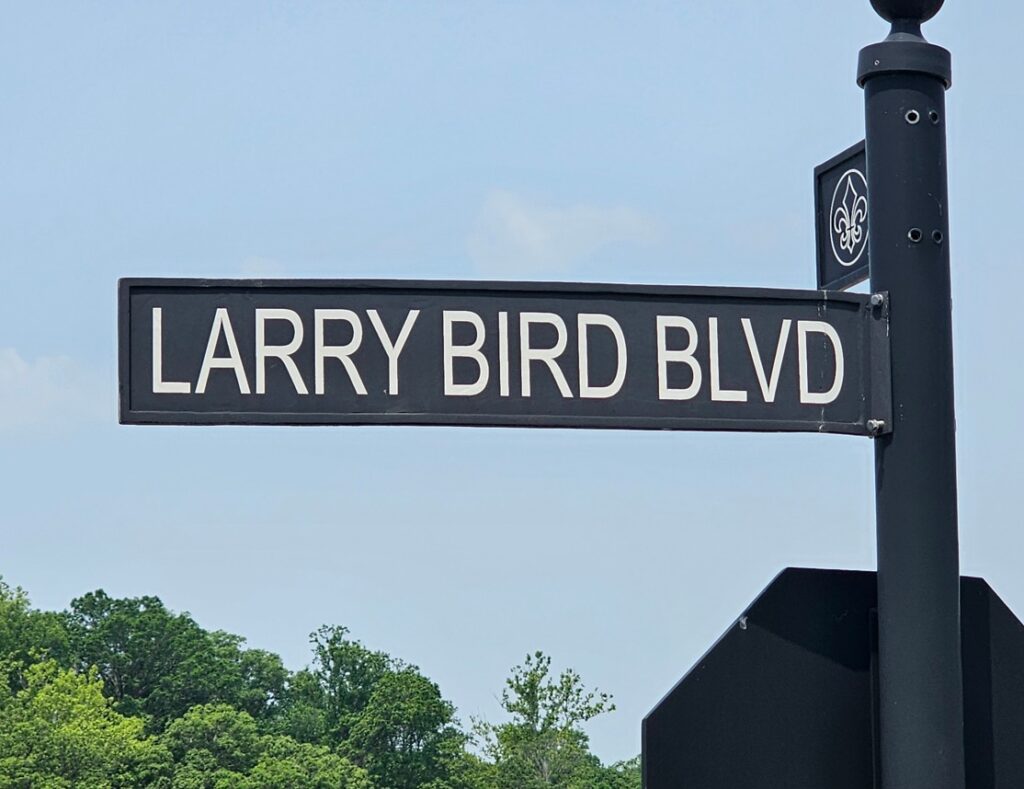
Driving through southern Indiana, we come upon French Lick, which is Larry Bird’s hometown.
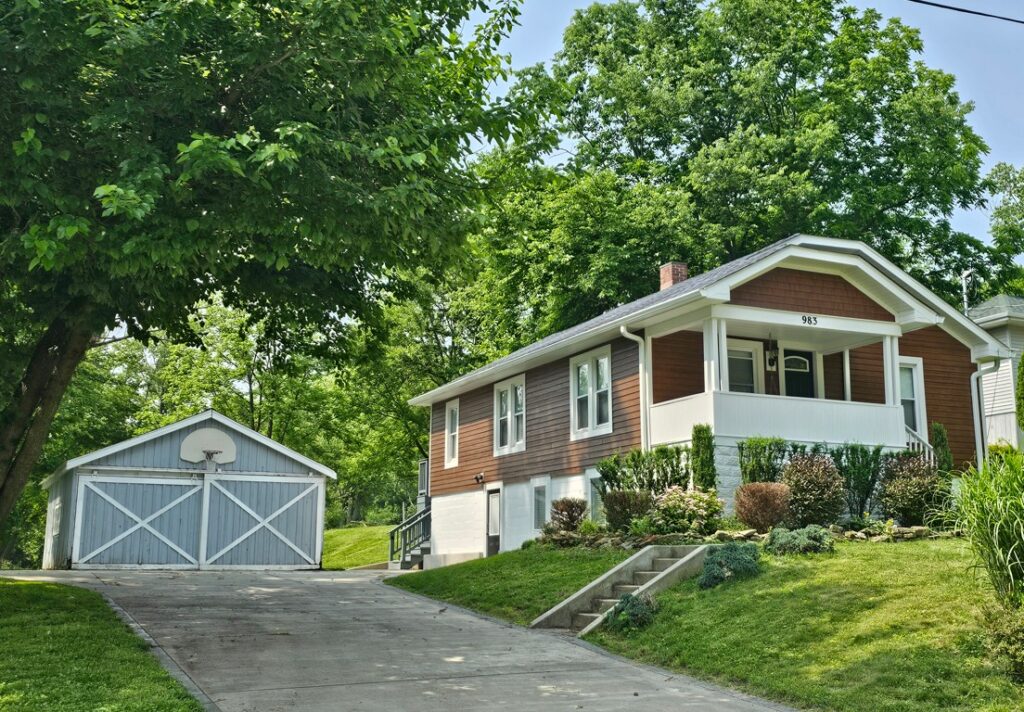
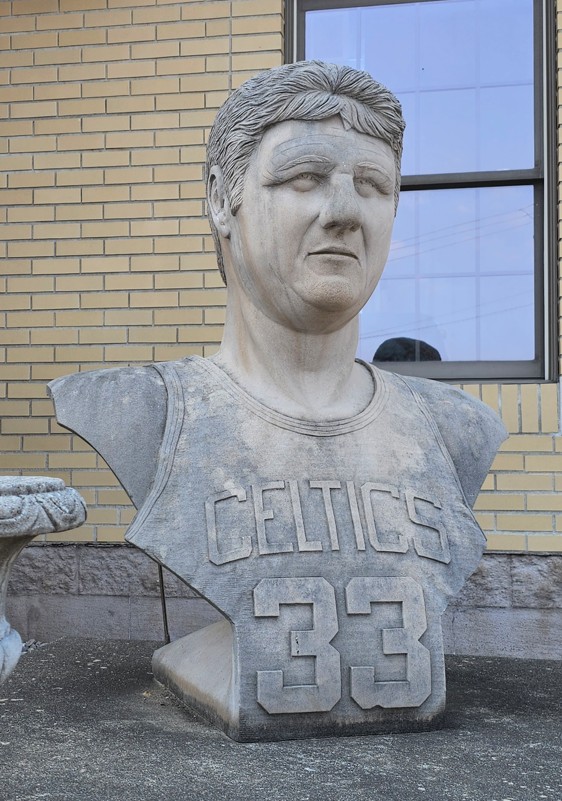
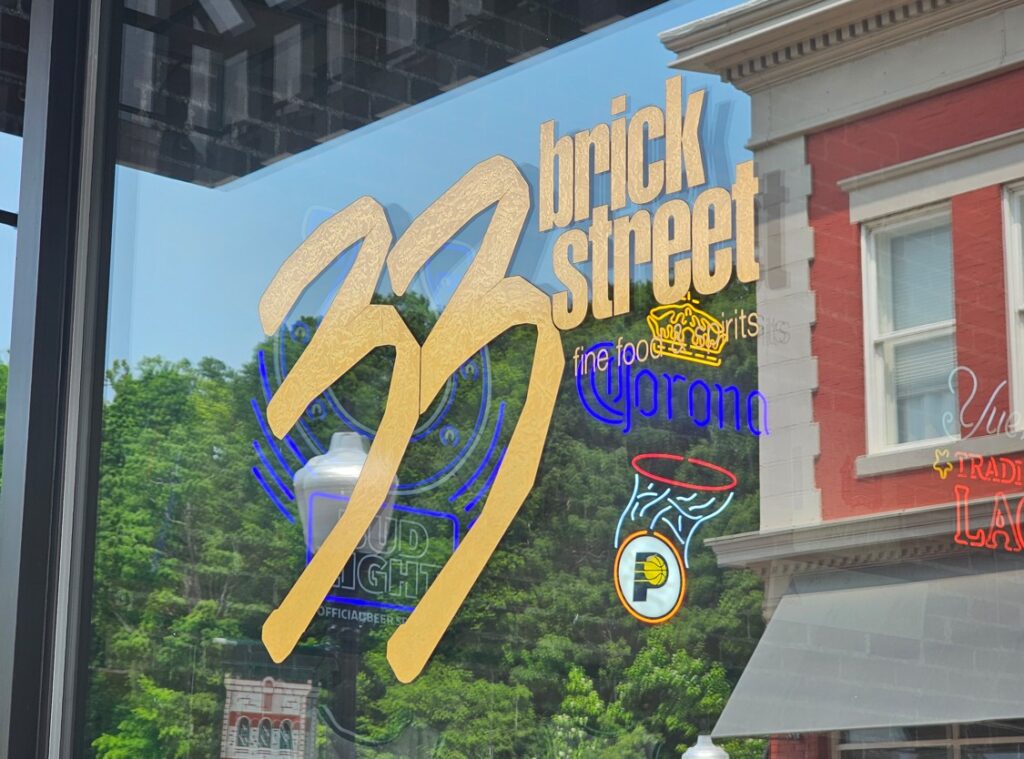
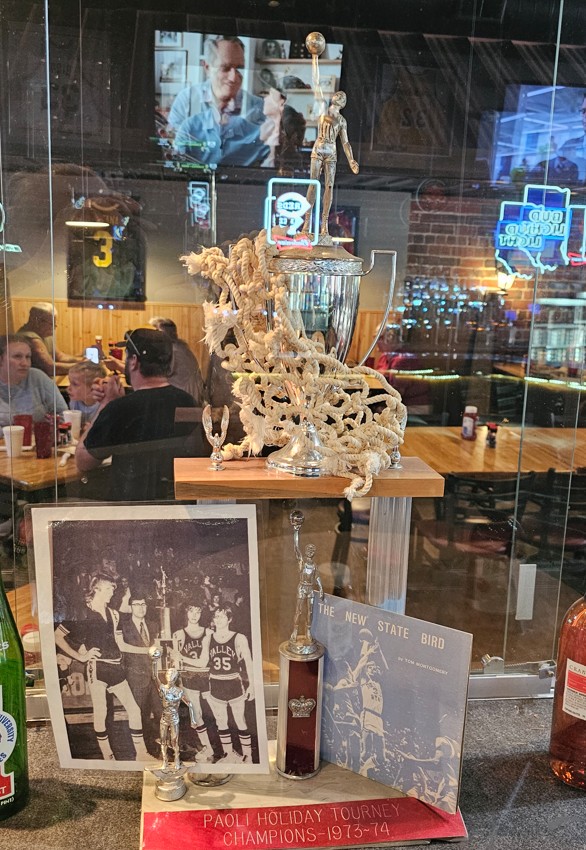
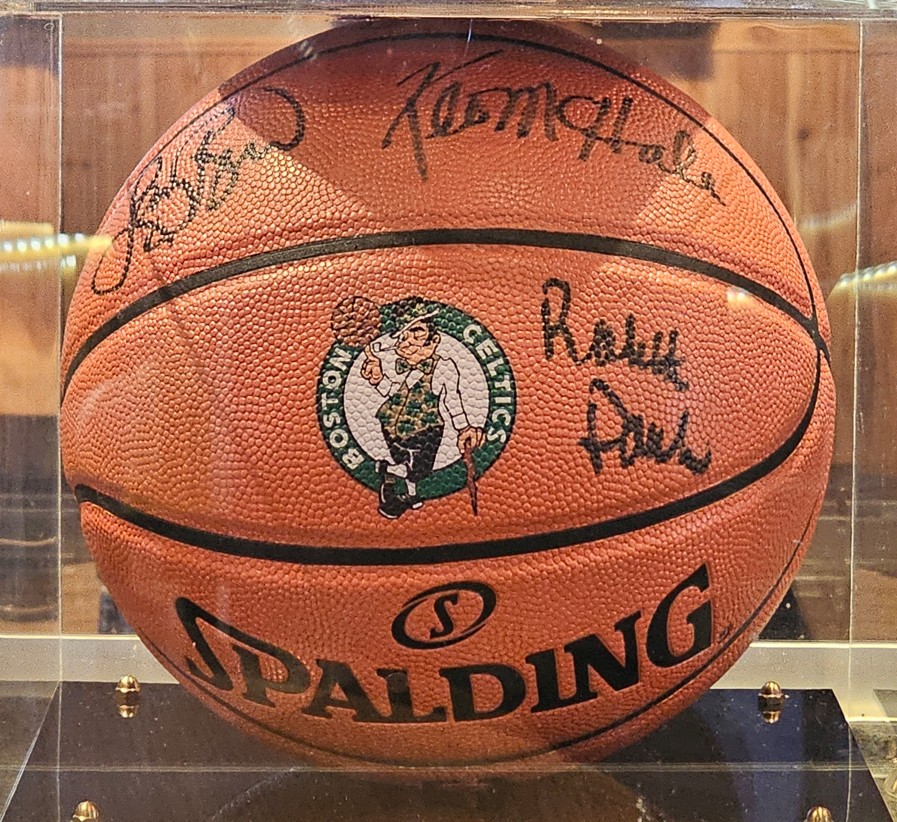
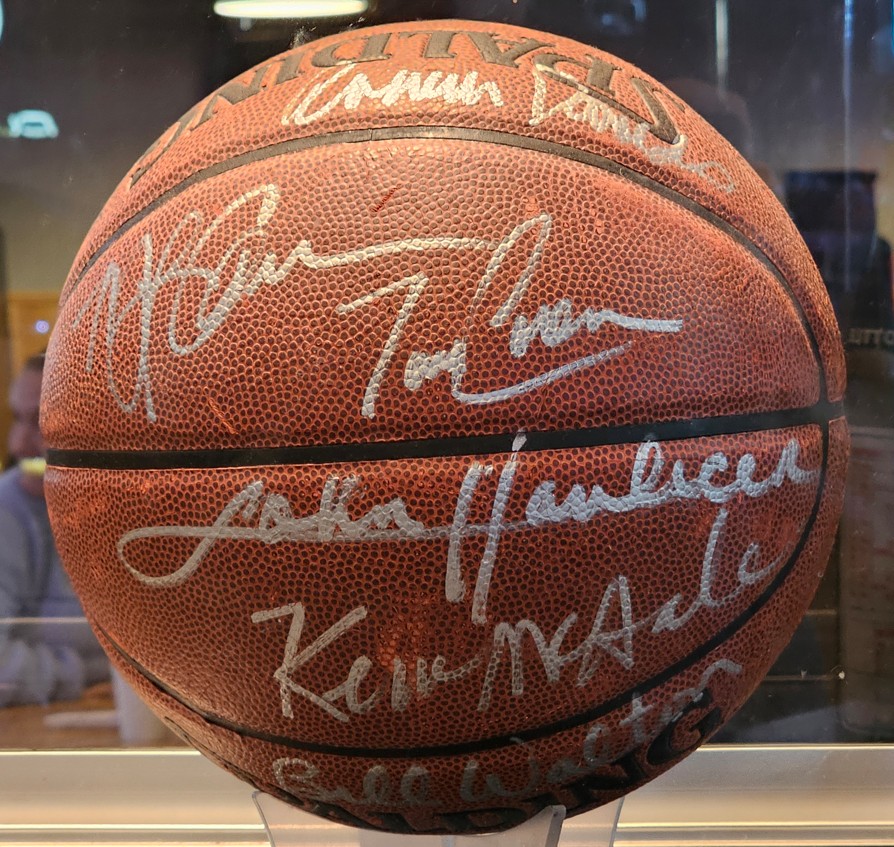
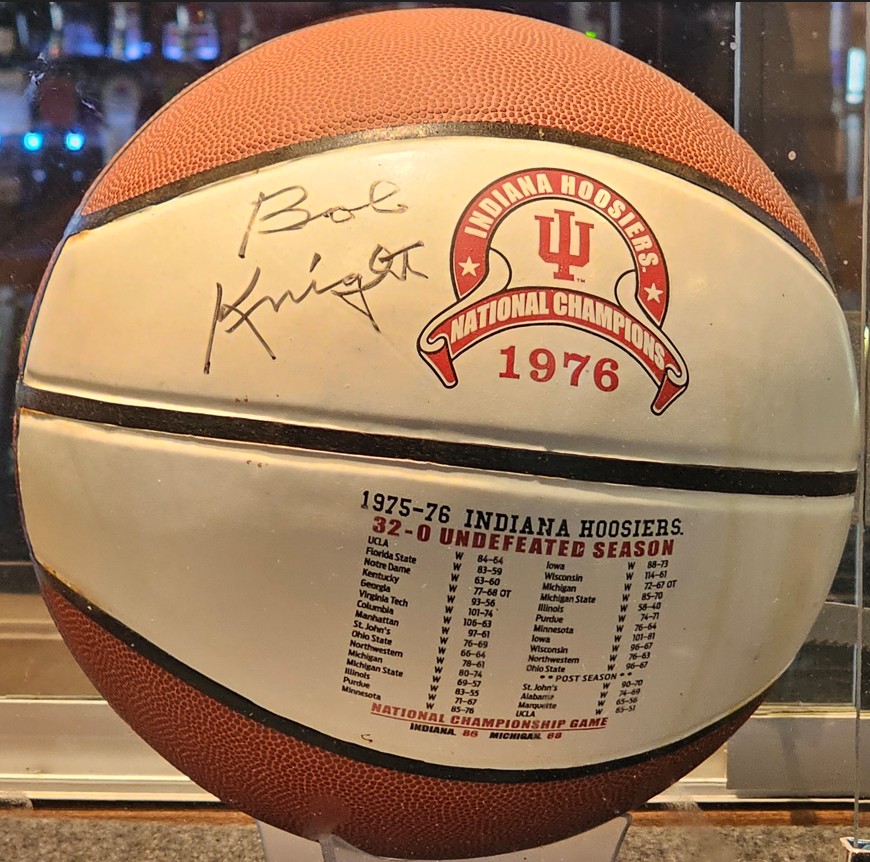
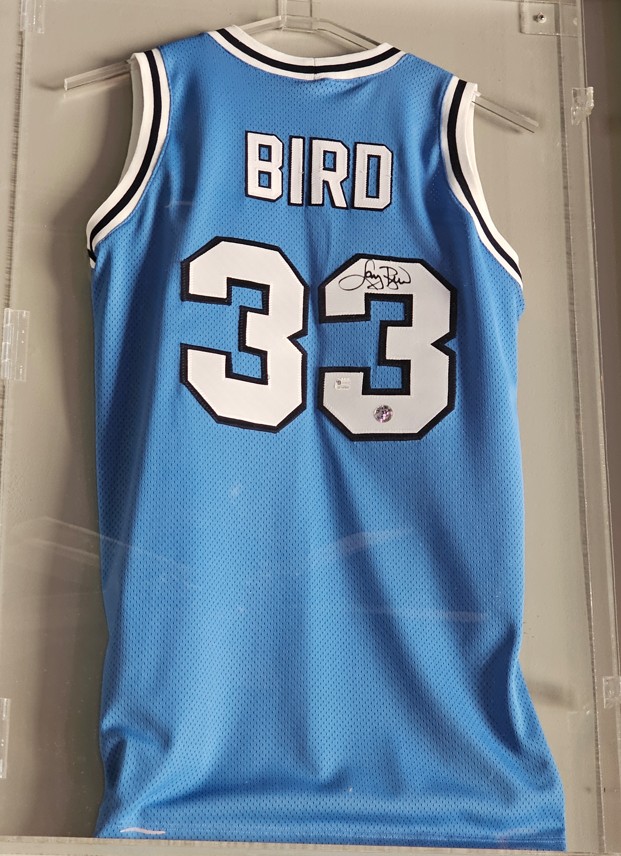
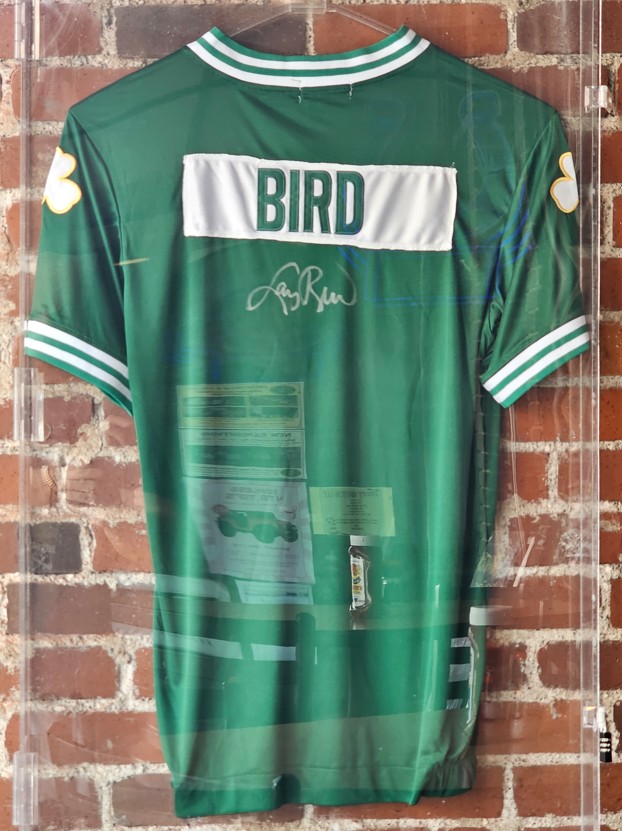
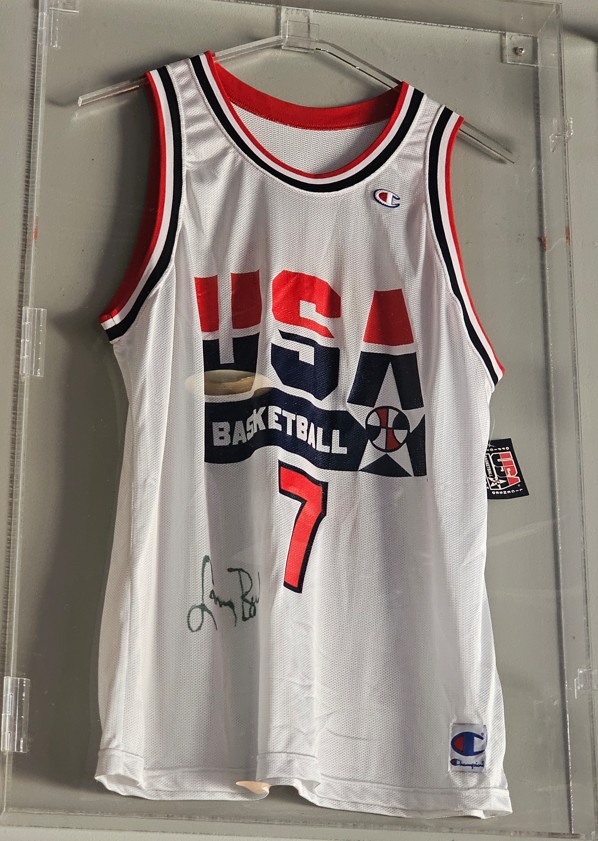
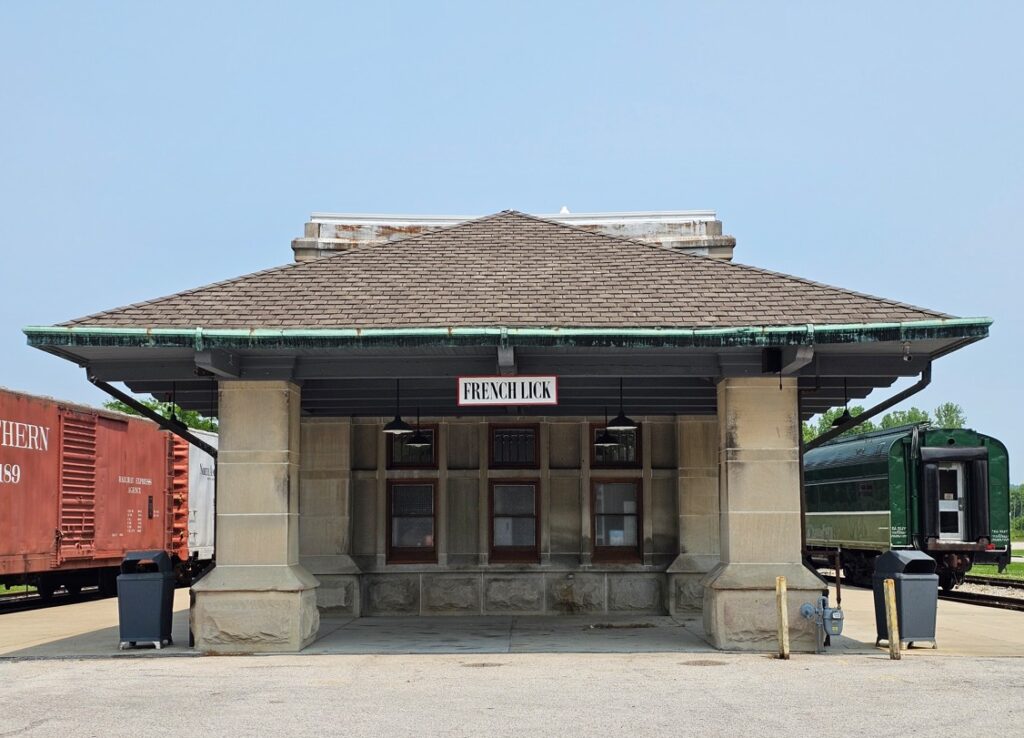
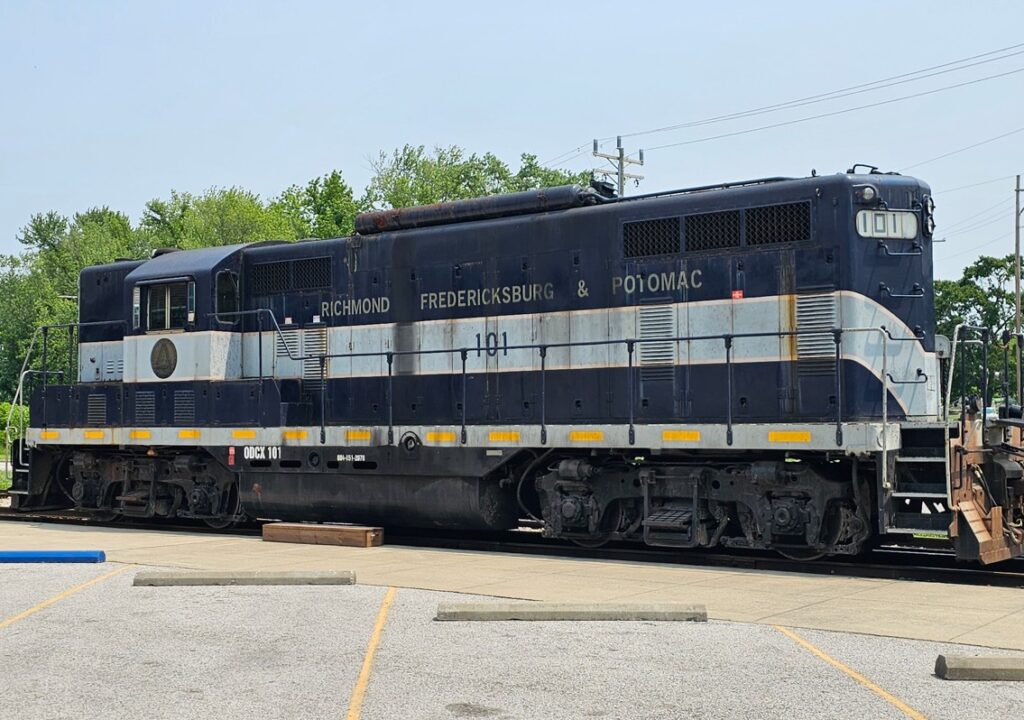
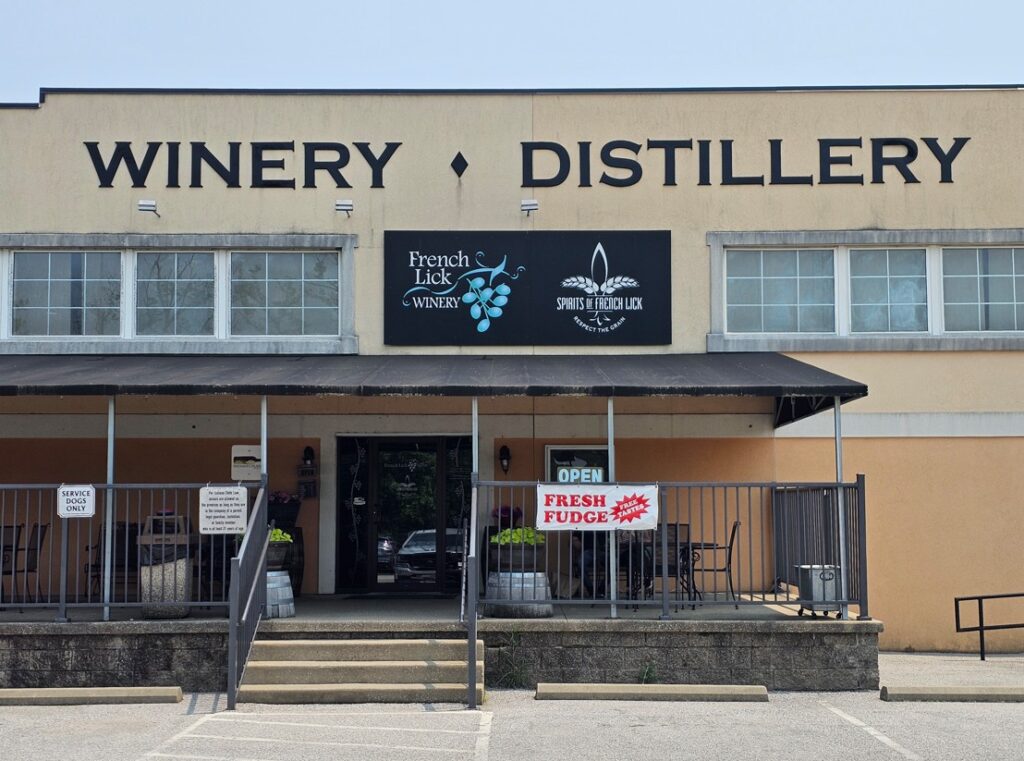
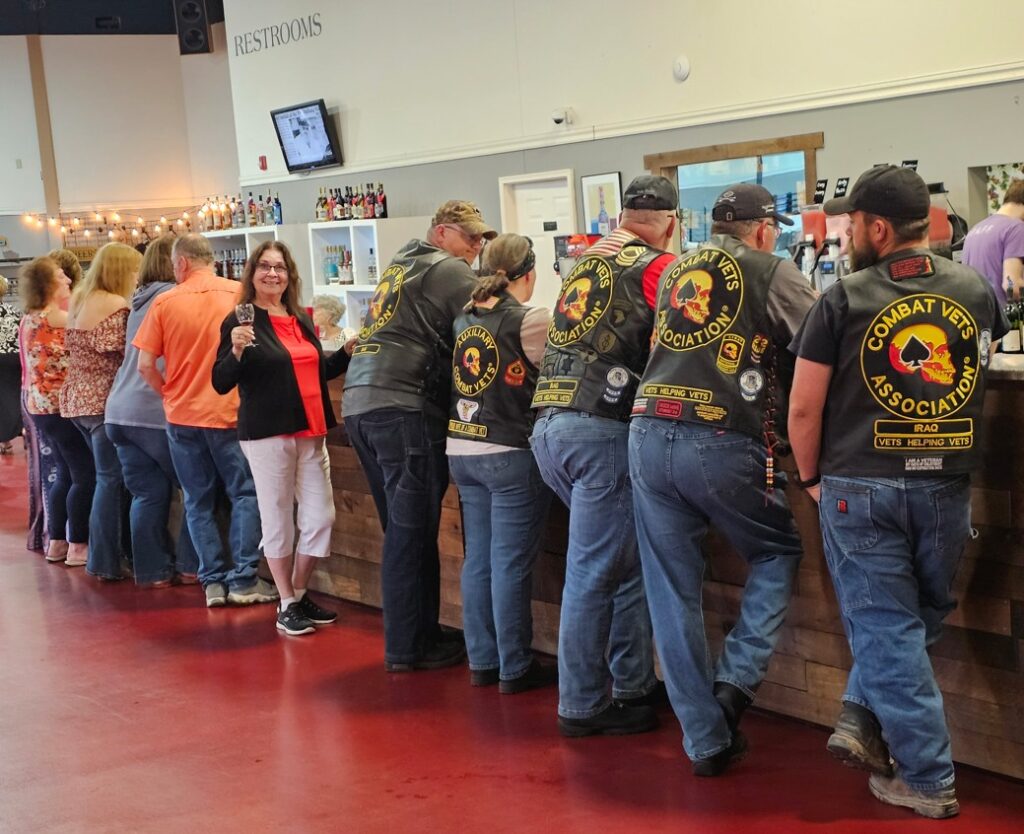
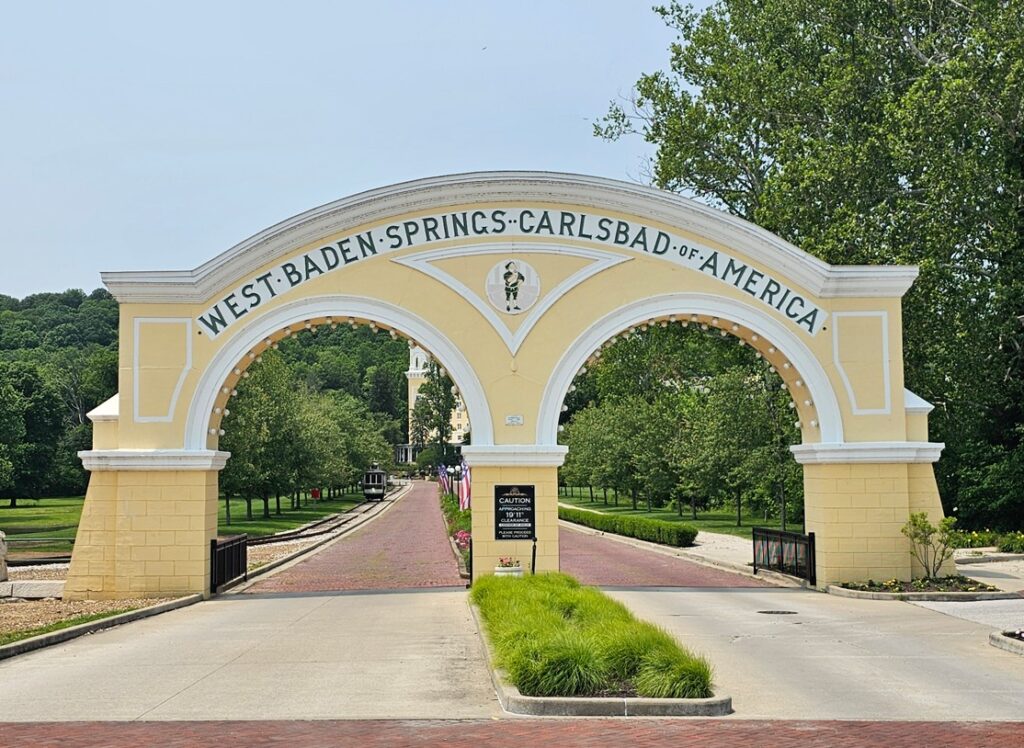
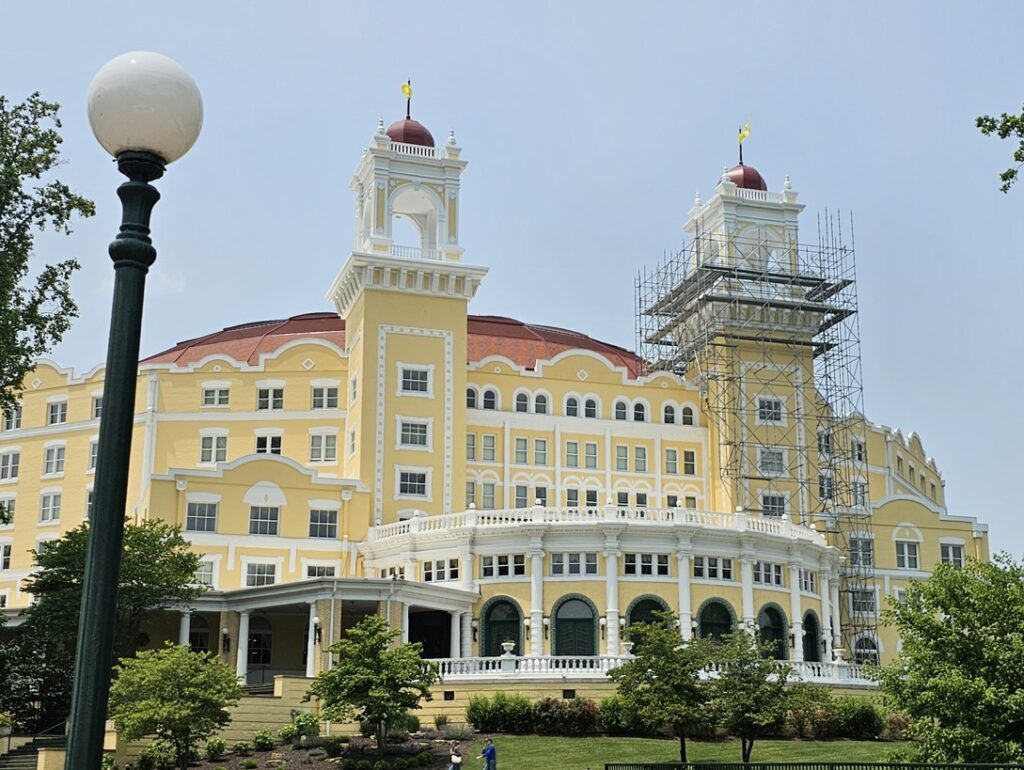
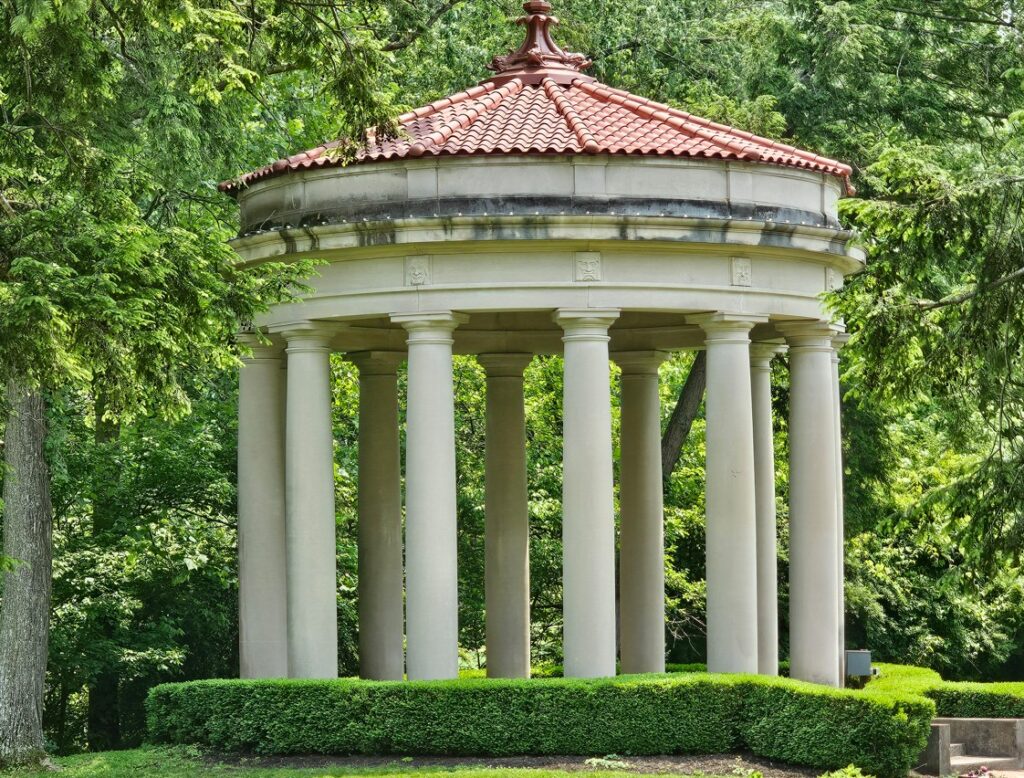
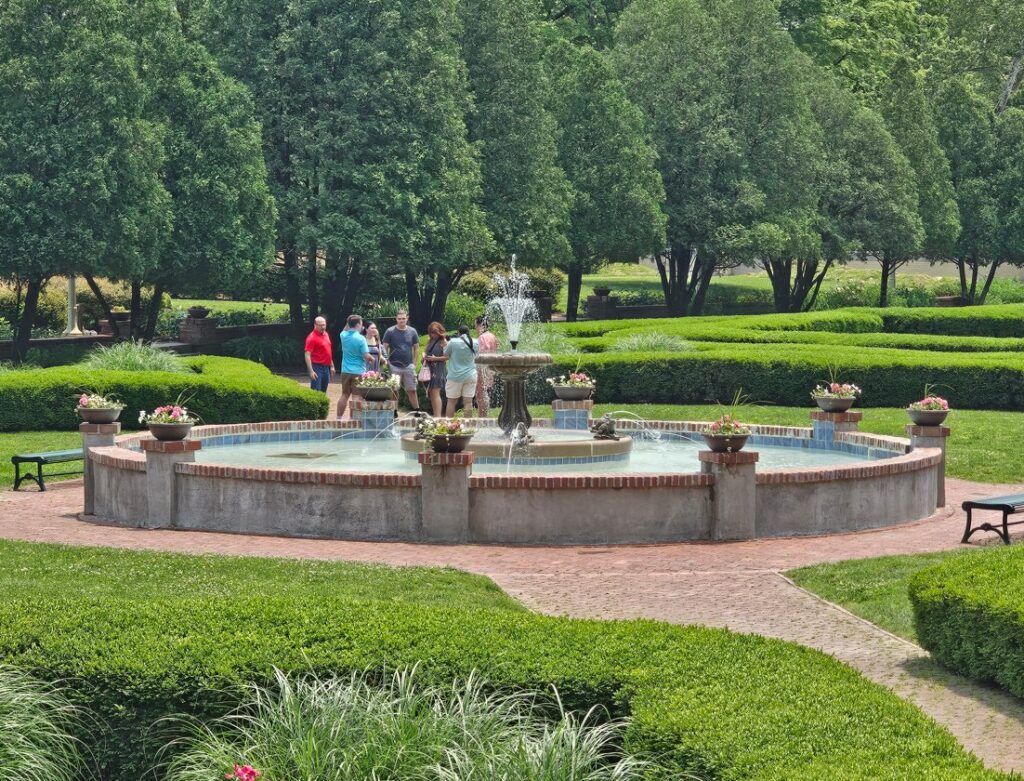
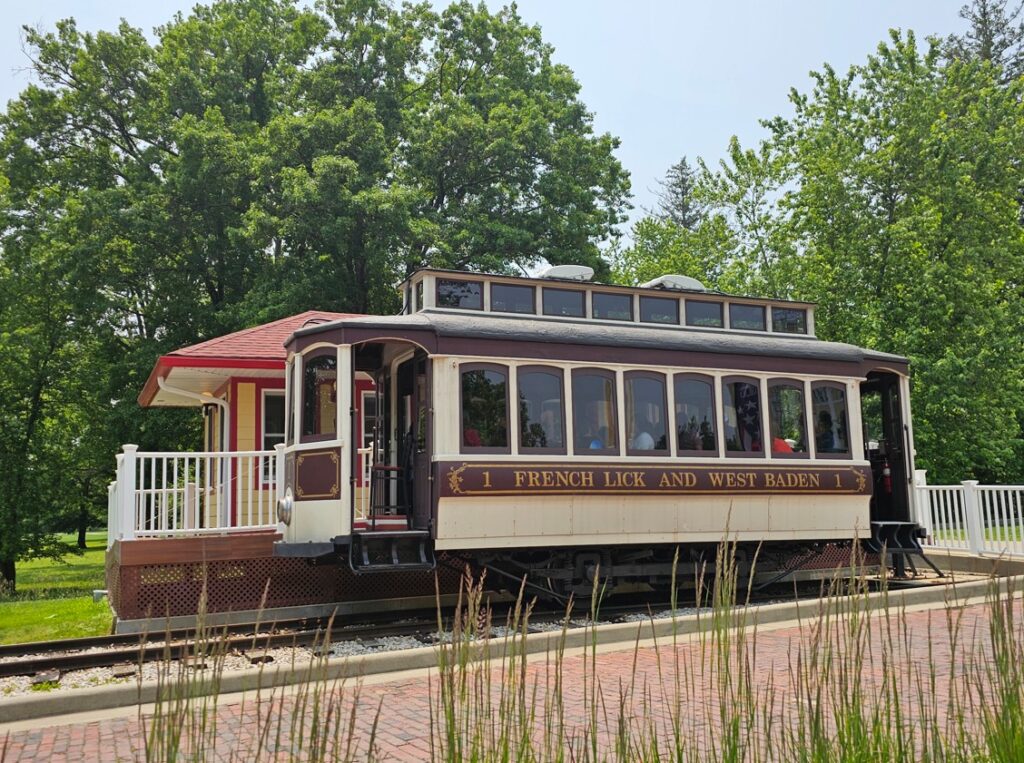
This is where Larry Bird grew up. He shot baskets on this garage (on a previous version of backboard).Larry Bird bust at the recreation center.33 Brick Street is a restaurant, very much Larry Bird-themed. A lot of memorabilia inside. Trophy from Bird’s high school winning a tournament in 1973-1974 seasonBasketball autographed by the “Big 3”: Larry Bird, Kevin McHale and Robert Parrish.Basketball autographed by (among others) John Havlicek, Kevin McHale and Bill Walton.Basketball autographed by legendary coach Bob Knight commemorating that last undefeated college basketball champions, Indiana in 1976.Bird’s college jersey.Bird’s Celtics warmup.Bird’s 1992 Dream Team Olympic jersey.French Lick depot.What is an old RF&P engine doing in French Lick Indiana?French Lick Winery for a tasting.The winery tasting was packed!West Baden Springs resort. Might be worth a re-visit someday!The grounds of West Baden Springs resort.Trolley goes from the resort to downtown French Lick.
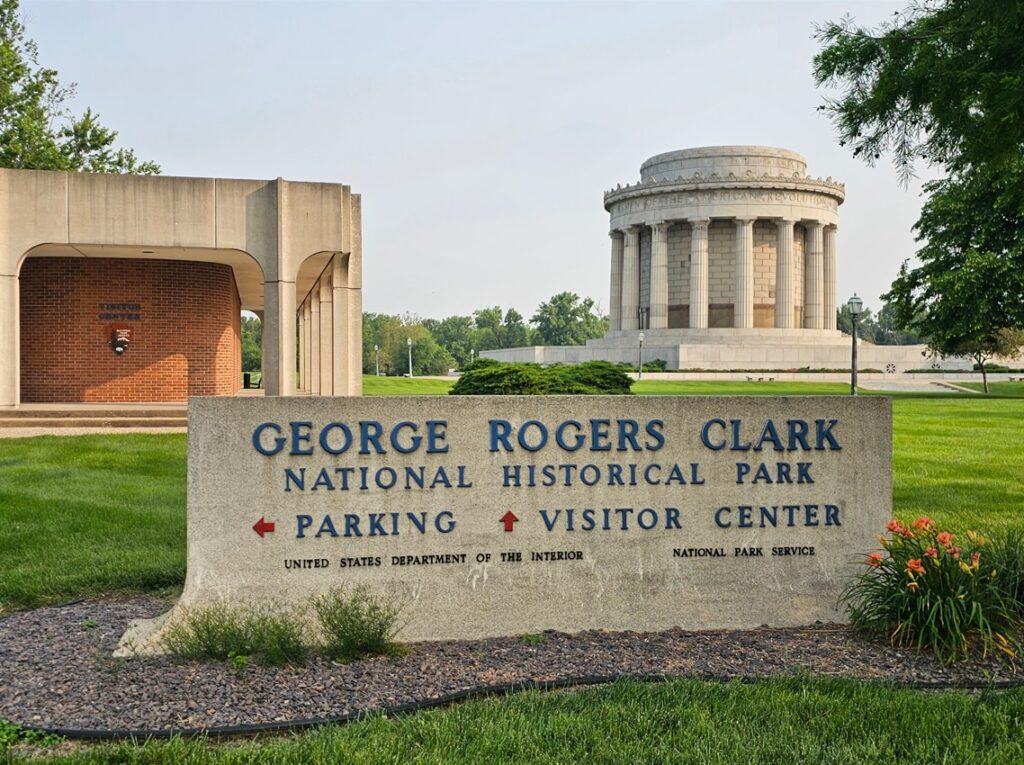
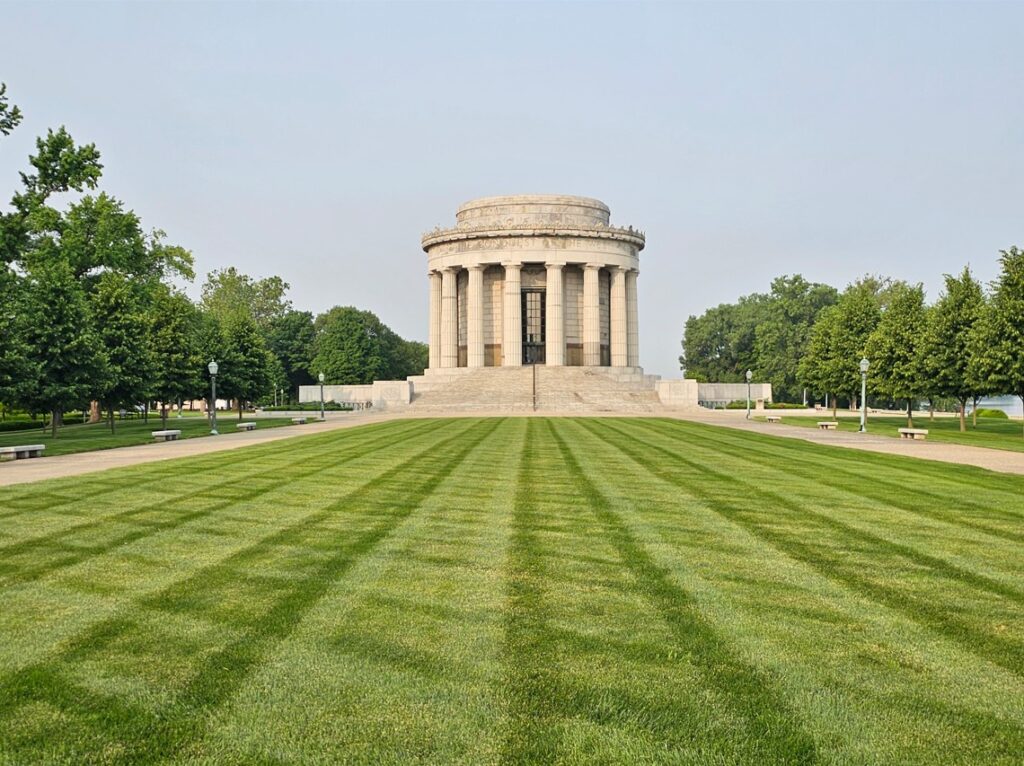
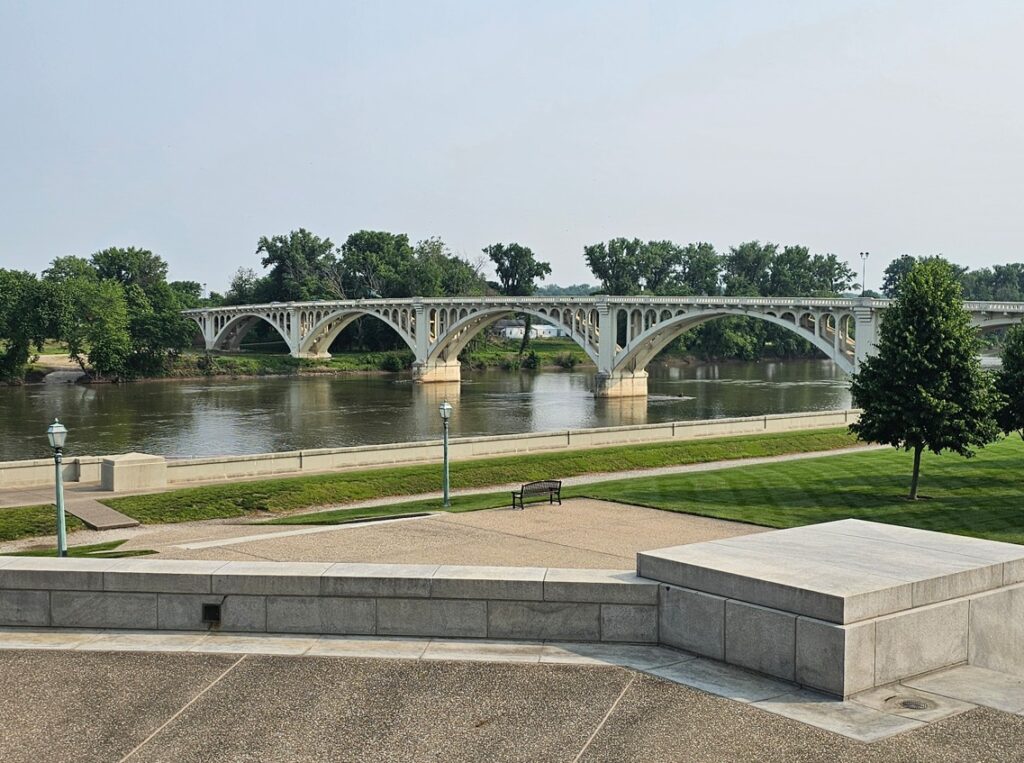
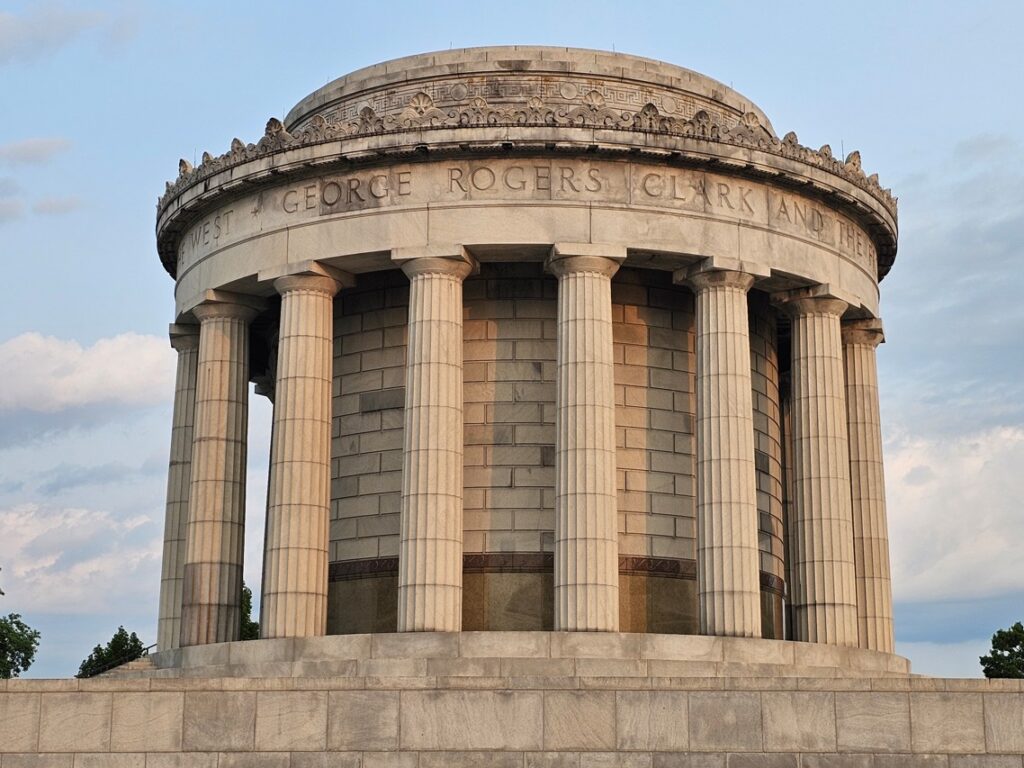
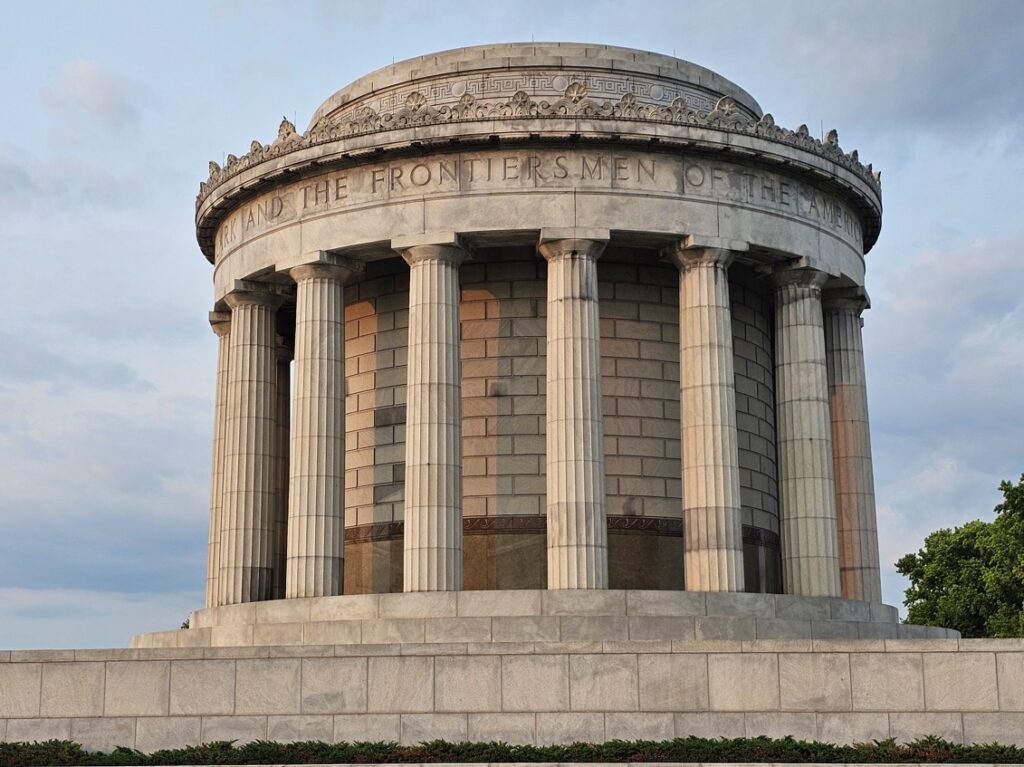
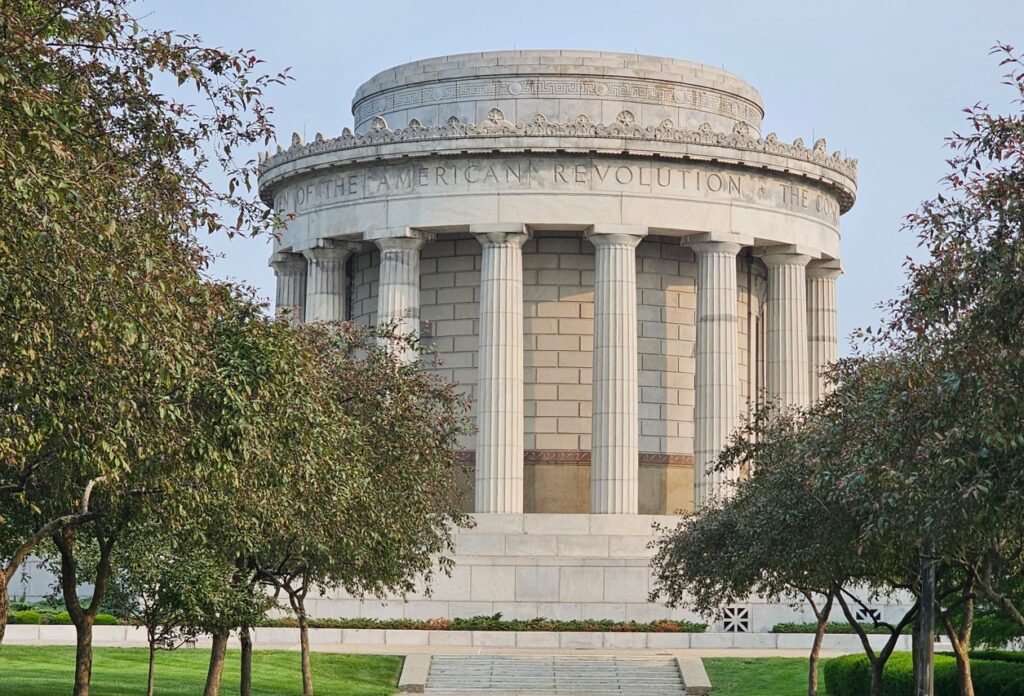
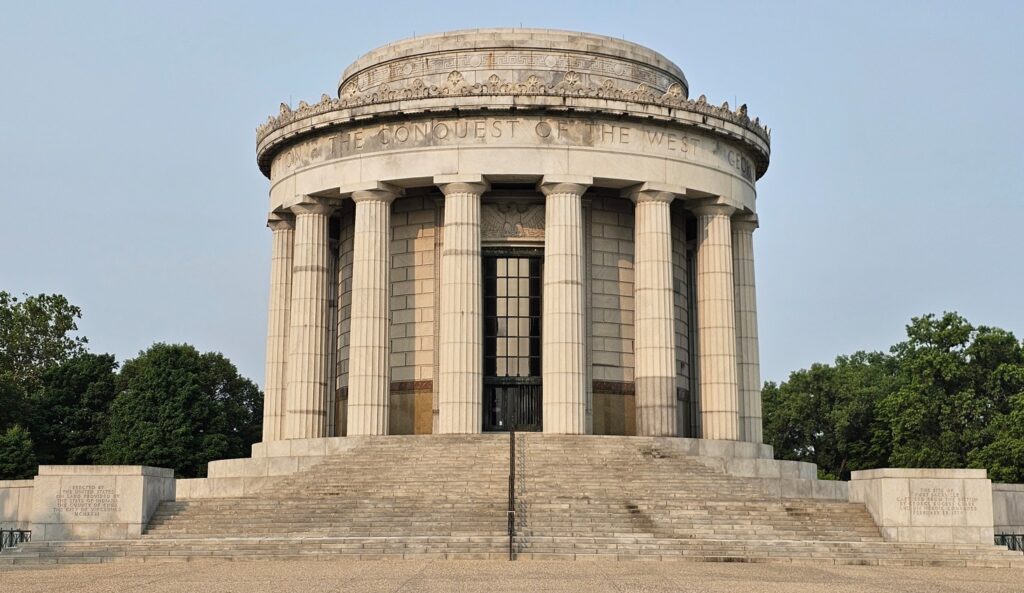
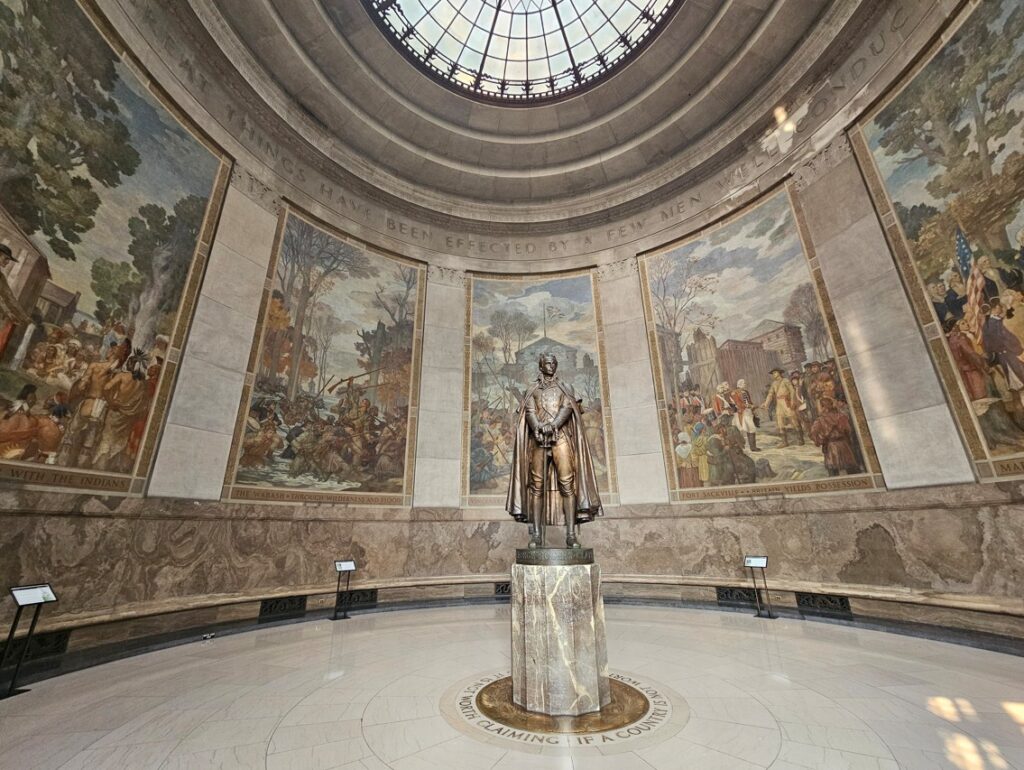
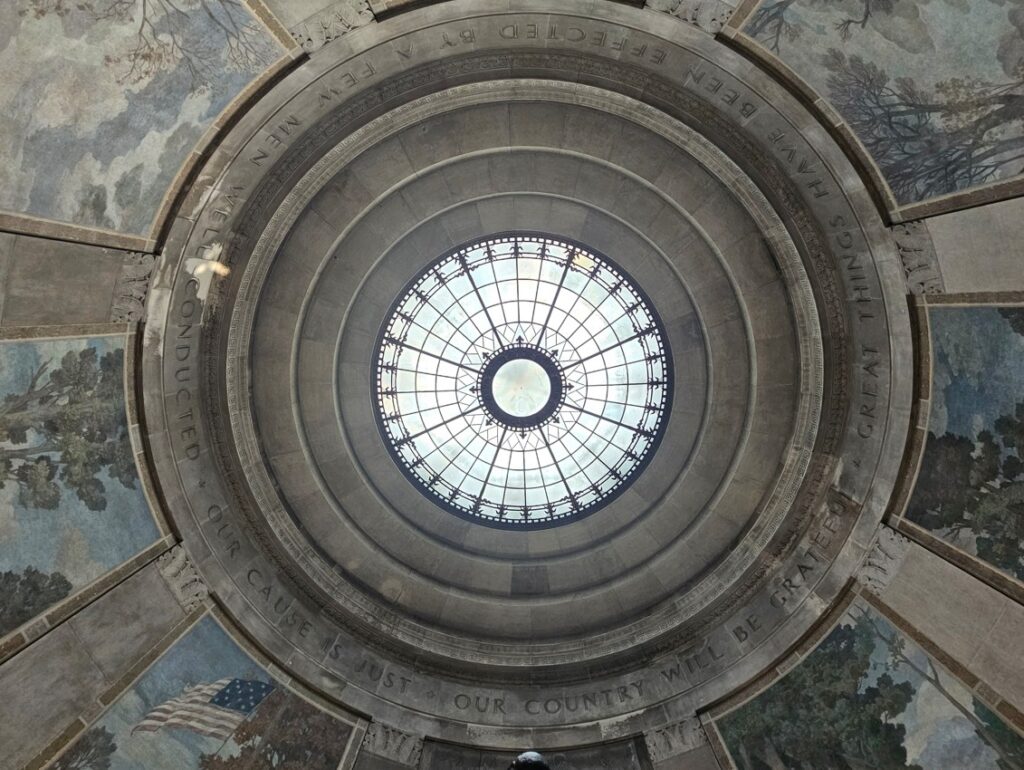
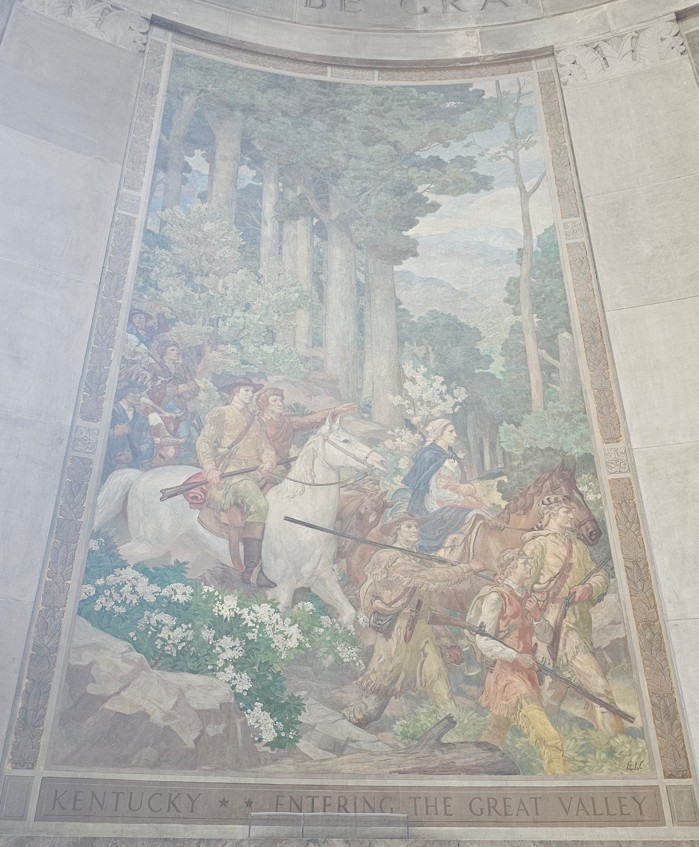
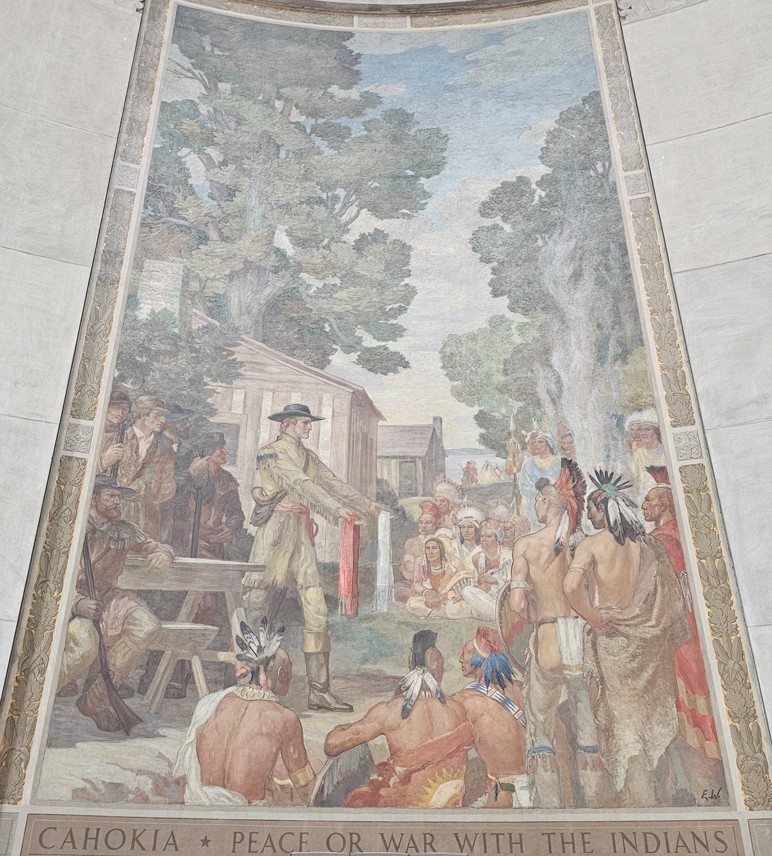
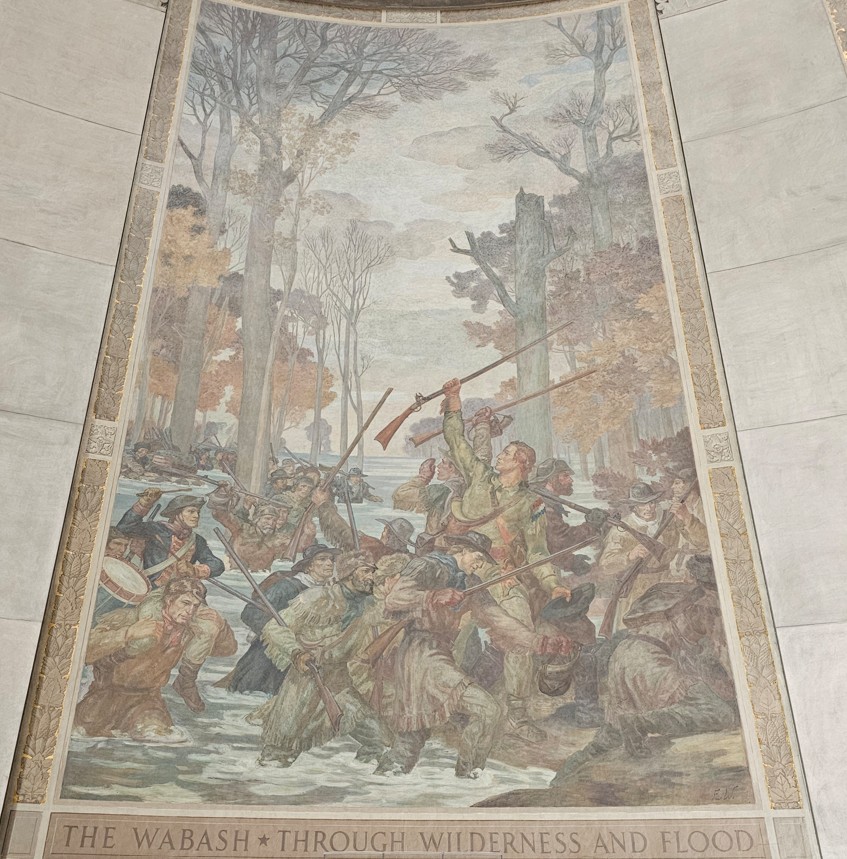
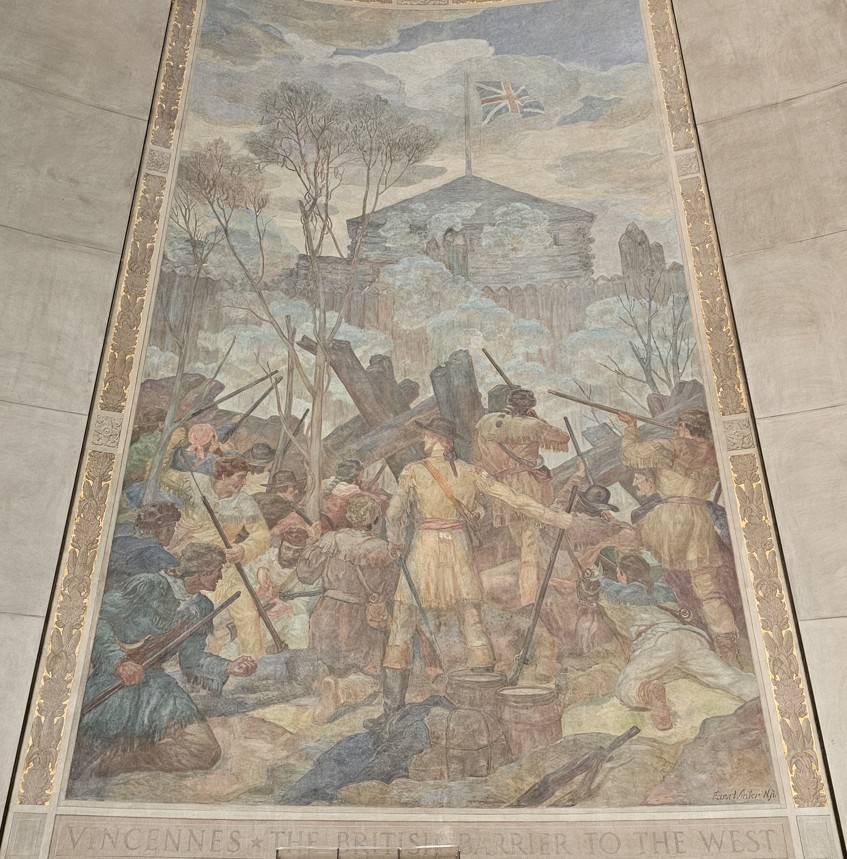
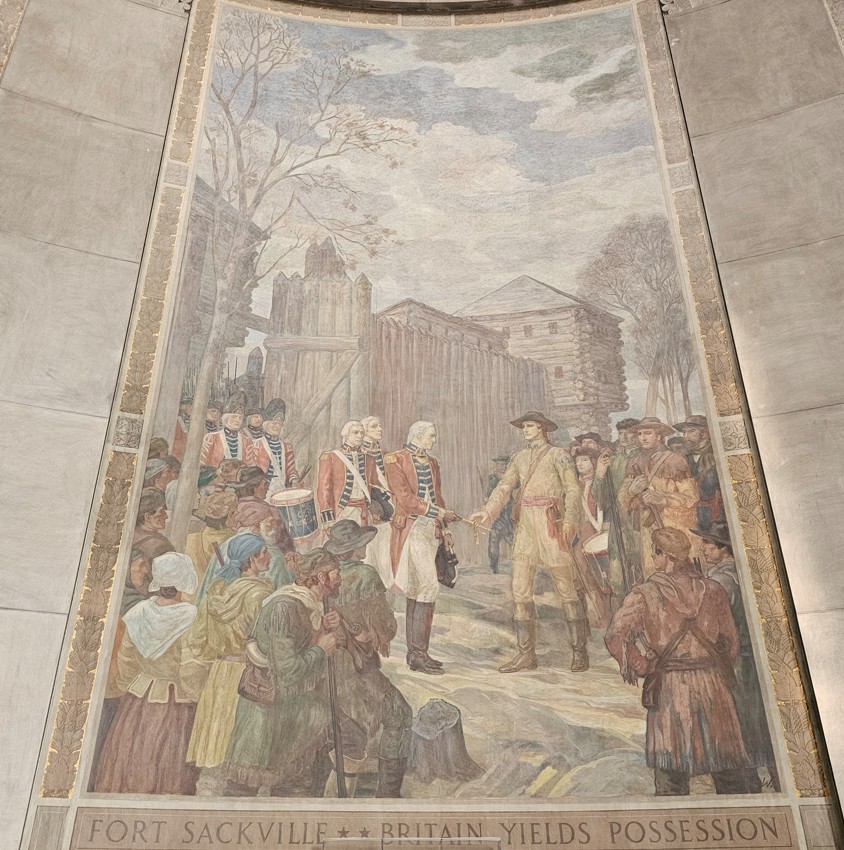
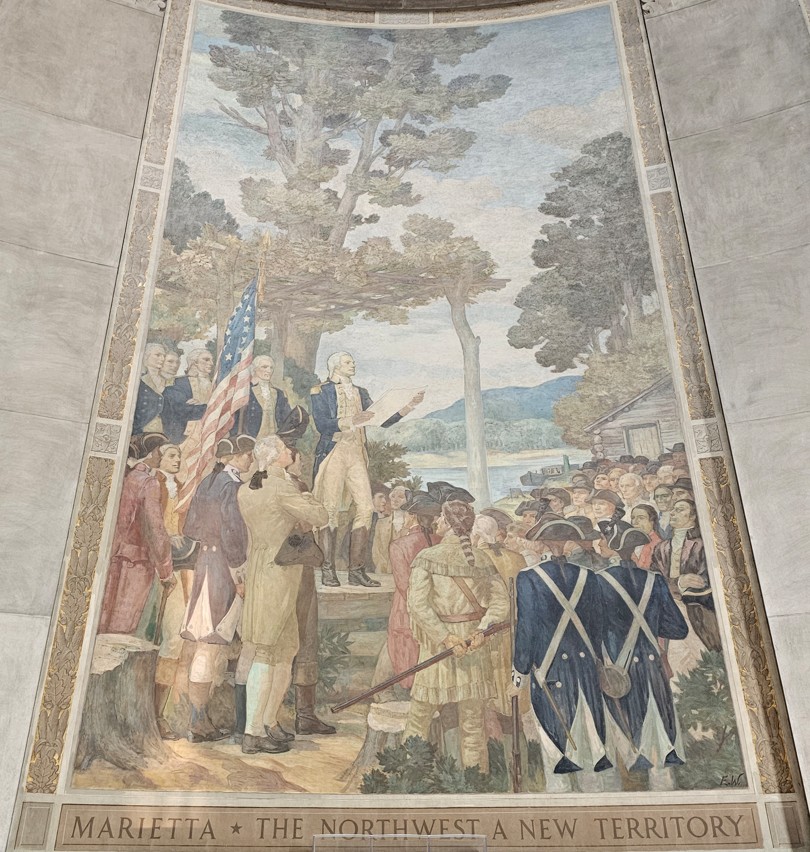
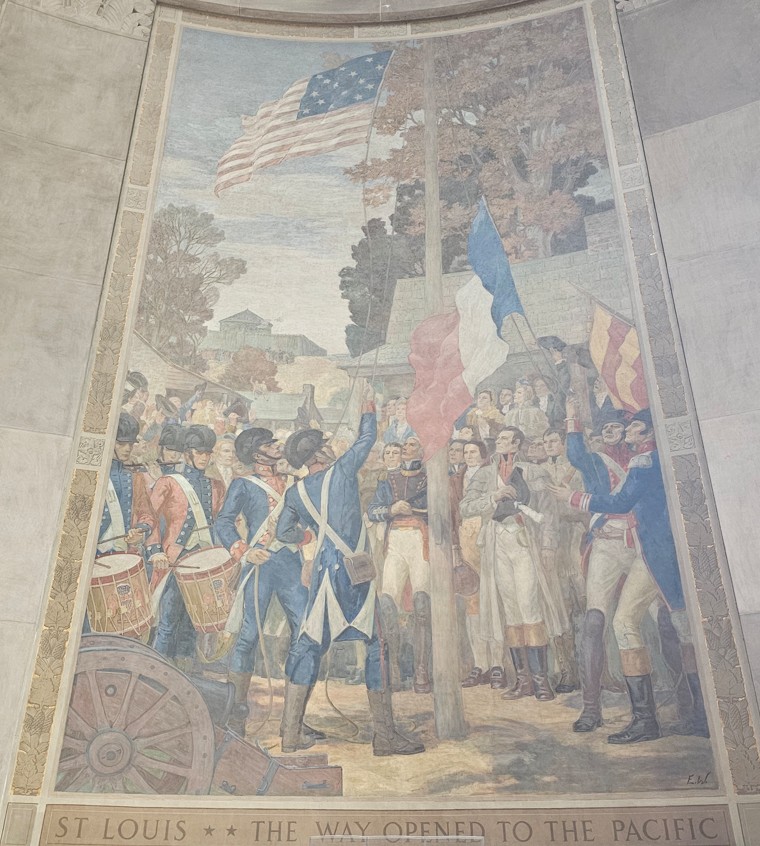
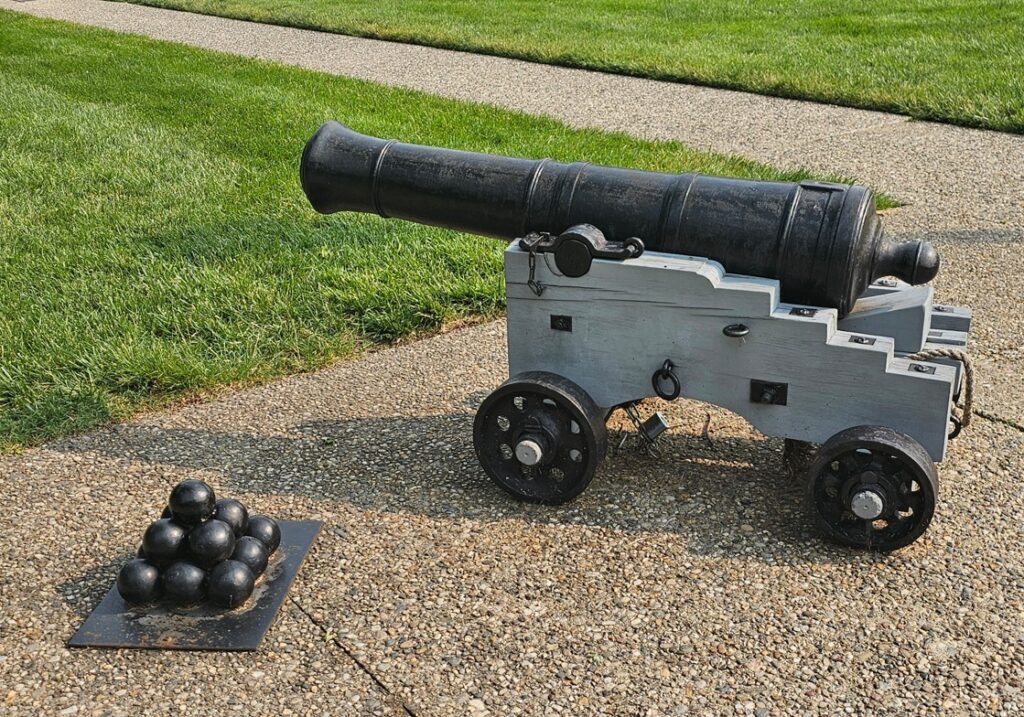
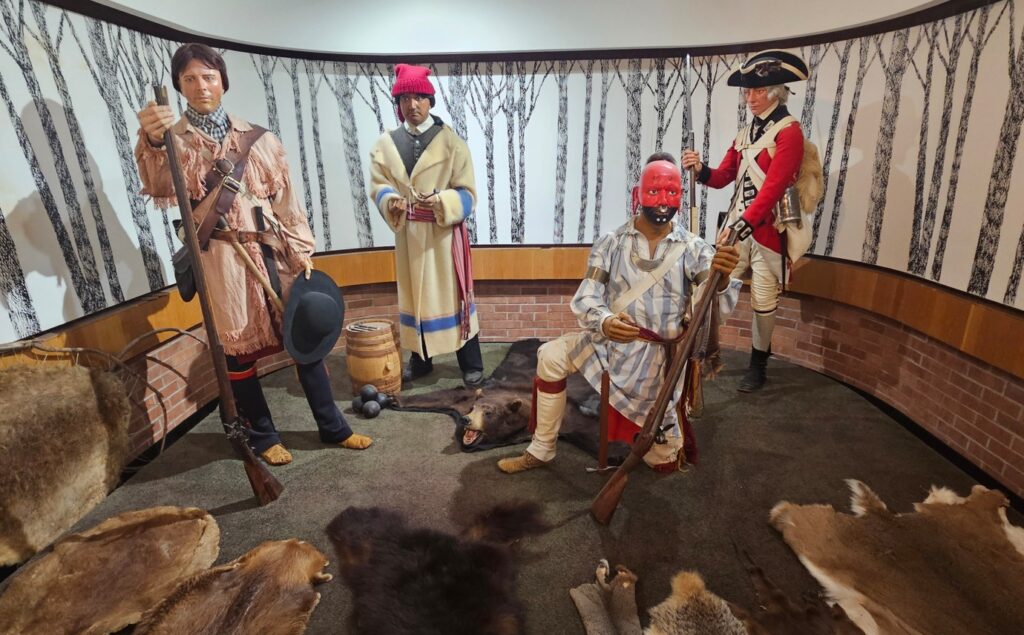
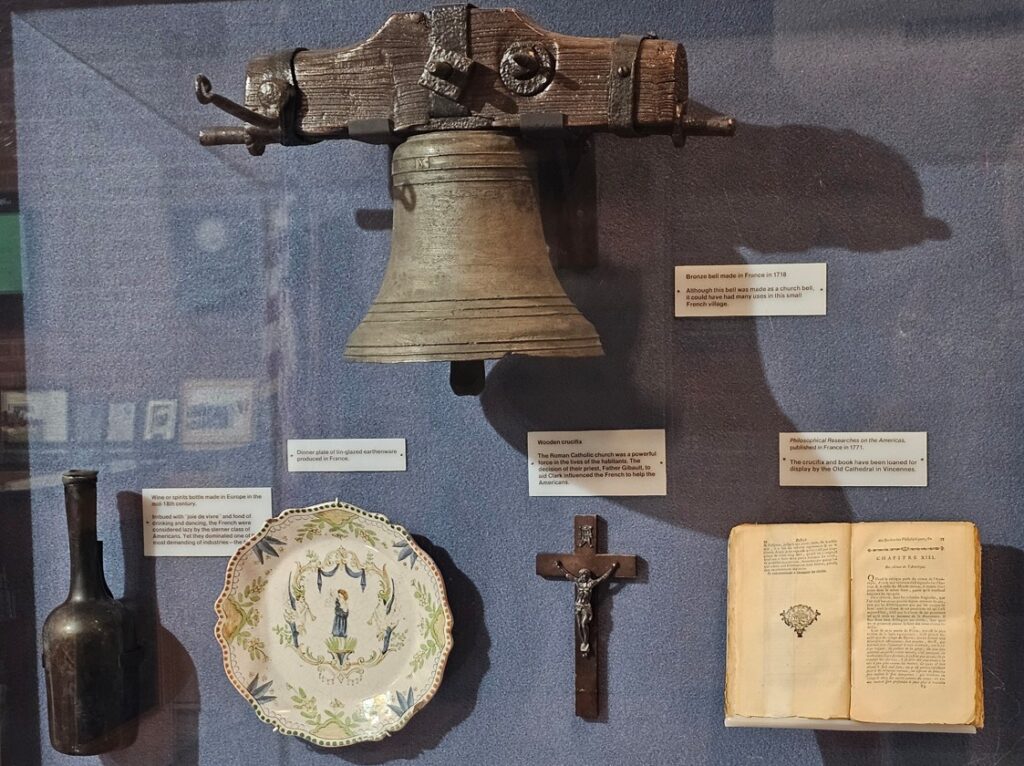
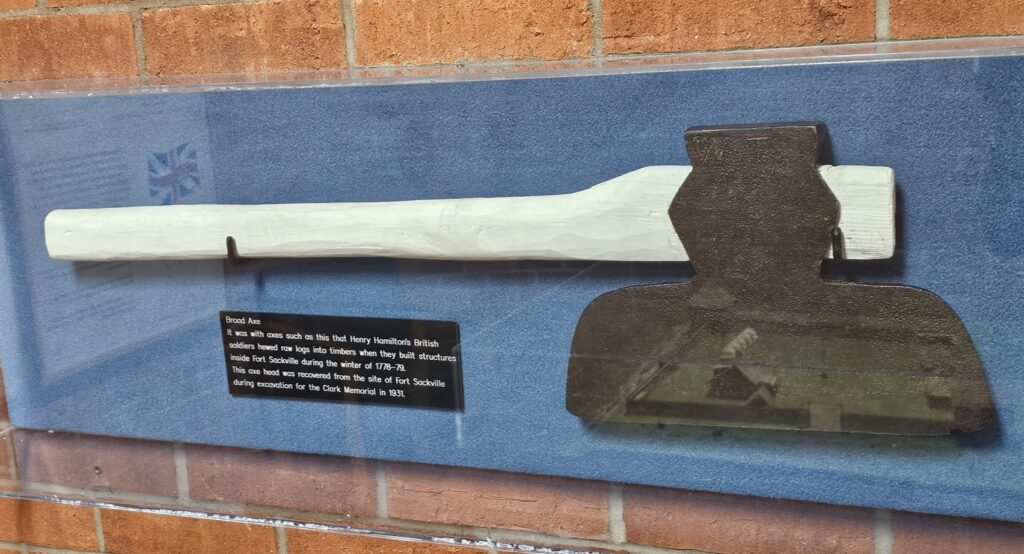
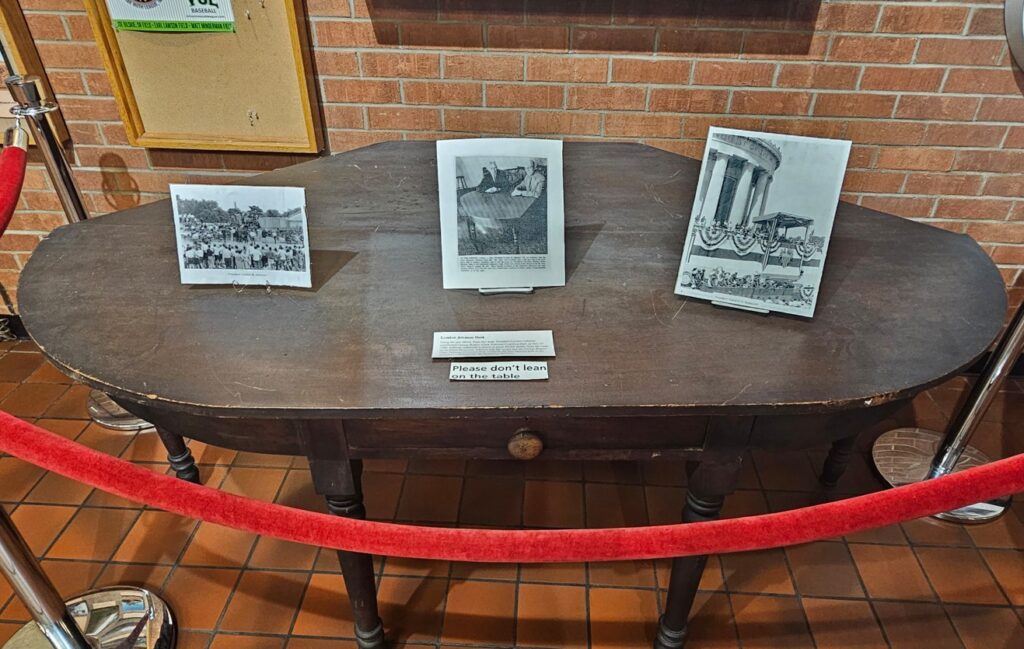
This monument memorializes George Rogers Clark’s daring victory over the British at Fort Sackville (current day Vincennes) in 1779, which was instrumental in winning the Revolutionary War, and opening the west to American expansion westward.The mall reminds you of the monuments in Washington DCThe Lincoln Memorial Bridge over the Wabash River reminds you of the Francis Scott Key Bridge in Washington DC.George Rogers Clark……and the Frontiersmen……of the American Revolution.The Conquest of the WestGeorge Rogers Clark statue in the center of the memorial.The rotunda.Panels chronicle the history of the area. This one depicts George Rogers Clark on a white horse leading settlers across the Allegheny Mountains.In 1778 Clark called for a conference at Cahokia to negotiate peace with the Native American tribes. He offered each tribe a choice of war or peace. Peace if they sided with the Americans in the Revolutionary War. Choosing the while belt meant they would side with the Americans, red for siding with the British. Most tribes chose to support the US, but some sided with Britain.In December 1778 British forces retook control of Fort Sackville from the French and Americans. Clark and his men executed a midwinter attack in February 1779 to retake the fort. They crossed 160 miles of frozen and eventually prairie over 19 days. The last 10 ,miles were completed without food, and sometimes water reached their necks. They retook Fort Sackville on February 25, 1779.While surrounding Fort Sackville, Clark intercepted some Native Americans who were British allies, and he executed them within view of the fort. The British thought Clark had large numbers, so they surrendered the fort after two days, with no losses on either side.The mural shows British Lt. Gov. Henry Hamilton to George Rogers Clark on February 25, 1779. This surrender represented more than just surrendering one fort. Clark’s victory changed the dynamic on the western frontier, disrupting the British military presence in the west, and confused the Native Americans about their loyalties. The victory also led thousands of American colonists in the east to move west of the Appalachians.This scene in Marietta, Ohio in 1788 depicts the Secretary of the Northwest Territory Winthrop Sargent reading the Northwest Ordinance, which eventually developed into Indiana, Ohio, Illinois, Michigan and Wisconsin.Here Captain Amos Stoddard stands at attention with Meriwether Lewis to his left at St. Louis. With George Rogers Clark’s brother William Clark, Lewis led the Corps of Discovery expedition across the country to the Pacific Ocean. St. Louis is considered the Gateway of the West.A cannon for the time period.This scene in the Visitor Center depicts the combatants in the area: American frontiersman, French habitant, Indian, and British soldier.British soldiers used a broad axe like this to hew raw logs into timbers to build structures inside Fort Sackville during the winter 1778-1779. This axe head was recovered from the site of Fort Sackville during excavation for the Clark Memorial in 1931.President Lyndon Johnson at this desk in 1966, established George Rogers Clark National Historical Park. About 50,000 people attended the signing.
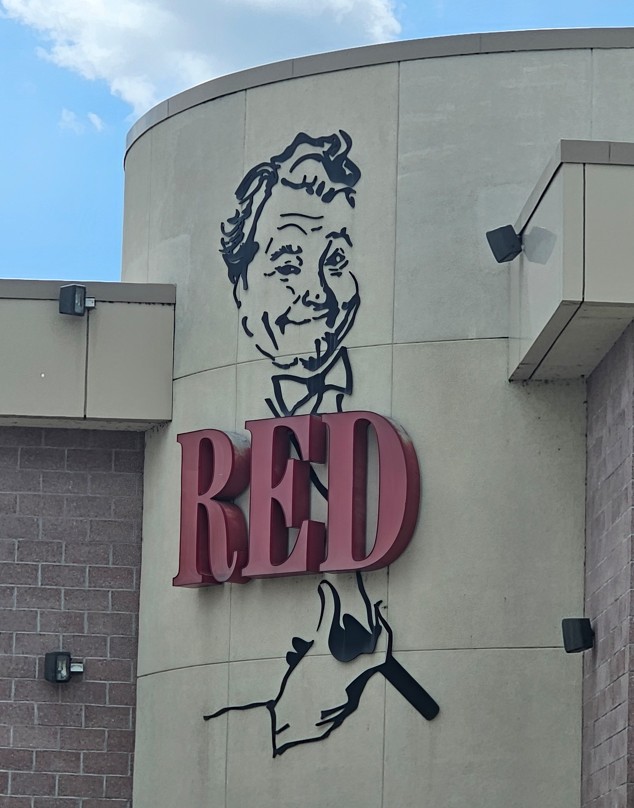
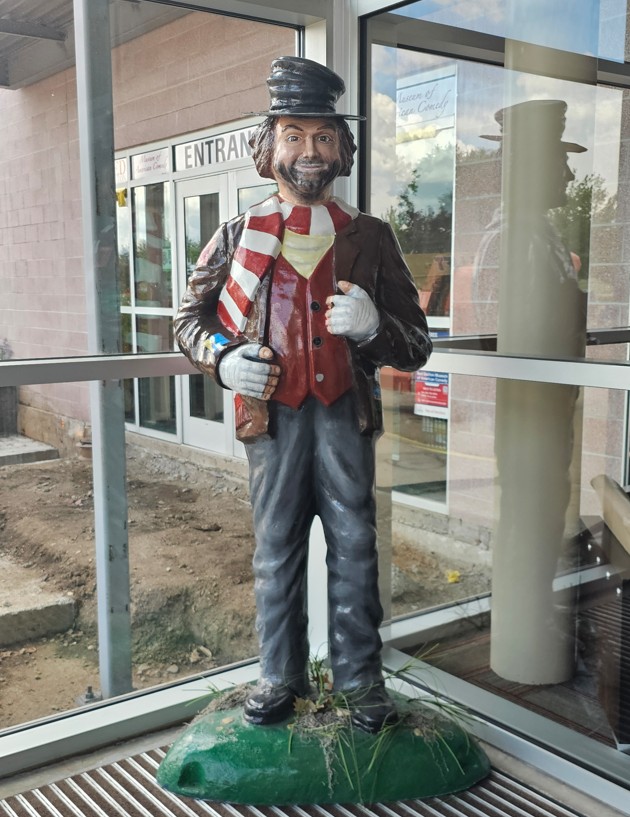
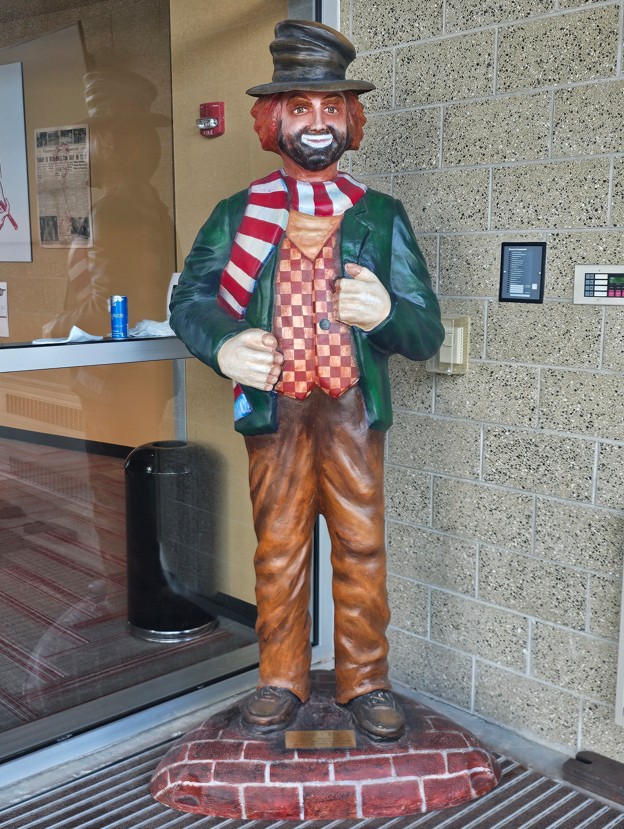
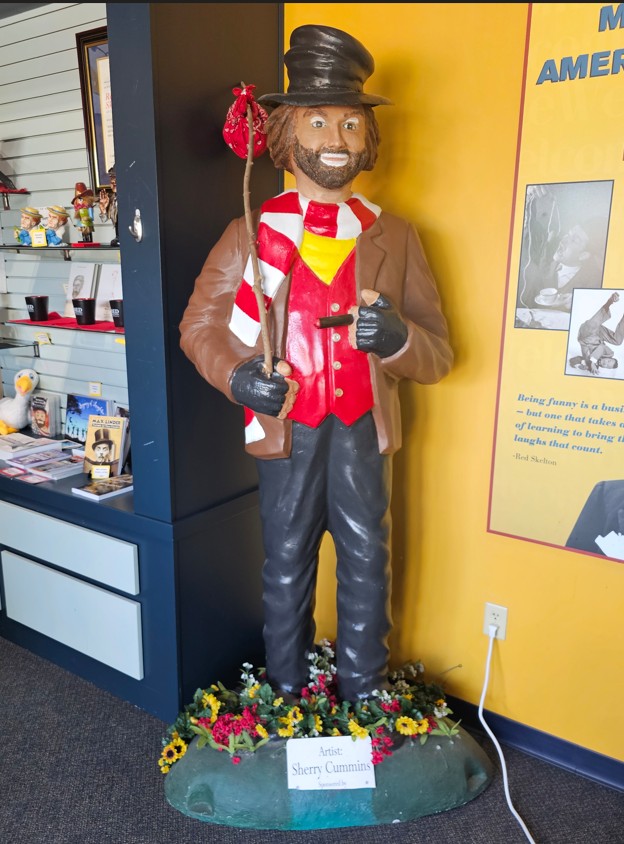
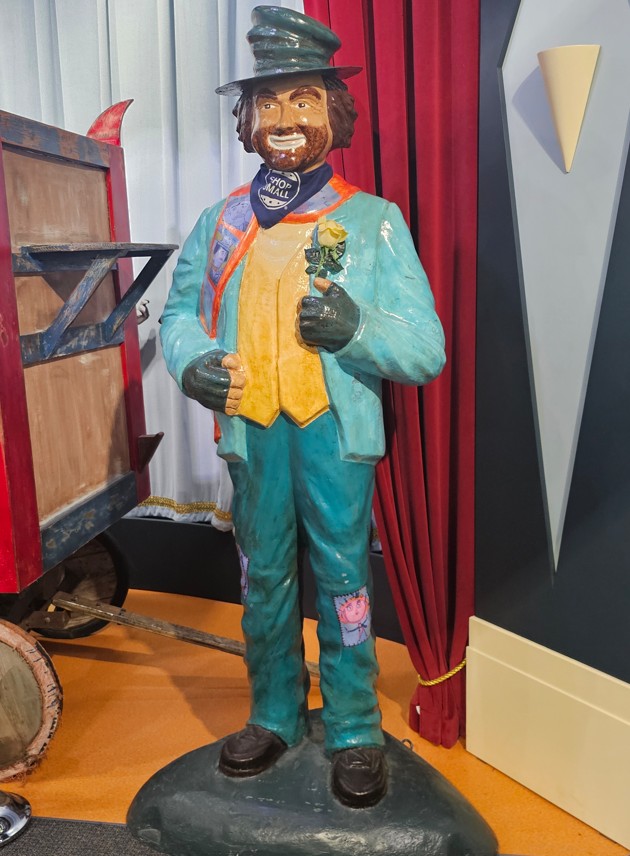
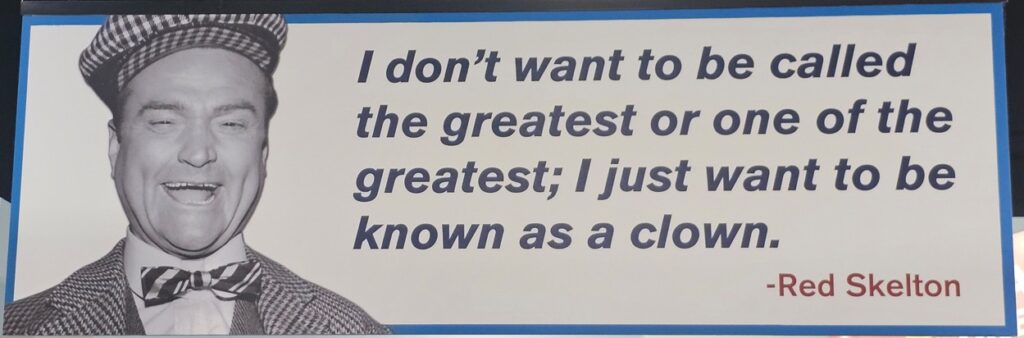
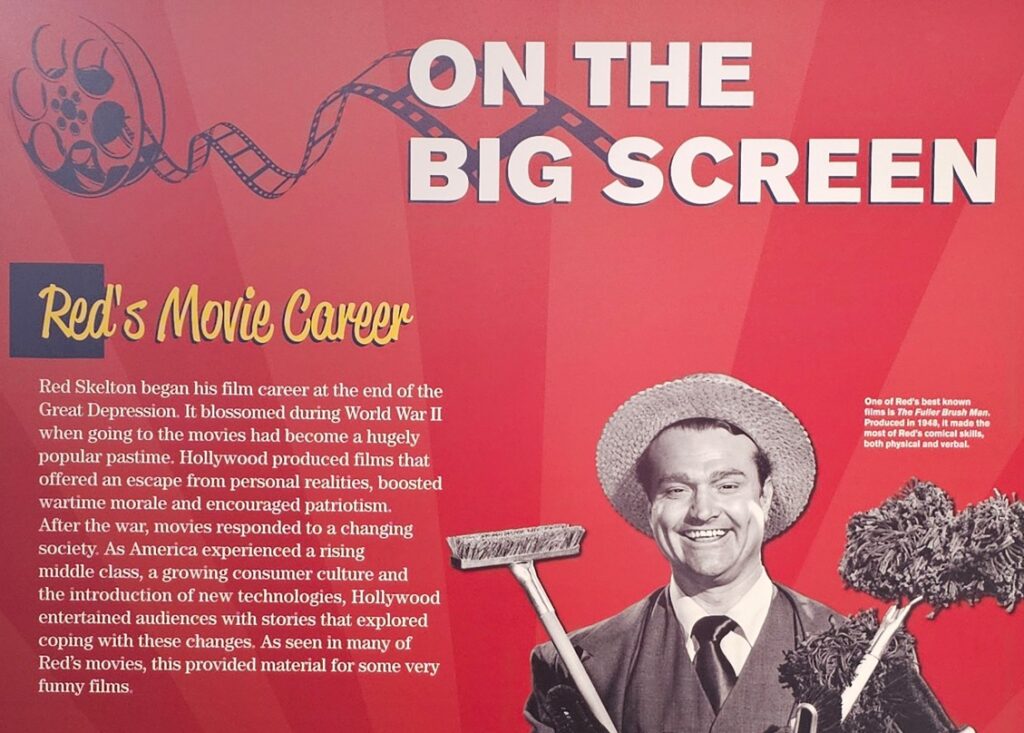
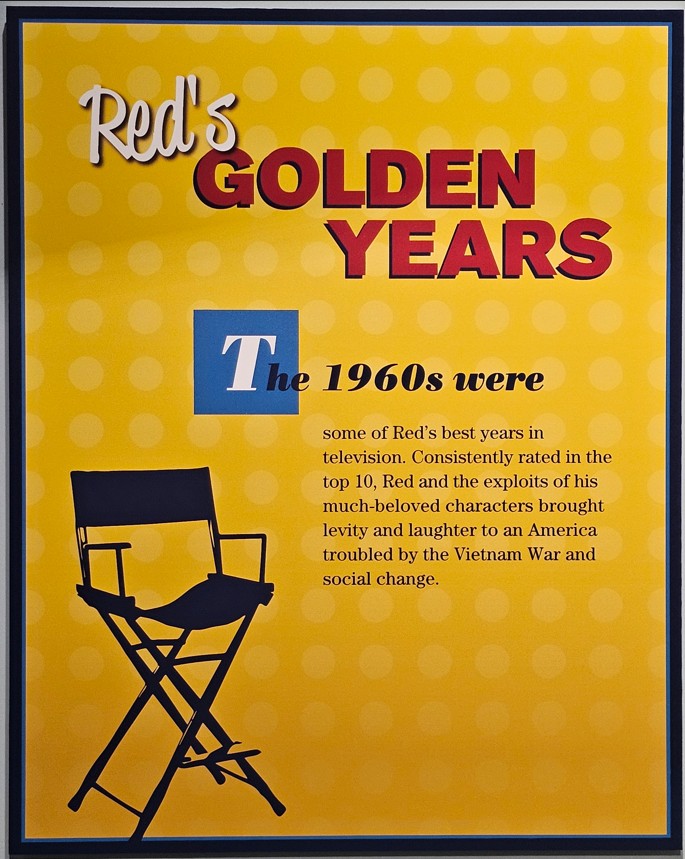
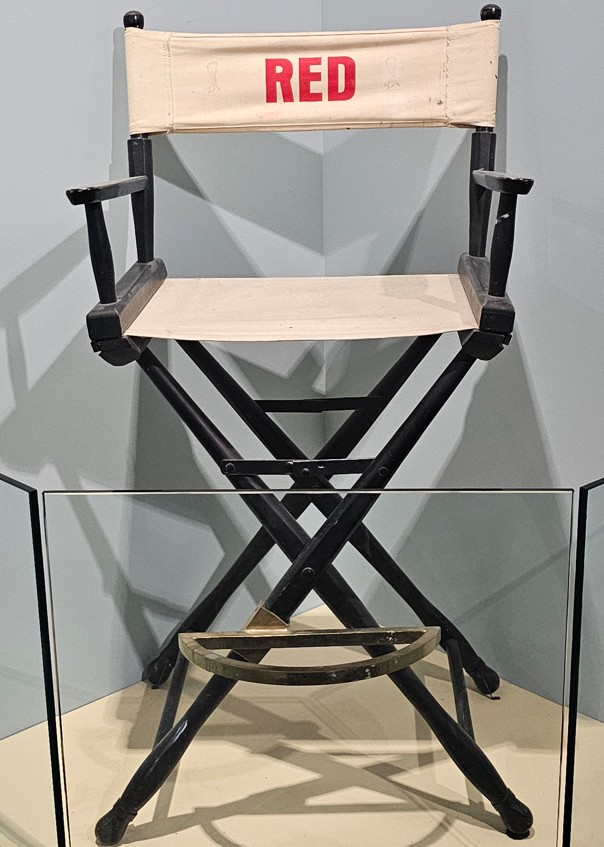
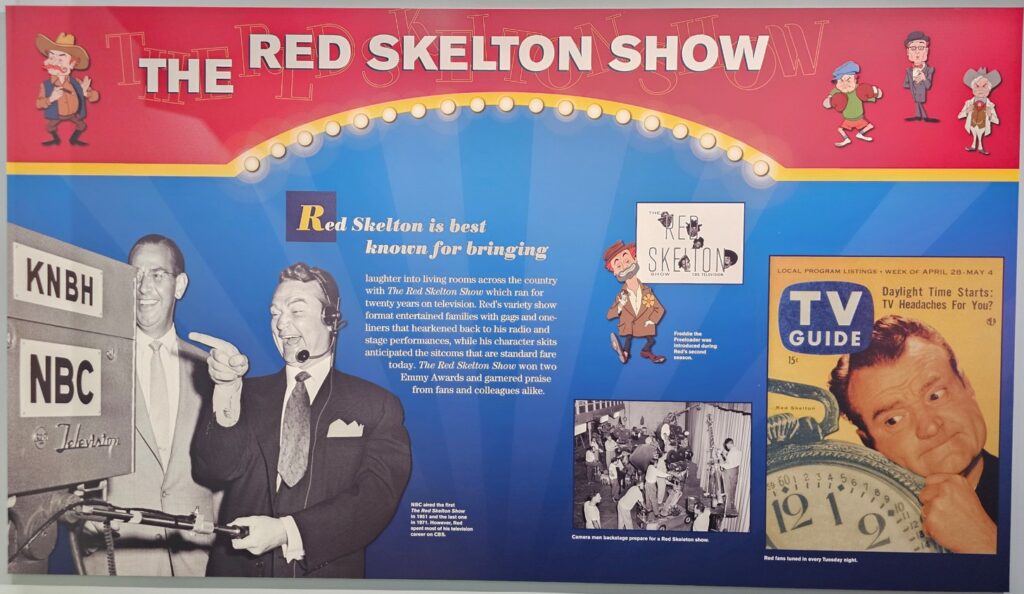
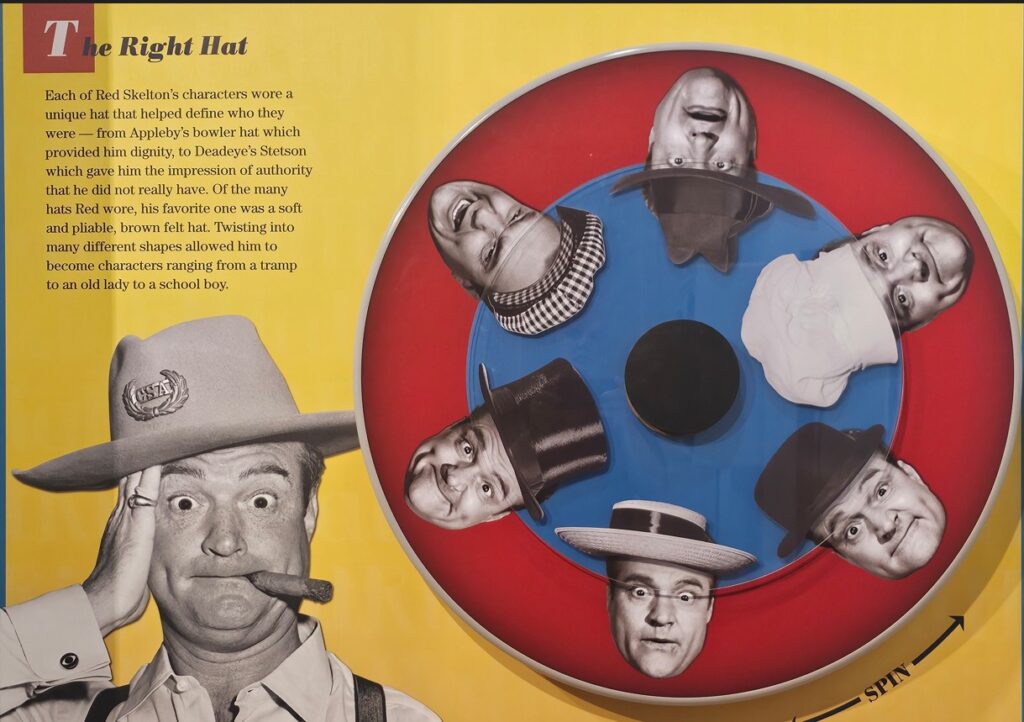
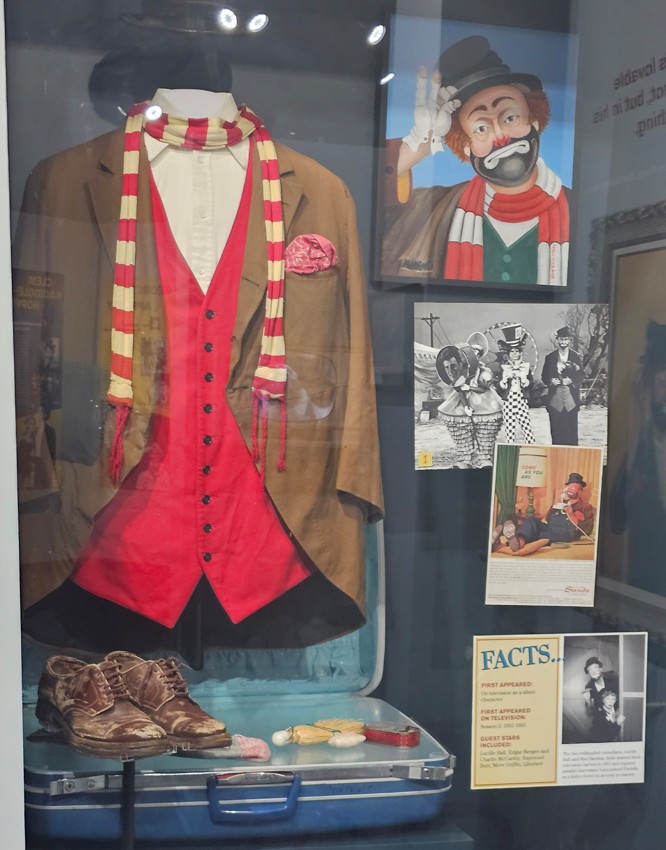
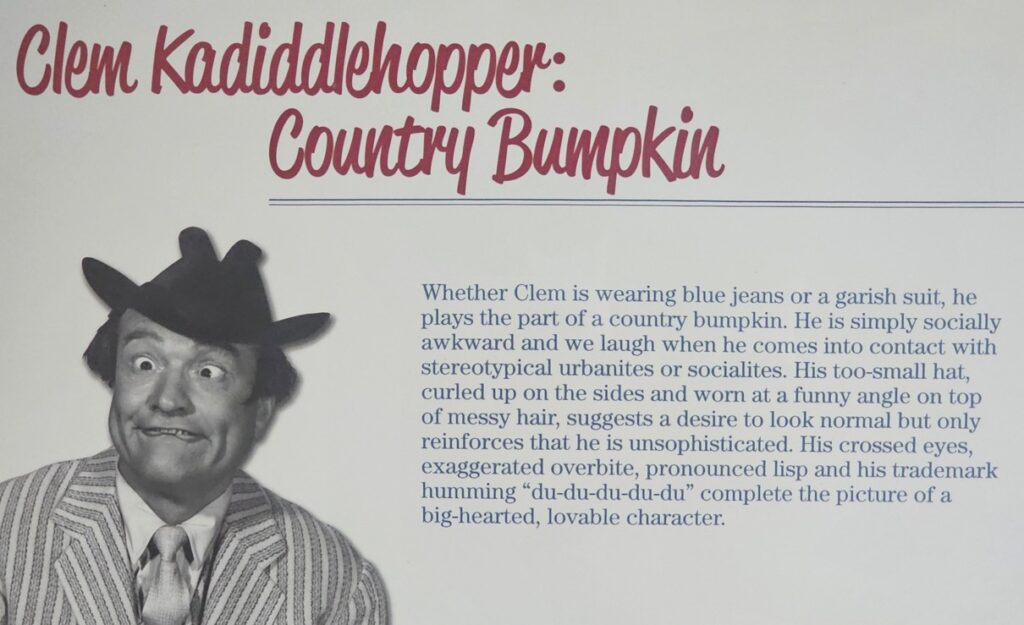
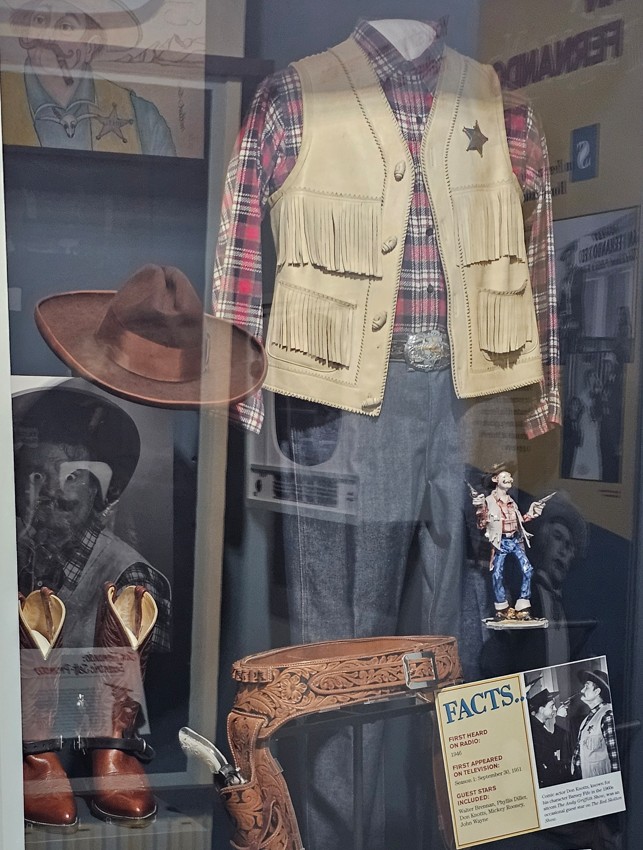
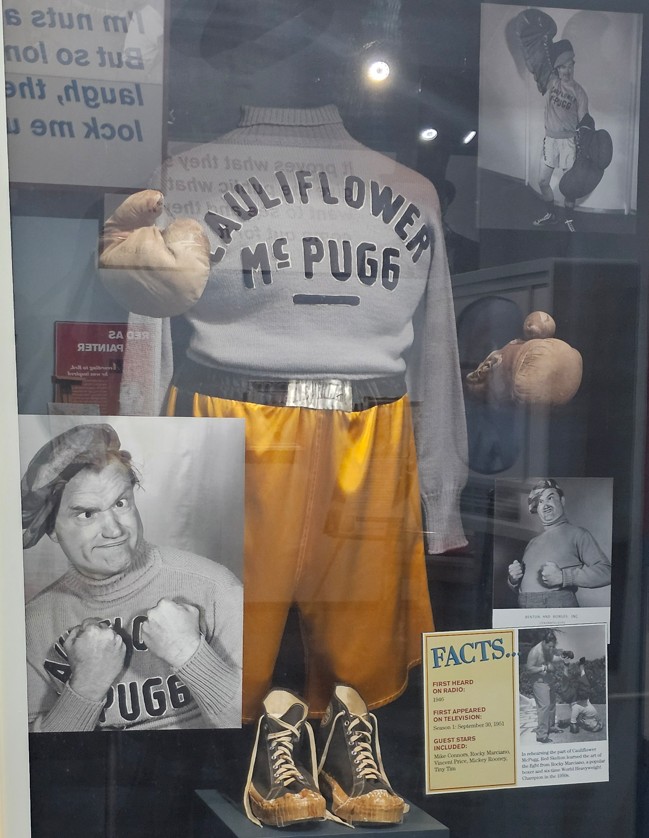
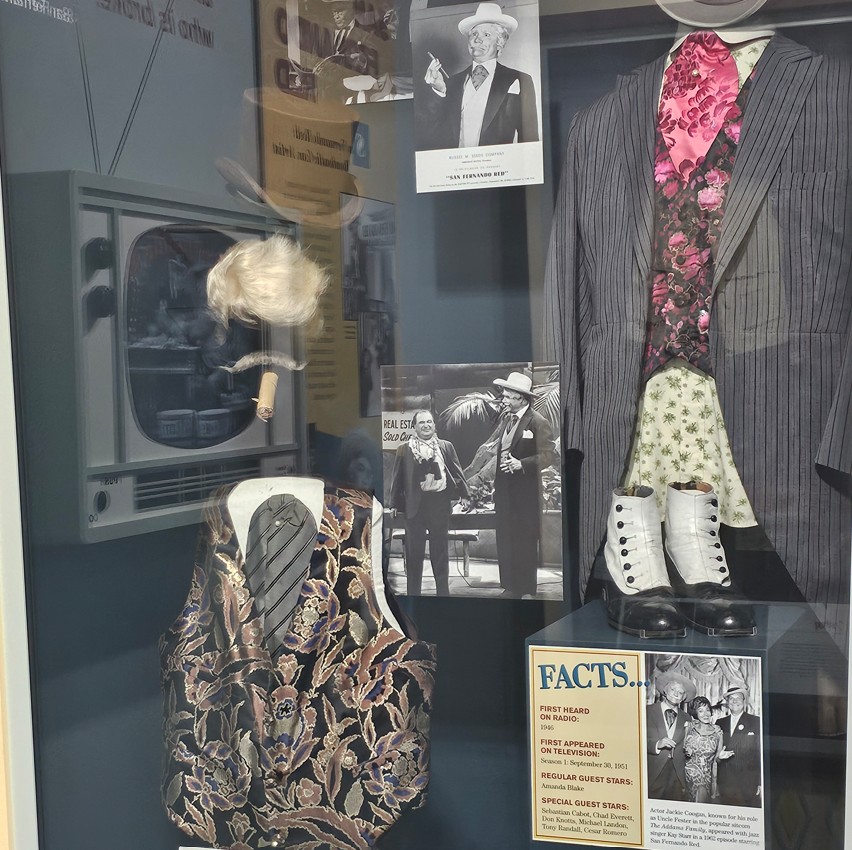
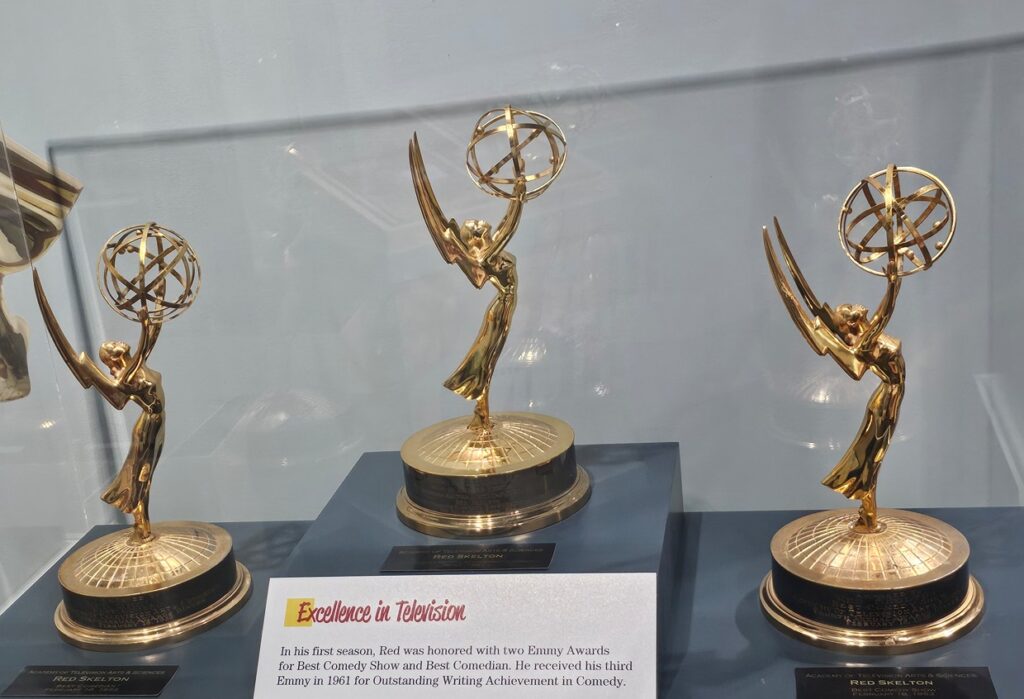
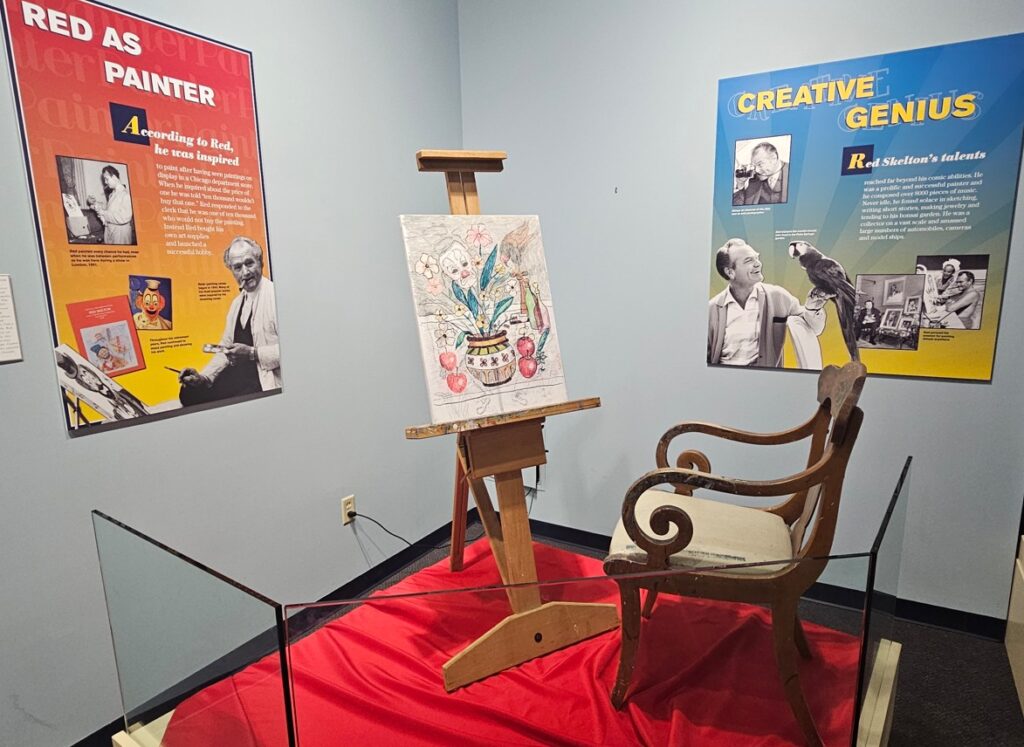
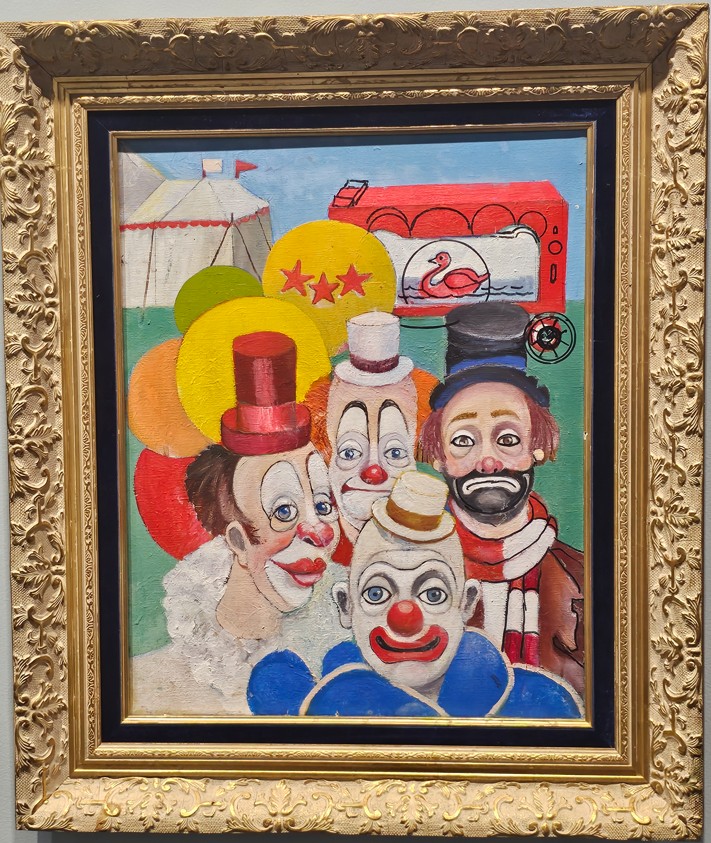
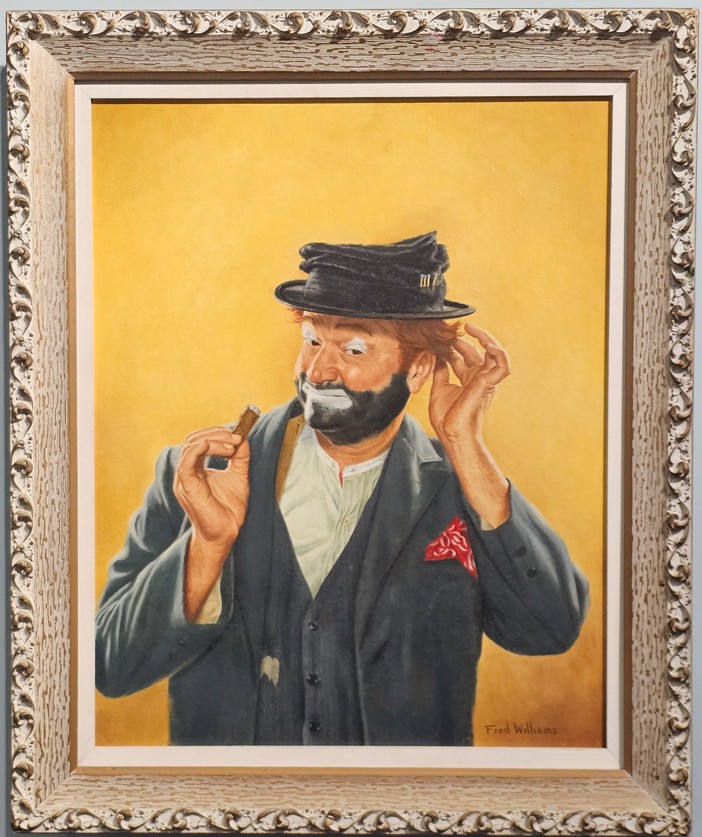
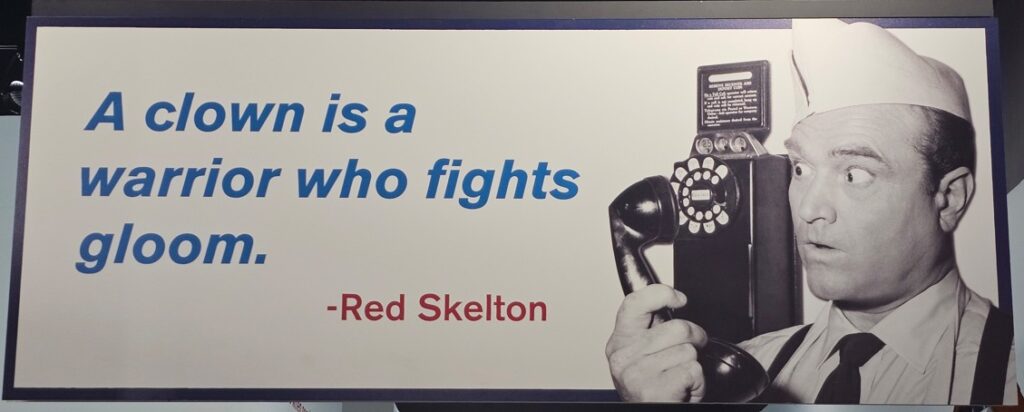
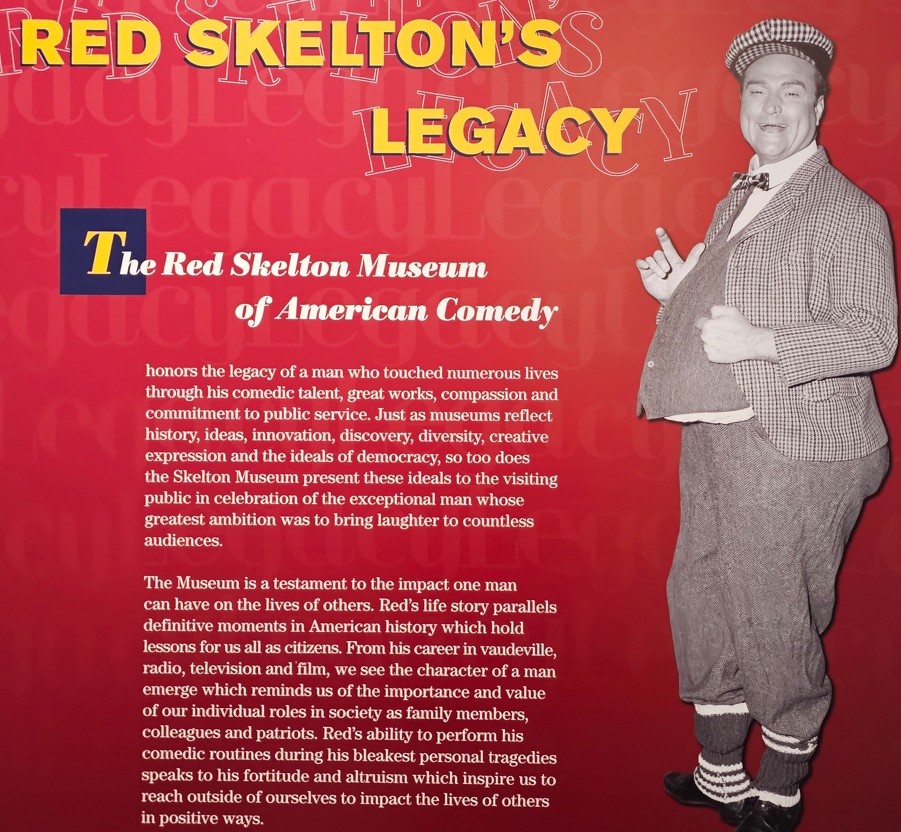
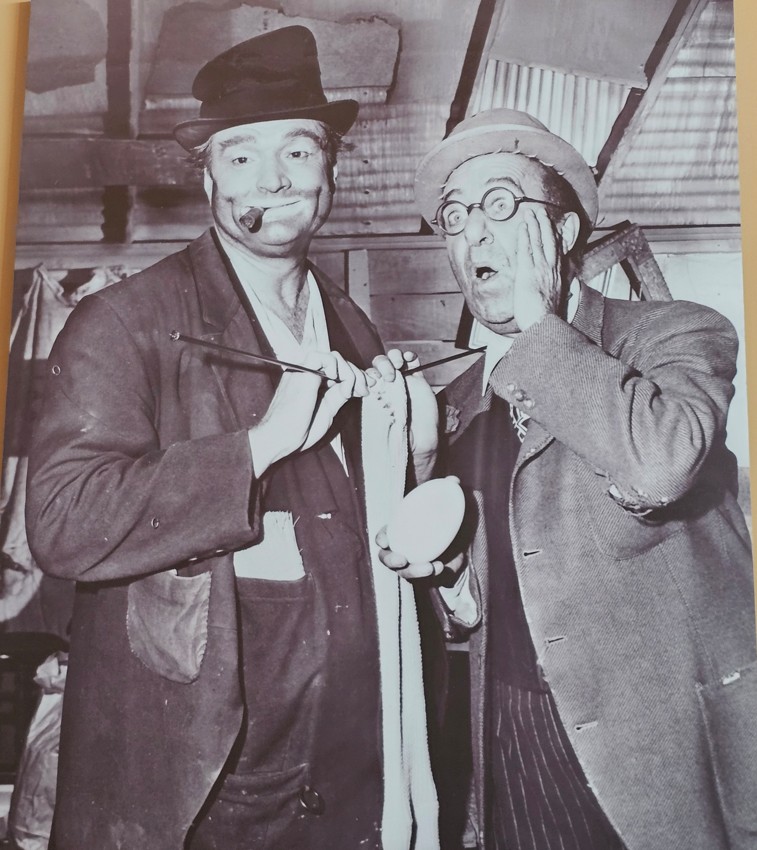
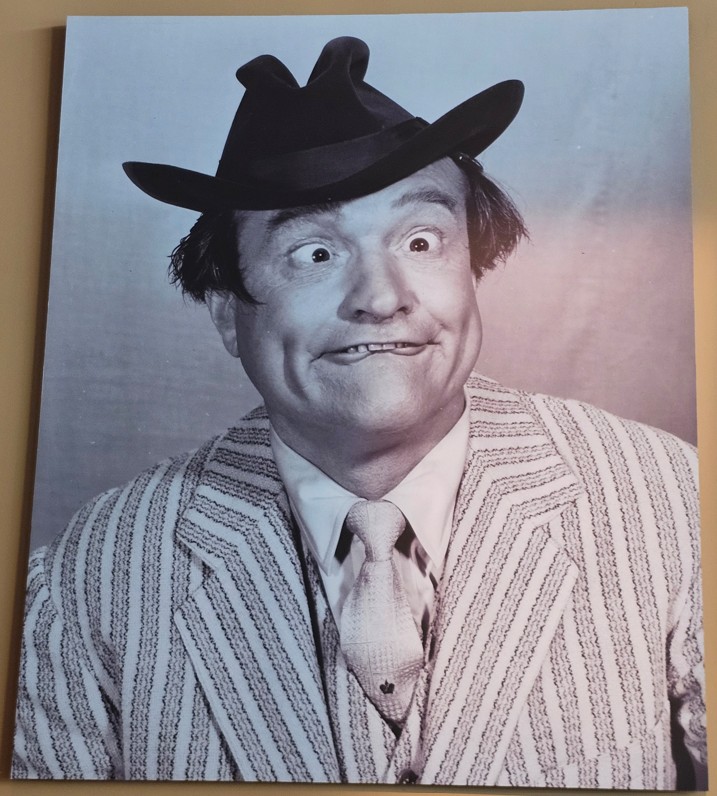
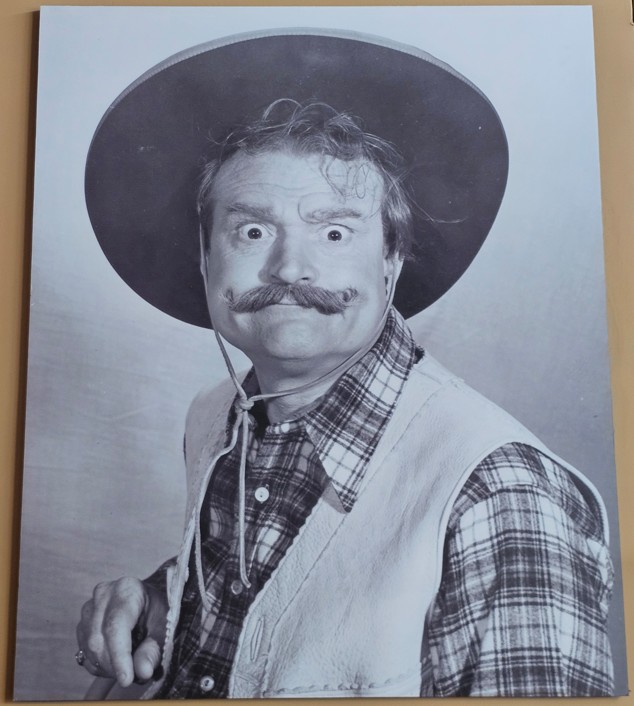
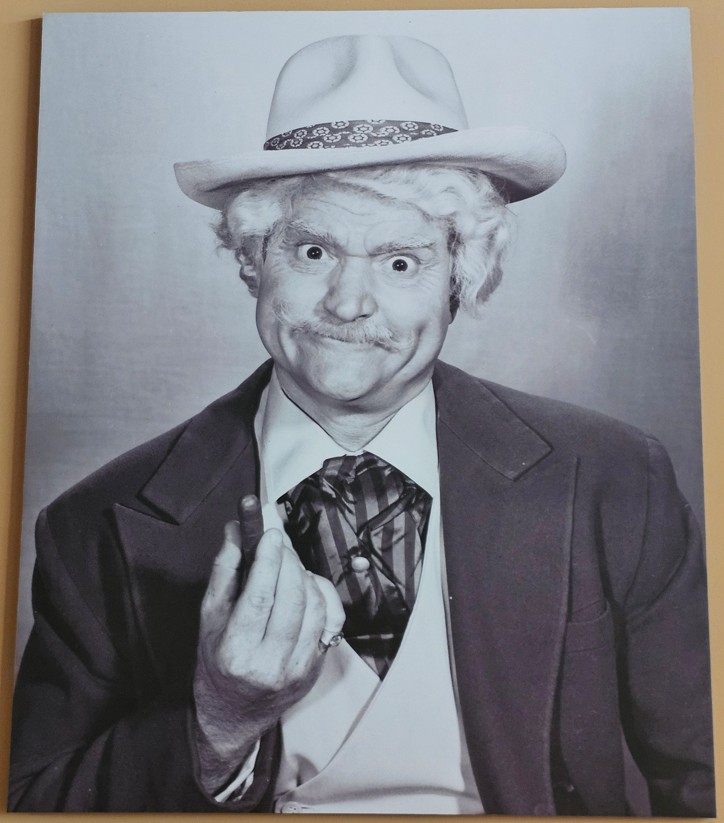
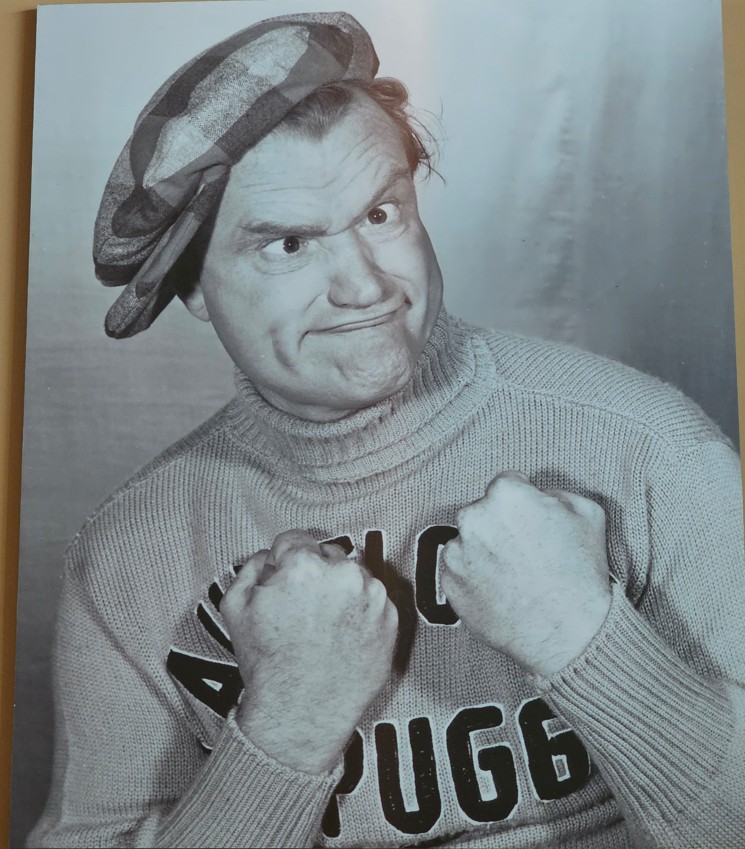
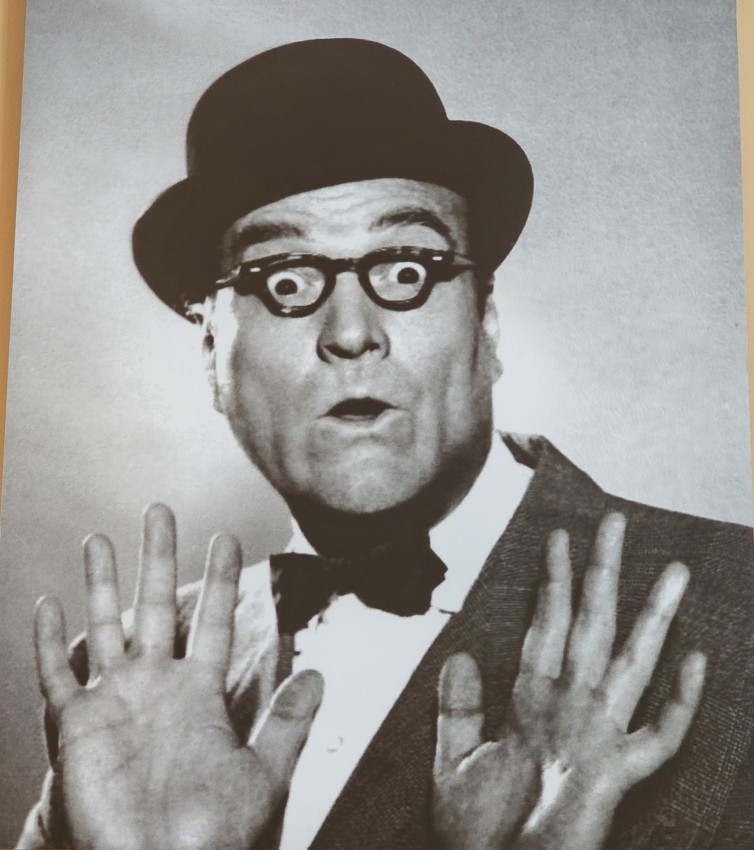
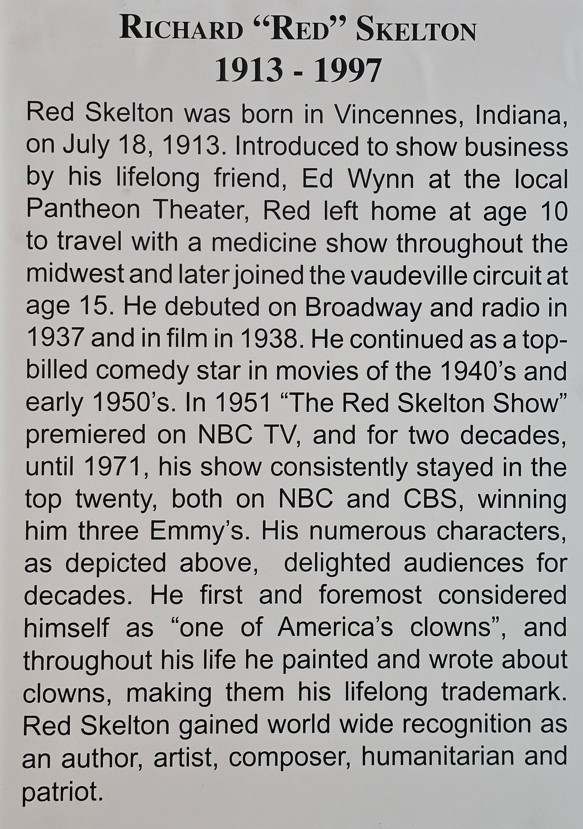
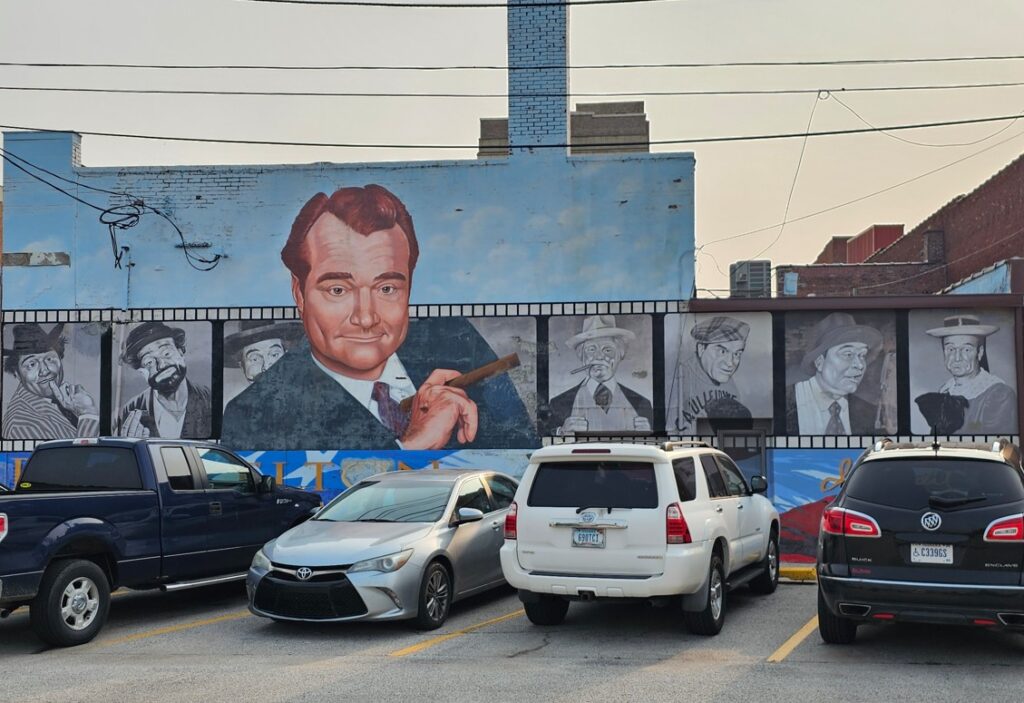
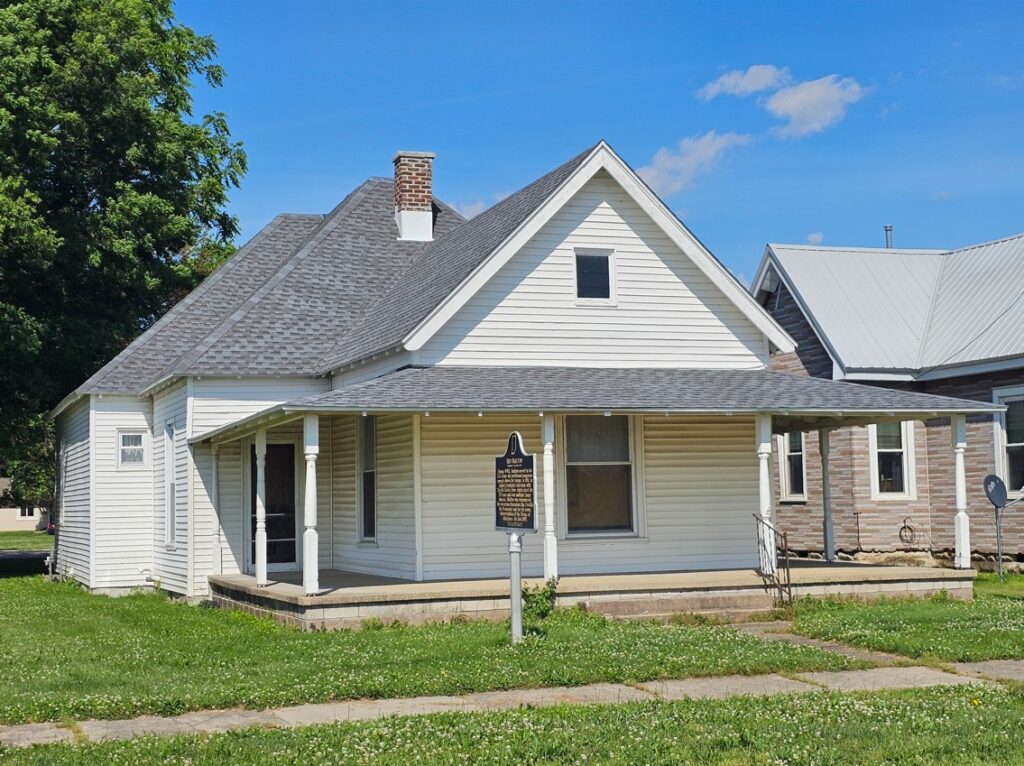
I grew up watching the Red Skelton Show. His comedy then is still funny today. Prior to his TV show, he was in movies.Skelton loved clowns.Skelton was a many of many characters and faces.Freddie the Freeloader costumeDeadeye Red costumeCauliflower McPugg costumeSan Fernando RedRed’s three Emmy Awards.Red was also an accomplished painter, primarily of clowns.Many faces of Red SkeltonRed Skelton mural in downtown VincennesRed Skelton’s birthplace, 1913.
Vincennes, the oldest city in Indiana, was established as a French fur trading post in the early 1700s. Inaugurated in 1800 as capital of the Indiana Territory, with William Henry Harrison as its first governor.
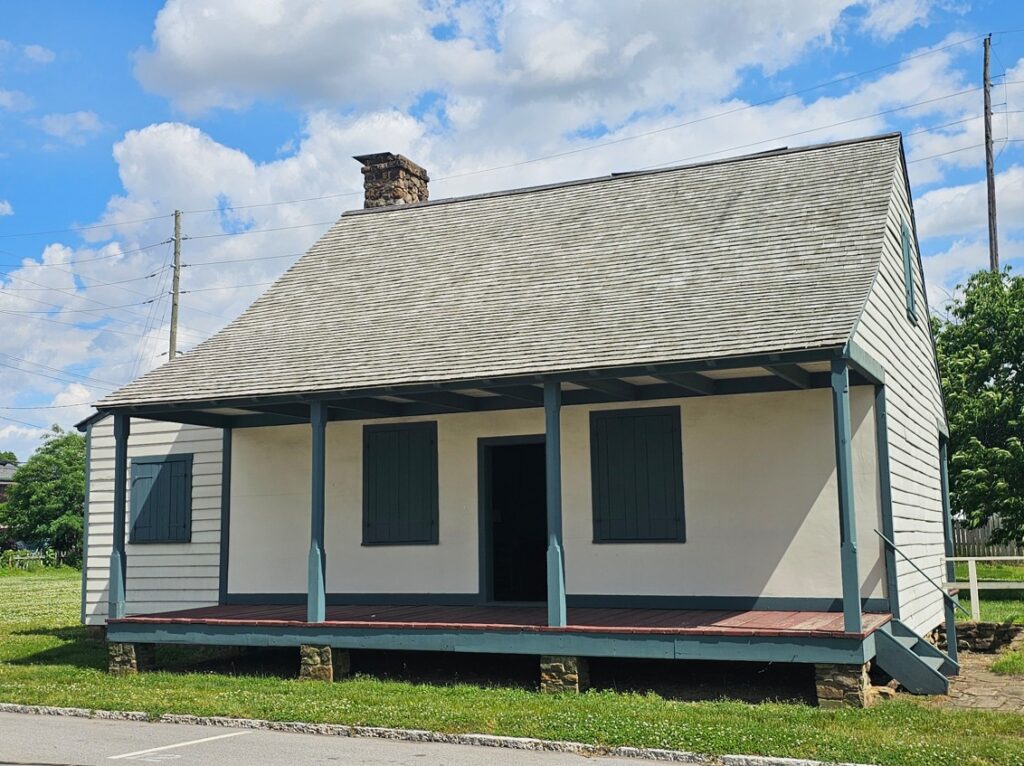
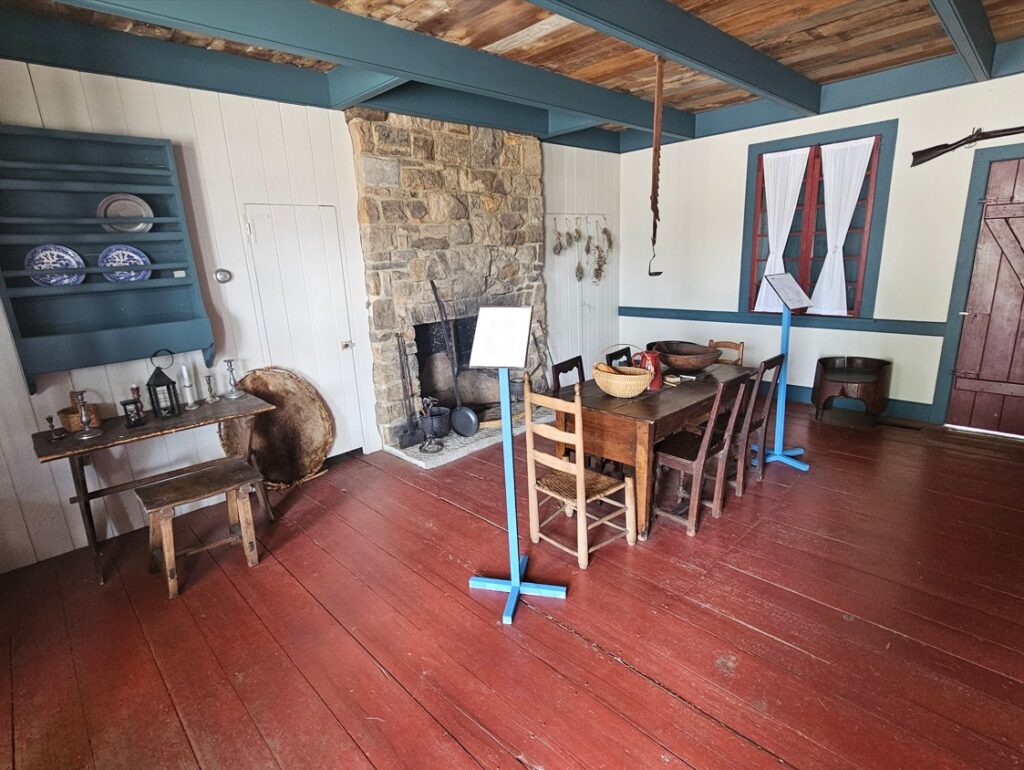
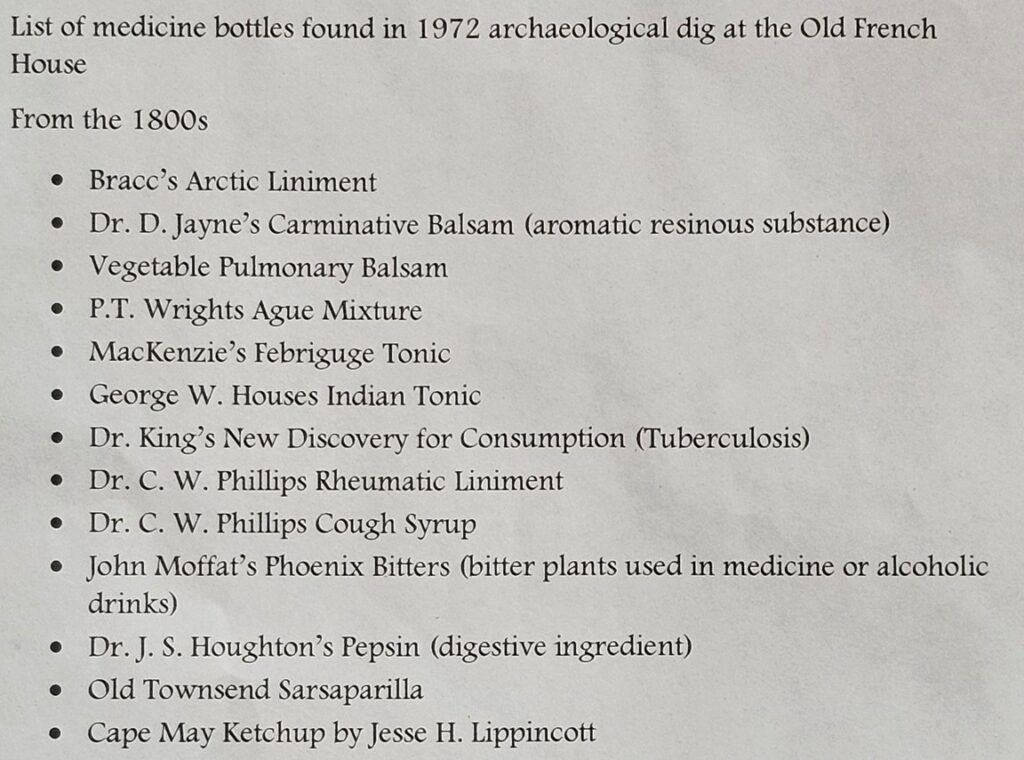
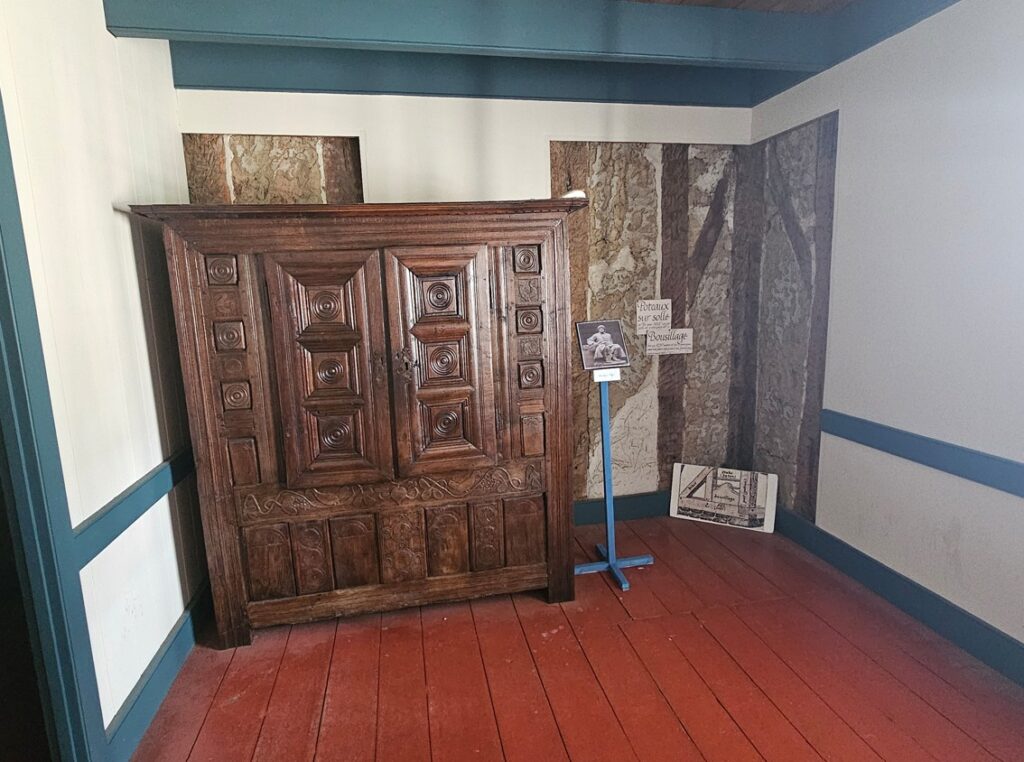
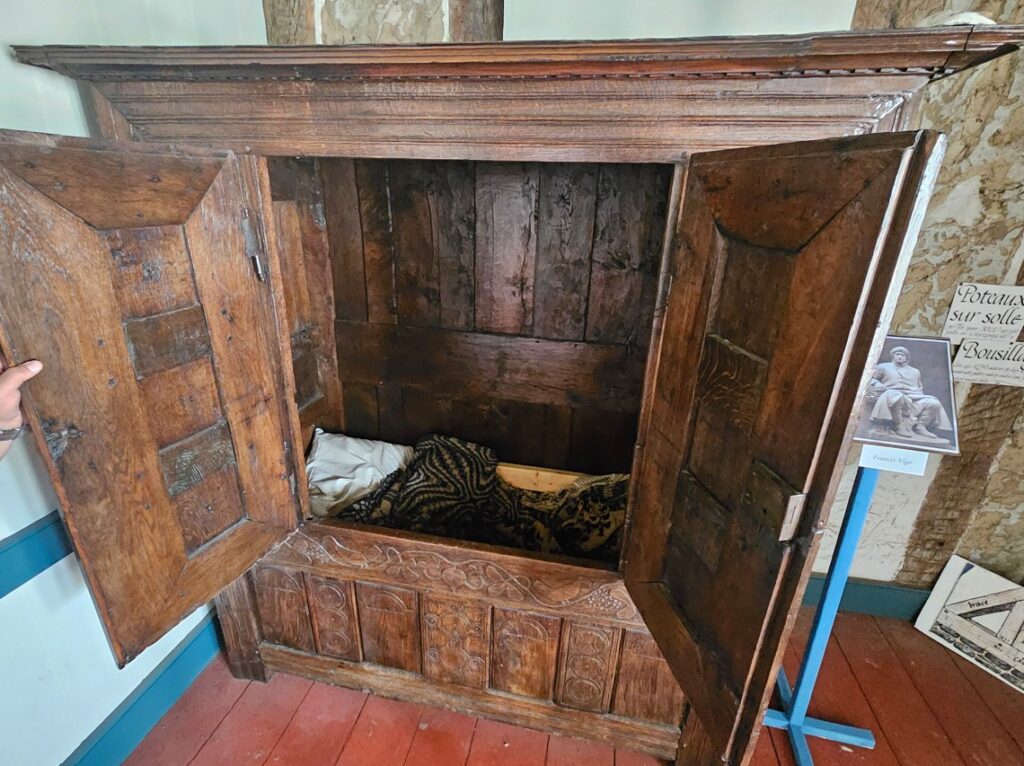
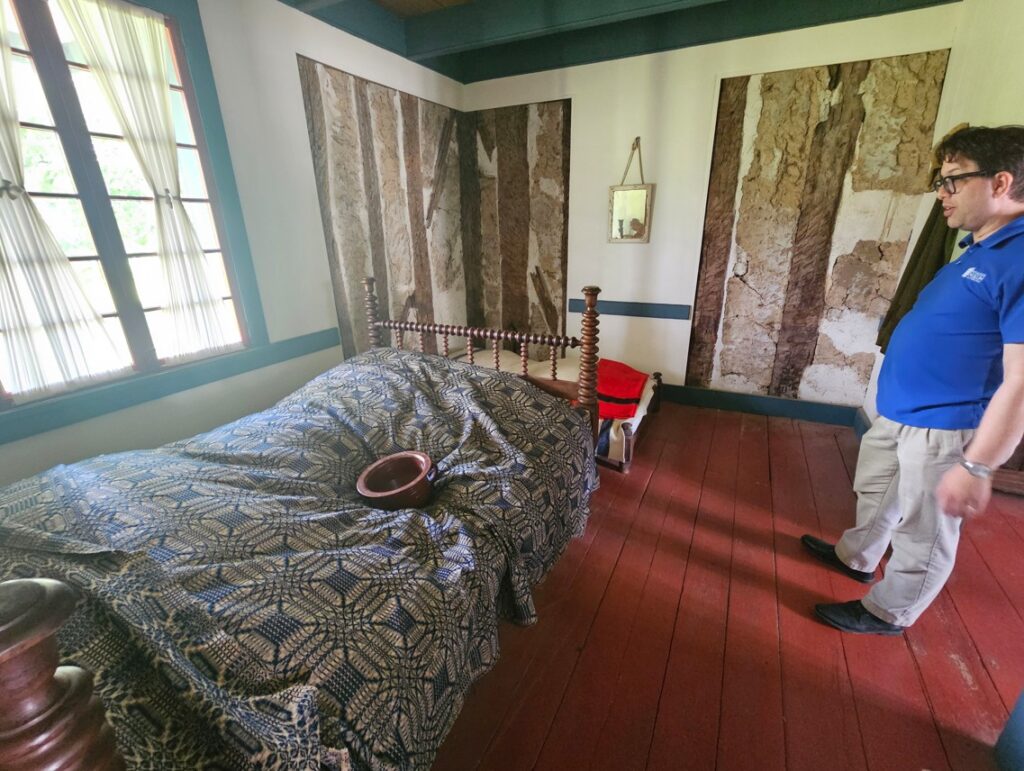
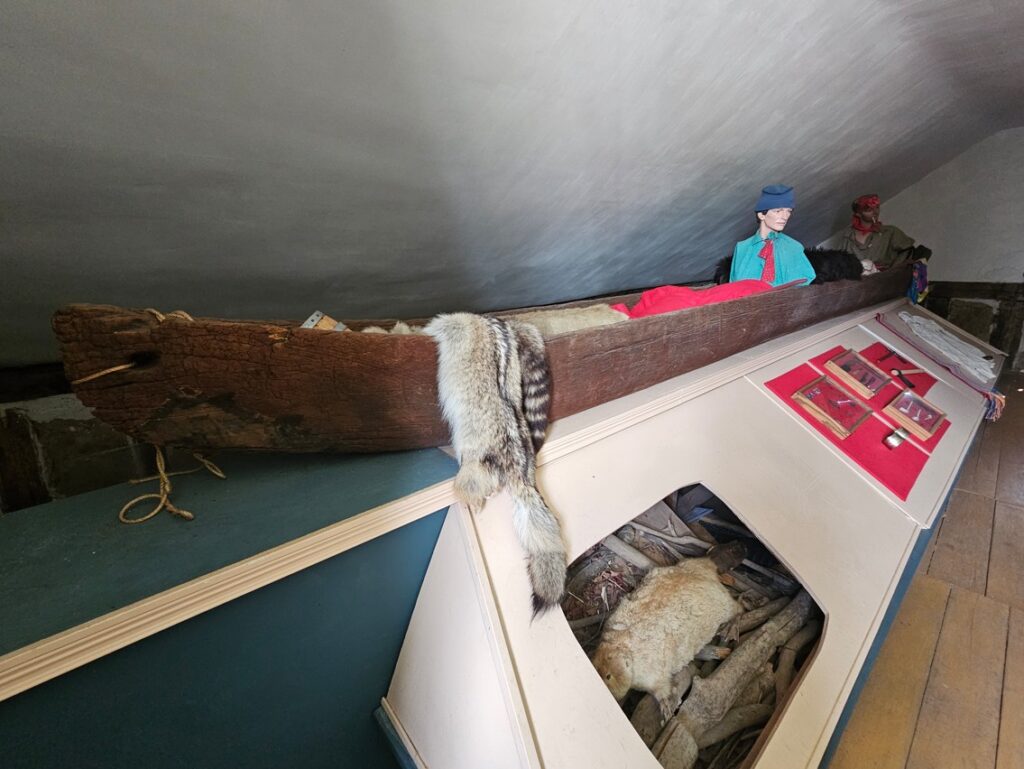
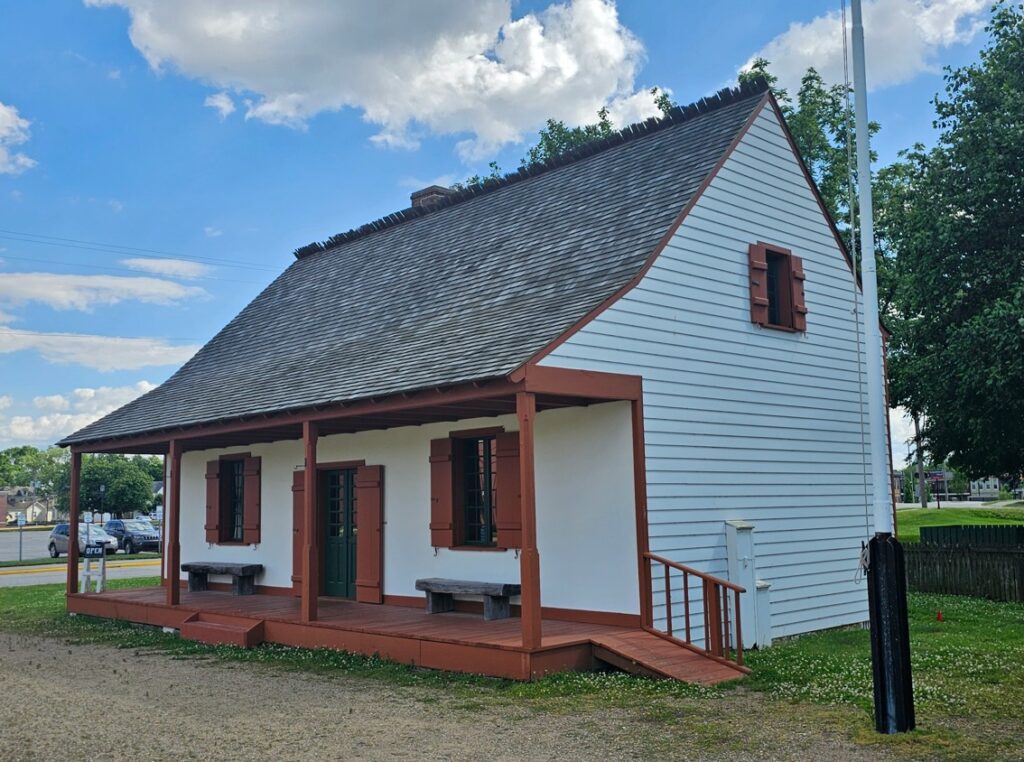
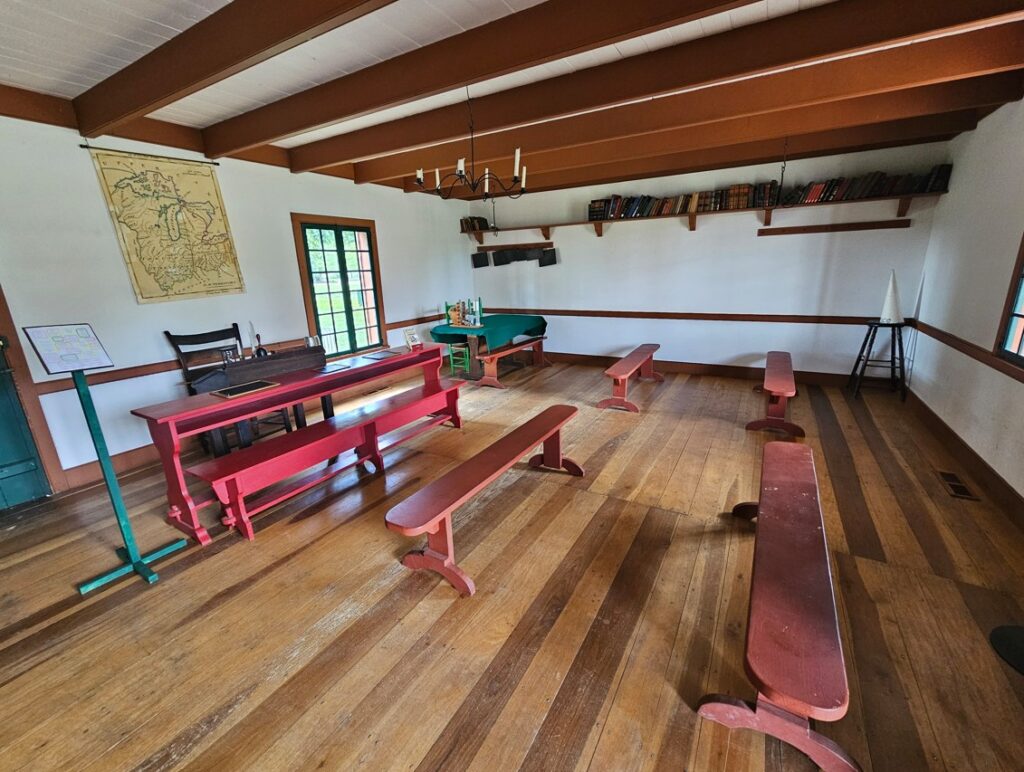
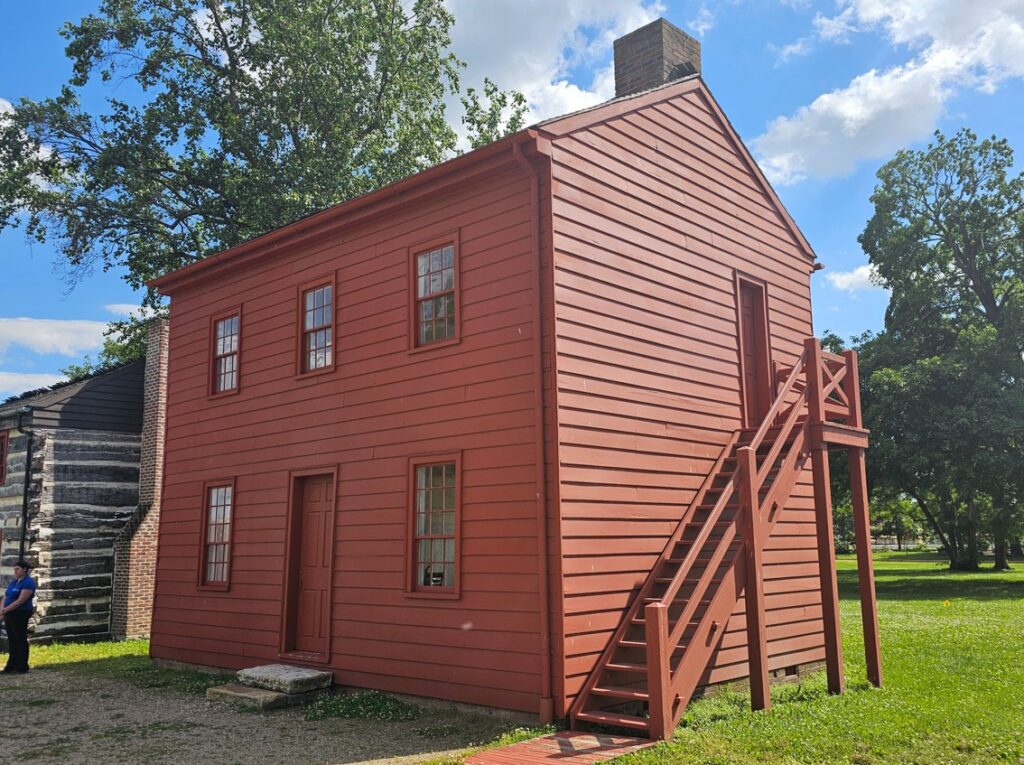
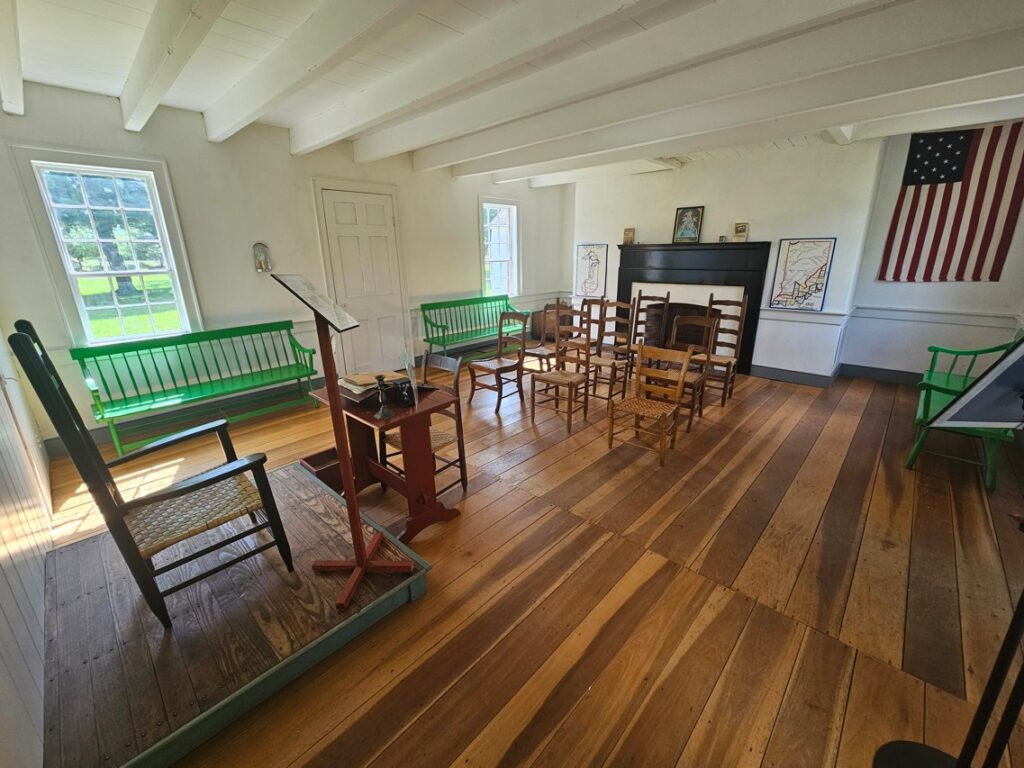
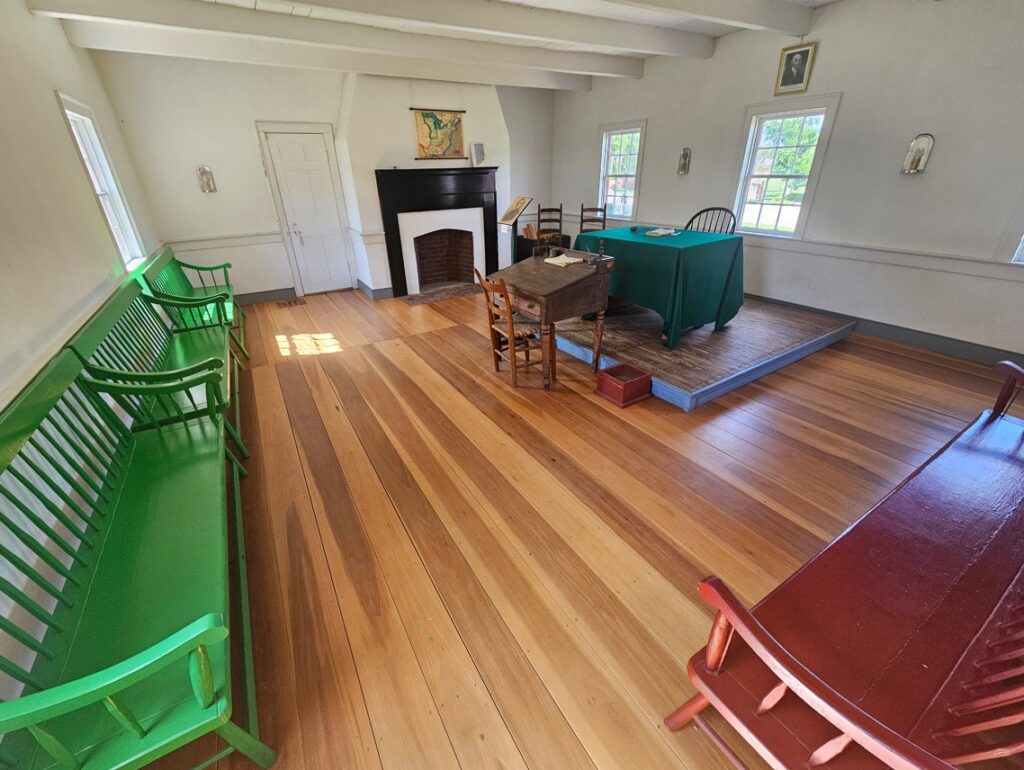
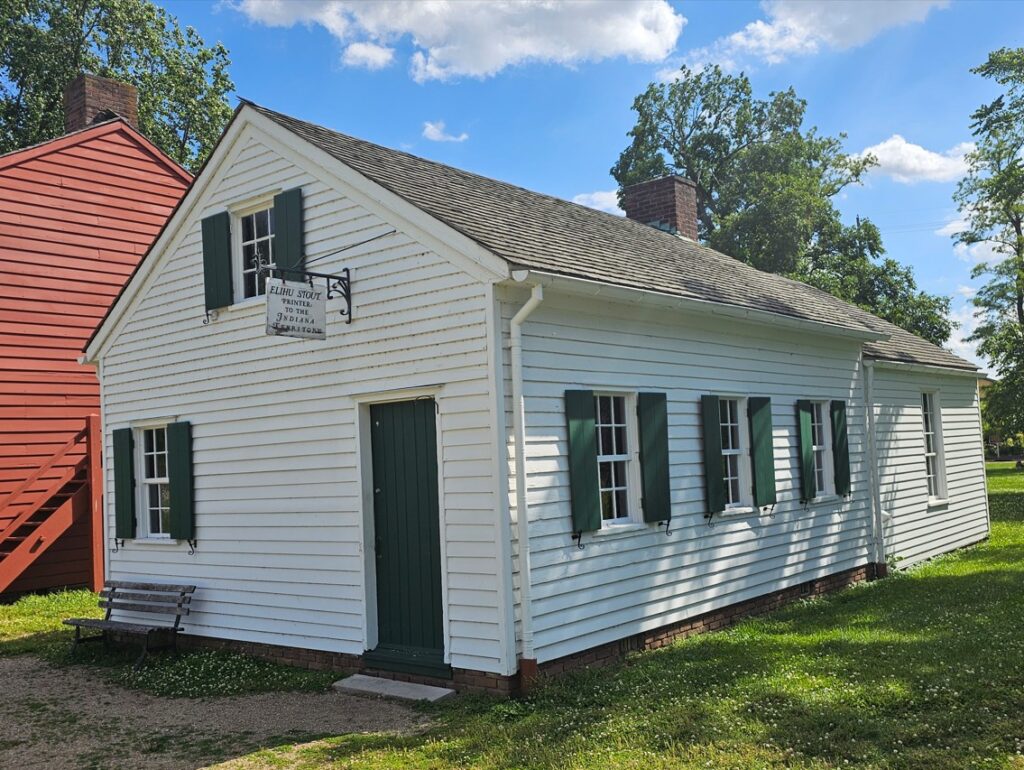
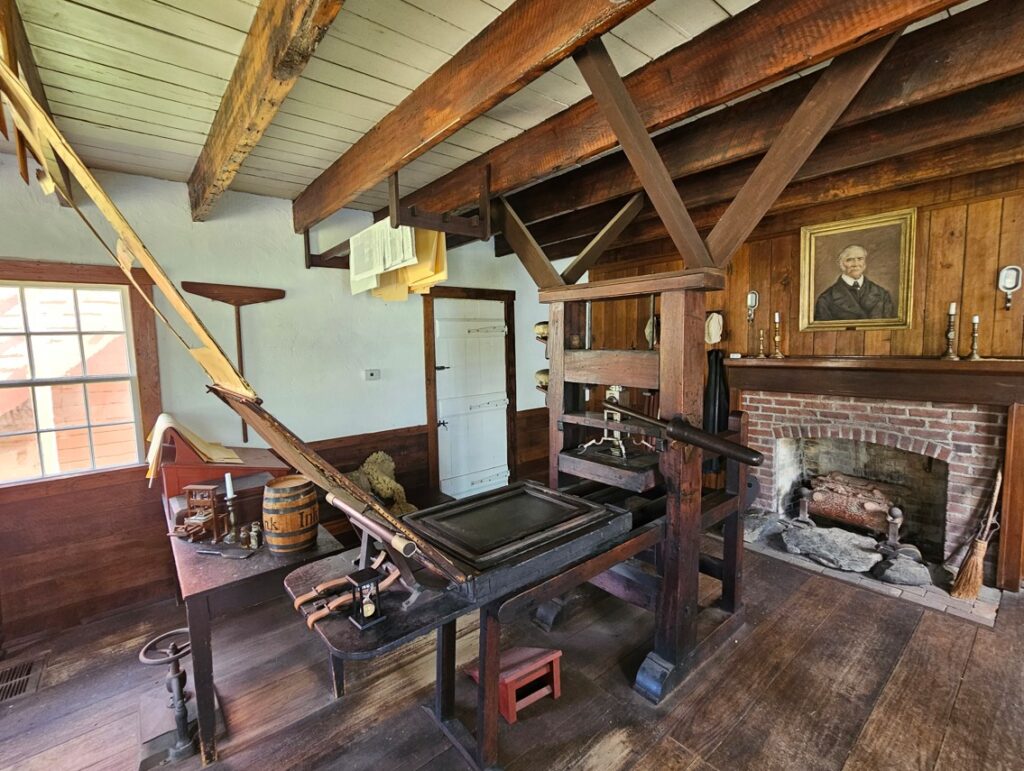
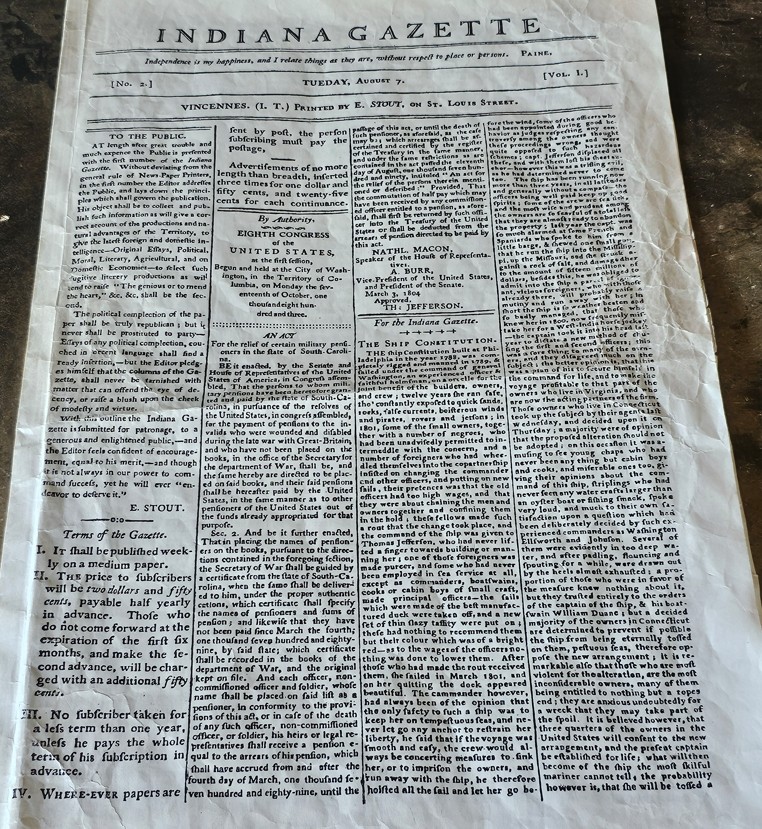
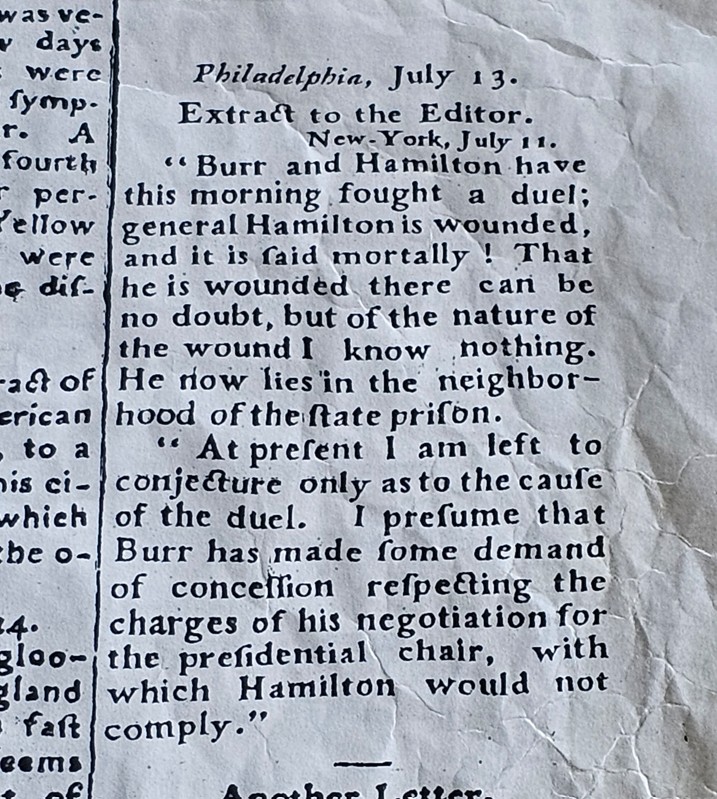
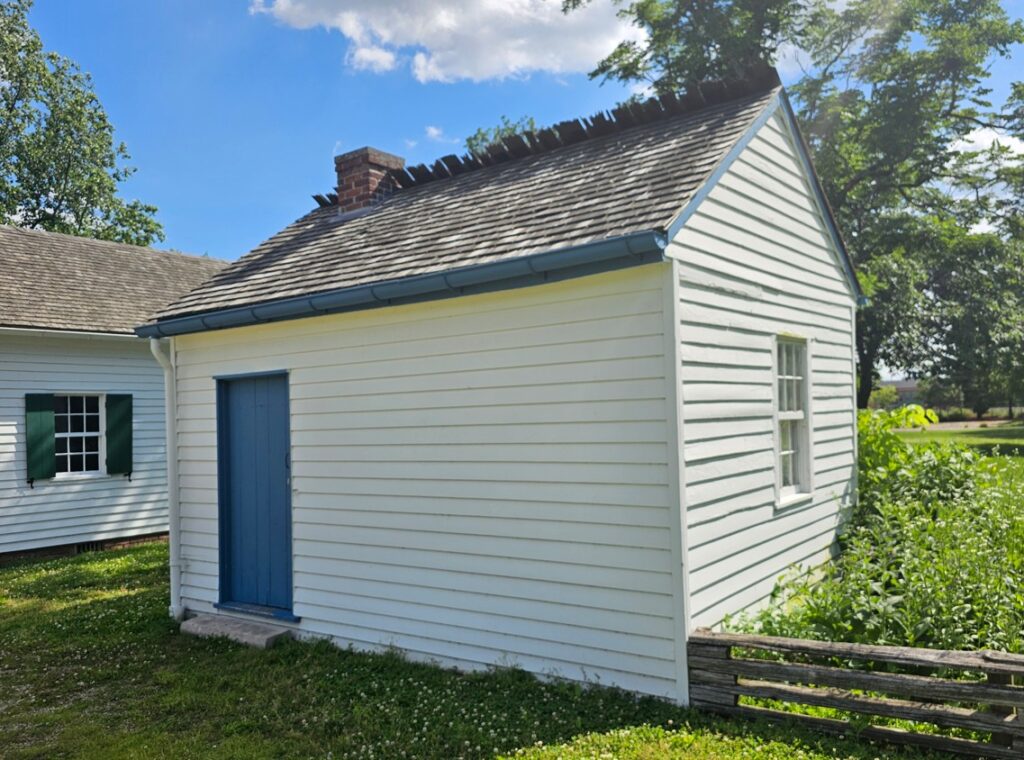
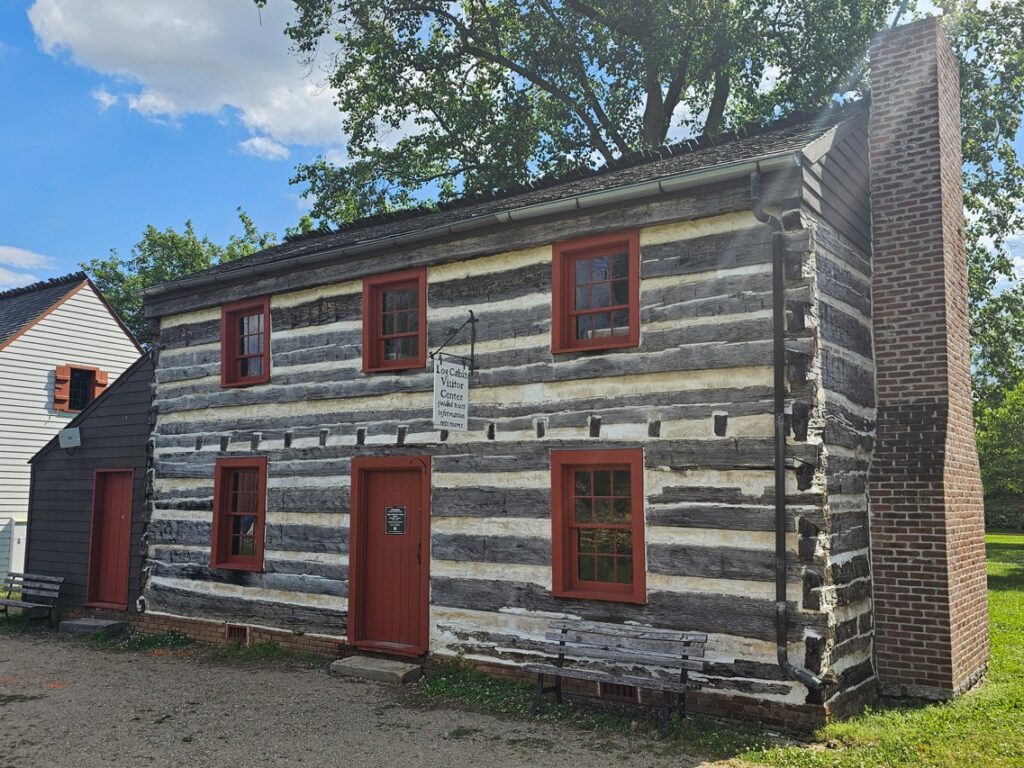
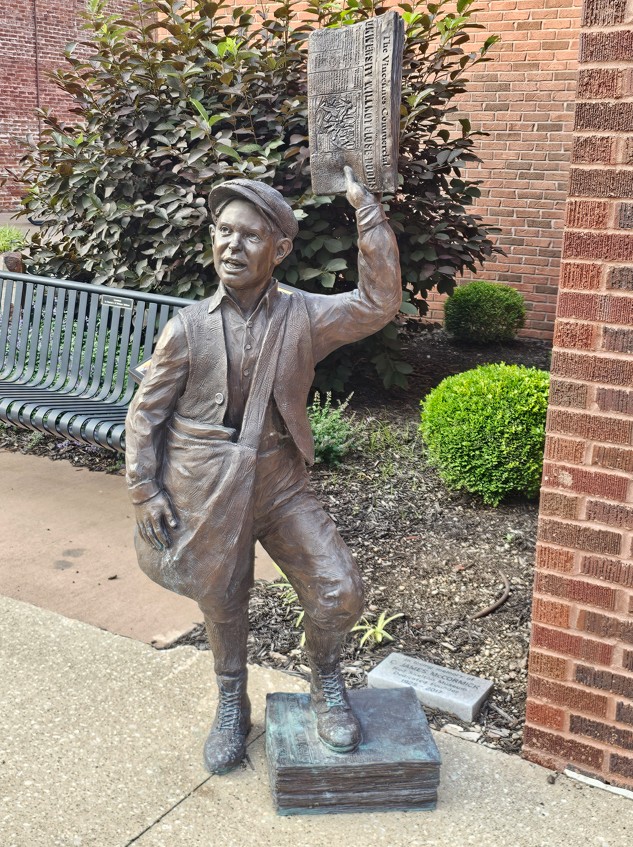
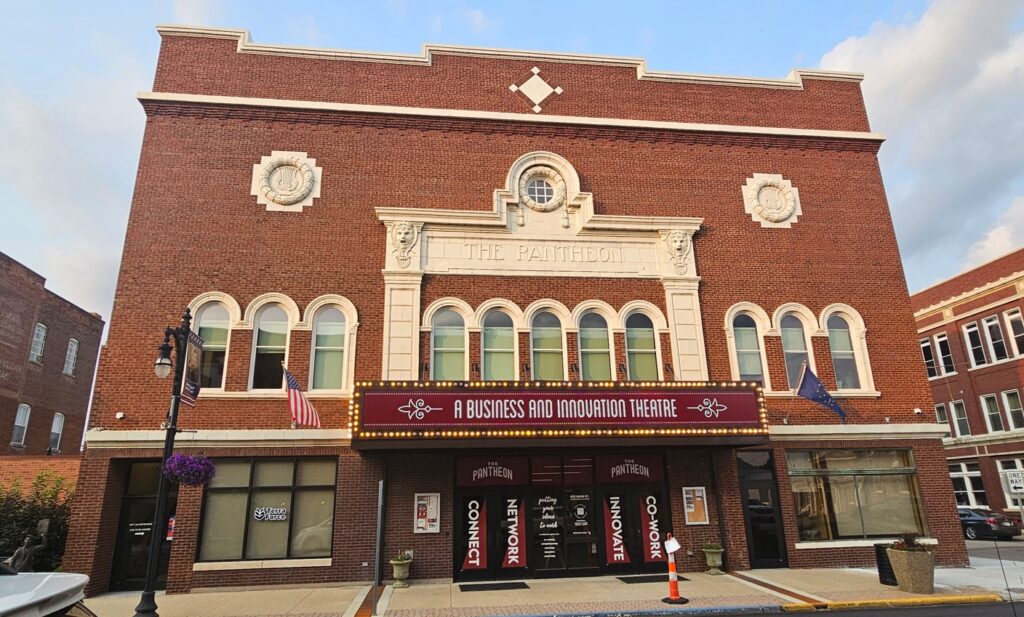
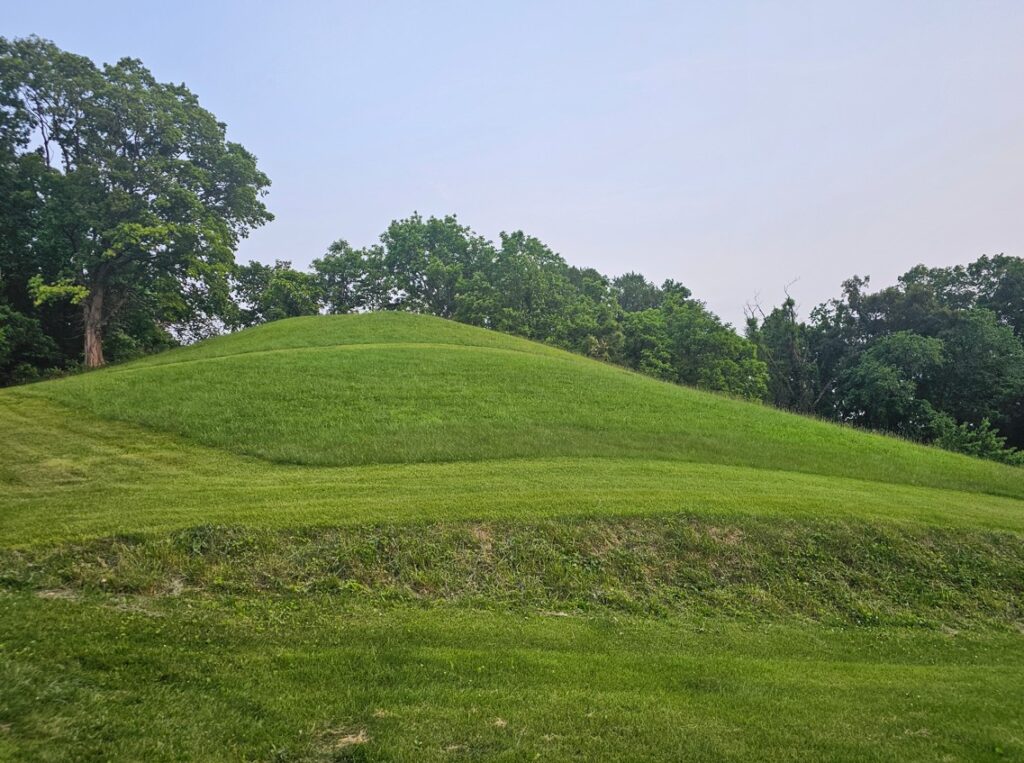
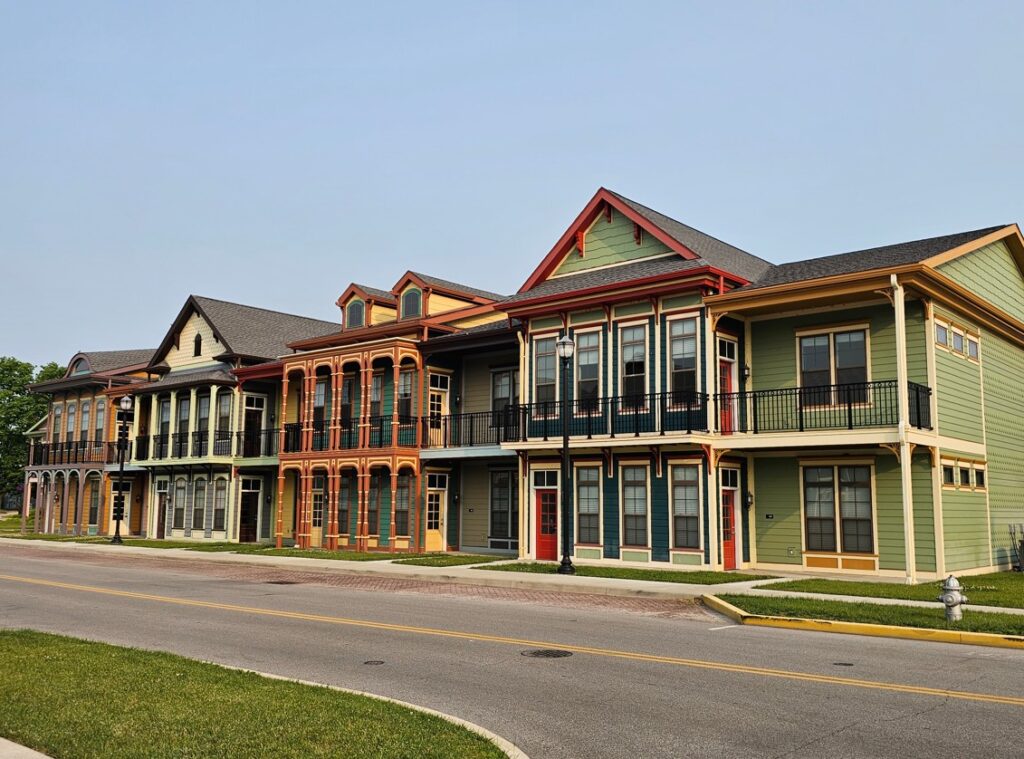
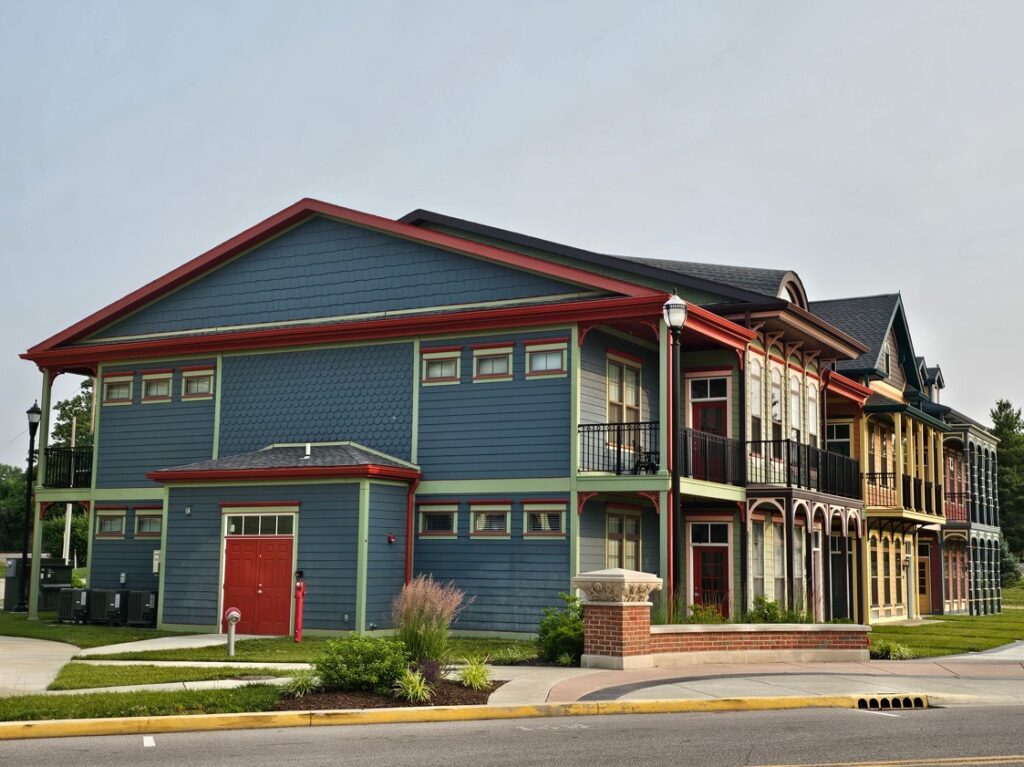
Old French House. Built circa 1806 for French fur trader Michel Brouillet. This house was built “posts-on-sill” which was typical of French settlers’ technique in the 18th and early 19th century.This chest opens up into a……bed!Display in the upstairs of the French House.Jefferson Academy, established by William Henry Harrison in 1801, became Vincennes University in 1806.Classroom.Indiana Territorial Capitol. This “Red House” served as capitol for only one month in 1811, but it is the only early capitol building that survives today.House of representatives room.Upstairs Senate room.Elihu Root Print Shop, established 1804. Published the Indiana Gazette.Sample Indiana Gazette.Article about the Hamilton-Burr duel.Historic building used as visitor center.Legend has it that over a hundred years ago a young Red Skelton was selling newspapers in front of the Pantheon Theater when a well-dressed man asked if he was planning to go to the show that evening. The boy said no, he had to sell all his papers to help his family. The man then bought all the papers and said if the boy came back tonight there would be a ticket waiting for him. The boy saw the show that night and realized the man who bought all the papers was the star of the show. When he saw the audience laughing, he was inspired to make people laugh.Historic Pantheon Theater, opened in 1921.Sugarloaf Mound is a natural landform but was used by Woodland Era Native Americans (1100 AD) as a burial mound.New housing for Vincennes University, pretty nice.
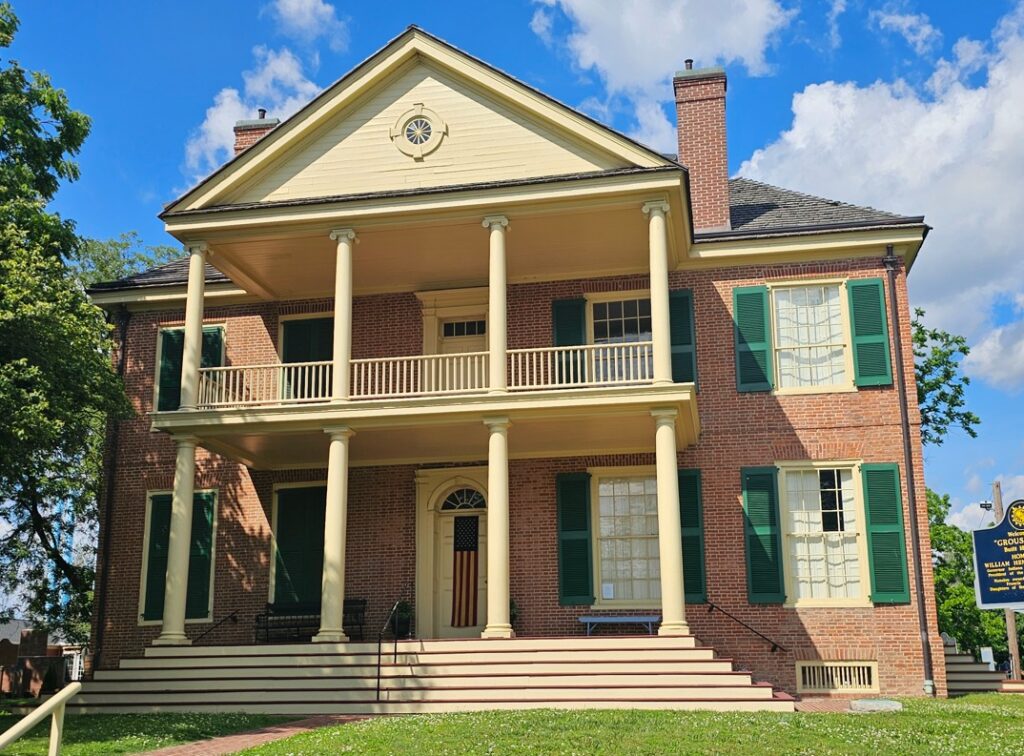
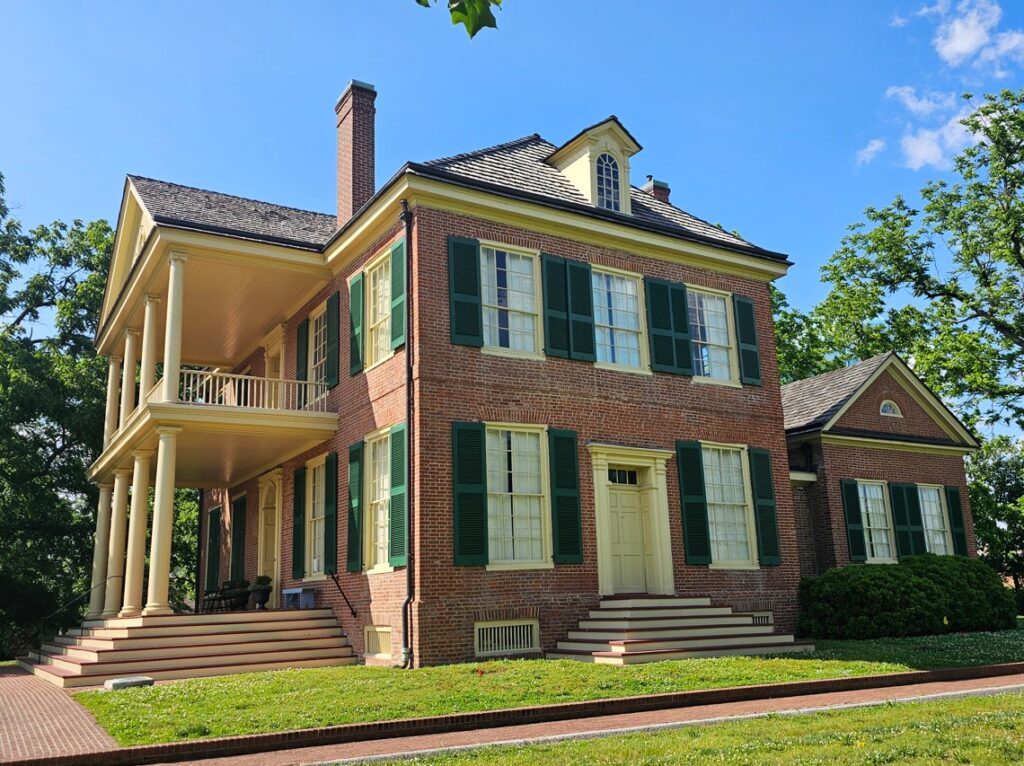
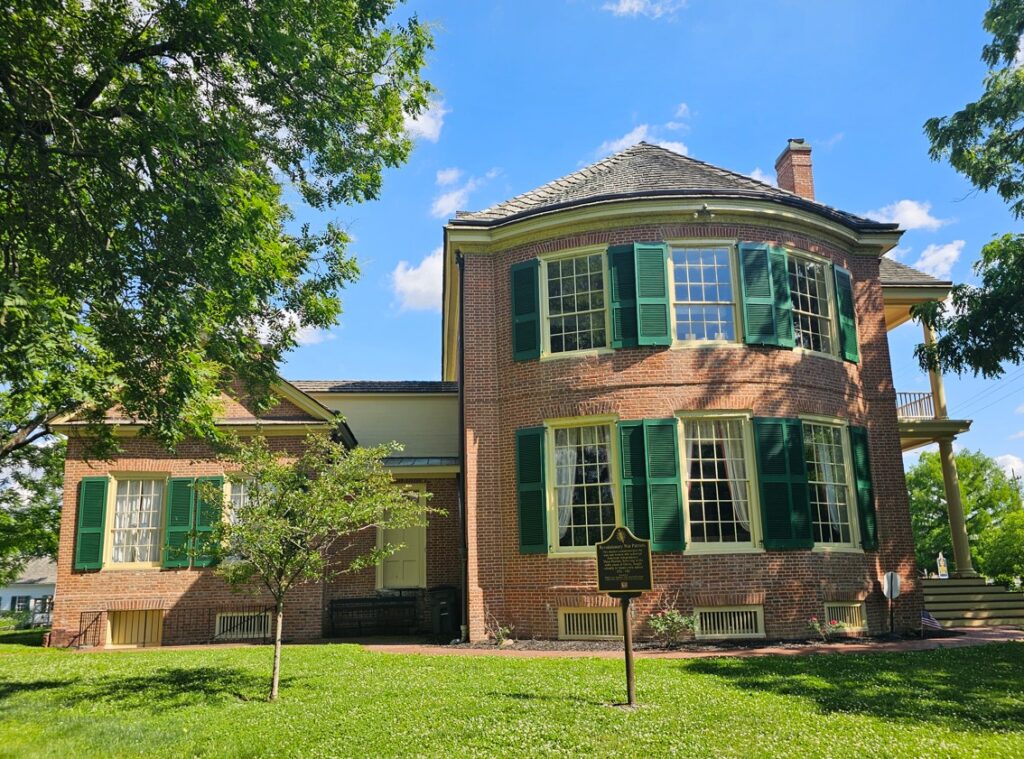
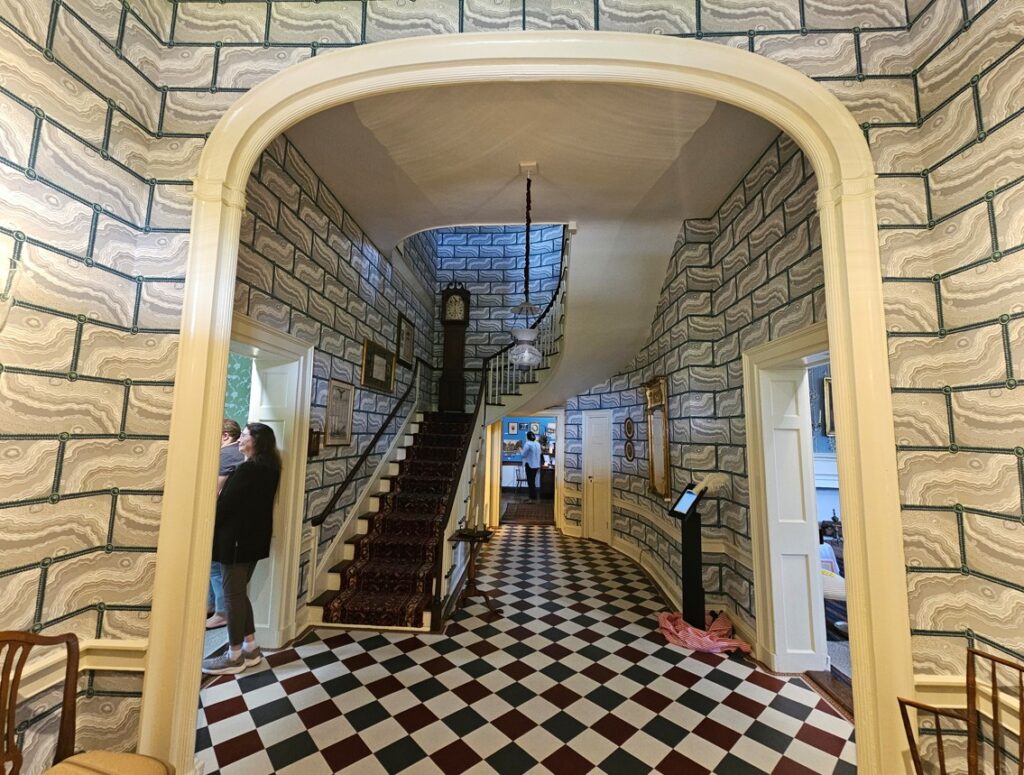
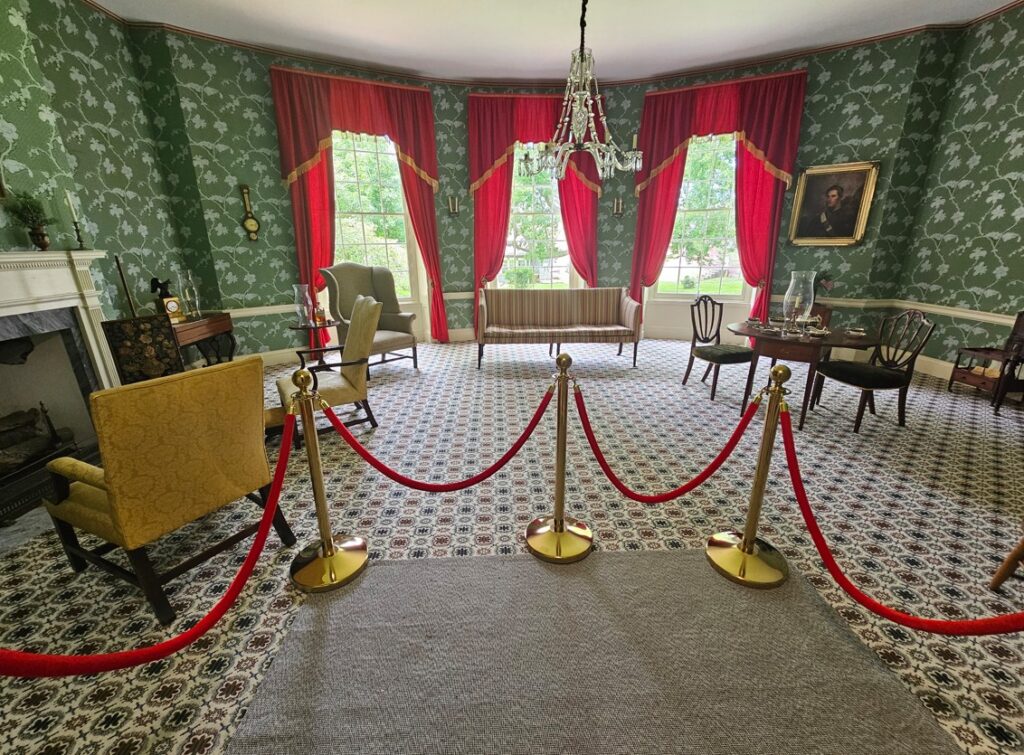
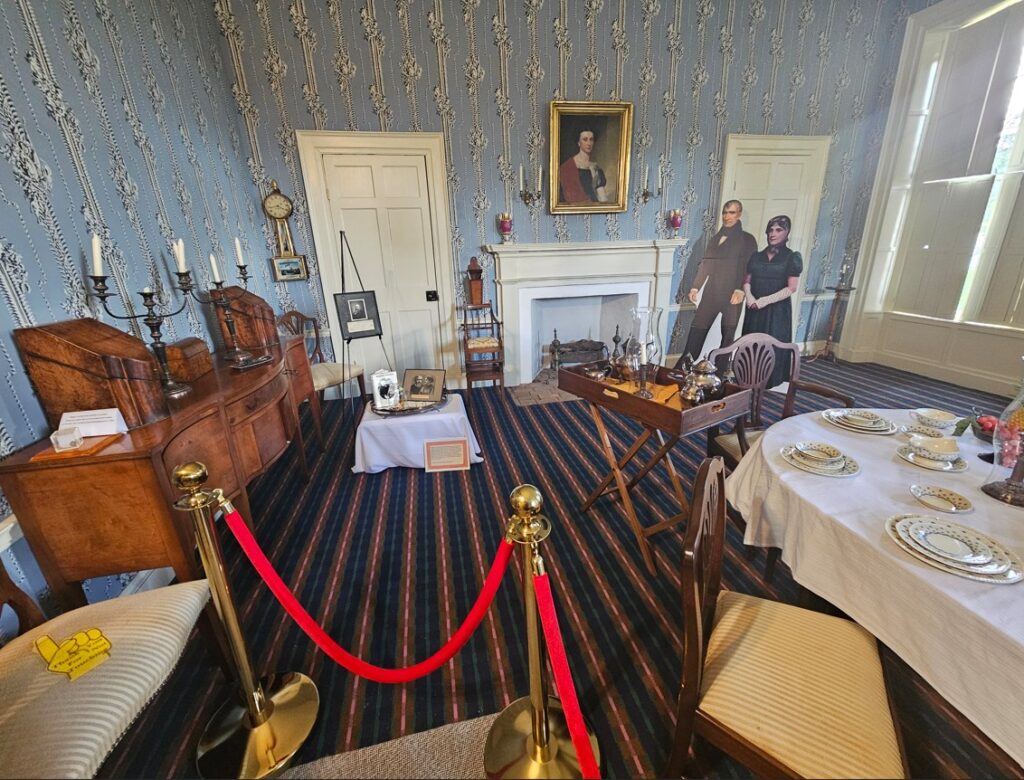
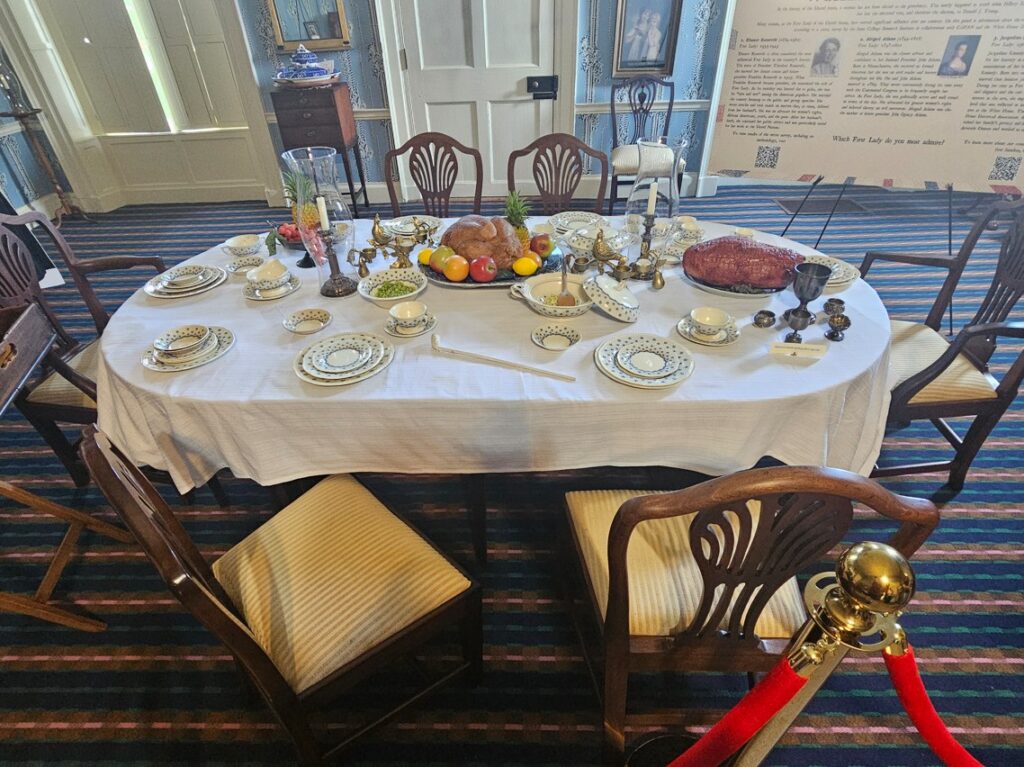
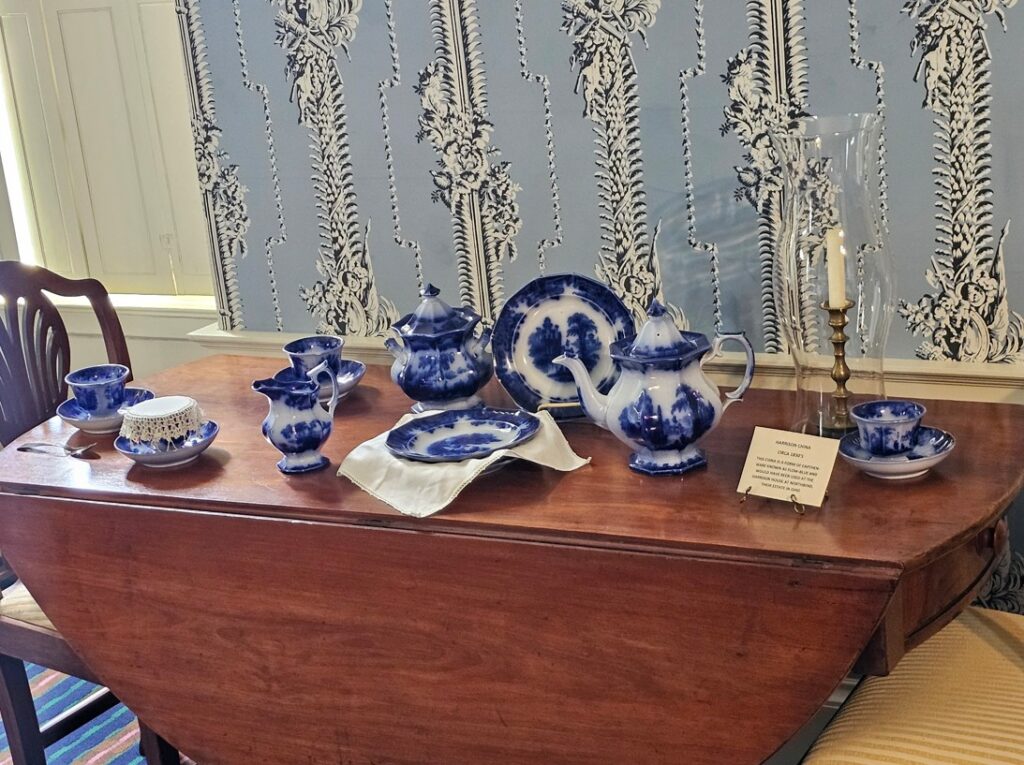
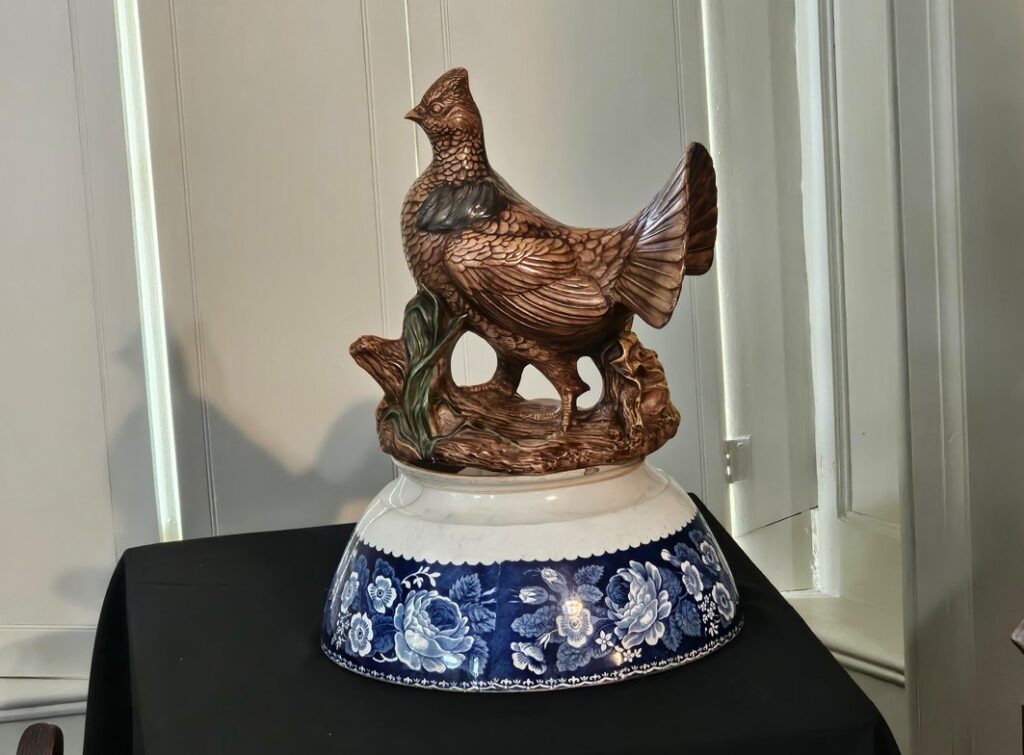
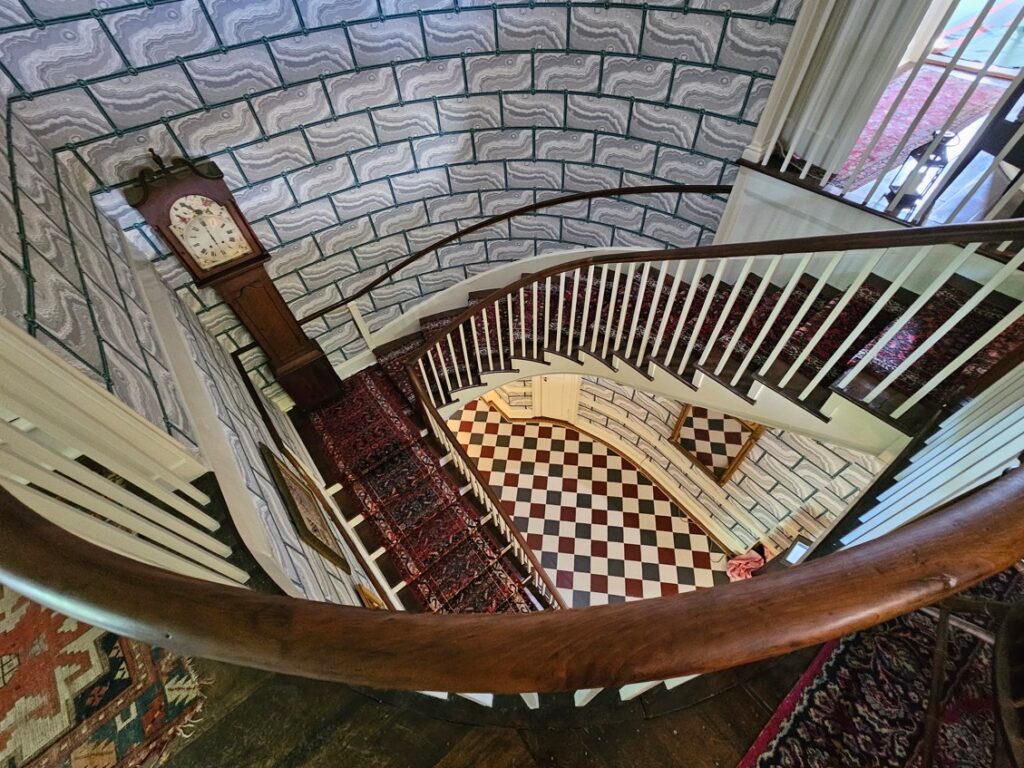
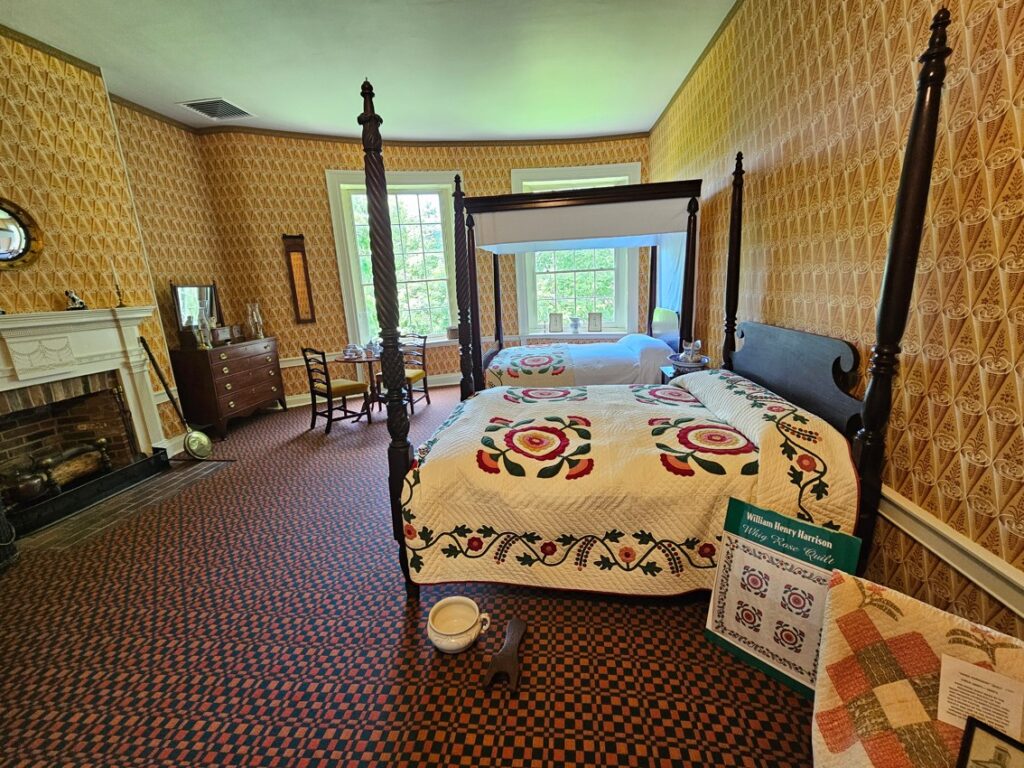
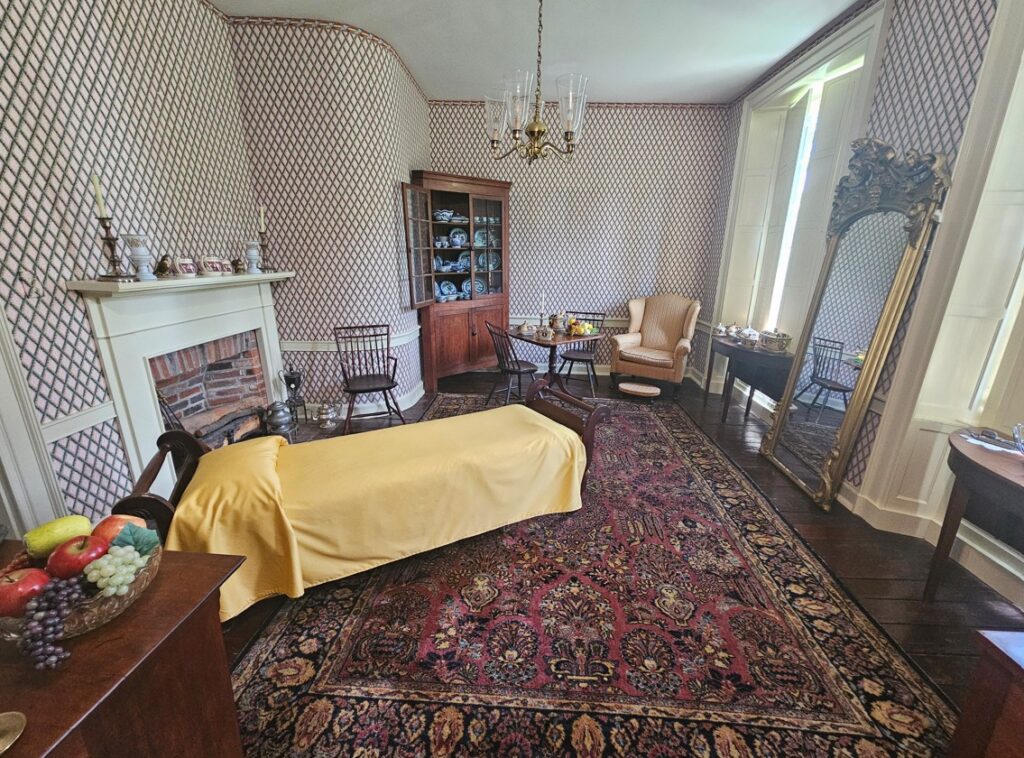
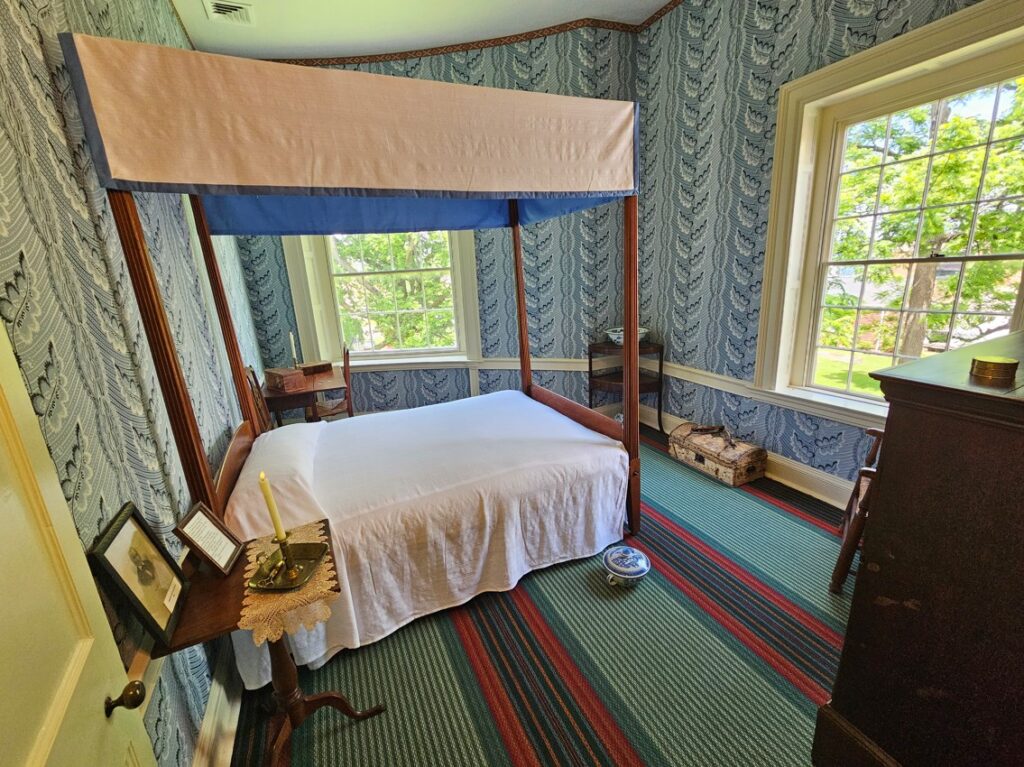
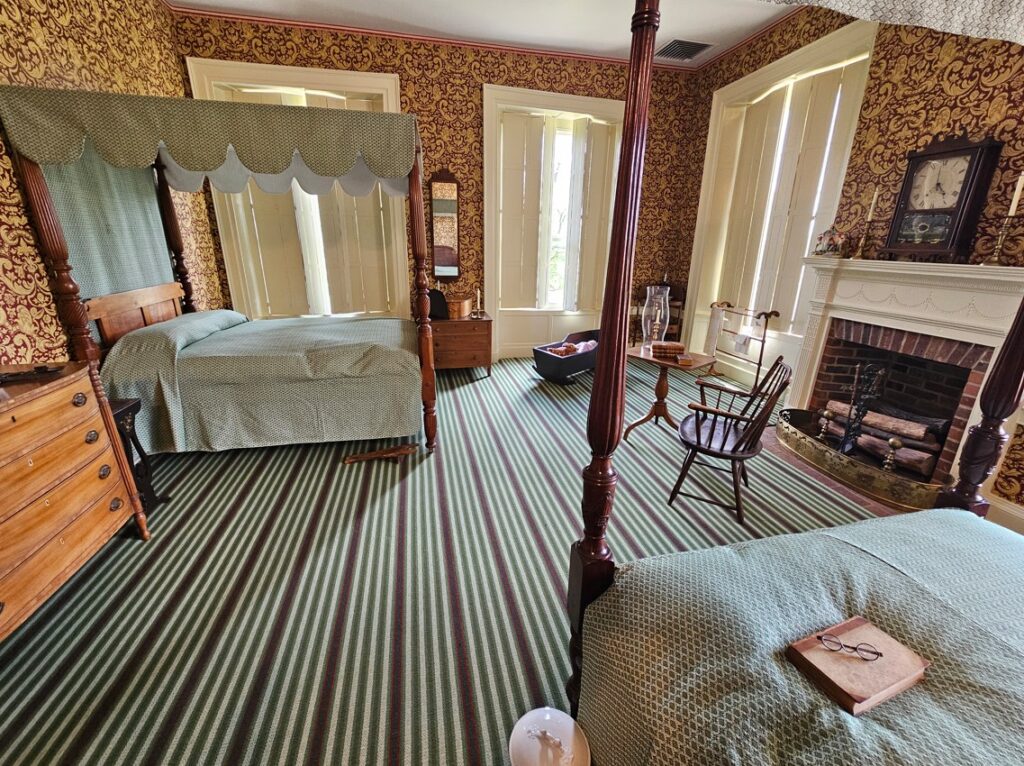
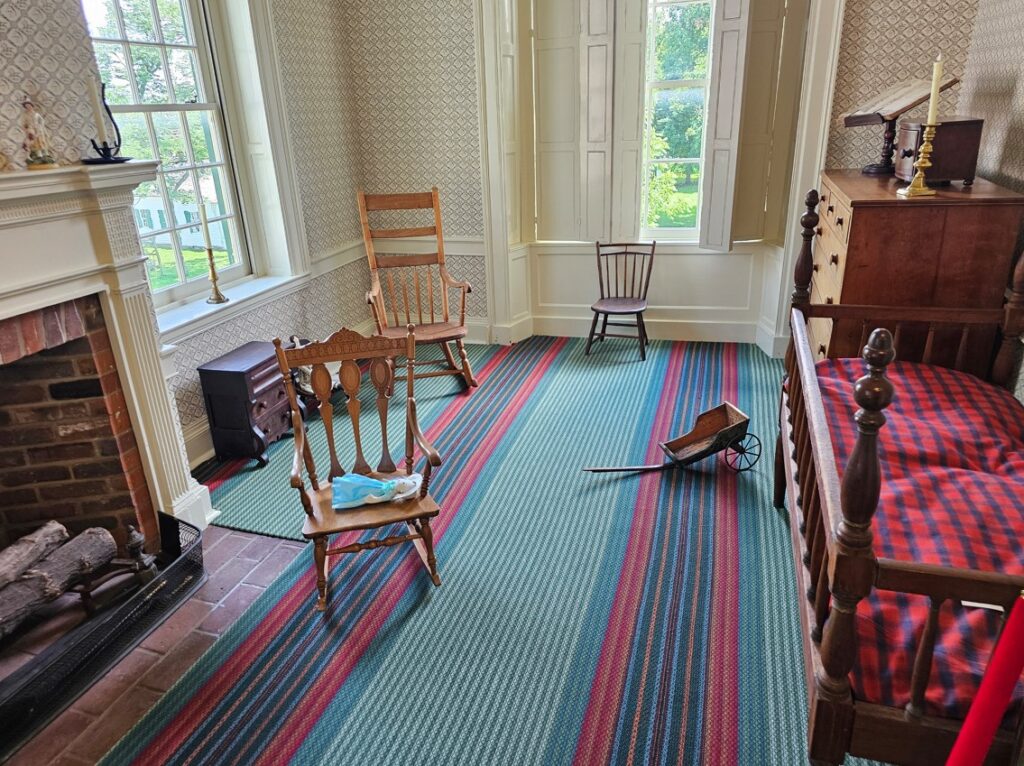
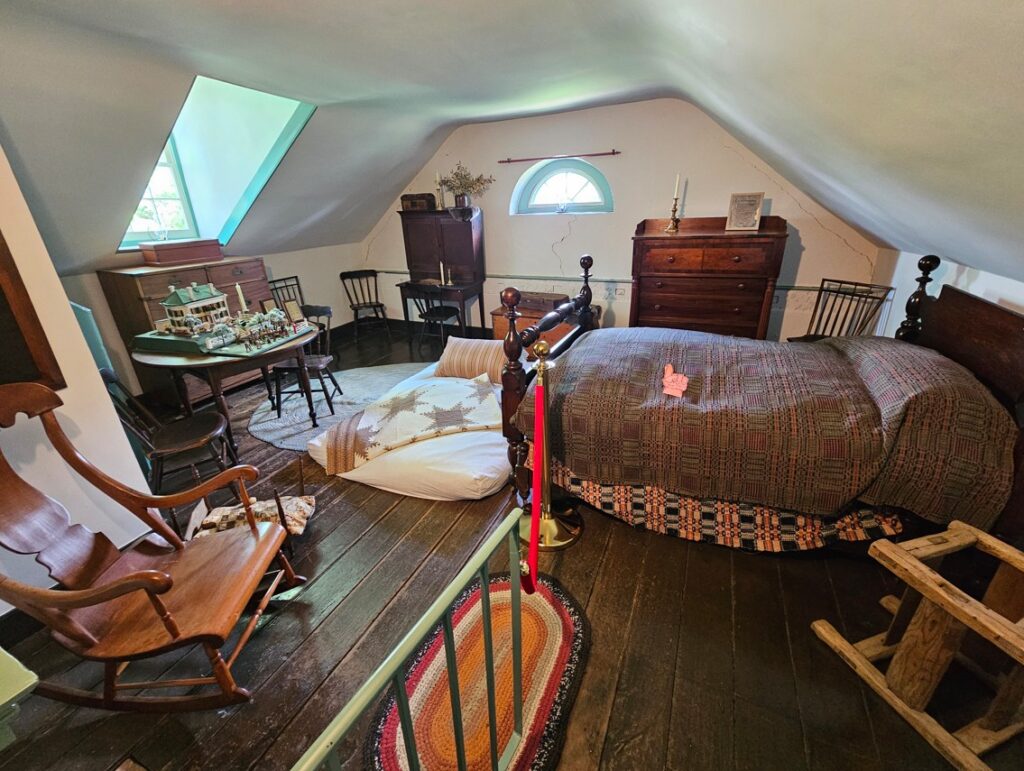
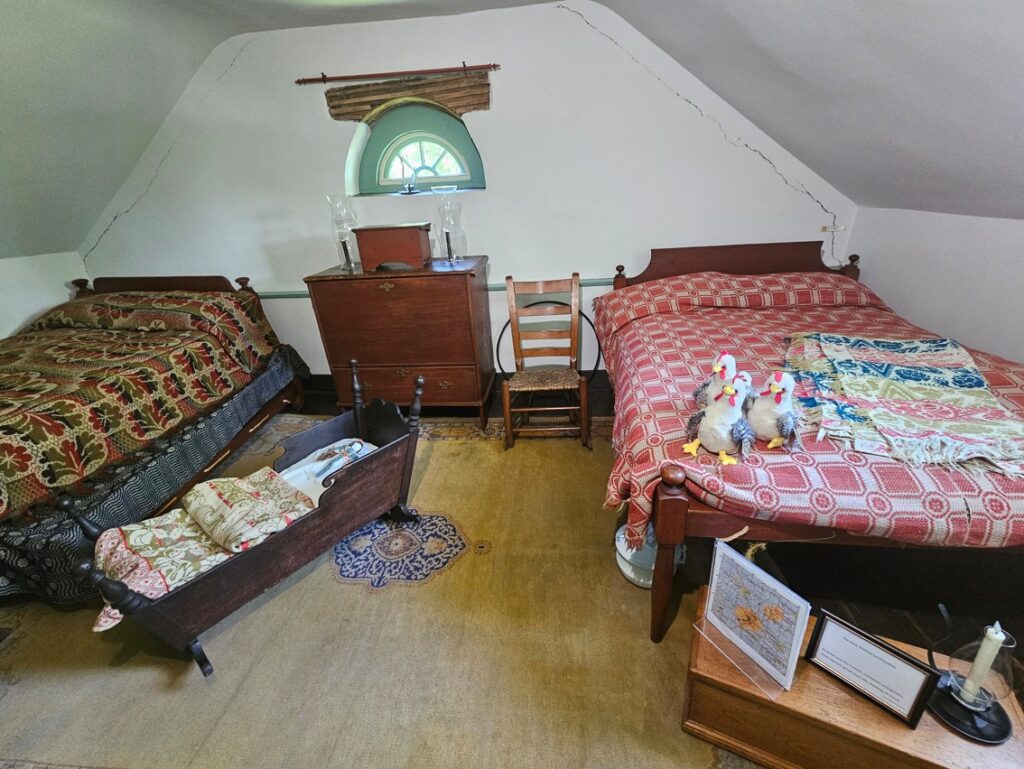
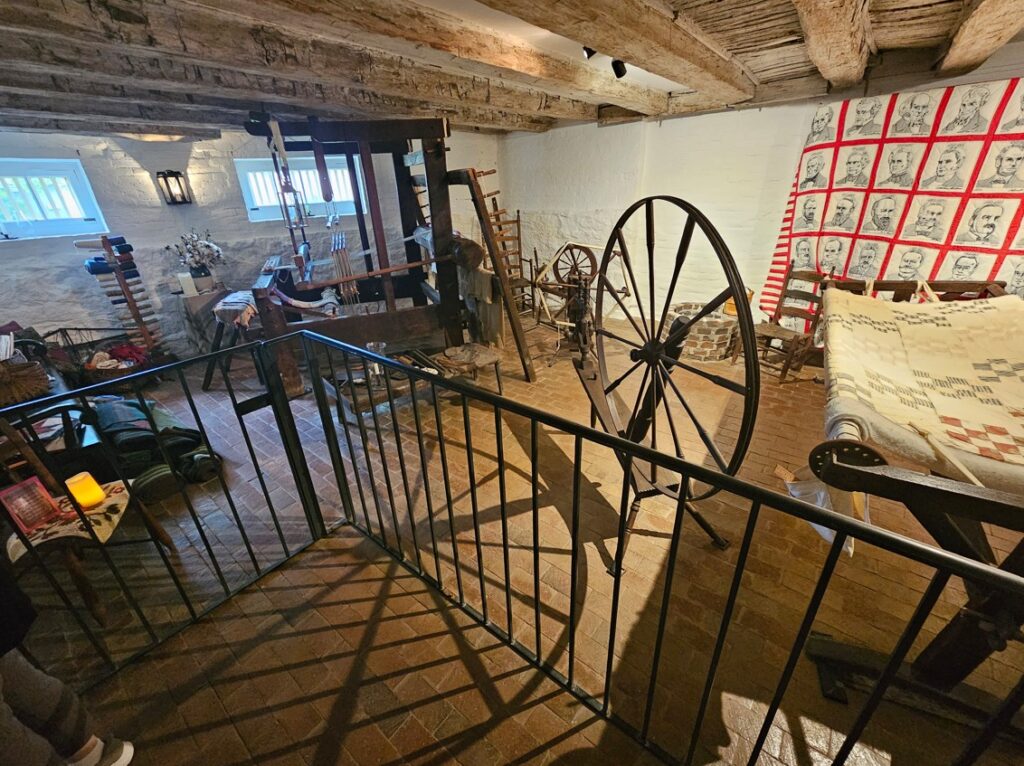
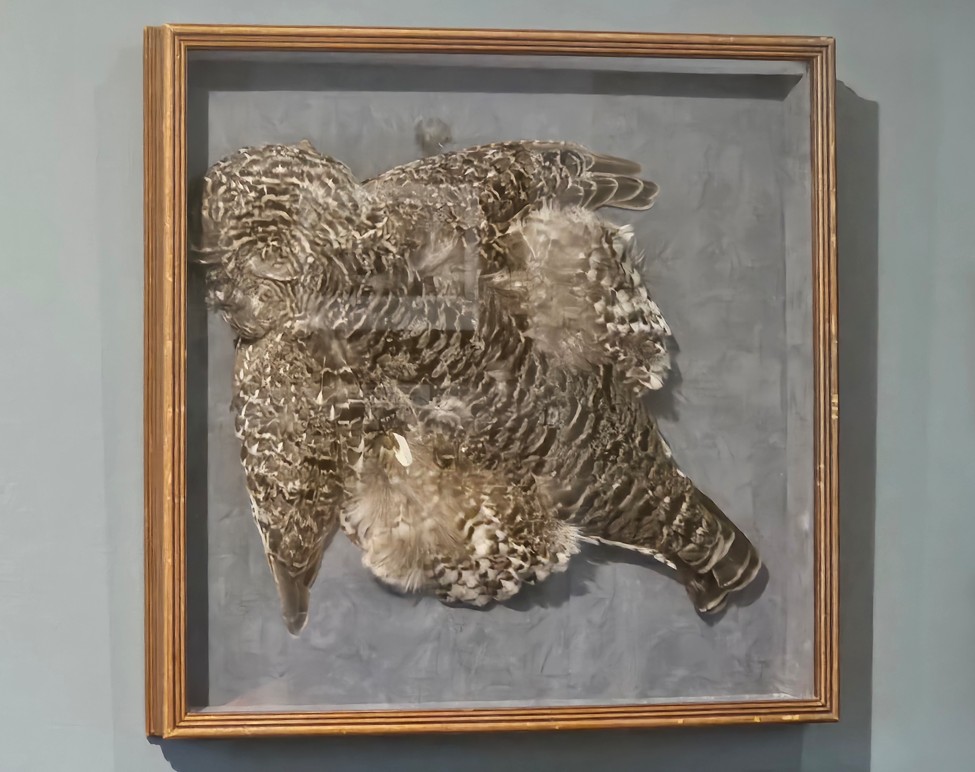
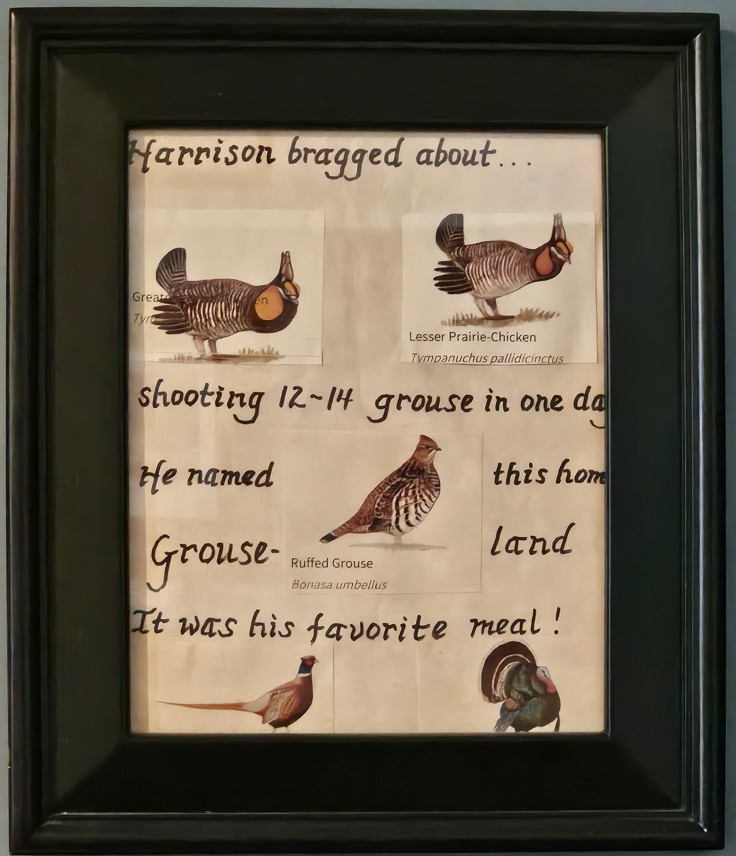
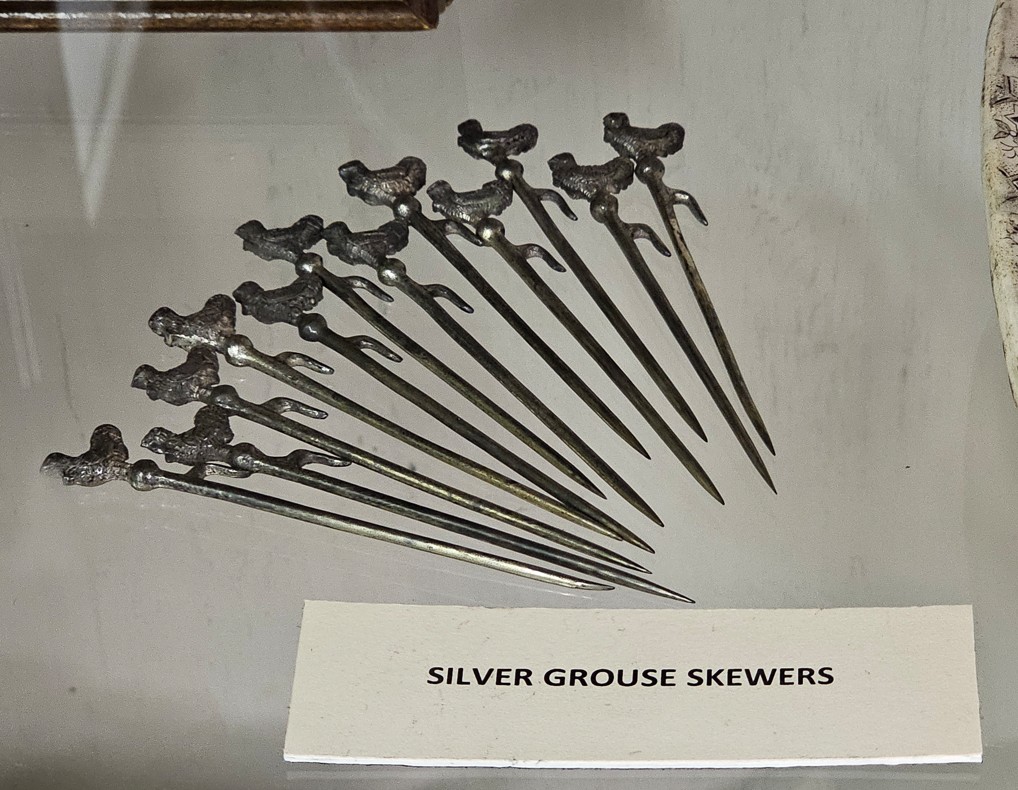
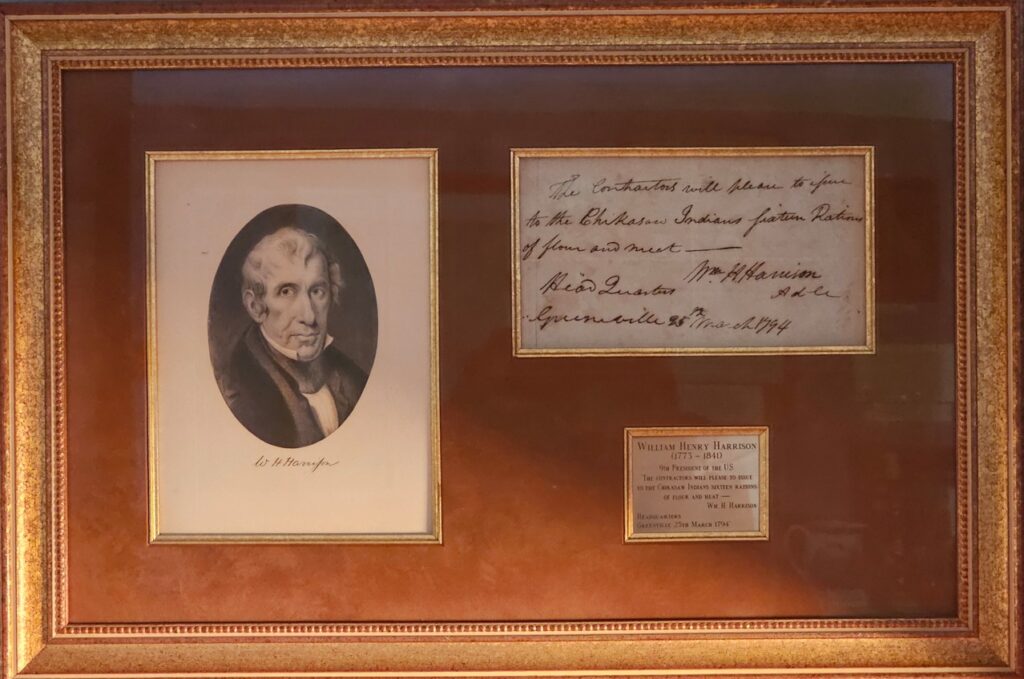
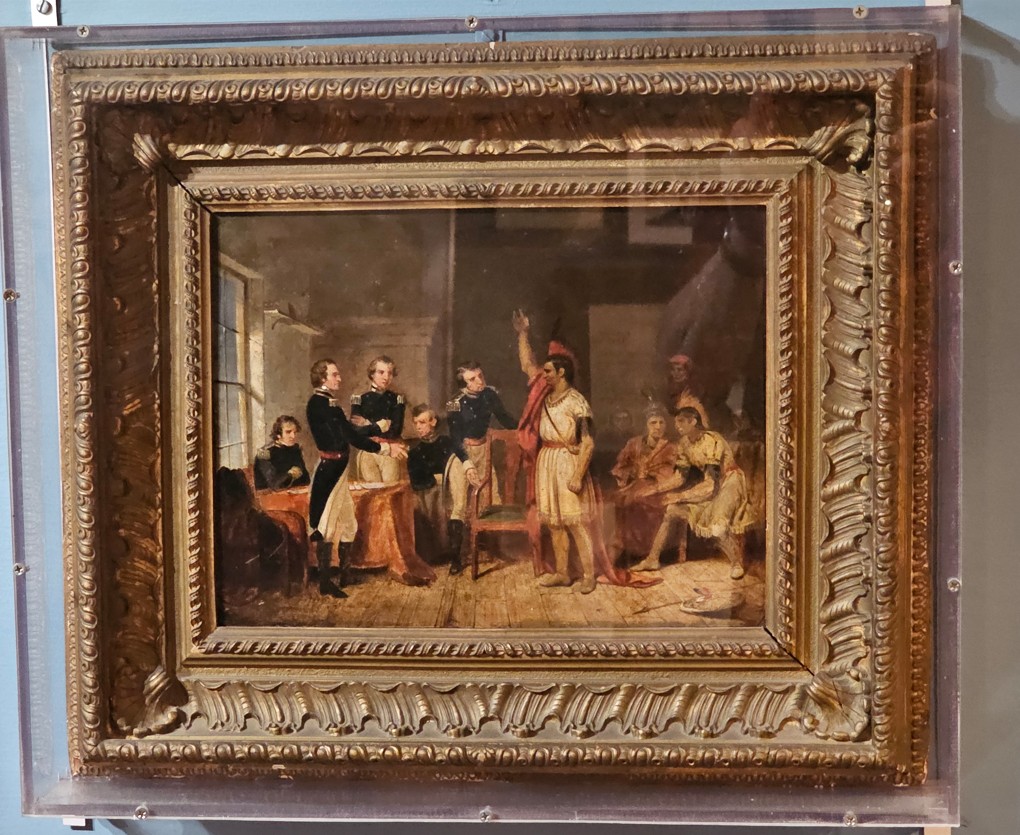
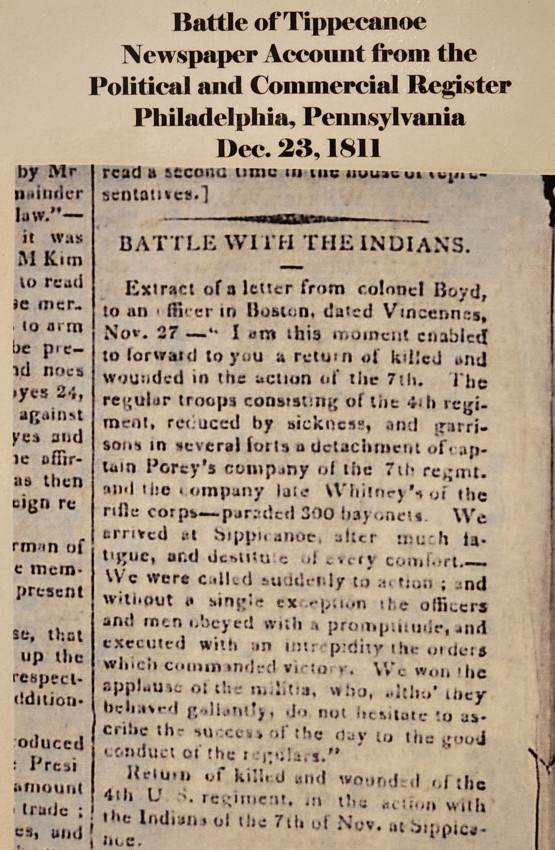
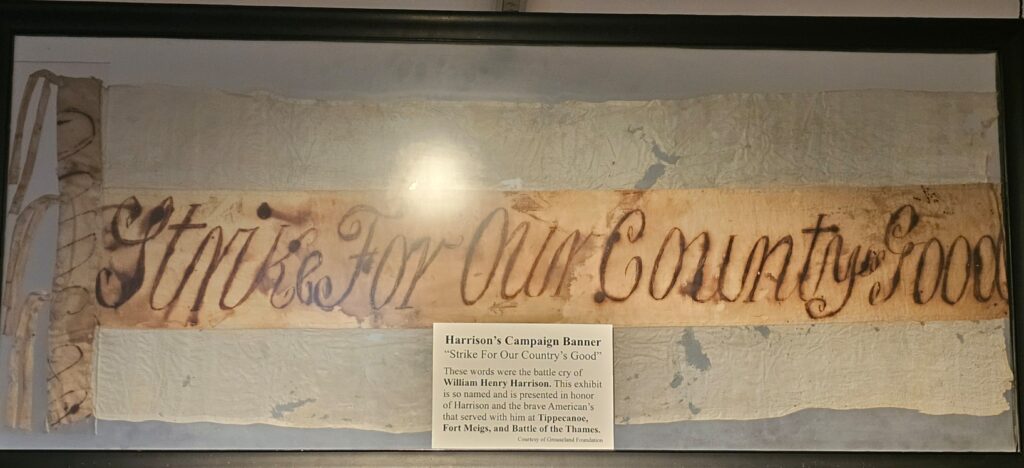
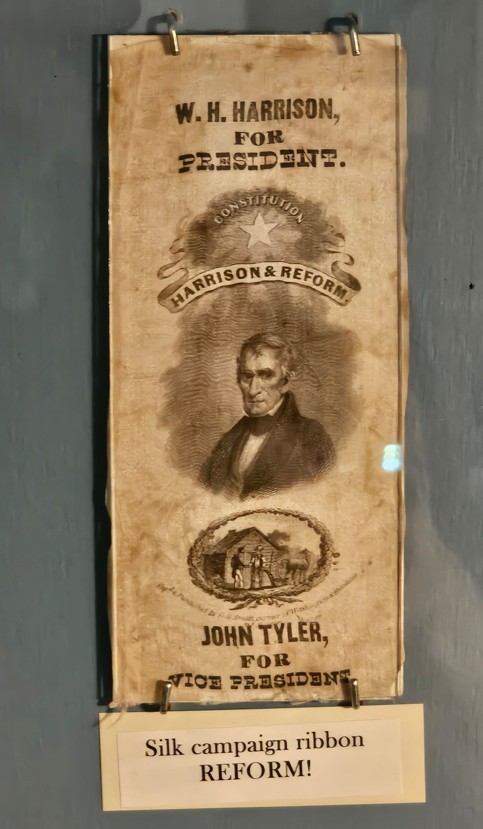
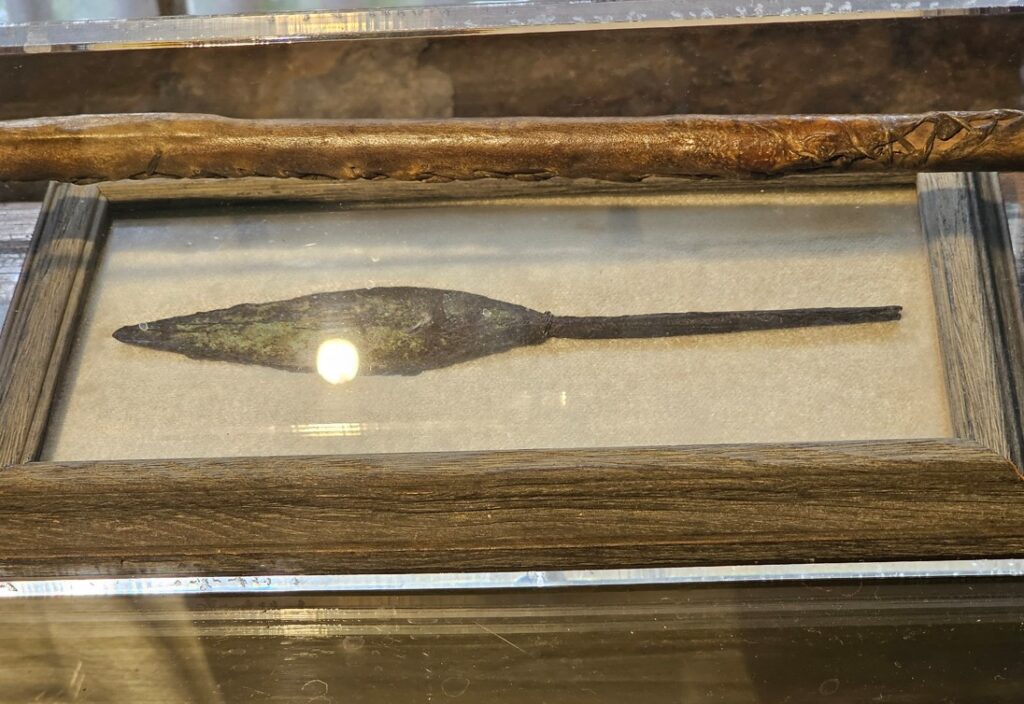
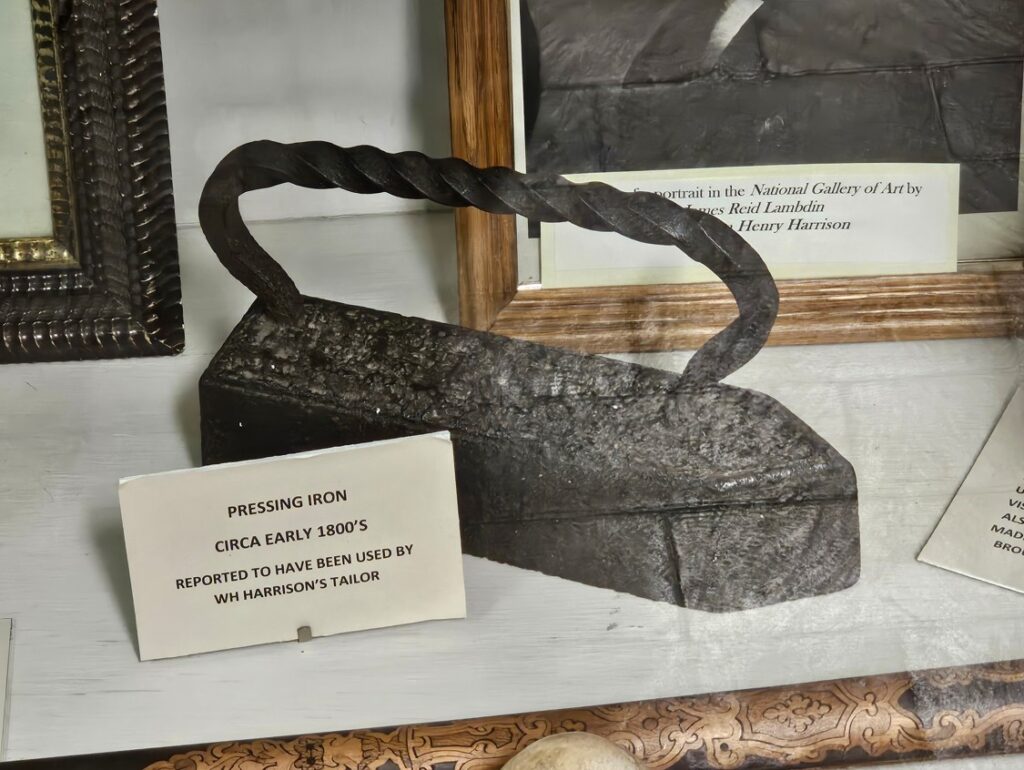
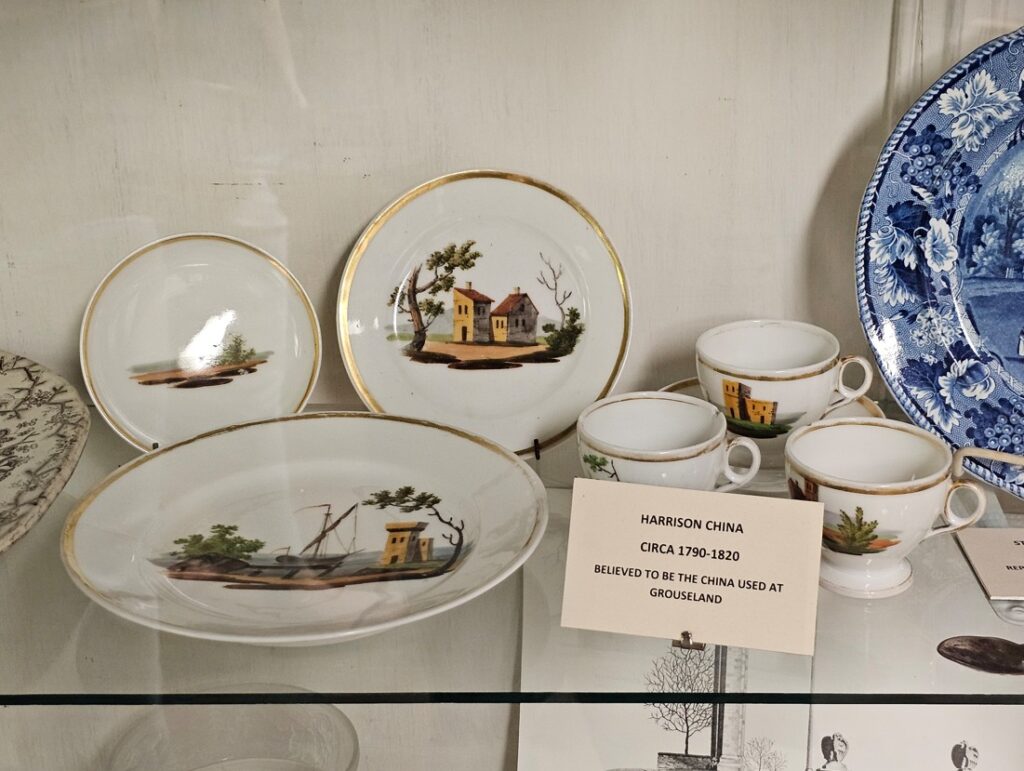
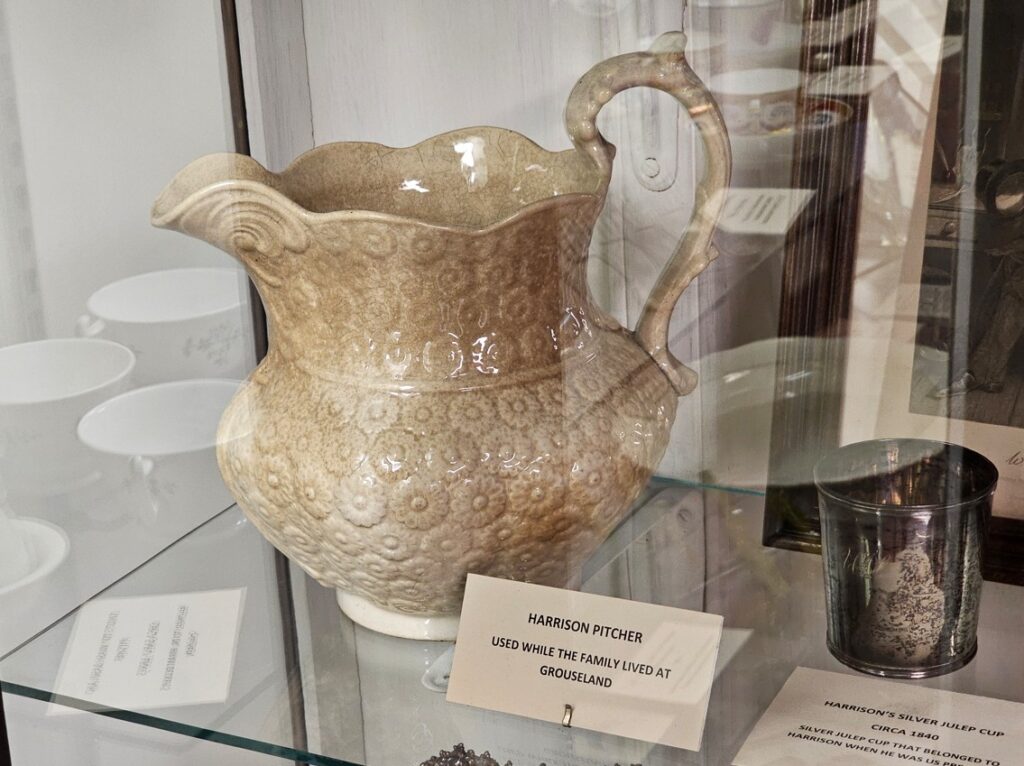
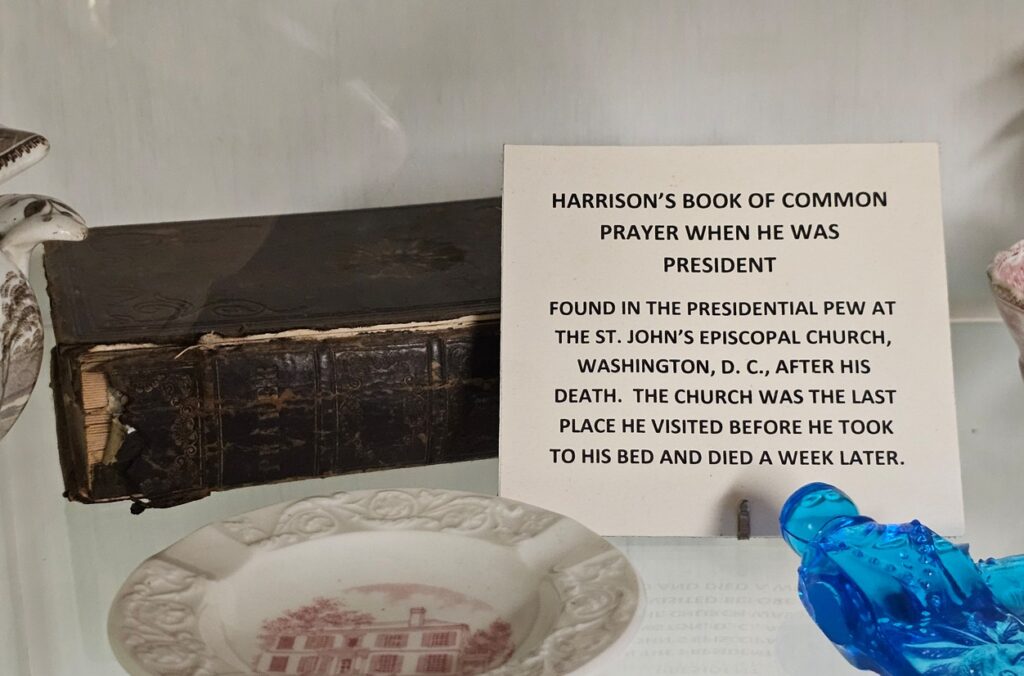
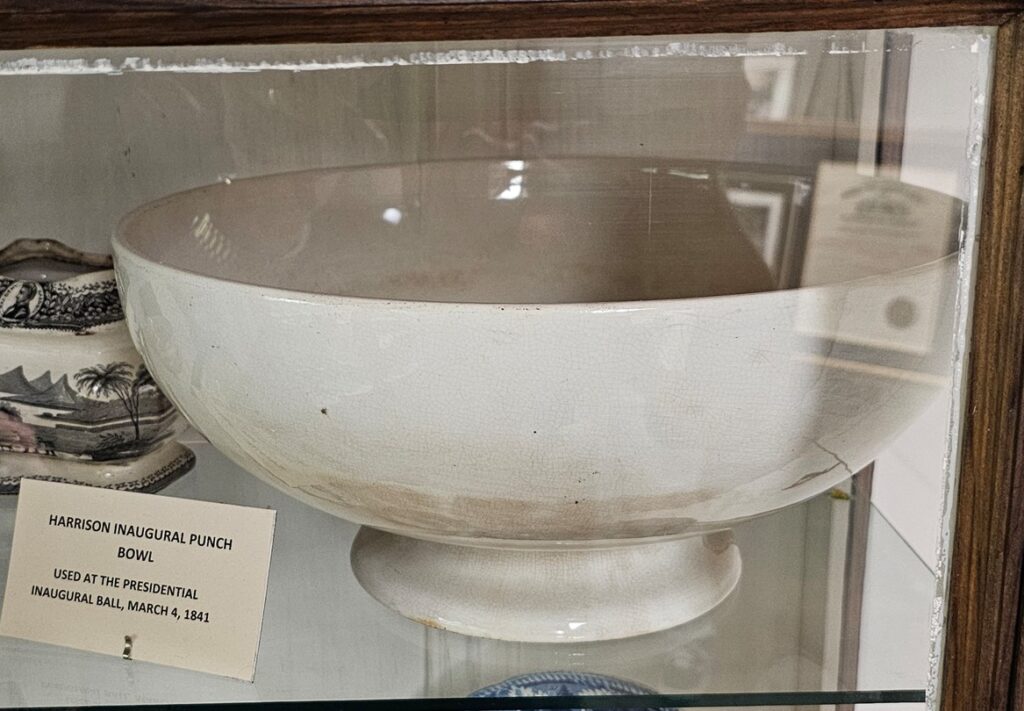
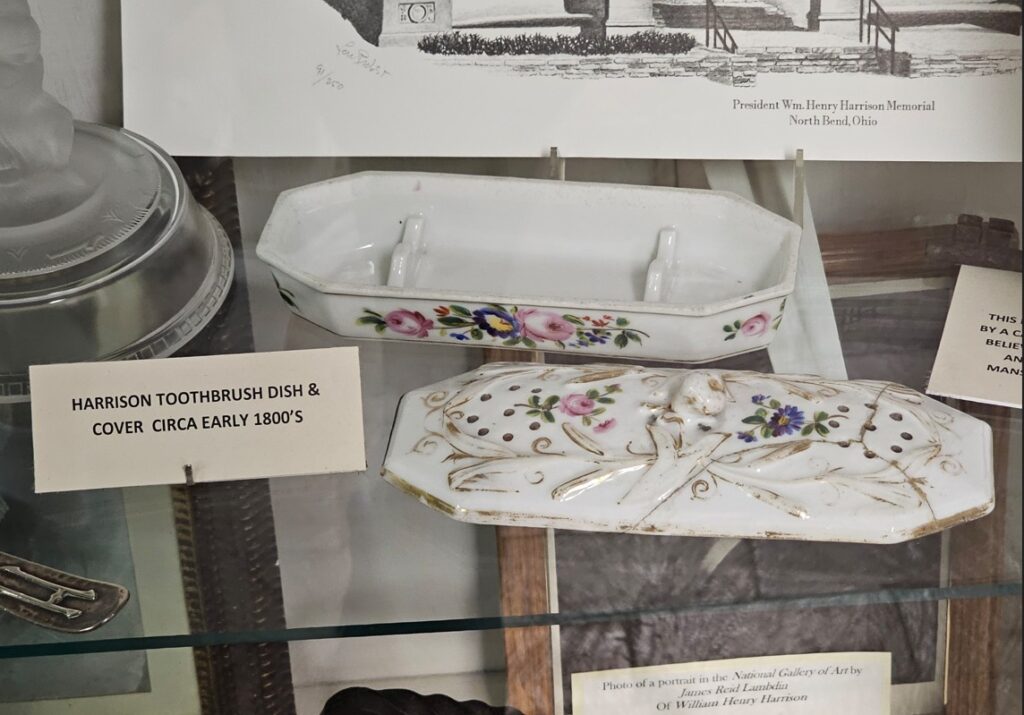
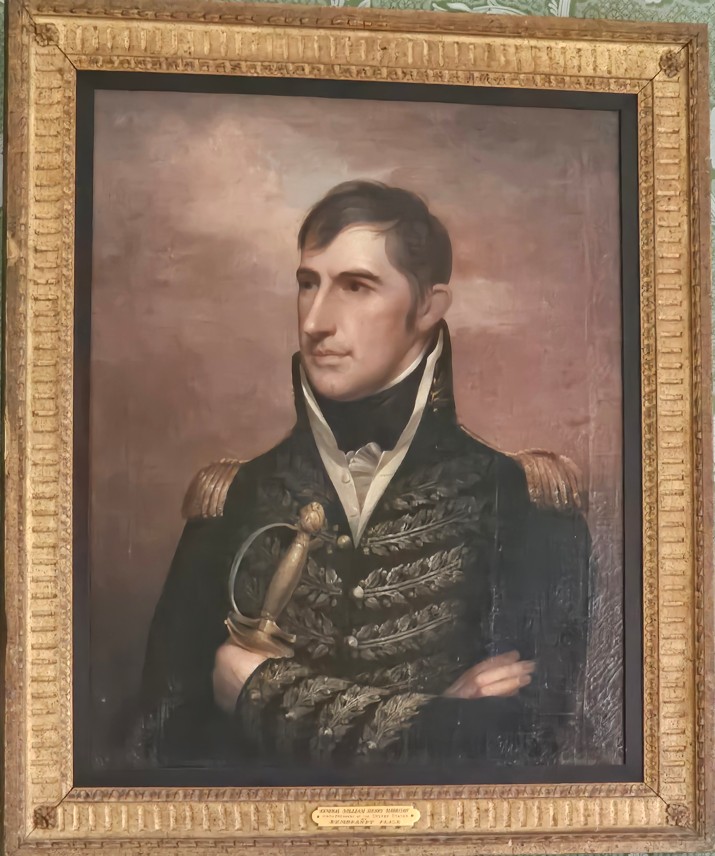
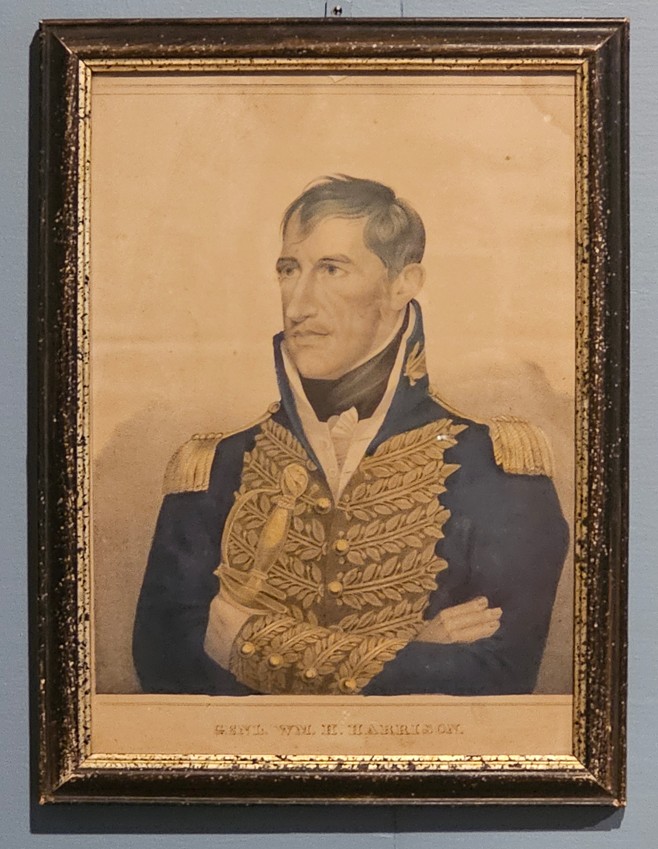
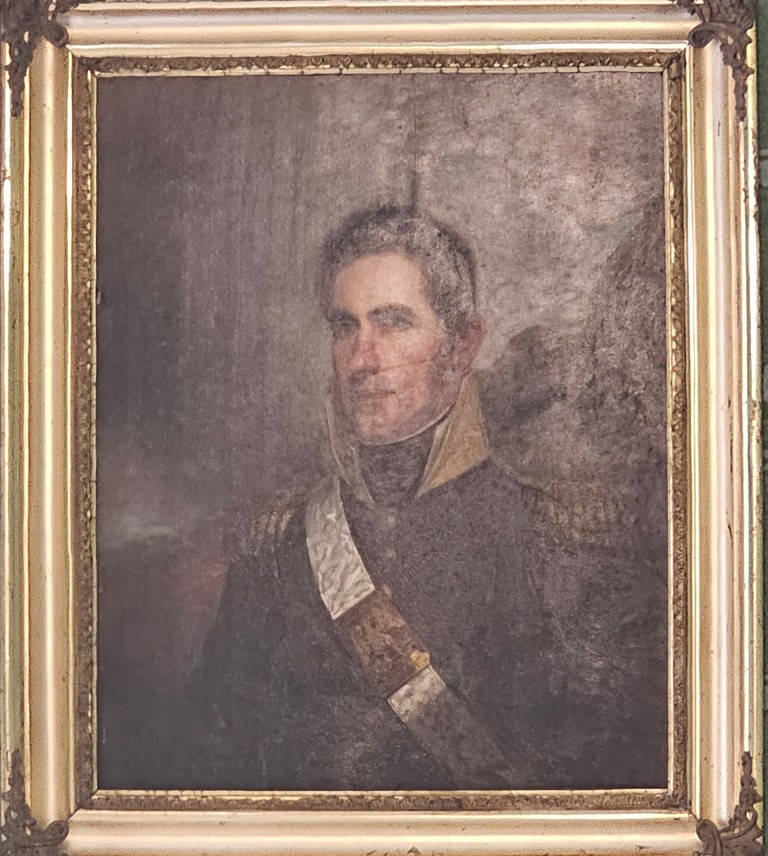
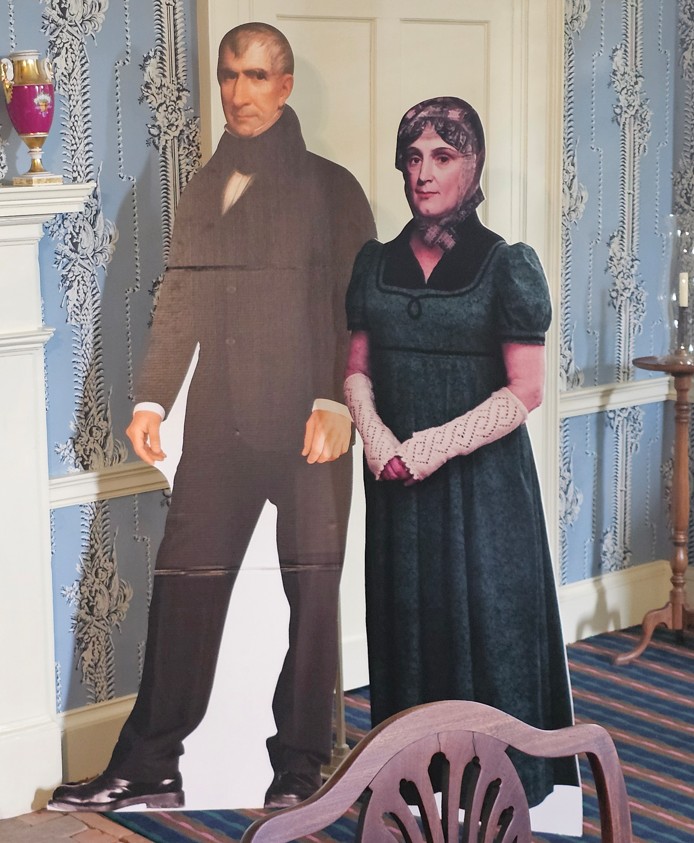
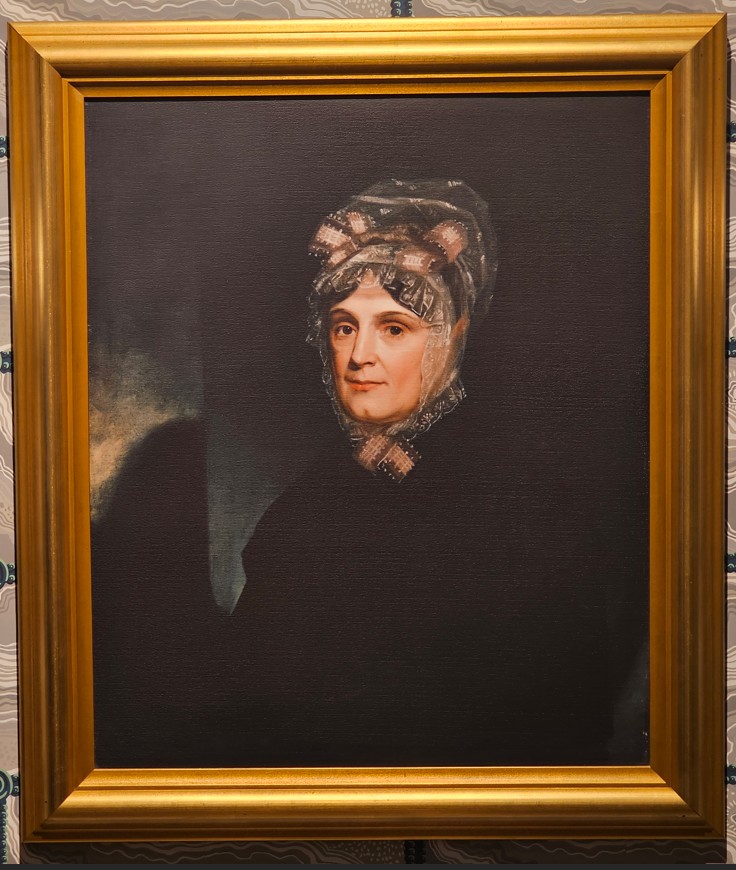
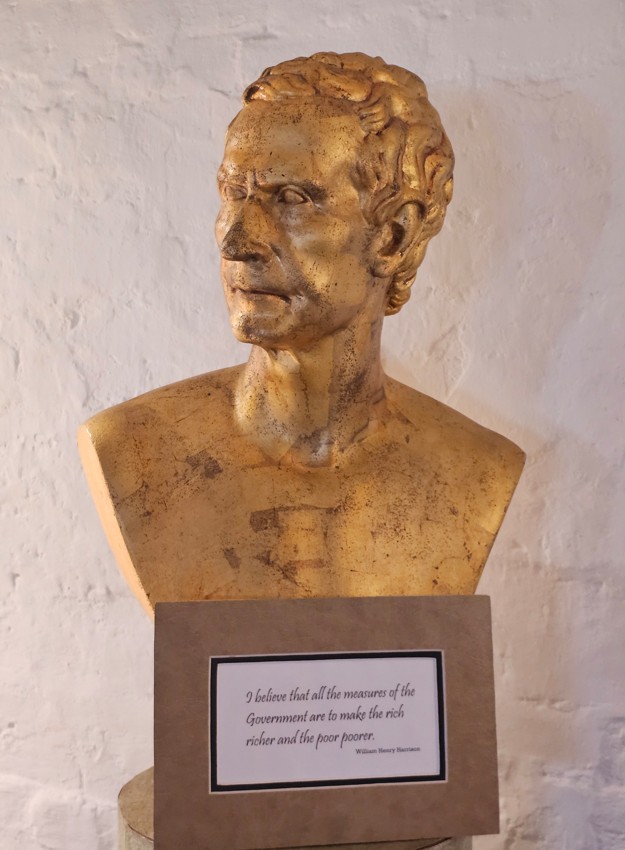
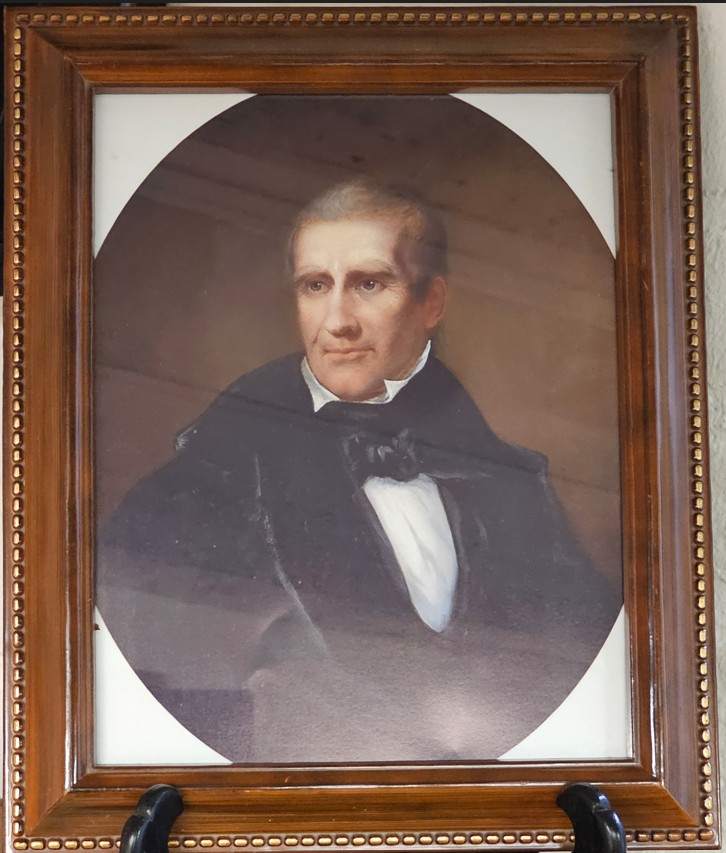
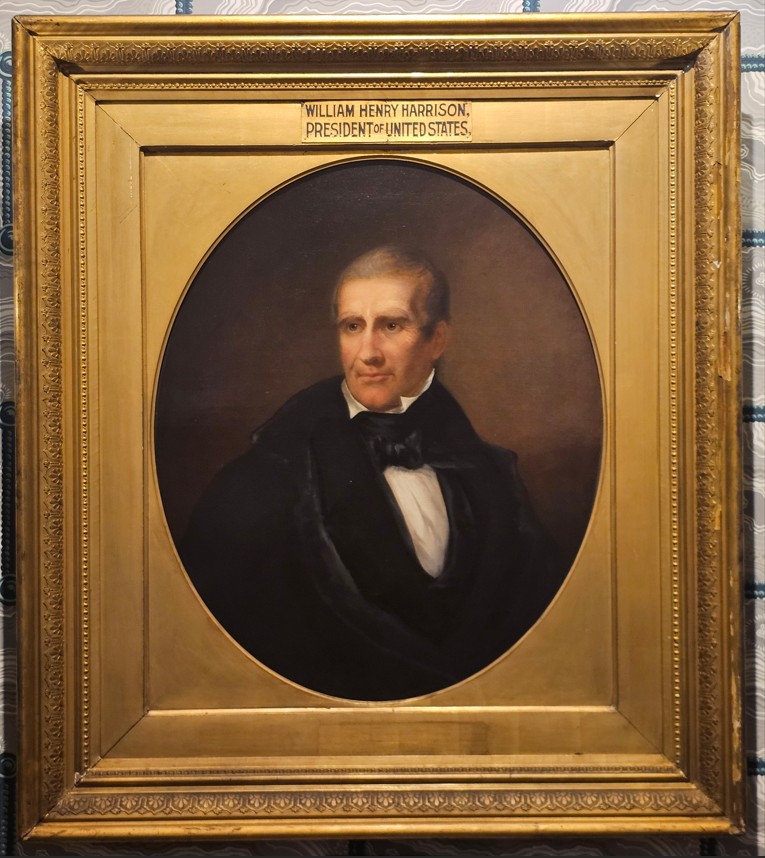
This was the home of William Henry Harrison, our 9th President. He died one month after his inauguration in 1841, the shortest term of any president. Due to his short term in office, he is barely a footnote in our history, but he was actually quite a substantial man prior to the presidency. He served as governor of the Indiana Territory 1800-1812, which covered what is today Illinois and Wisconsin as well as Indiana. He gained military fame as commander of a militia that defeated the Shawnee at the battle of Tippecanoe, and commanded the Northwest Territory military forces during the War of 1812. He was a US Congressman, US Senator and ultimately President.As governor of Indiana Territory, he built and lived here, which he named Grouseland, because he loved to hunt and eat grouse.Entry hallwayParlorDining roomGrouse themed chinaIn the basement, a loom and spinning wheel are displayed.Grouse feathersNote handwritten note by William Henry Harrison in 1794: “The contractors will please to issue to the Chickasaw Indians sixteen rations of flour and meat.”Painting of Harrison meeting Shawnee leader Tecumseh.1840 campaign banner: “Strike for Our Country’s Good”Prehistoric copper spear point, commonly called a “rat-tail spear point”, estimated to be from 1,000-4,000 BC, on display in Grouseland’s basement.Various portraits of Harrison.Harrison with First Lady Anna Harrison.First Lady Anna Harrison. She never made it to the White House. She was ill when Harrison was inaugurated, then when she was packing to move to Washington. she received word of Harrison’s death.Harrison bust.