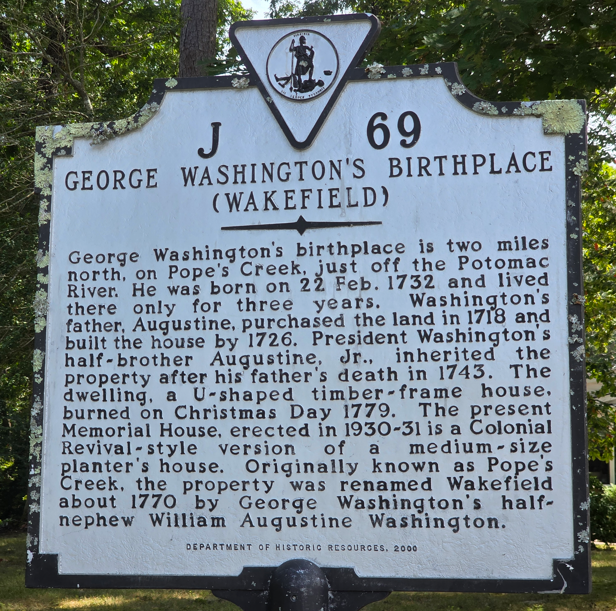
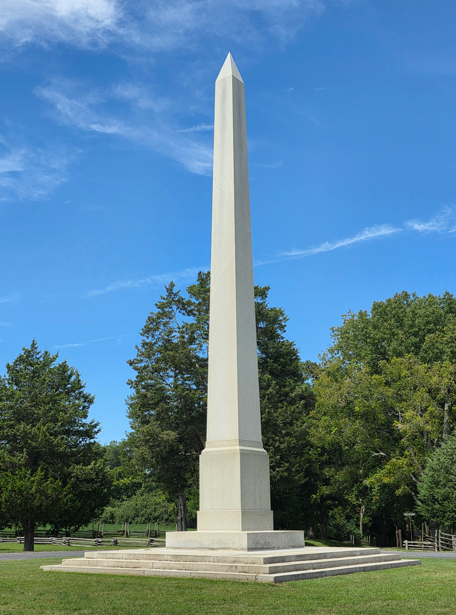
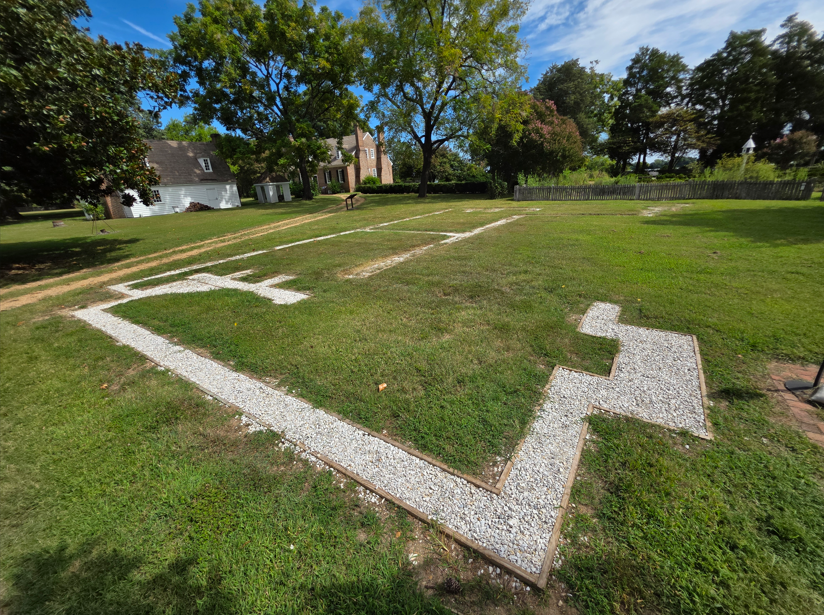
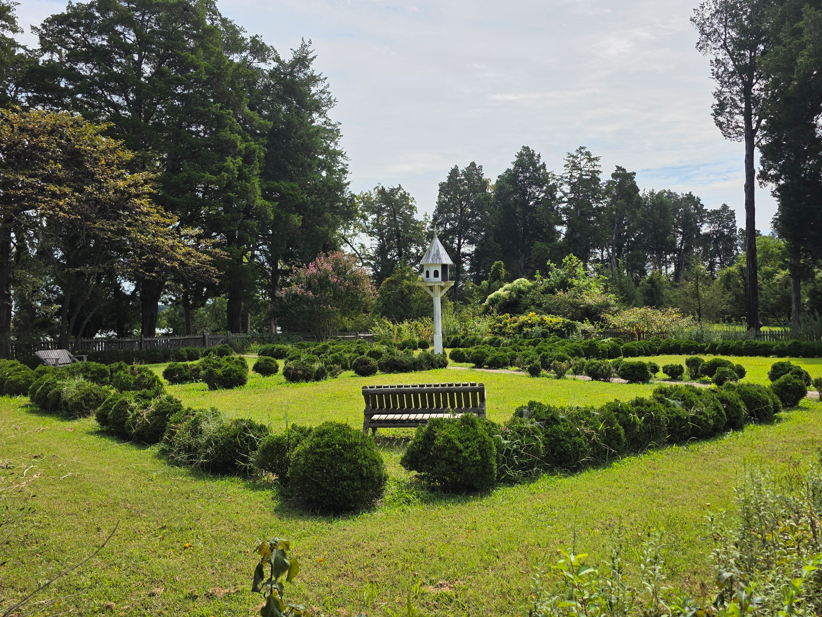
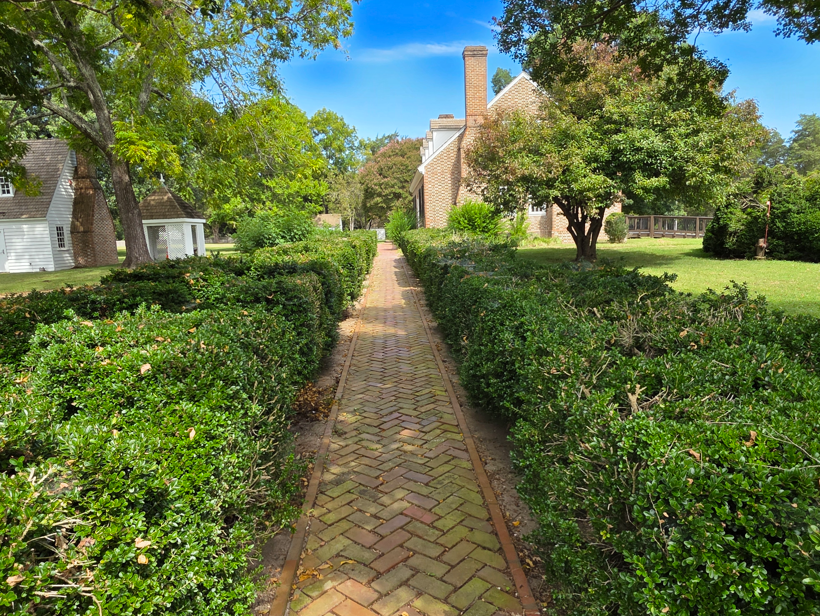
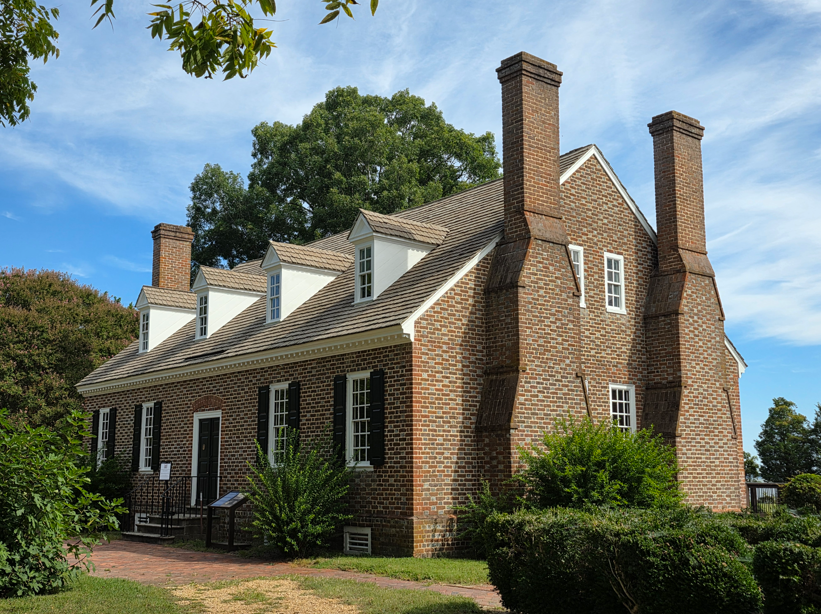
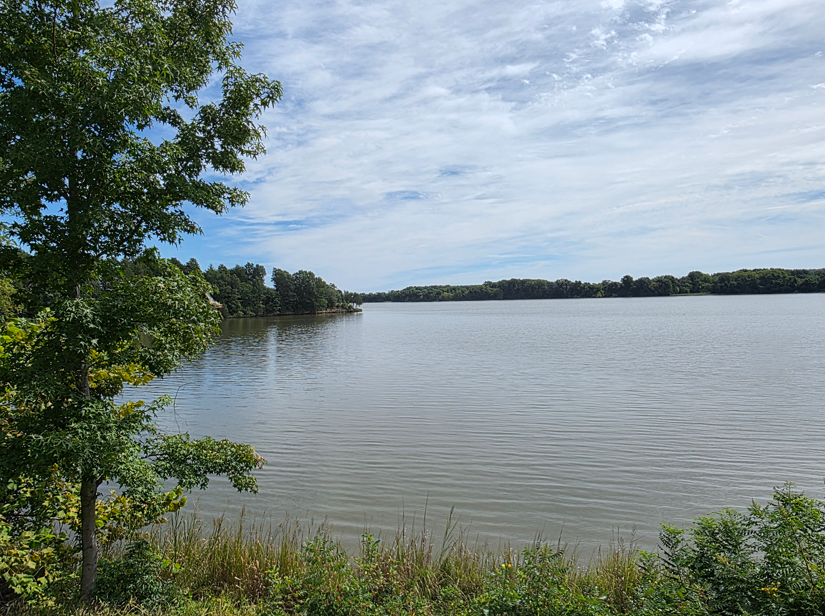
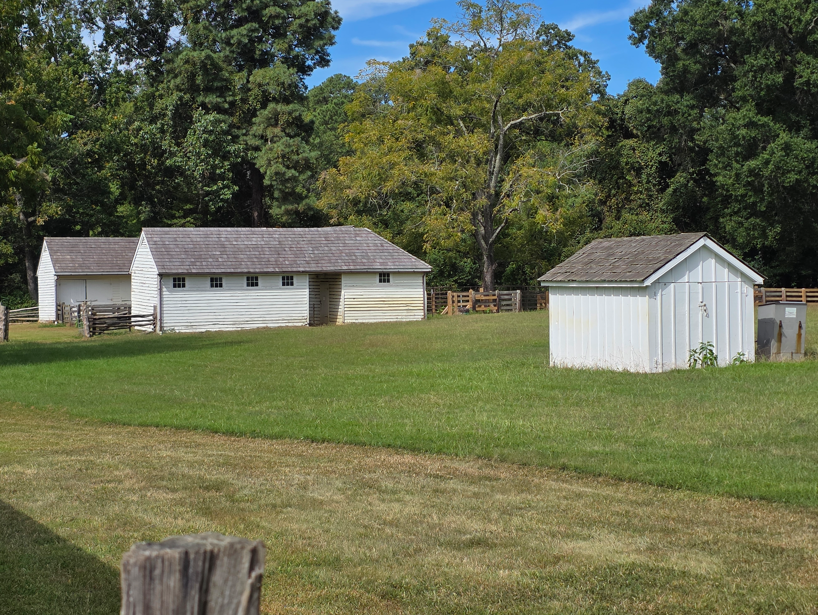
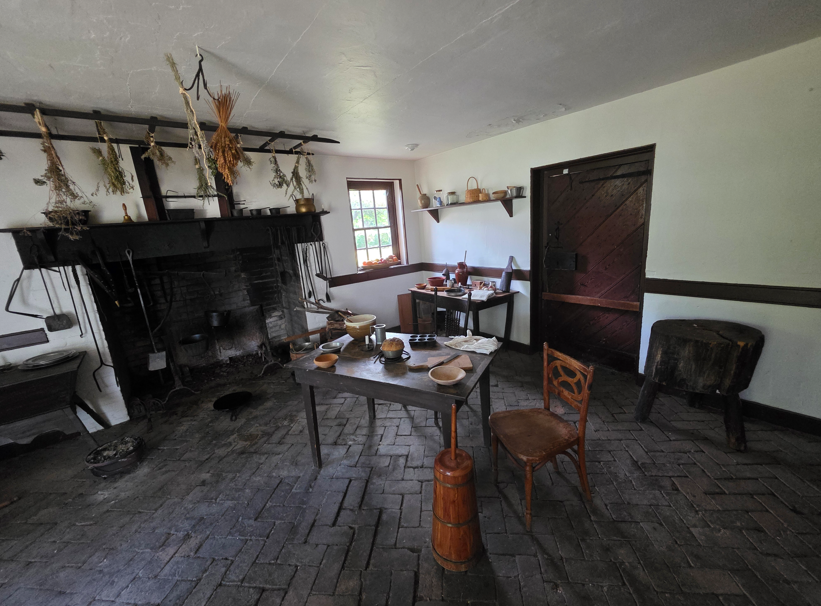
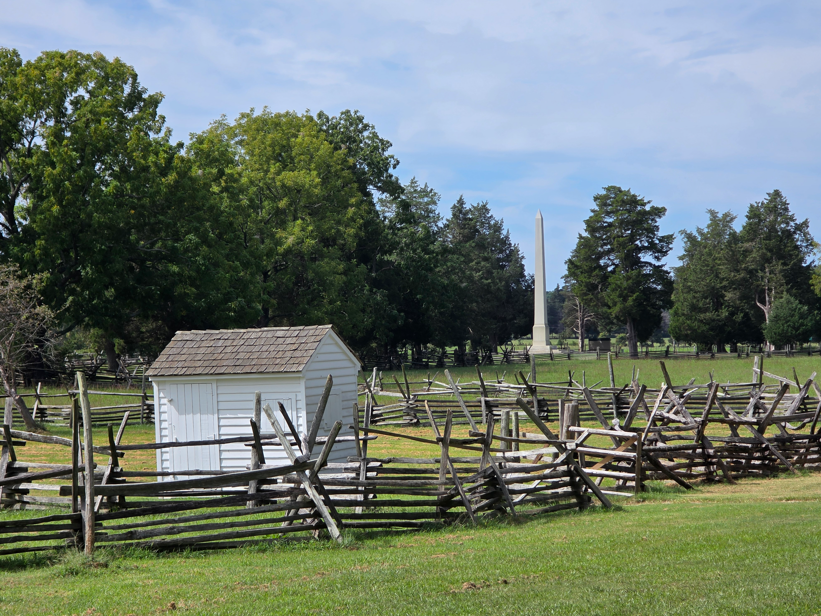
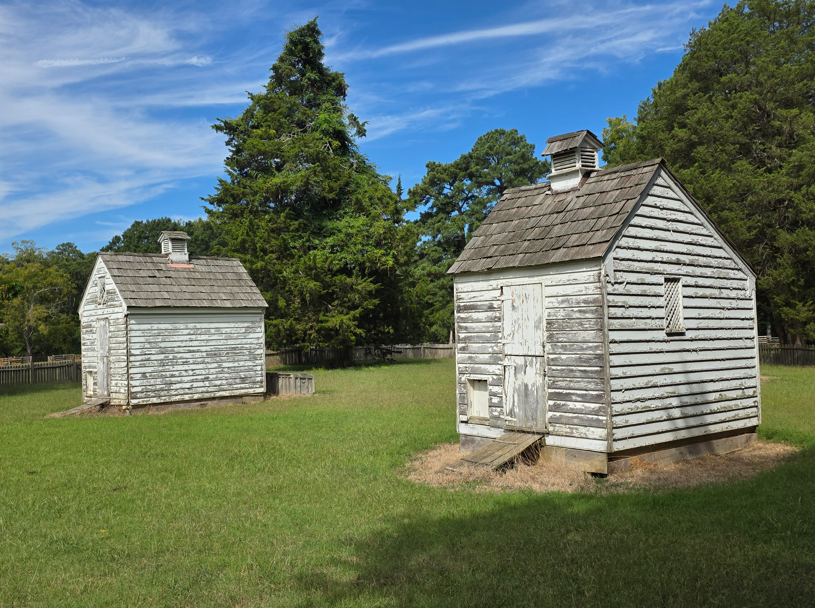
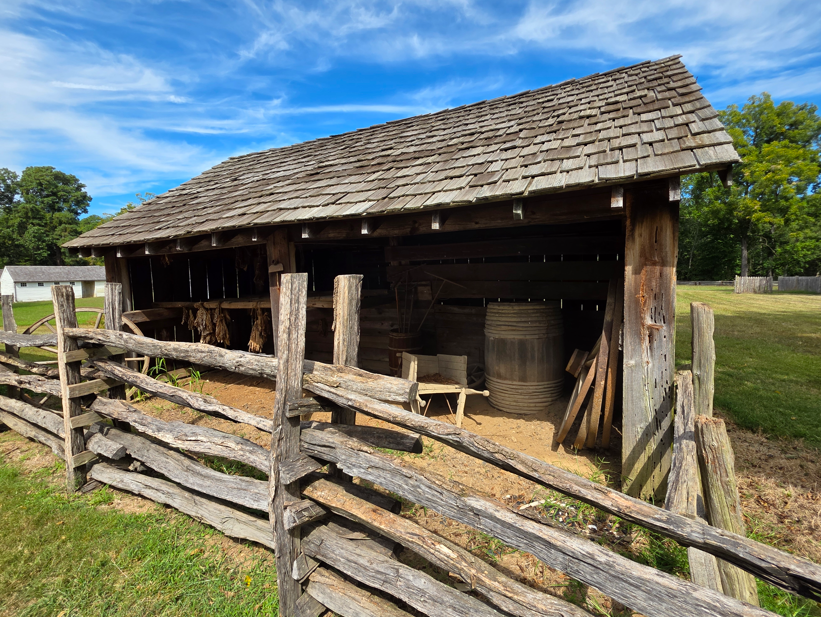
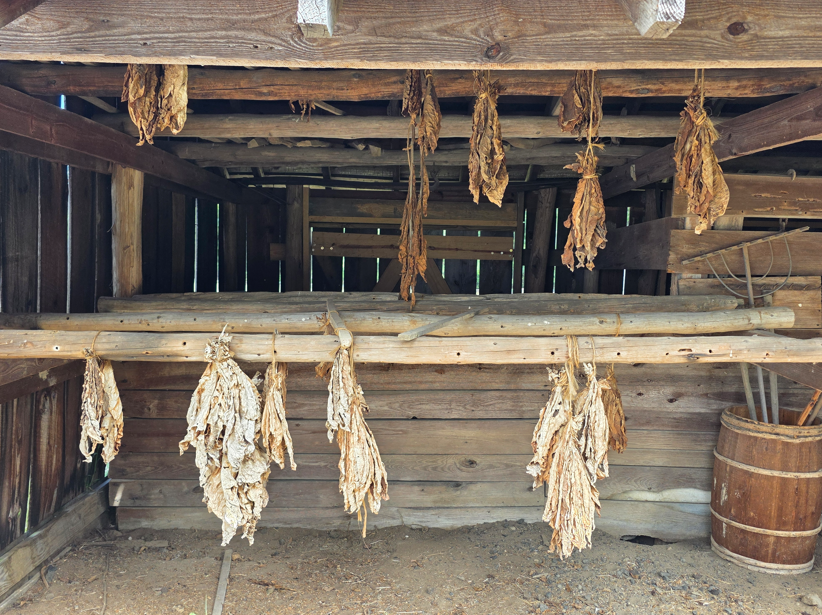
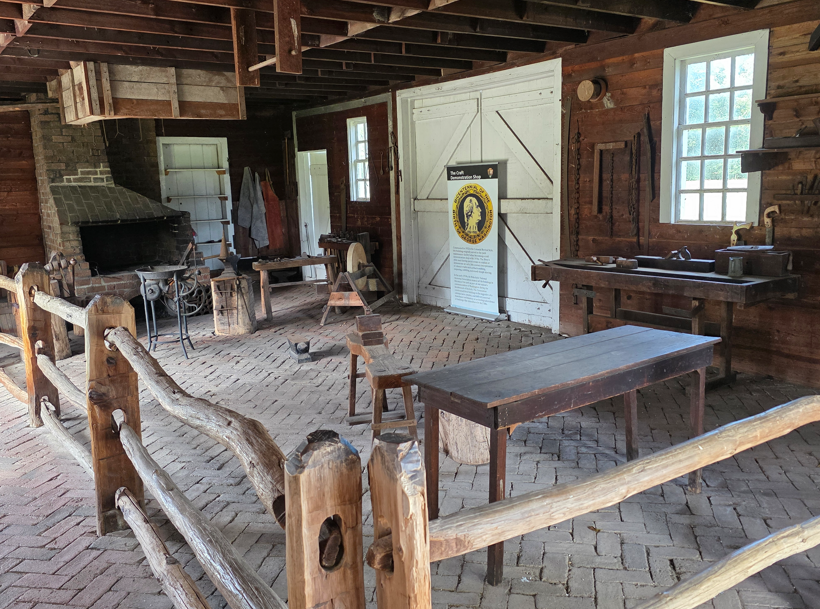
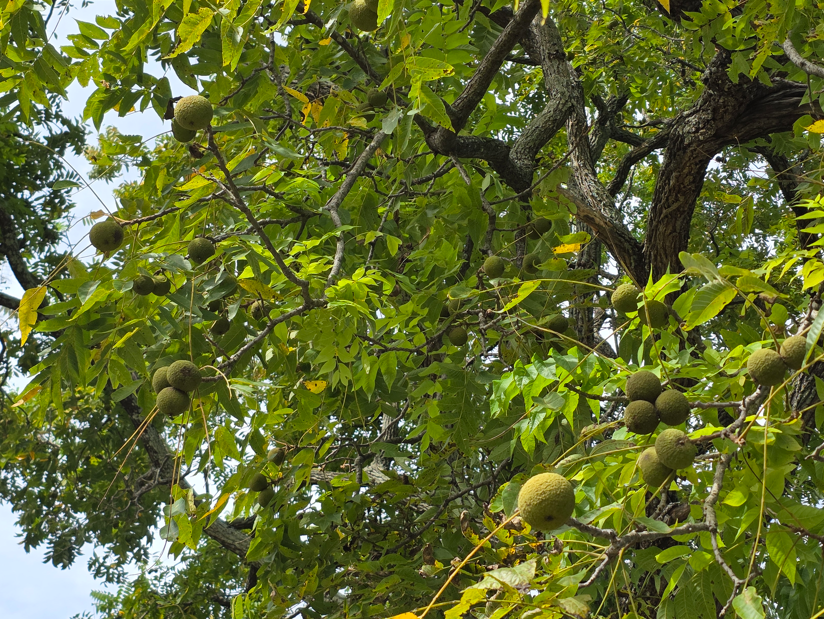
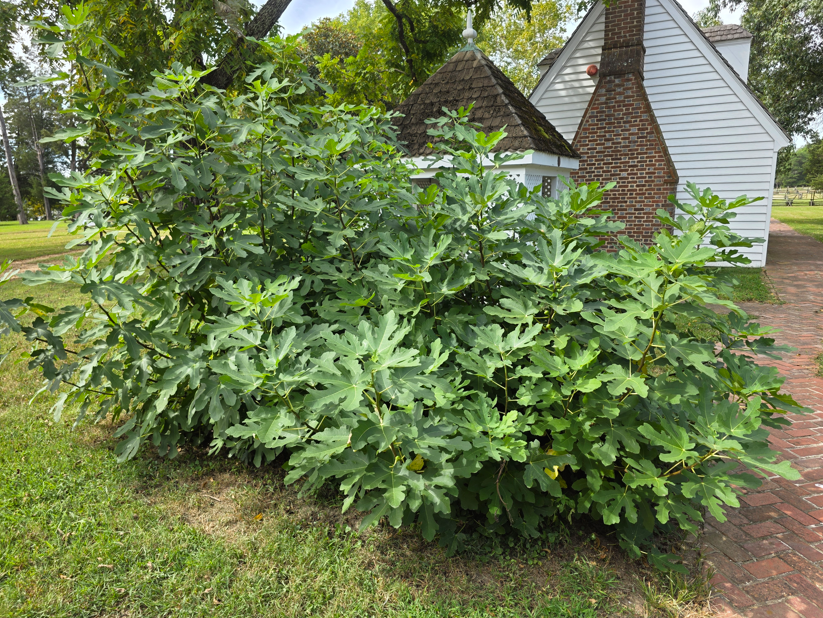
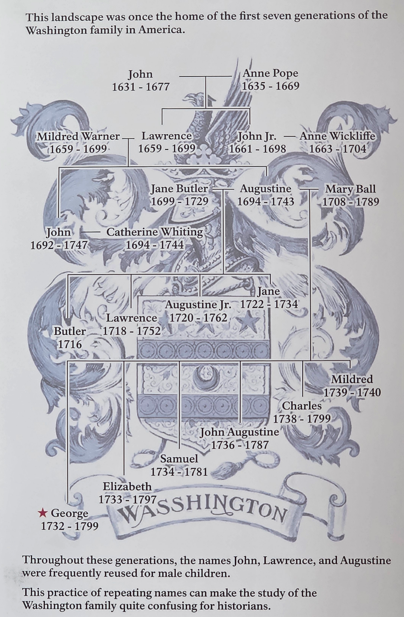
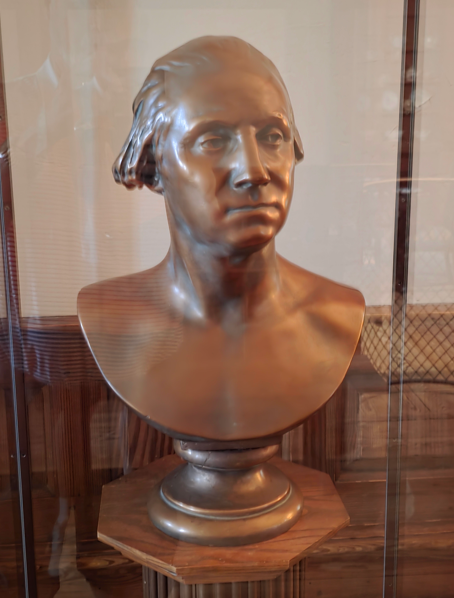
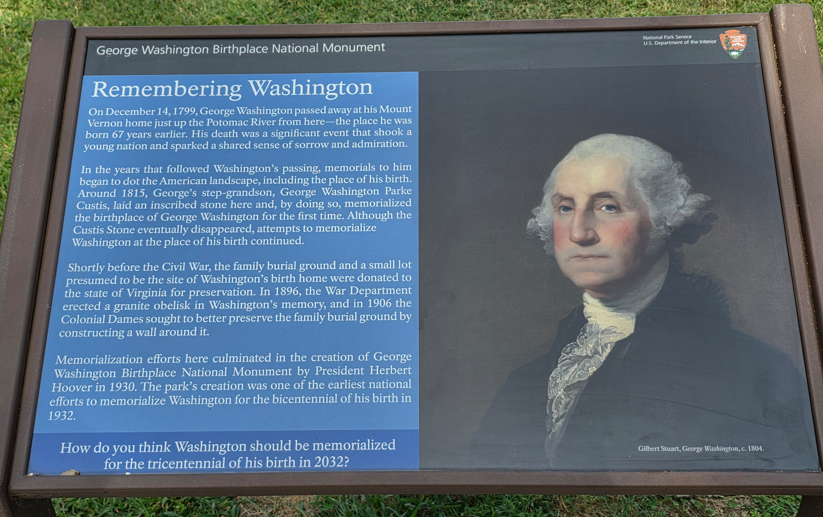
Washington was born here in Westmoreland County, and he moved to Fredericksburg’s Ferry Farm when he was 6 years old.Washington Birthplace monument obelisk.This outline marks the archeological remains of a brick foundation representing a substantial 18th century home that belonged to the Washington family.Colonial Revival GardenPathway to memorial house.Washington Birthplace Memorial House. This house was built in 1932 to commemorate the 200th anniversary of Washington’s birth. The Washington family farm backed up to Popes Creek.Colonial Revival Kitchen.Tobacco barnTobaccoFarm WorkshopWalnut treeFig treeWashington family treeBust of Washington inside the Memorial House.
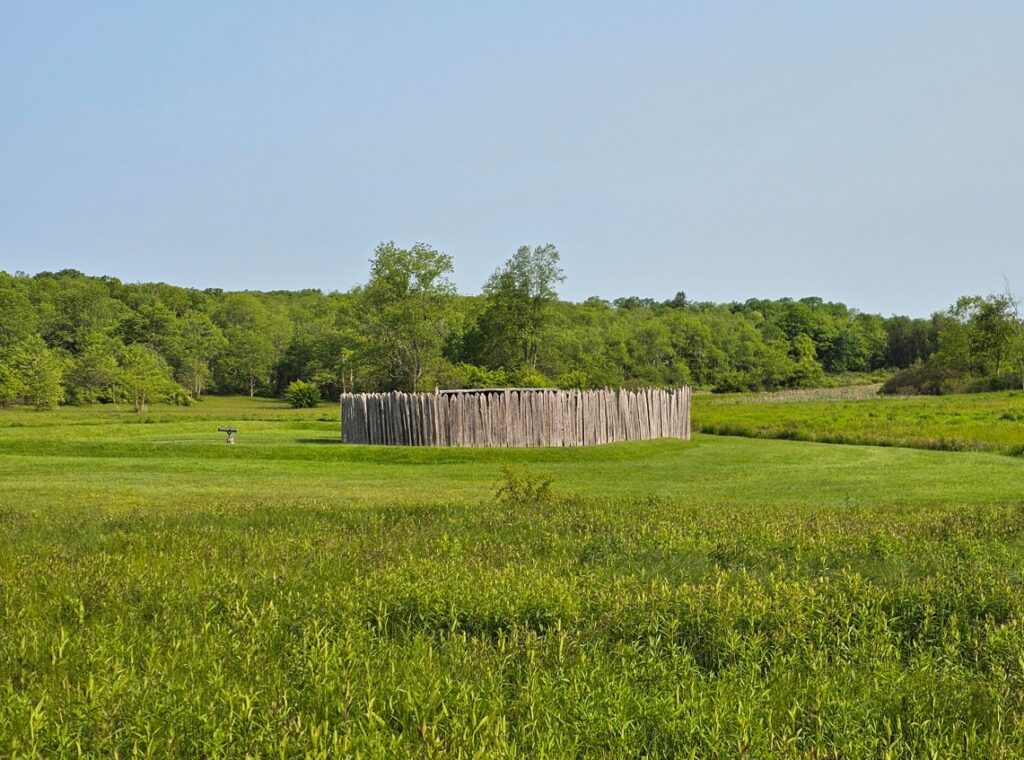
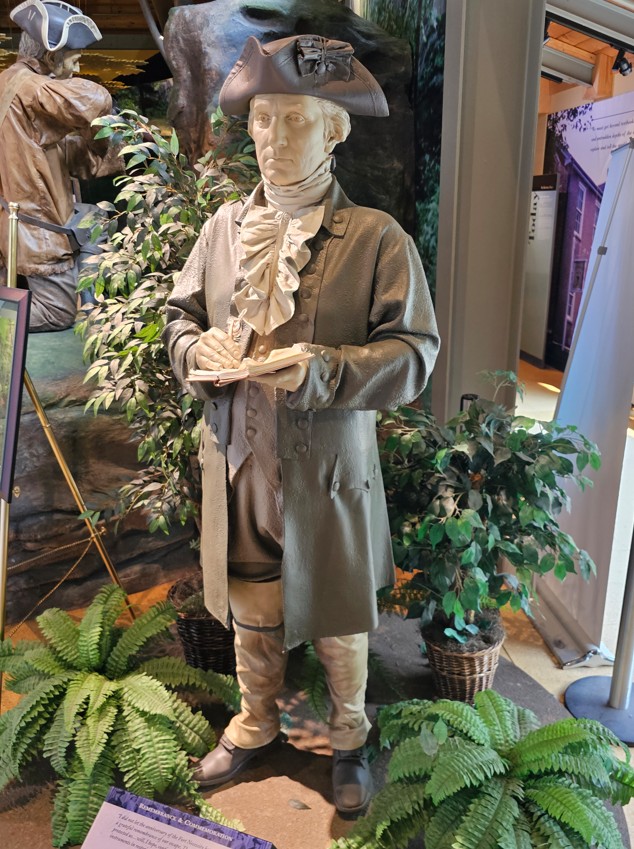
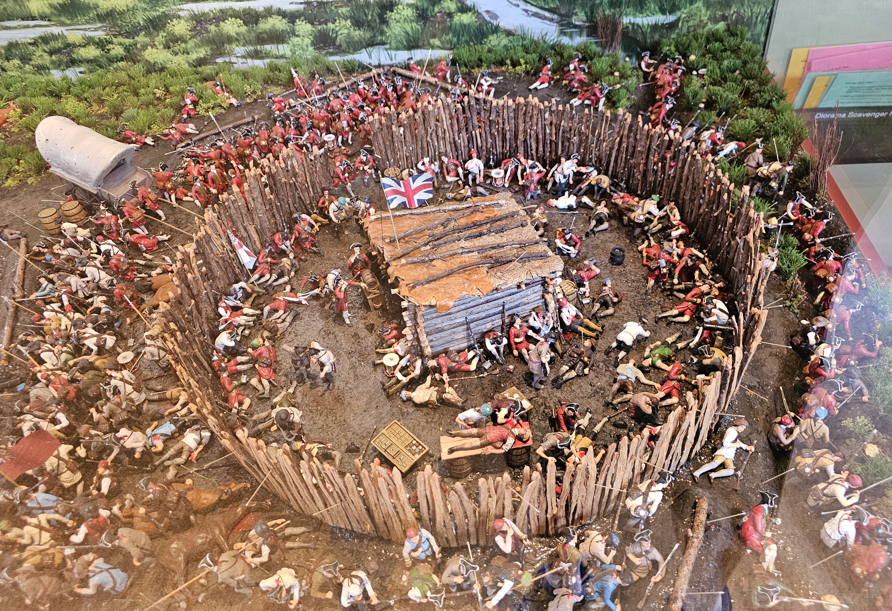
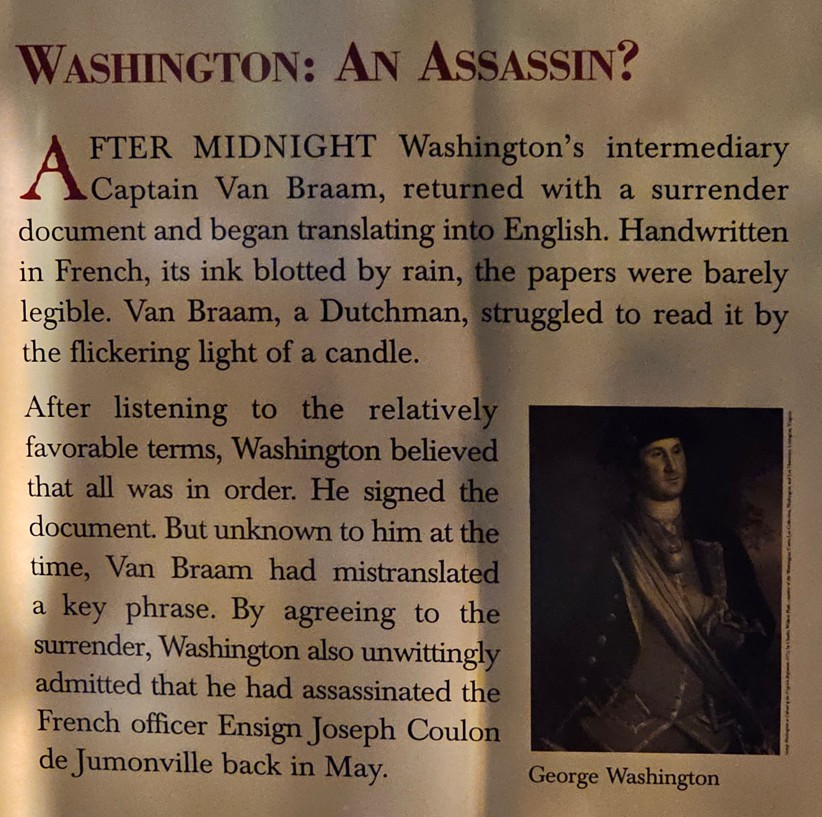
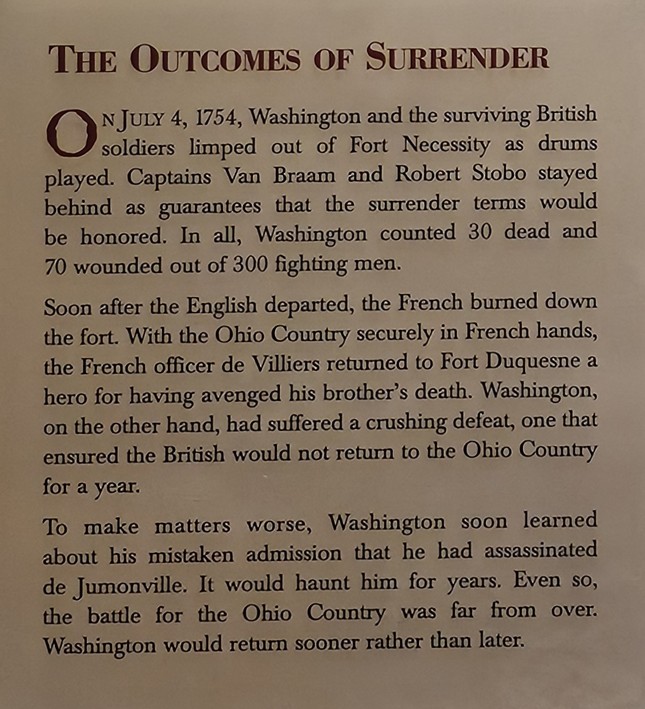
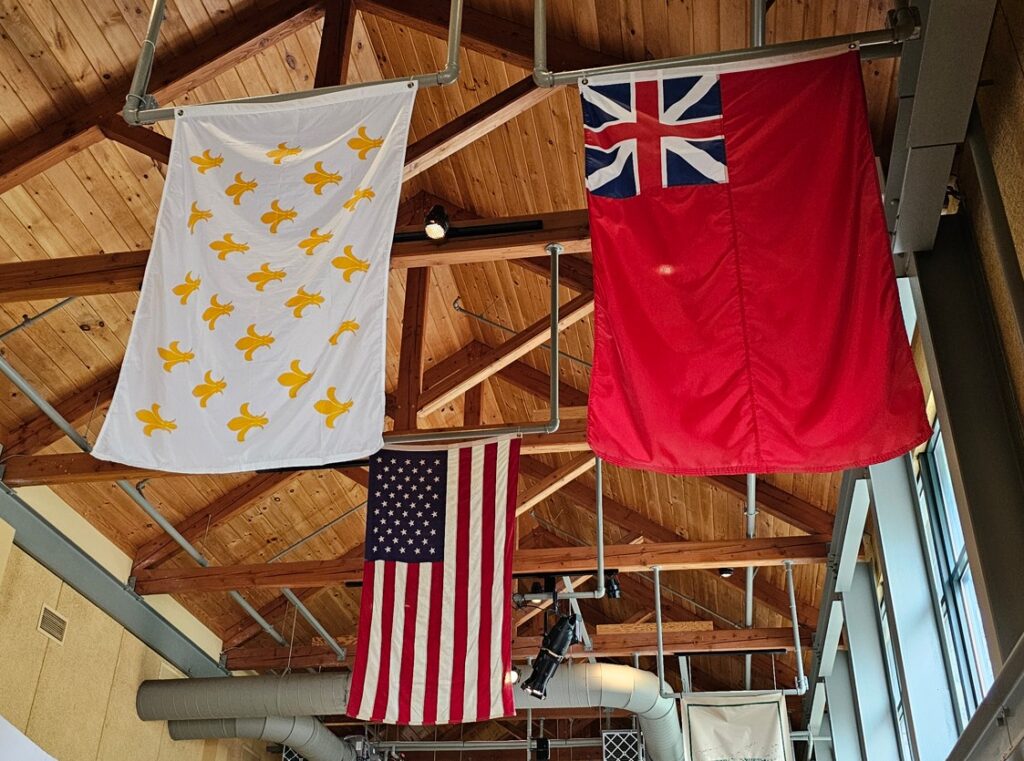
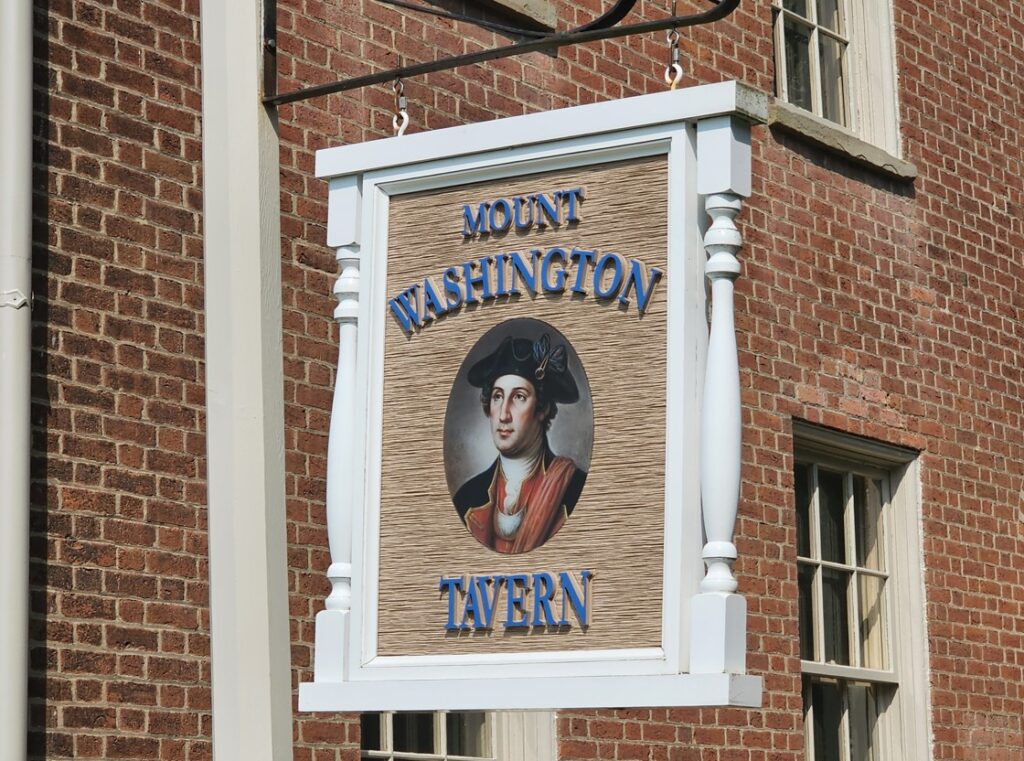
The Battle of Fort Necessity, a significant prelude to the French and Indian War, was the only battle in which George Washington ever surrendered. The battler occurred July 3, 1754, near the site of the Battle of Jumonville Glen, Washington’s Indian allies killed French officer Joseph Coulon de Villiers, Sieur de Jumonville. In anticipation of French retaliation, Washington fortified his camp at Great Meadows and named it Fort Necessity. On July 3, a larger French and Indian force, led by Jumonville’s half-brother, Louis Coulon de Villers, attacked. After a day-long fight, facing heavy rain, flooded trenches, and dwindling supplies, Washington accepted the French terms of surrender. Unknowingly, he signed a document written in French that confessed to assassinating Jumonville. On July 4, Washington and his troops departed and the French torched the fort.
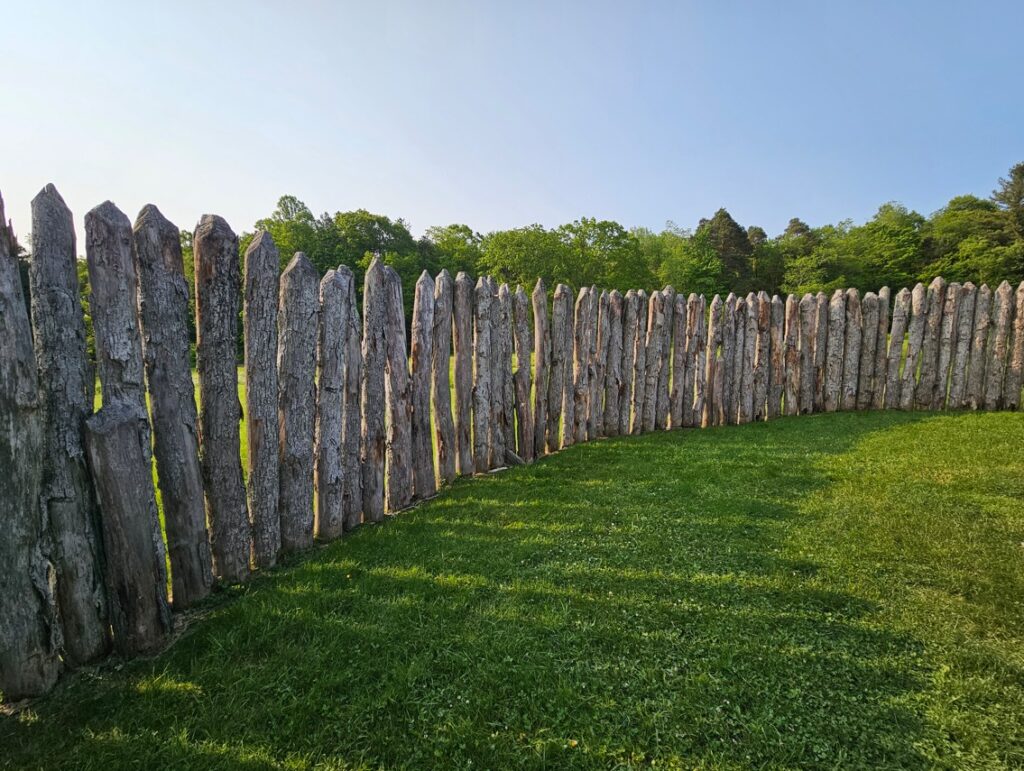
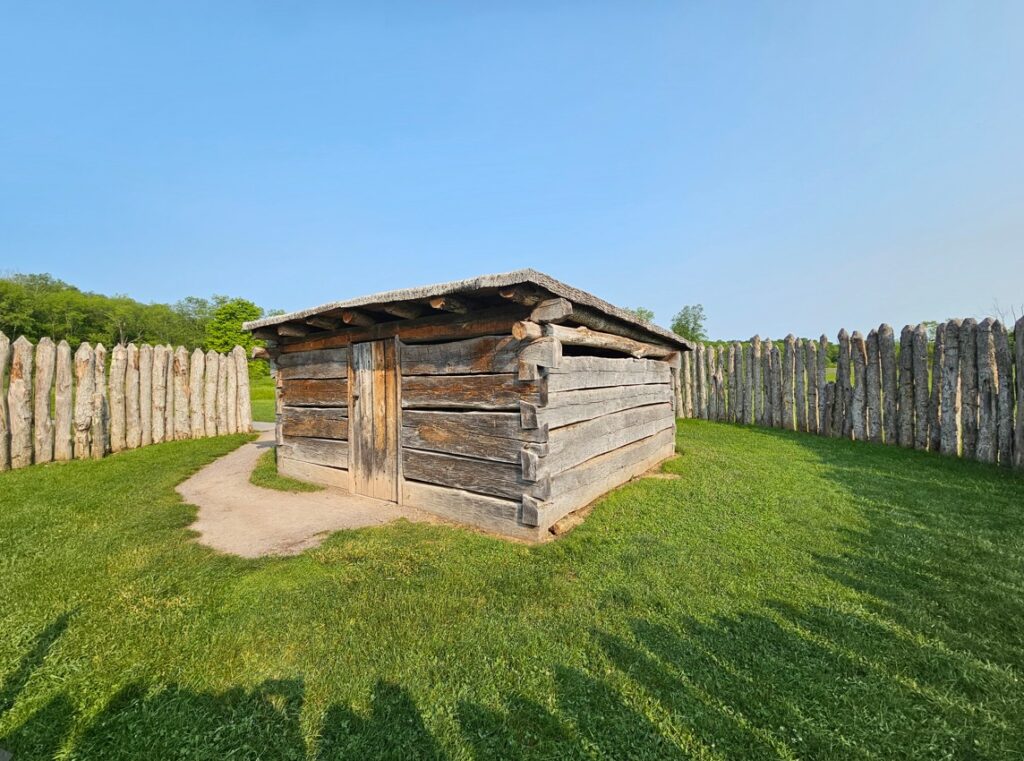
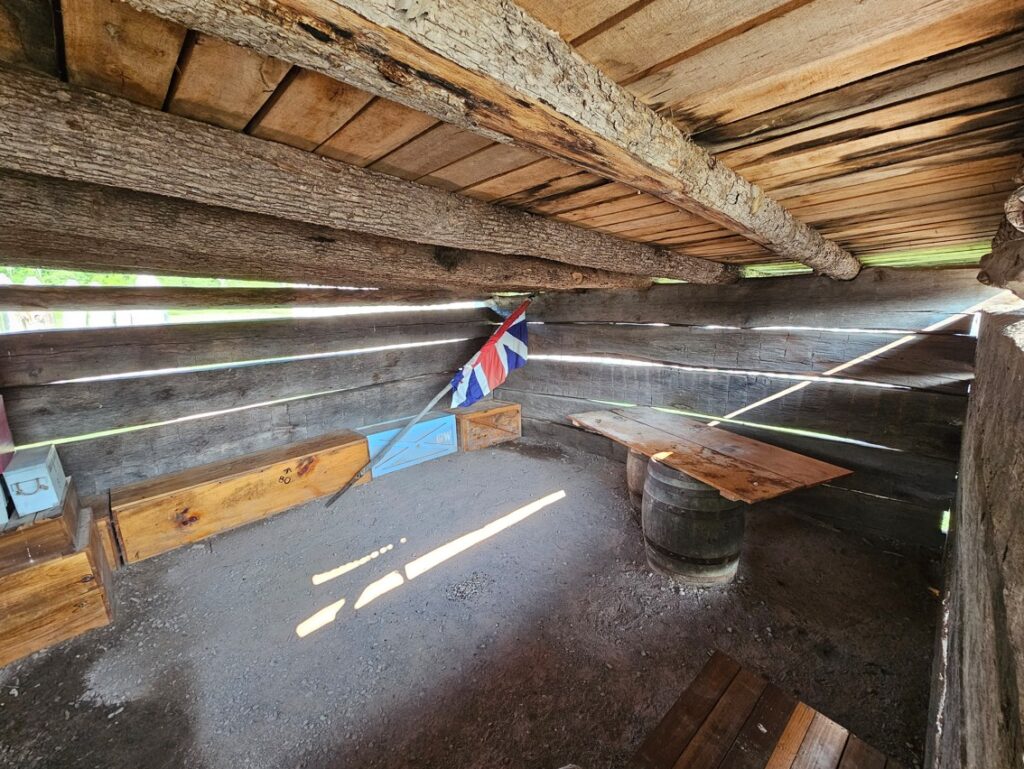
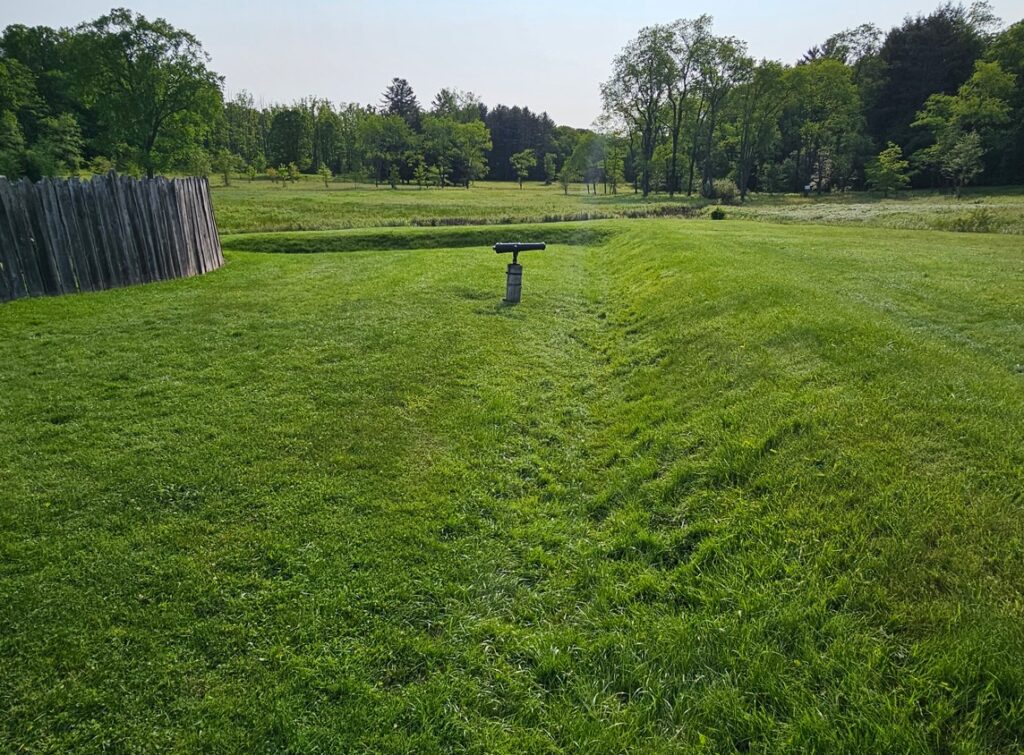
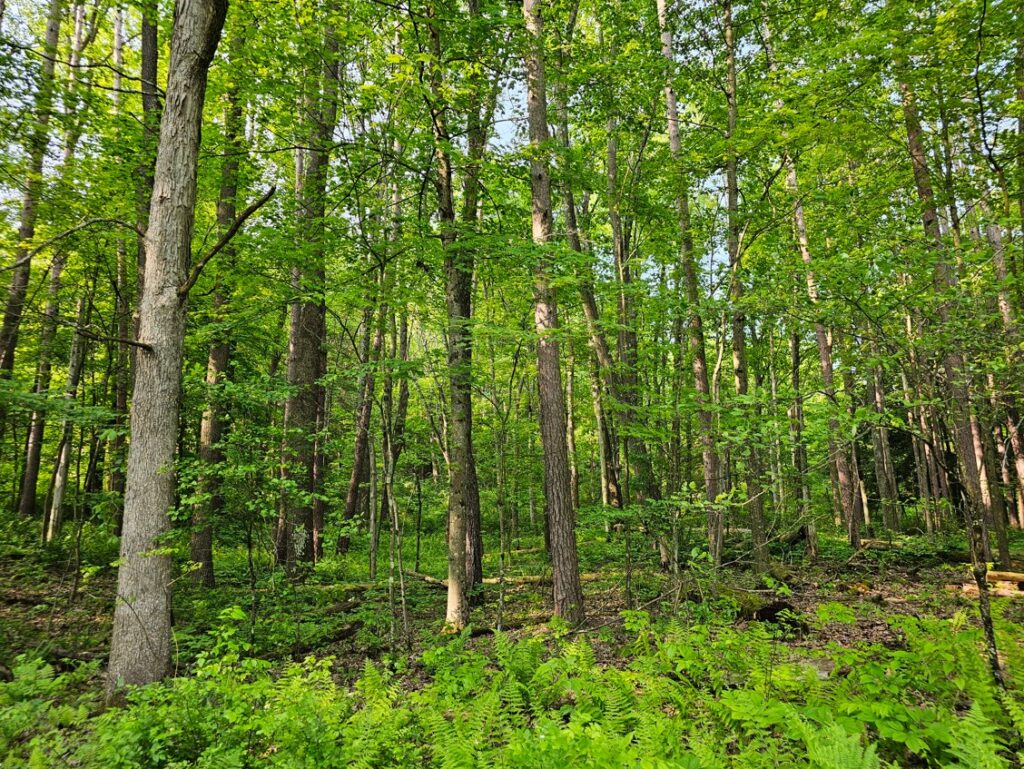
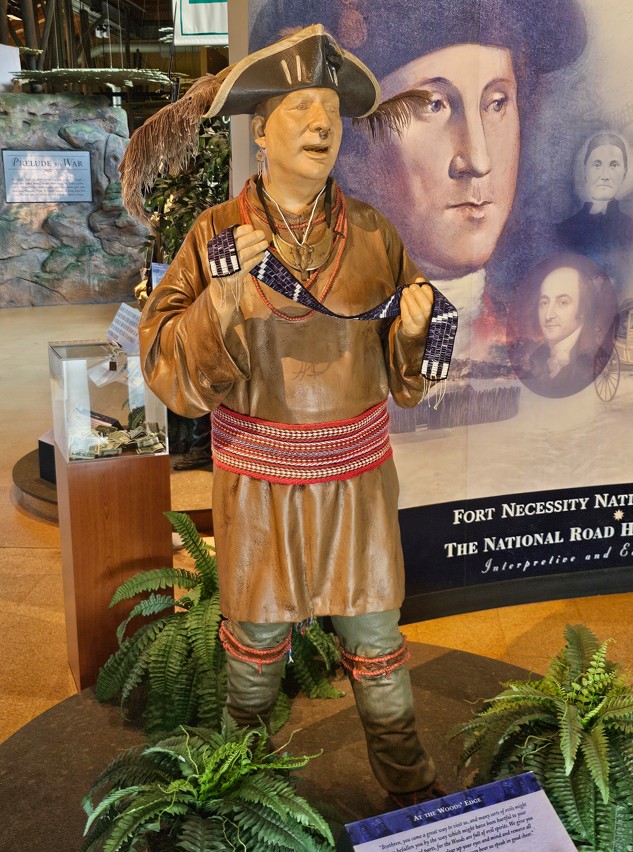
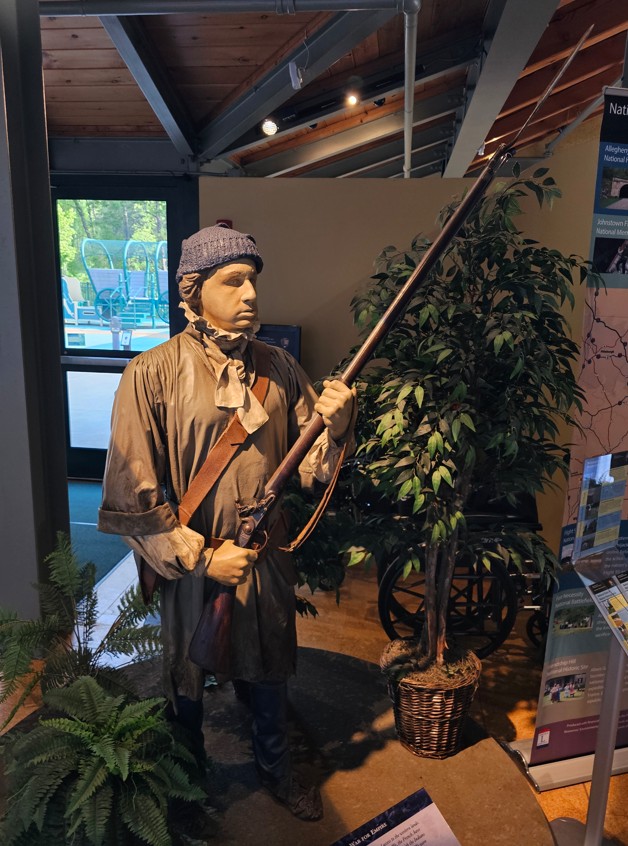
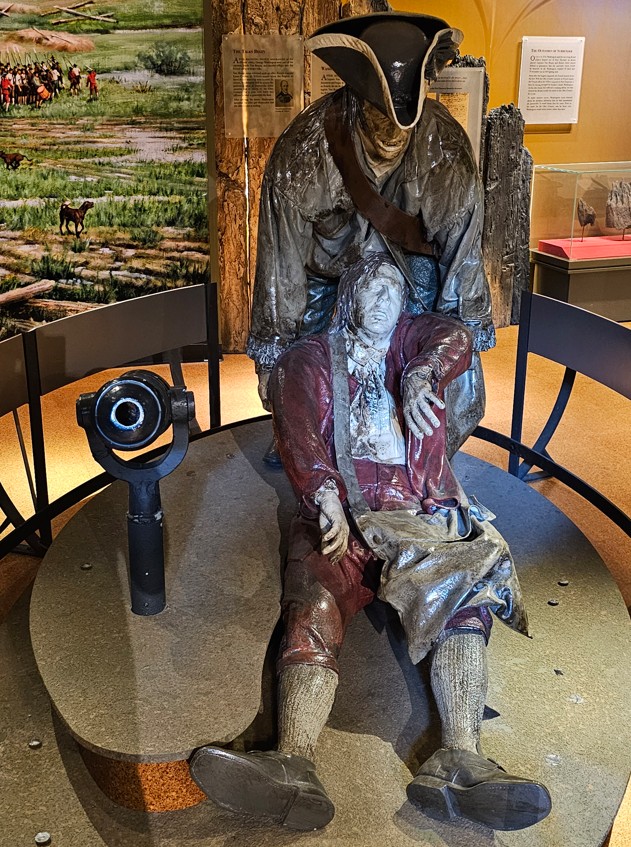
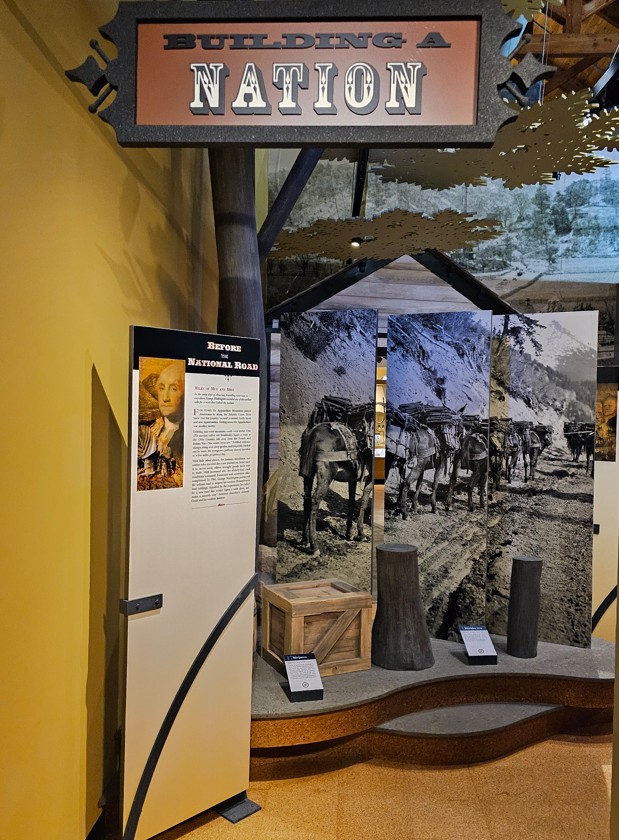
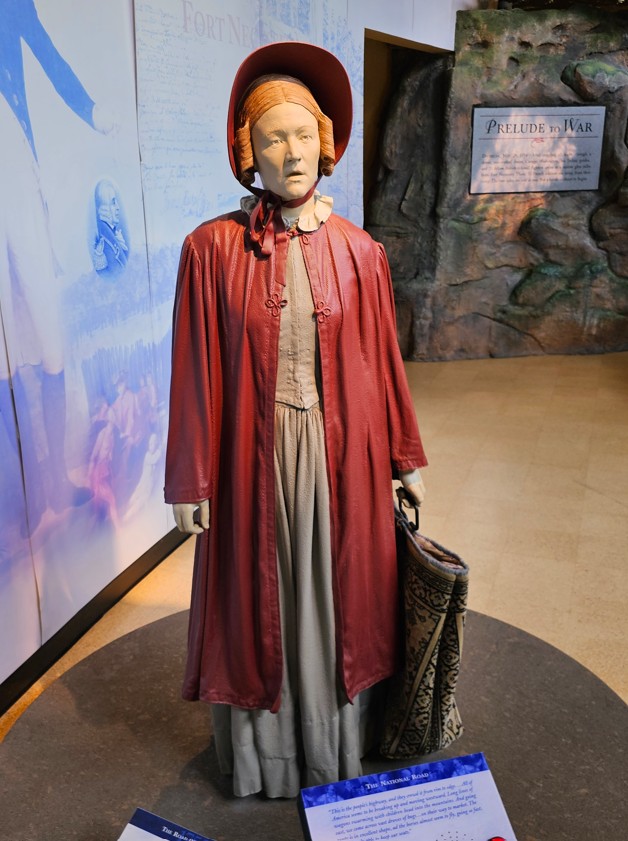
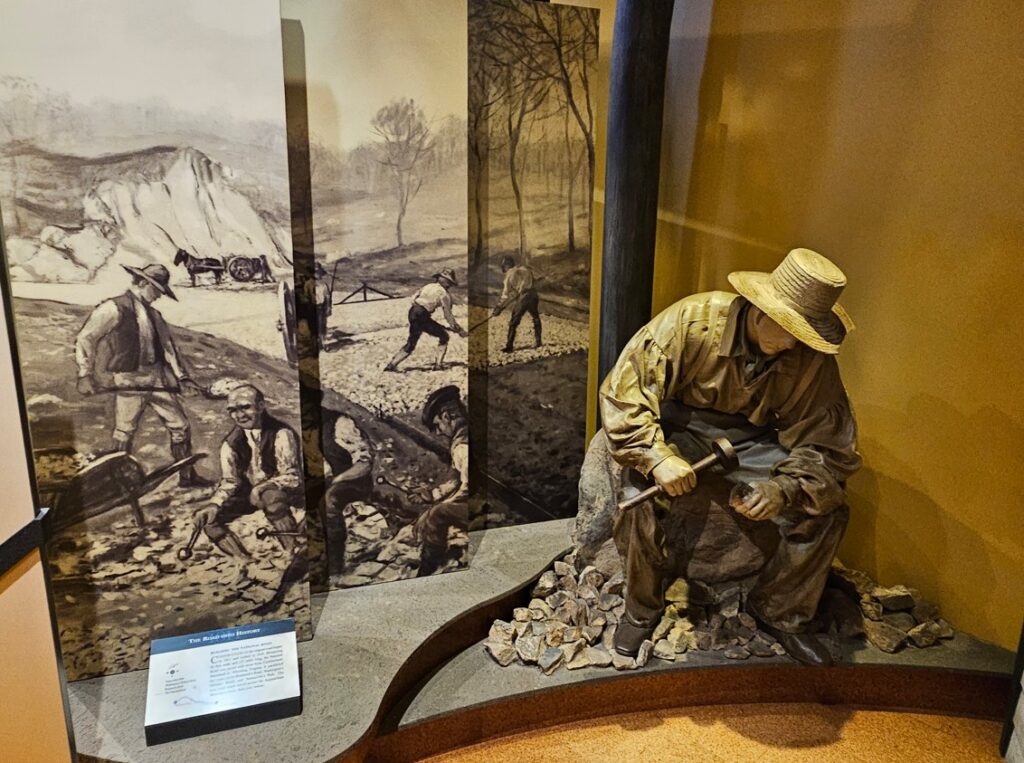
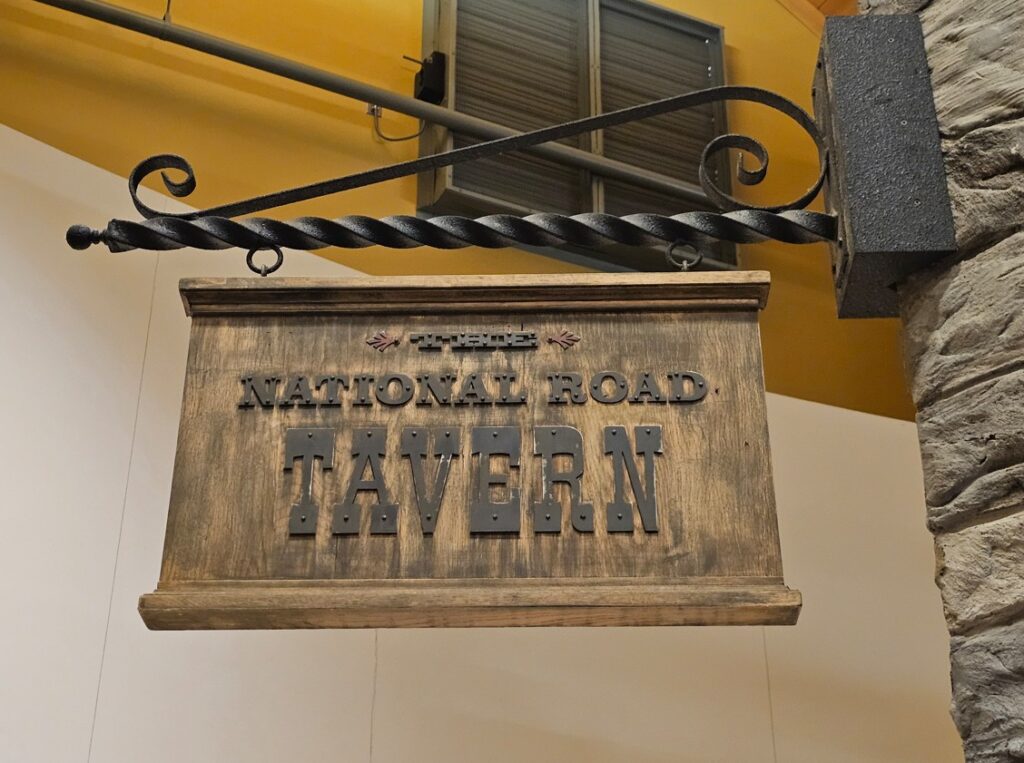
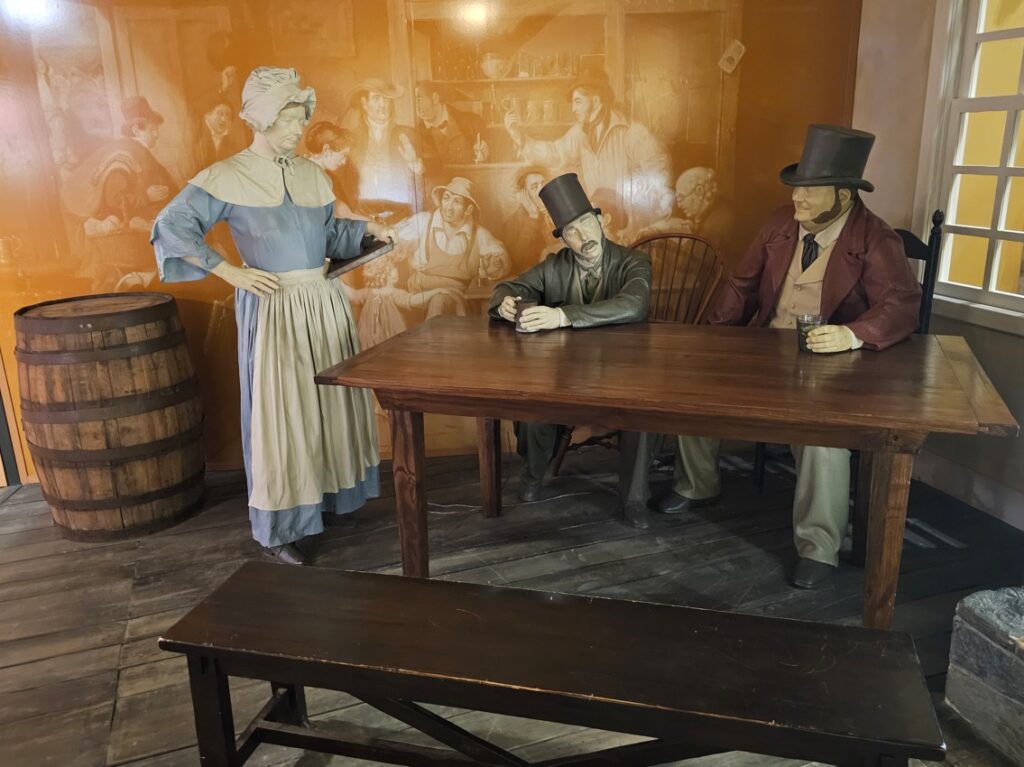
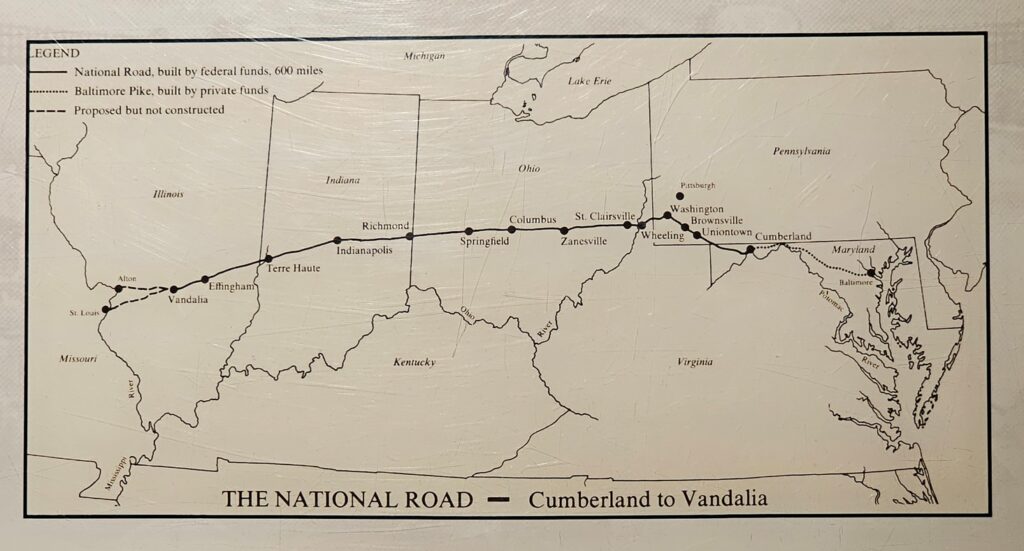
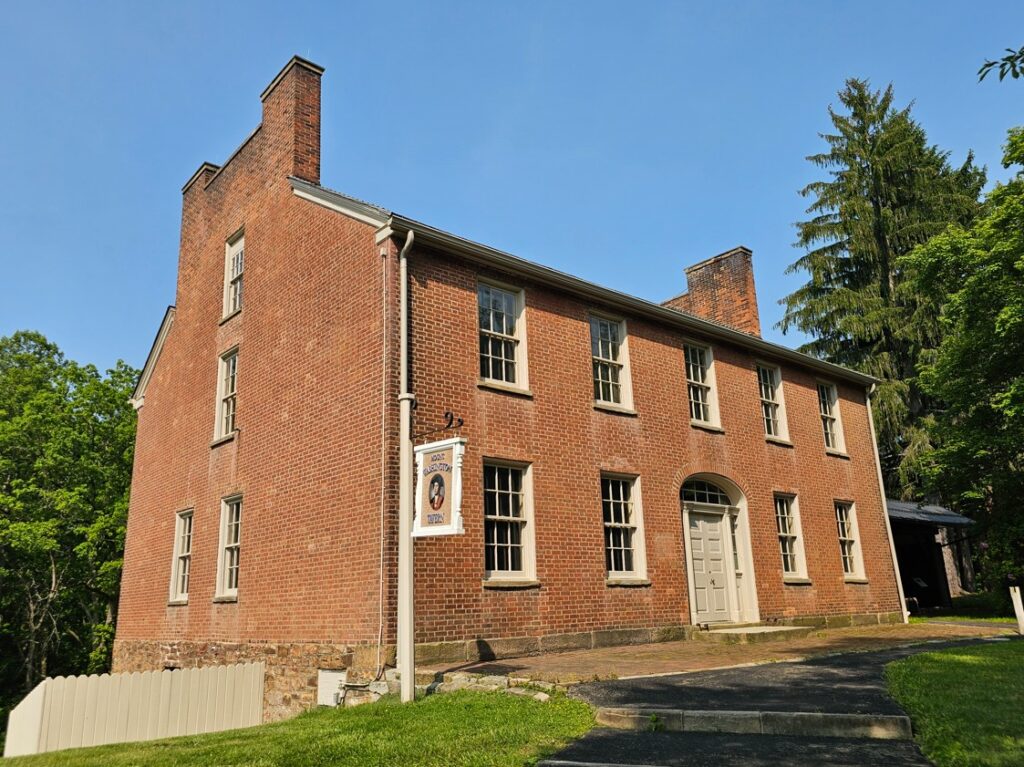
The rebuilt Fort NecessityInside wall of the small fort.Inside the shelter. Trench around the fort, and a small cannon. About 800 French and Indian soldiers emerged from these thick woods as they began the attack on the fort.30 years after the battle here, Washington returned to this site. His experiences here defined his life. He wrote “I did not let the anniversary of the Fort Necessity battle pass without a grateful remembrance of our escape. The same Providence that protected us will, I hope, continue his mercies and make us happy instruments in restoring peace and liberty”.Washington and his troops had to travel through dense forests with many dangers. To help the visitors overcome the physical and spiritual hardships of their travel, Indians performed a cleansing ritual known as “At the Woods Edge Ceremony”.In the 1750s three great cultures collided here at Fort Necessity. The French pushed south and west from Canada, British settlers pressed from the east, and American Indians were caught up in the middle. Each group felt they were in the right to claim this land.Battle displays in the Visitor Center.Battle combatants.Diorama of the battle at Fort Necessity.The story of Washington’s only surrender.The National Road.Today, US Route 40 passes by this battlefield site. This was the first federally funded highway built by the US government, called “The National Road”, and is considered the road that made the US a nation. Nemacolin, a Delaware Indian scout, blazed the initial route as a pack trail in 1751-1752, from Wills Creek to Brownsville PA. It was a very busy road in the early 1800s. Originally the National Road ran from Cumberland MD to Wheeling WV, cutting a passable road through the mountains. Ultimately the National Road, combined with Baltimore Pike, ran from Baltimore MD to Vandalia IL.Construction of the original National Road started in 1811 and completed in 1818. It was 66 feet wide and 137 miles long. It made travel across the Appalachian Mountains faster than ever before. It paralleled the route cut but Braddock’s Road and Namacolin’s Path.Scenes along the National Road.Mount Washington on US Route 40 today, near Fort Necessity Battlefield.
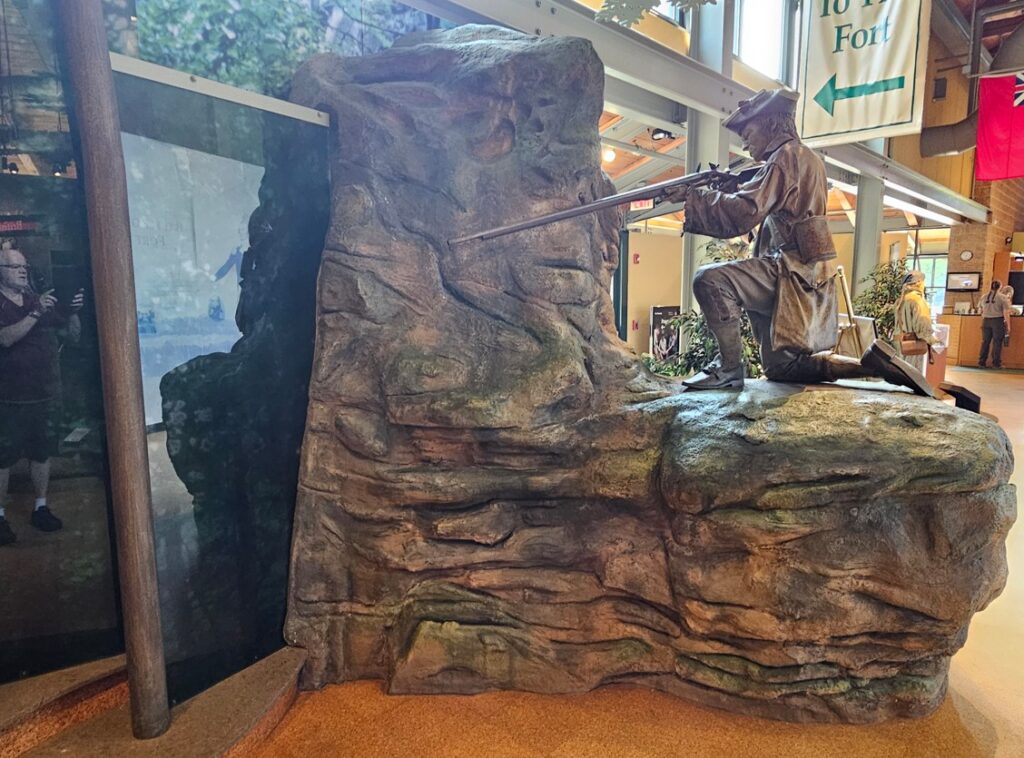
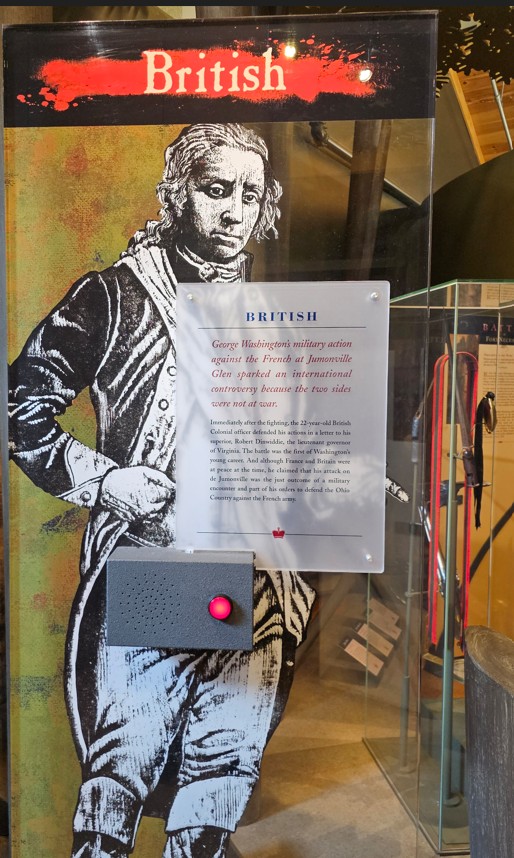
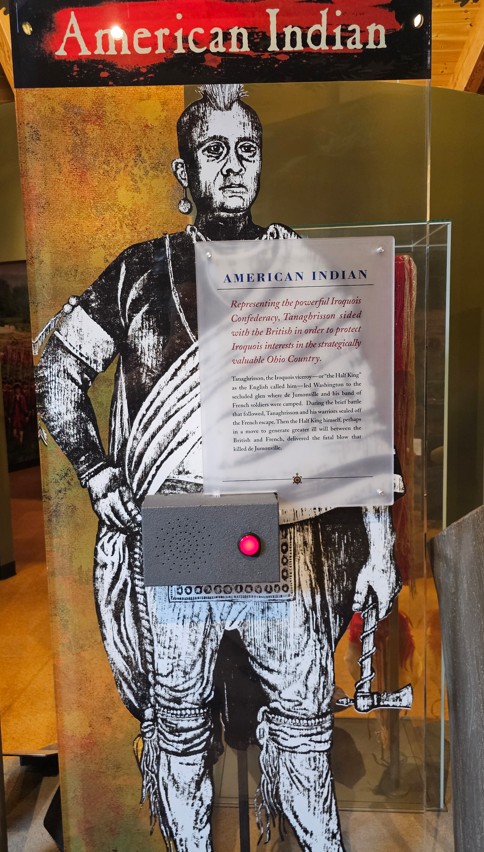
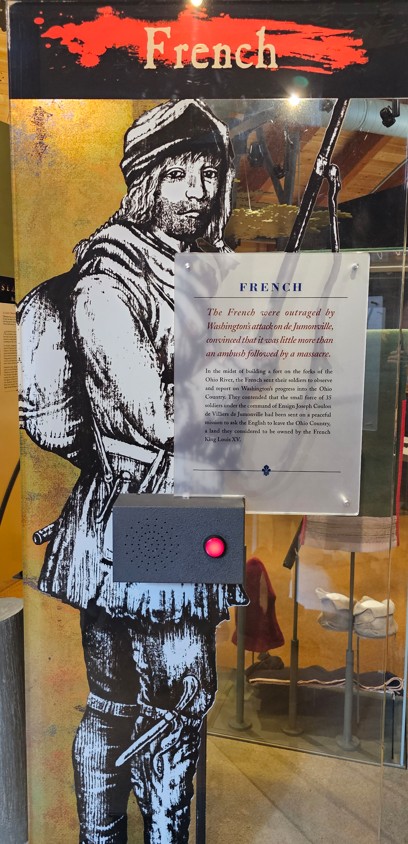
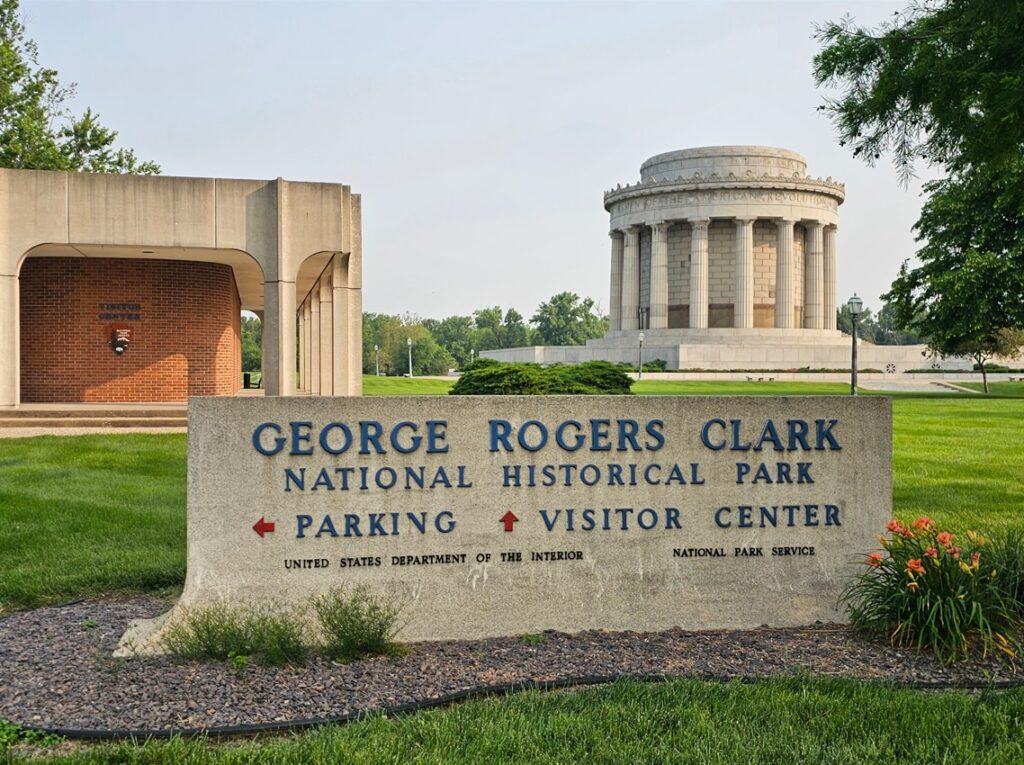
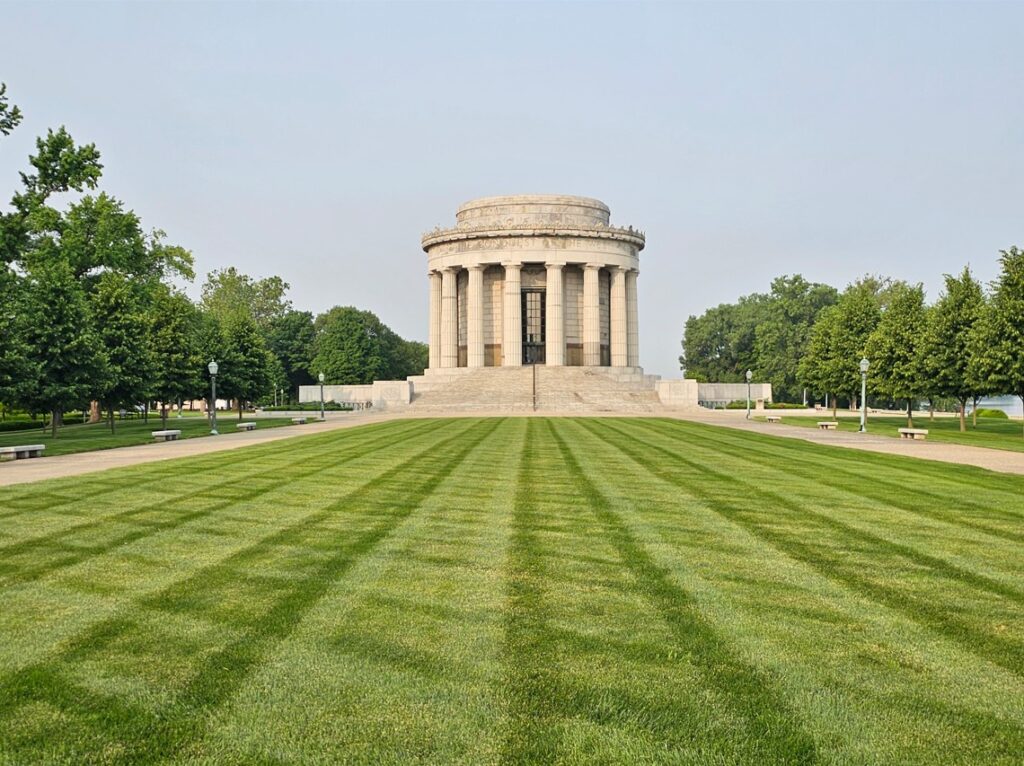
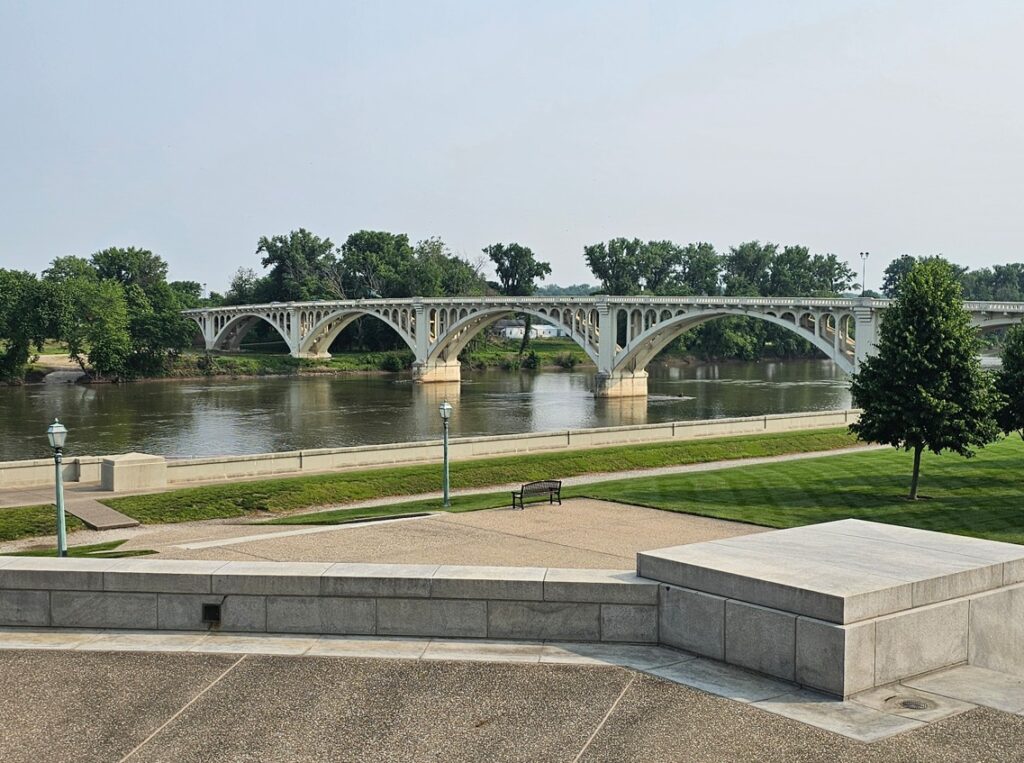
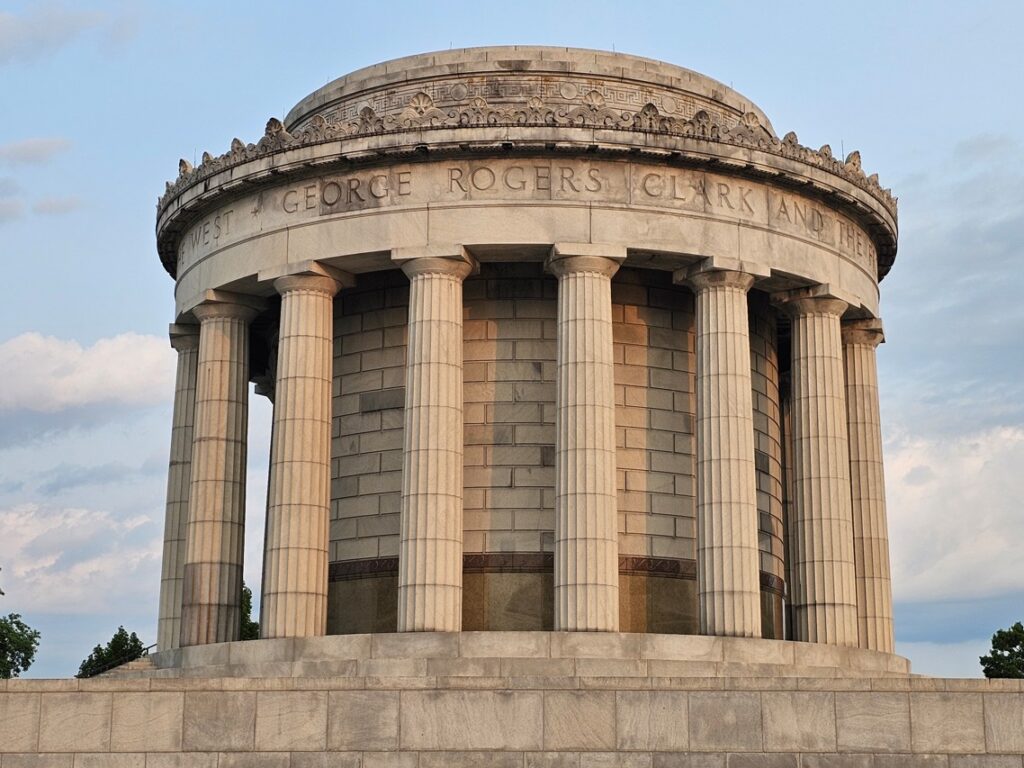
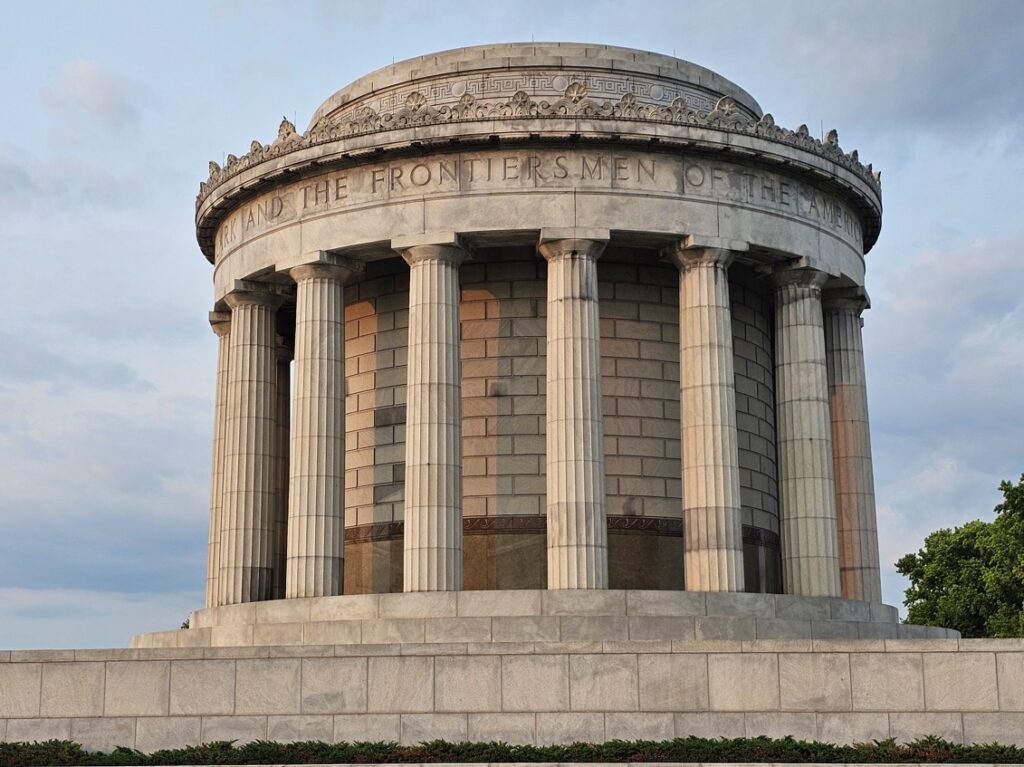
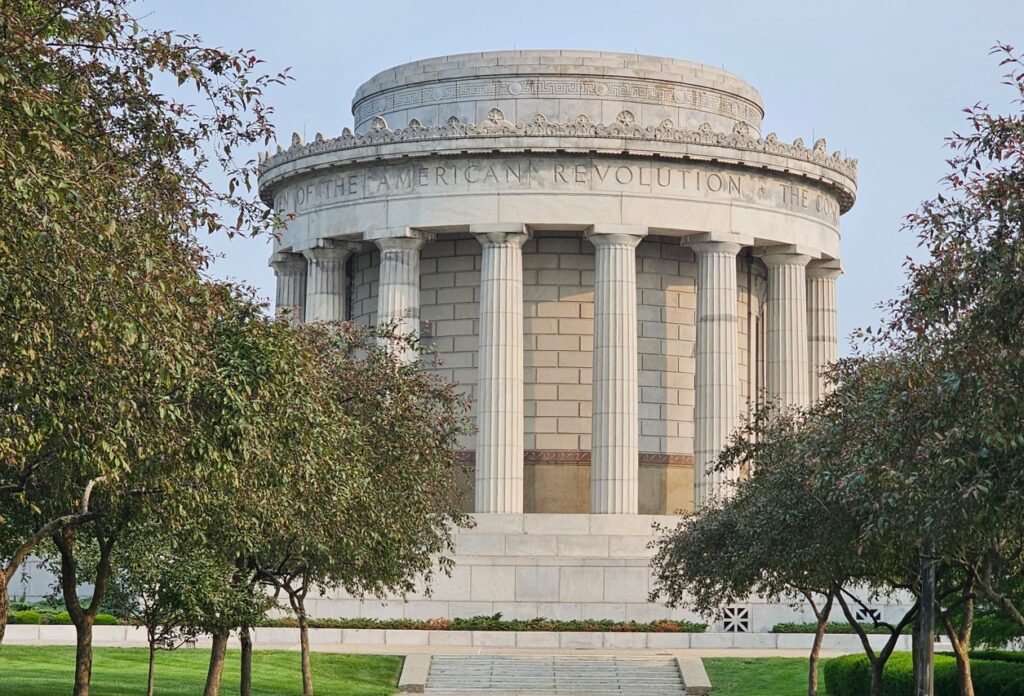
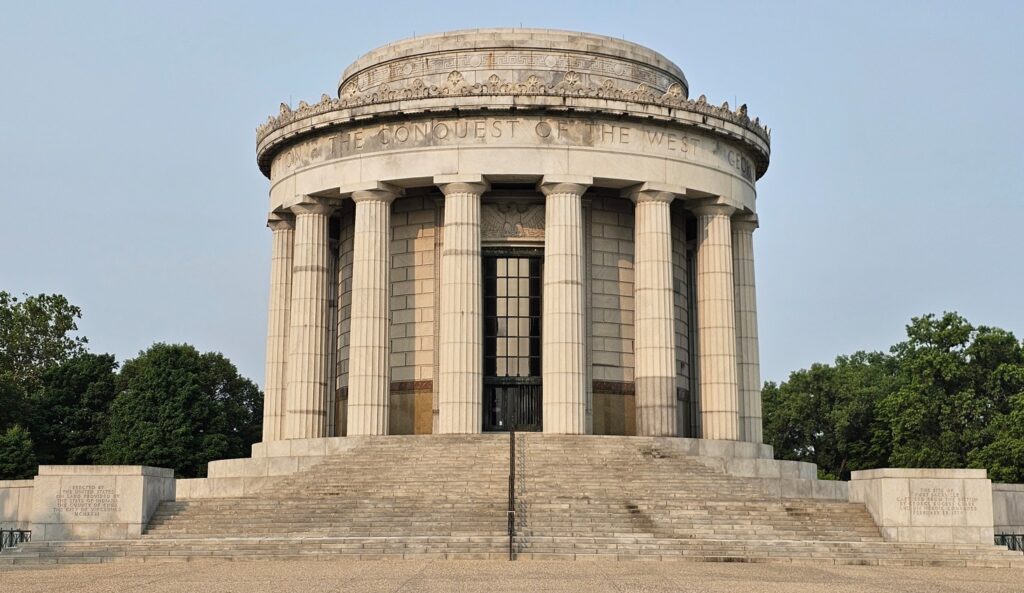
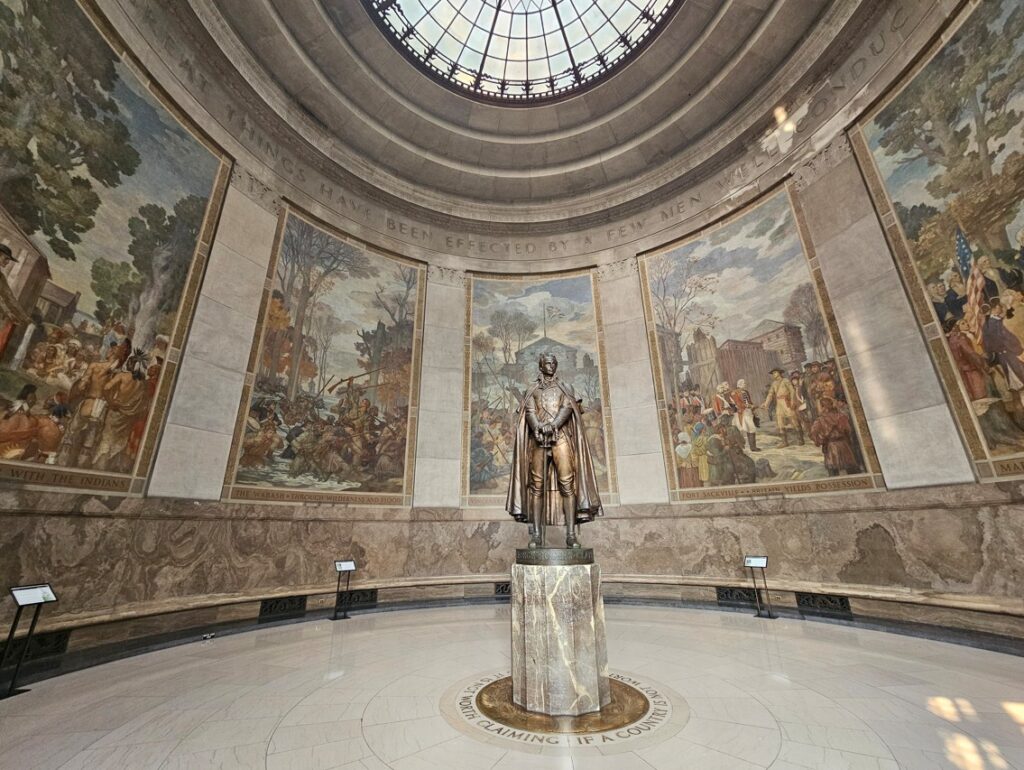
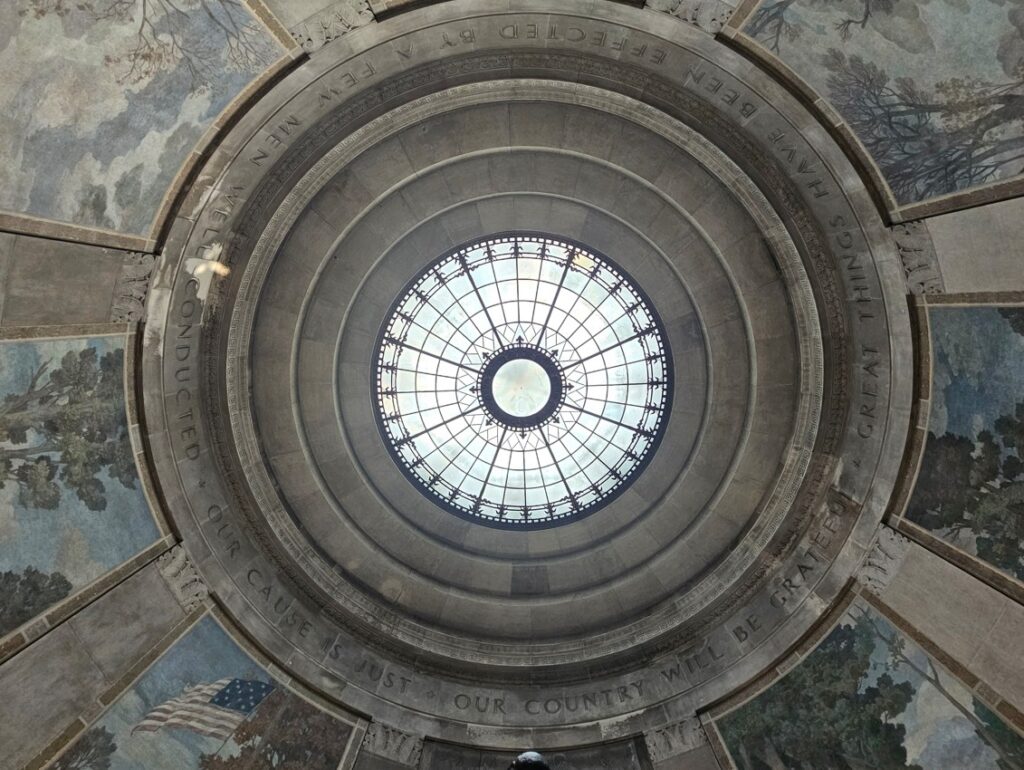
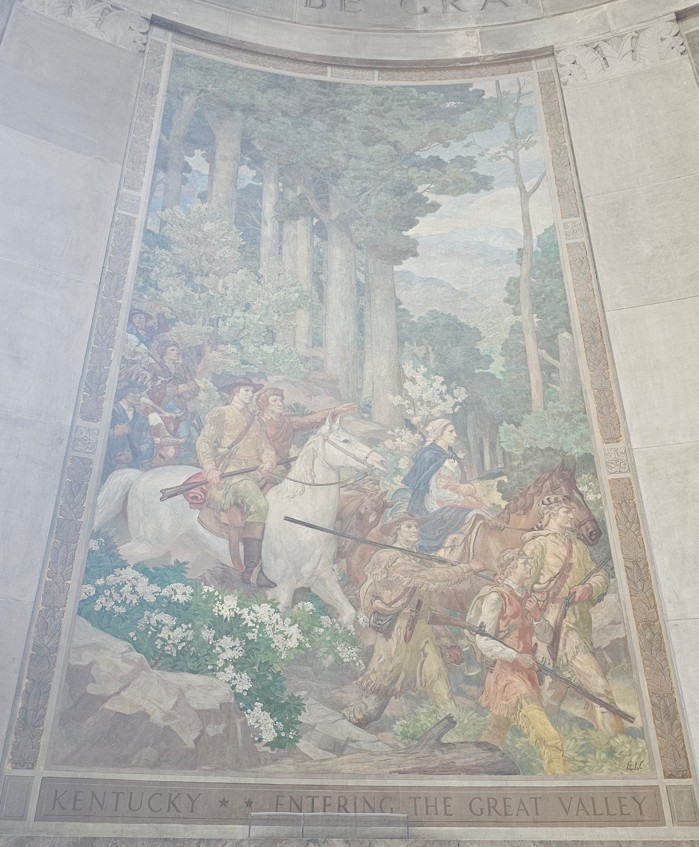
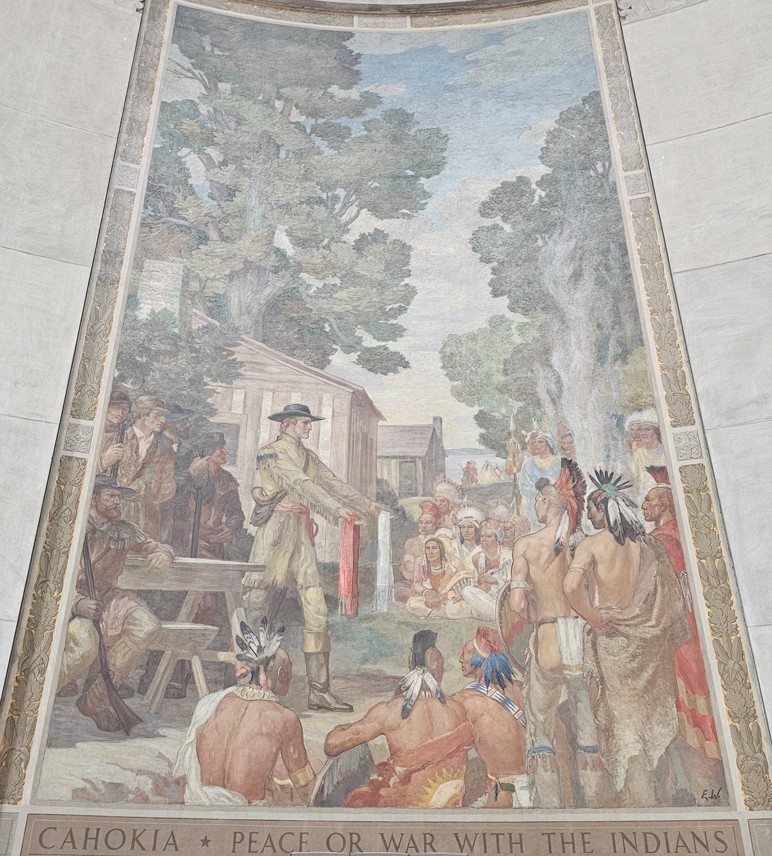
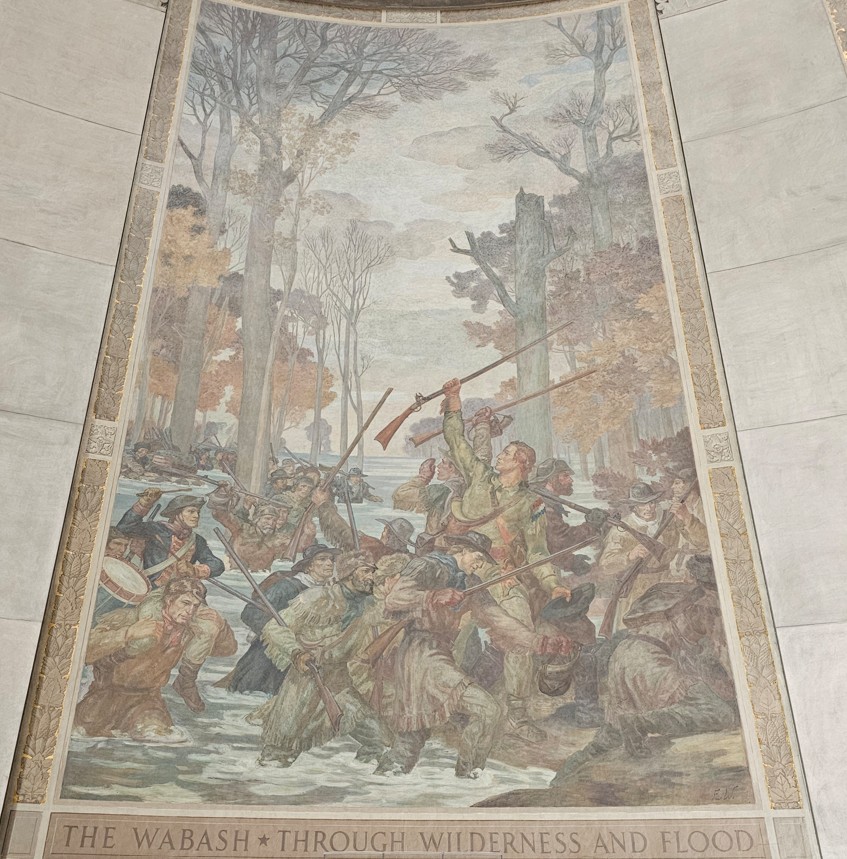
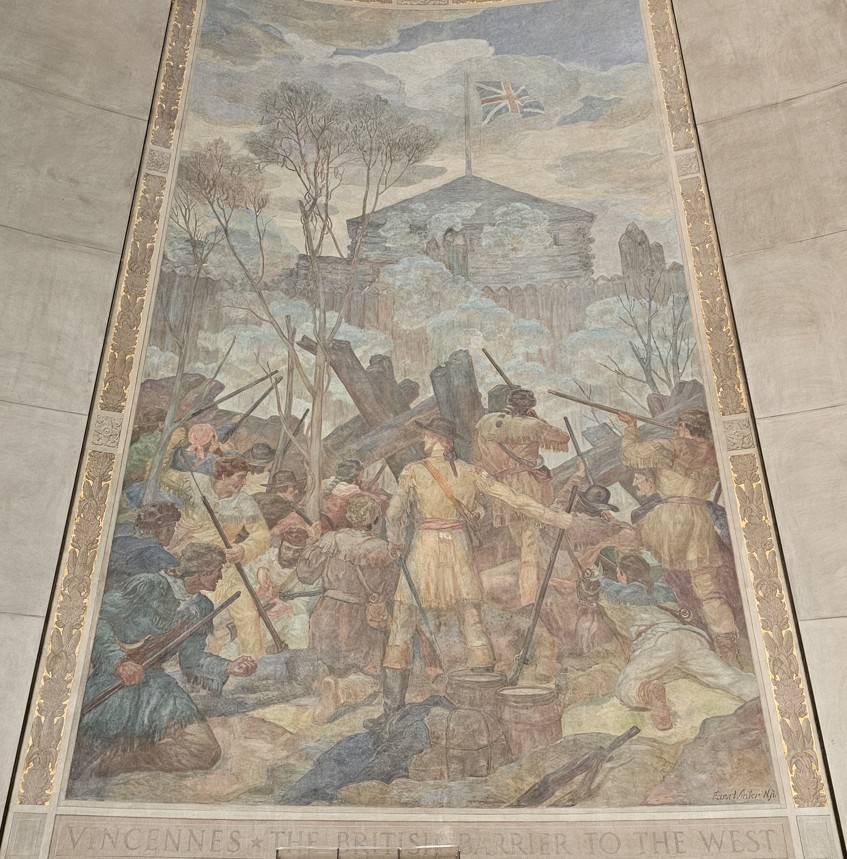
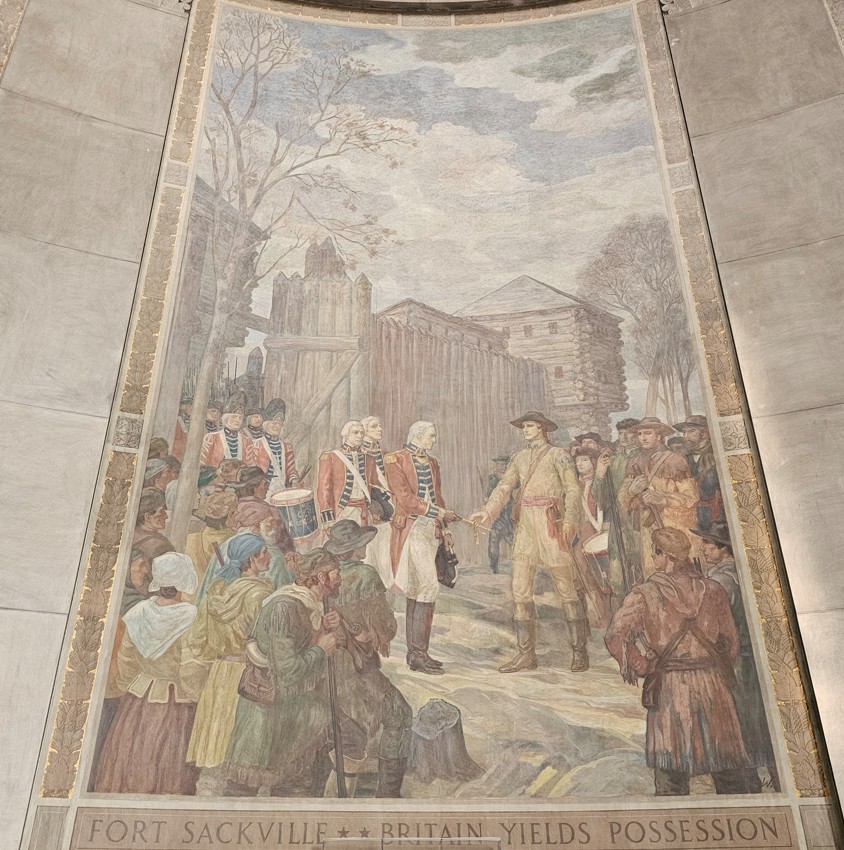
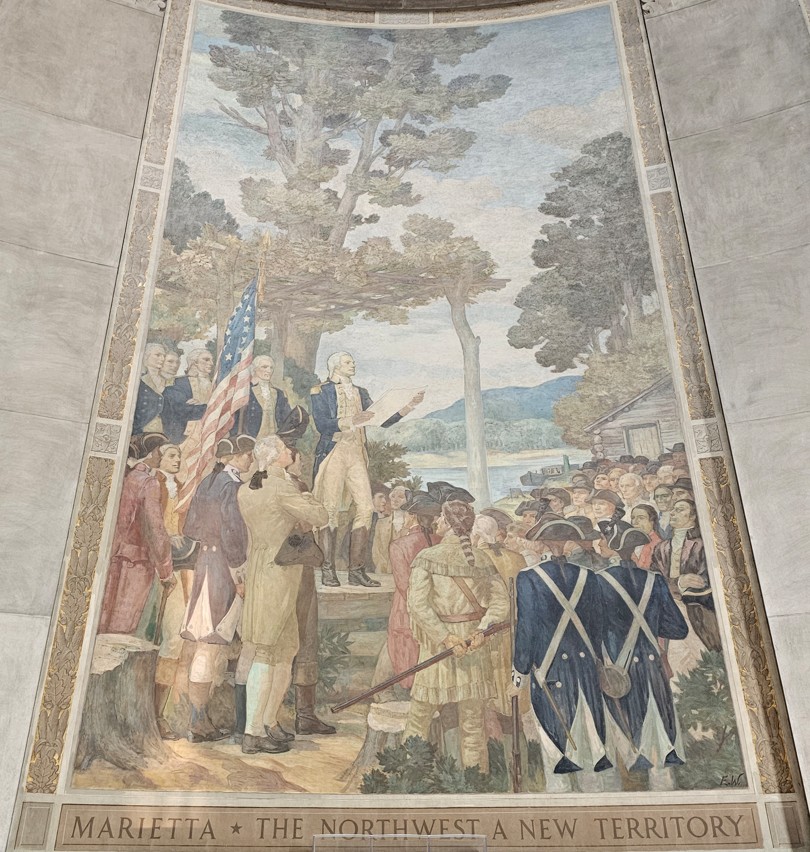
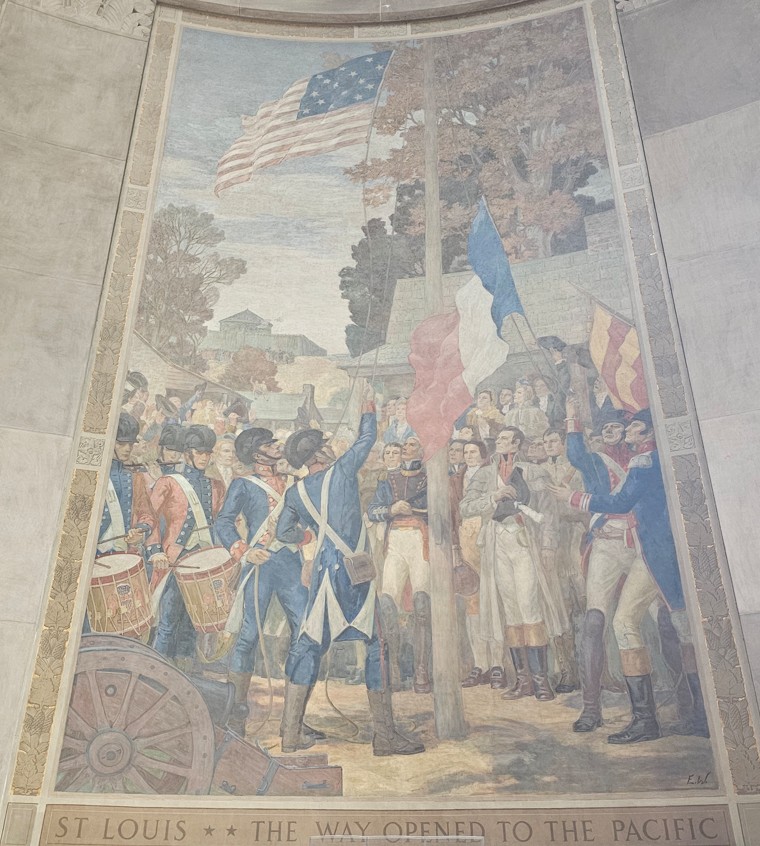
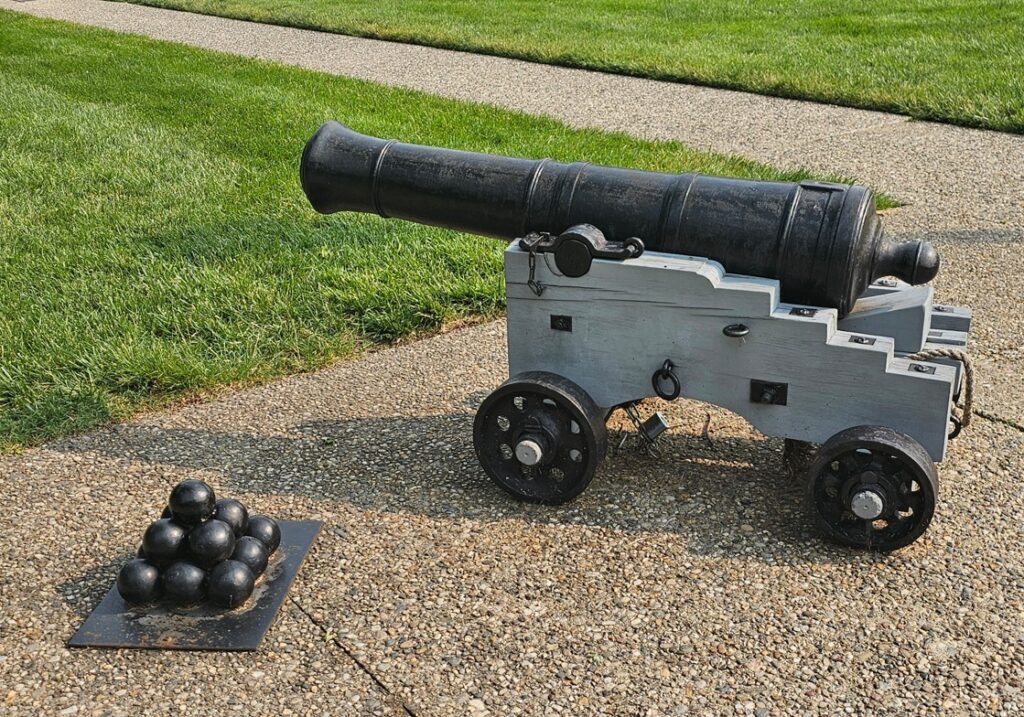
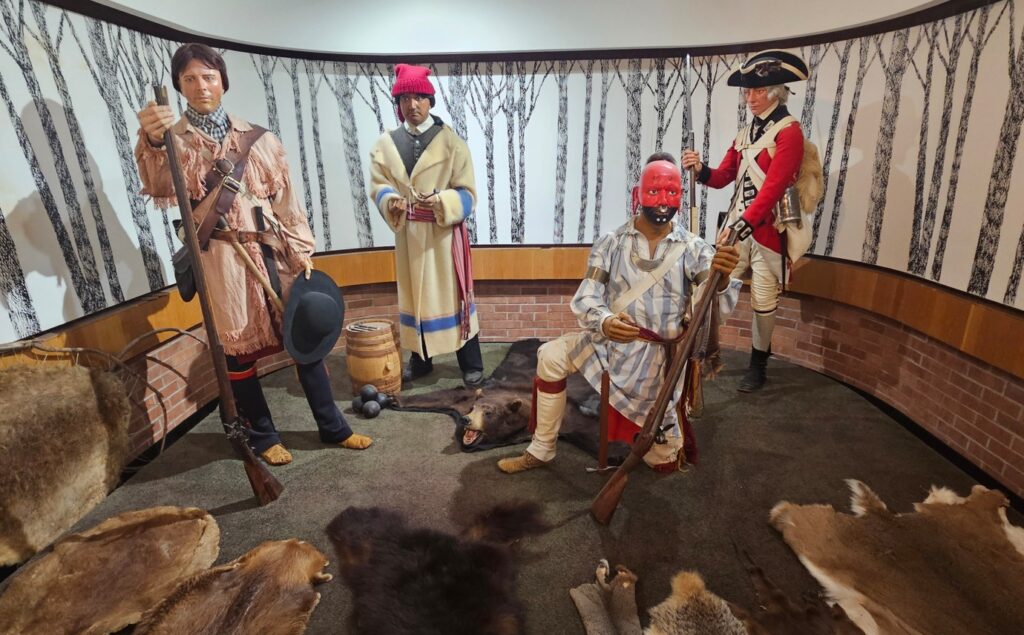
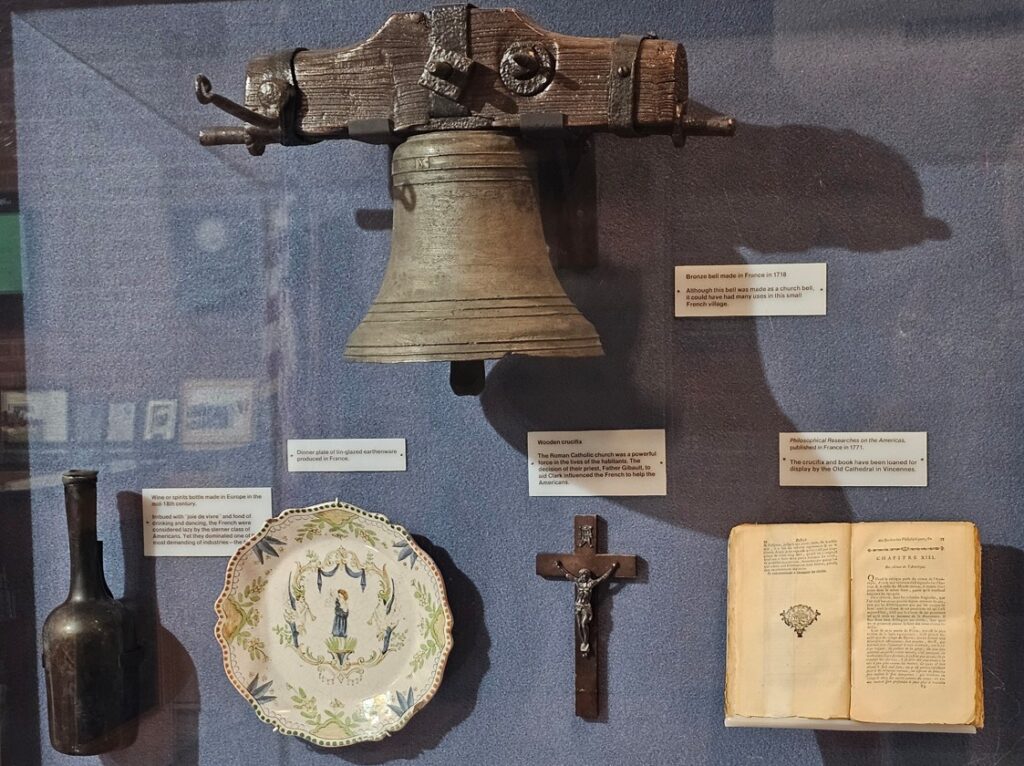
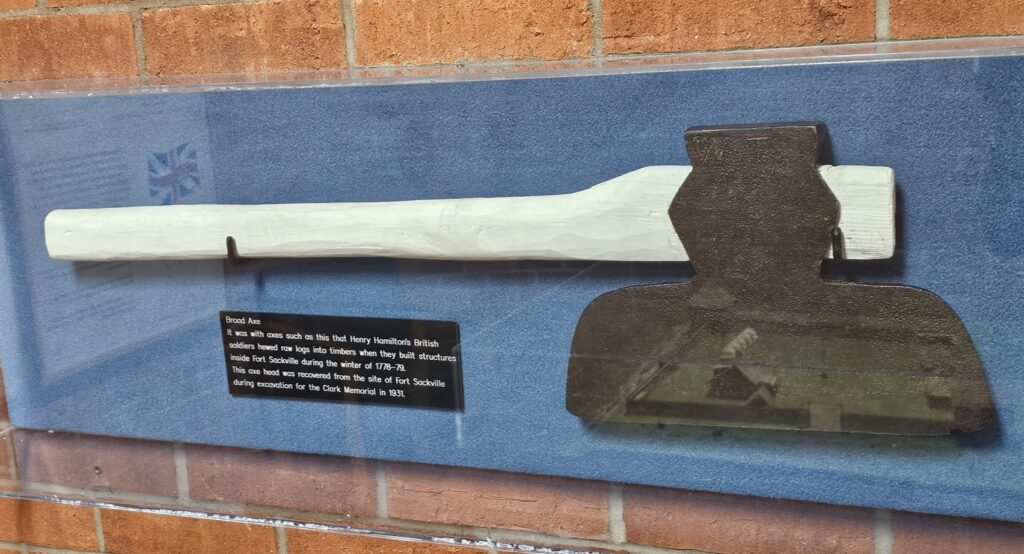
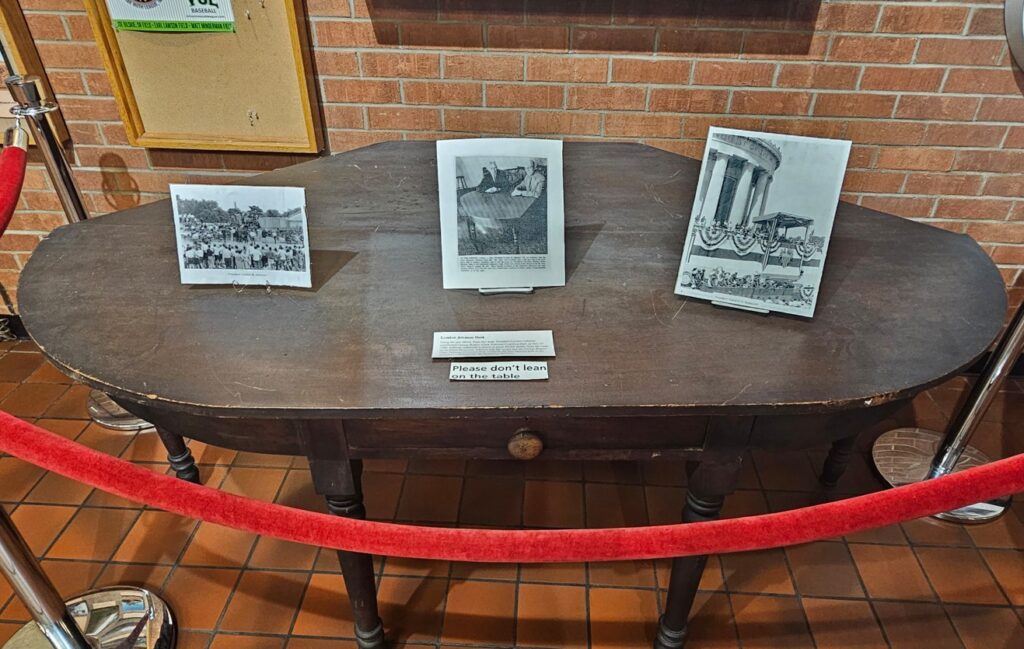
This monument memorializes George Rogers Clark’s daring victory over the British at Fort Sackville (current day Vincennes) in 1779, which was instrumental in winning the Revolutionary War, and opening the west to American expansion westward.The mall reminds you of the monuments in Washington DCThe Lincoln Memorial Bridge over the Wabash River reminds you of the Francis Scott Key Bridge in Washington DC.George Rogers Clark……and the Frontiersmen……of the American Revolution.The Conquest of the WestGeorge Rogers Clark statue in the center of the memorial.The rotunda.Panels chronicle the history of the area. This one depicts George Rogers Clark on a white horse leading settlers across the Allegheny Mountains.In 1778 Clark called for a conference at Cahokia to negotiate peace with the Native American tribes. He offered each tribe a choice of war or peace. Peace if they sided with the Americans in the Revolutionary War. Choosing the while belt meant they would side with the Americans, red for siding with the British. Most tribes chose to support the US, but some sided with Britain.In December 1778 British forces retook control of Fort Sackville from the French and Americans. Clark and his men executed a midwinter attack in February 1779 to retake the fort. They crossed 160 miles of frozen and eventually prairie over 19 days. The last 10 ,miles were completed without food, and sometimes water reached their necks. They retook Fort Sackville on February 25, 1779.While surrounding Fort Sackville, Clark intercepted some Native Americans who were British allies, and he executed them within view of the fort. The British thought Clark had large numbers, so they surrendered the fort after two days, with no losses on either side.The mural shows British Lt. Gov. Henry Hamilton to George Rogers Clark on February 25, 1779. This surrender represented more than just surrendering one fort. Clark’s victory changed the dynamic on the western frontier, disrupting the British military presence in the west, and confused the Native Americans about their loyalties. The victory also led thousands of American colonists in the east to move west of the Appalachians.This scene in Marietta, Ohio in 1788 depicts the Secretary of the Northwest Territory Winthrop Sargent reading the Northwest Ordinance, which eventually developed into Indiana, Ohio, Illinois, Michigan and Wisconsin.Here Captain Amos Stoddard stands at attention with Meriwether Lewis to his left at St. Louis. With George Rogers Clark’s brother William Clark, Lewis led the Corps of Discovery expedition across the country to the Pacific Ocean. St. Louis is considered the Gateway of the West.A cannon for the time period.This scene in the Visitor Center depicts the combatants in the area: American frontiersman, French habitant, Indian, and British soldier.British soldiers used a broad axe like this to hew raw logs into timbers to build structures inside Fort Sackville during the winter 1778-1779. This axe head was recovered from the site of Fort Sackville during excavation for the Clark Memorial in 1931.President Lyndon Johnson at this desk in 1966, established George Rogers Clark National Historical Park. About 50,000 people attended the signing.
The earth is the Lord’s and the fullness thereof, the world and those who dwell therein -Psalm 24:1
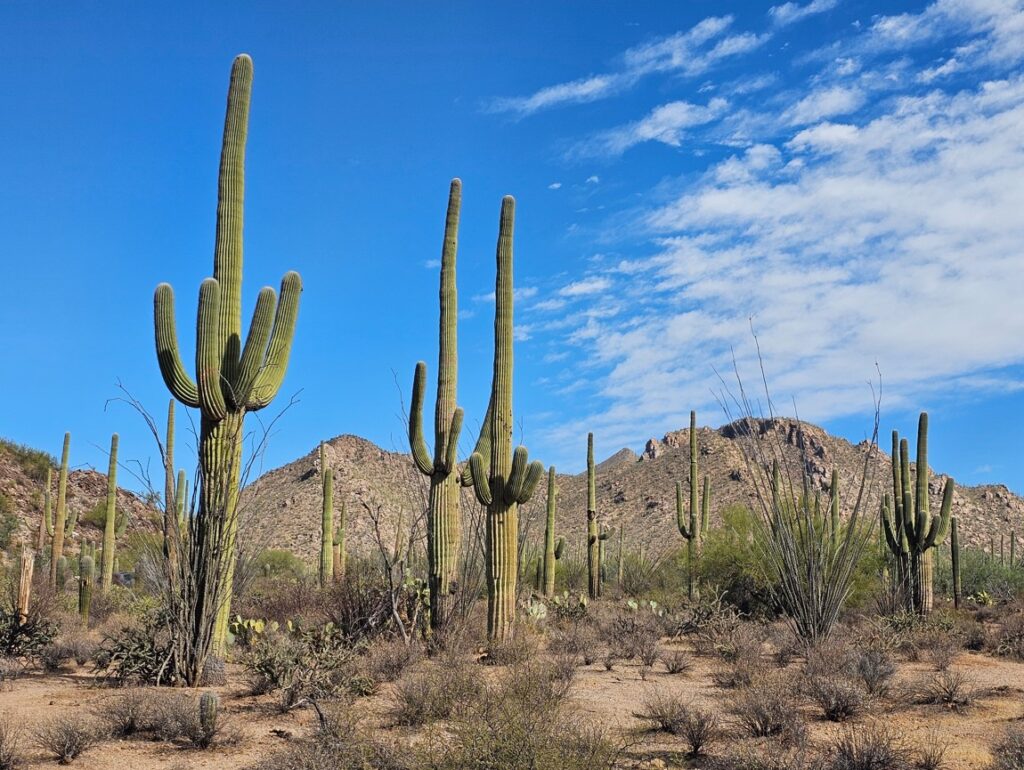
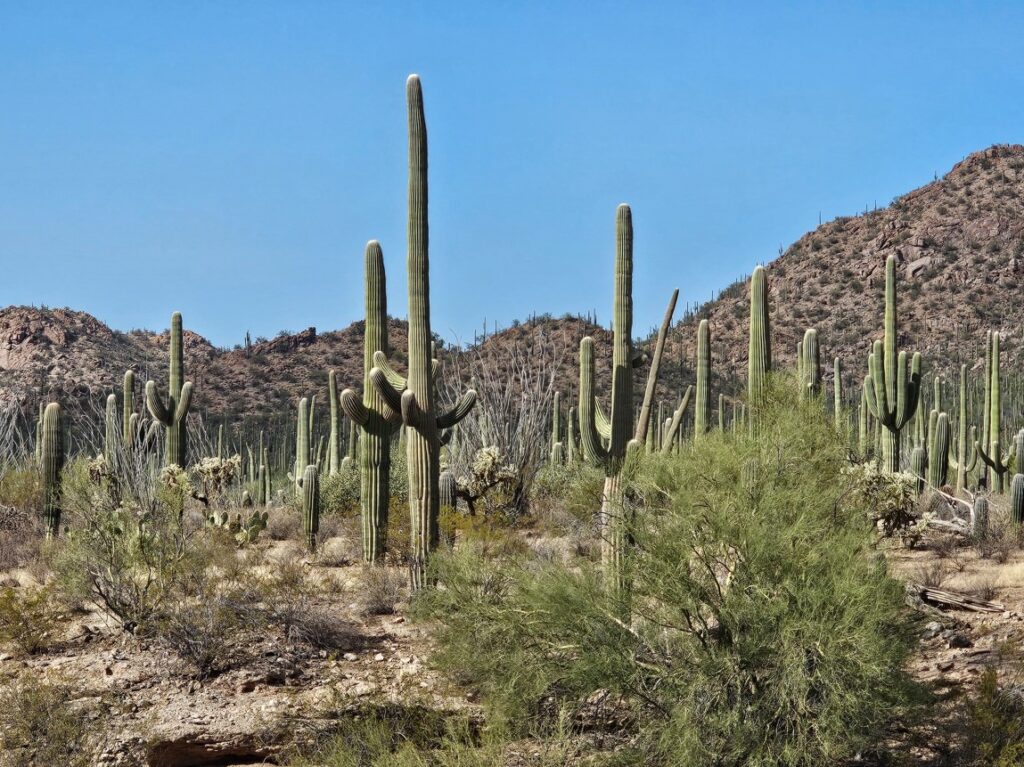
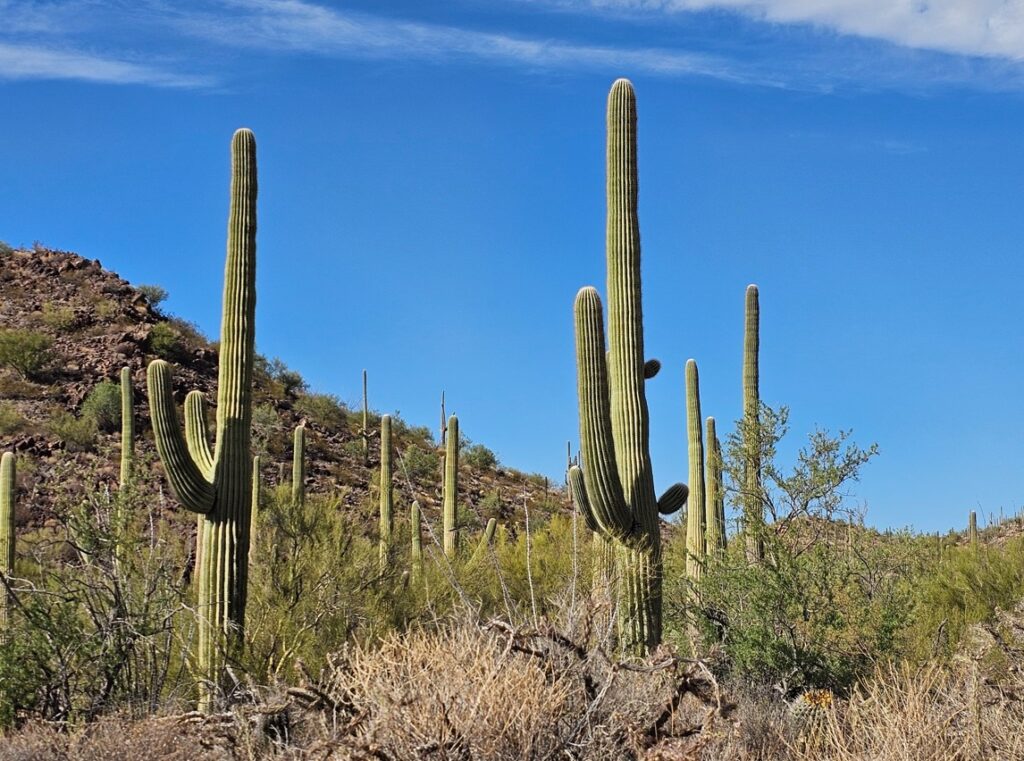
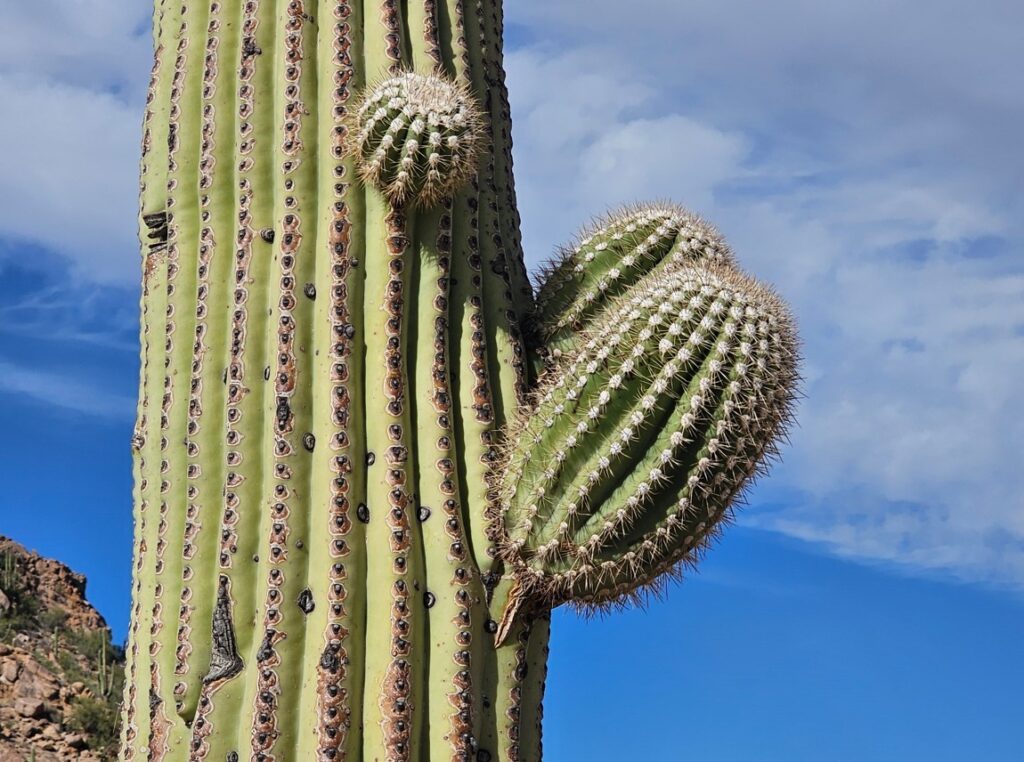
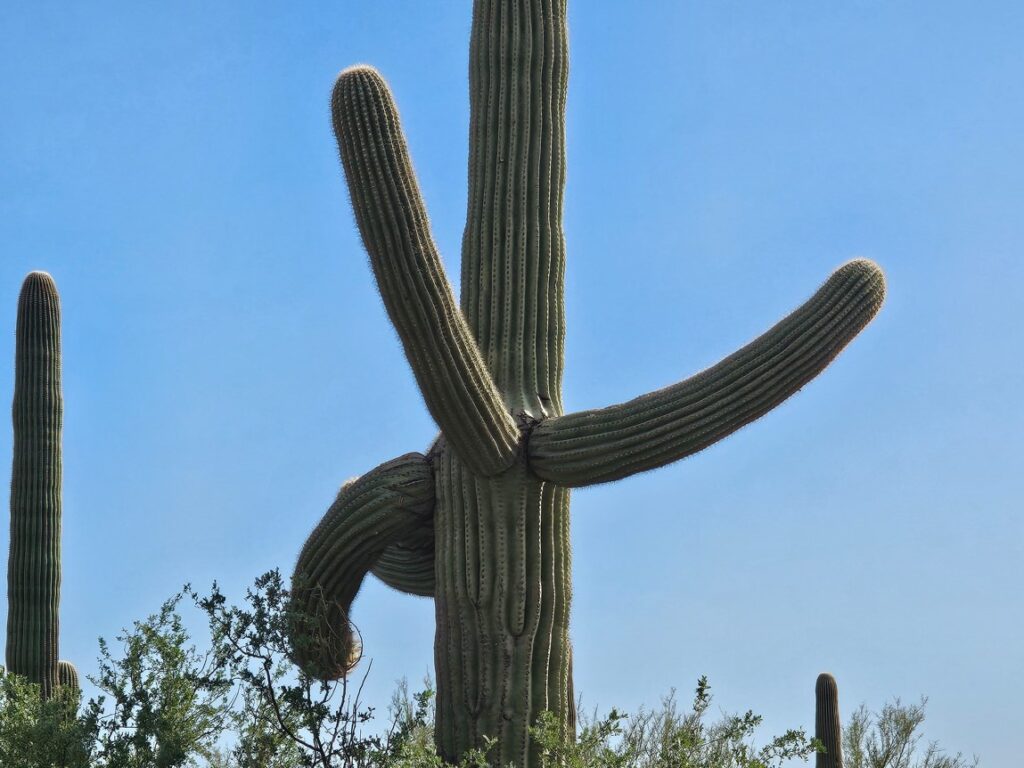
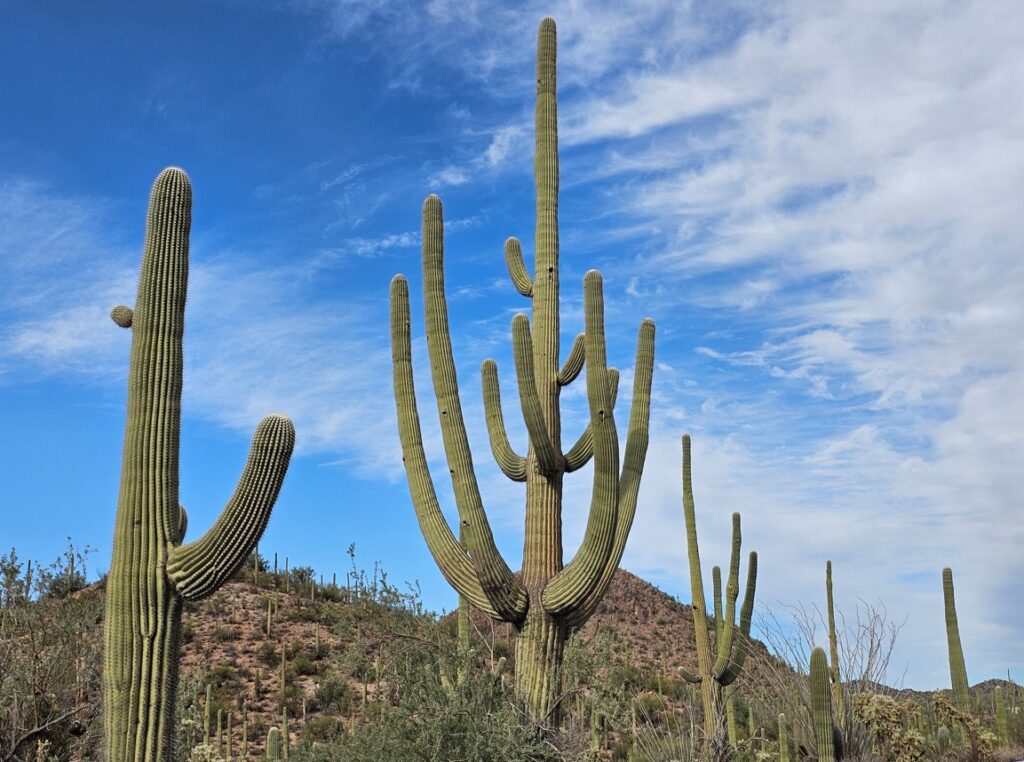
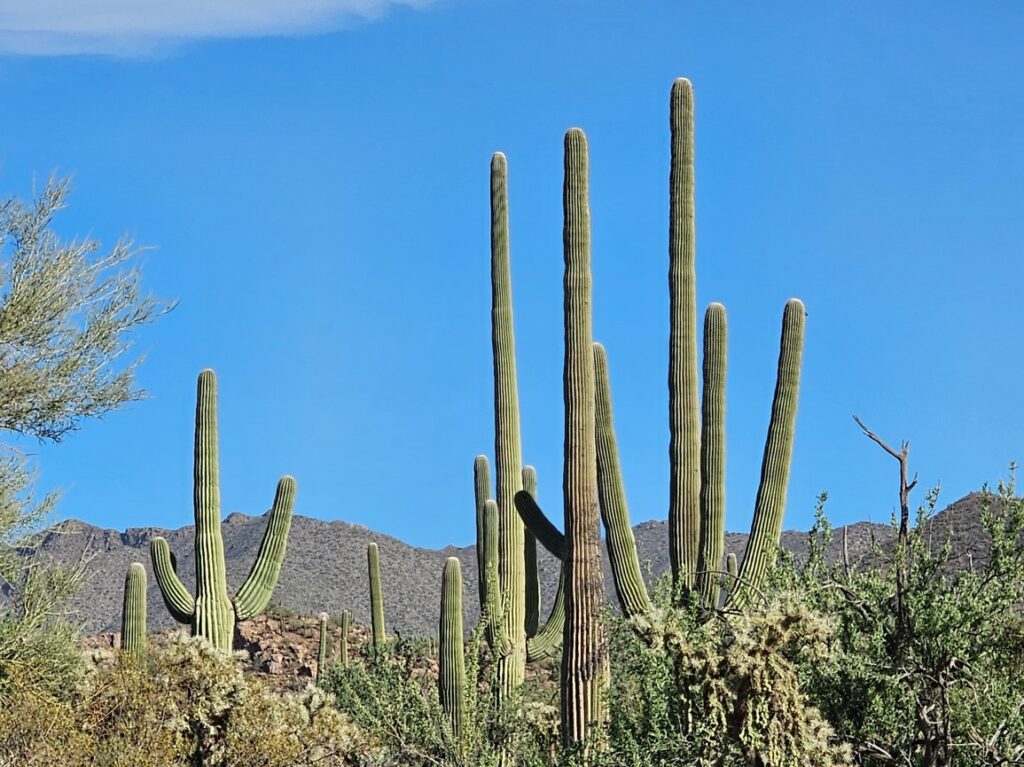
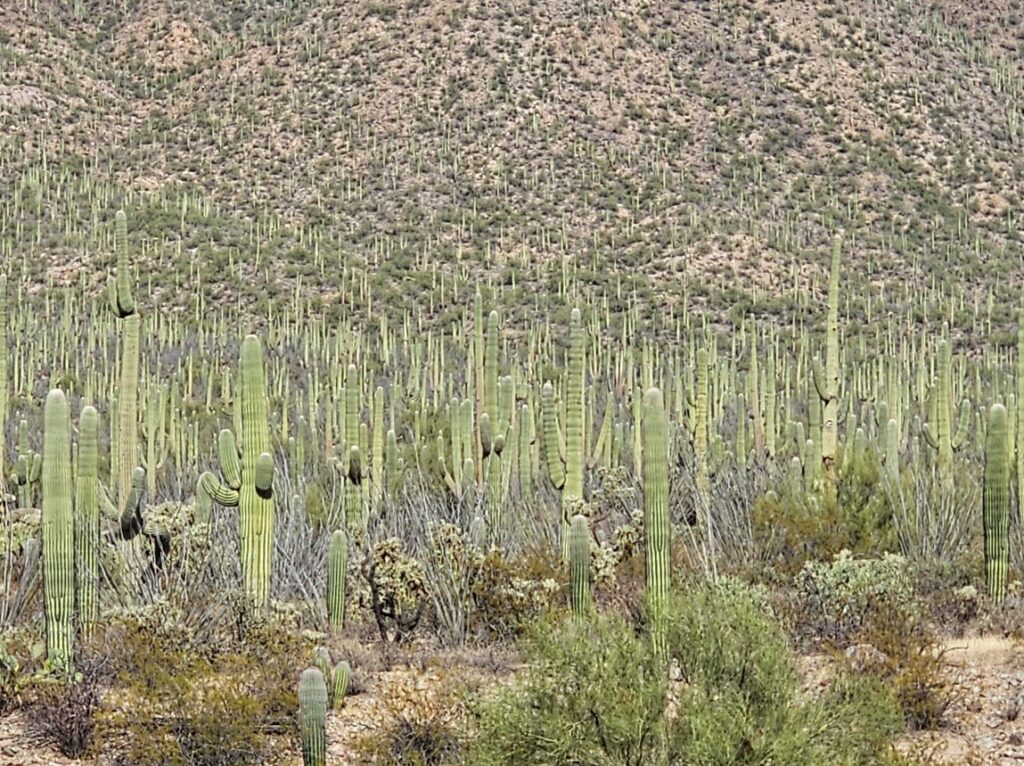
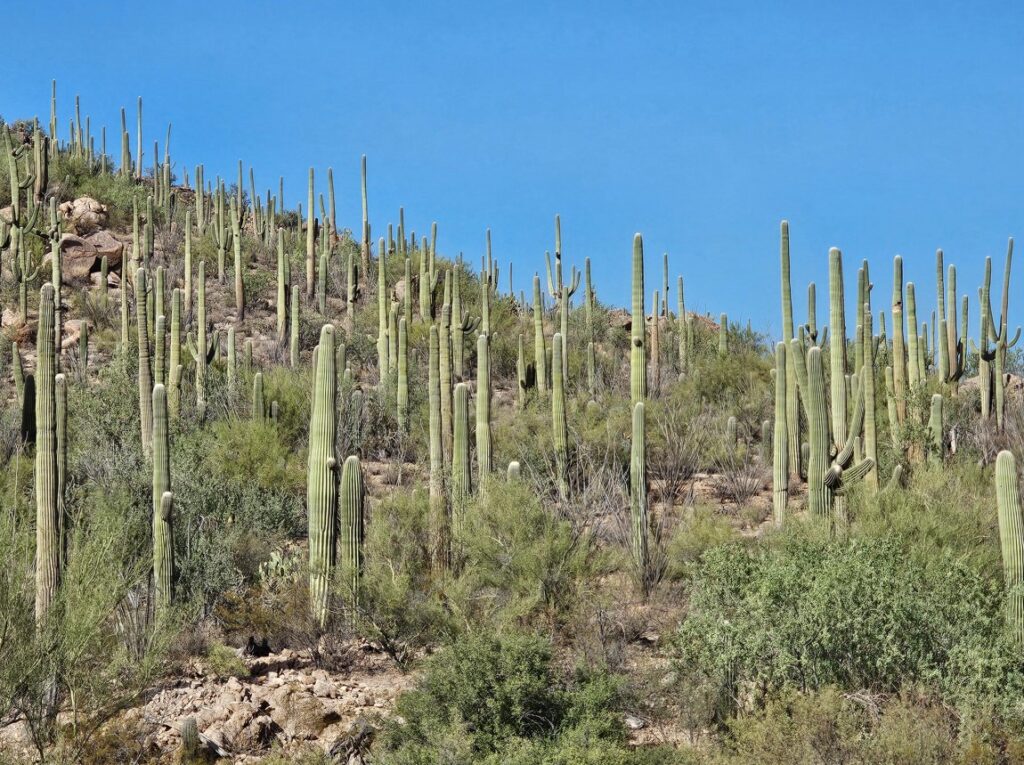
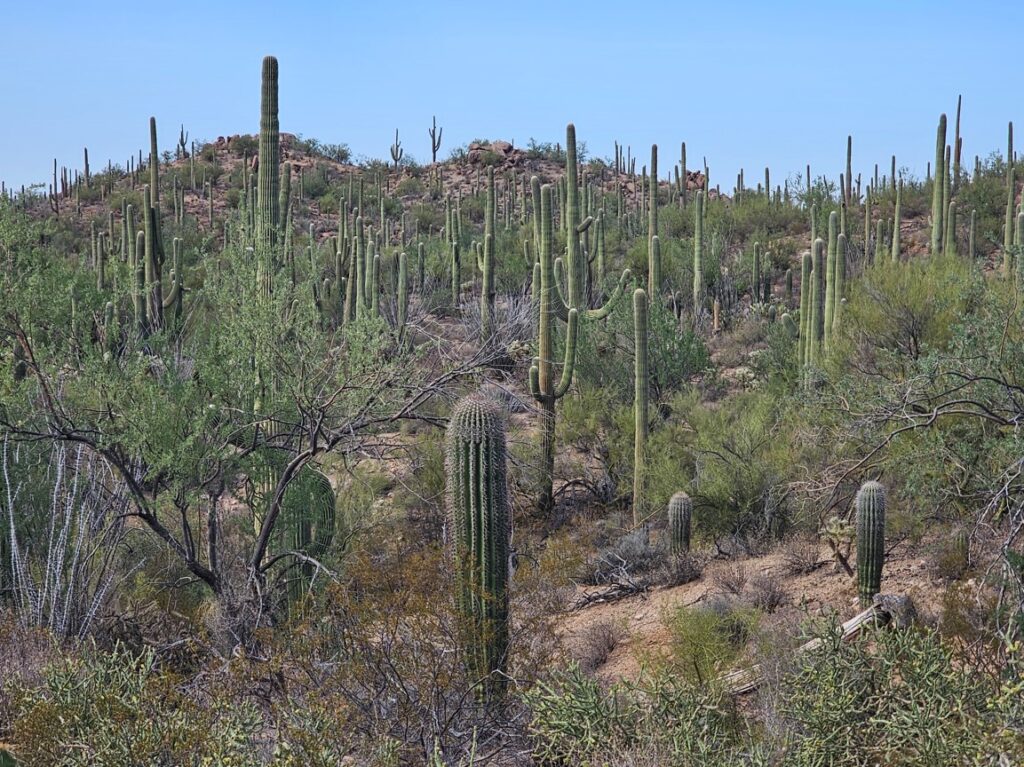
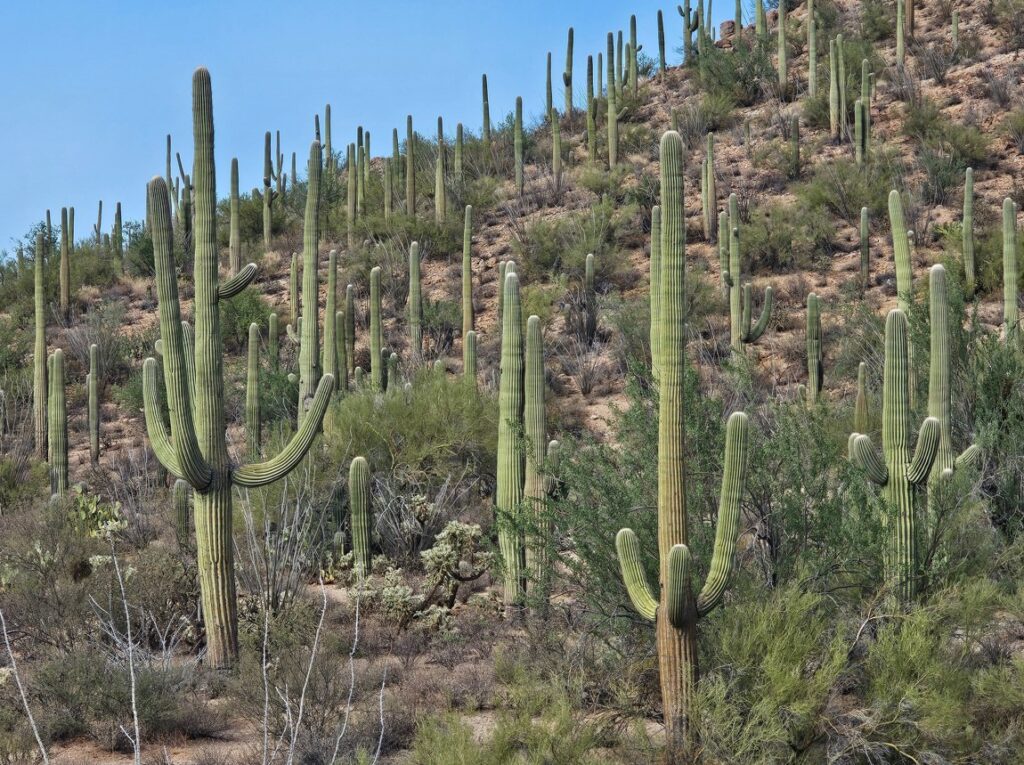
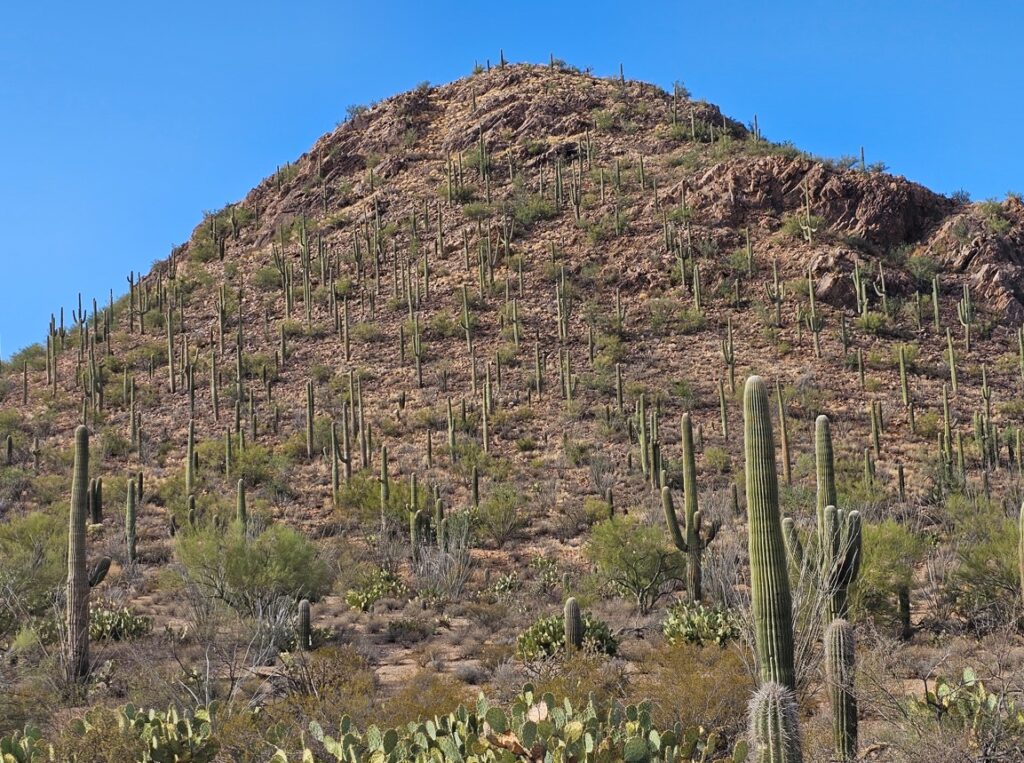
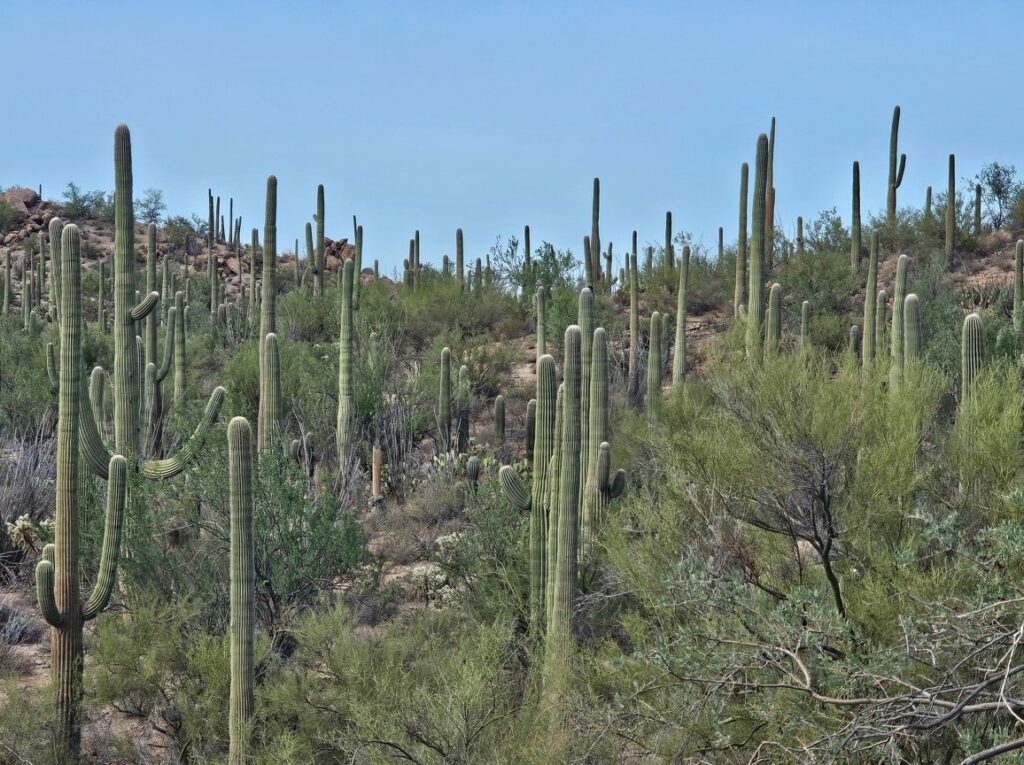
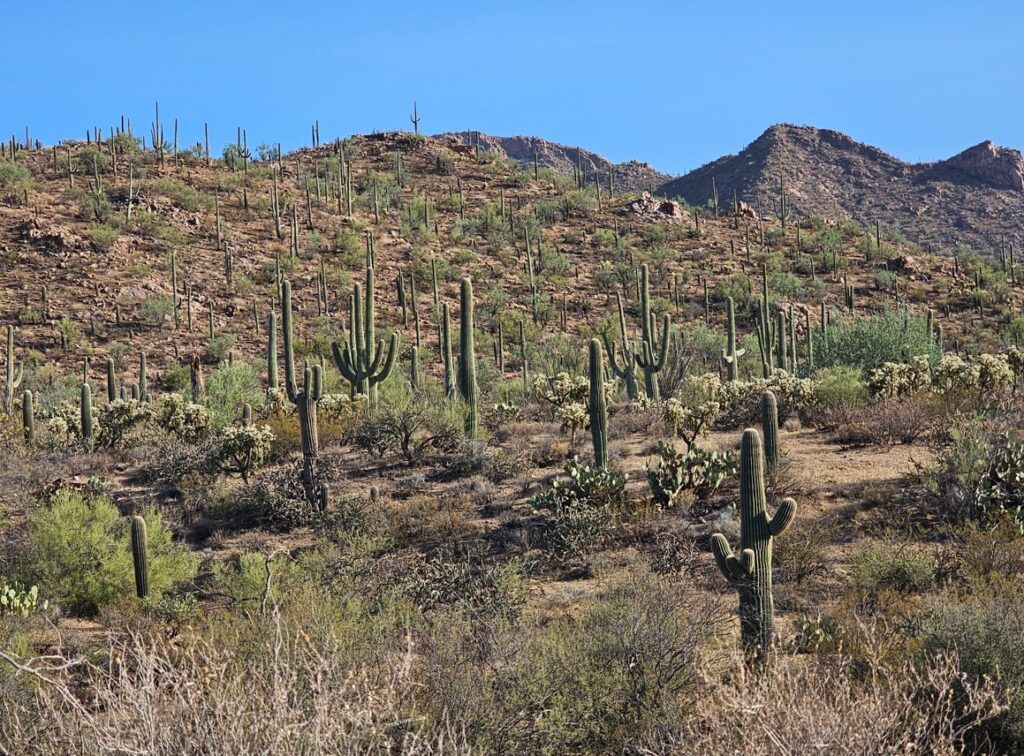
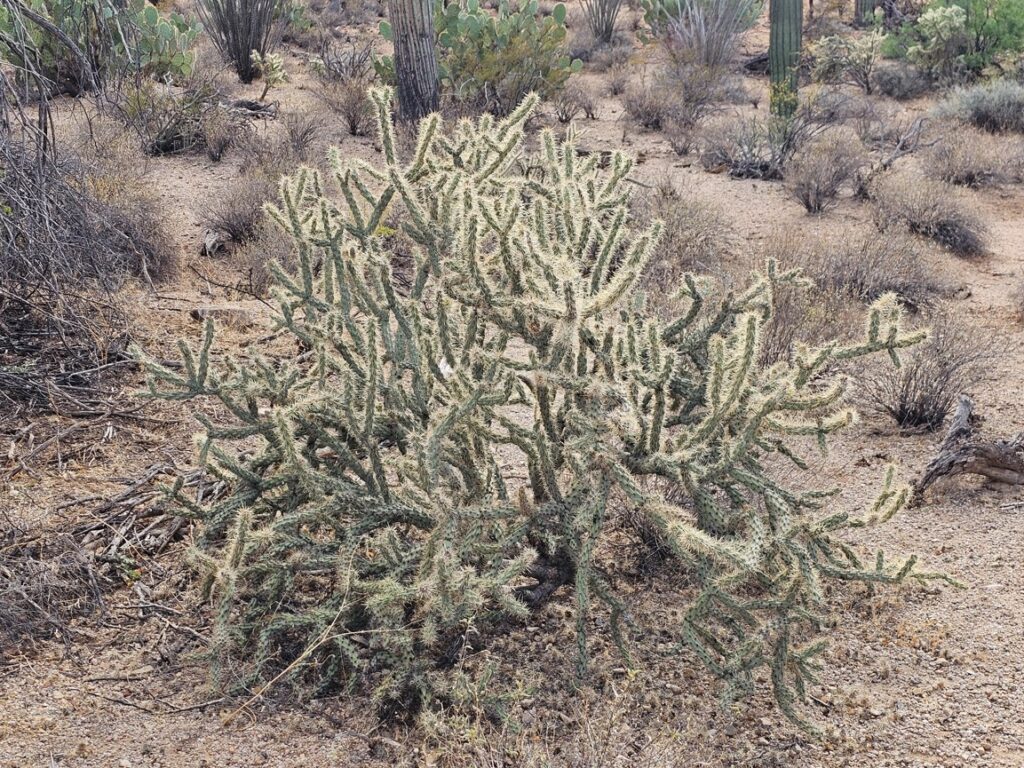
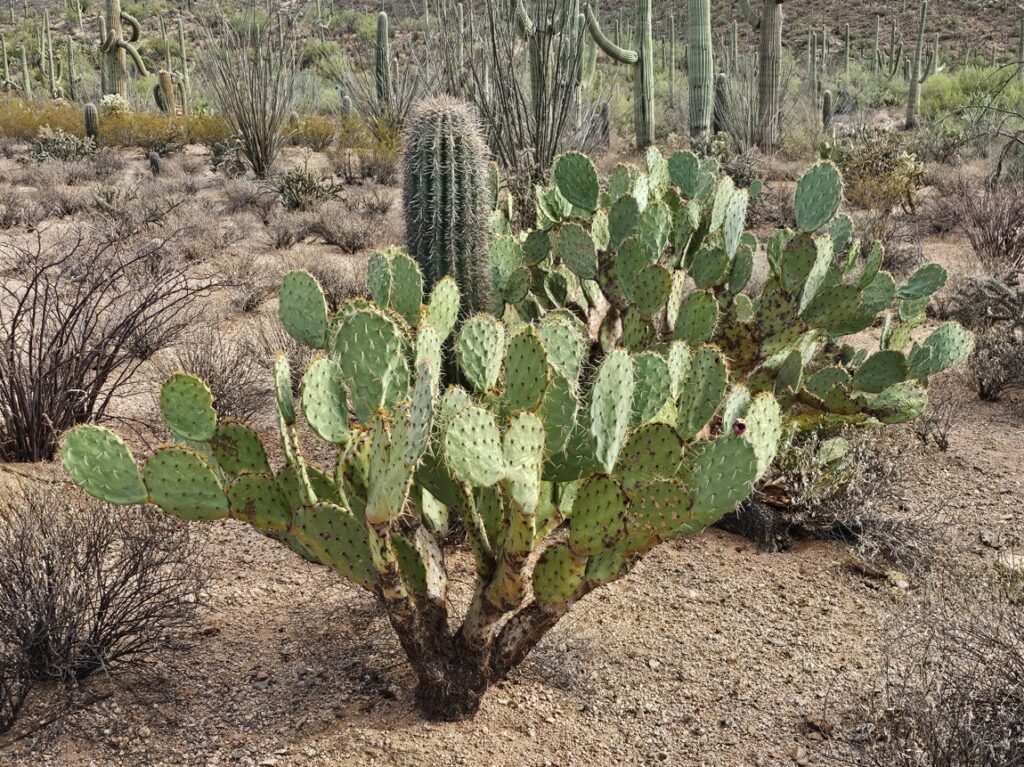
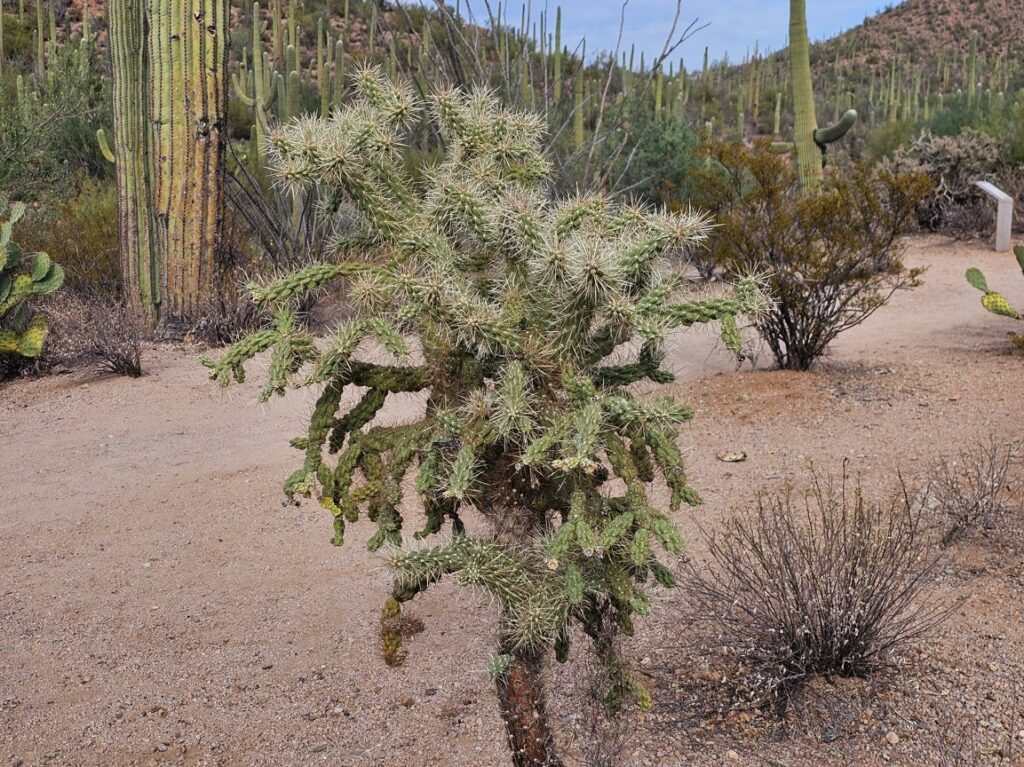
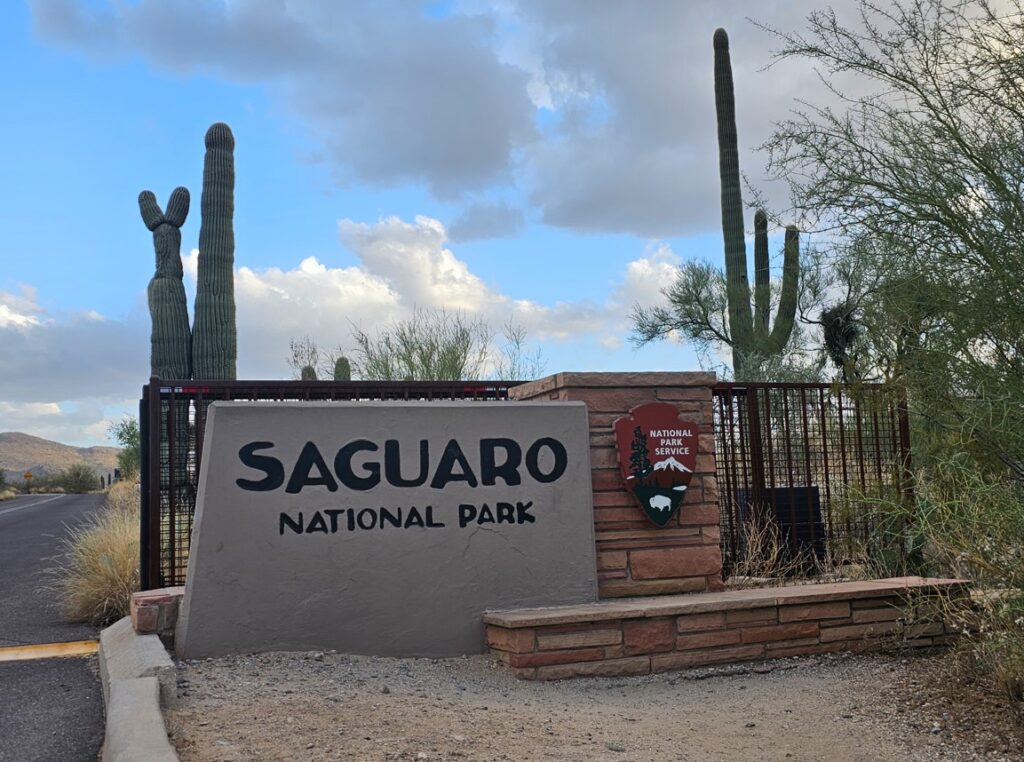
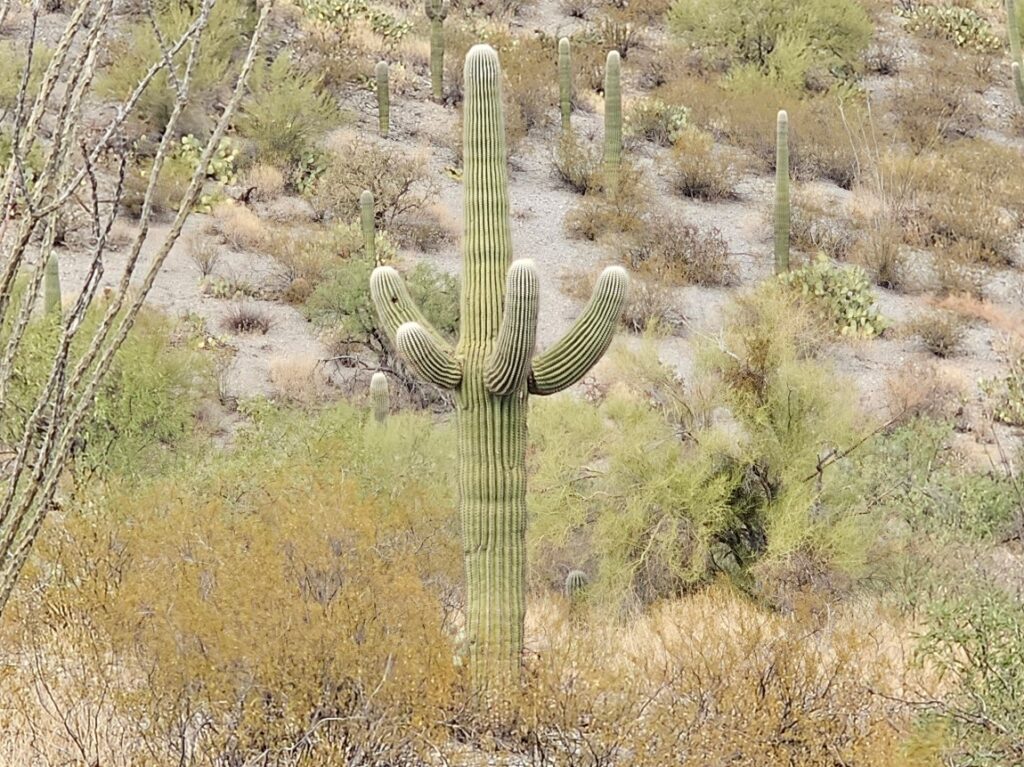
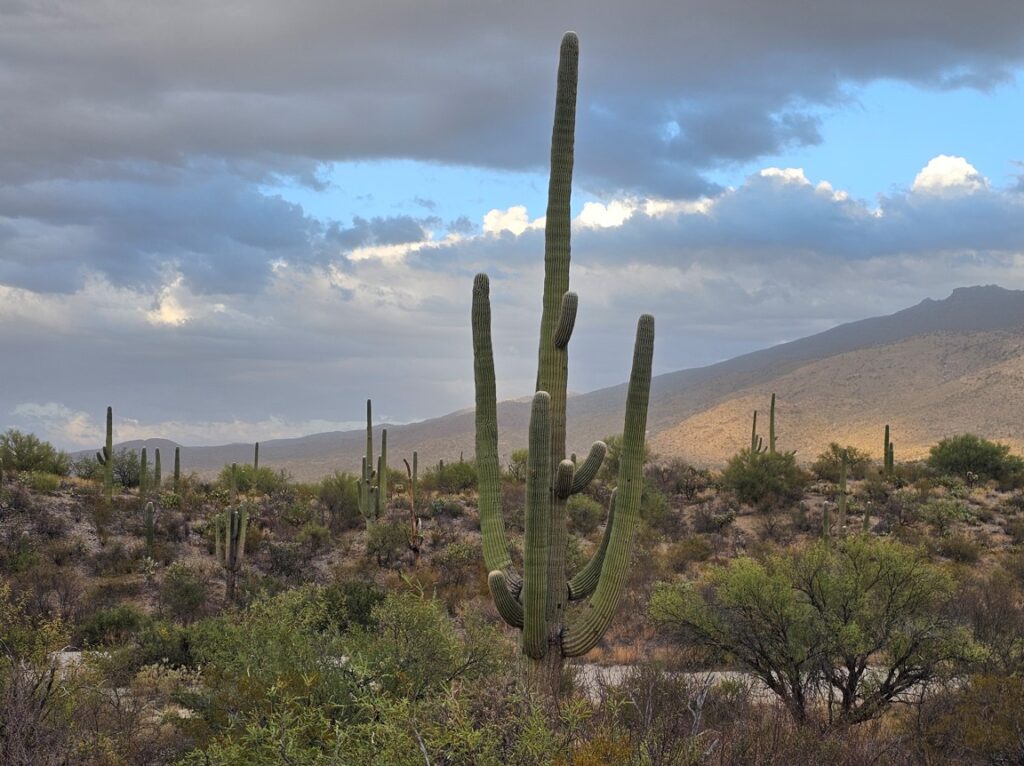
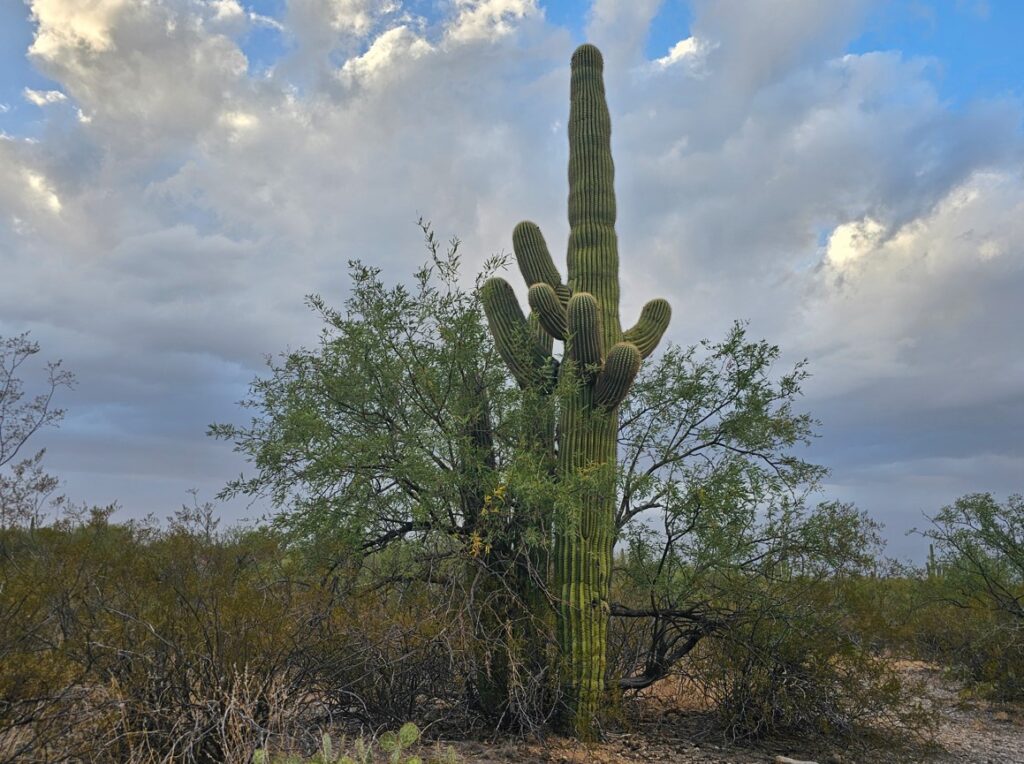
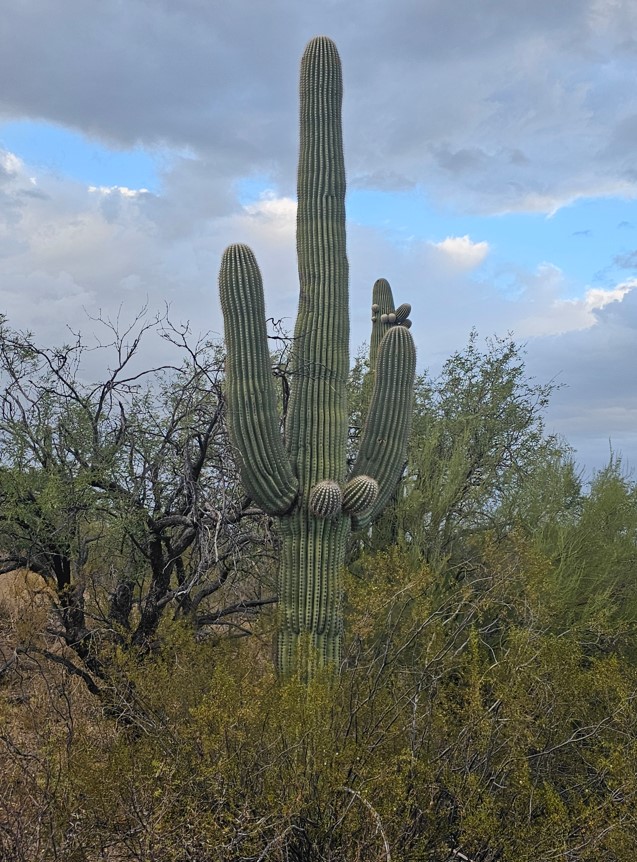
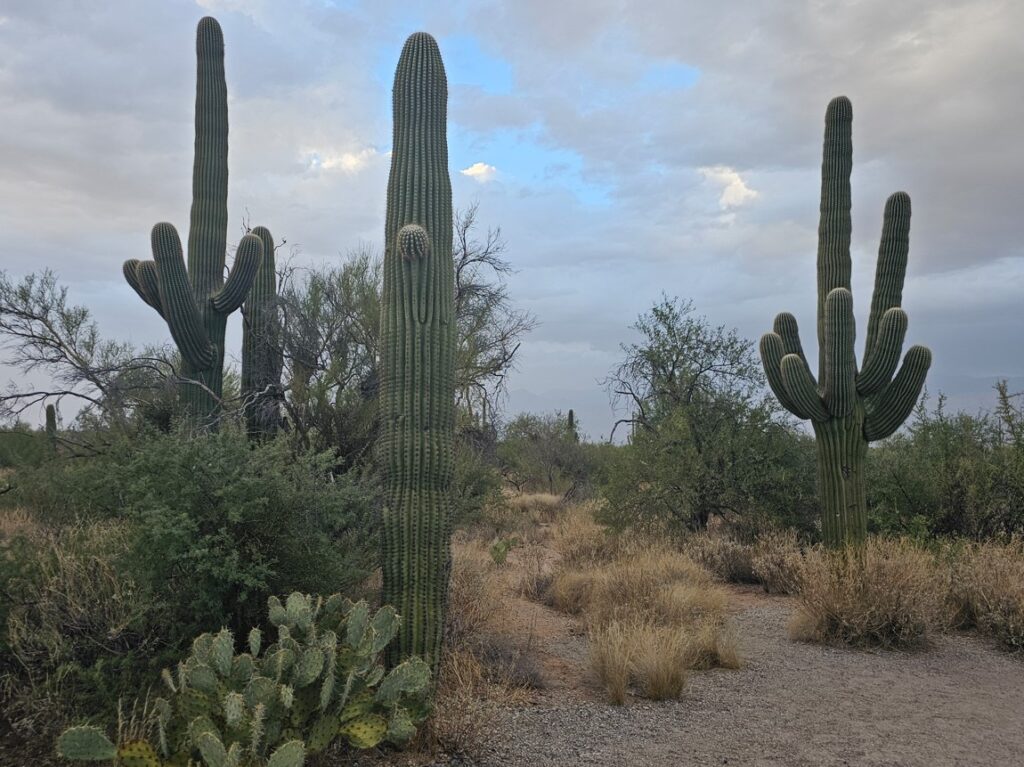
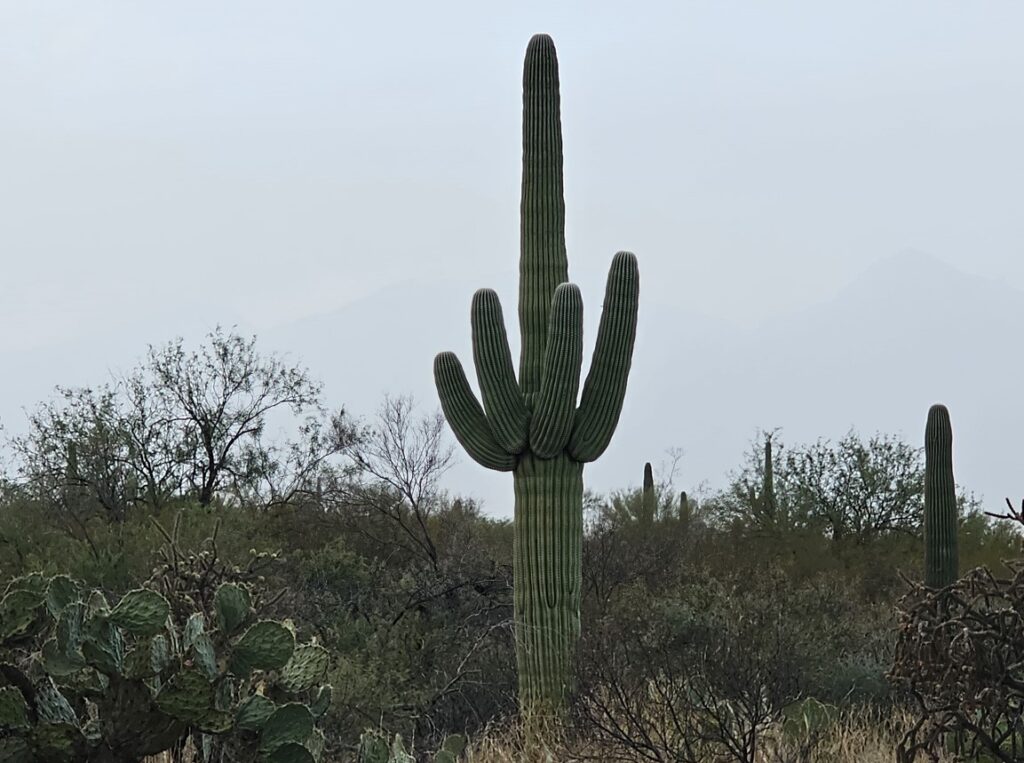
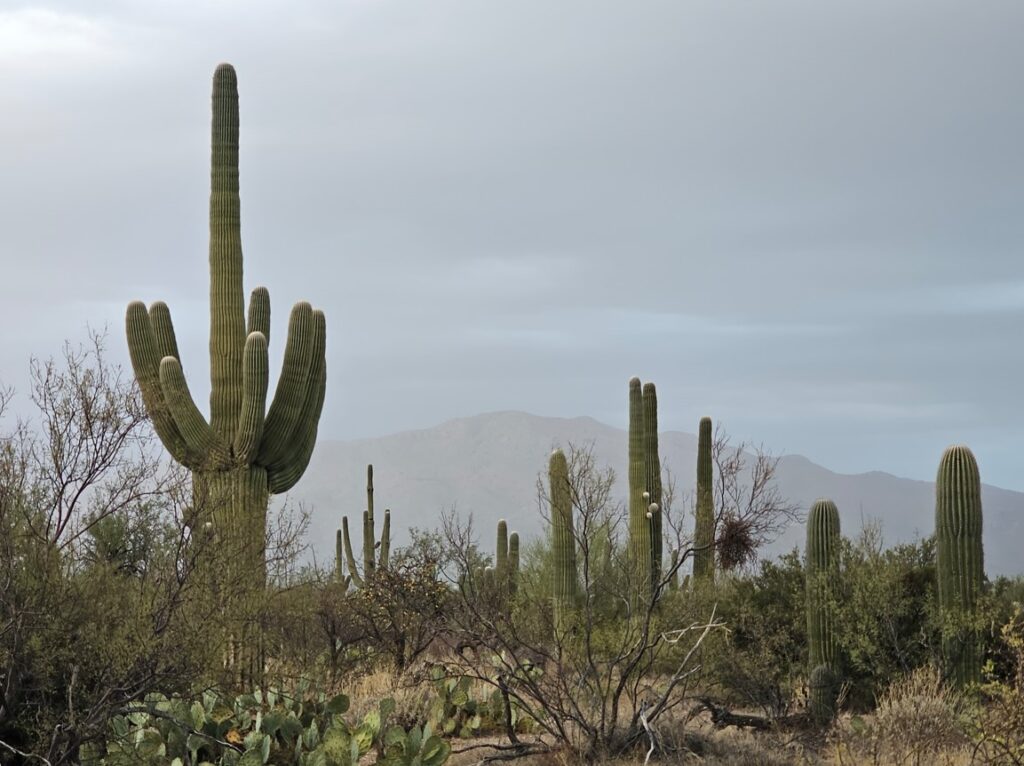
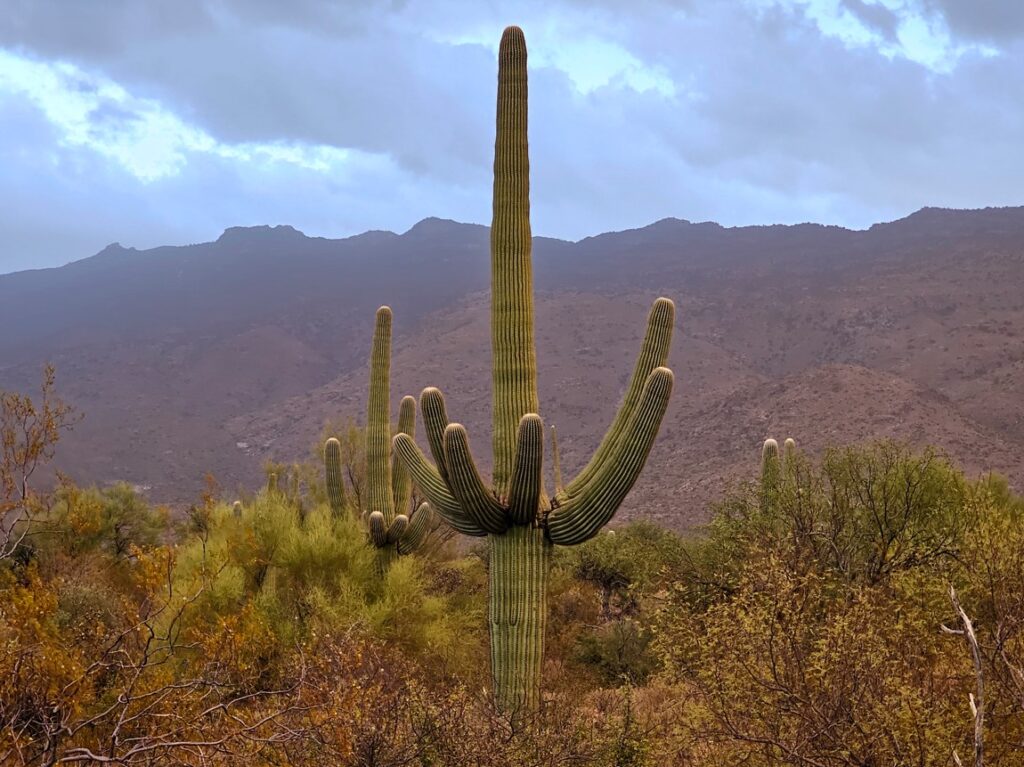
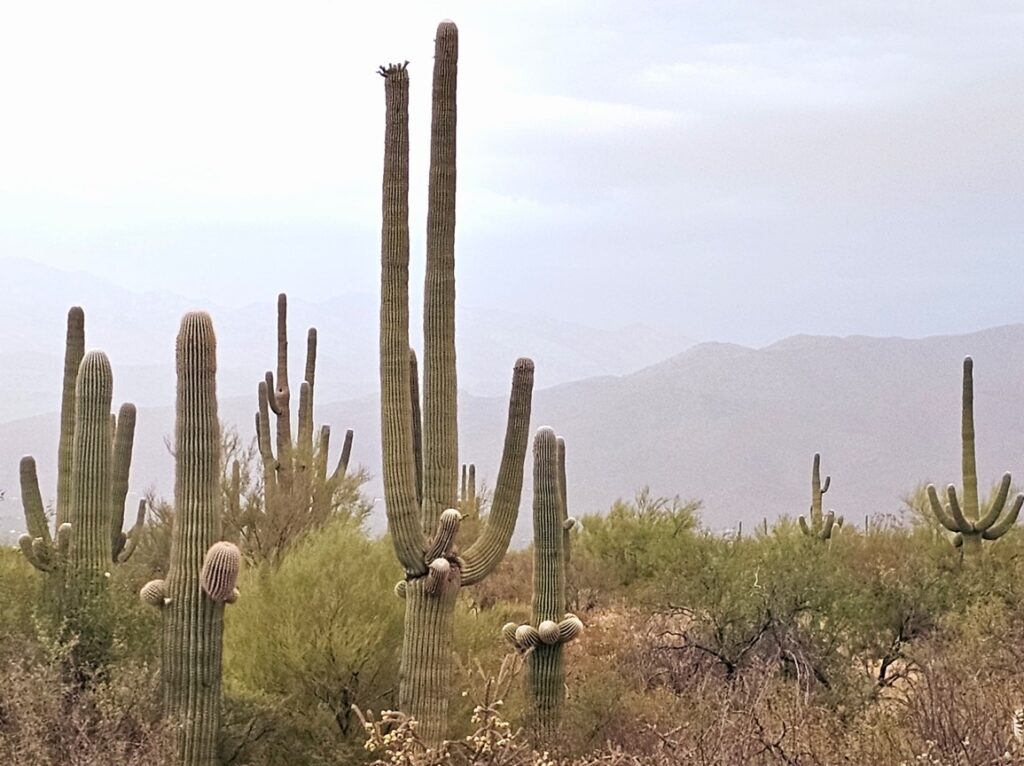
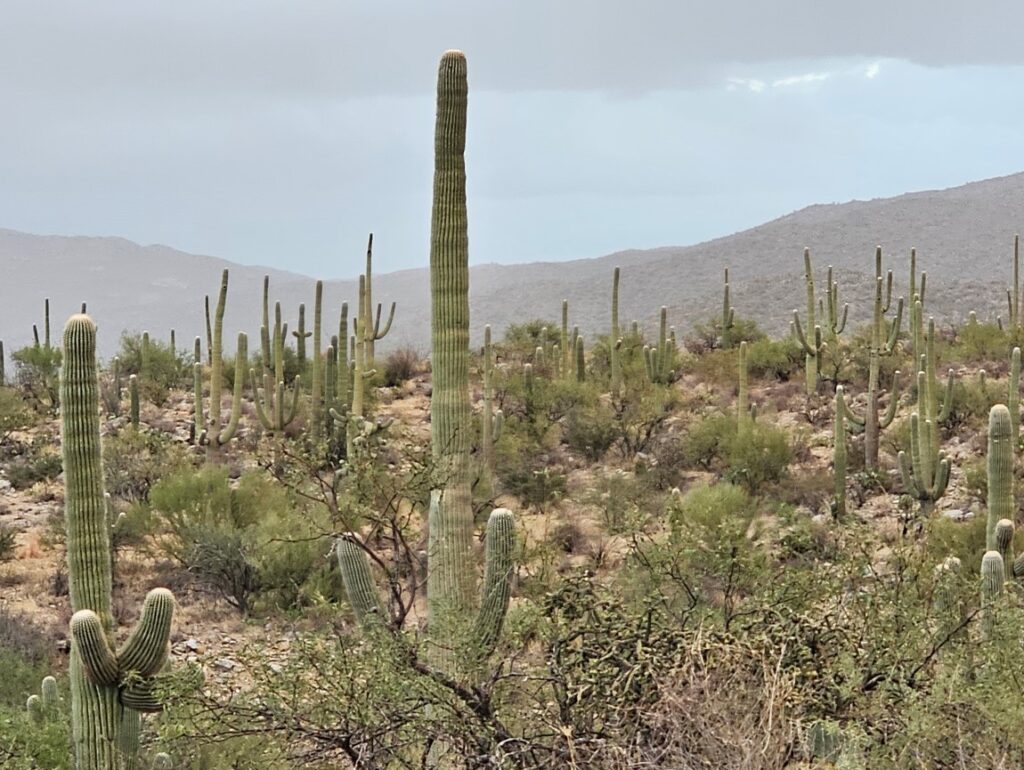
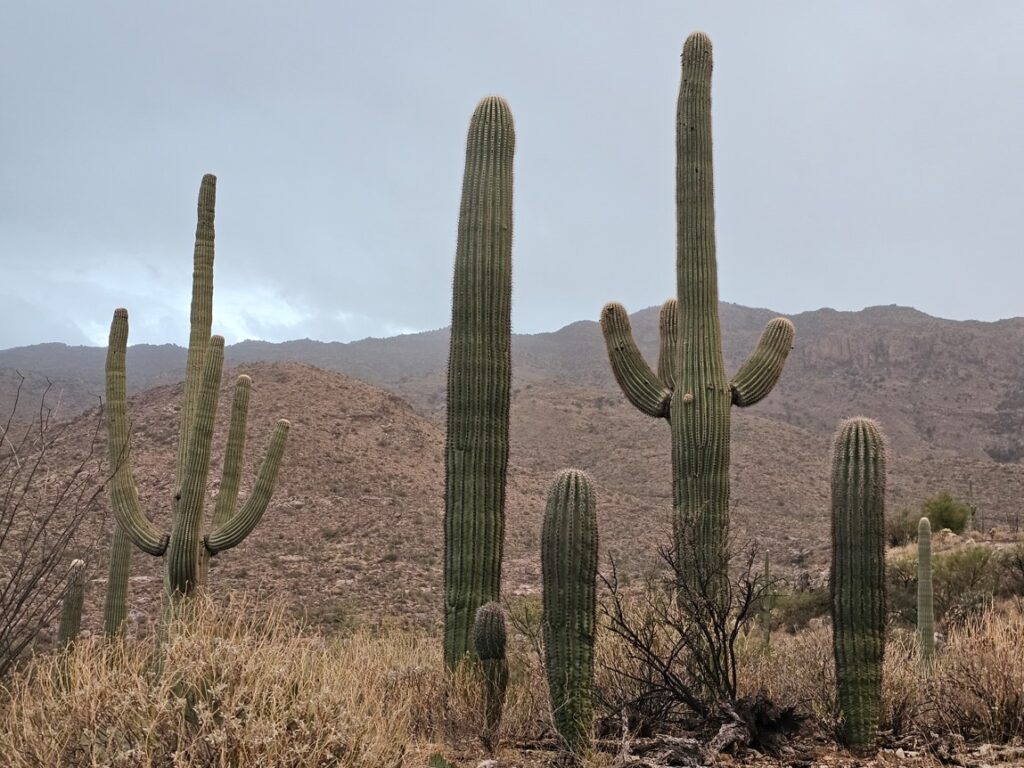
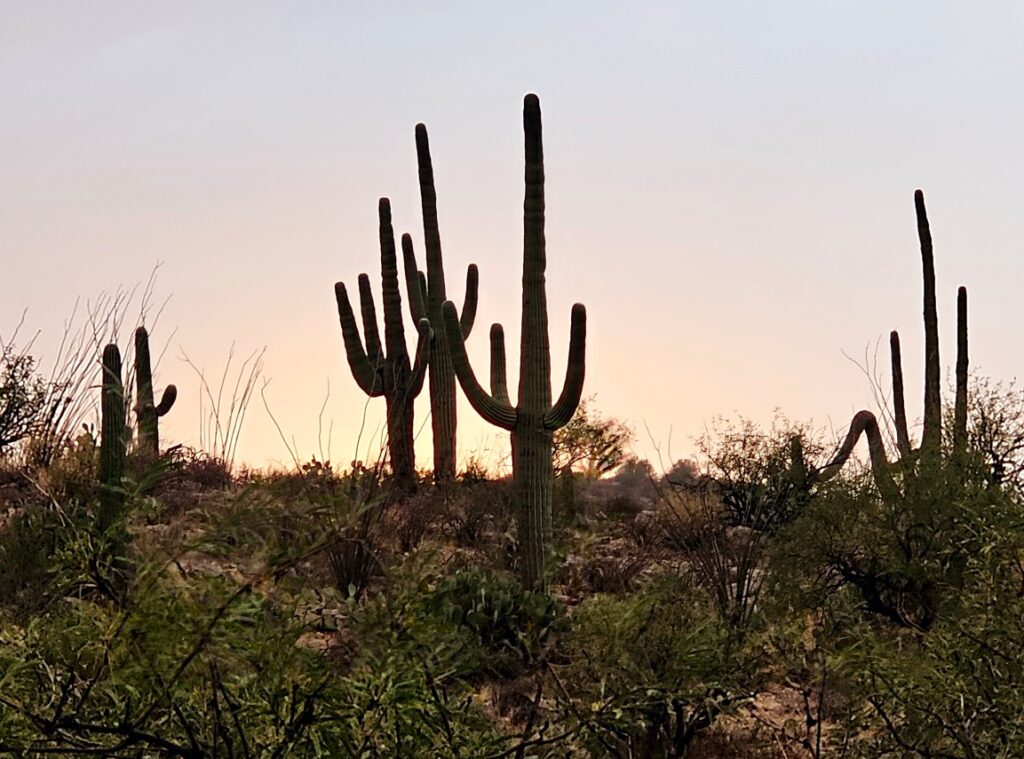
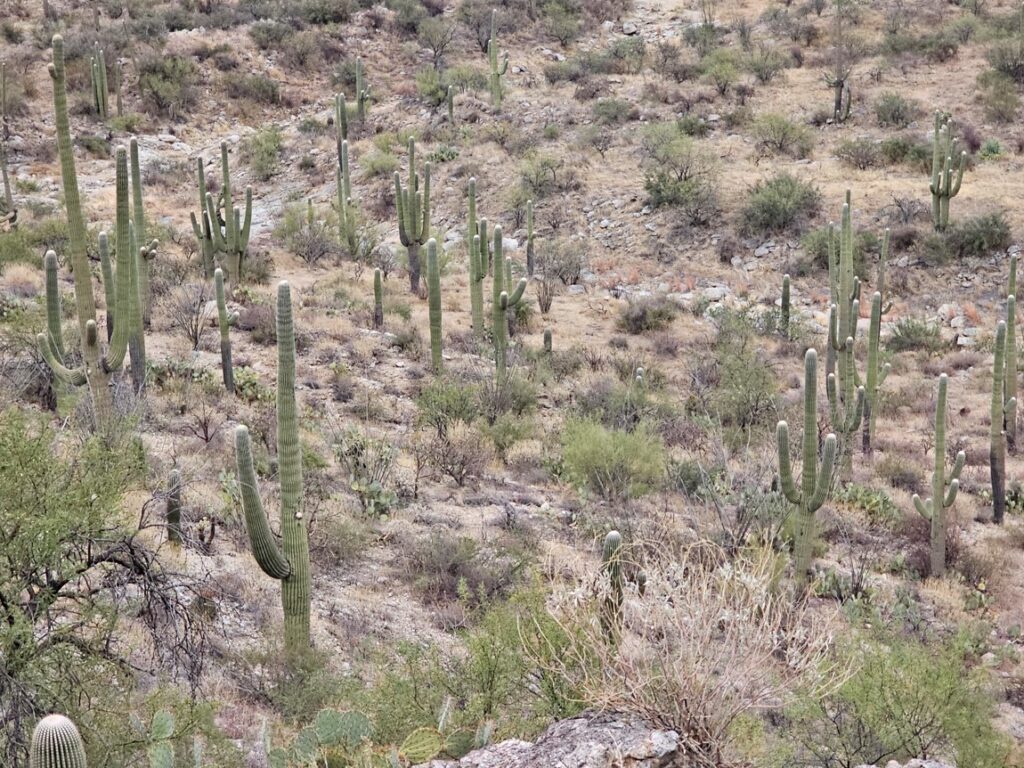
Having never seen a single saguaro cactus in person prior to this trip, this park was amazing to me! Saguaro National Park is both on the east and the west side of Tucson. This park is on the east.