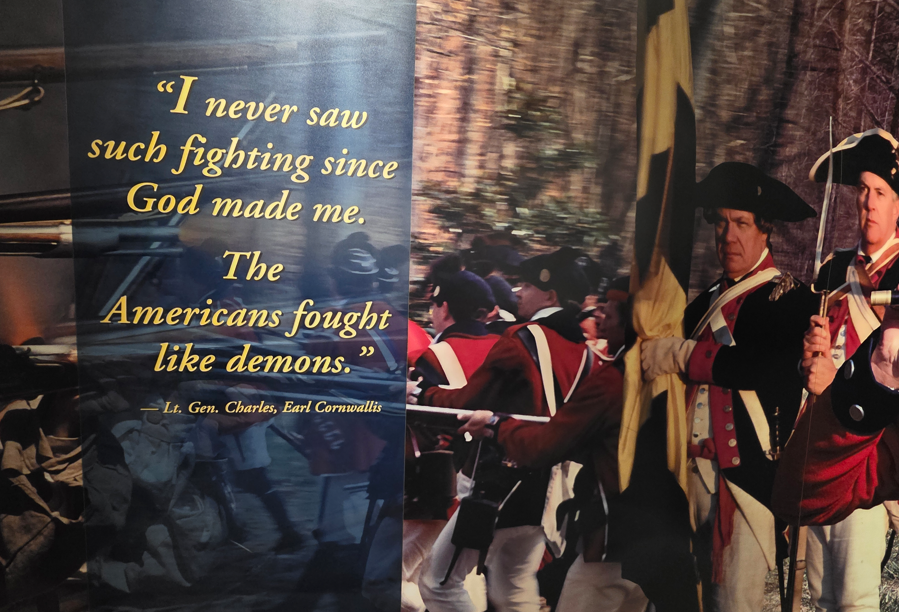
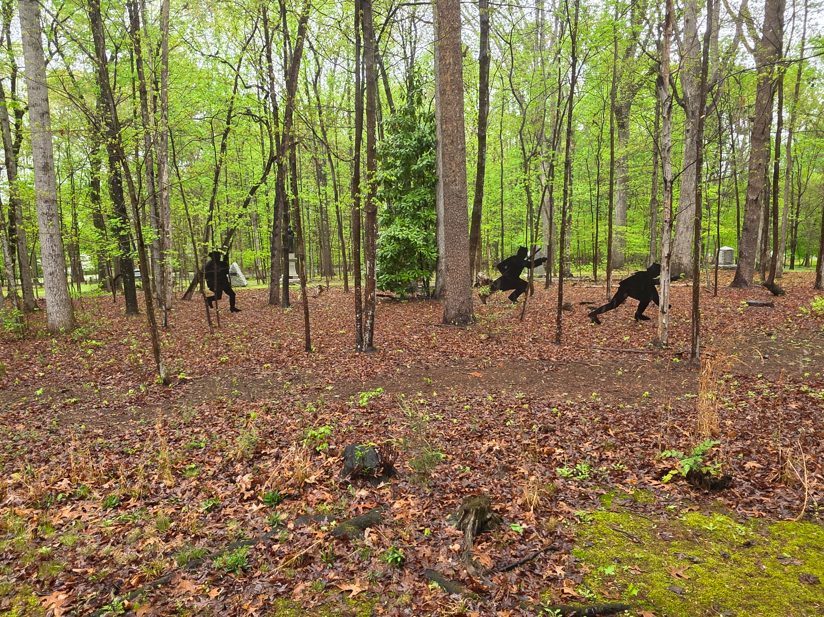
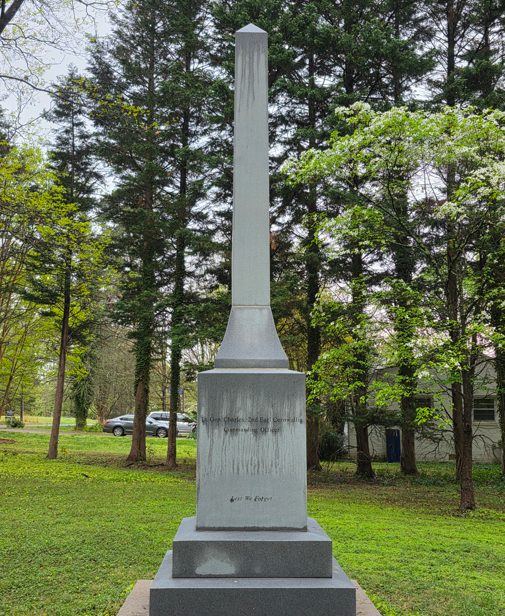
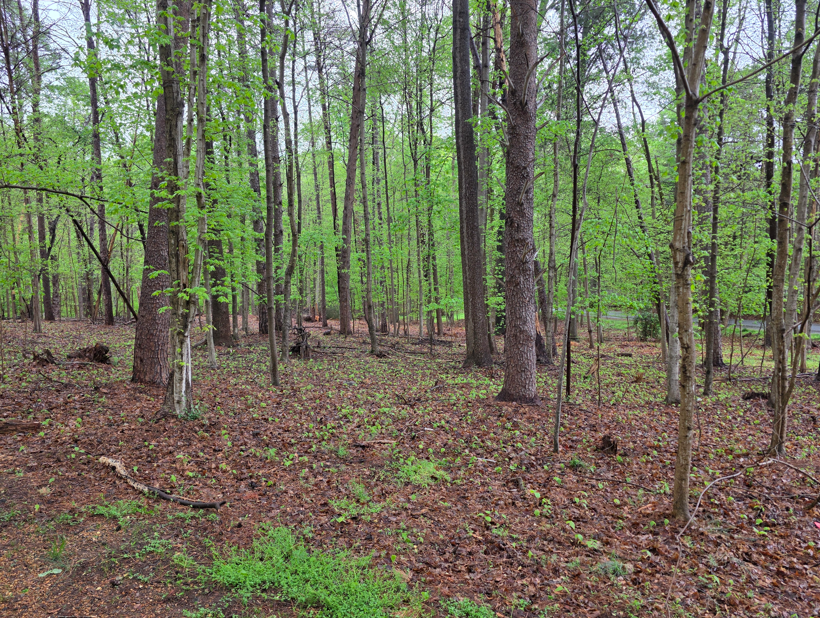
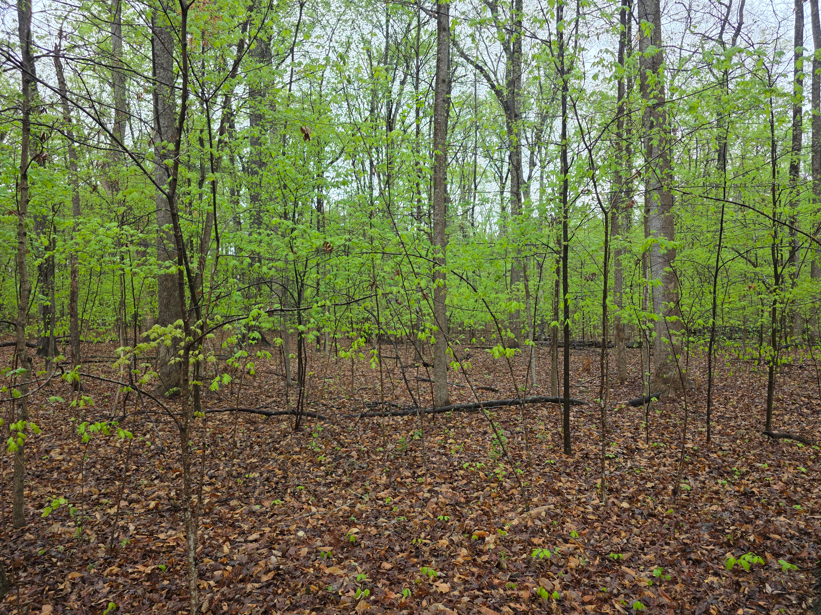
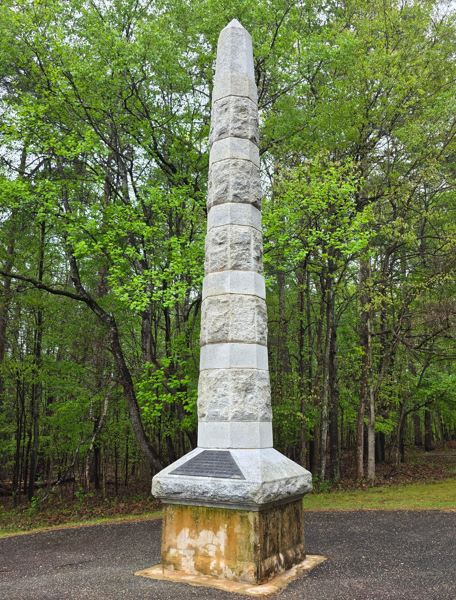
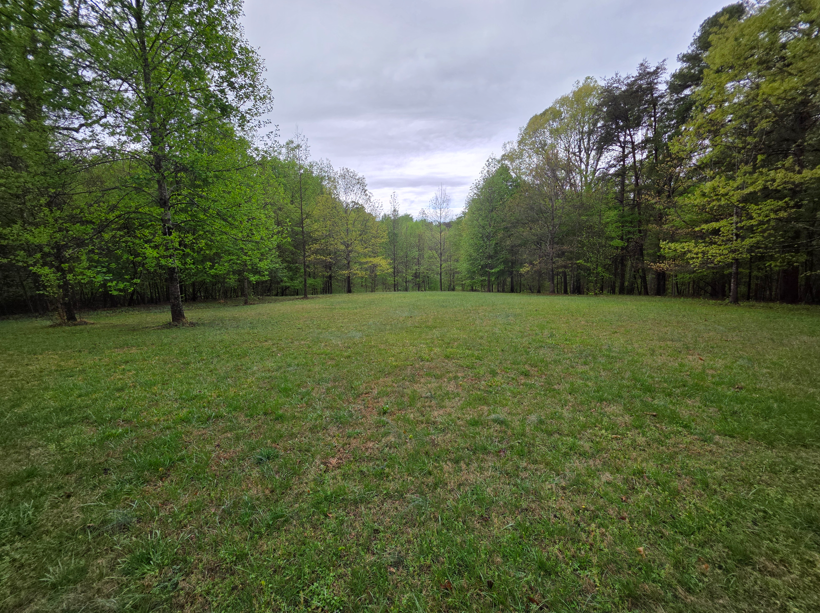
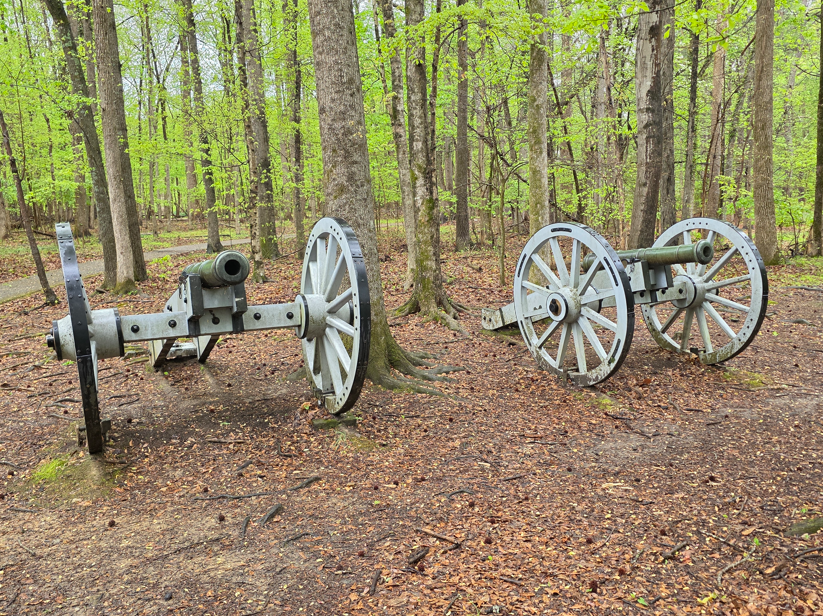
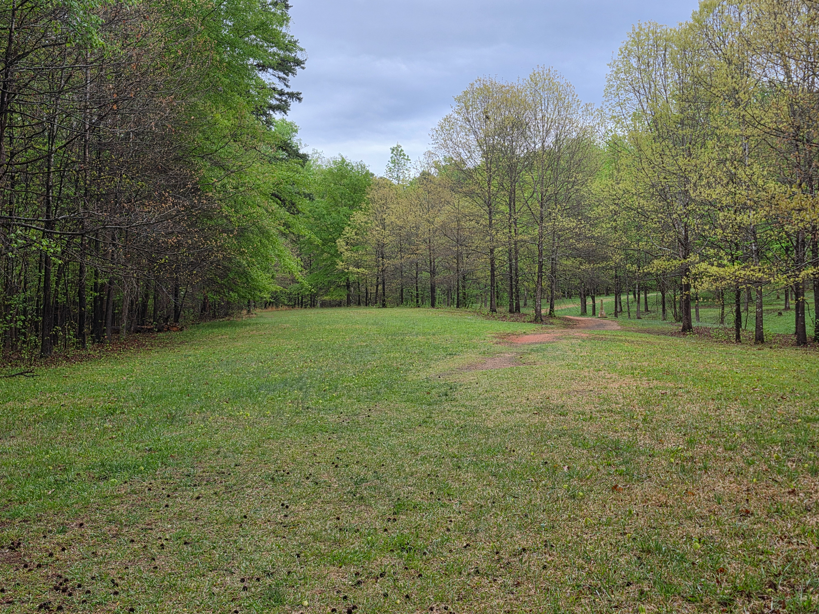
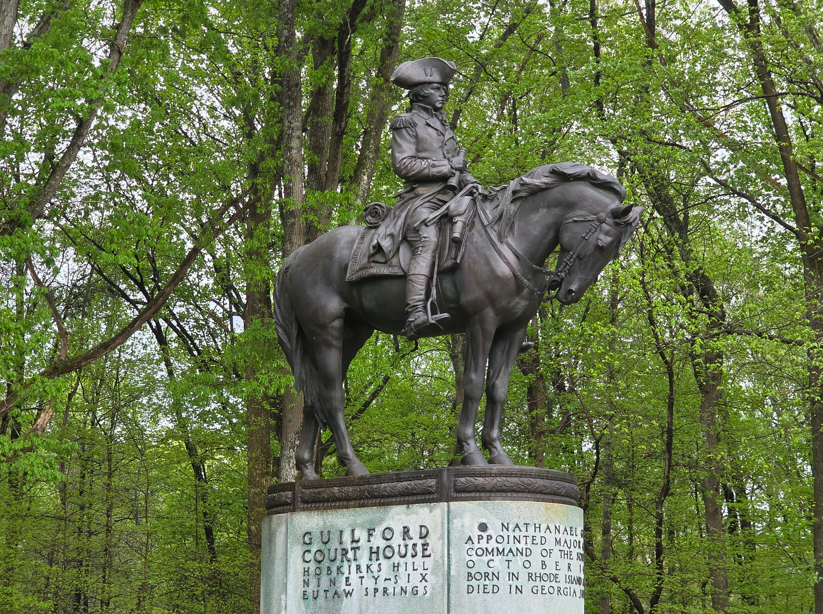
March 15, 1781. A rebel army of 4,400 Americans led by Major General Nathanael Greene made its stand here to contest the invasion of North Carolina by a veteran force of 1,900 British soldiers commanded by Lt. General Charles, Earl Cornwallis.The Battle of Guilford Courthouse marked the limit of British occupation in the South during the Revolutionary War. It also left Lord Cornwallis’ army in tatters. As the British columns limped eastward to gather supplies and reinforcements, General Greene’s forces would march south to overrun the last remaining outposts of King George III. Only seven months after winning the Battle of Guilford Courthouse, besieged on land and sea by French and American forces, Cornwallis would surrender his army at Yorktown. This battle signified the beginning of the end of the Revolutionary War.Monument to General Cornwallis.General Greene split his forces into three lines, each one to progressively weaken the British forces.The first line was manned by Lt. Colonel Henry Lee. Lee’s orders were to withdraw to the second line when the first line gave way. But the thick woods and chaos of battle disoriented Lee’s men and the veered southeast and missed the left flank of the second line. This confusion had serious consequences for both armies. A large contingent of British and Hessians split off from the main British advance and pursued Lee’s Legion in a separate running battle, which fragmented the British attack, and both sides’ battle plans unraveled.This monument is dedicated to Peter Francisco, who according to legend, “slew in this engagement eleven of the enemy with his own broad sword rendering himself thereby perhaps the most famous private soldier of the Revolutionary War.The second line, with the Virginia militia, opened their ranks for the retreating North Carolinians from the first line. The Virginia militia faced 800 British infantry. The second line was posted in the woods, a strong position along the high ground. Firing from behind think trunks in the forest, they exchanged heavy fire with the advancing British infantry. The redcoats suffered heavy losses, but they were able to break through this line toward the third line.The third line was the day’s most contested ground. Here were the Patriots’ most seasoned troops, the Maryland and Delaware Continentals. The Patriots held the high ground, forcing the British to climb out of the creek valley into the fighting. With the British Guard advancing, this was the day’s fiercest fighting. As the British overwhelmed the left and the right, General Greene directed an orderly retreat.As the Americans withdrew from the field they lost all four of their cannons to the British. Mostly ineffective in the heavily wooded terrain, they were devastating to enemy troops crossing cleared ground.A British battalion swept across this ground from right to left. By this point the British have momentum but their ranks had been thinned.Statue of Major General Nathanael Greene. This is a very impressive statue.