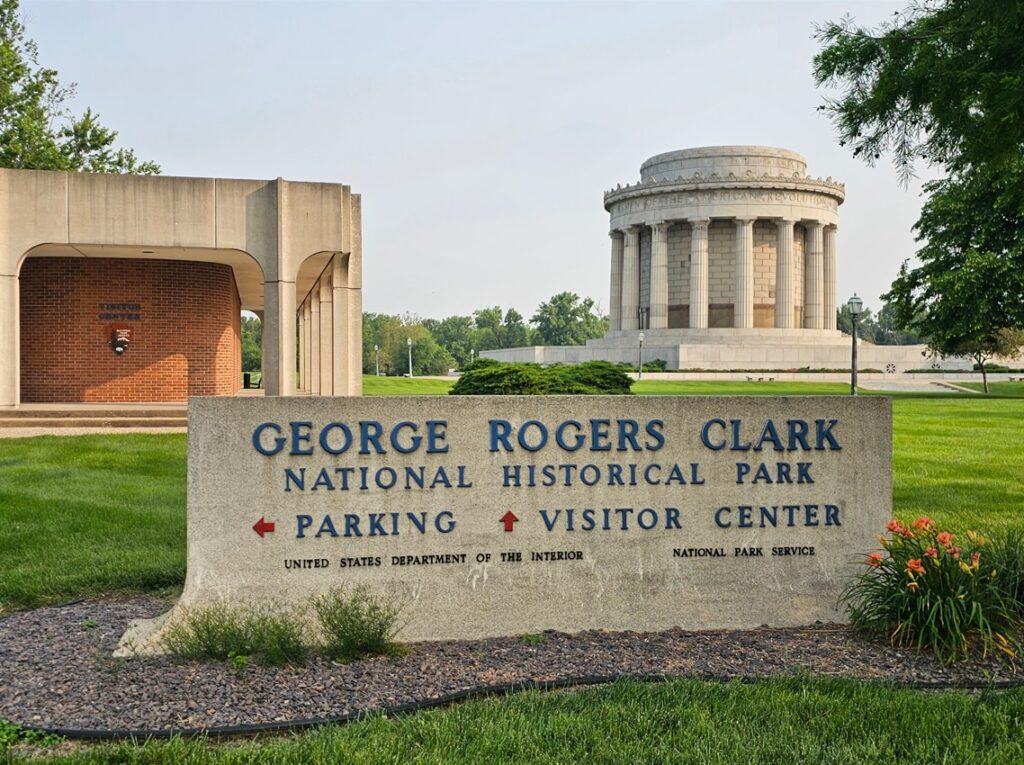
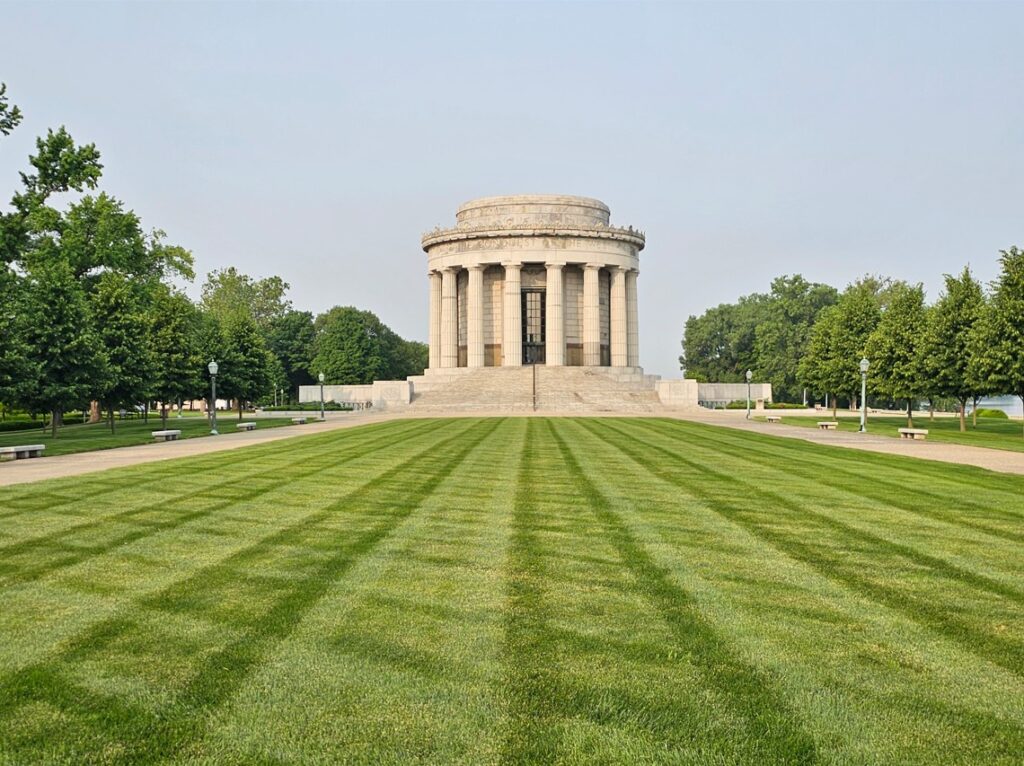
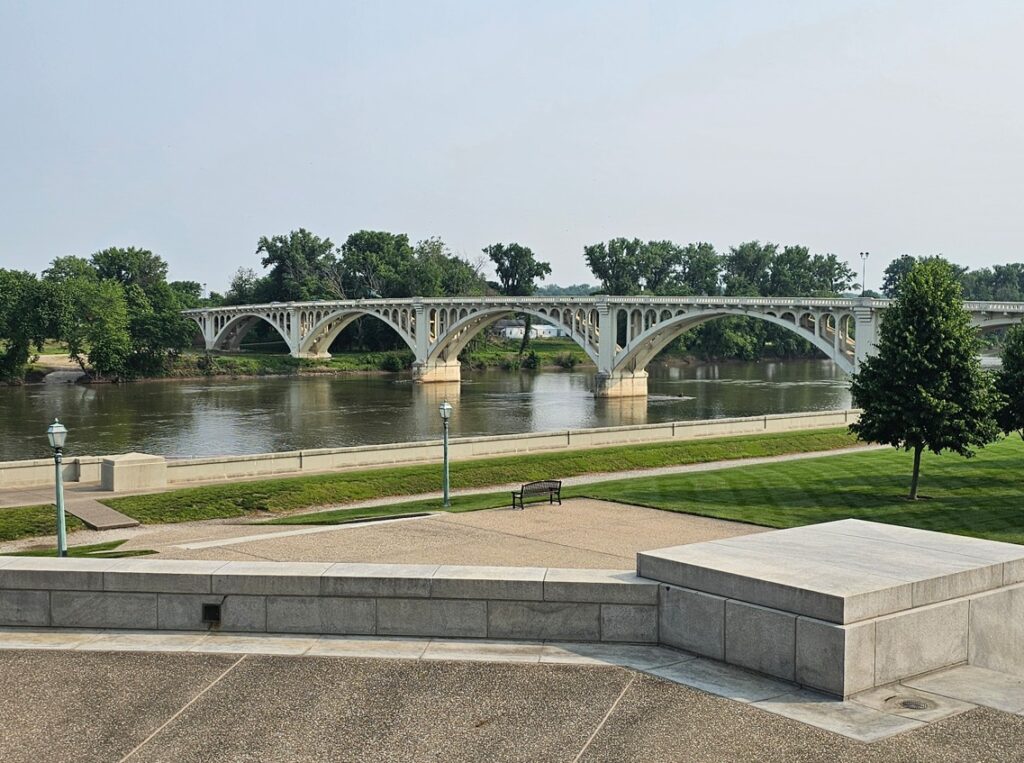
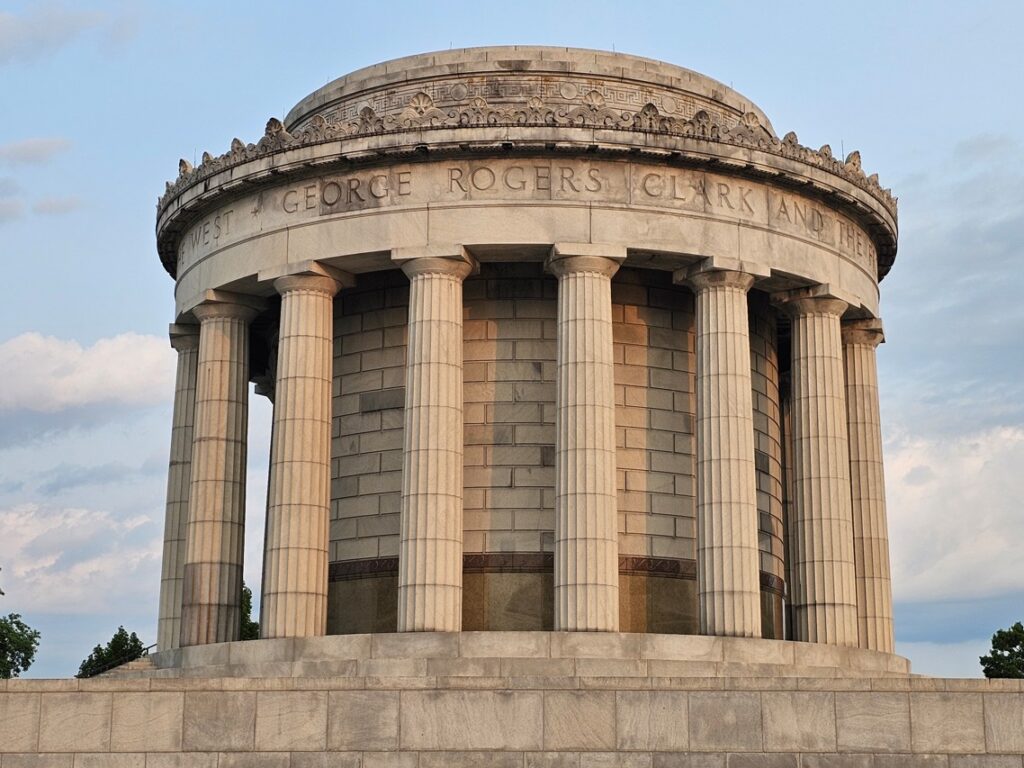
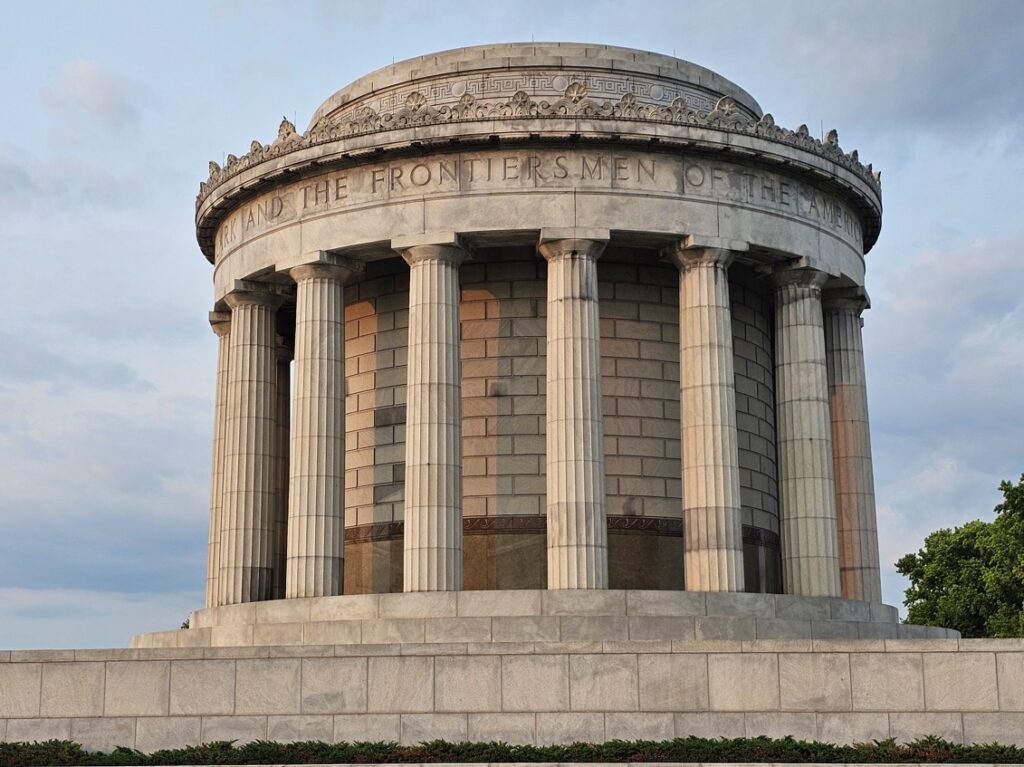
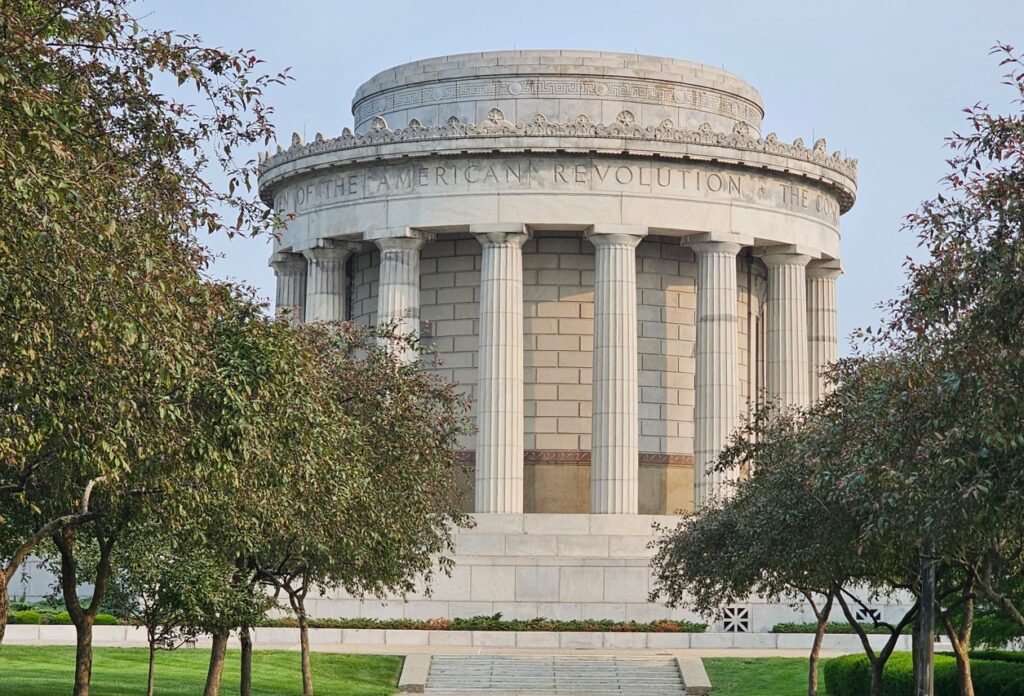
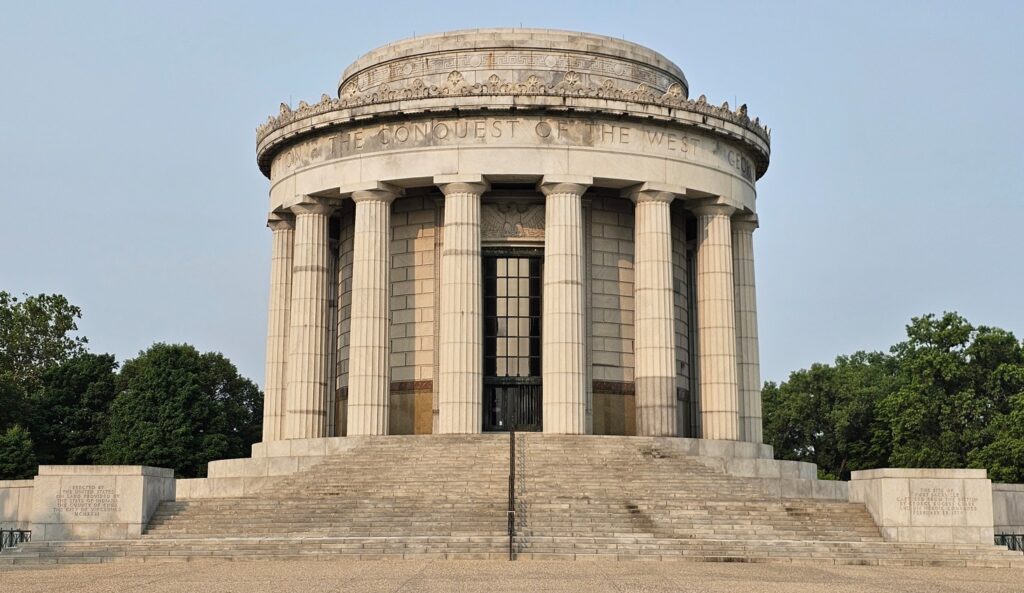
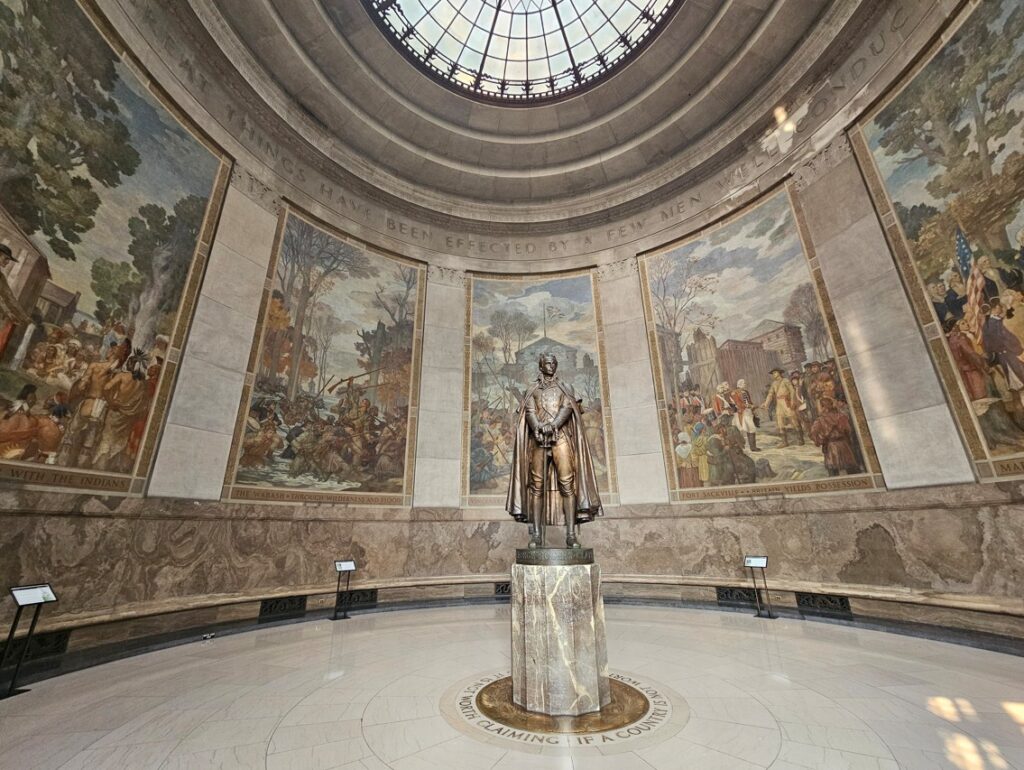
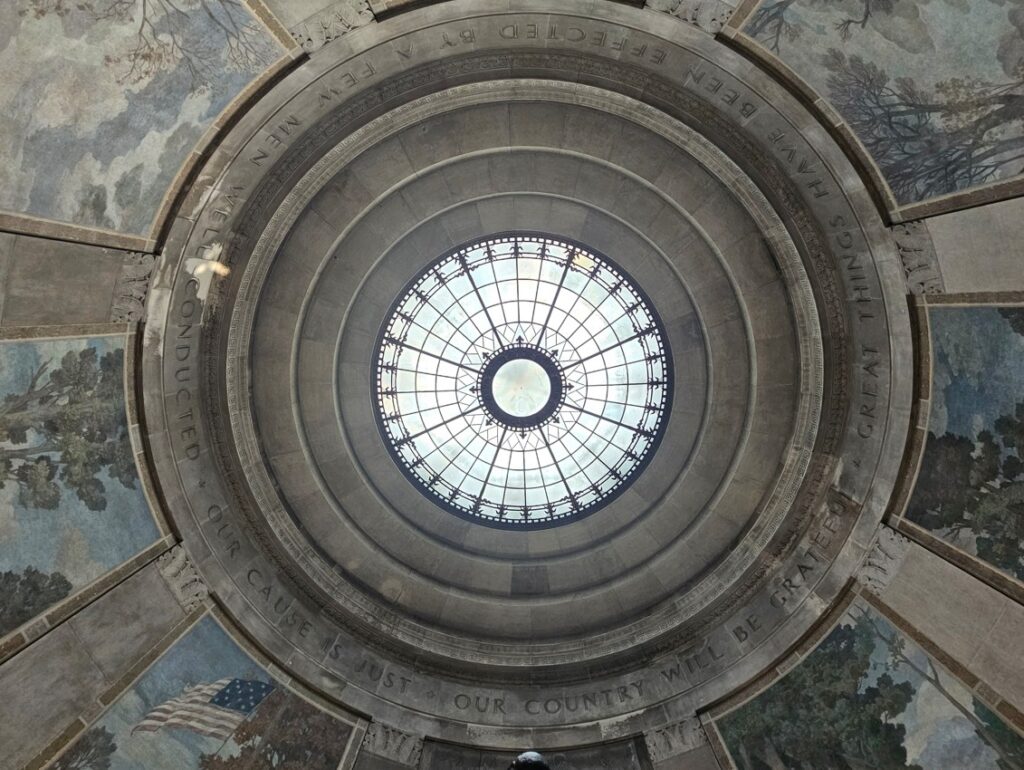
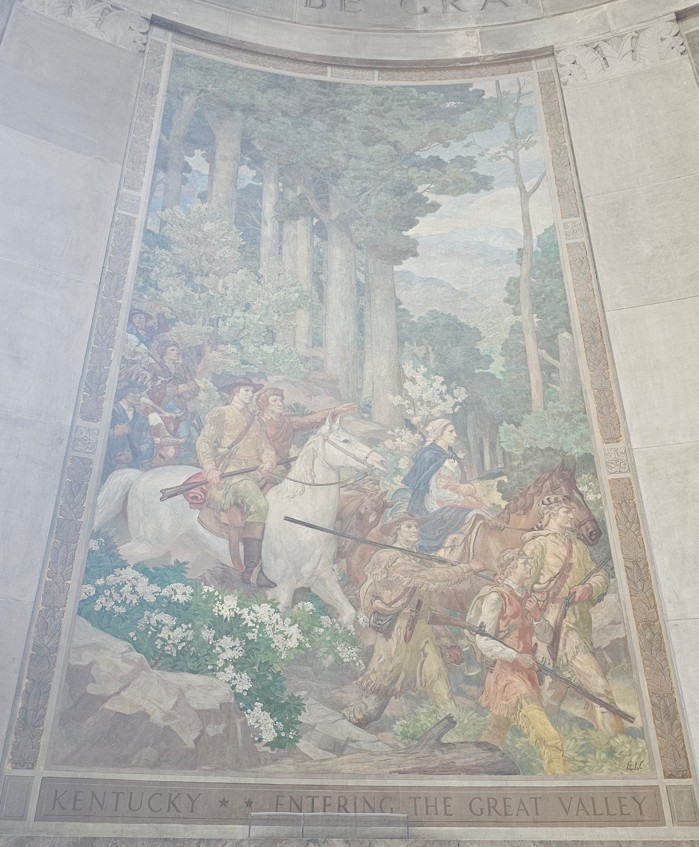
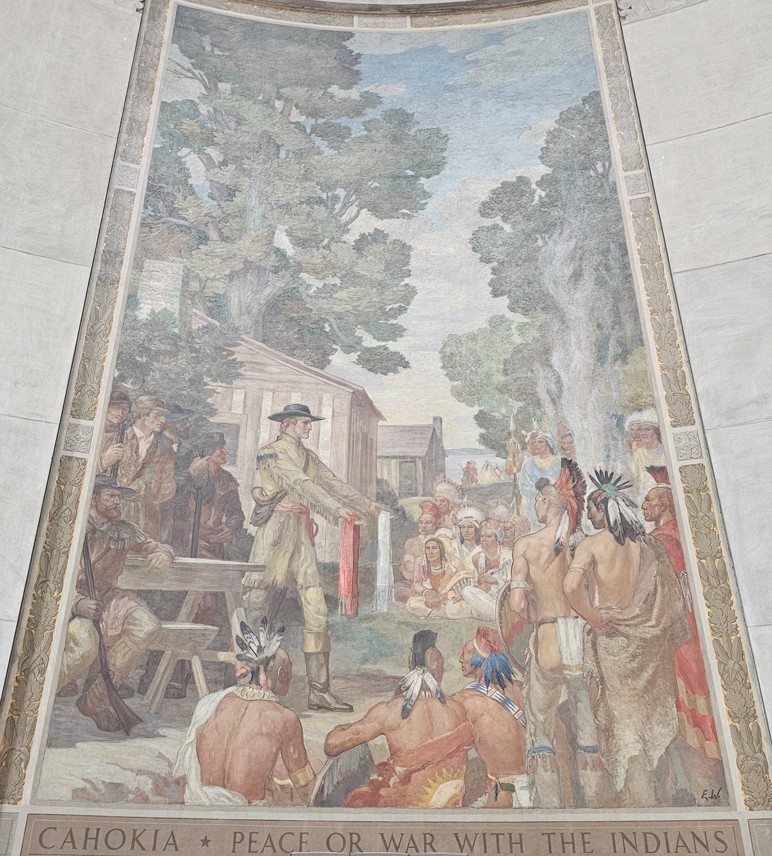
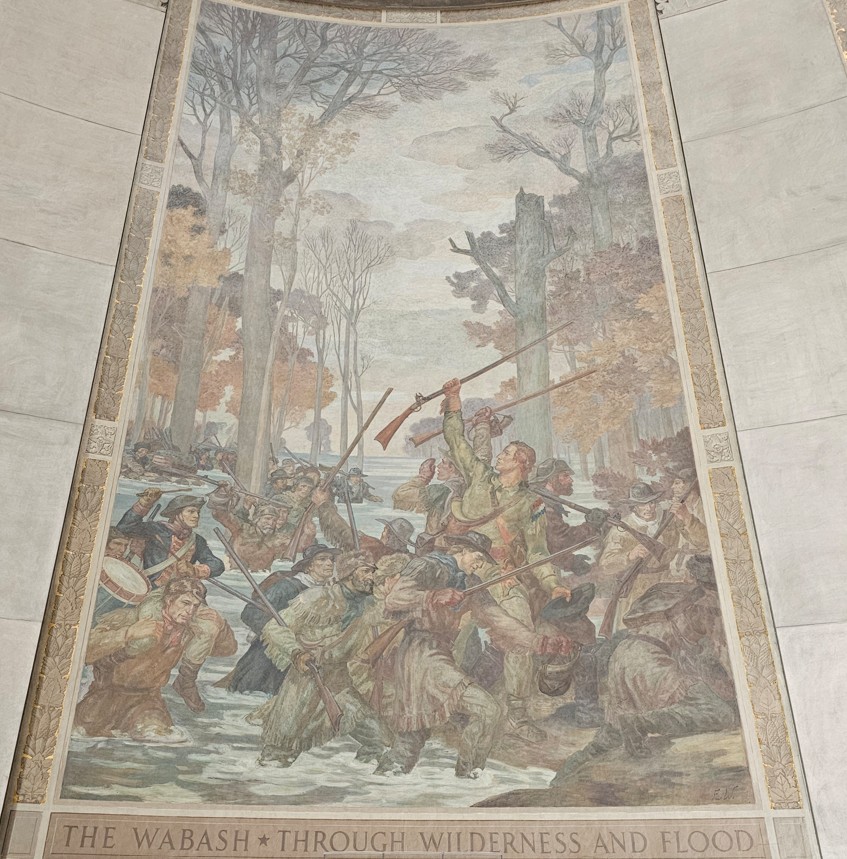
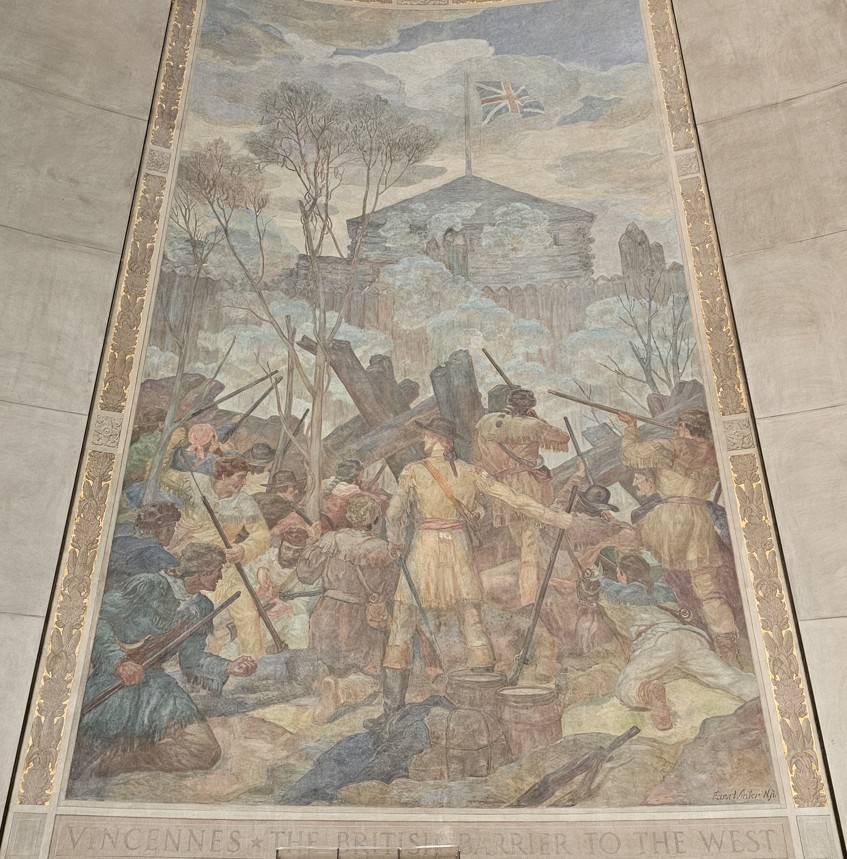
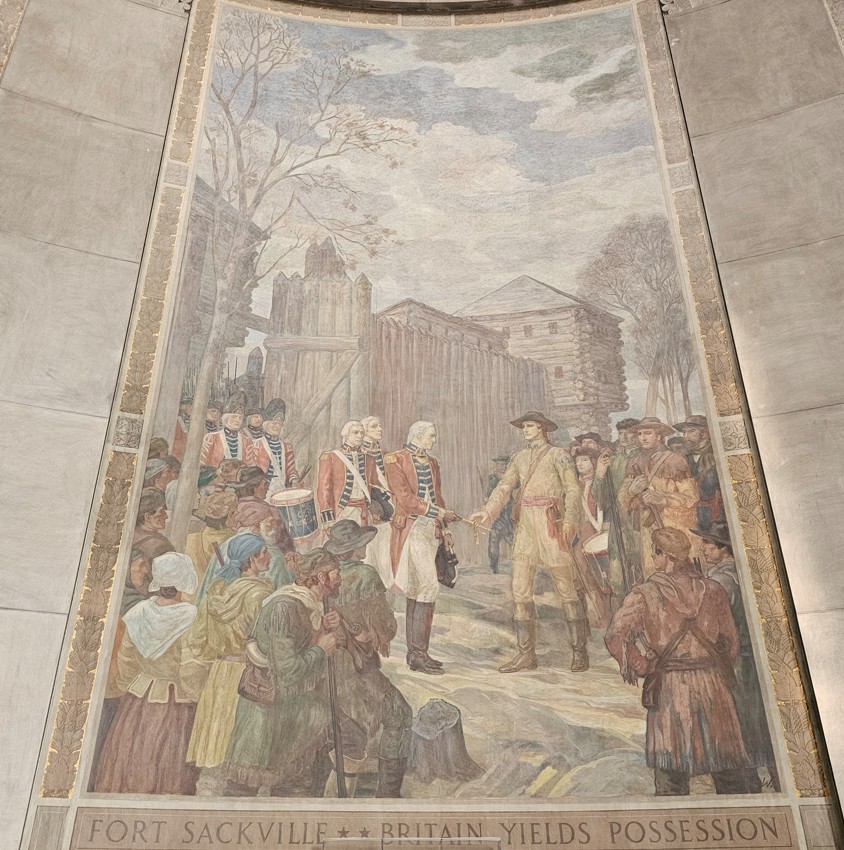
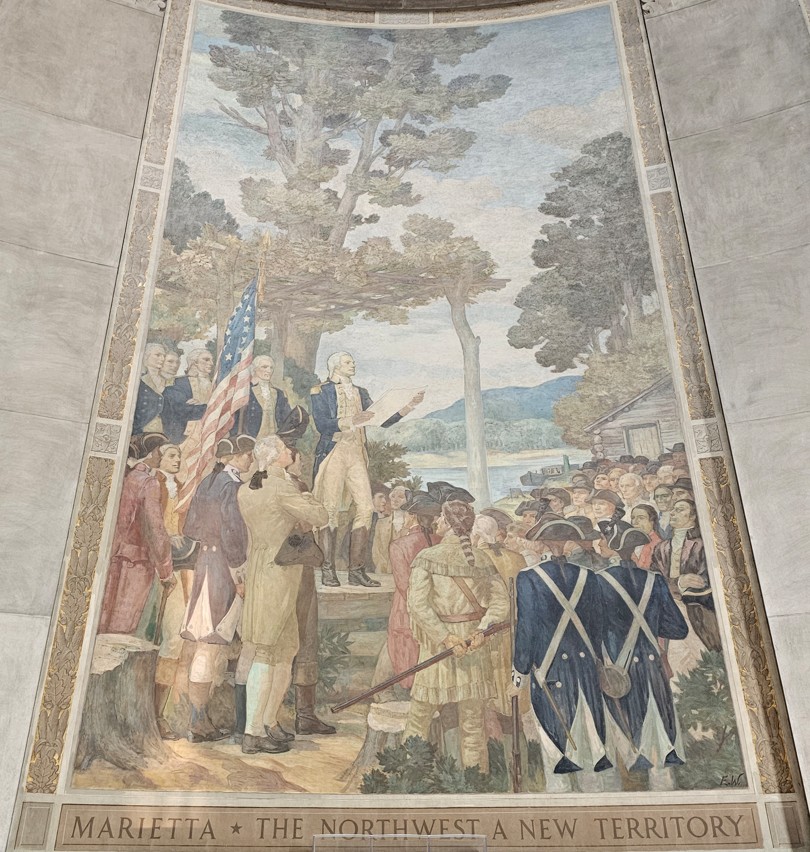
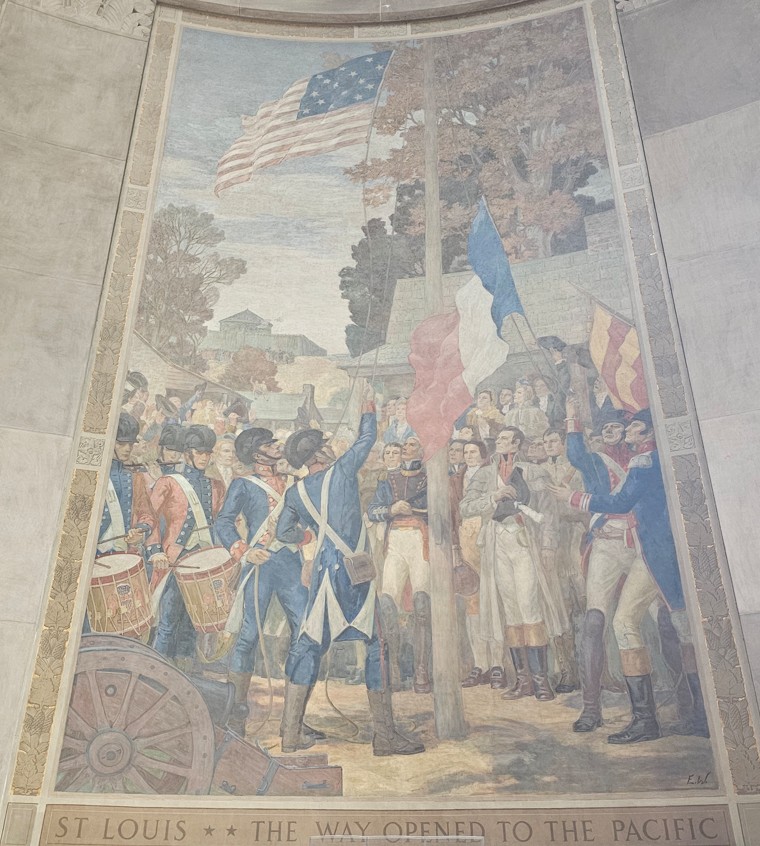
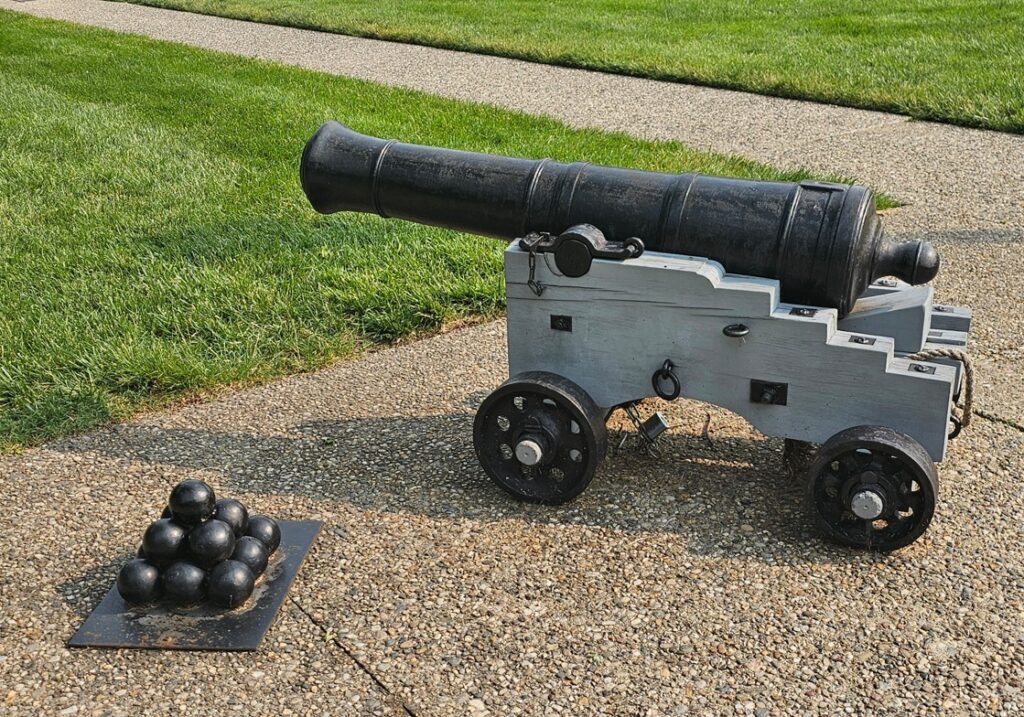
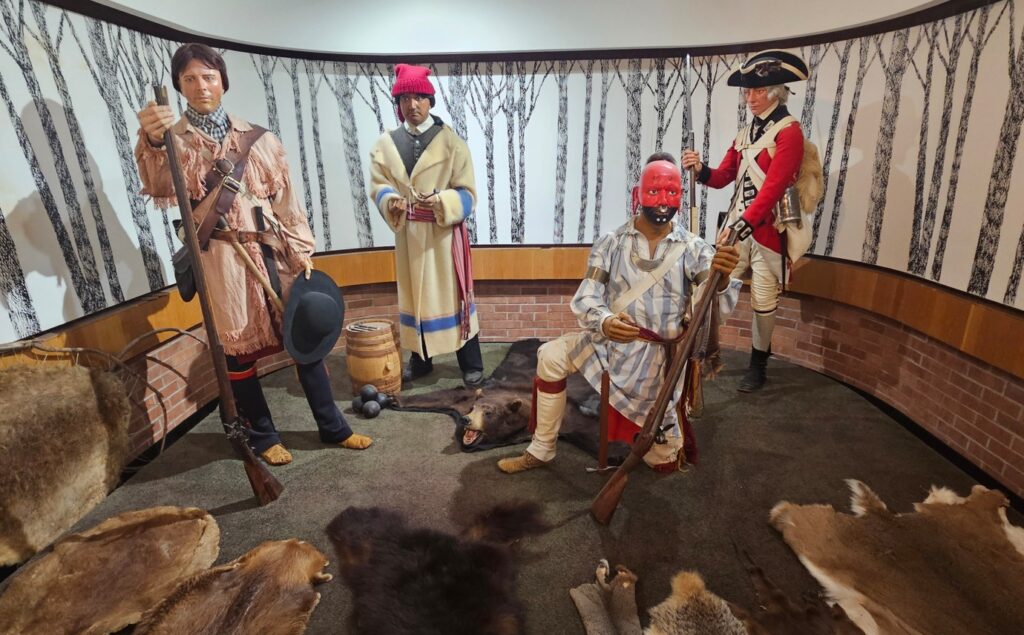
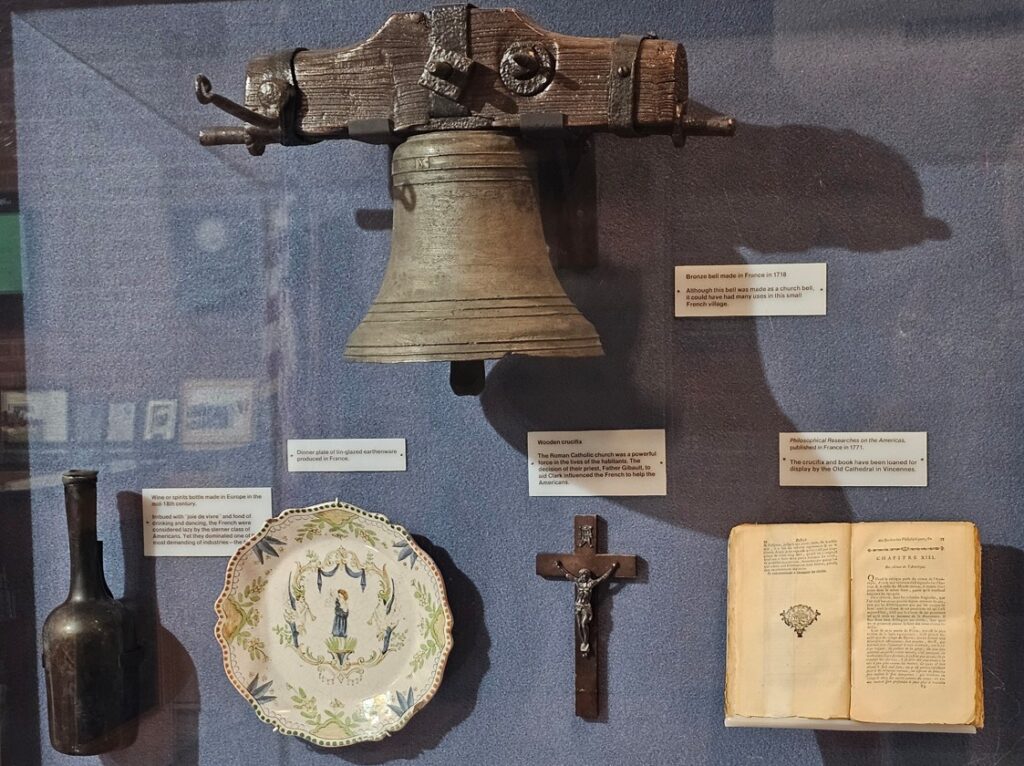
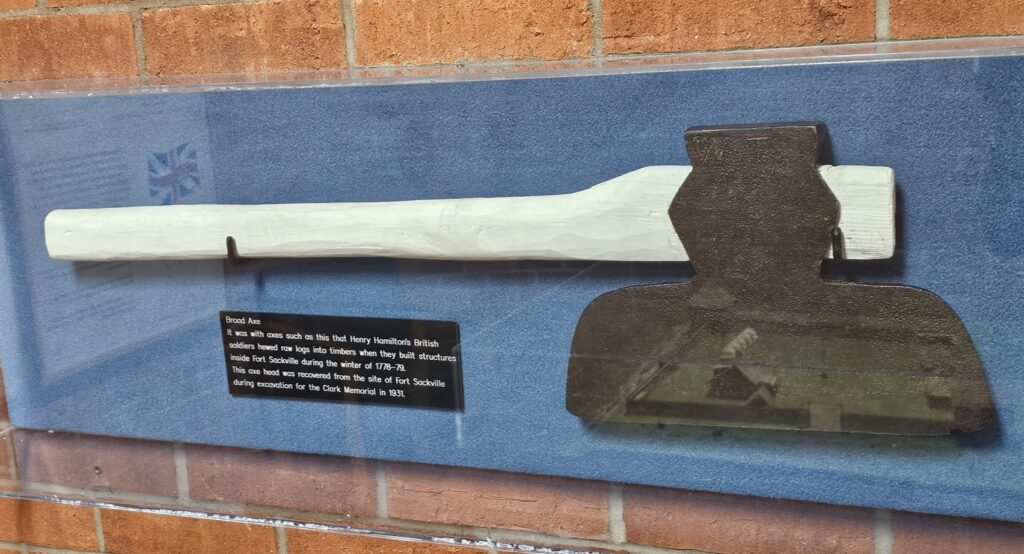
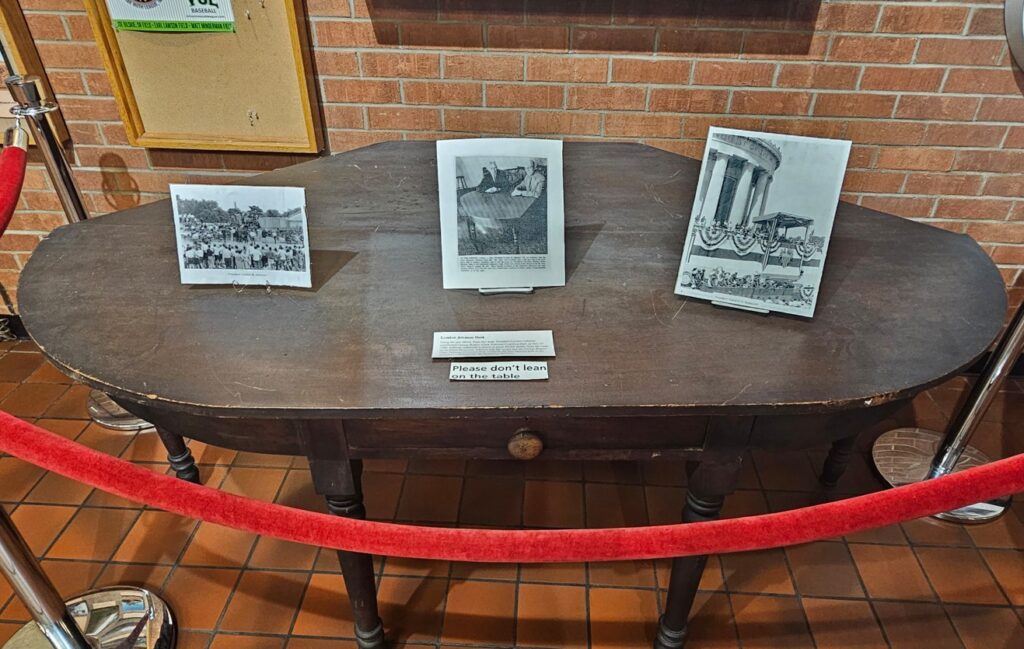
This monument memorializes George Rogers Clark’s daring victory over the British at Fort Sackville (current day Vincennes) in 1779, which was instrumental in winning the Revolutionary War, and opening the west to American expansion westward.The mall reminds you of the monuments in Washington DCThe Lincoln Memorial Bridge over the Wabash River reminds you of the Francis Scott Key Bridge in Washington DC.George Rogers Clark……and the Frontiersmen……of the American Revolution.The Conquest of the WestGeorge Rogers Clark statue in the center of the memorial.The rotunda.Panels chronicle the history of the area. This one depicts George Rogers Clark on a white horse leading settlers across the Allegheny Mountains.In 1778 Clark called for a conference at Cahokia to negotiate peace with the Native American tribes. He offered each tribe a choice of war or peace. Peace if they sided with the Americans in the Revolutionary War. Choosing the while belt meant they would side with the Americans, red for siding with the British. Most tribes chose to support the US, but some sided with Britain.In December 1778 British forces retook control of Fort Sackville from the French and Americans. Clark and his men executed a midwinter attack in February 1779 to retake the fort. They crossed 160 miles of frozen and eventually prairie over 19 days. The last 10 ,miles were completed without food, and sometimes water reached their necks. They retook Fort Sackville on February 25, 1779.While surrounding Fort Sackville, Clark intercepted some Native Americans who were British allies, and he executed them within view of the fort. The British thought Clark had large numbers, so they surrendered the fort after two days, with no losses on either side.The mural shows British Lt. Gov. Henry Hamilton to George Rogers Clark on February 25, 1779. This surrender represented more than just surrendering one fort. Clark’s victory changed the dynamic on the western frontier, disrupting the British military presence in the west, and confused the Native Americans about their loyalties. The victory also led thousands of American colonists in the east to move west of the Appalachians.This scene in Marietta, Ohio in 1788 depicts the Secretary of the Northwest Territory Winthrop Sargent reading the Northwest Ordinance, which eventually developed into Indiana, Ohio, Illinois, Michigan and Wisconsin.Here Captain Amos Stoddard stands at attention with Meriwether Lewis to his left at St. Louis. With George Rogers Clark’s brother William Clark, Lewis led the Corps of Discovery expedition across the country to the Pacific Ocean. St. Louis is considered the Gateway of the West.A cannon for the time period.This scene in the Visitor Center depicts the combatants in the area: American frontiersman, French habitant, Indian, and British soldier.British soldiers used a broad axe like this to hew raw logs into timbers to build structures inside Fort Sackville during the winter 1778-1779. This axe head was recovered from the site of Fort Sackville during excavation for the Clark Memorial in 1931.President Lyndon Johnson at this desk in 1966, established George Rogers Clark National Historical Park. About 50,000 people attended the signing.