Kentucky 2020 Day 1

So we left Virginia for a short trip around Kentucky, with a few stops in West Virginia on the way home.
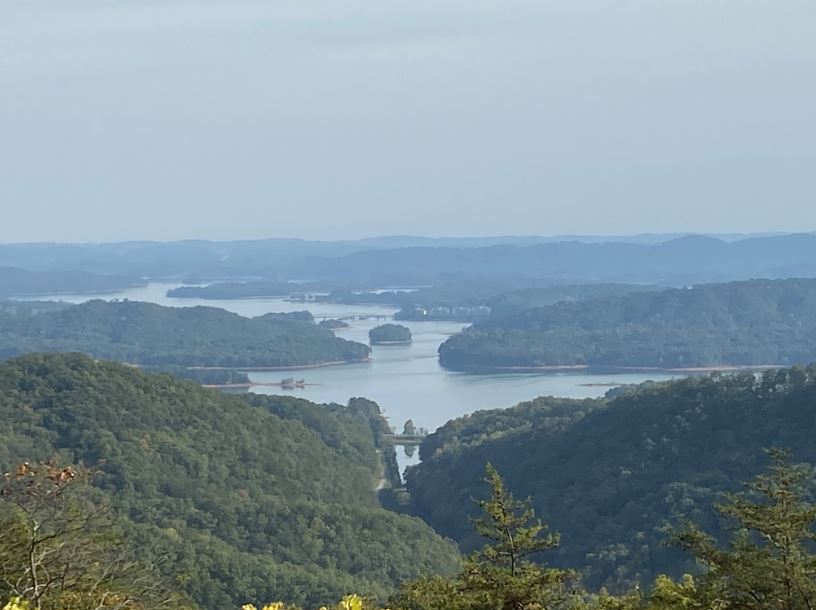
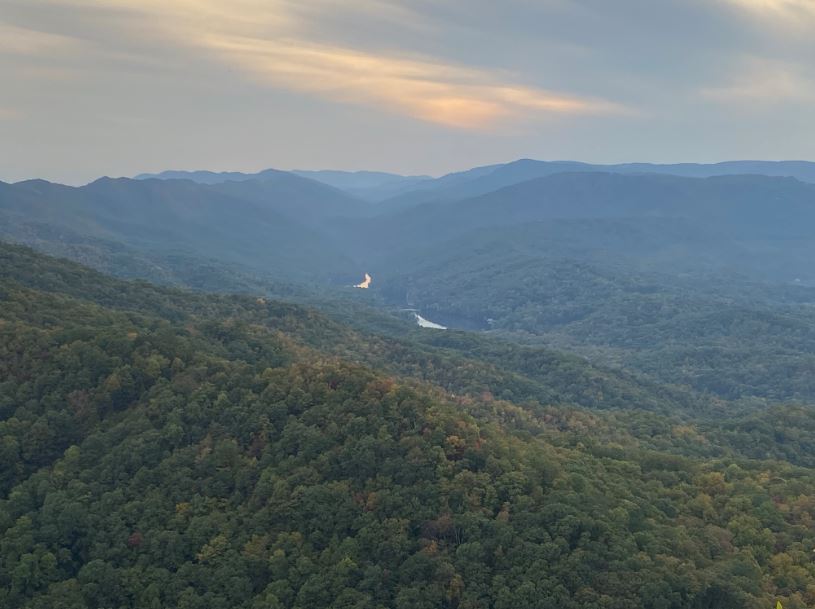
Our 7 hour drive south took us by this scenic overlook – Veterans’ Overlook in Bean Station TN, which overlooks the Cherokee Reservoir.
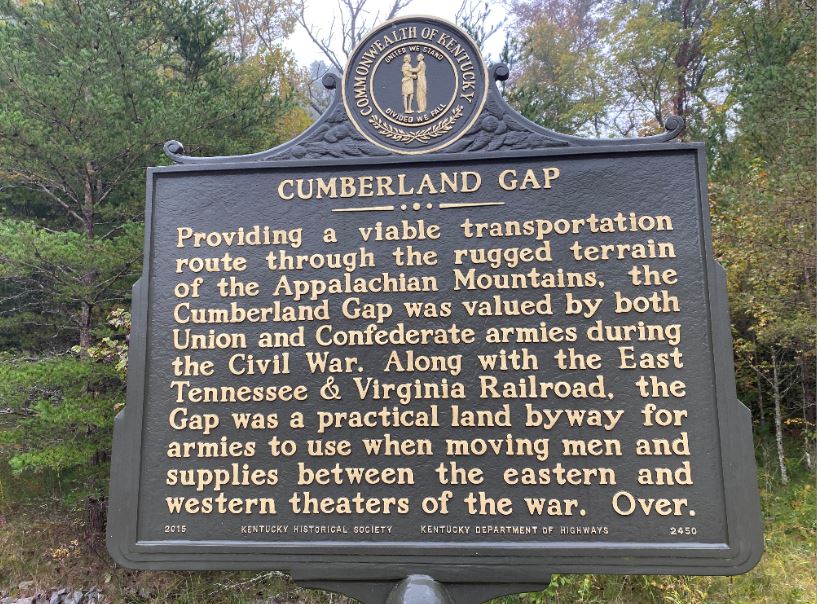
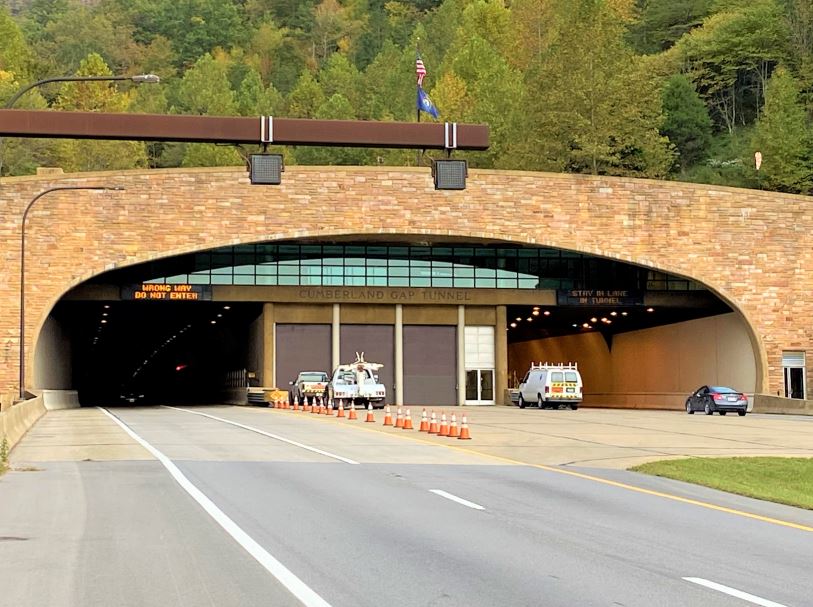
We drove through the Cumberland Gap Tunnel, which brought us from Tennessee to Middlesboro KY.
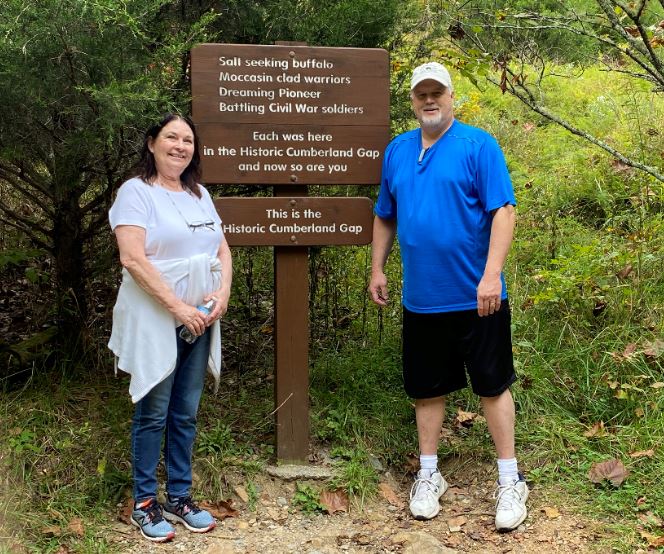
CUMBERLAND GAP NATIONAL HISTORIC PARK – KY/TN/VA
Colonists discovered Cumberland Gap as an easier path for westward travel and exploration in the mid-1700s. Daniel Boone made this pass legendary, blazing the trail west into Kentucky, where he encountered the Shawnee and Cherokee, sometimes as enemies and many times as friends. Boone’s encounters with the Indians is depicted in one of the four relief sculptures on the US Capitol doors. This is Daniel Boone Country!
This area has seen a lot of action over the years!
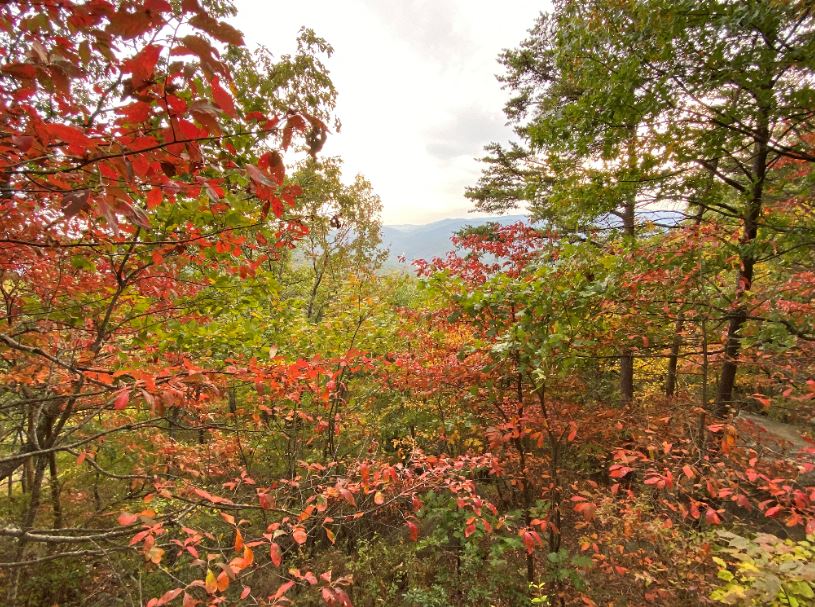
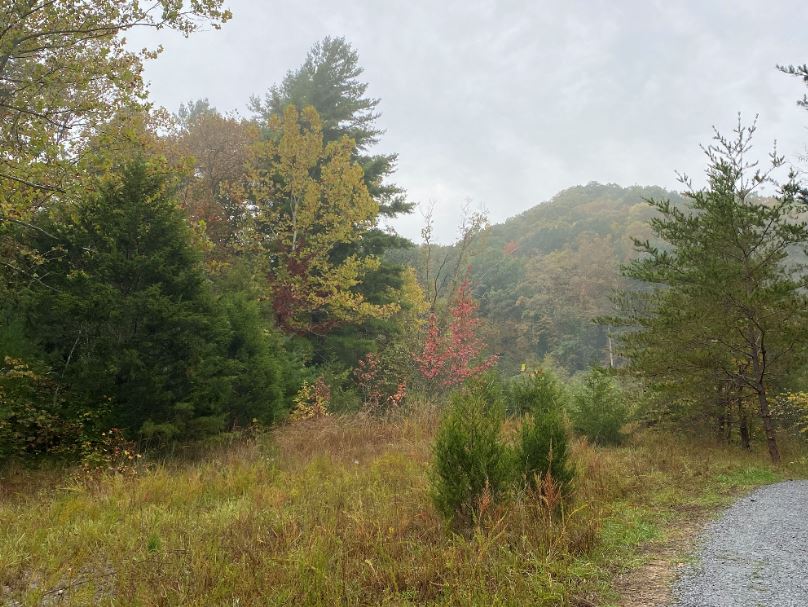
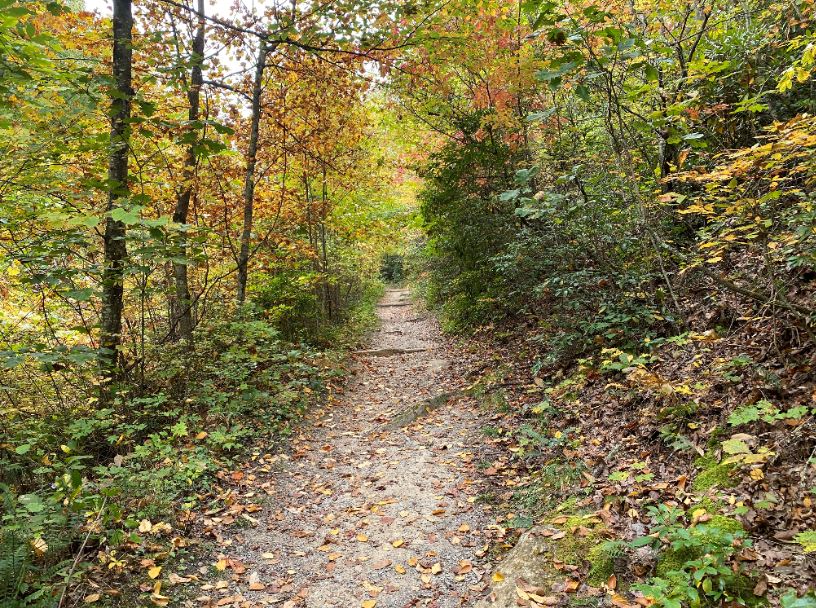
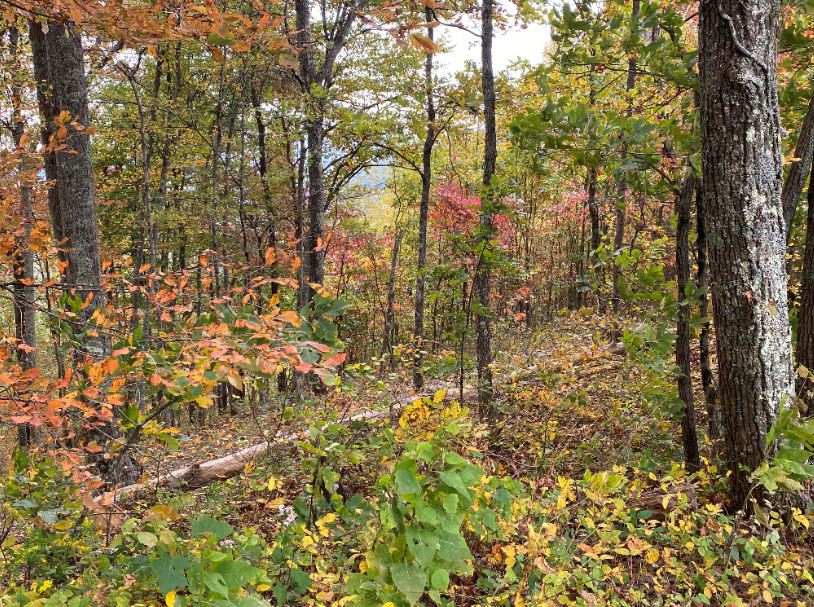
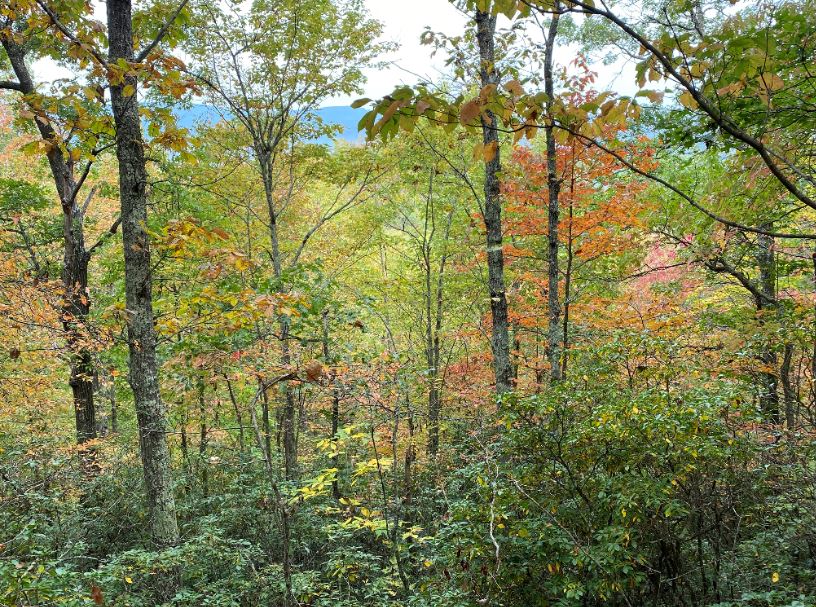
We were surprised to see so much color – we thought we would be a couple weeks early, but this was really colorful and beautiful!
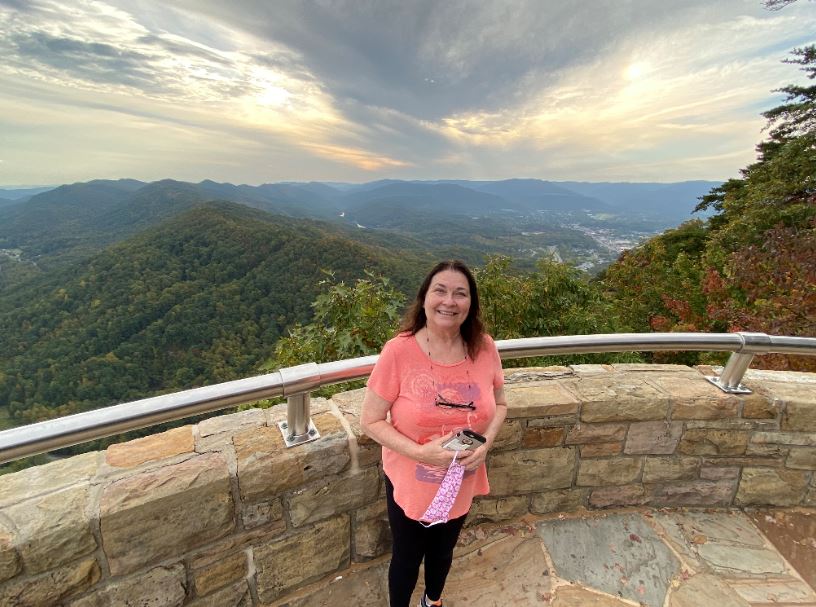
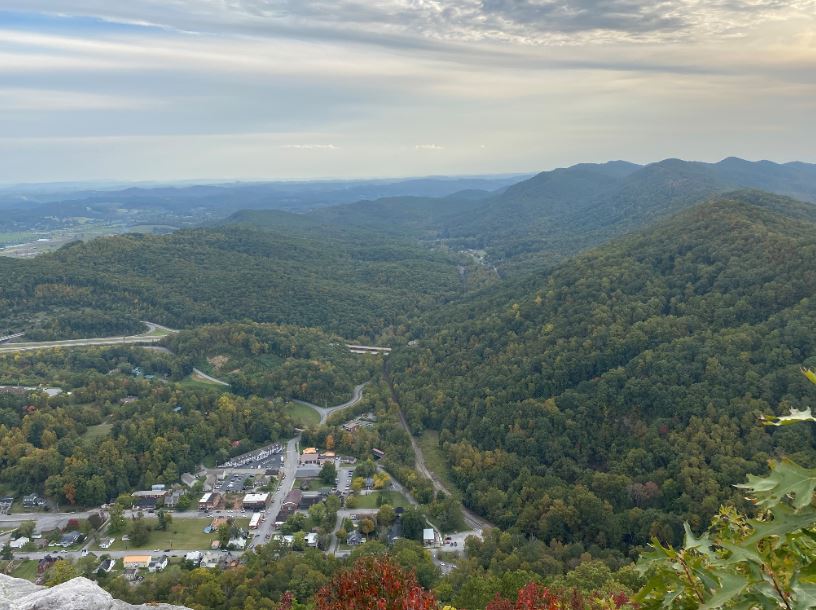
Mary Jean at the top of Pinnacle Overlook. She is standing in Virginia. Kentucky is to the right on the picture, Tennessee to the left.
Cumberland Gap TN
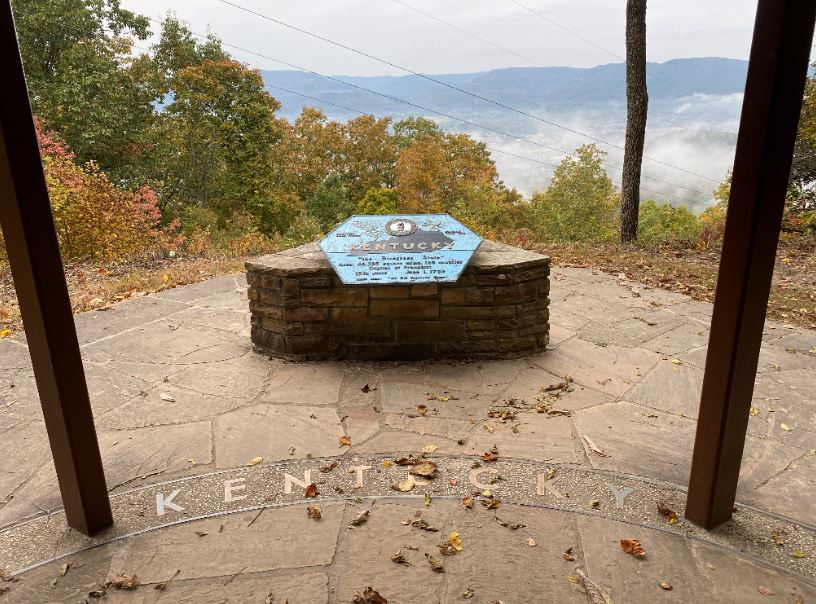
Kentucky
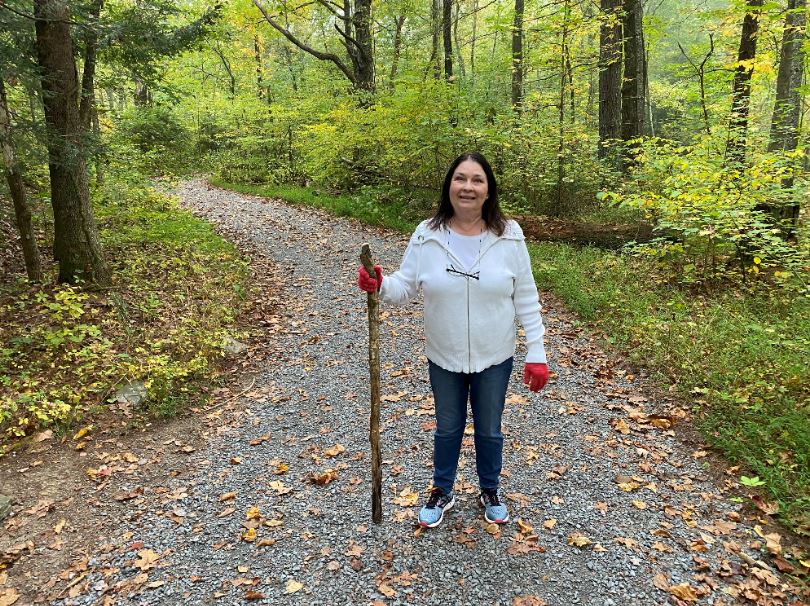
Walking up to the Tri-State Peak. The trail is 1.2 miles long, uphill all the way, and gets pretty steep at the end.
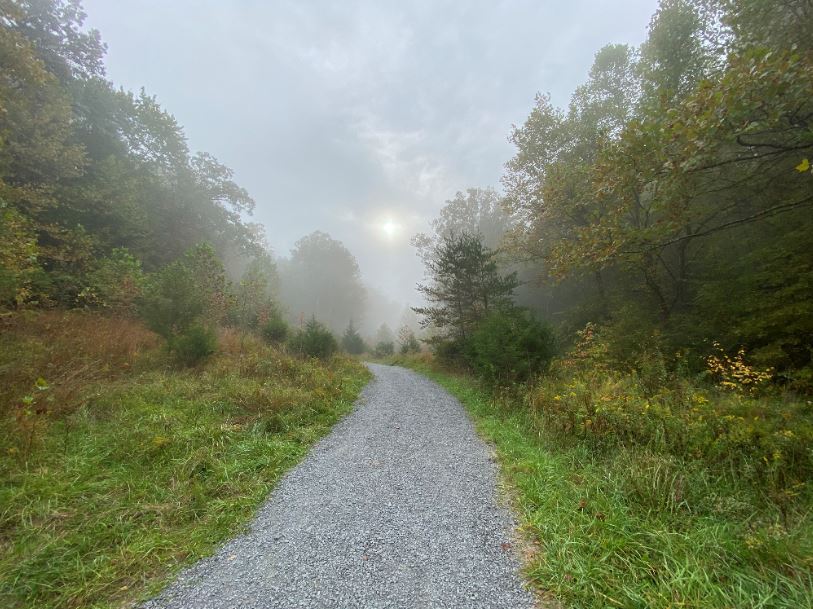
We started around 9 AM in light fog.
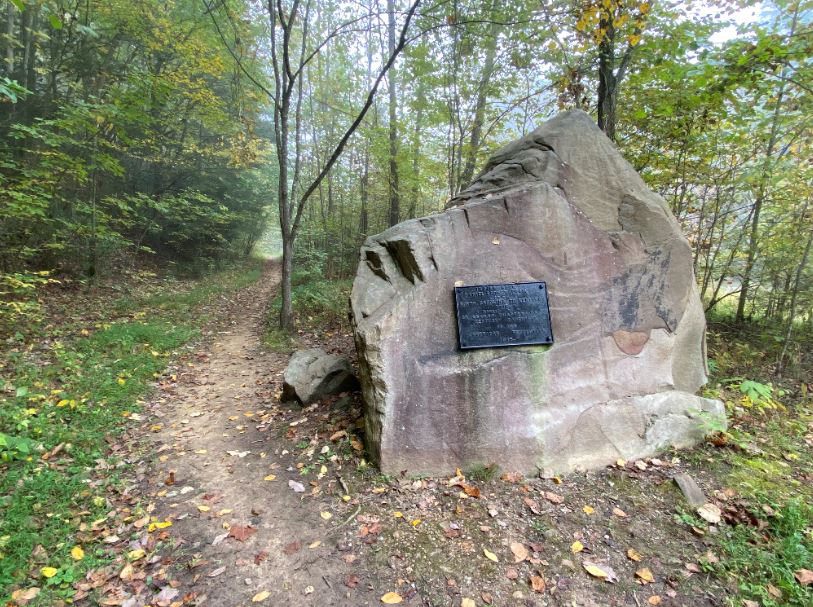
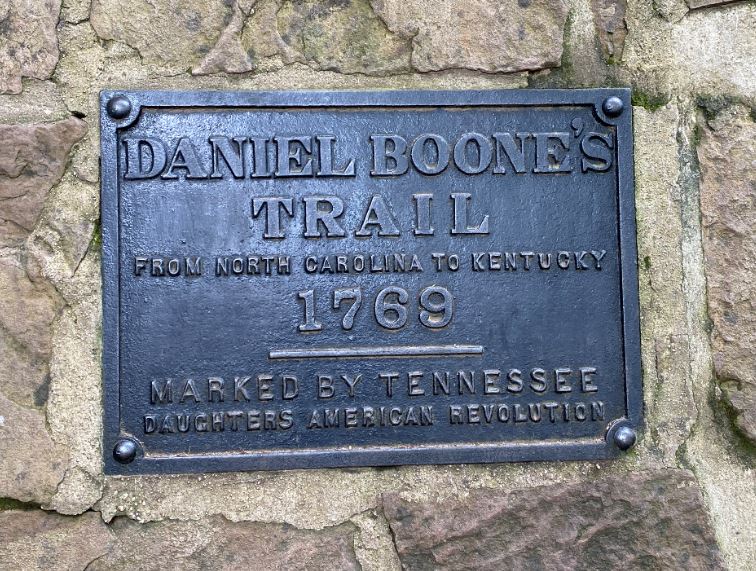
“Indian Rock” marks one of the documented trails that Daniel Boone used in 1775 from North Carolina to Kentucky.
The sun peeking through the fog.
This is the Cumberland Gap “Saddle”
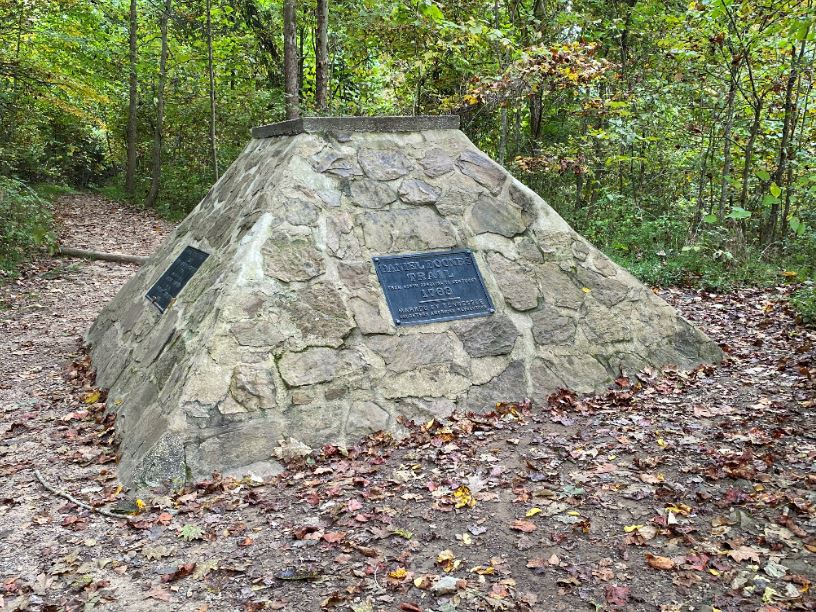
Daniel Boone monument.
This is a steep path. The picture doesn’t really capture its steepness.
At the top of Tri-State Peak, where Virginia, Kentucky and Tennessee meet at a point. This is the Kentucky sign.
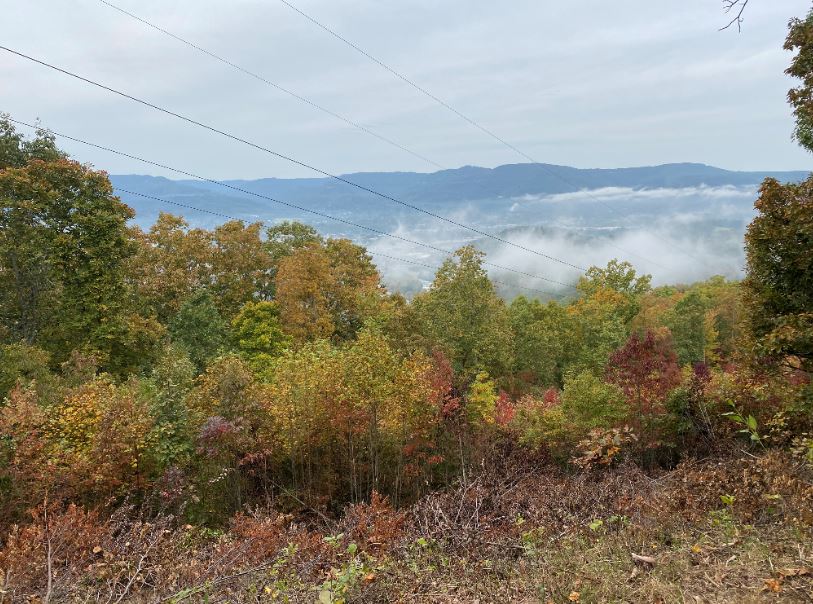
The view of Kentucky from the Kentucky sign
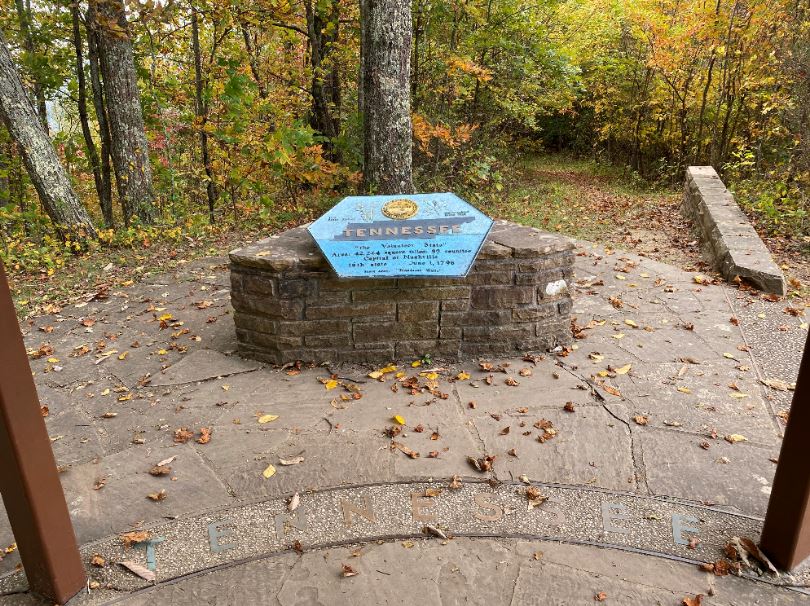
Tennessee sign
The view of Tennessee from the Tennessee sign
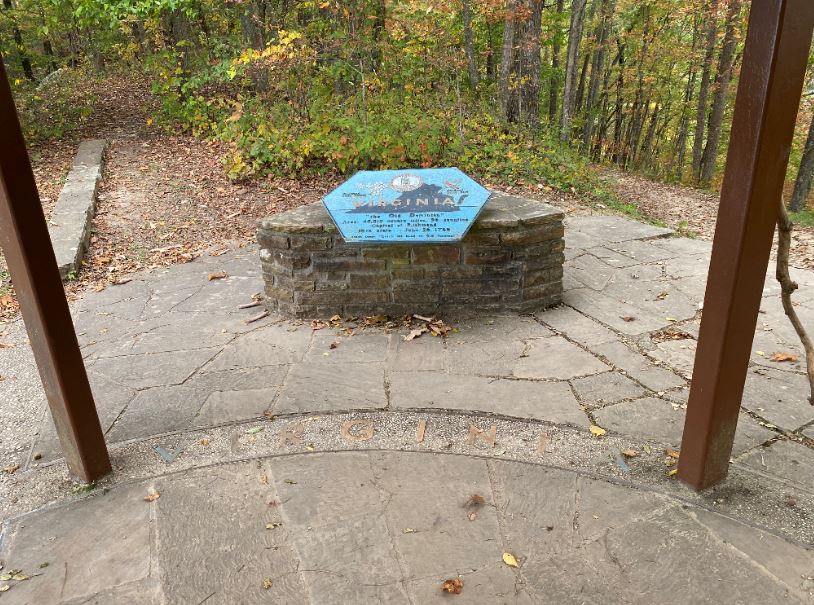
Virginia sign
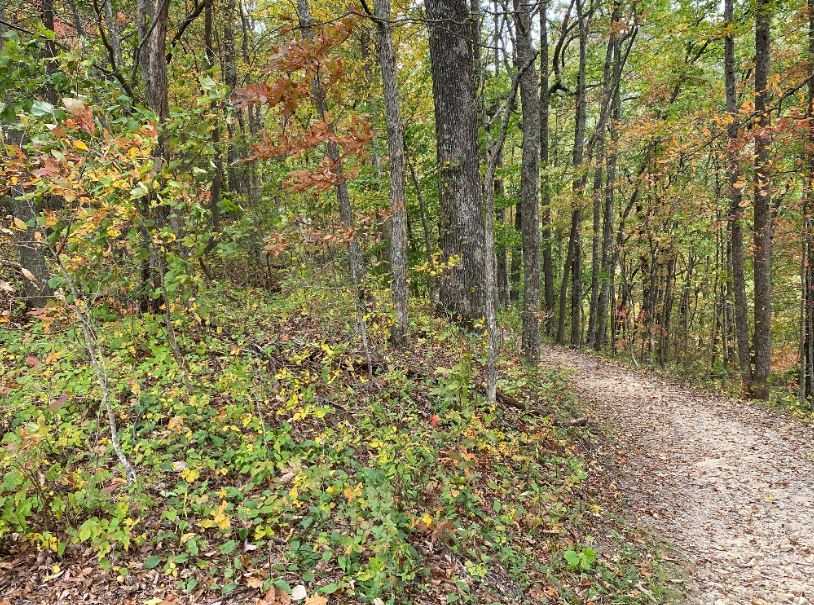
View of Virginia from the Virginia sign. This is the trail we hiked.
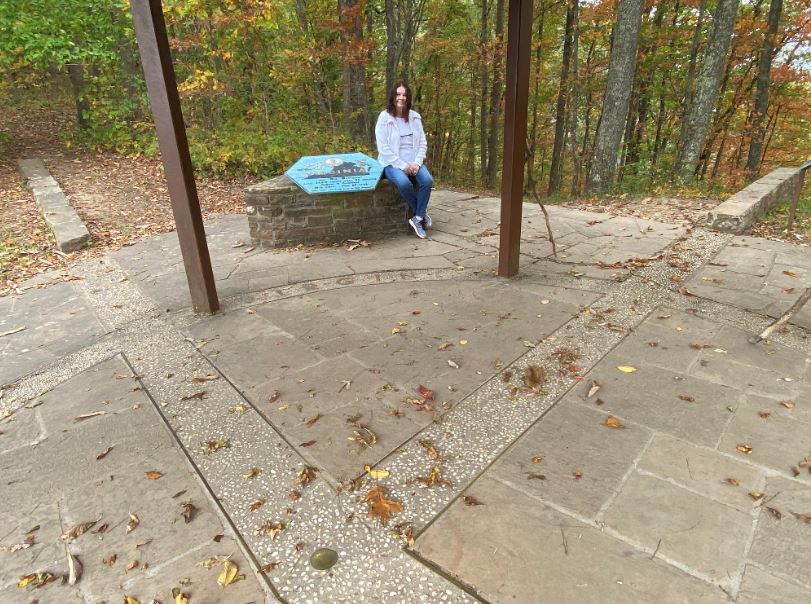
This is the far southwest point of the state of Virginia. The round marker is the point. Mary Jean is sitting in Virginia, Tennessee is on the right, and Kentucky is on the left.
Survey marker at the point
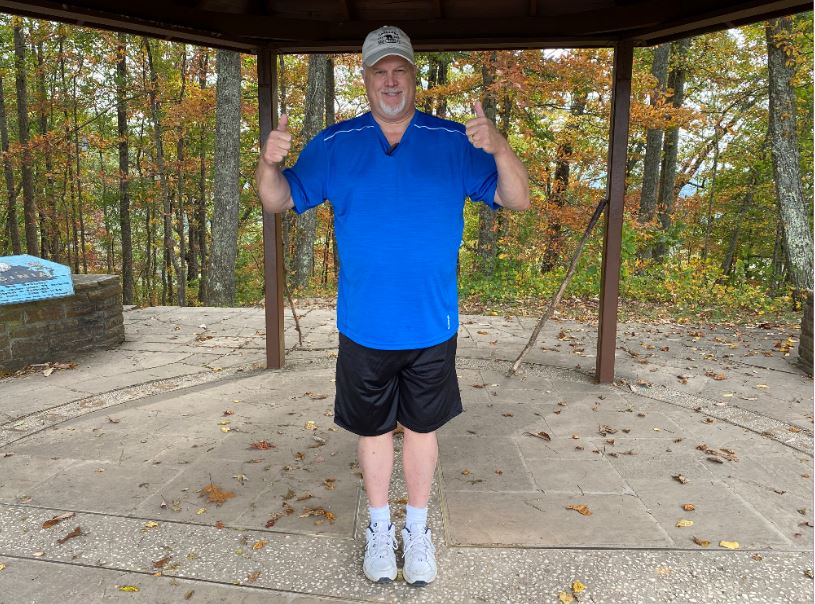
Standing in three states at once!
Colorful view on the hike back down
Warrior!
THE ORIGINAL KENTUCKY FRIED CHICKEN, CORBIN KY
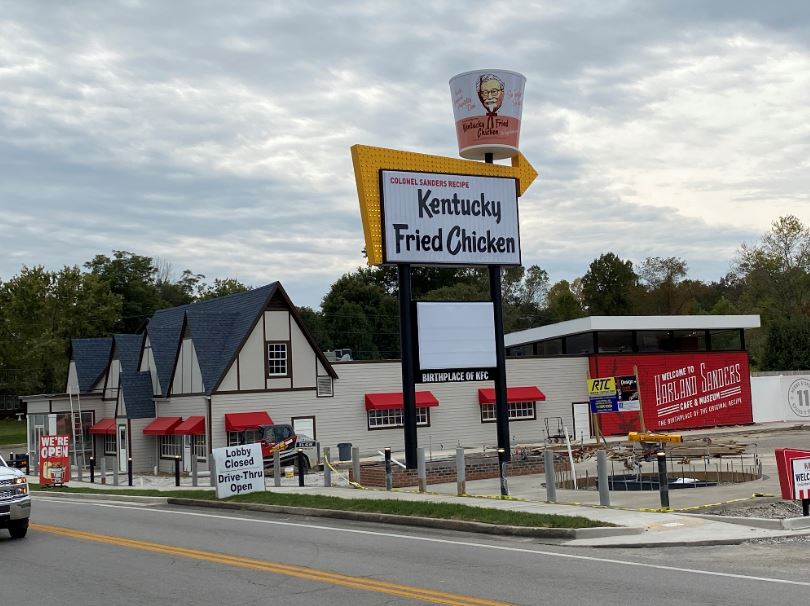
This the location of the very first Kentucky Fried Chicken! The original restaurant was named Sanders Cafe, and was attached to a motel. Of course, it is under renovation so we could not visit the museum. We did get our lunch at the drive-thru. This will be a pretty neat site when it is finished.
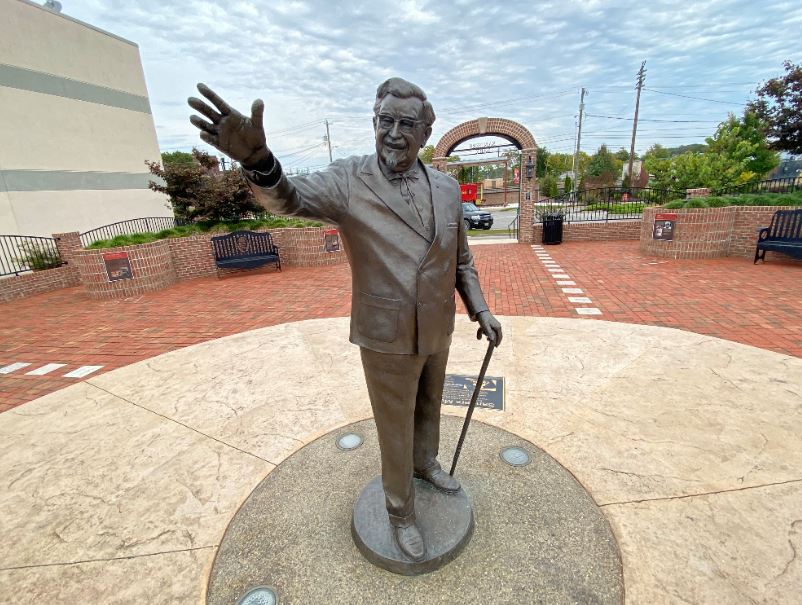
Colonel Sanders statue in town.
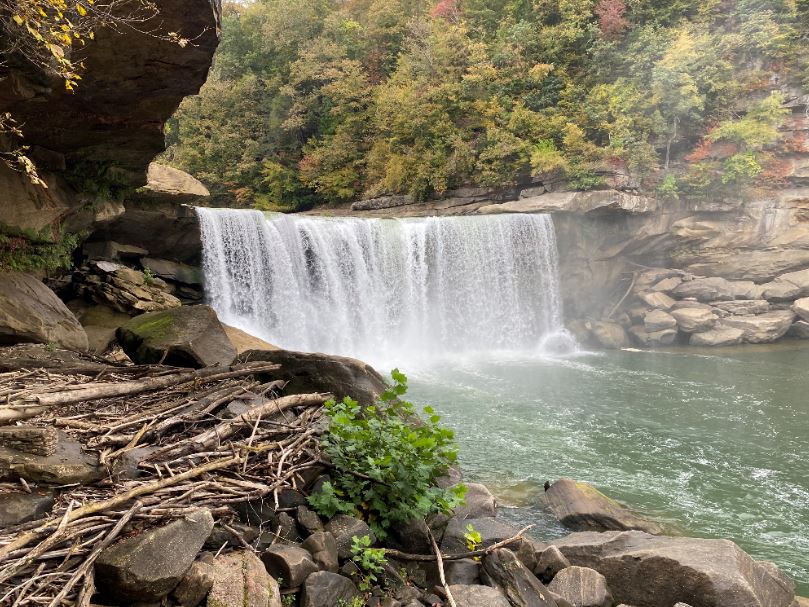
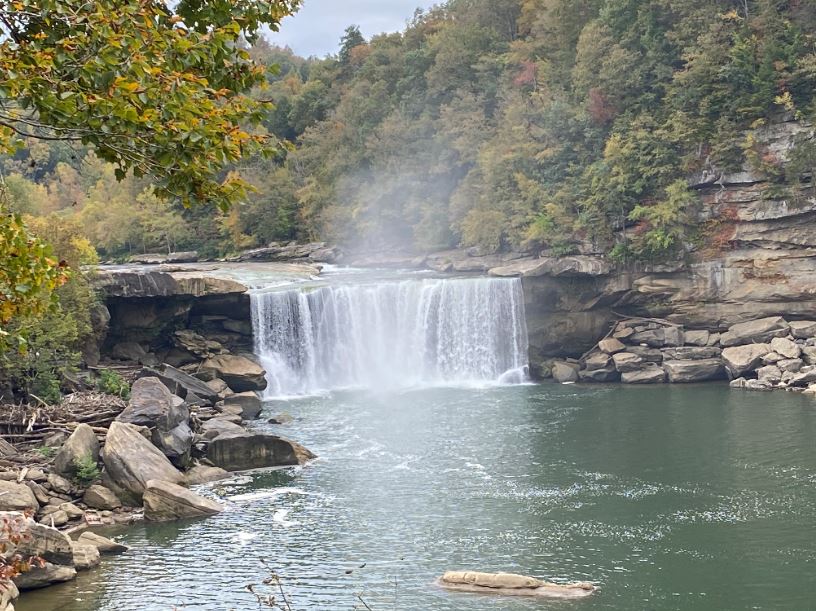
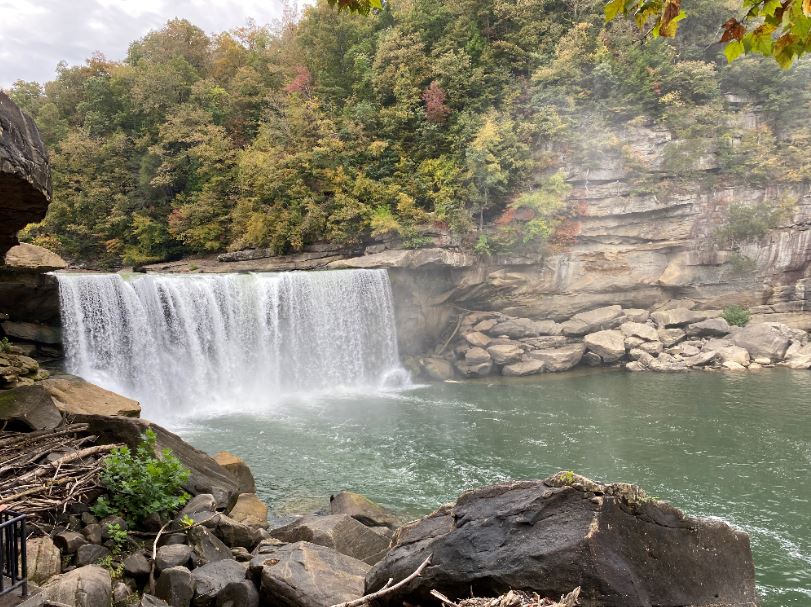
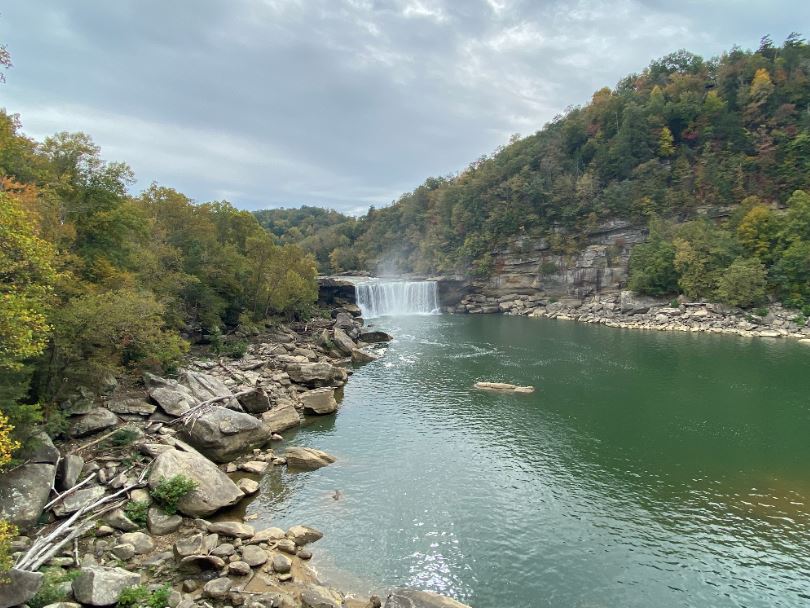
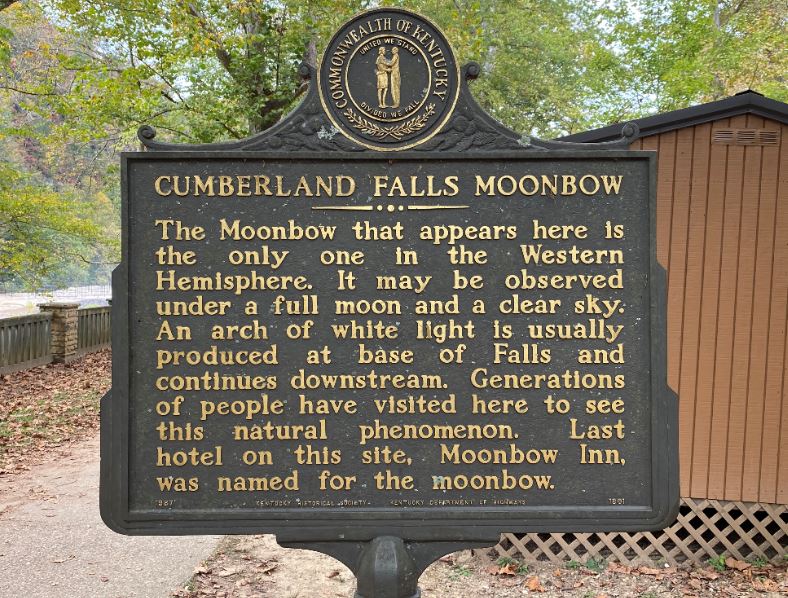
CUMBERLAND FALLS, NEAR WILLIAMSBURG KY
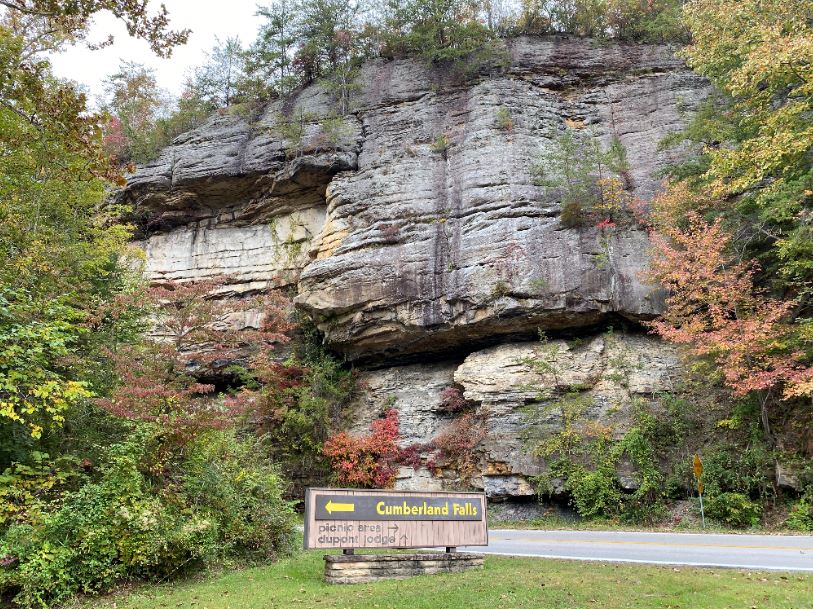
Cumberland Falls is nicknamed the Niagara Falls of the South
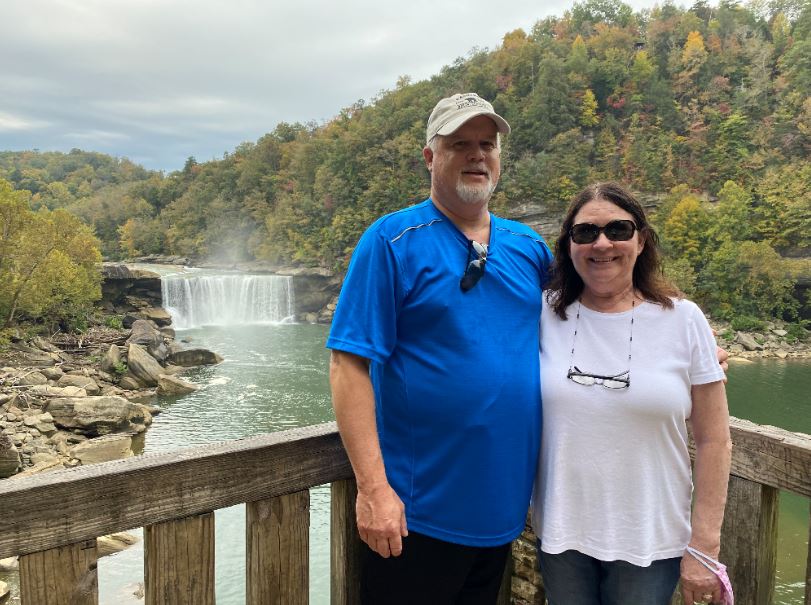
So here we are at Cumberland Falls!
Beautiful waterfalls – 125 ft. wide, 68 ft. tall, 3,600 cubic feet of water over the ledge per second!
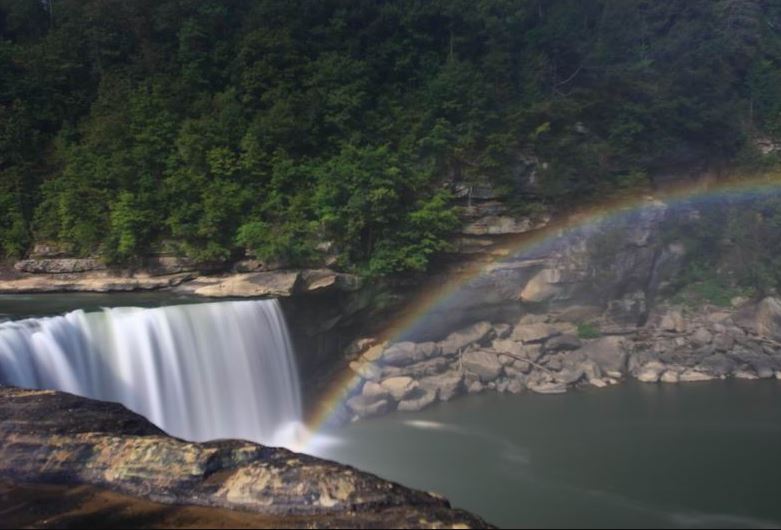
Unfortunately, the most recent full moon was October 3, so we did not experience the moonbow, but if we did, it would look like this:
(nighttime picture from the internet, not me!)

Woodrow Wilson

Presidential Museum, Staunton VA

(Thomas) Woodrow Wilson was the 28th President of the US.
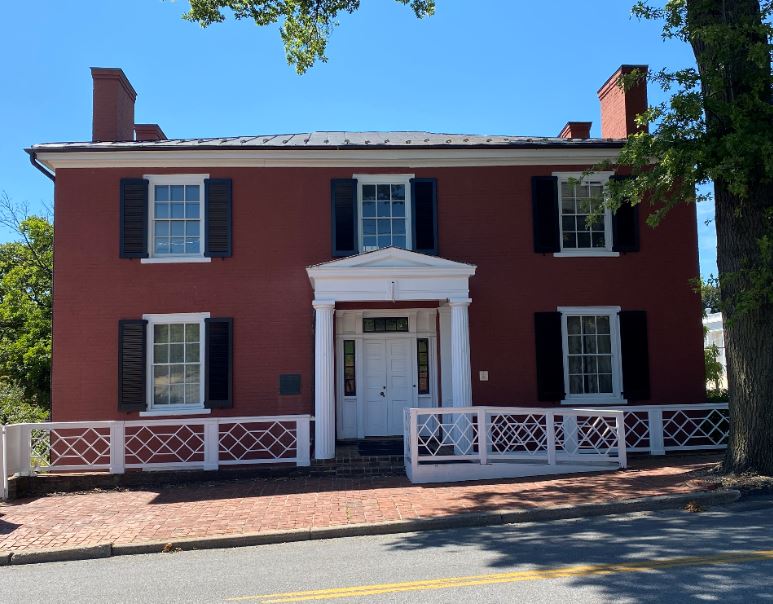
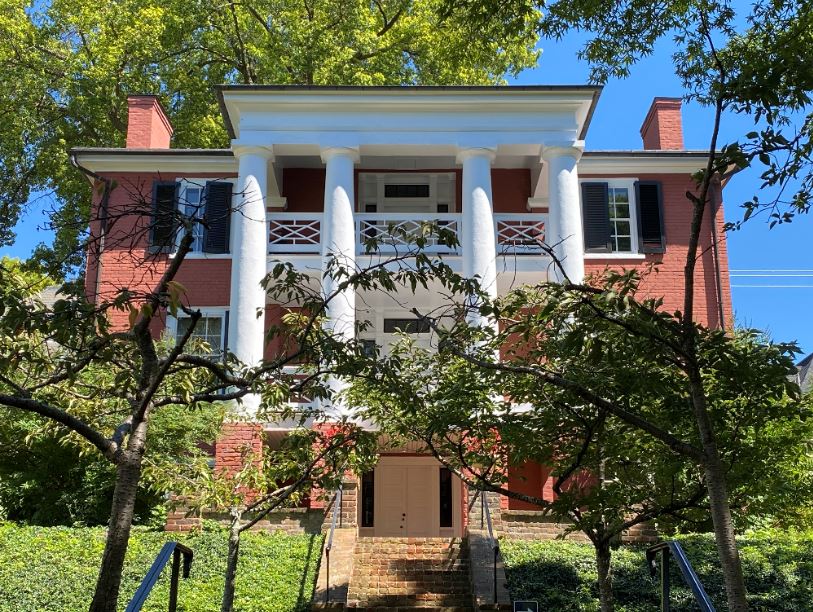
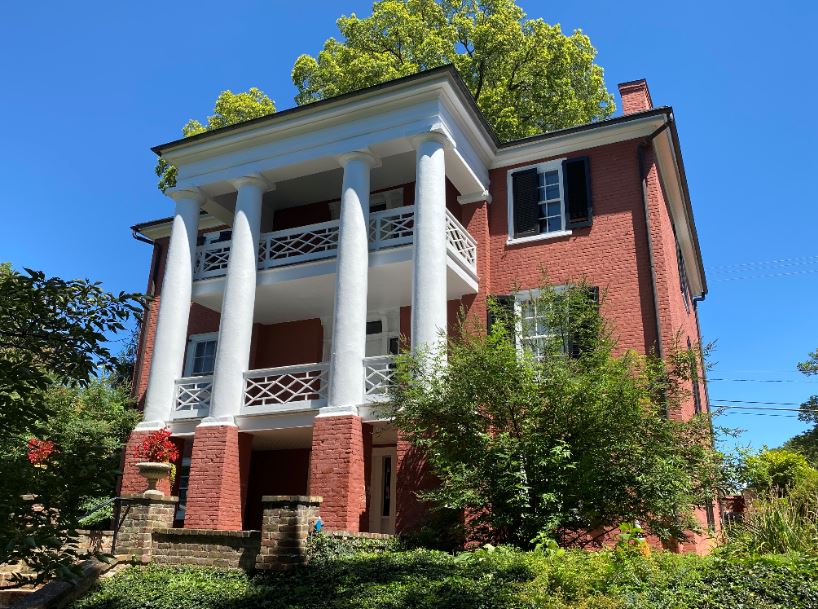
He was the eighth (and so far, last) president born in Virginia. He was born in this house in Staunton VA in 1856. This was the manse for the Presbyterian Church. His father was a Presbyterian minister.
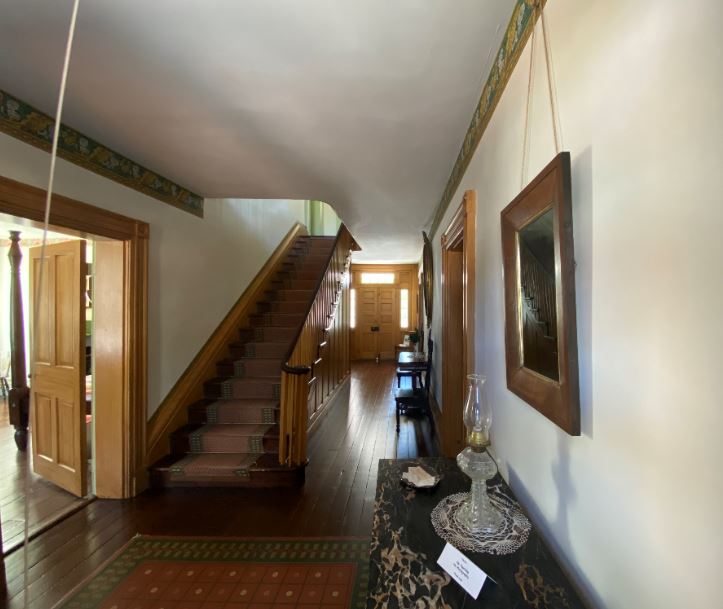
Due to COVID, the birthplace house was not open for visitors, but I was able to see the foyer through the front window.
Rear of the manse.
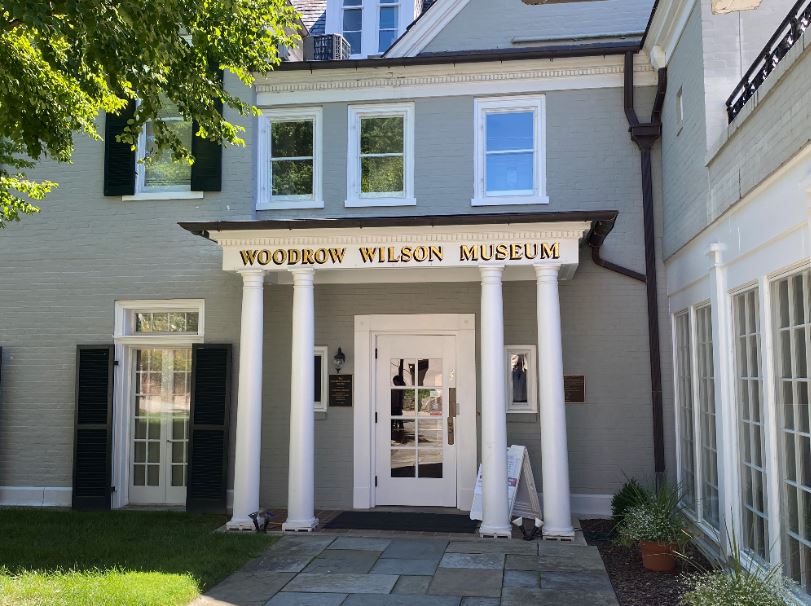
Entrance to the museum
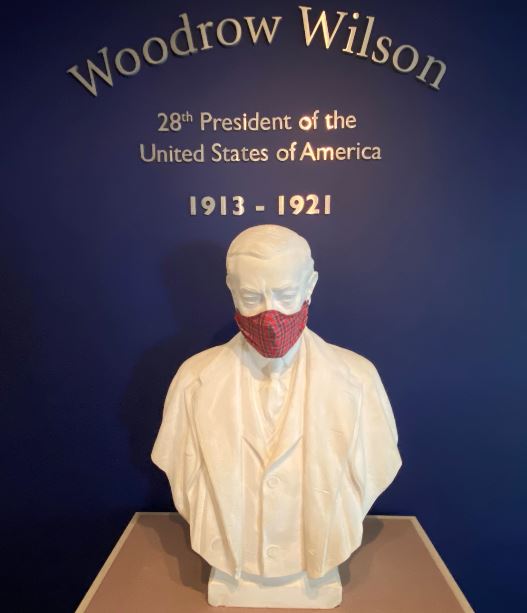
Bust of President Wilson, wearing a mask. He was president during the 1918 Spanish Flu pandemic, so he actually did wear a mask back then!
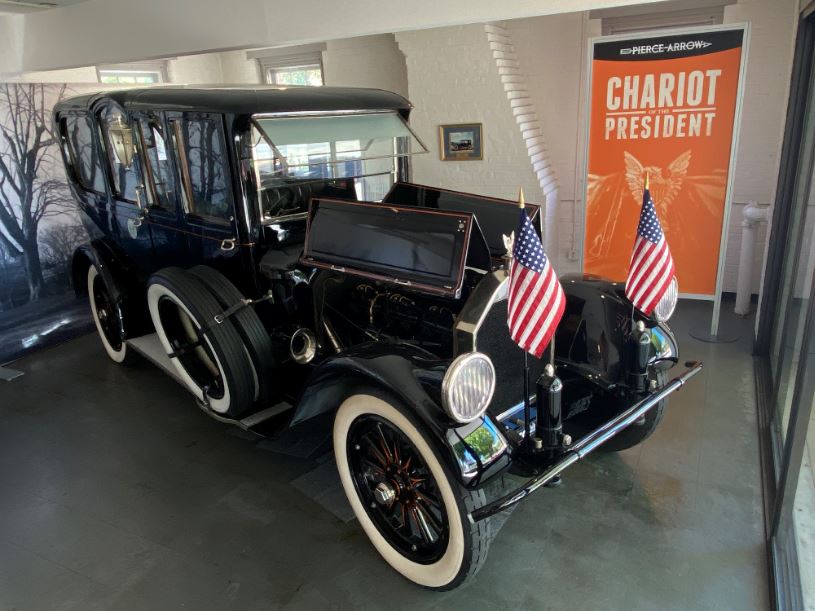
President Wilson’s Pierce Arrow, which he used is his post-presidency days (1921-1924).
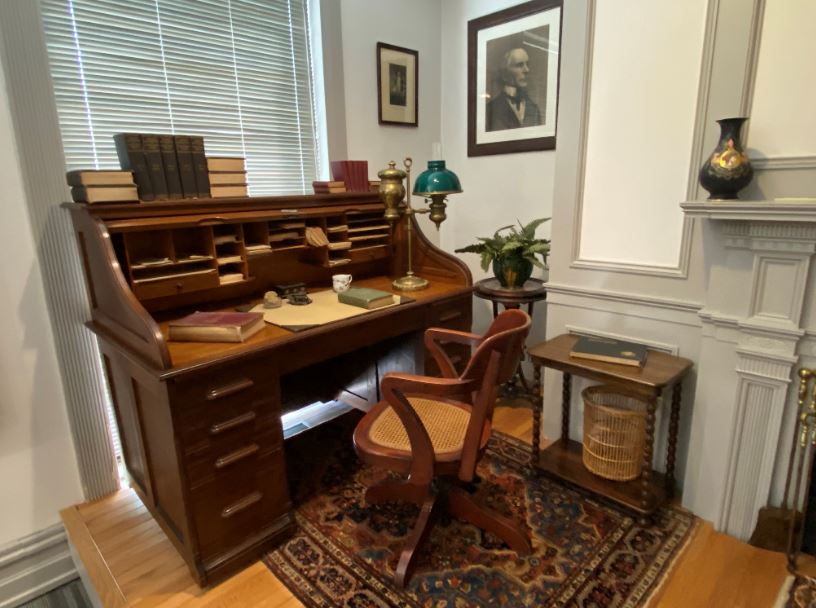
Wilson’s desk at Princeton. He went to UVA law school, practiced law in Rome GA, where he met and married his first wife. Ellen Axson, another Presbyterian minister’s child. First Lady Ellen Wilson died in 1914.

Wilson earned a PhD in Political Science from Johns Hopkins University, still the only president to have earned a PhD. He subsequently taught at Princeton University, and later was president of Princeton. He also served as governor of New Jersey for two years before winning the presidency in 1912.

President Wilson suffered several strokes, including one before he ran for President. He suffered two debilitating strokes in 1918 as president, and was largely unseen the last two years of his presidency. He required assistance when leaving the White House in 1921 to attend President Warren Harding’s inauguration.

He lived in Washington DC after he left office, and died in 1924. He is buried inside the National Cathedral in DC.
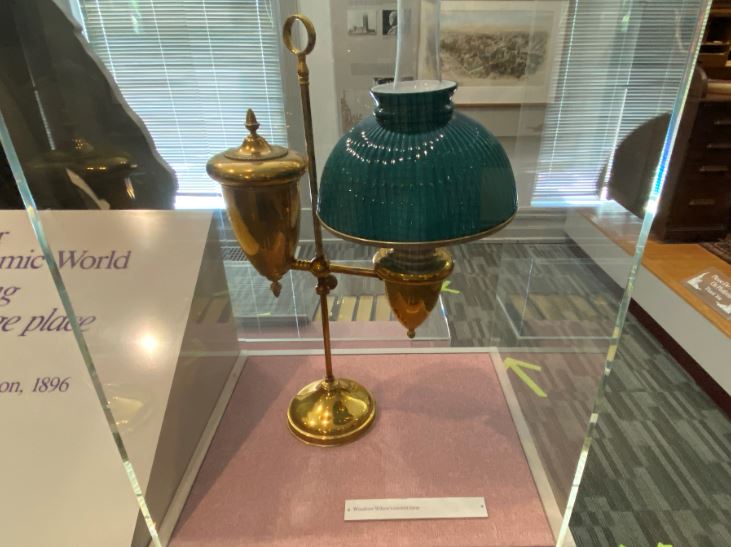
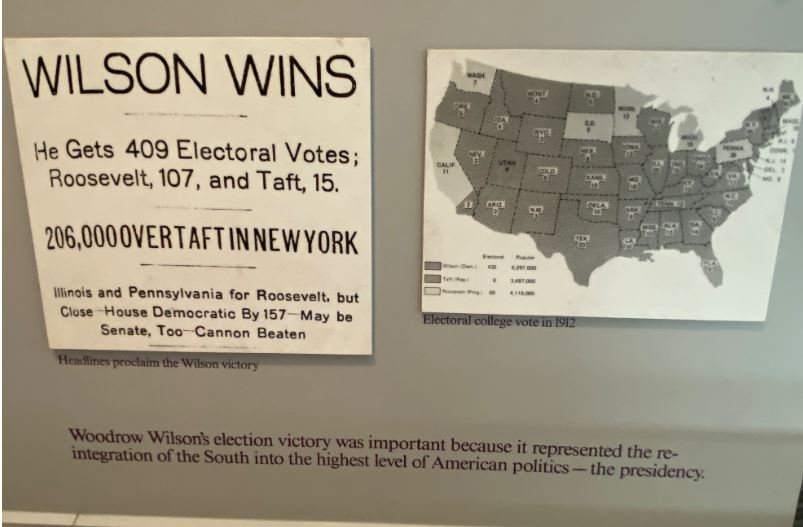
Wilson’s desk lamp.
Due to a schism in the Republican Party, (Theodore Roosevelt ran third party after he failed to gain the Republican nomination from President Taft), Wilson won a decisive Electoral College victory, even though he won only 41.8% of the popular vote. Roosevelt and Taft combined for 50.7%.

President Wilson was a racist in a big way. The first major movie ever screened at the White House was “The Birth of A Nation”, which was glorified the KKK from the Reconstruction Era. He also continued segregating the Civil Service.
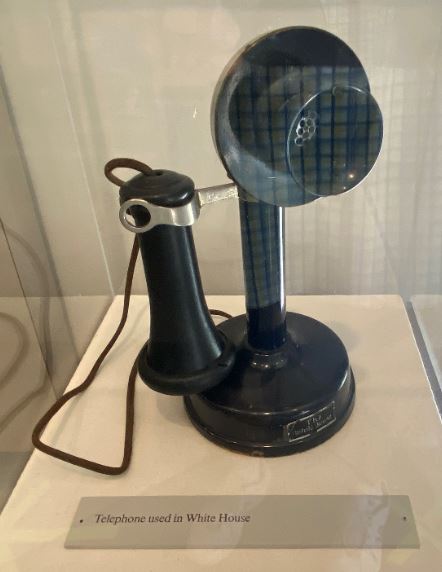
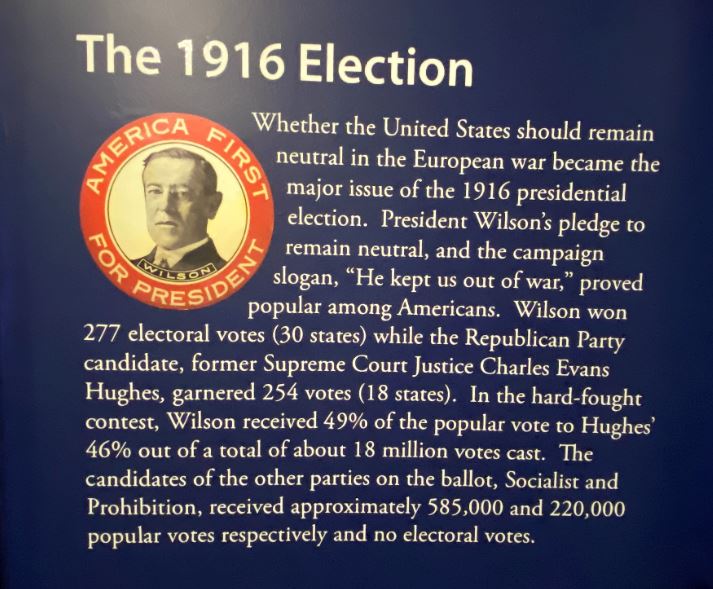
President Wilson’s White House phone.
President Wilson’s progressive policies expanded the Federal government bureaucracy. He also opposed voting rights for women.
Three constitutional amendments were ratified during the Wilson presidency.
17th: Enabled direct election of Senators
18th: Prohibition of alcohol manufacturing and sale
19th: Women’s right to vote
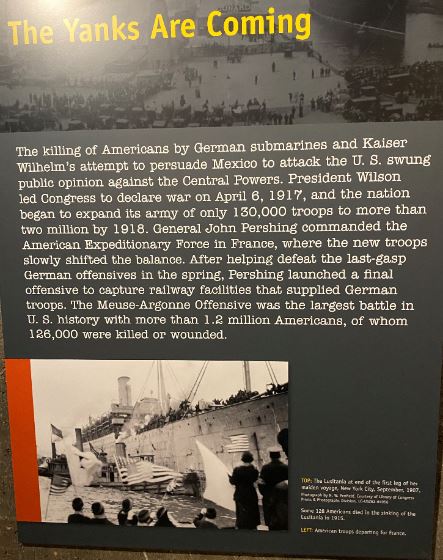
After campaigning in 1916 that he kept the US out of war, President Wilson led the US into World War I after the Germans sunk the Lusitania, which killed 1198 people, including 128 Americans.
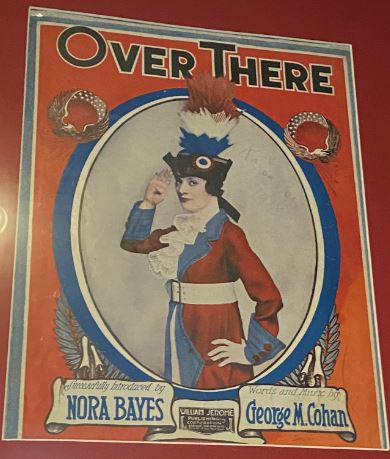
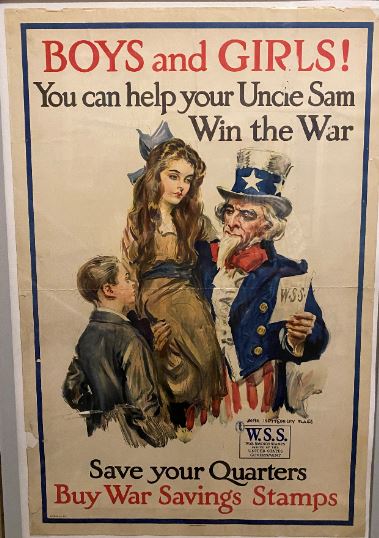
World War I poster.
It was interesting to see these posters after seeing the World War II art posters at the FDR Museum in New York in 2018.
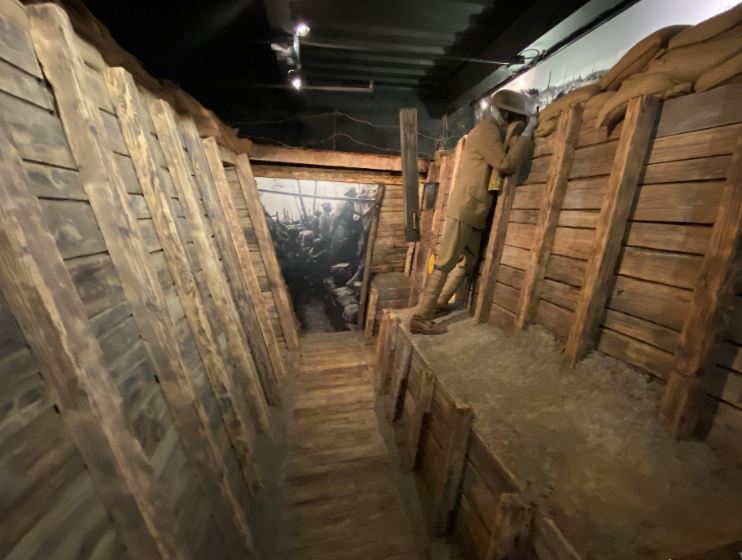
Trench warfare display
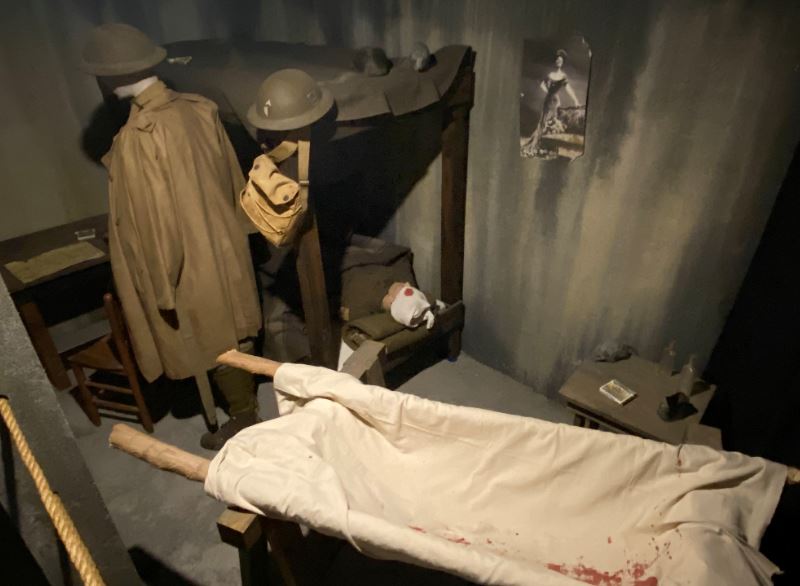
Medic tent. It may be hard to see in this small picture, but there are rats all over this display!

After the war, President Wilson worked tirelessly to institute his “Fourteen Points” toward worldwide peace, which culminated in the creation of the League of Nations, which was a precursor to the United Nations. The League of Nations failed when the US Congress rejected it. It was a huge defeat and embarrassment for President Wilson.
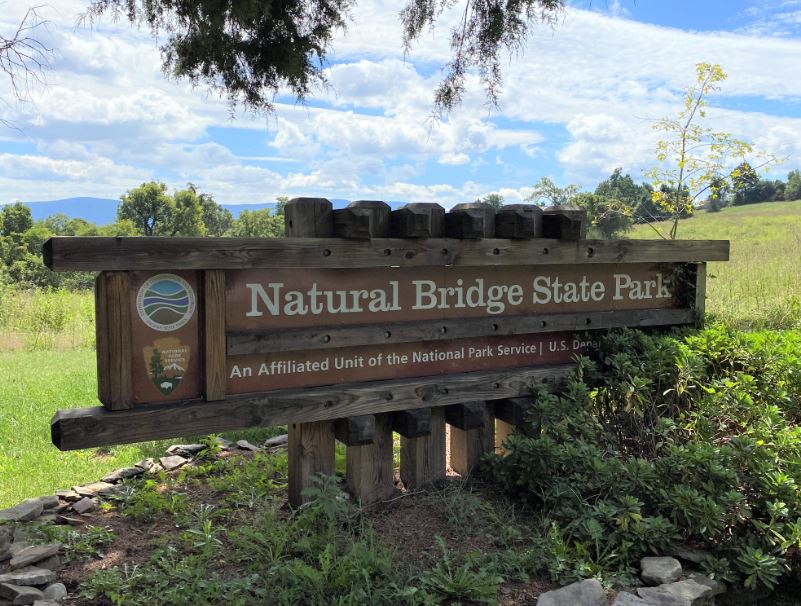
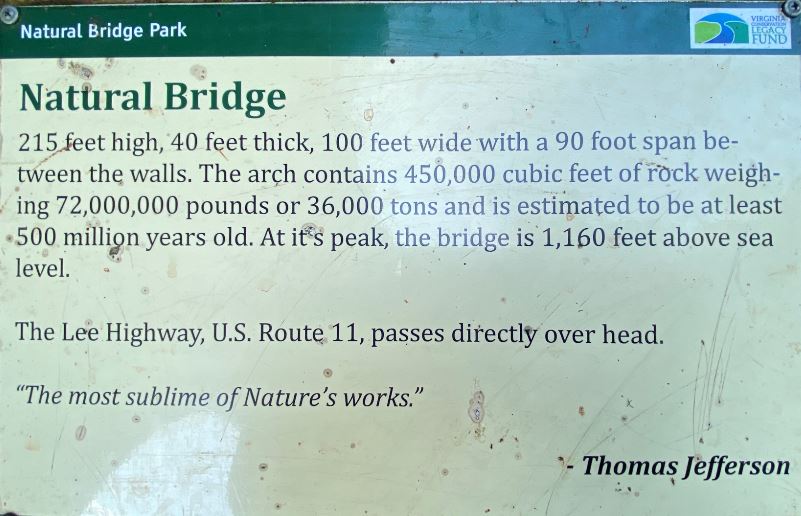
Natural Bridge VA

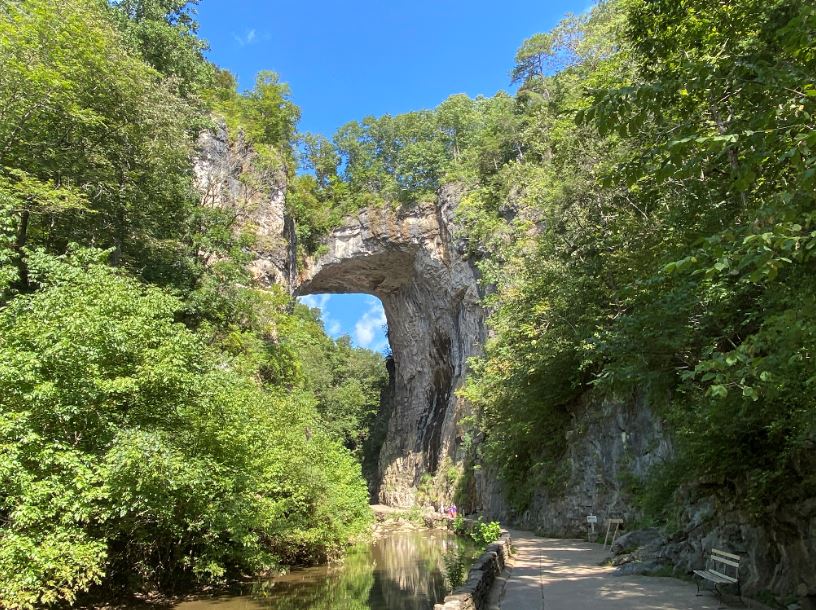
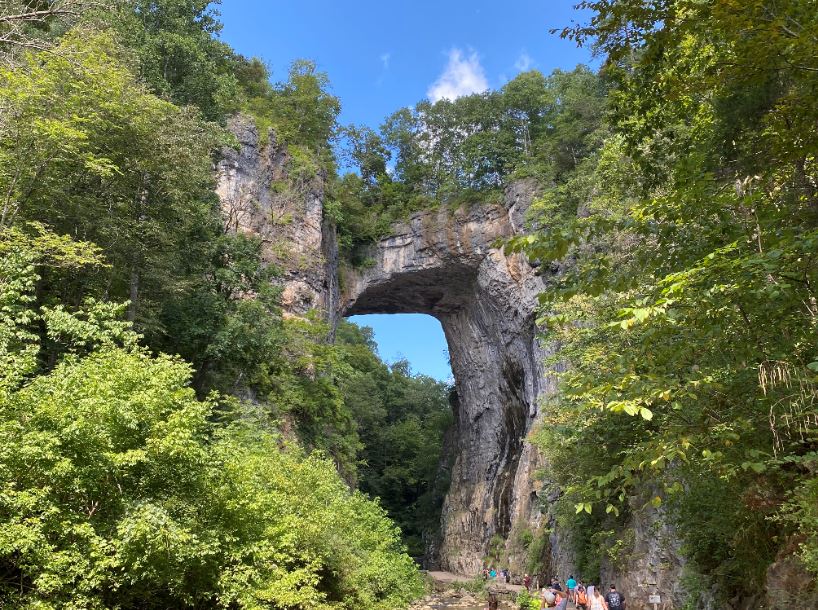
We took a day trip to see Natural Bridge VA. We had never been here before.
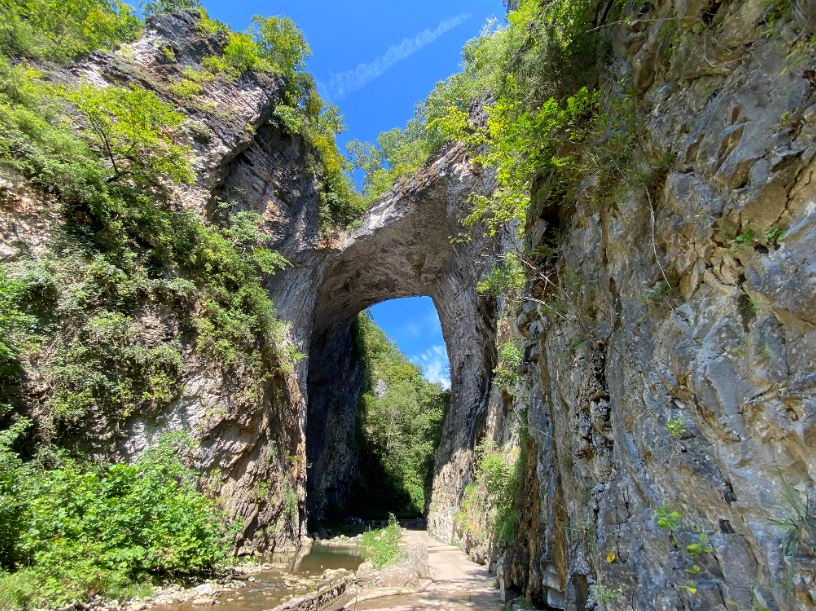
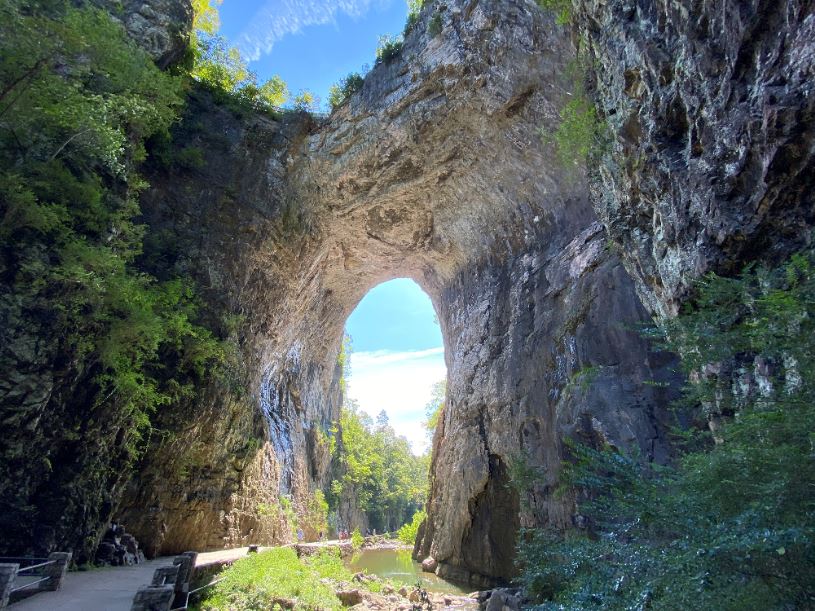
After you walk down 137 steps, go through the gate, and there it is! It is much larger than you can tell in a picture. It is really quite a sight!
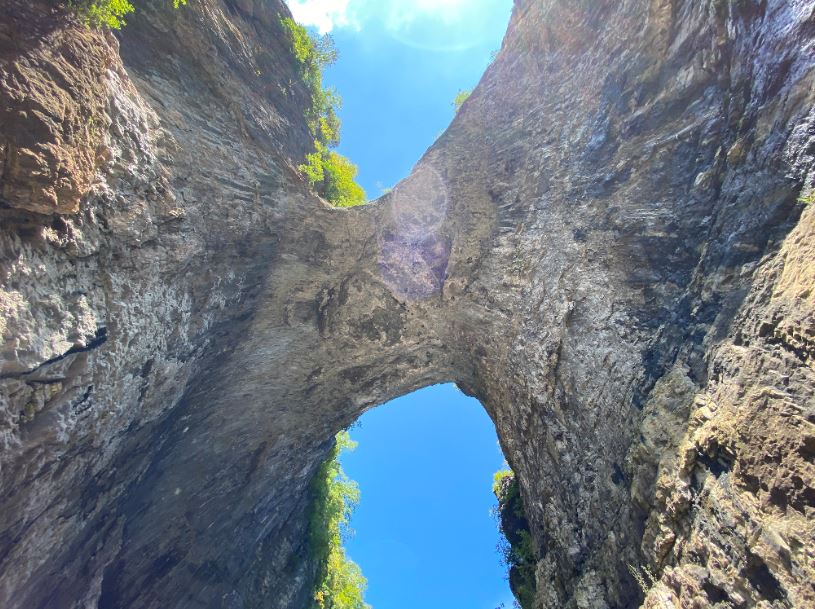
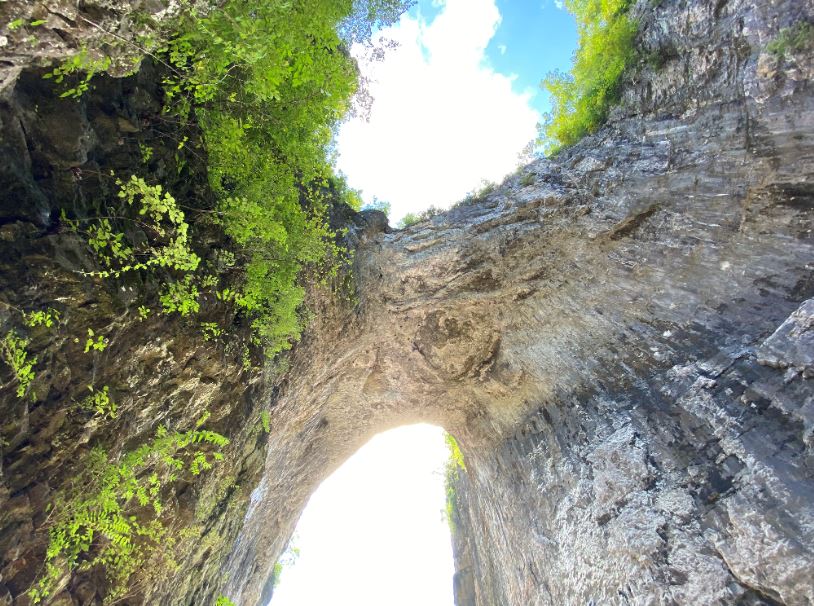
Looking up at the bottom of the bridge. Route 11 runs right over the top of the vridge.
Looking up at the bottom again.
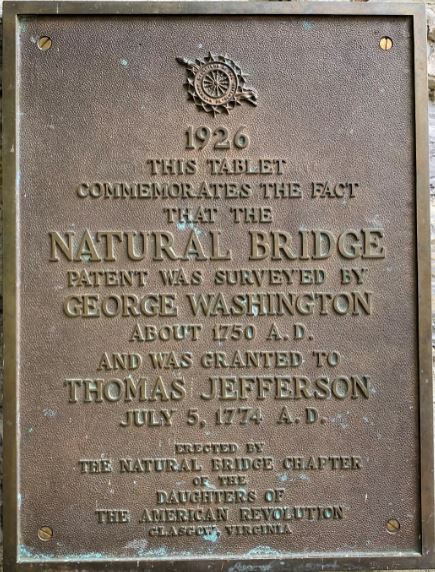
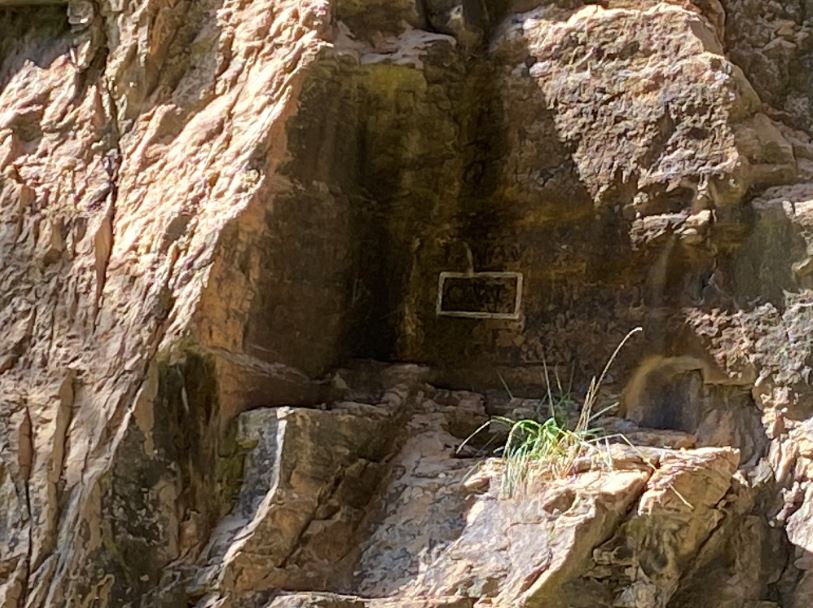
George Washington climbed 28 feet up the rock and etched GW in the rock.

Cashiers NC

So a nice trip to the mountains of western North Carolina – the Highlands, originally settled by Scottish immigrants.
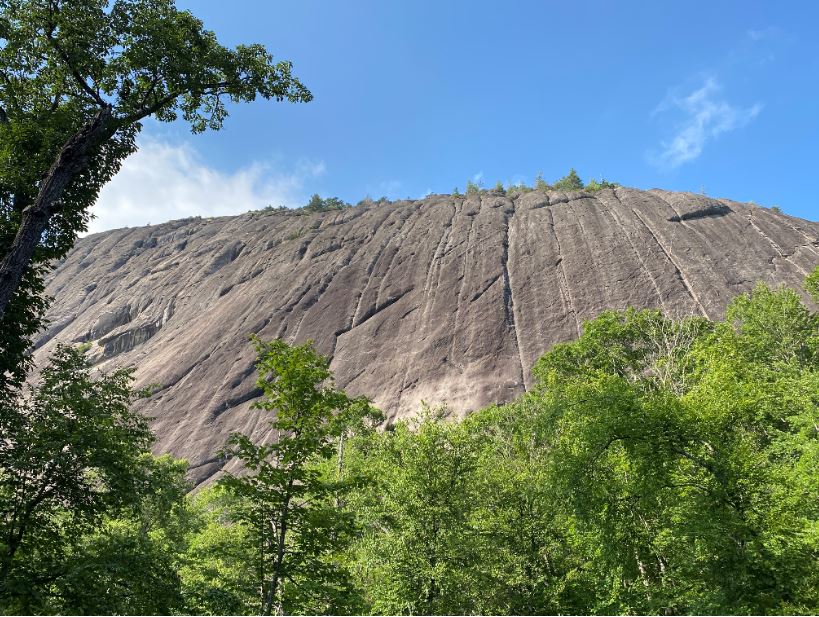
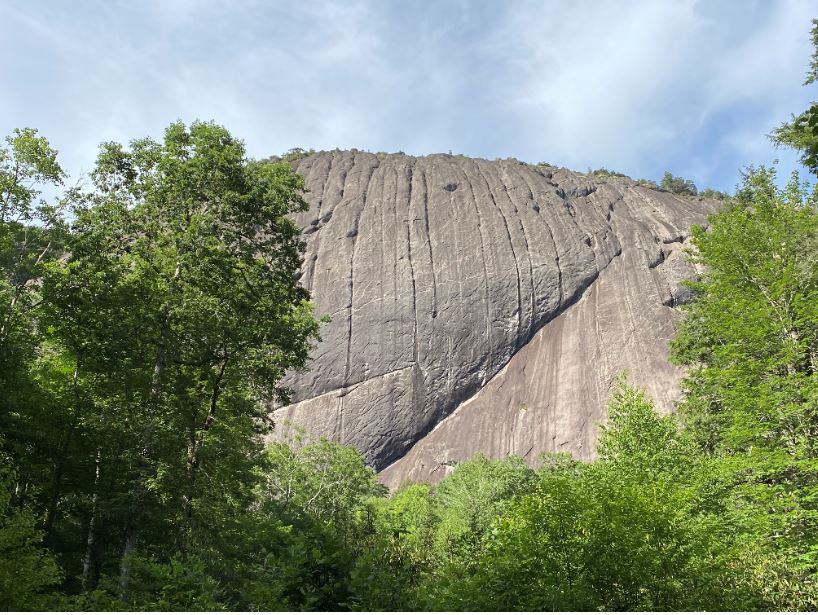
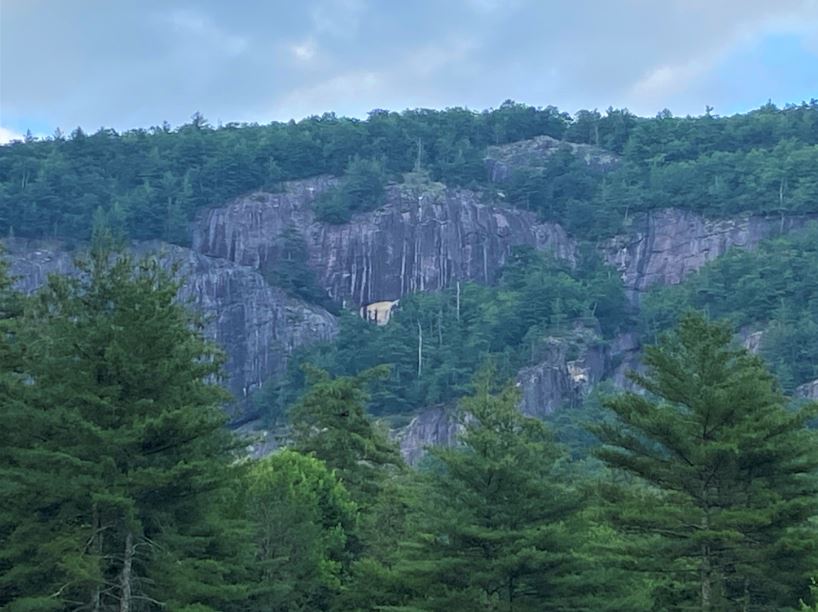
Laurel Knob, the tallest crag east of the Mississippi. It is 1200 tall, and is considered the finest piece of granite this side of Yosemite in California! A rock climber’s challenge, but there is only one route that is open to the public for climbing.
Large cleft in Laurel Knob
Bear Mountain in Lonesome Valley development.
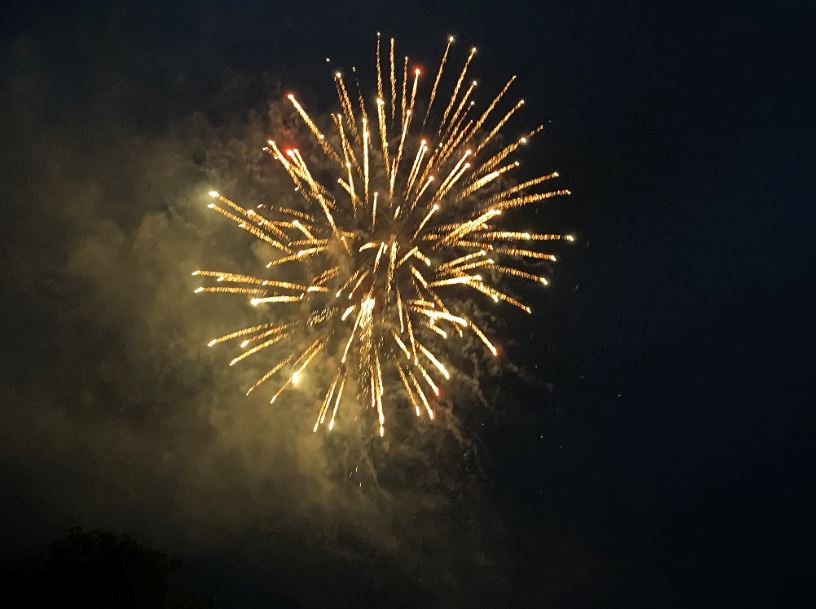
Independence Day fireworks for Lonesome Valley owners. A spectacular show!
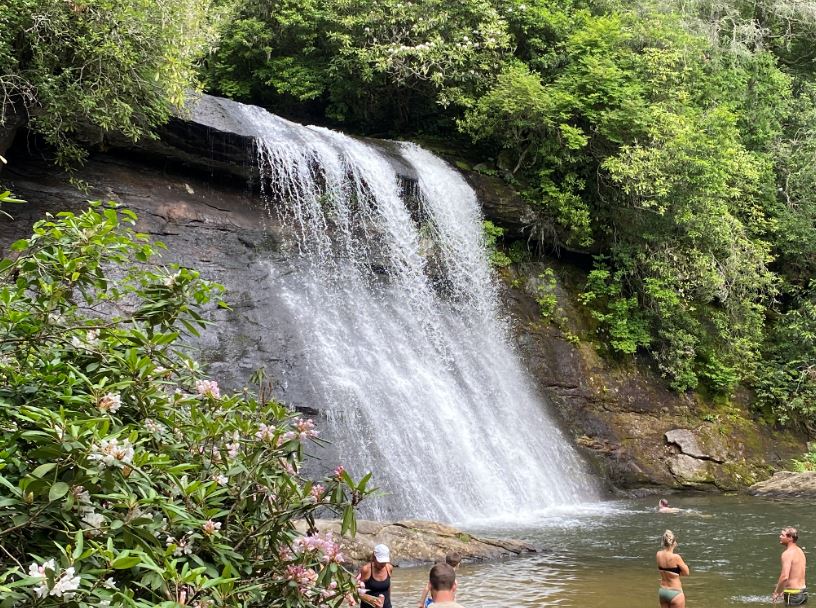
Silver Run Falls on the Whitewater River near Cashiers. One of many waterfalls close by.
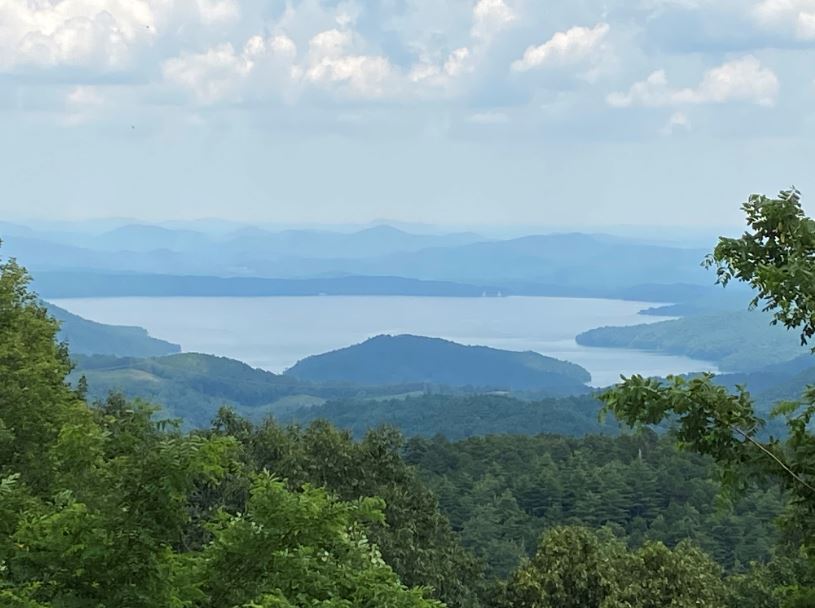
Scenic Overlook at Tamassee SC on the way to Clemson
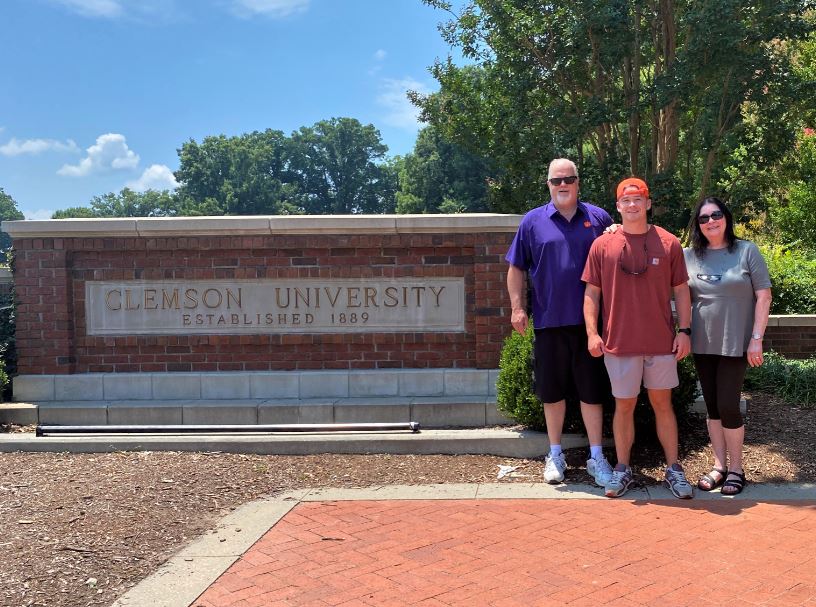
With Jacob at Clemson. He’s a sophomore now!
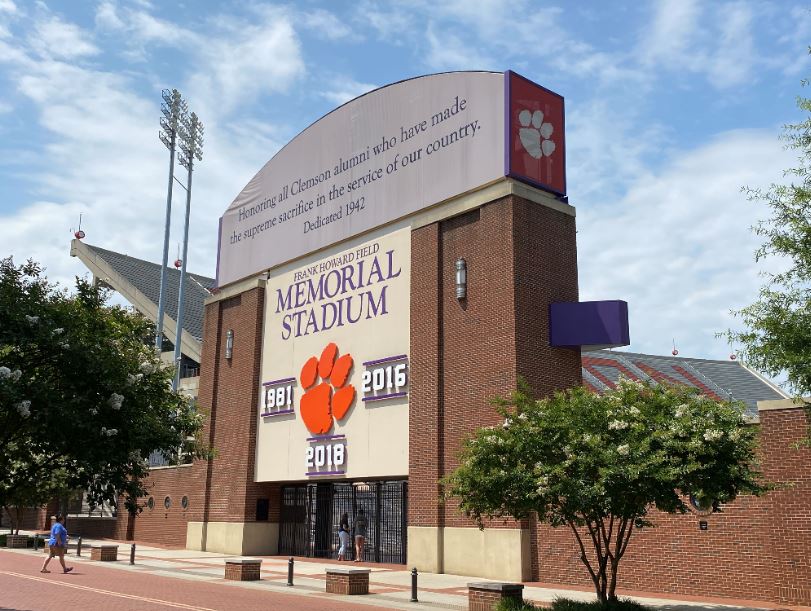
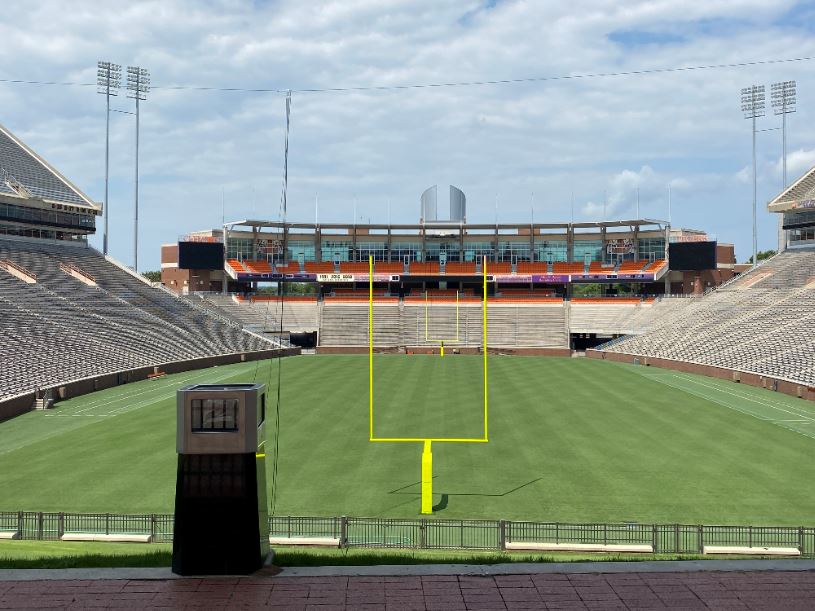
Memorial Stadium, aka Death Valley, home of the multiple-National Champion Tigers!
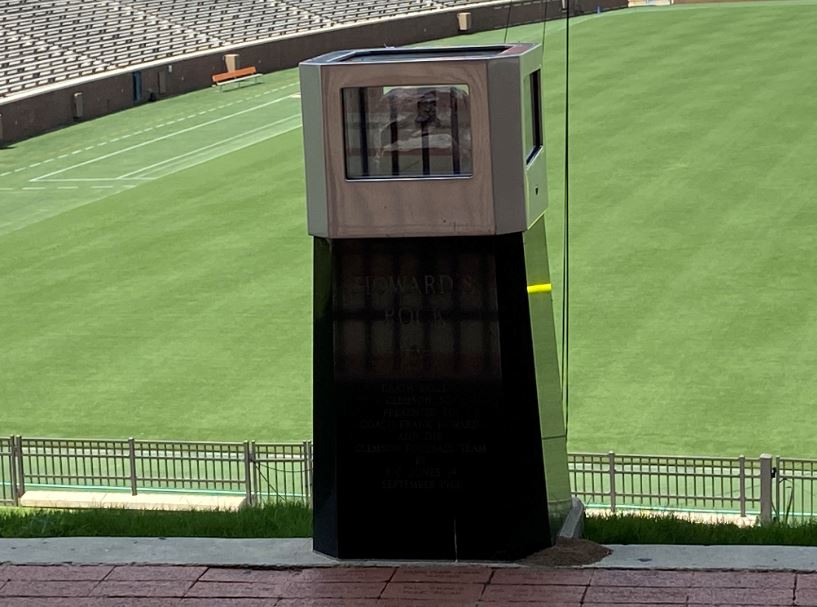
This rock is from Death Valley CA. Before each home game, the Clemson football players touch this rock for good luck, then run down the hill to take the field.
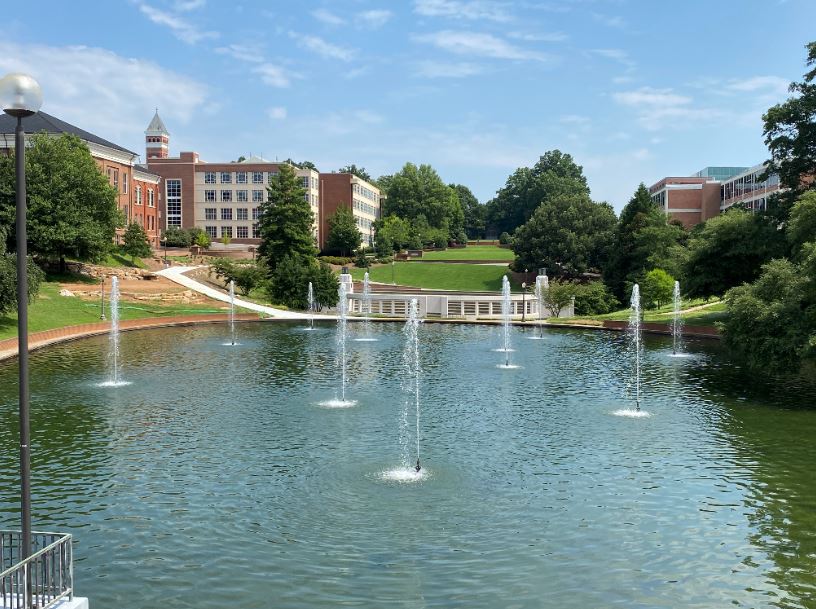
Clemson campus
Fort Hill, the home of John Calhoun, who held numerous political offices in the first half of the 19th century – Congressman, Secretary of War, Vice President under two presidents John Quincy Adams and Andrew Jackson), US Senator (twice) and Secretary of State. Calhoun’s son-in-law Thomas Clemson ultimately bequeathed Fort Hill plantation to create Clemson University (originally Clemson Agricultural College).

Greeneville TN

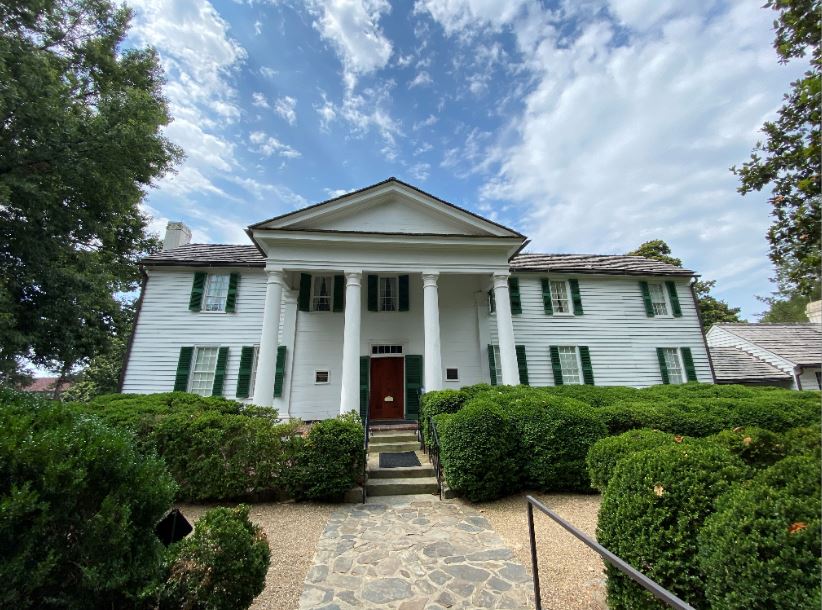
Home of President Andrew Johnson, 17th President of the United States. President Johnson was sworn in as president when President Abraham Lincoln was assassinated on April 14, 1865.
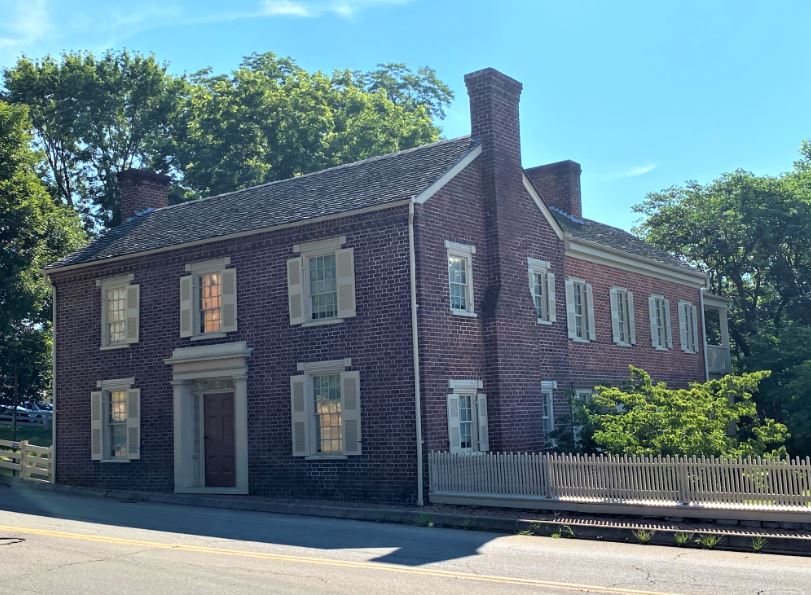
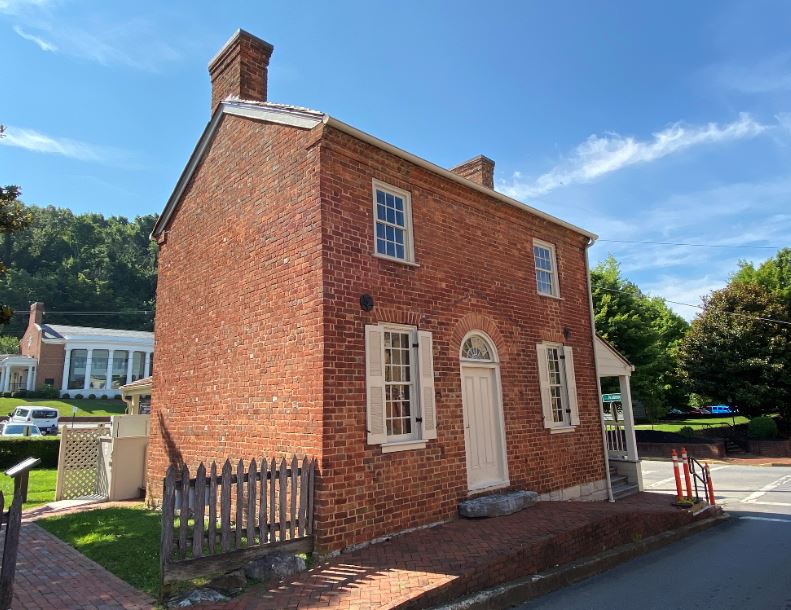
This is one of two homes in Greeneville that Johnson lived in.
This is the other. He lived in each home about the same amount of years.
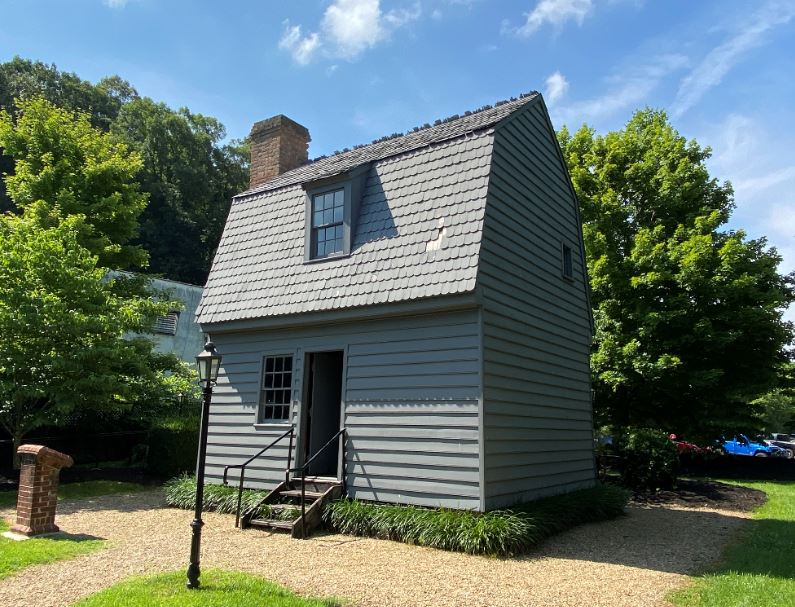
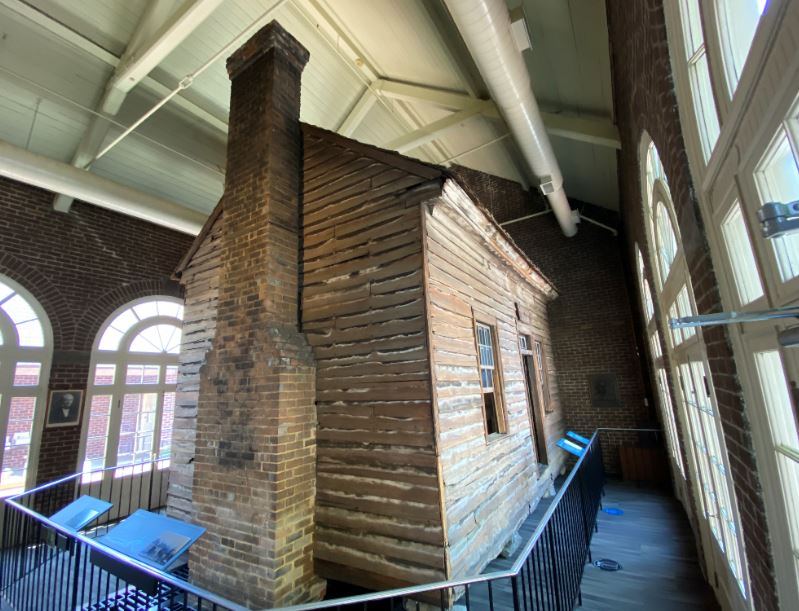
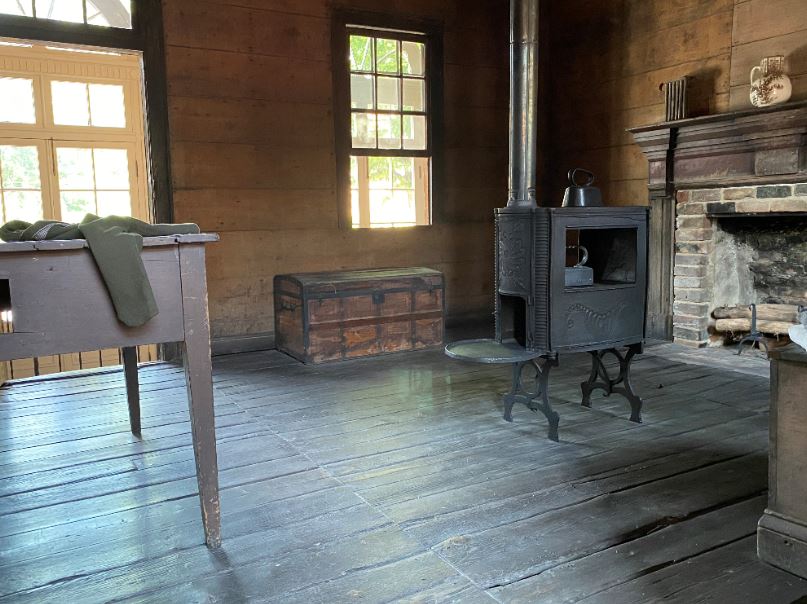
This is a replica of the house in Raleigh NC where President Johnson was born. The original house no longer stands. He was born into poverty.
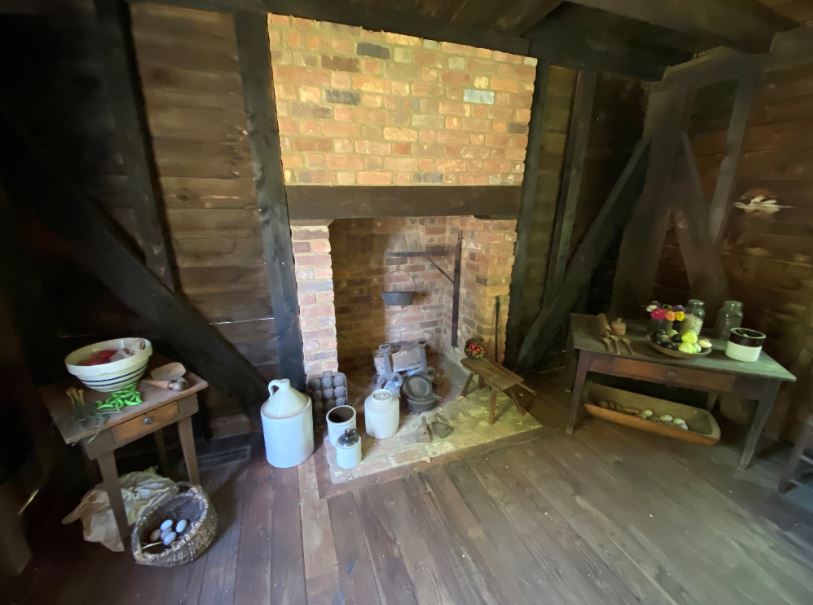
The inside of the birth house.
This is a replica of Johnson’s tailor shop, which is inside of the museum.
The inside of the tailor shop.
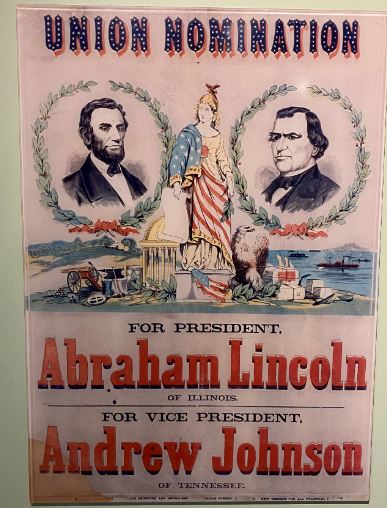
President Lincoln added Johnson to the ticket for the 1864 election. Lincoln, a Republican, chose Johnson, a southern Democrat in an effort to unite the nation as the Civil War was drawing near an end.
After Lincoln died, Johnson was sworn in using this Bible.
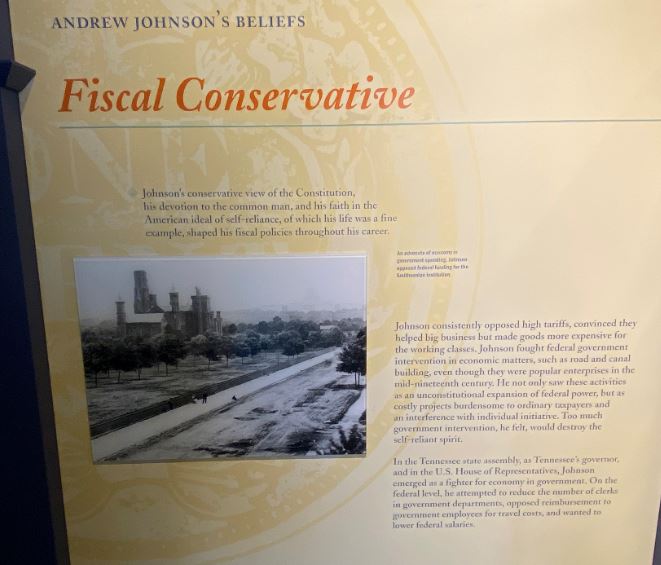
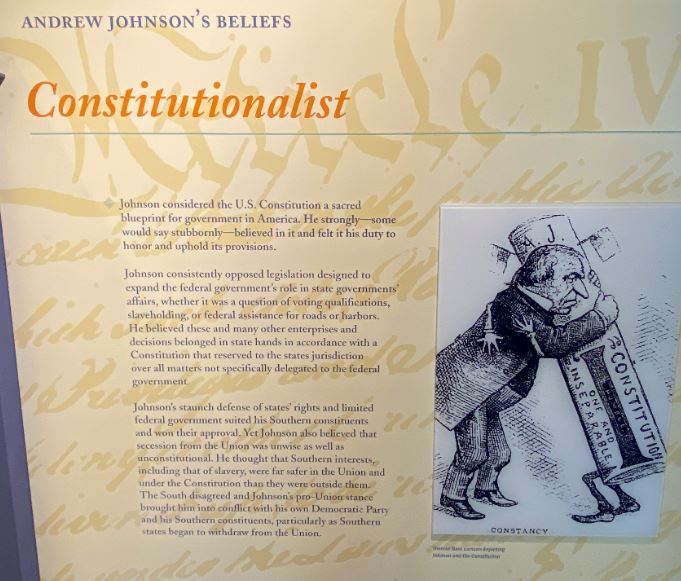
President Johnson was a conservative, constitutionalist…
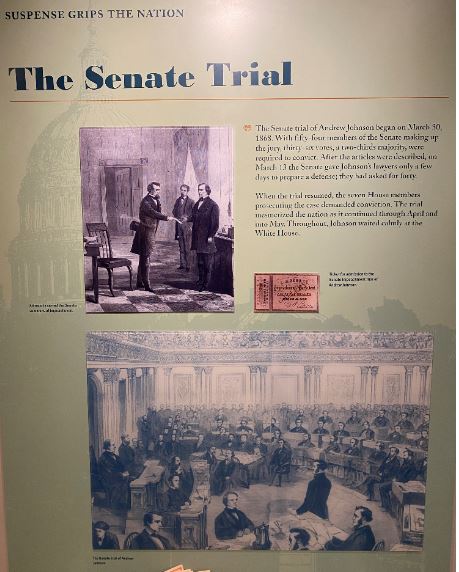
President Johnson was the first US President to be impeached. The Republican-controlled Congress opposed virtually everything Johnson did. Congress passed a law called the Tenure of Office Act, which essentially tried to disallow the president from removing his cabinet members. Johnson vetoed the bill, but Congress overrode his veto. The president went ahead and fired Secretary of War Stanton, believing the act to be unconstitutional.
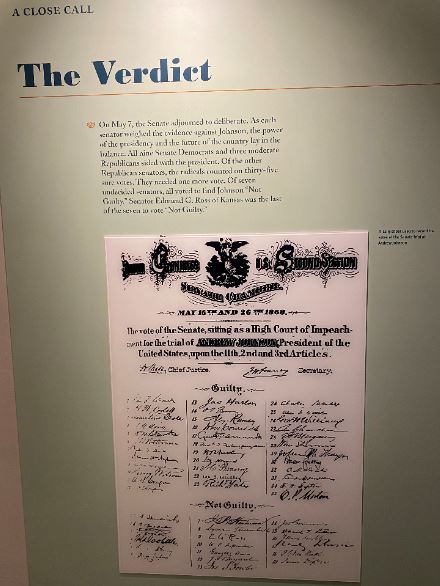
The House of Representatives voted to impeach Johnson, which is a political action that is similar to an indictment in the criminal justice system. The trial in the Senate, requiring two-thirds vote to convict and remove Johnson from office, voted 35-19 to convict and remove, which was one vote short of removal!
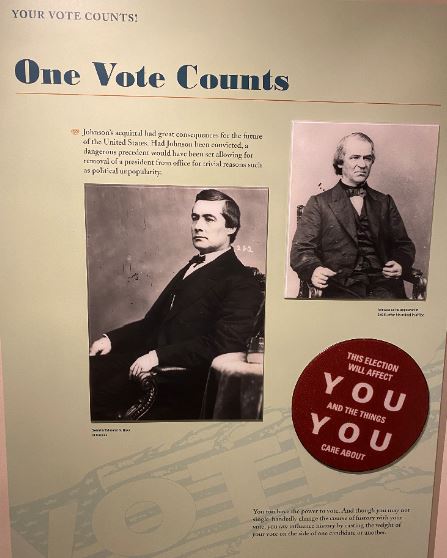
Senator Edmund Ross of Kansas cast the final, and deciding vote, against convicting President Johnson.
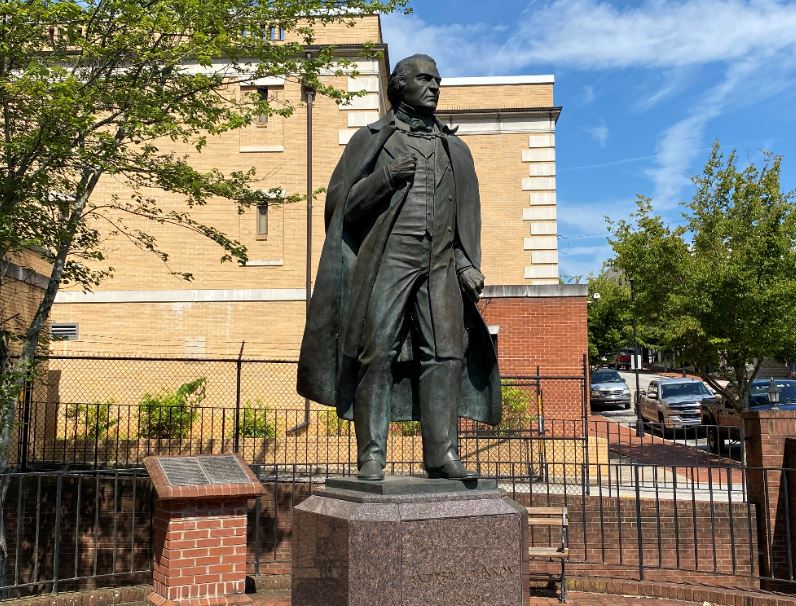
Statue of President Andrew Johnson
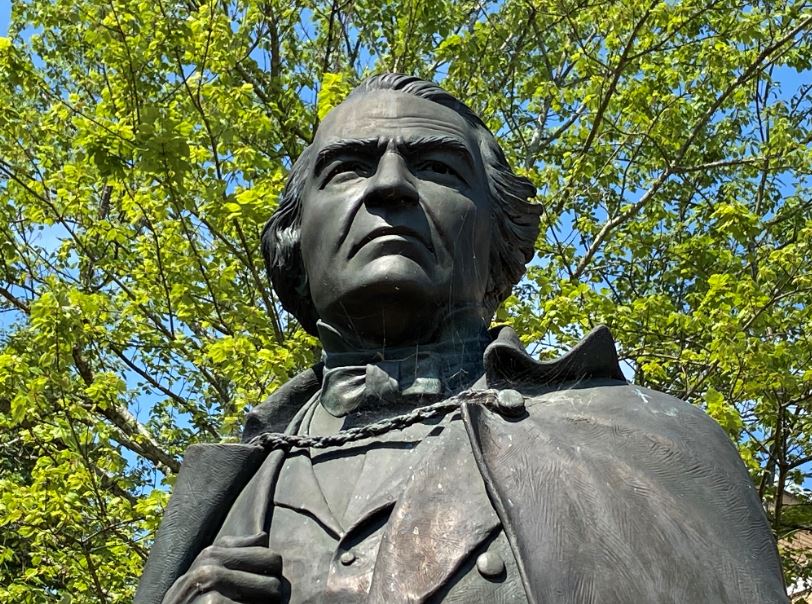
Close-up
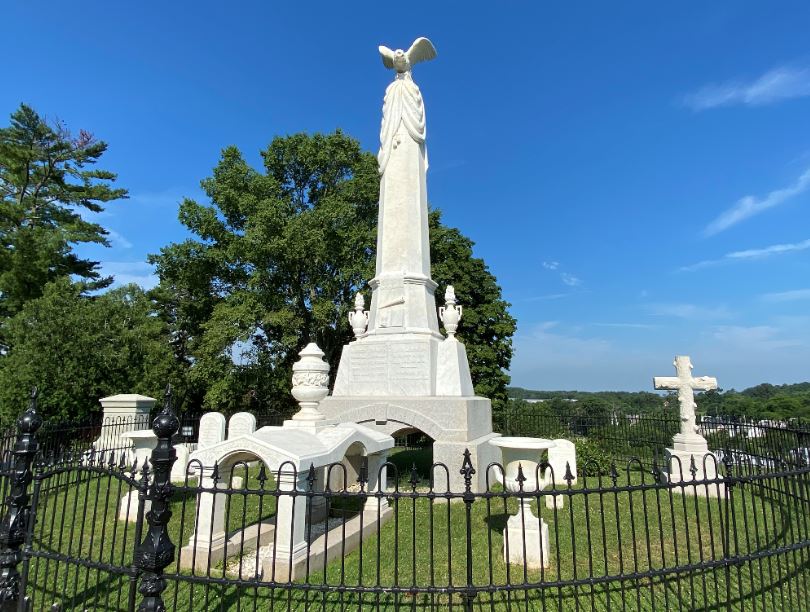
Monument and grave of President Andrew Johnson.