


Museum of Flying

Santa Monica CA

This museum honors the work of aviation pioneer Donald W. Douglas, who was just 28 years old when he started the Douglas Aircraft Company in Santa Monica in 1920. Within 20 years the company had state-of-the art production facilities in El Segundo, Long Beach, and then in Chicago, Tulsa and Oklahoma City. He was the czar for all US aircraft production under President Franklin Roosevelt during World War II.
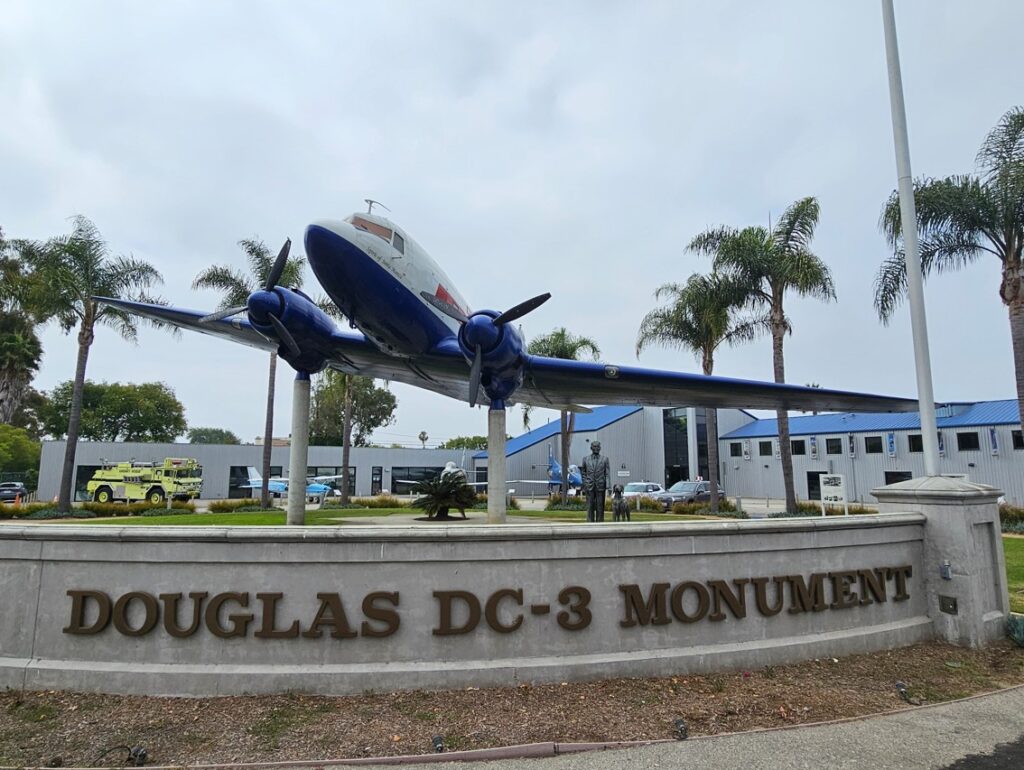
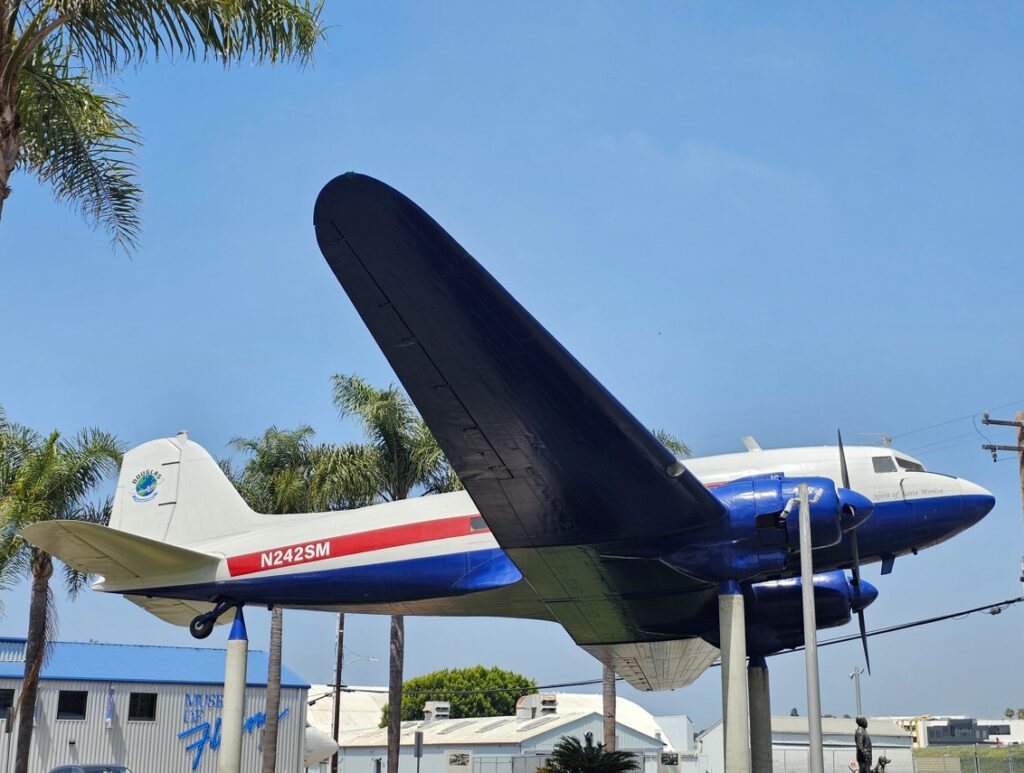
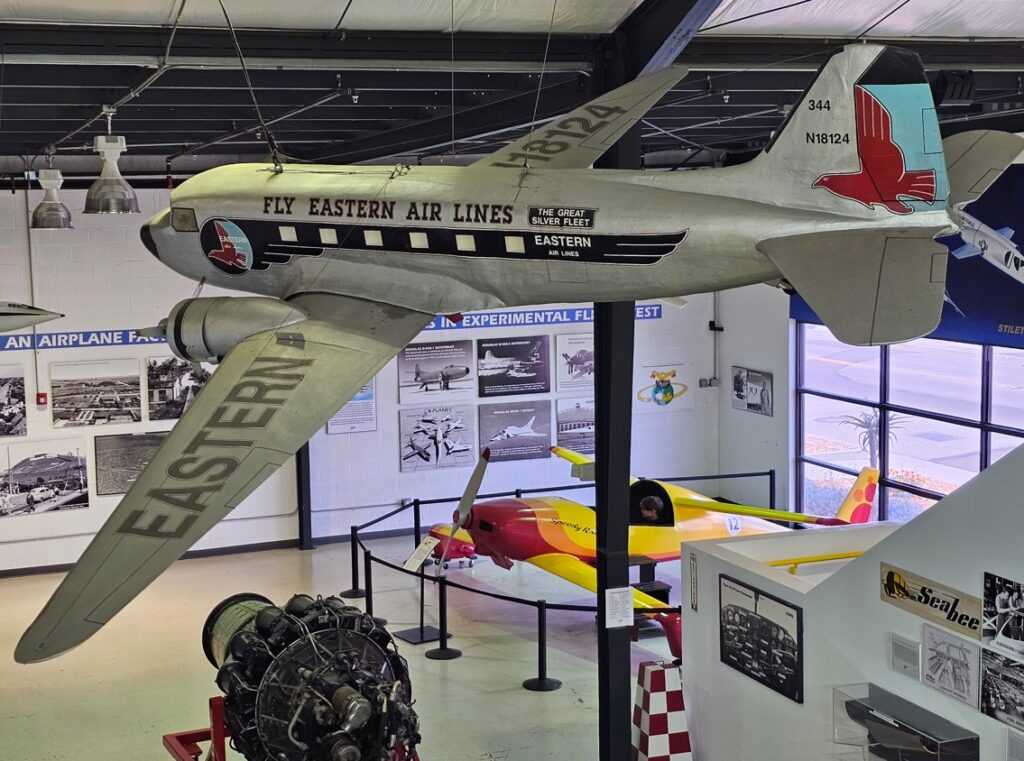
The first flight of a DC-3 airplane took place in Santa Monica in 1935. These aircraft were (are) so reliable may are still in service throughout the world even today. The DC-3 revolutionized air travel such that passengers could reach their destinations quickly, safely and at affordable prices. During the 1950s, more than 90% of all world air travel took place on Douglas-build aircraft.
The Spirit of Santa Monica
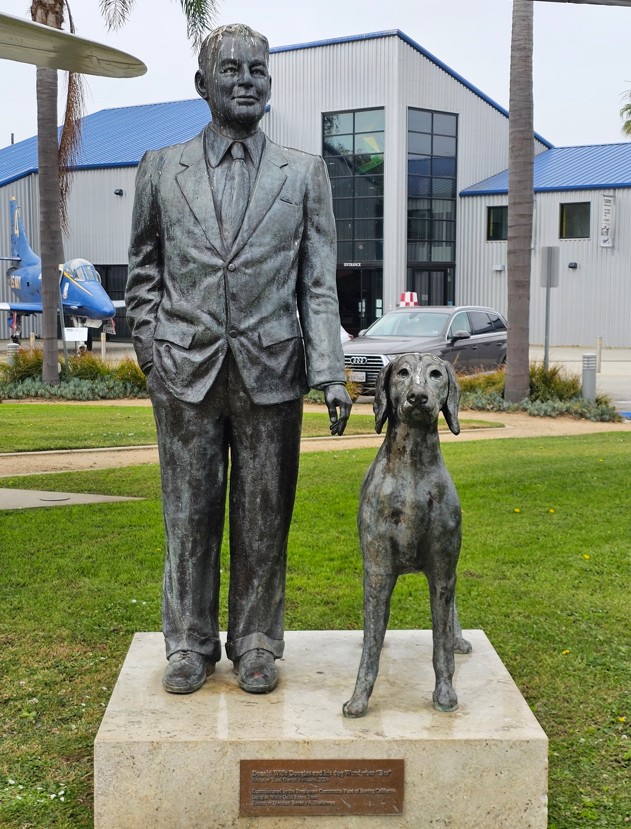
Douglas and his dog Wunderbar
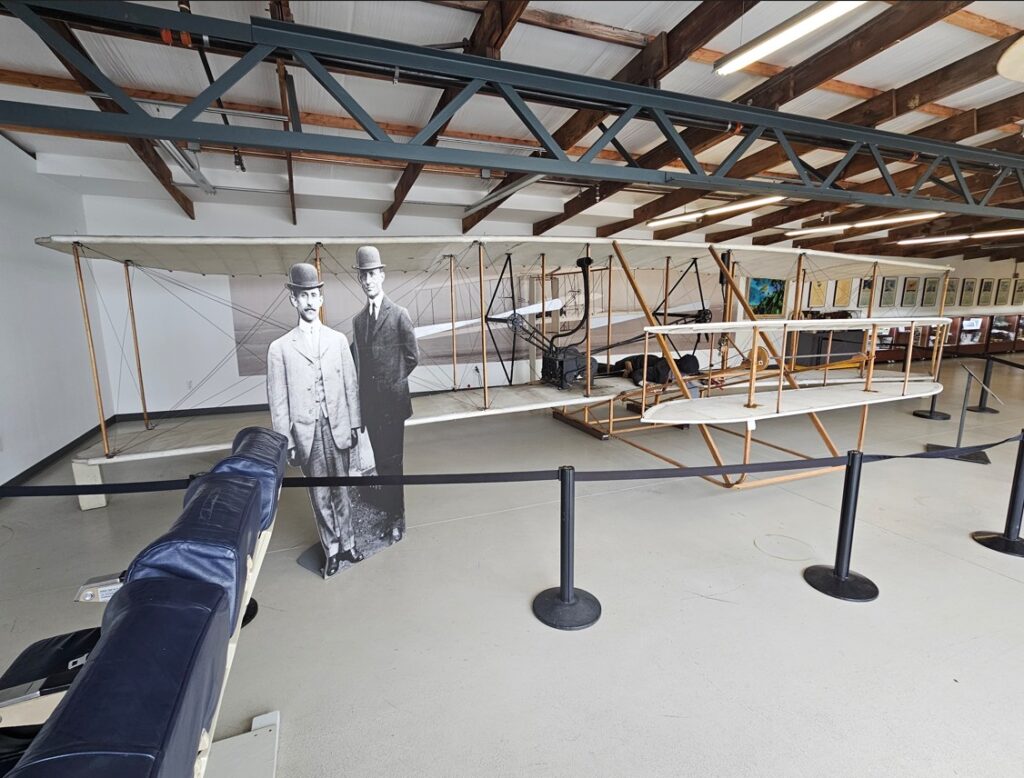
Model of the Wright Brothers’ original flyer from 1903. Douglas started his company within 20 years of the Wright Brothers’ first flight.
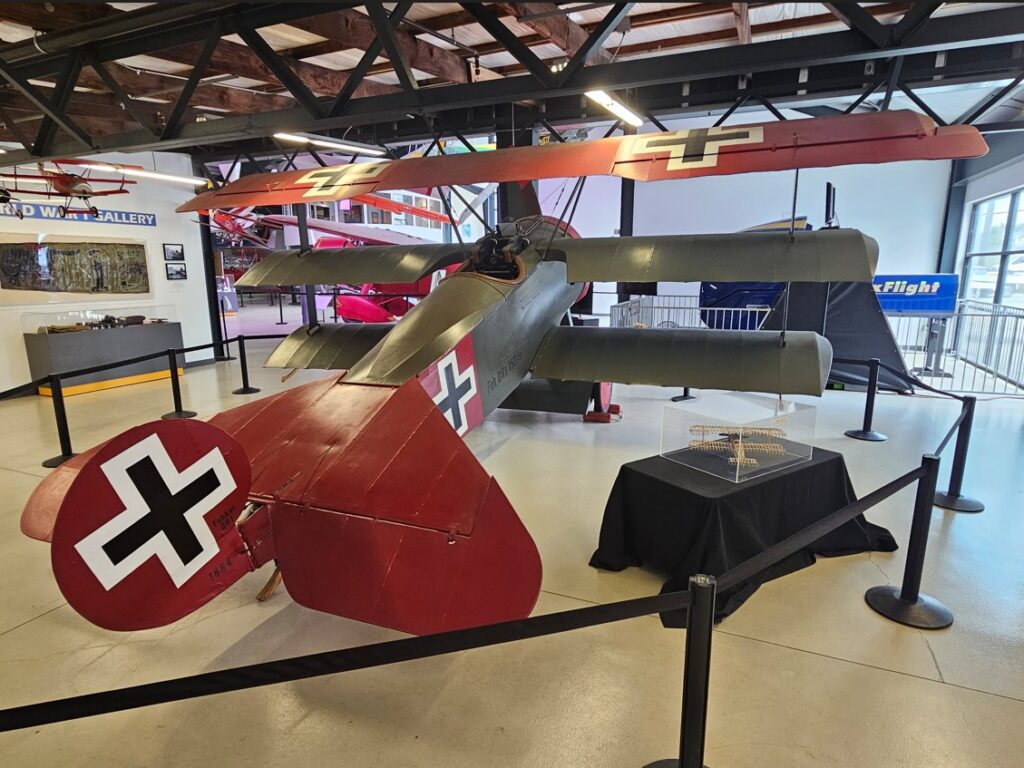
Fokker Dr. 1 Triplane. Baron Manfred von Richthofen (The Red Baron) piloted a plane similar to this one during World War I in 1917. This is a replica – no original Fokker Dr. 1s are known to be in existence.
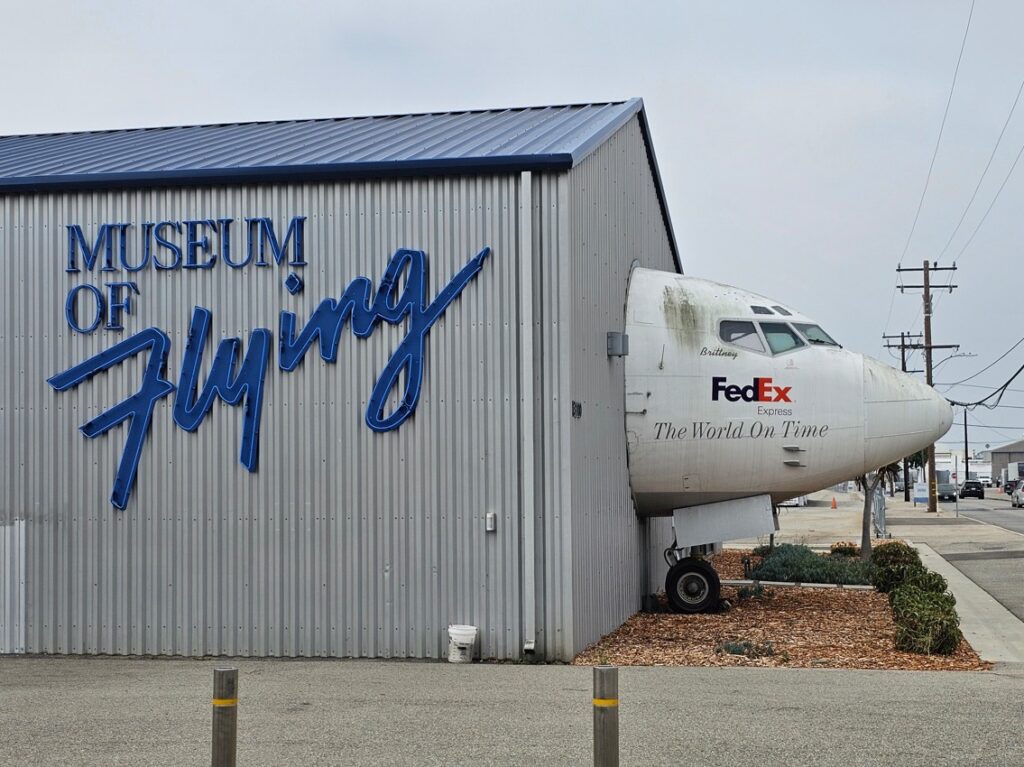
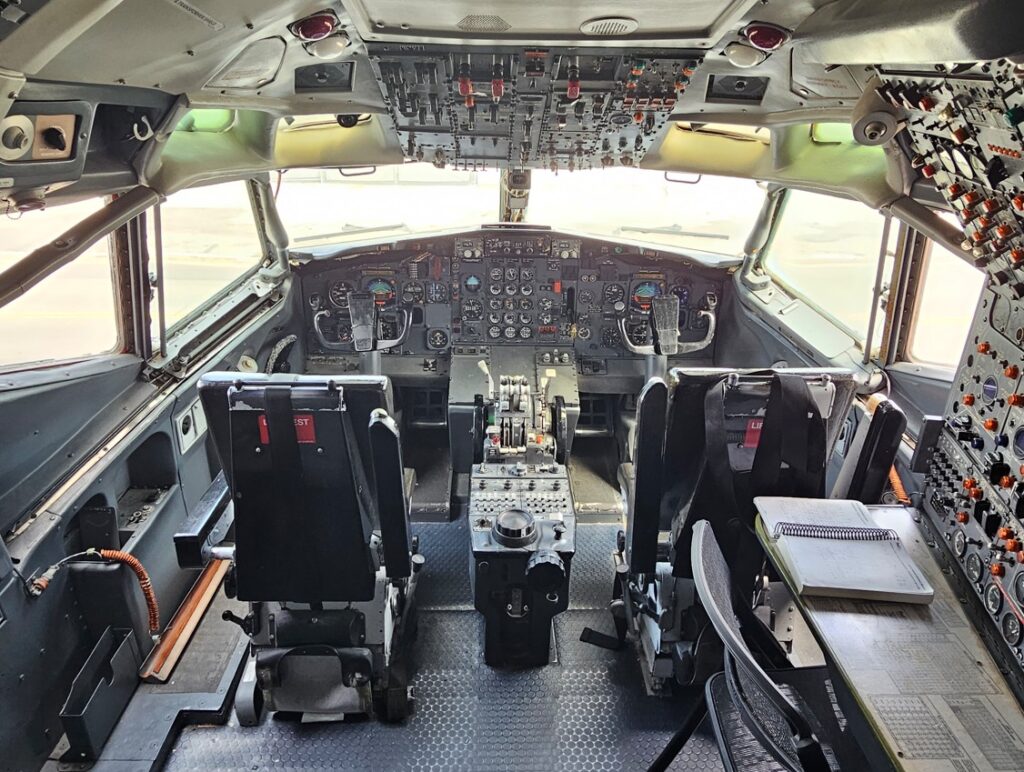
Cockpit of a Boeing 727.
DC-3
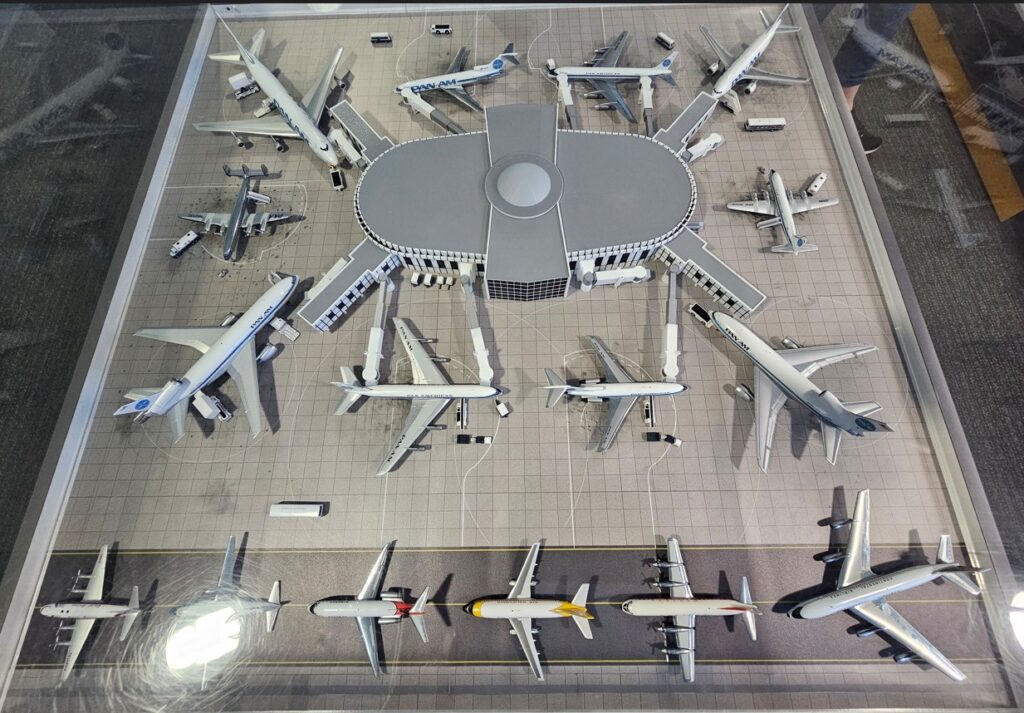
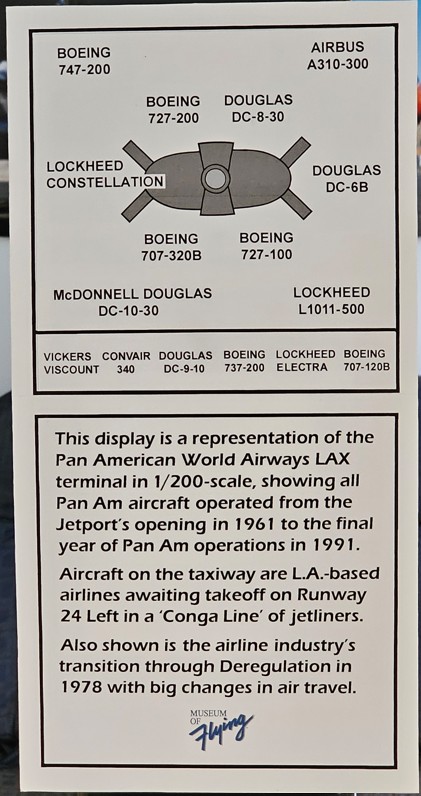
Model of LAX Airport with various aircraft.
Douglas airplane made an around the world flight in 1924.
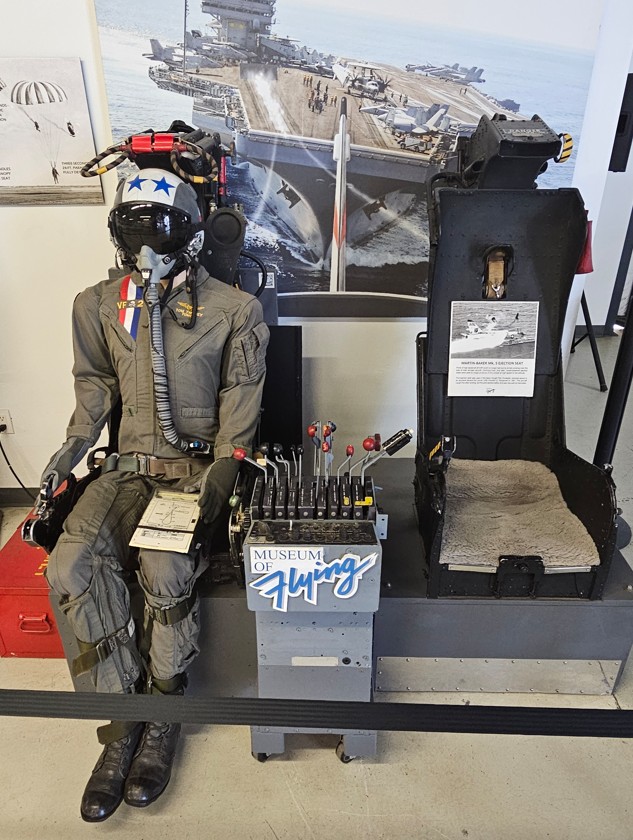
Martin-Baker Mk. 5 Ejection Seat, used in the Navy Vought F8U Crusader aircraft
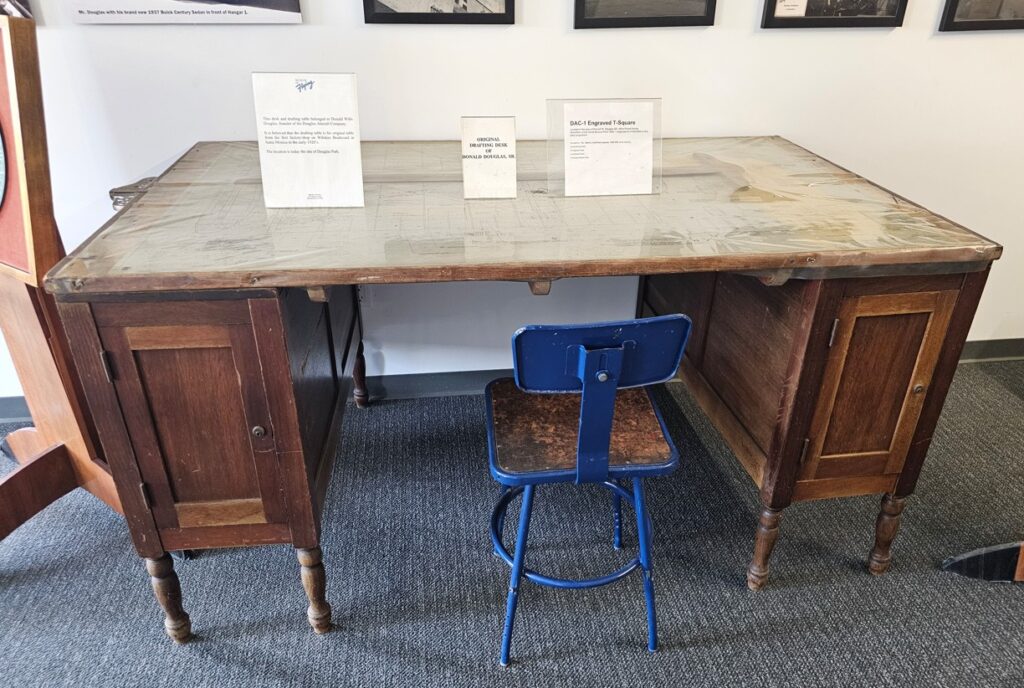
Original drafting desk of Donald Douglas, from the first factory/shop on Wilshire Boulevard on Santa Monica in the early 1920s.
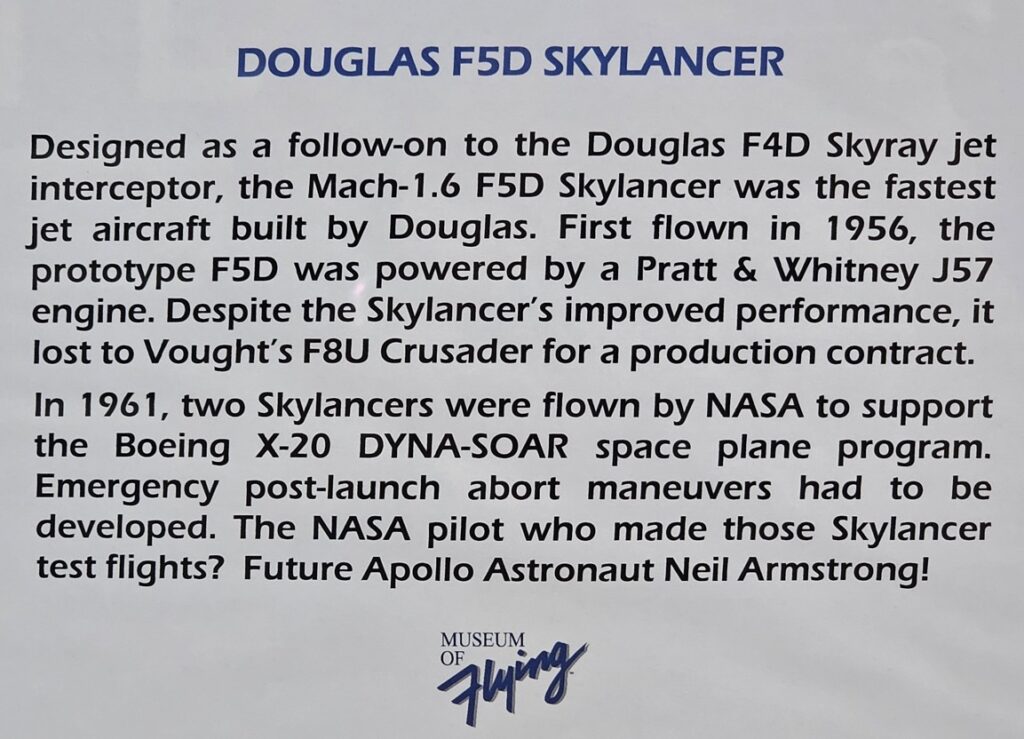
Douglas F5D Skylancer, the fastest jet aircraft built by Douglas.
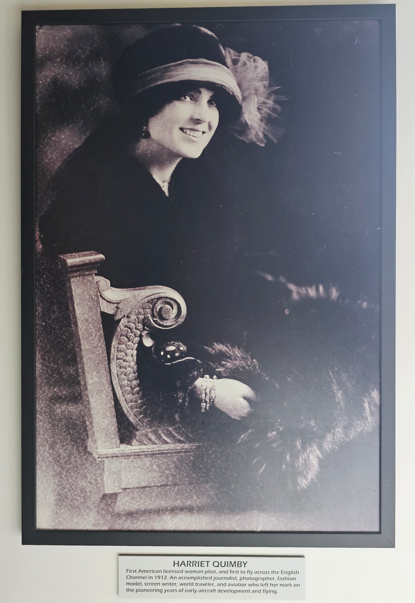
Harriet Quimby, first US licensed pilot, first to fly over the English Channel.
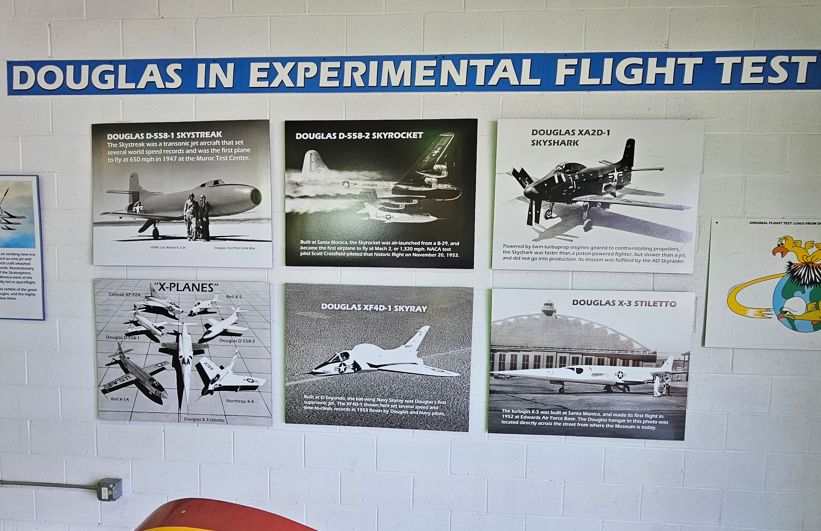
Douglas Aircraft Company joins the jet age.
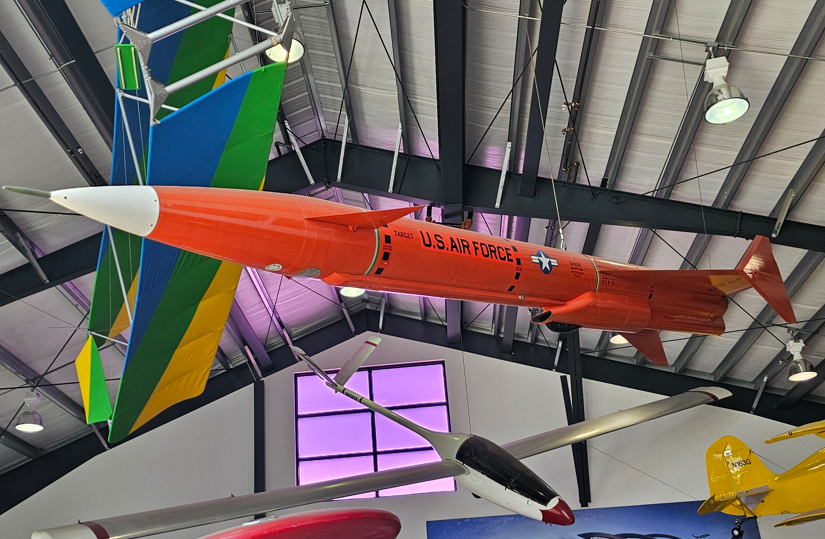
Teledyne Ryan AQM-81 Firebolt, high-altitude supersonic target, which was an advanced version of the 1968 Raytheon AQM-37 Jayhawk target drone.
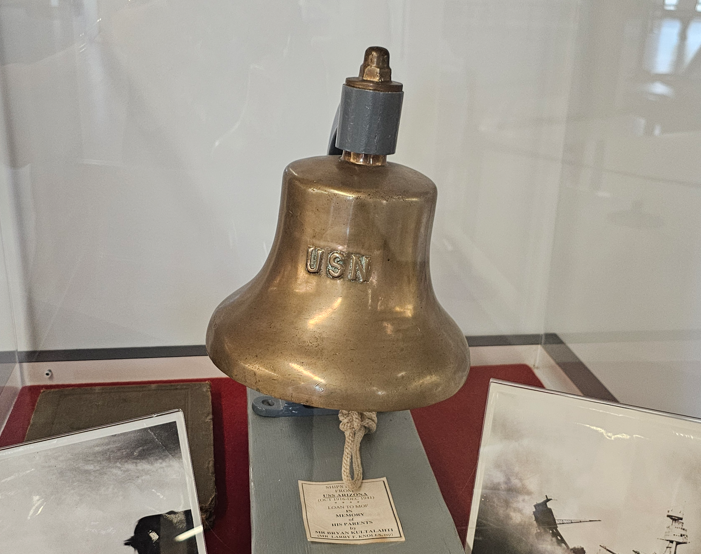
Ship’s mess bell from the USS Arizona, which was sunk during the Japanese attack on Pearl Harbor.

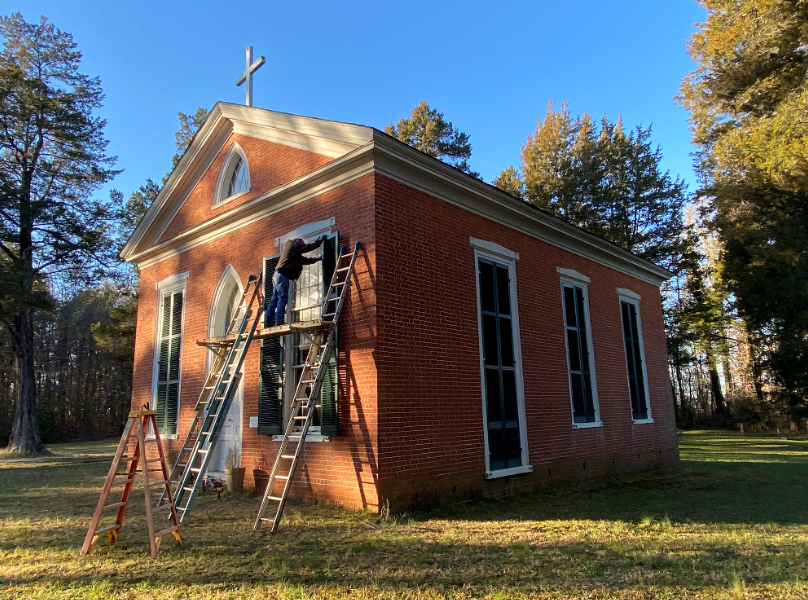
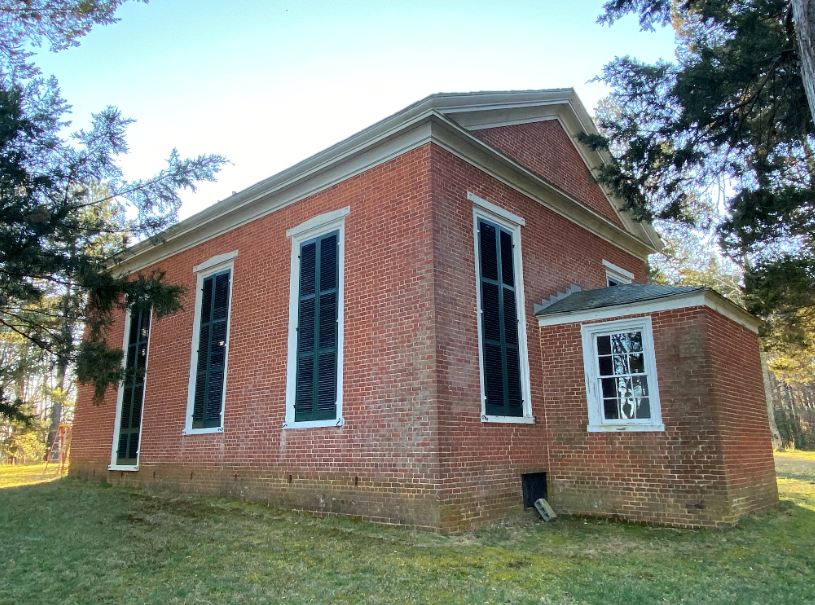
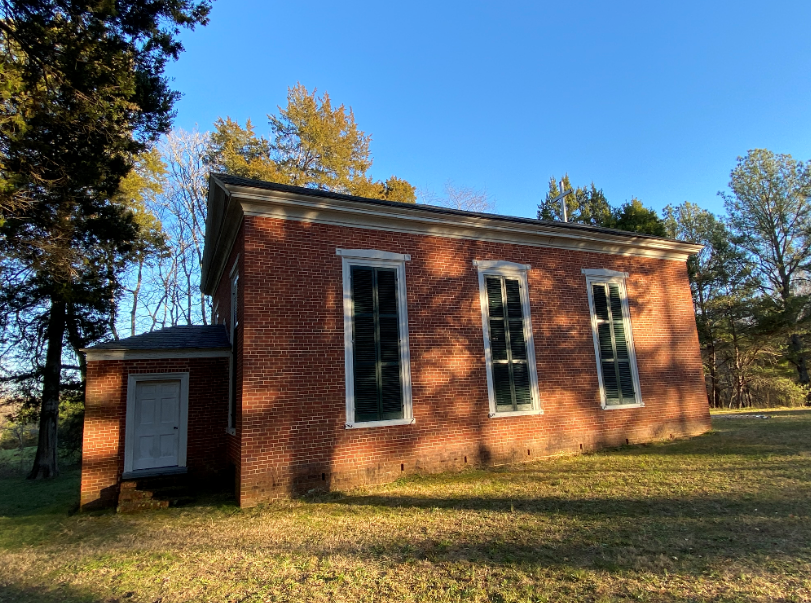
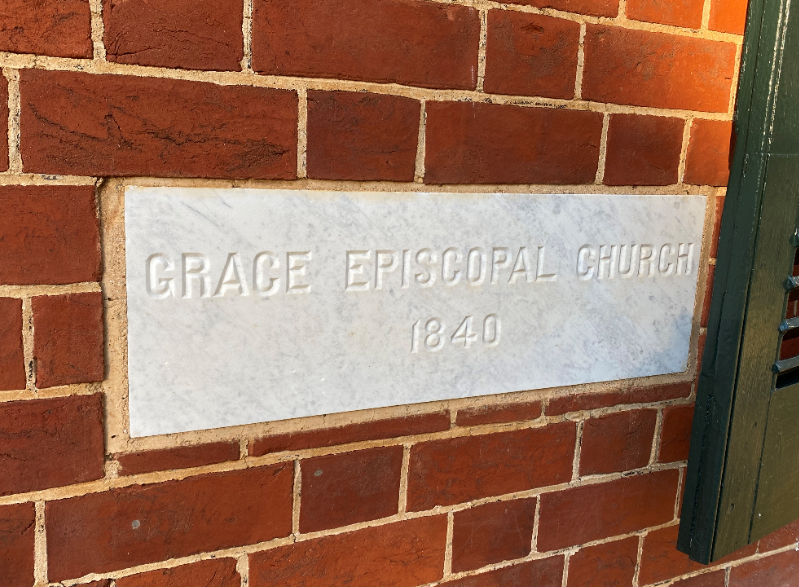
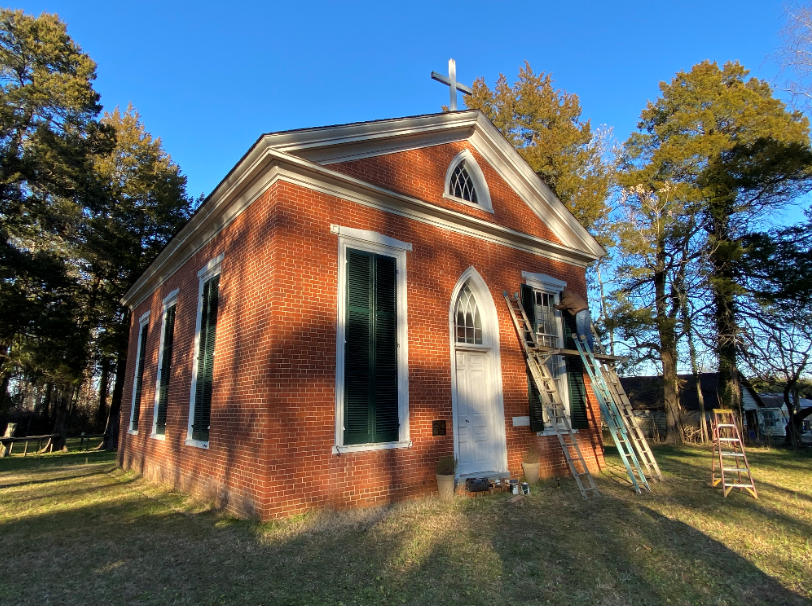
Grace Church

Ca Ira VA – January 2021

When I was in college, during the summertime, I would help my academic advisor Richard Couture prepare this church and grounds for its annual worship service. The church only meets once a year because the church community is so small as to be almost extinct. Its historical significance draws (or at least in the late 1970s) a number of historians, college professors and other interested people to the worship service, which is/was followed by a fellowship meal on the grounds.

The church’s historical significance is described in the application for inclusion on the National Registry of Historic Places in 1980 (application signed by Mr. Couture):

Grace Church, Ca Ira, survives as a charming illustration of the stylistic hybridization that occurred with Romantic Revivalism in the antebellum period. Unlike many of its similarly imaginative contemporaries, Grace Church is devoid of architectural naivete and is at once a skillful blending of Roman, Greek, and Gothic Revival elements, all executed with superb craftsmanship. Its temple form and fine brickwork are an offspring of Virginia’s Jeffersonian tradition, while its Greek and Gothic details are adapted from builders’ pattern books. The church was erected in 1840-43 by Valentine Parrish, a local master builder, and is one of the only remaining buildings of Ca Ira, a town laid out in 1787 which prospered briefly in the antebellum period as a milling and tobacco warehouse center.