Nellie Johnstone Number 1

Bartlesville OK

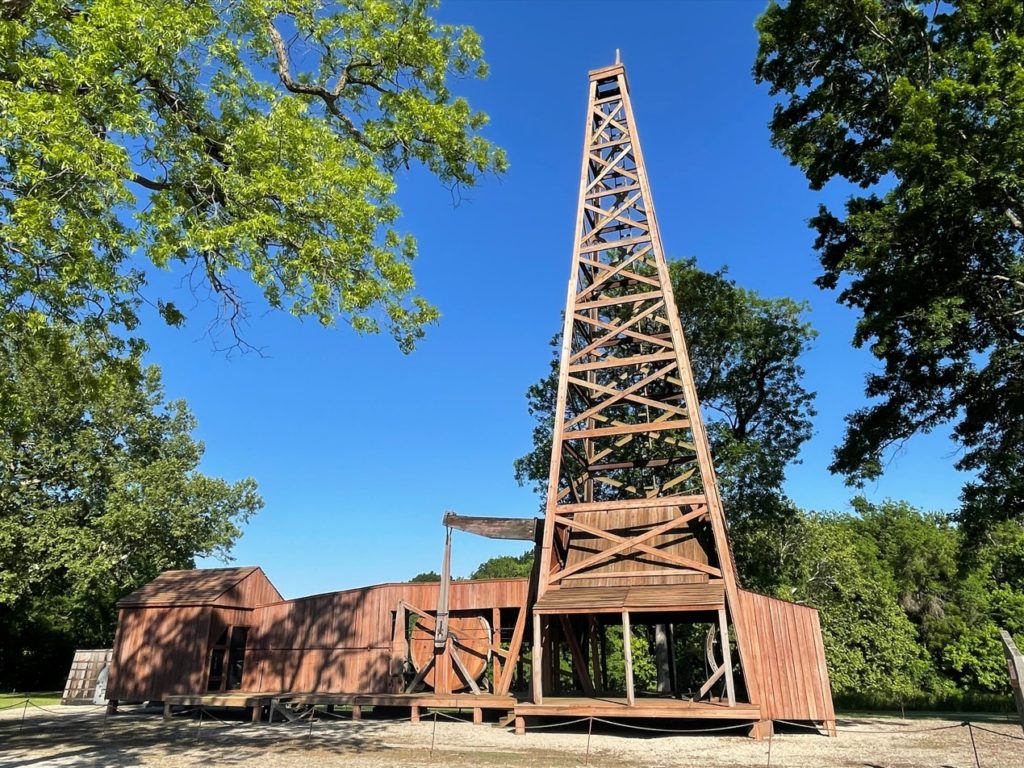
This is a replica of Nellie Johnstone Number 1, the first commercial oil well in Oklahoma, starting in 1897. It was 1,320 feet deep, and between 1903 and 1947 it produced an estimated 100,000 barrels of oil, which were ultimately transformed into 4 million gallons of petroleum products.
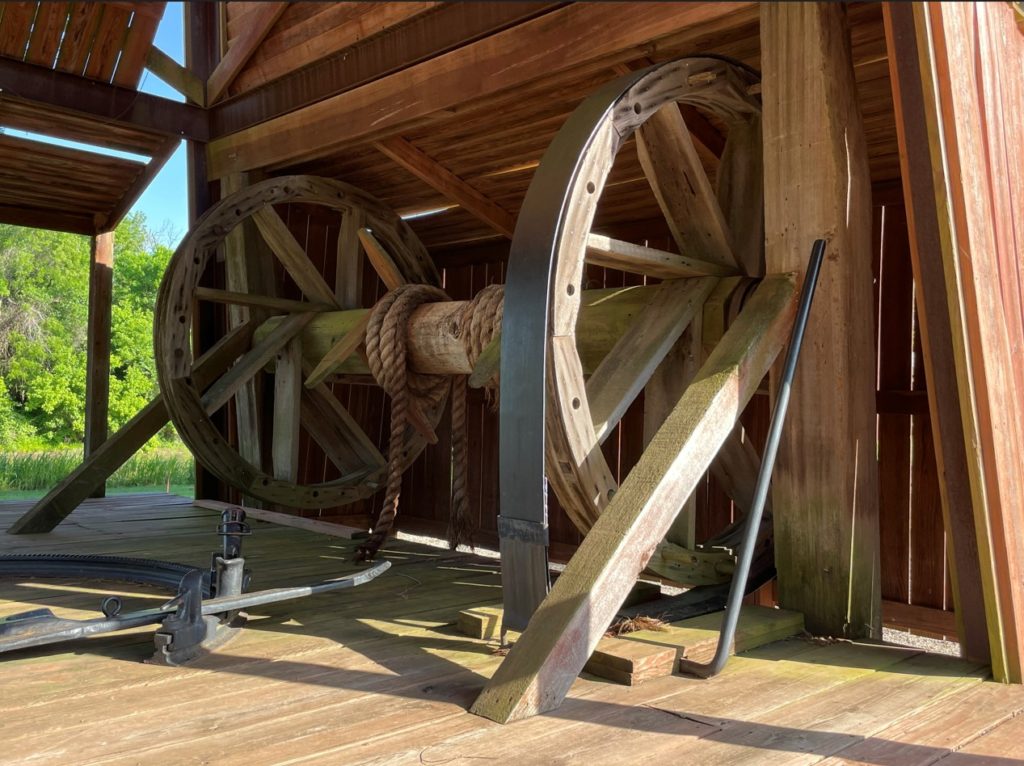
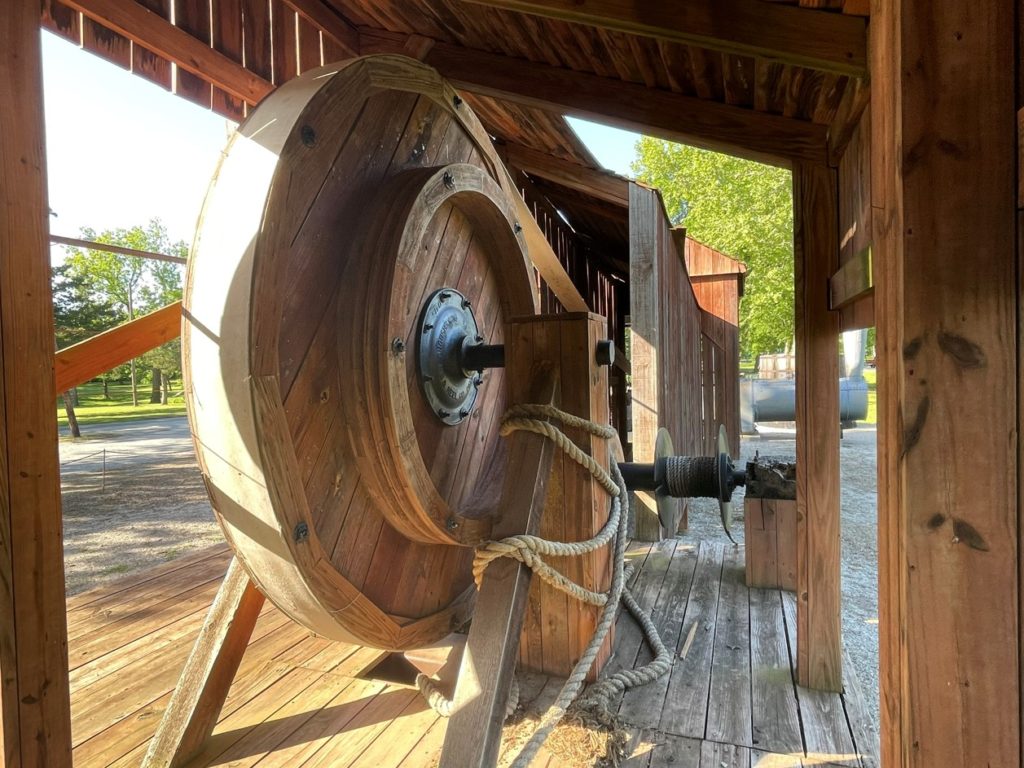
Bull Wheel – drilling rope or line was wrapped around this huge spool, which was wound and unwound as tools were lowered and raised in the well bore.
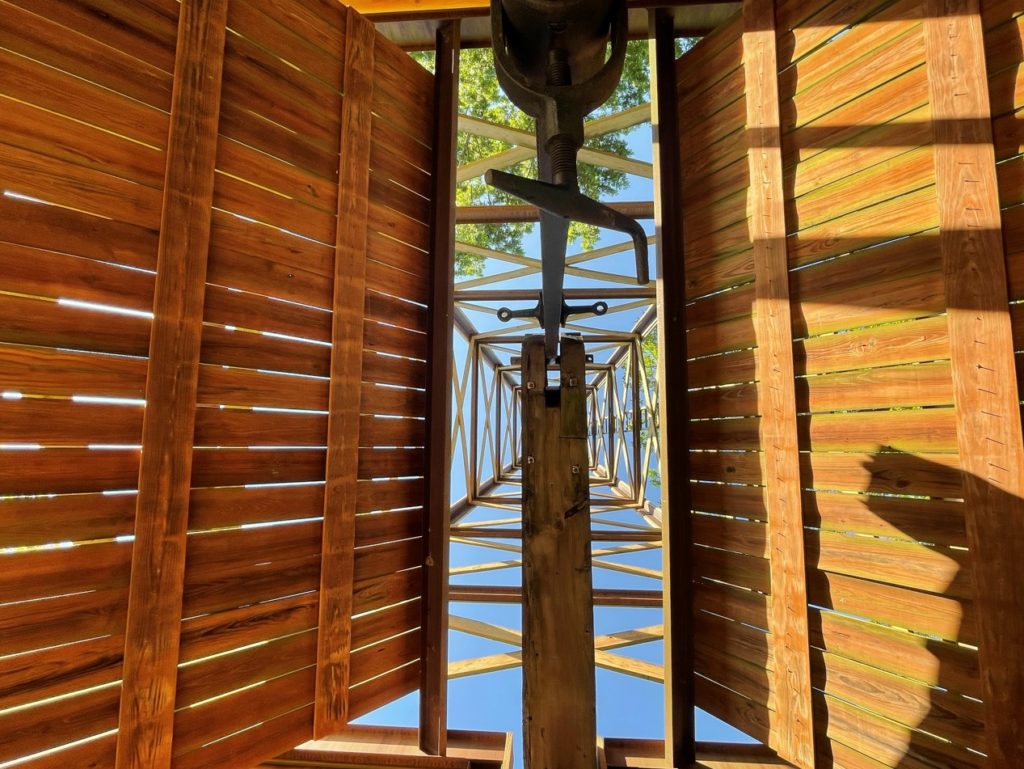
Looking up into the derrick.
Band Wheel – 2,600 pound wheel of laminated wood transformed the rotating motion of the drive belt into the up-and-down motion necessary to drill the well.
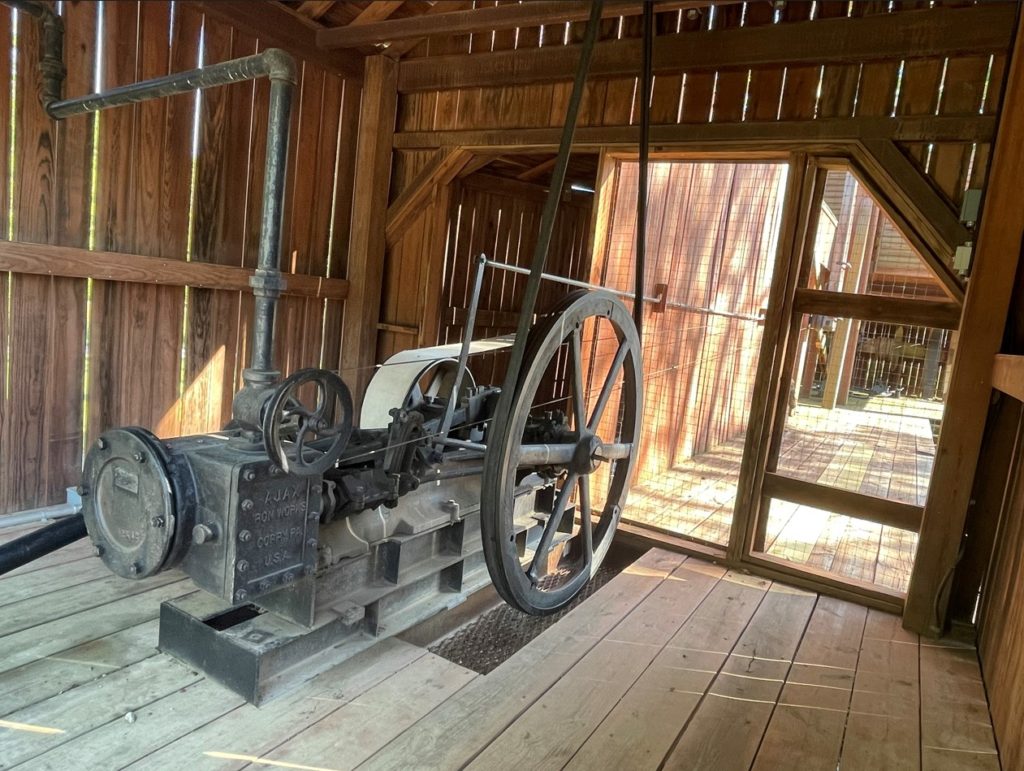
Steam Engine – the power source for drilling was provided by this one-cylinder steam engine, which received steam through a pipe from the boiler. It typically operated at 60 to 120 revolutions per minute.
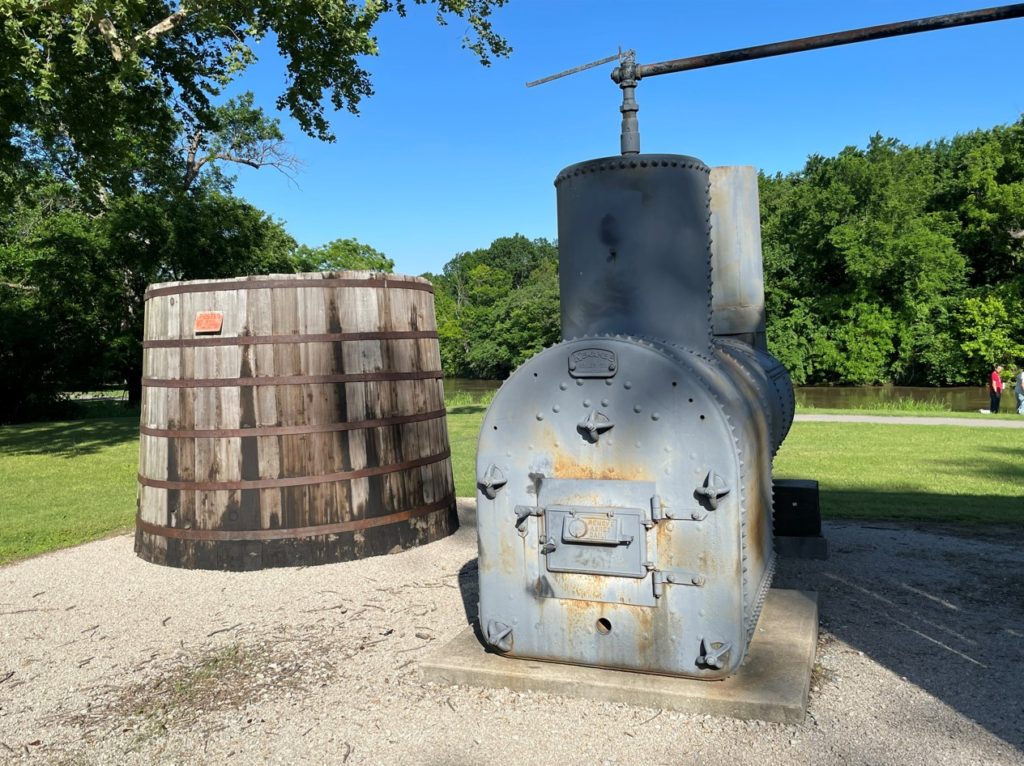
Boiler – steam from this boiler operated the derrick. Wood from nearby trees provided the fuel for the boiler’s fire, and the nearby Caney River furnished the necessary water.

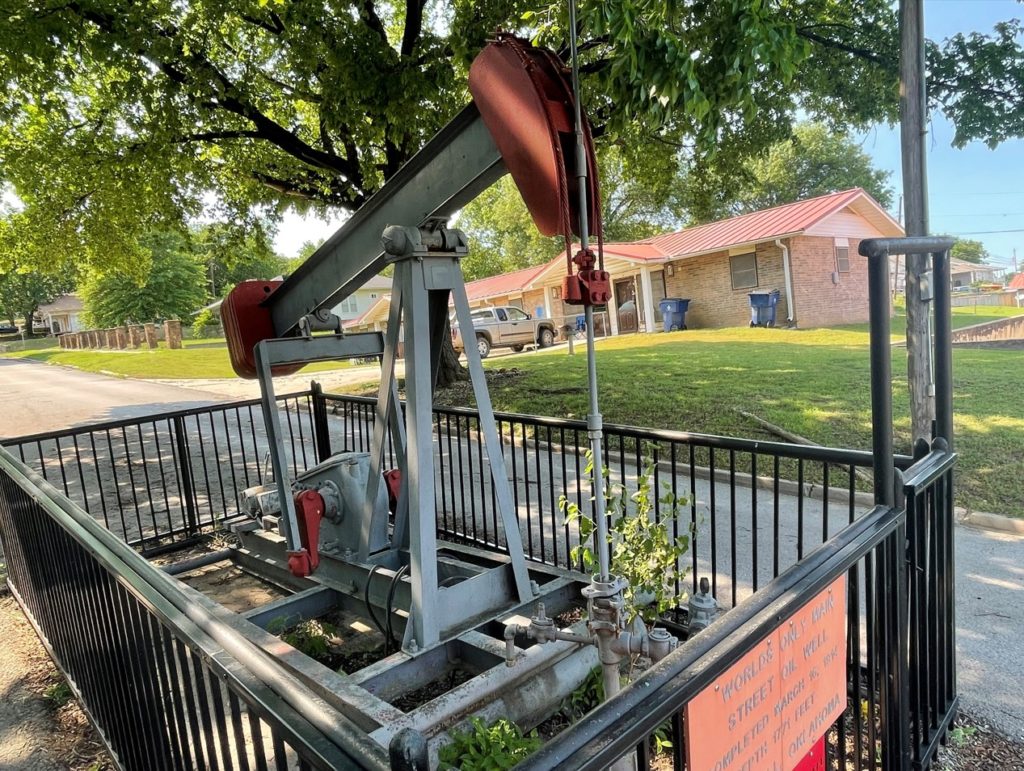
Pumpjack

Barnsdall OK

This is a pumpjack. It pumps oil. These pumpjacks are all over Oklahoma, still pumping. This pumpjack is in the middle of Main Street in Barnsdall OK, claiming to be the only Main Street Pumpjack in the world. It was completed 1914, and is 1,771 feet deep.

Greenwood District

Tulsa OK

The worst race massacre in American history occurred here in Tulsa, May 31-June 1, 1921.

In the early 1900s, Tulsa’s African-American community, the “Greenwood District”, was nationally known for its prosperity. “Black Wall Street” was populated with entrepreneurs, doctors, lawyers, pharmacists, dentists, beauty parlors, barbershops, dance halls, pool halls, movie theaters, restaurants, grocery stores, and much more. Greenwood Avenue was favorably compared with Beale Street in Memphis and State Street in Chicago.

On May 31, 1921 Dick Rowland, a 19 year old African-American was accused of assaulting a white woman. He was jailed, but the charges were later dropped.

The local Tulsa Tribune published an inflammatory story that mobilized a white mob to lynch Rowland.

African-Americans stationed themselves outside the courthouse to protect Rowland.

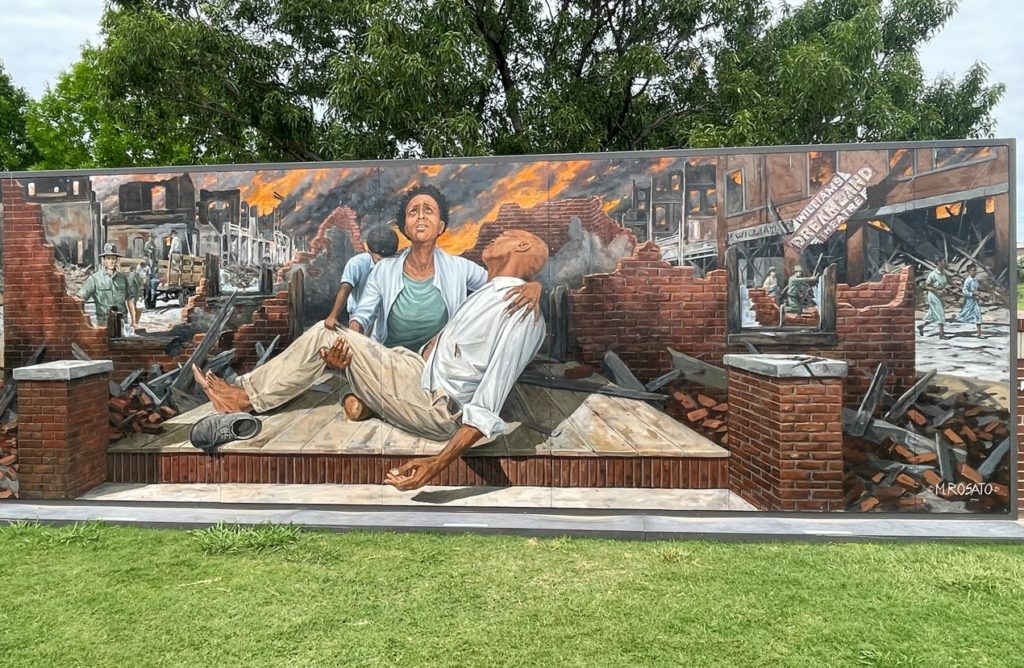
The white mob pursued the retreating African-Americans into the Greenwood District, terrorizing the entire community, shooting African-Americans, burning homes and businesses to the ground.

When the Oklahoma National Guard was called in, they ignored the rampaging mob and instead arrested hundreds of African-American survivors.

Public officials failed to keep records of people who were wounded or killed. The estimated number of deaths is at least 36, but witness accounts put the number at more than 300 African-Americans killed. The massacre lasted two days.
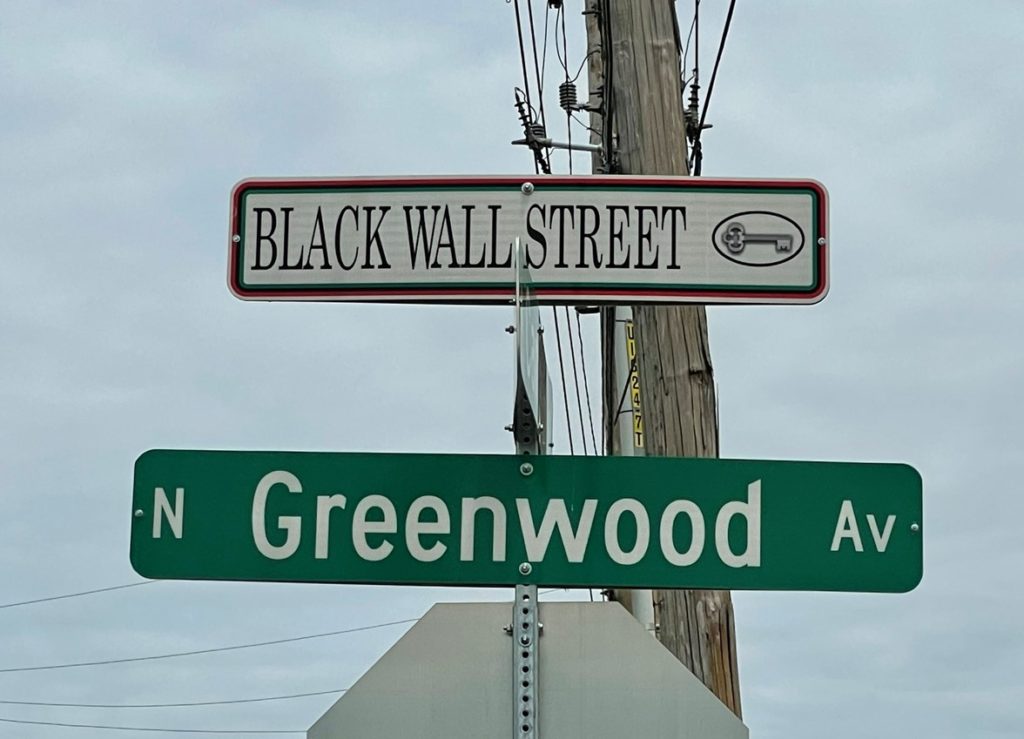
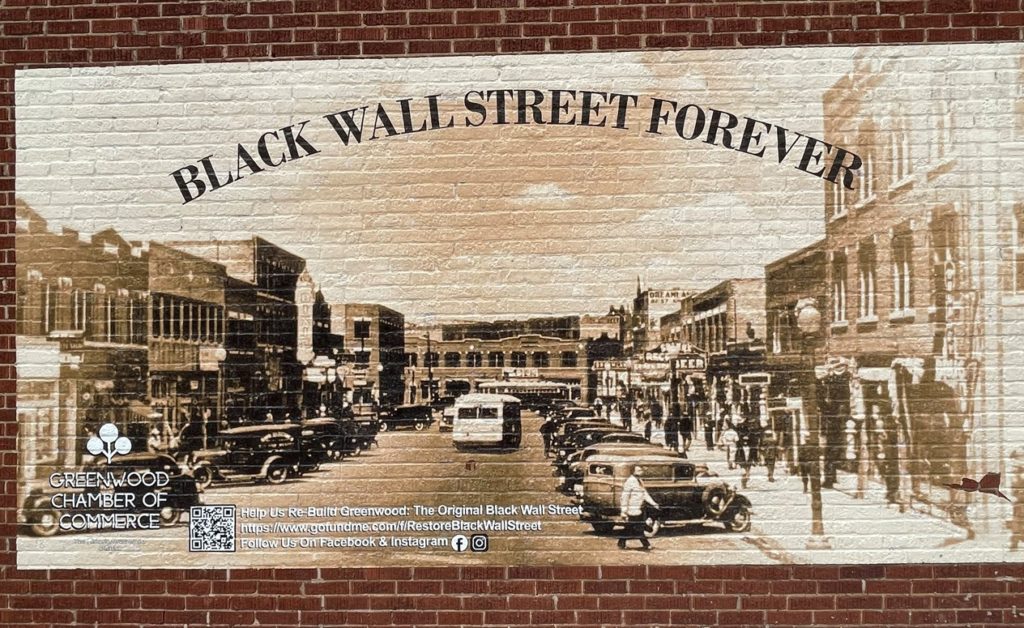
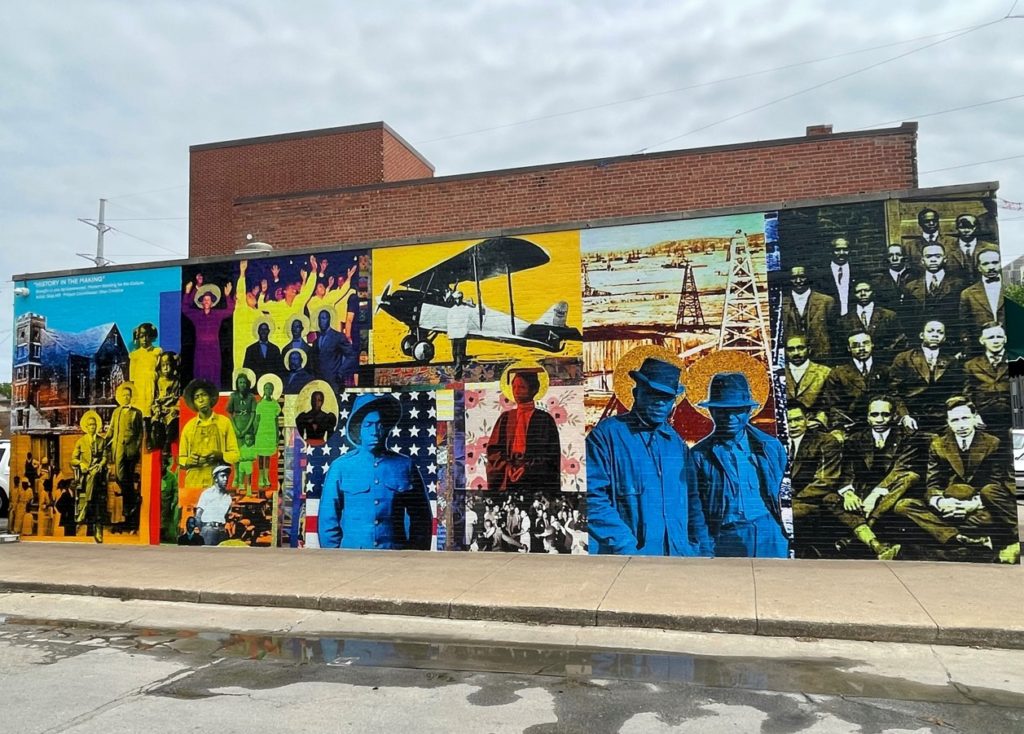
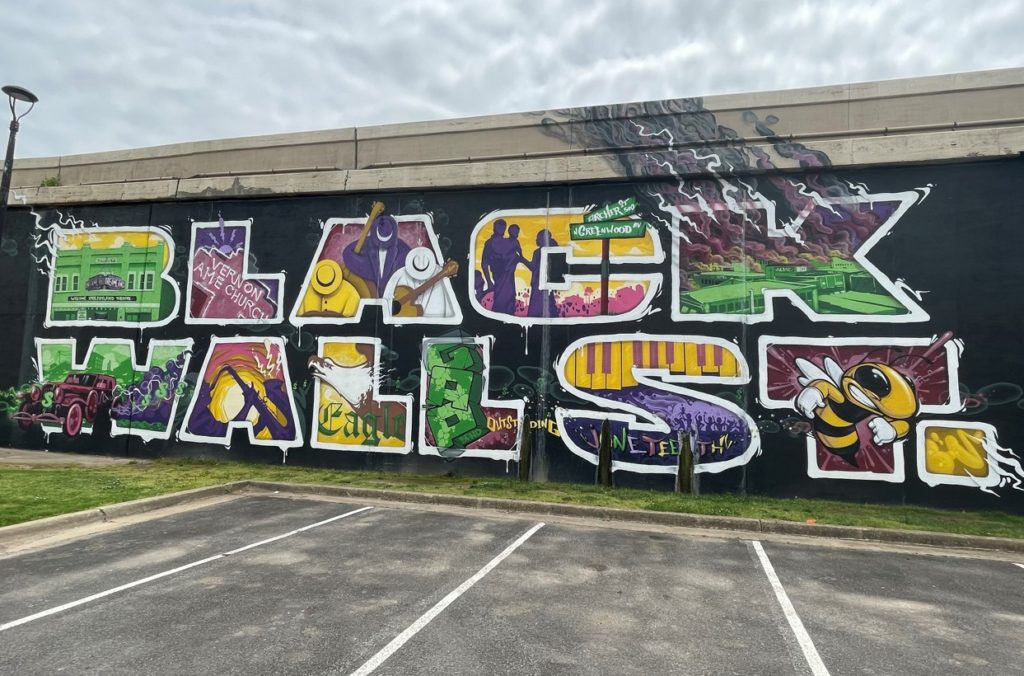
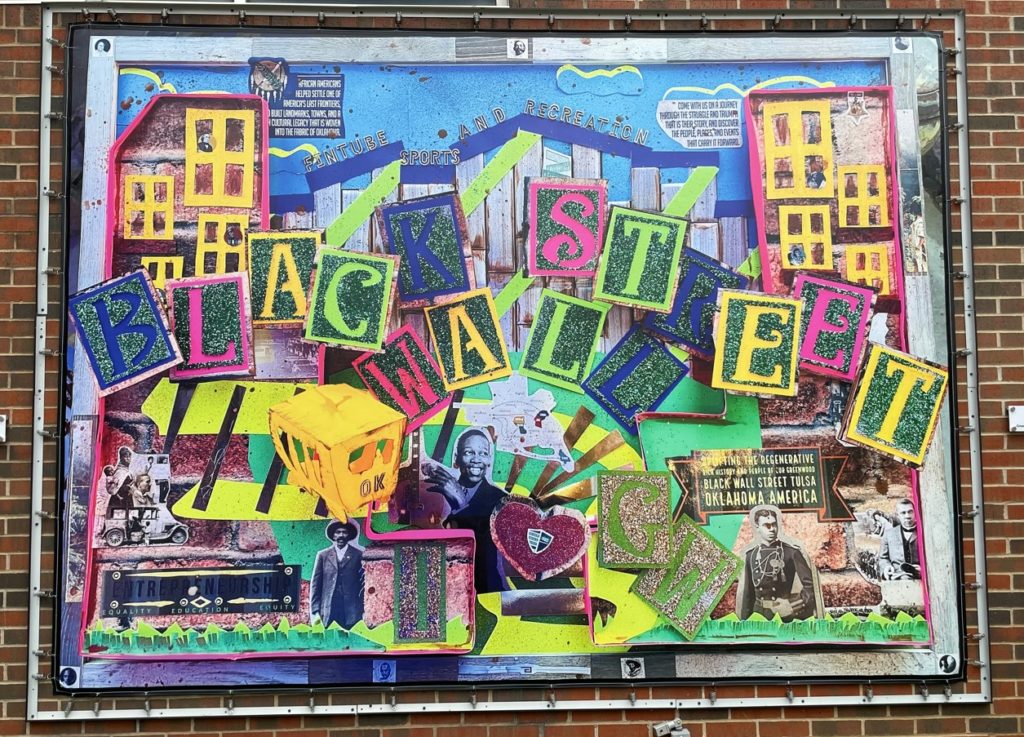
Murals depicting Black Wall Street.
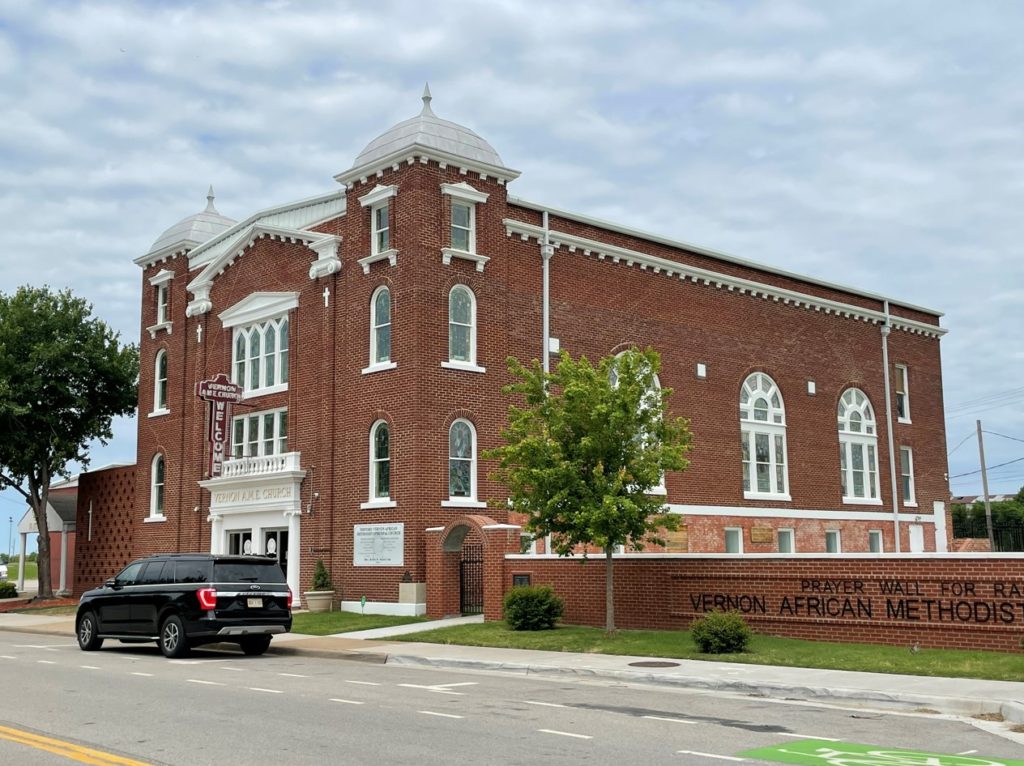
Vernon AME Church on Greenwood Avenue, the only surviving foundation from the 1921 Massacre.