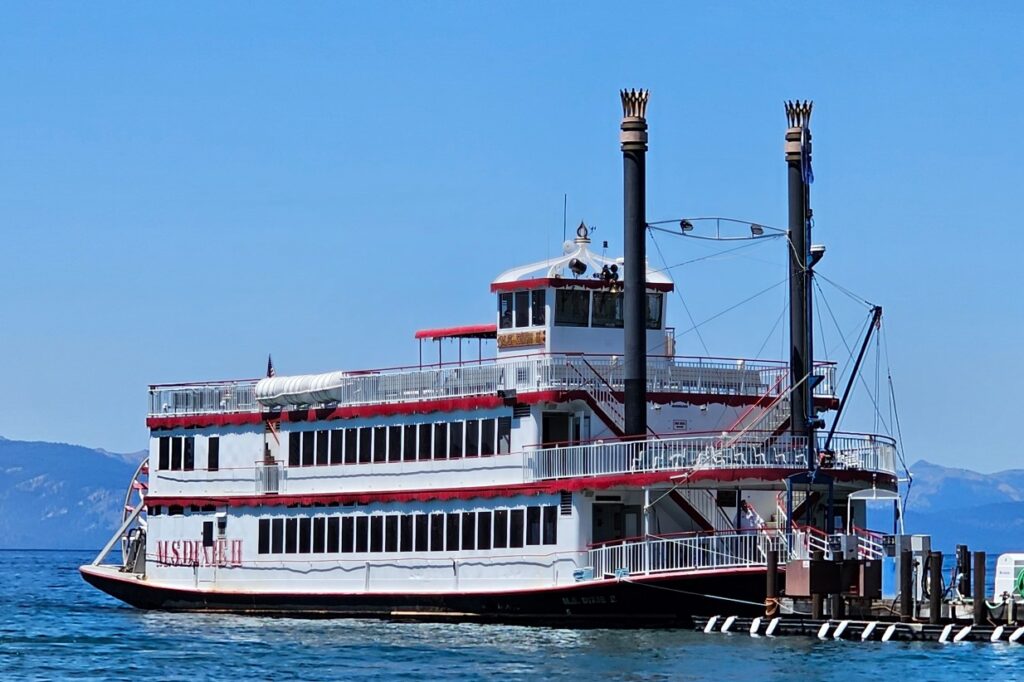
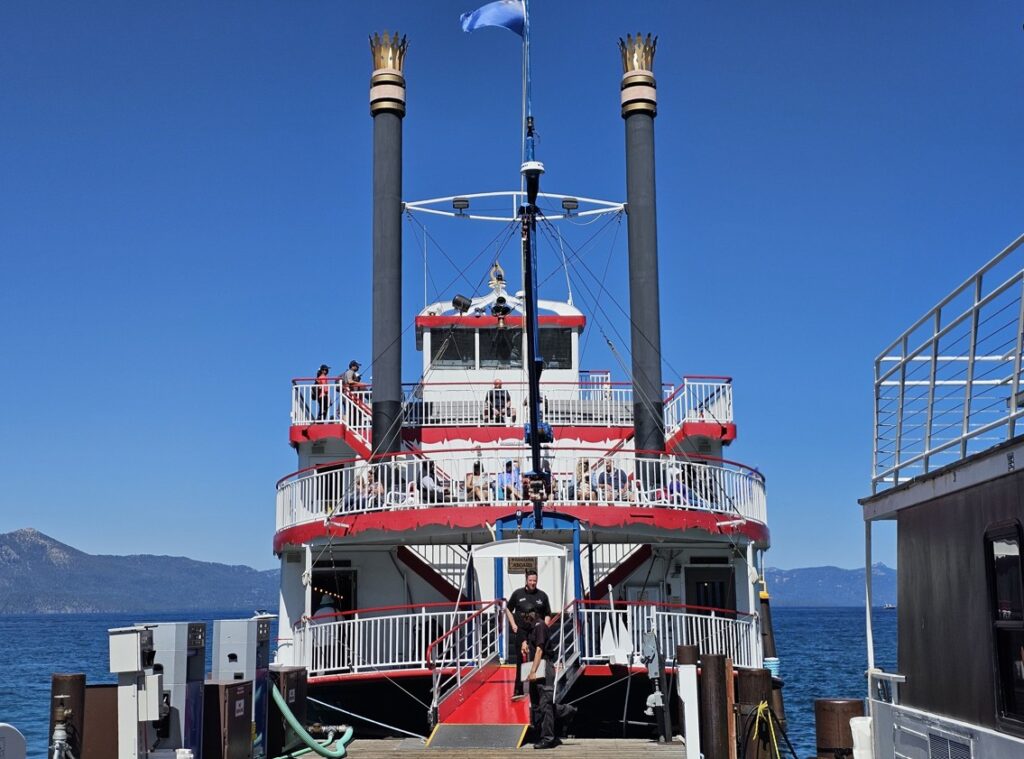
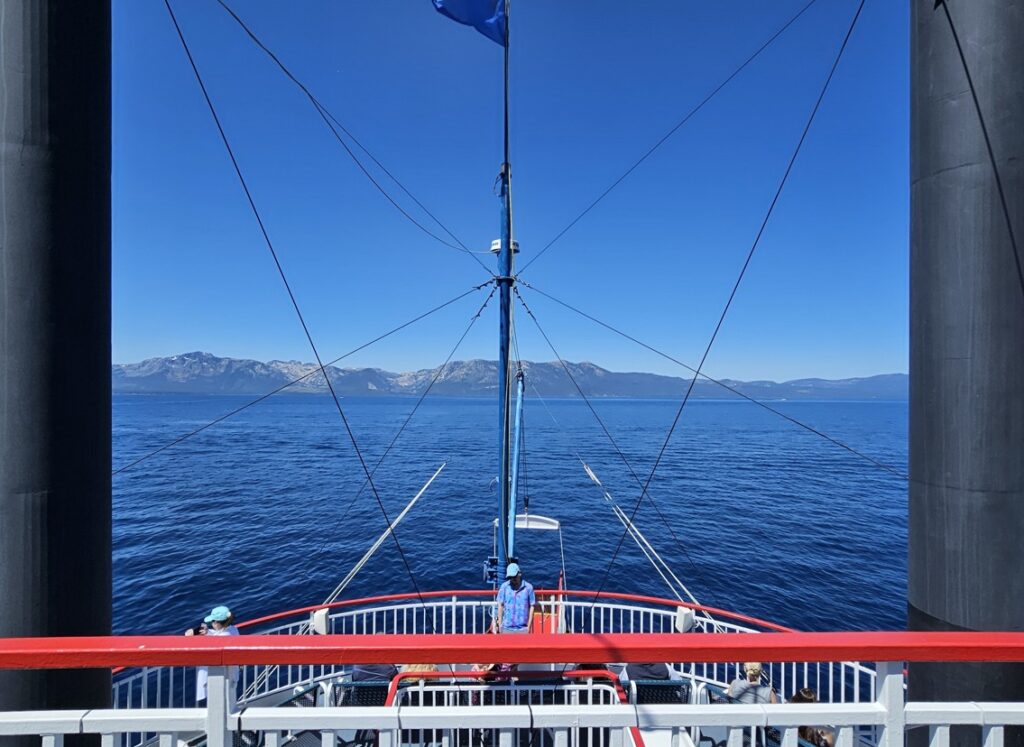
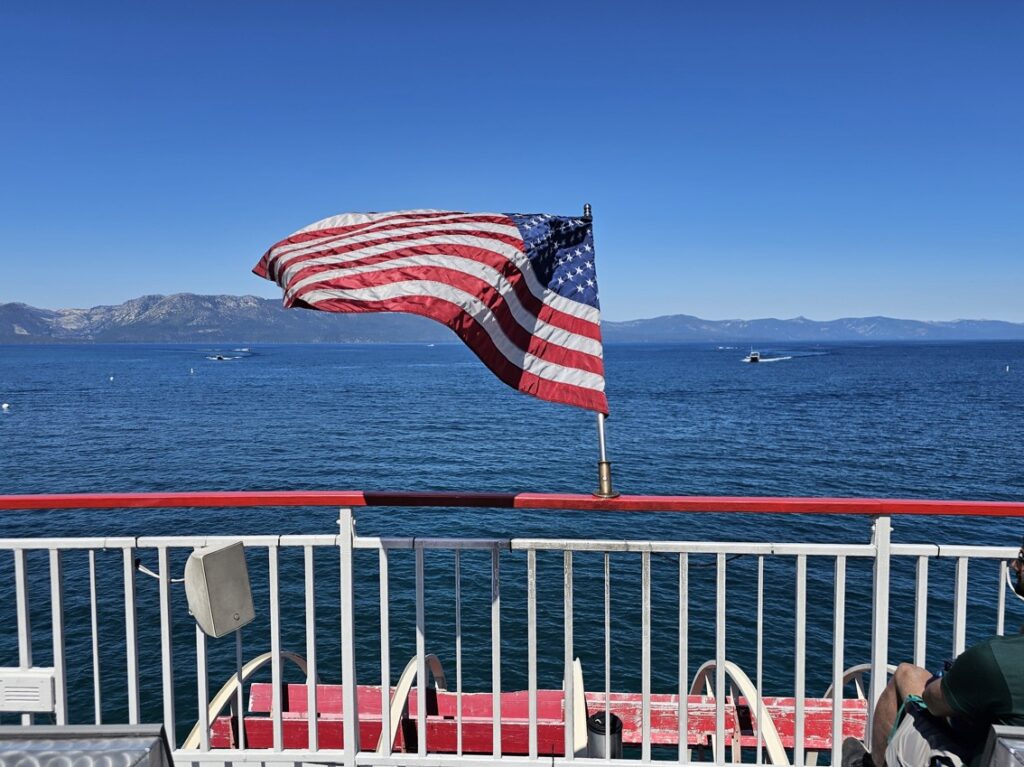
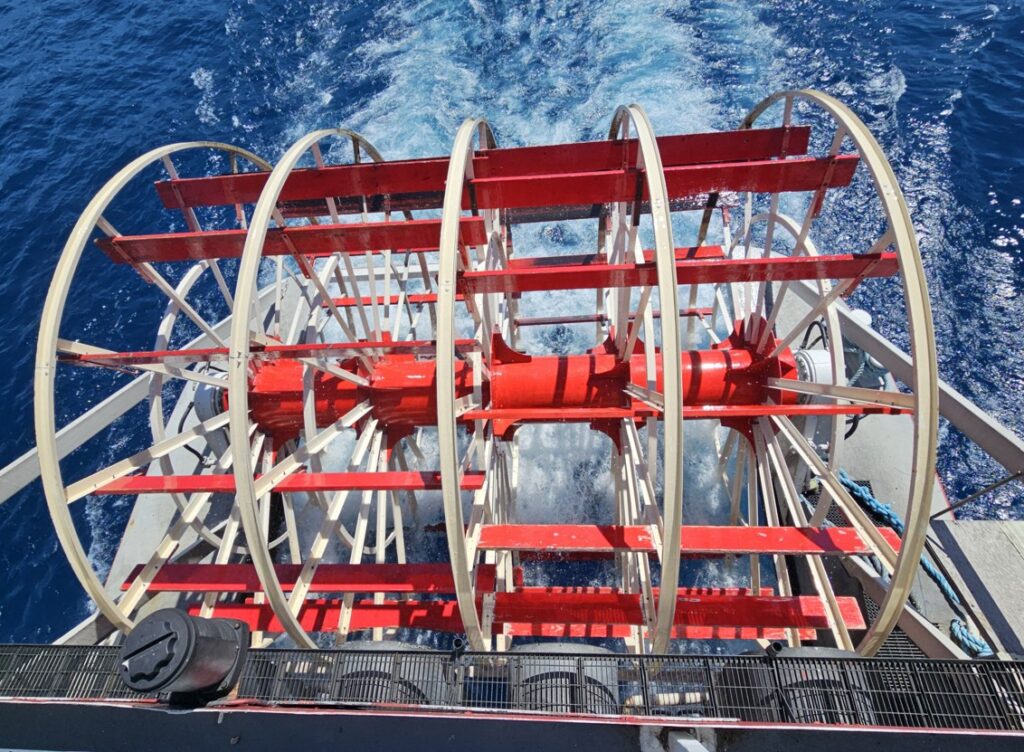
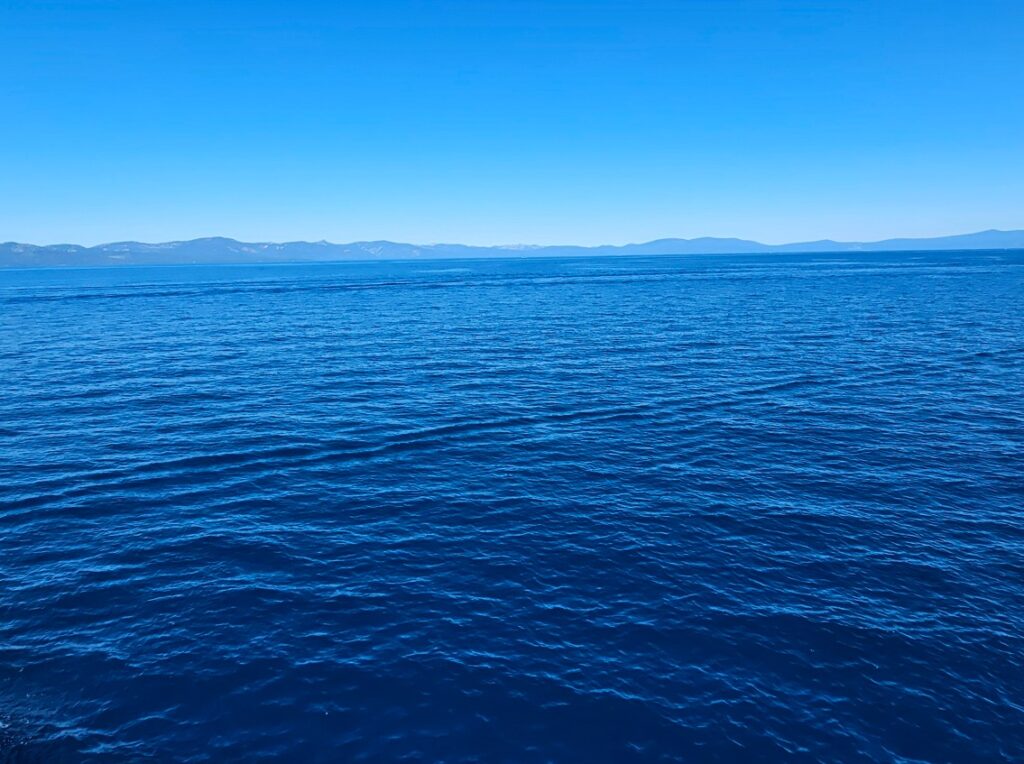
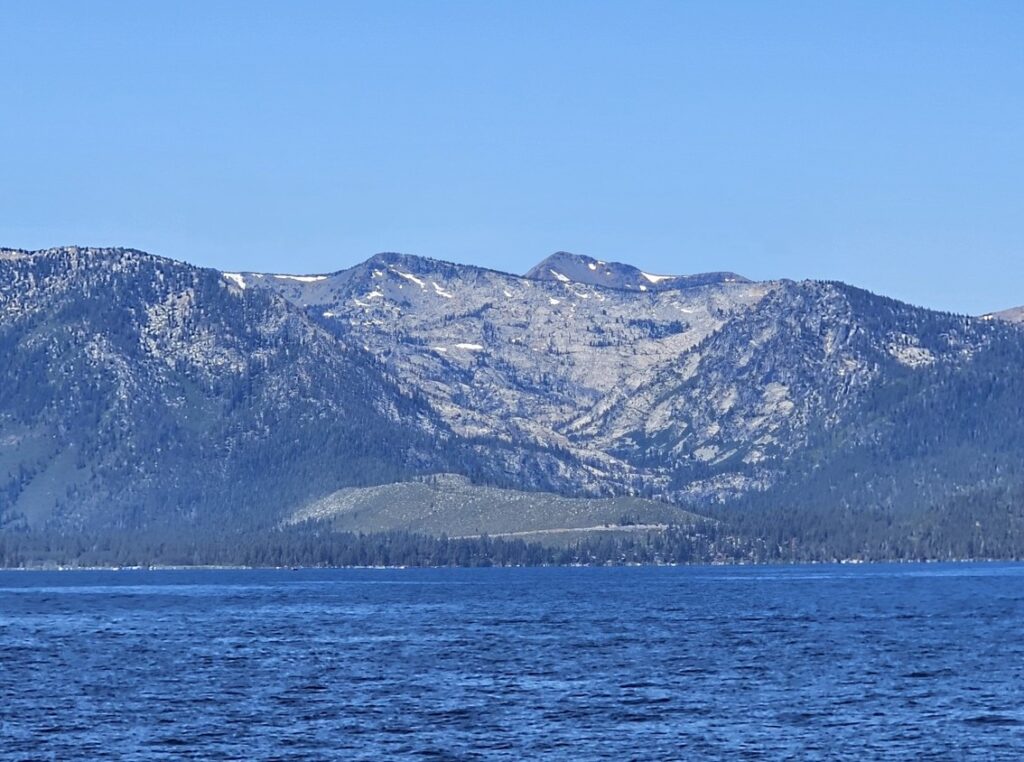
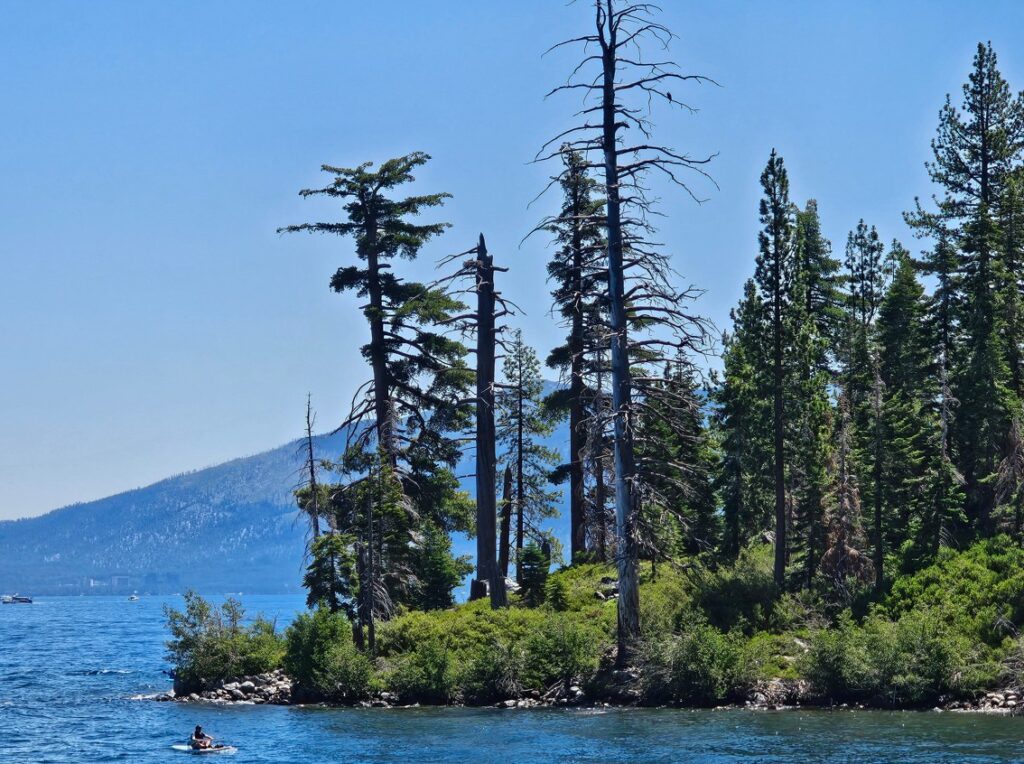
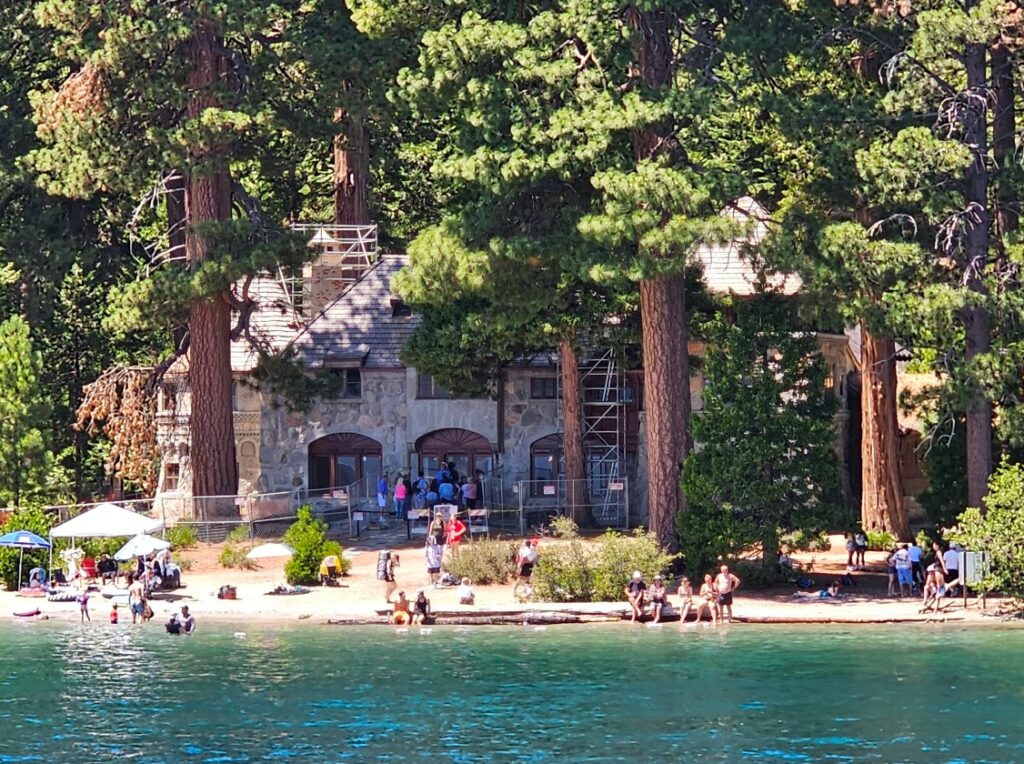
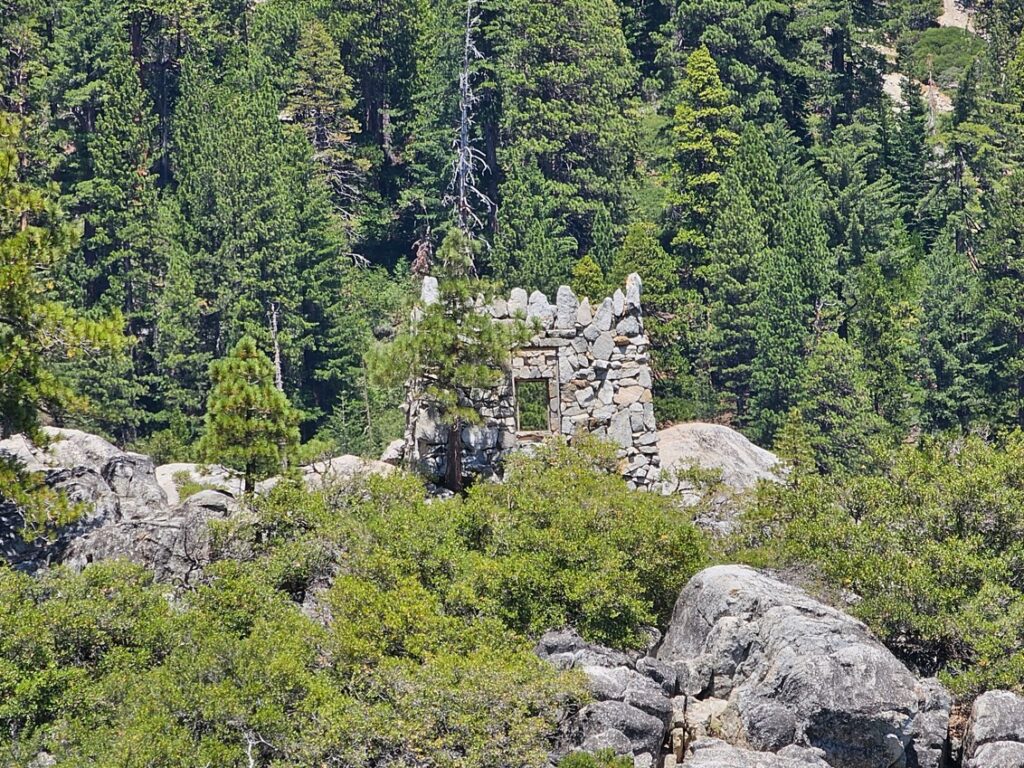
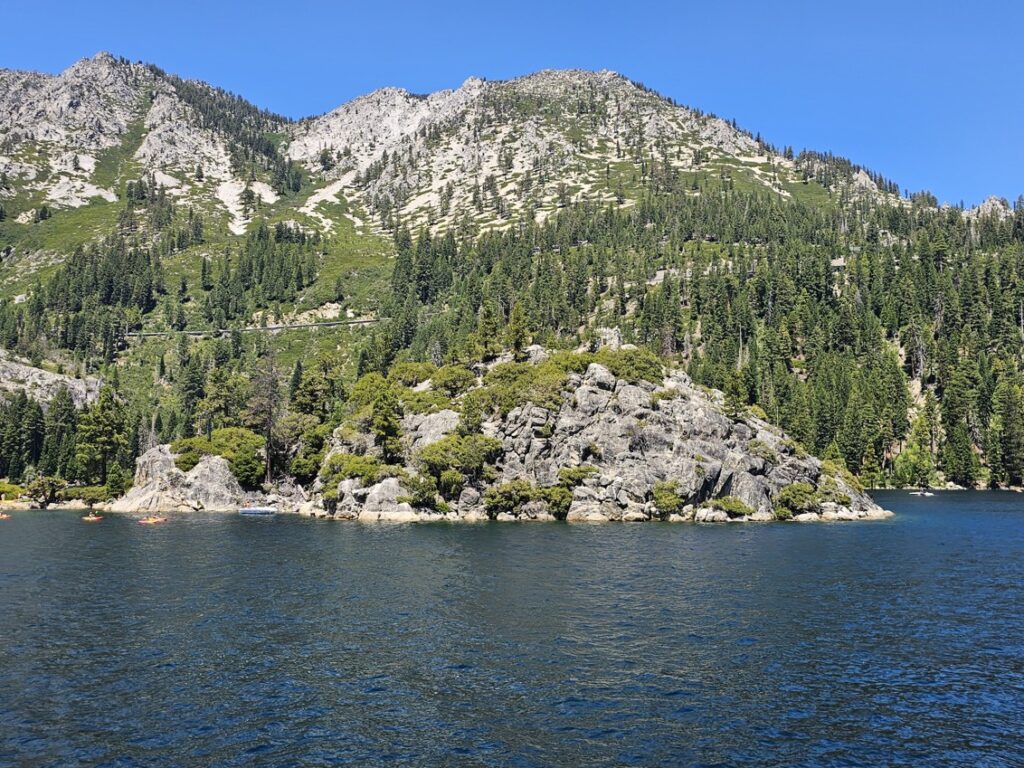
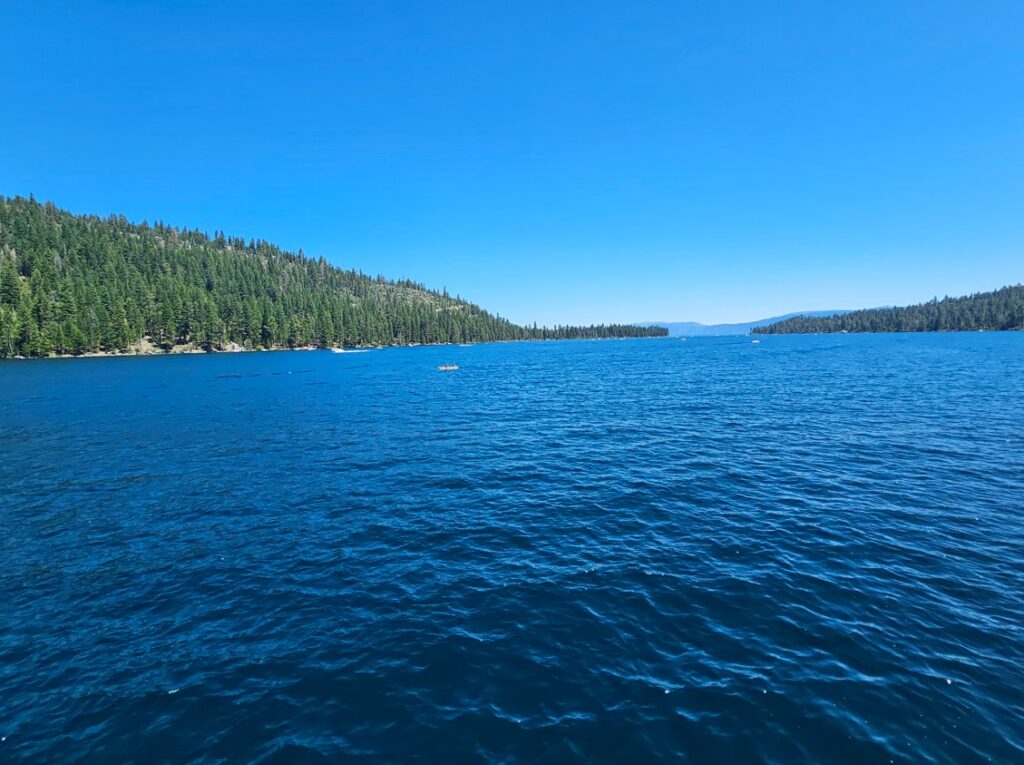
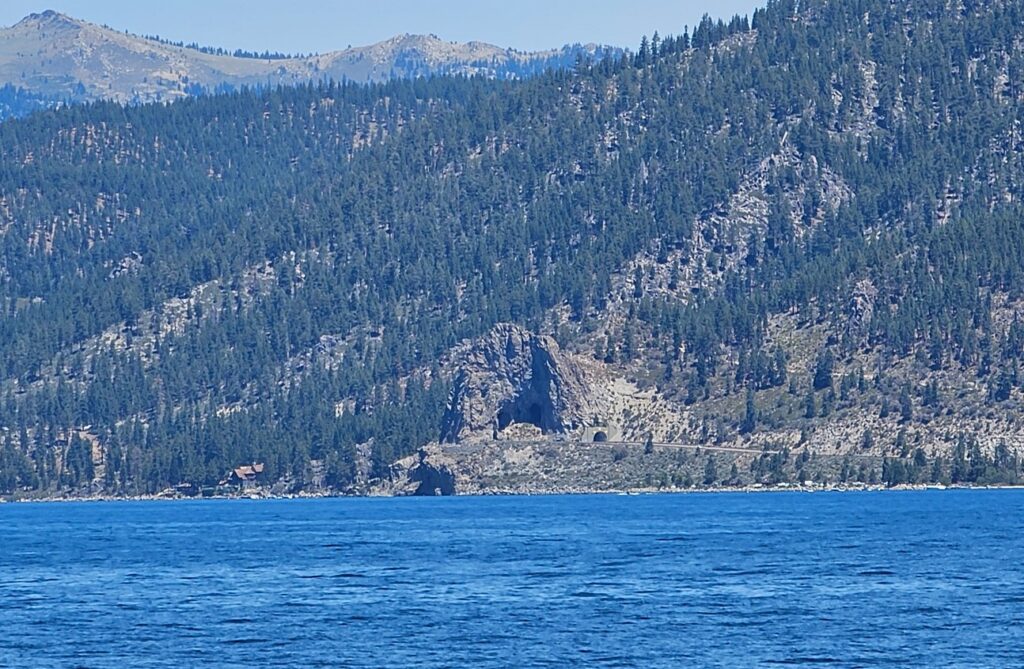
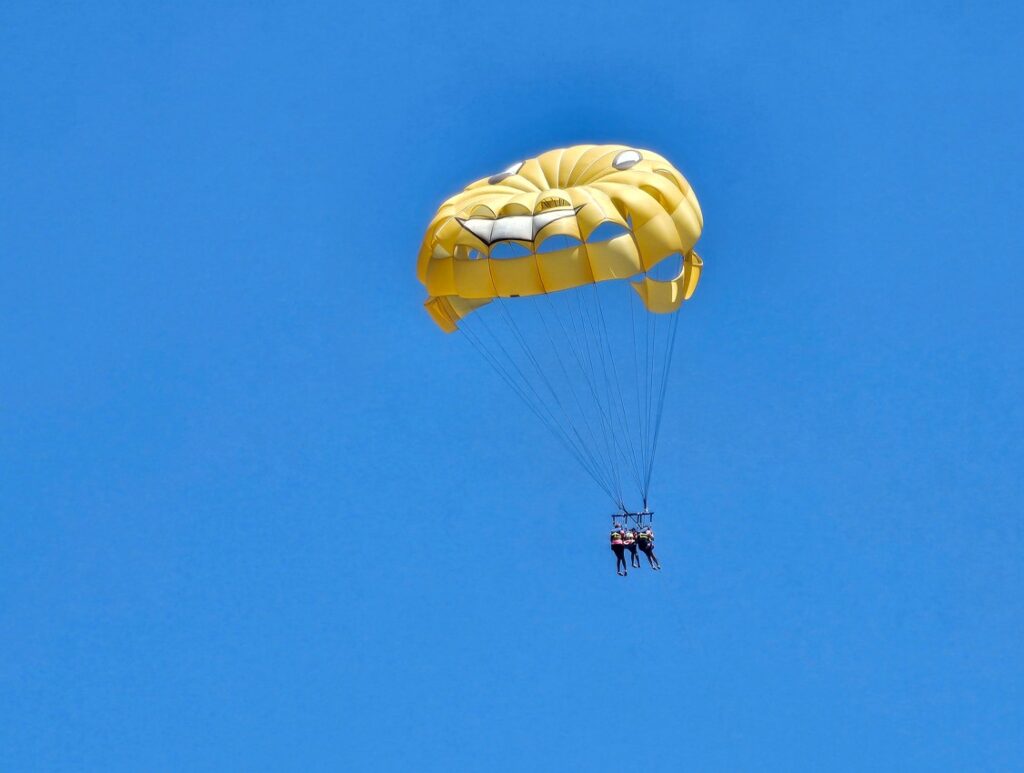
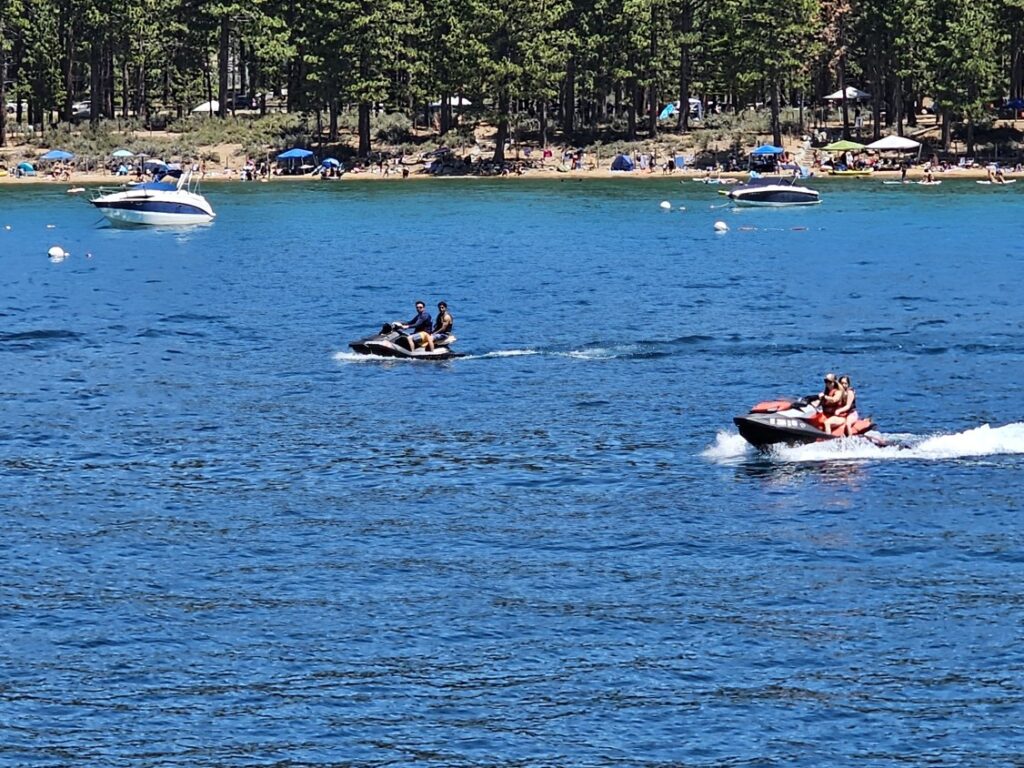
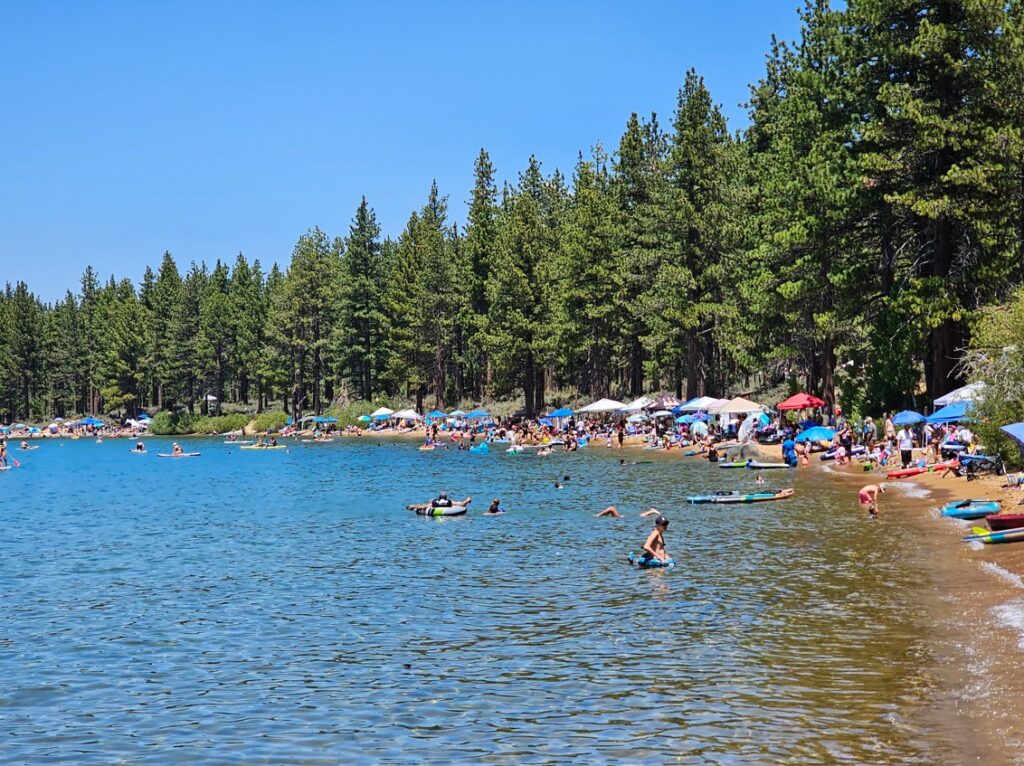
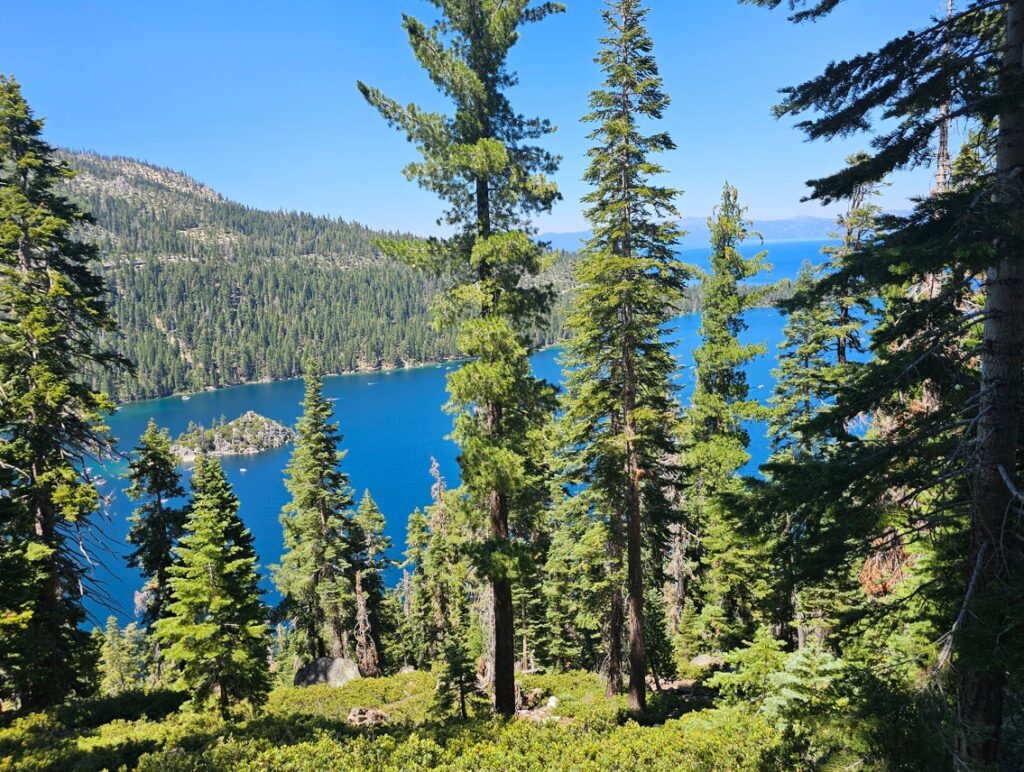
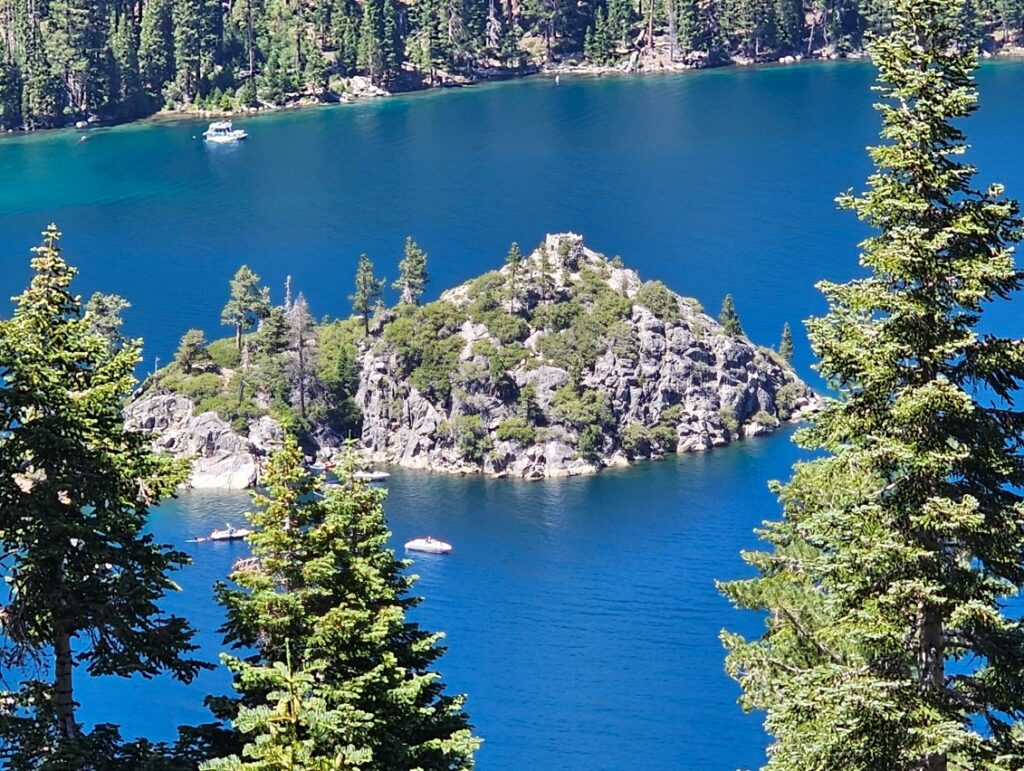
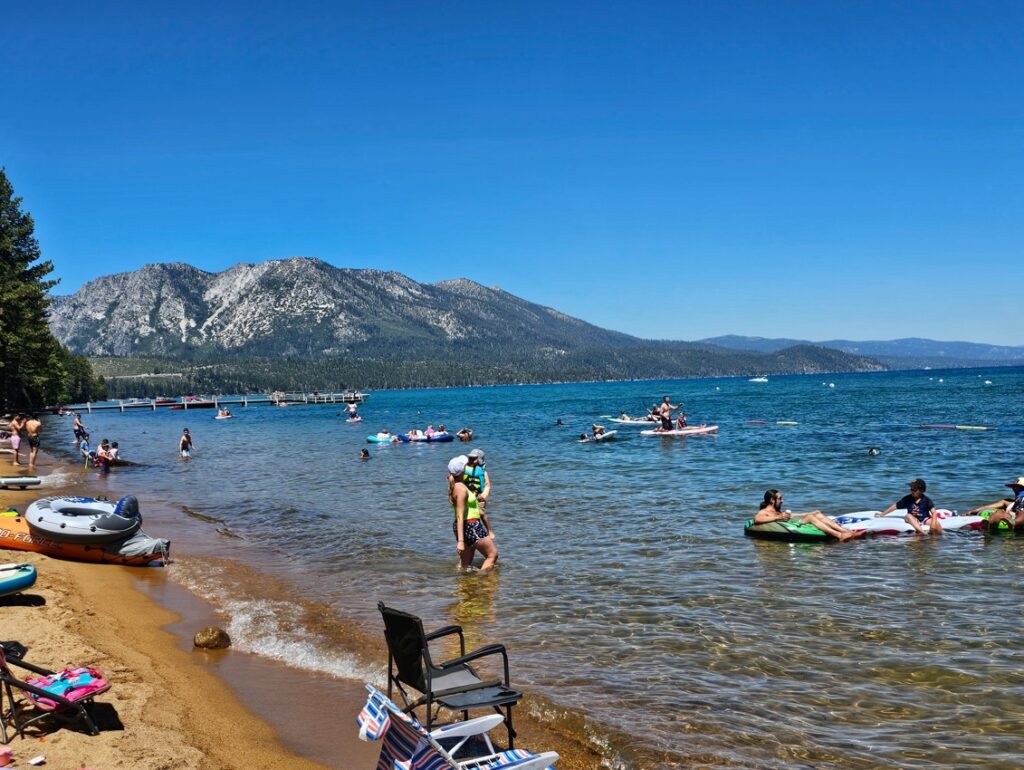
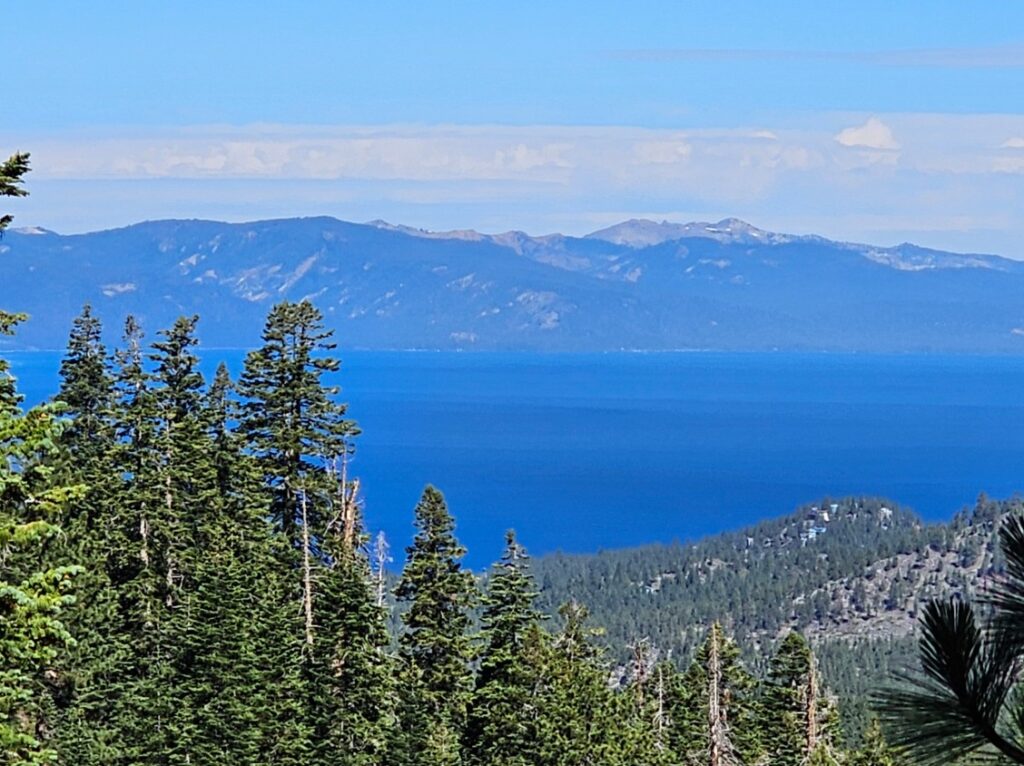
We took a lake cruise from Zephyr Cove on the MC Dixie II.The blue water is so clean and clear that if you drop a white plate into the water, you would be able to see the plate at a depth of 75 feet.The little dot near the top of the dead looking tree is a bald eagle.View of historic Vikingsholm mansion from the boat at the edge of Emerald Bay.Fannette Island Tea HouseFannette Island in Emerald BayHeading out of Emerald BayThe tunnel is called Cave Rock. Lincoln Highway cuts through the rock/tunnel.Sky divers over Lake Tahoe.Fun on Lake Tahoe.Zephyr Cove
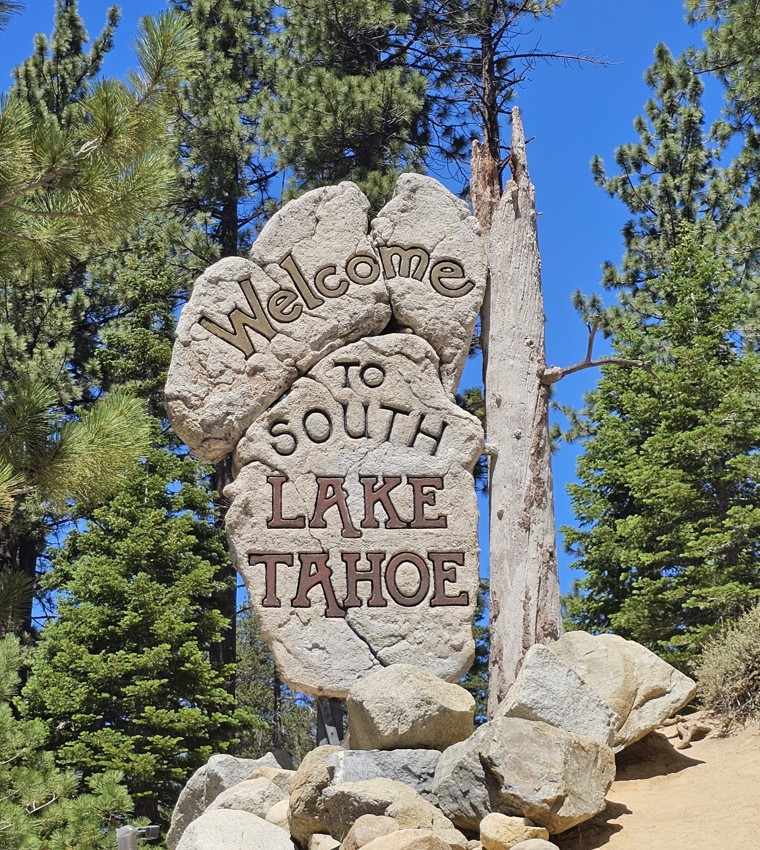
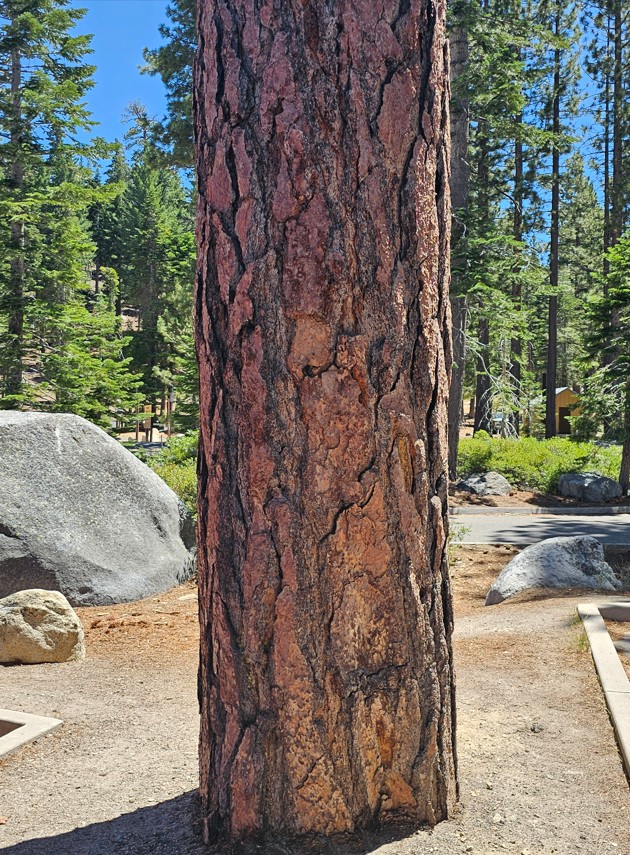
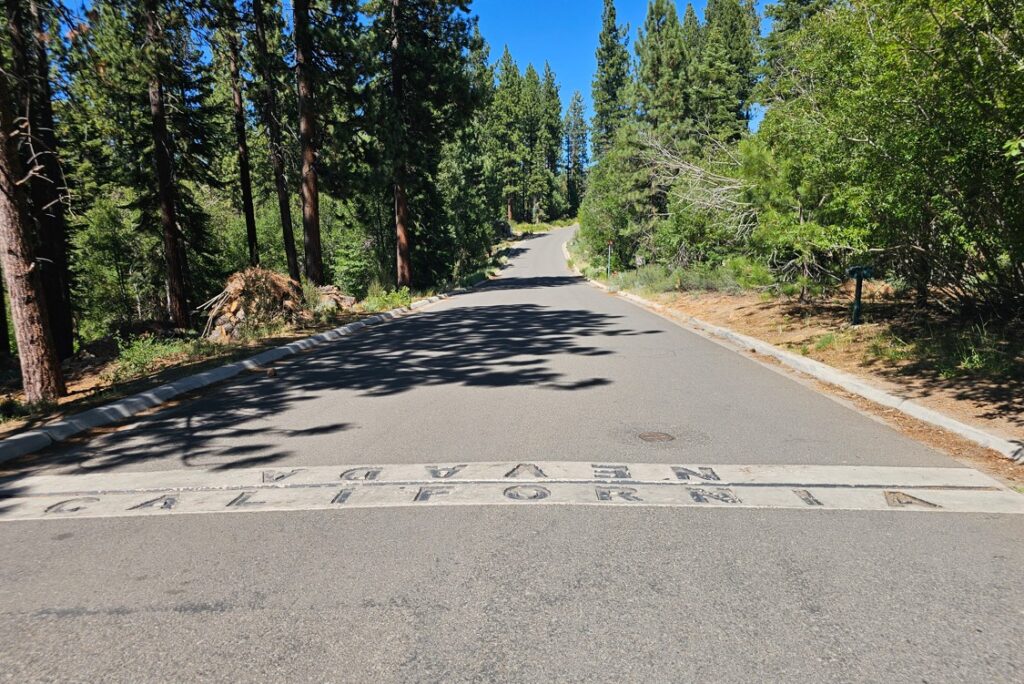
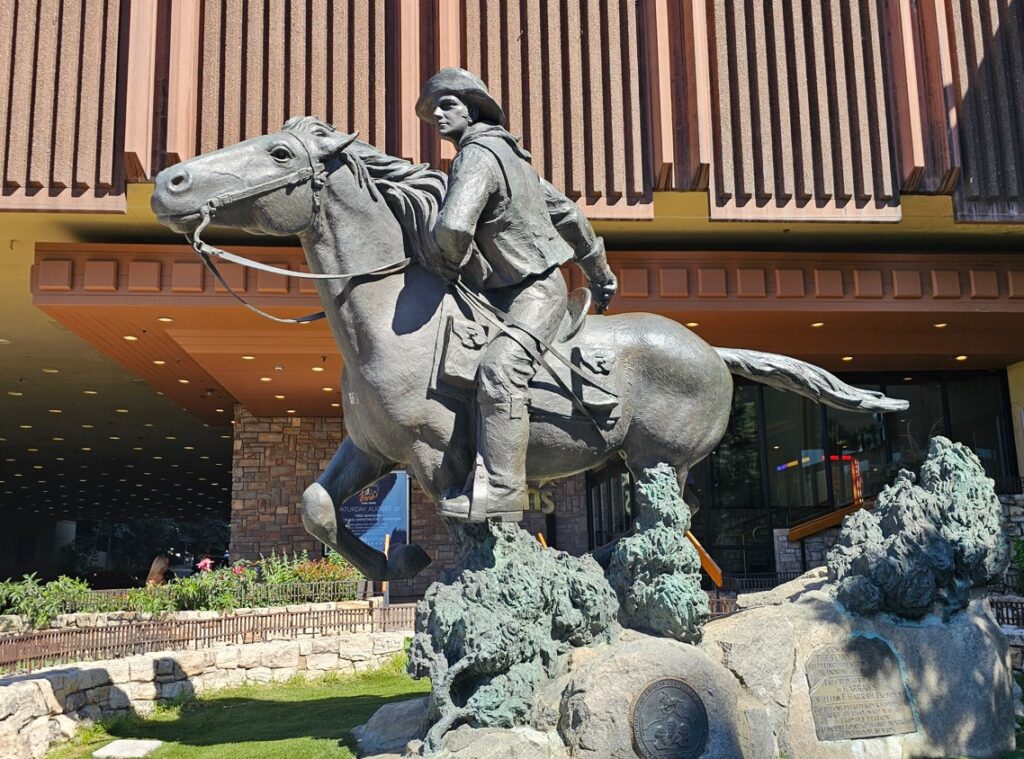
Emerald BayFannette Island in Emerald BayPine treeCalifornia-Nevada state linePony Express monument. The first Pony Express rider passed here April 4, 1860 on his way to Friday’s Station, a remount point 4/10 of a mile northeast at Edgewood, Nevada.Lake Tahoe
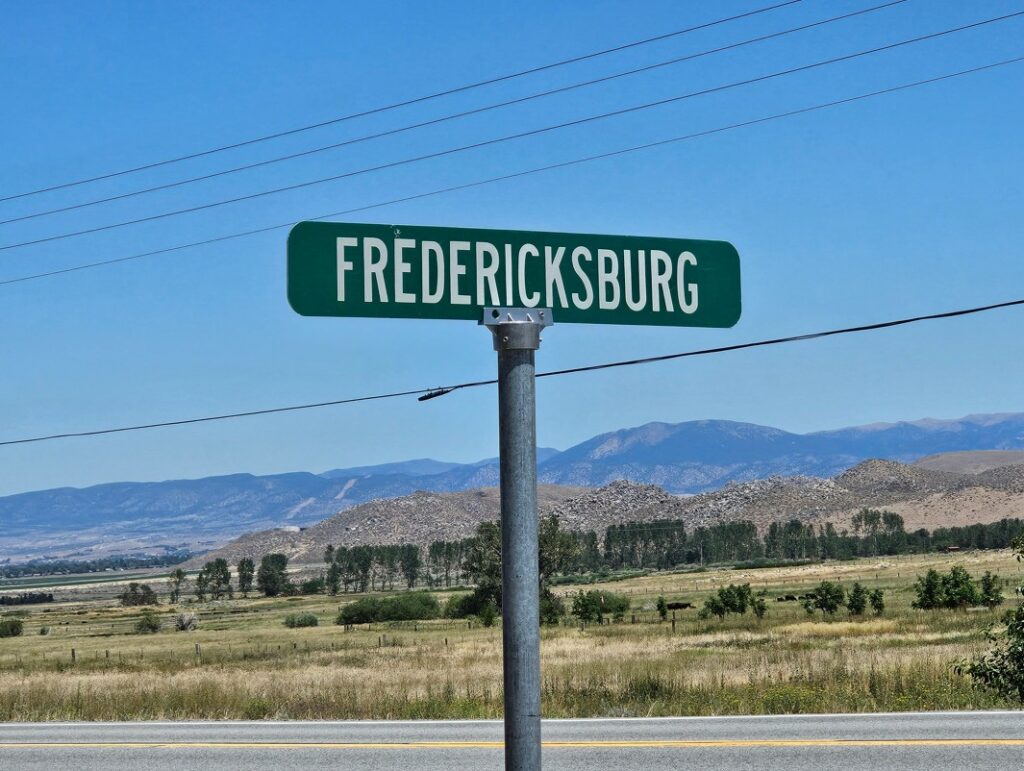
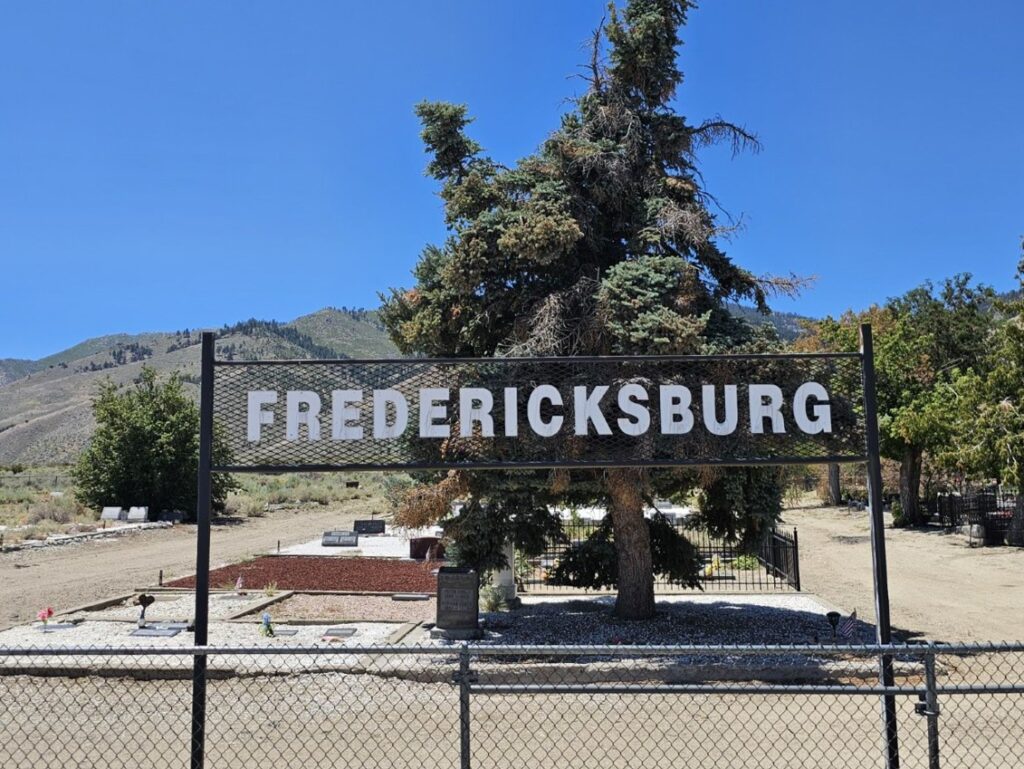
Adding California to my list of “Fredericksburgs I have visited”. This is the 5th after Virginia, Texas, Ohio and Indiana.
Fredericksburg California started in 1864 when German settler Frederick Bruns began farming in the area. The farm became a stopover for travelers heading towards California and supplied milk and apples to mining towns. The community had a school and a post office in the late 1800s to the early 1900s. Most of the older buildings were destroyed by fire in 1986. It remains a small agricultural hamlet.
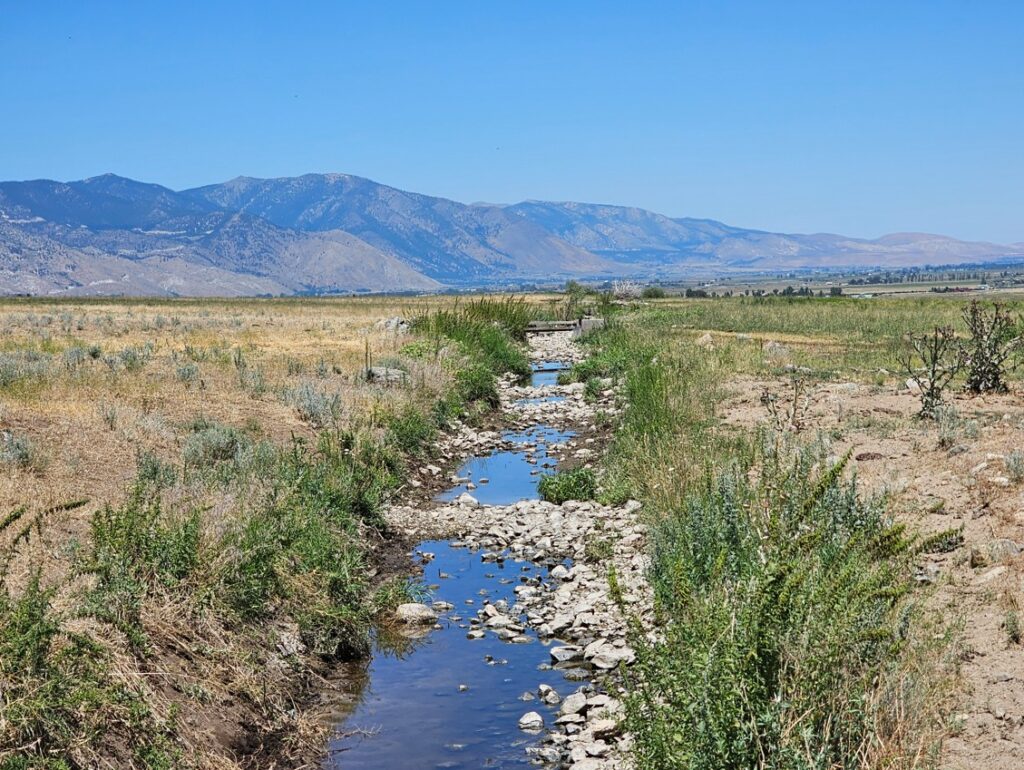
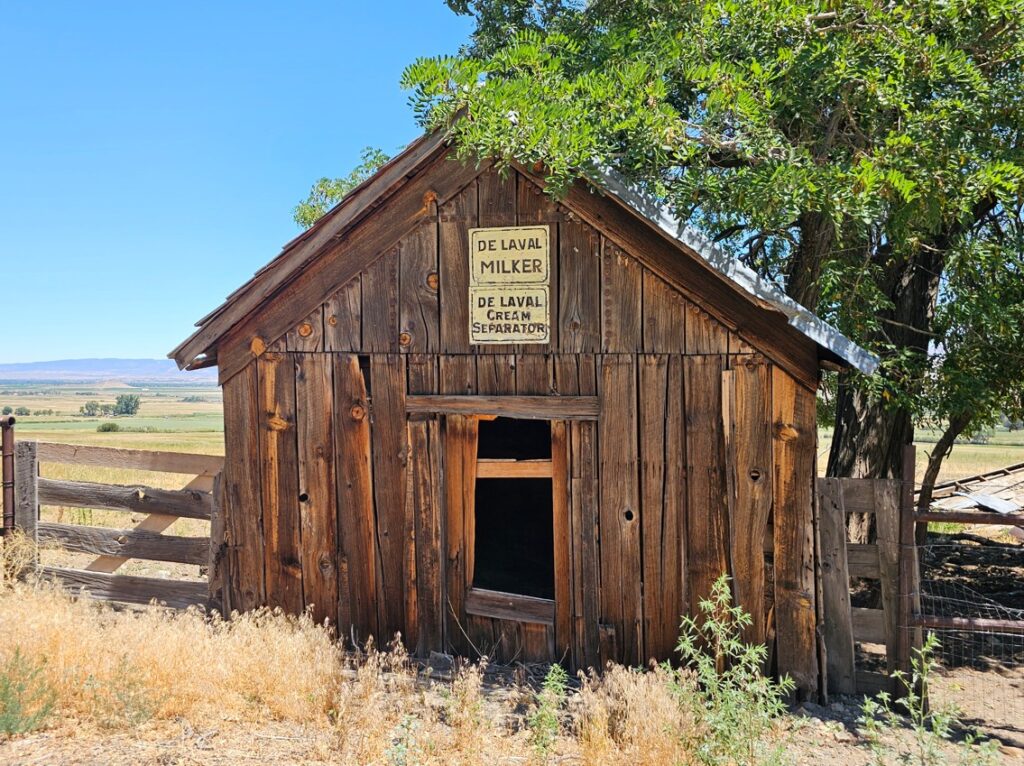
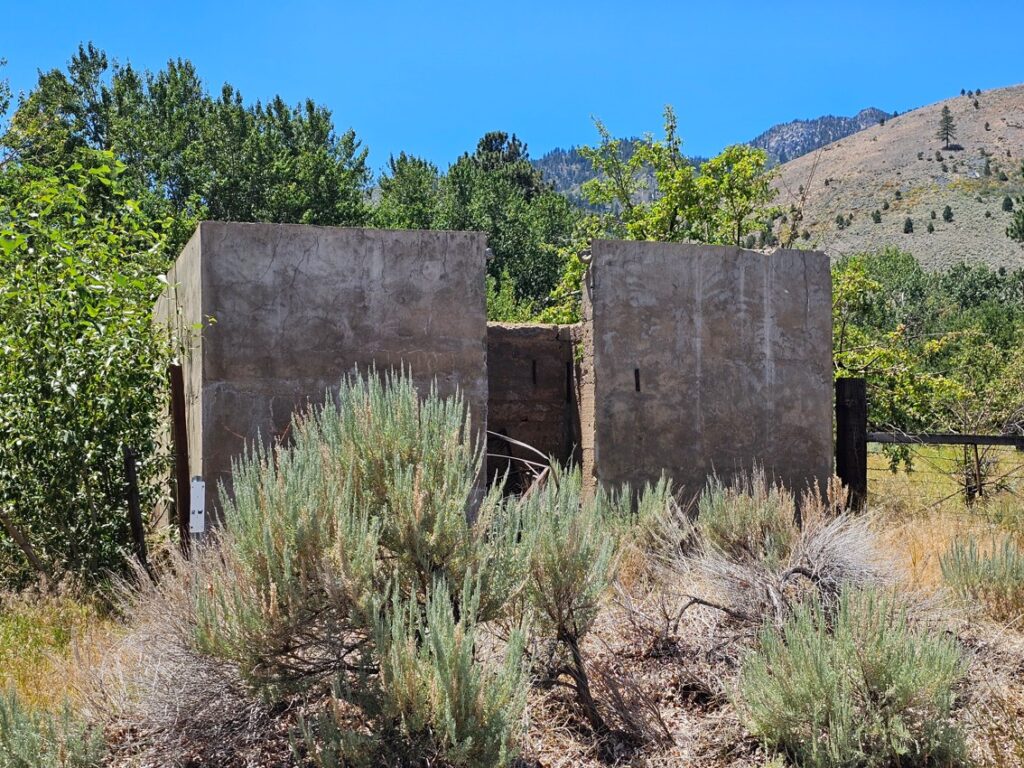
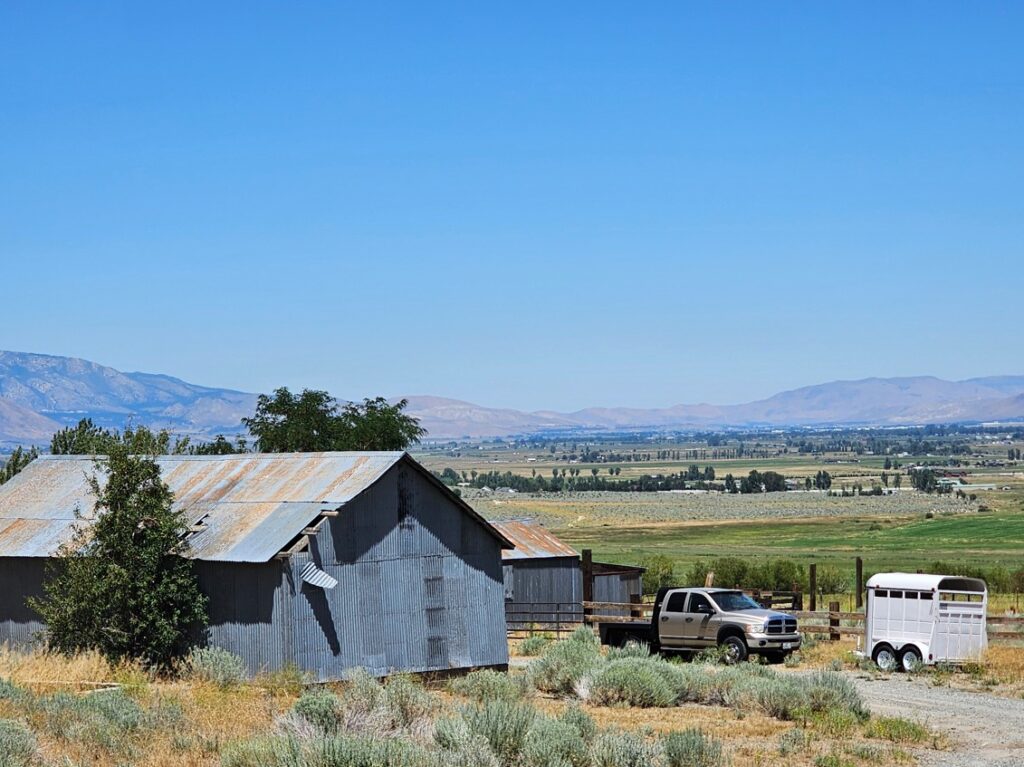
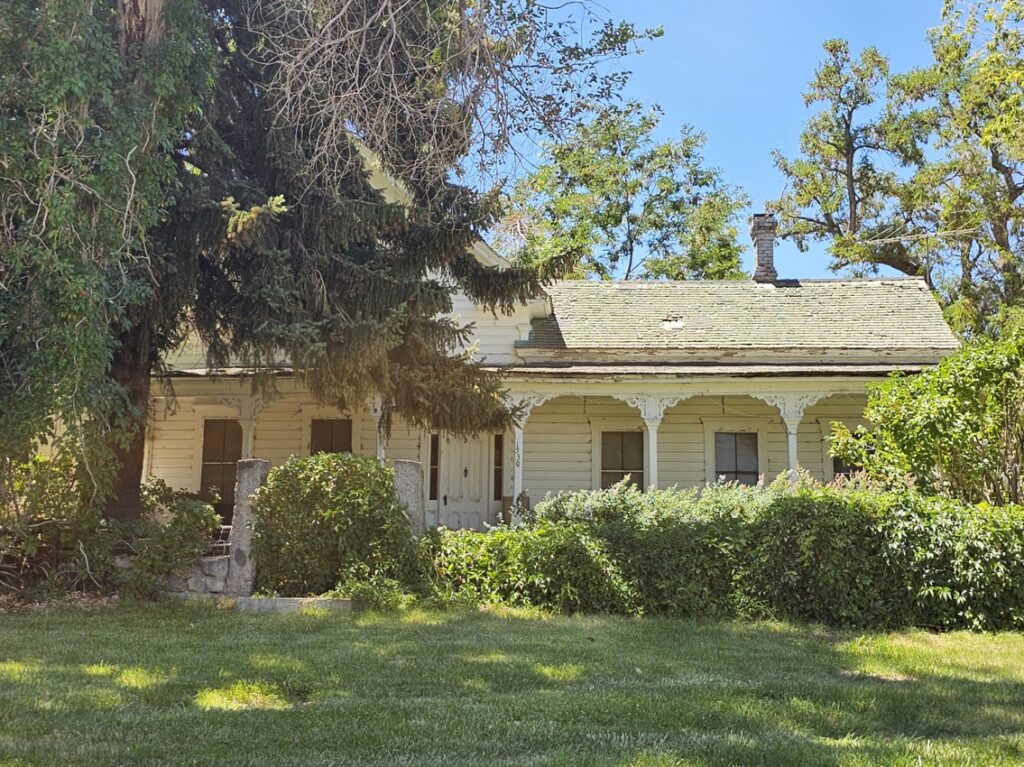
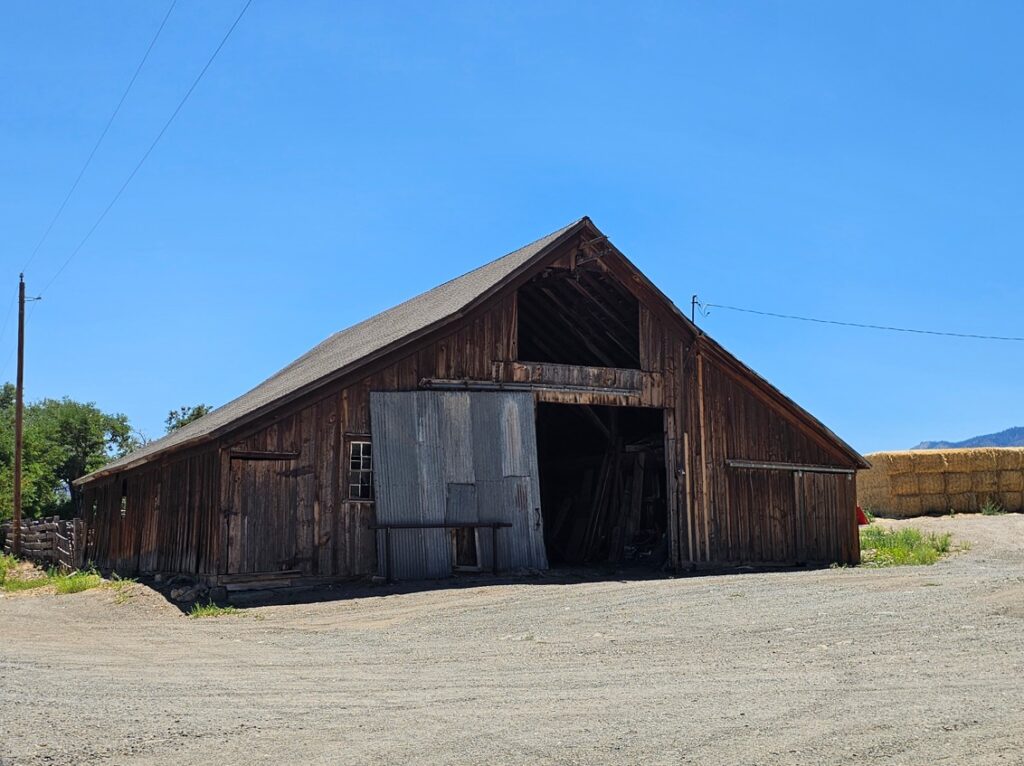
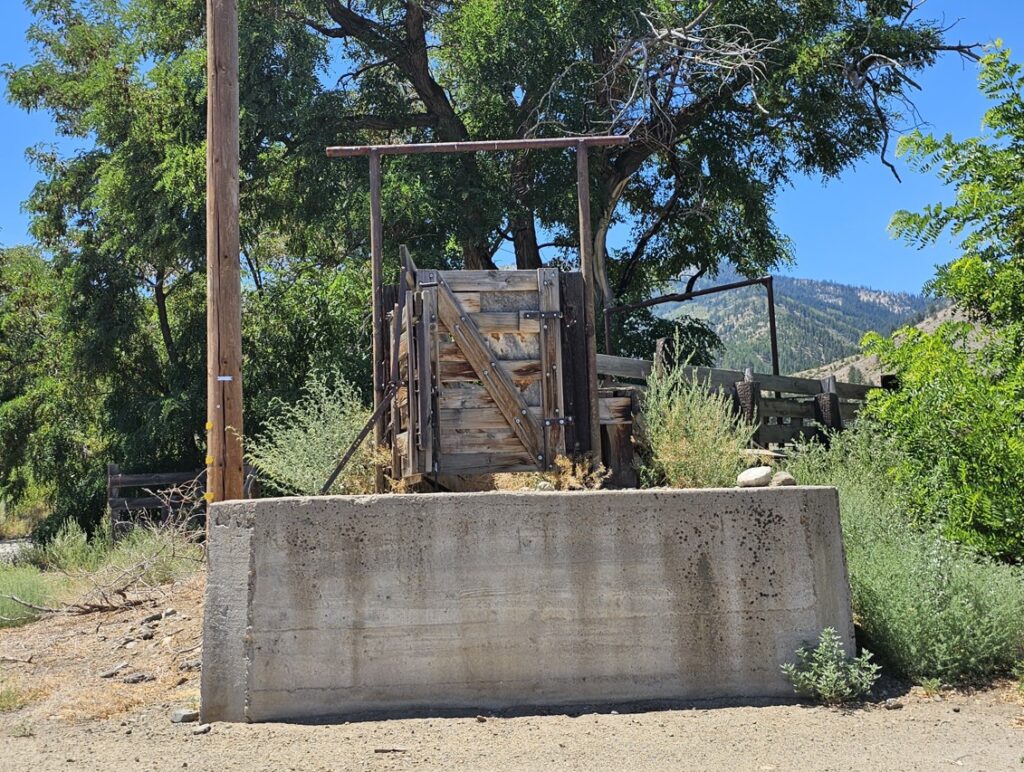
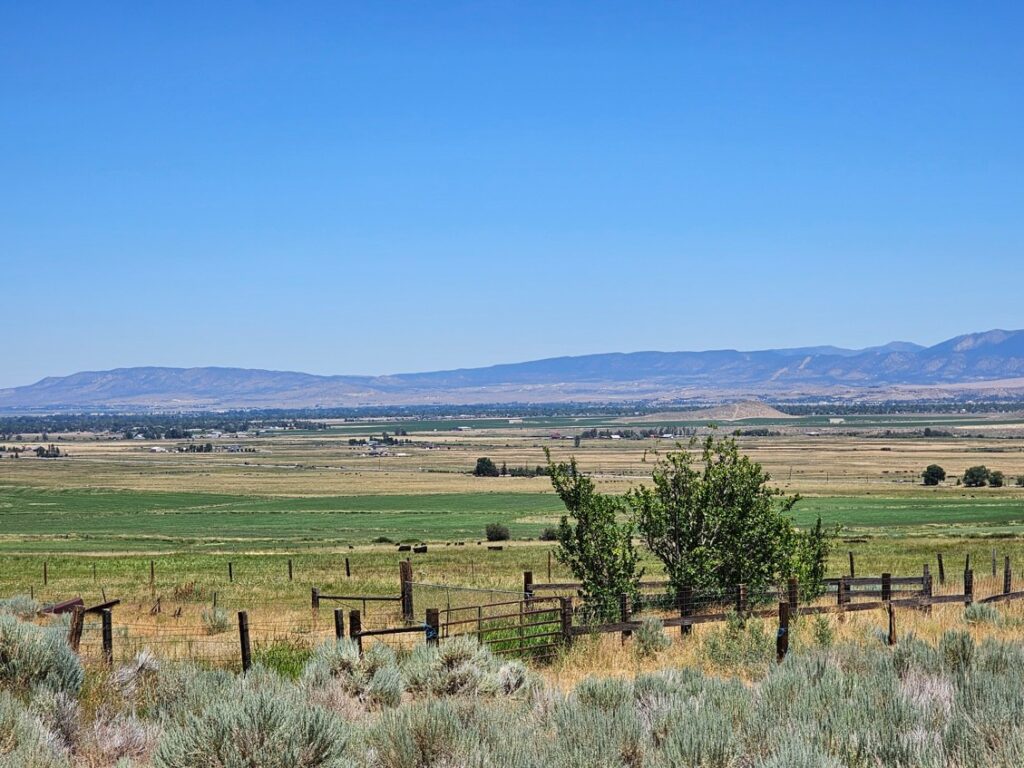
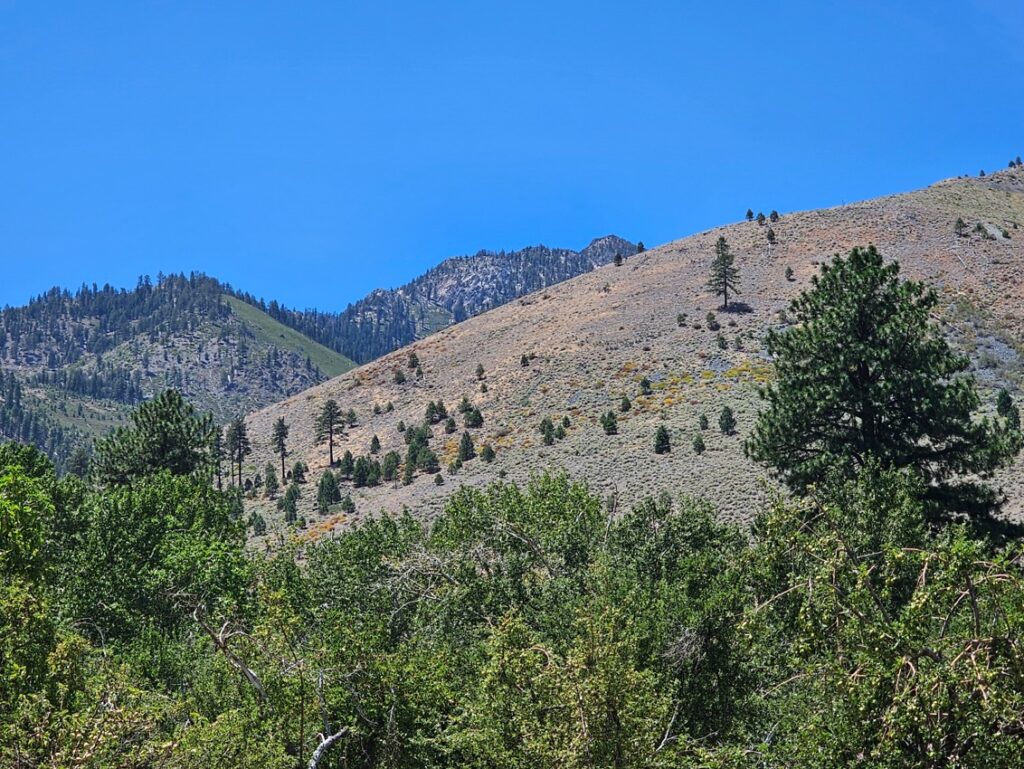
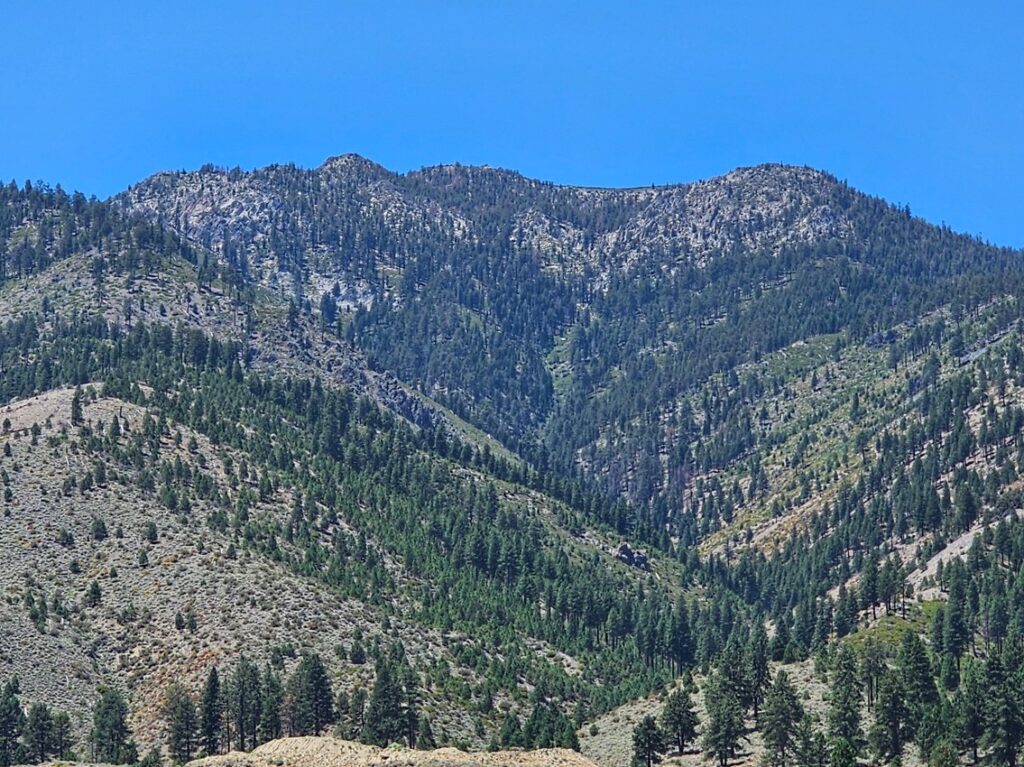
Fredericksburg Ditch (not a river)Milk HouseGansberg Seperator HouseRanch in FredericksburgBruns Home 1850sLivery Stable 1850sRamp.View of Fredericksburg Canyon looking westwardFredericksburg CemeteryMountains to the west of Fredericksburg.(L-R): Freel Peak (10,886 ft), Jobs Sister (10,823 ft), Jobs Peak (10,638 ft)
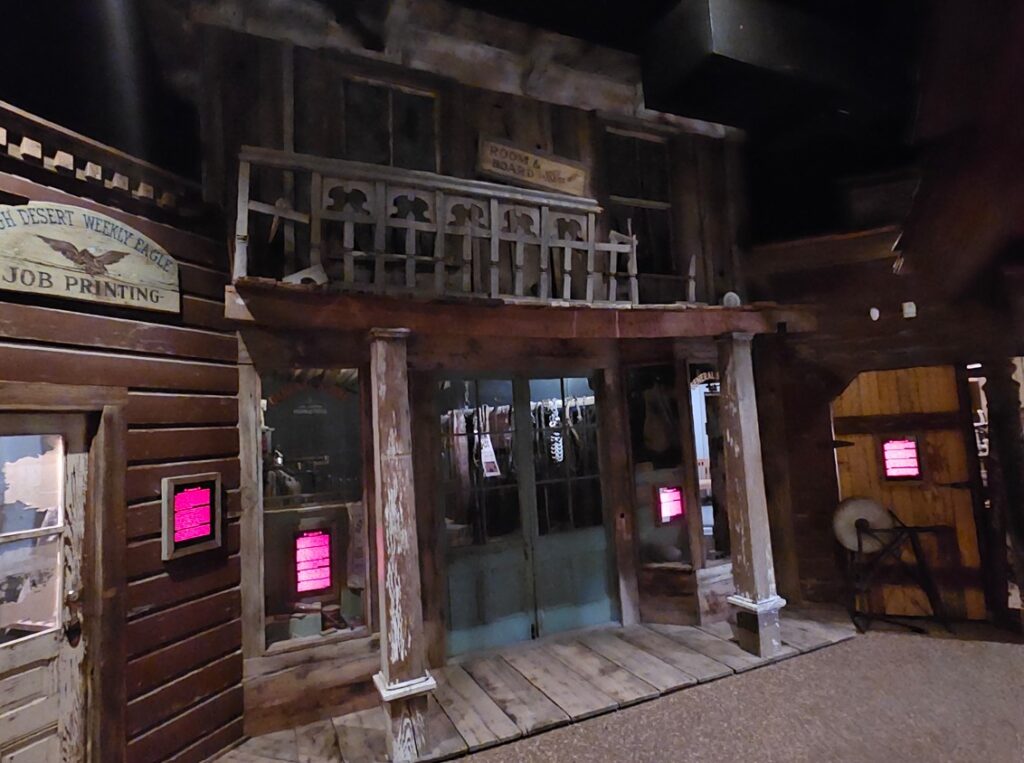
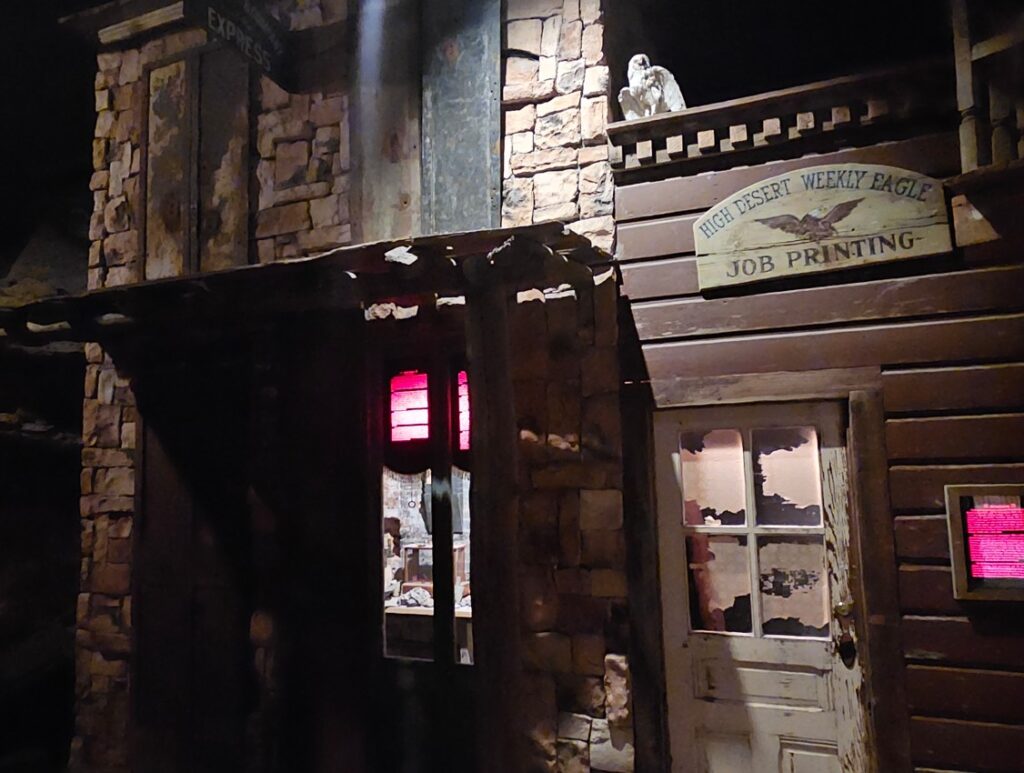
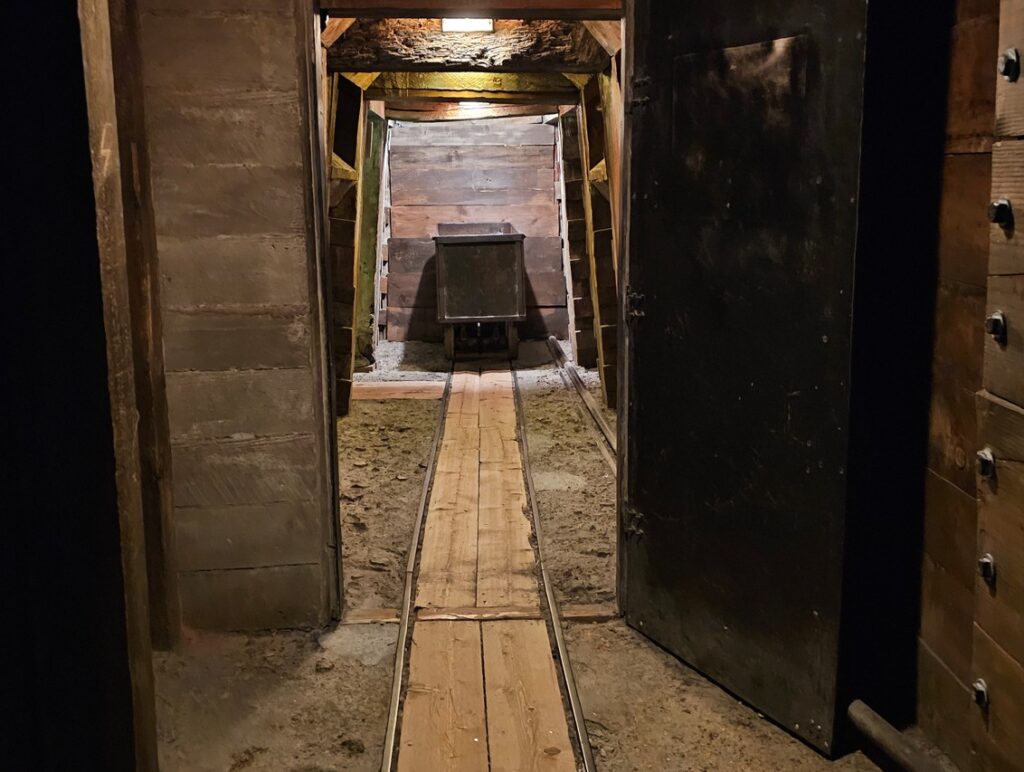
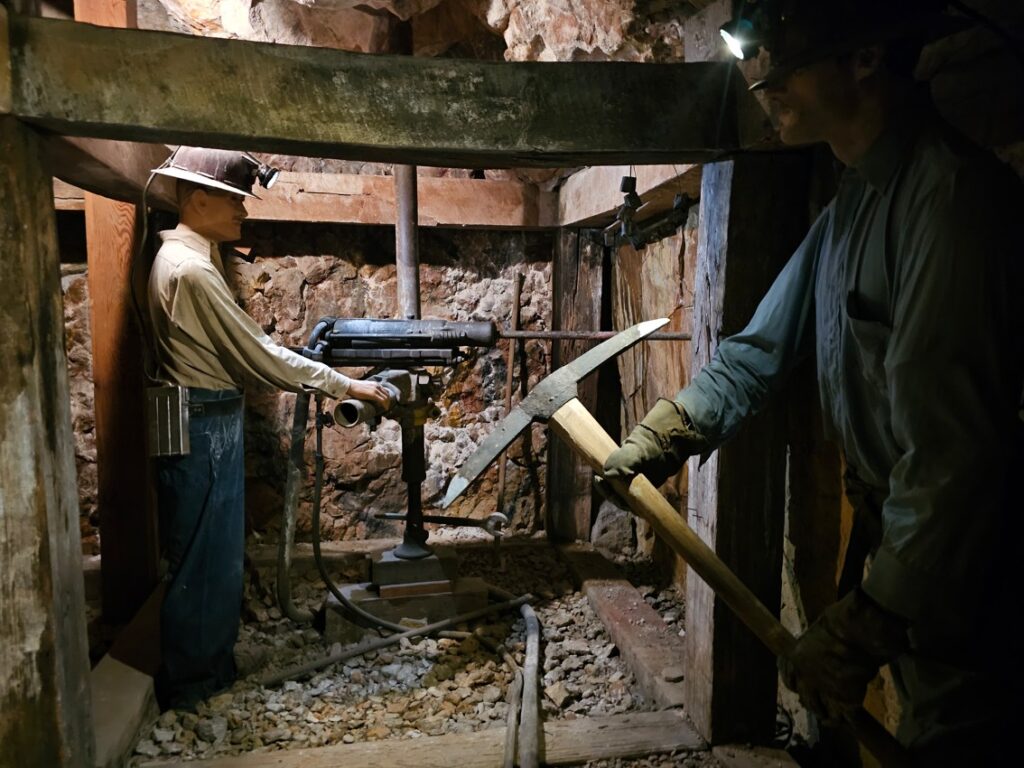
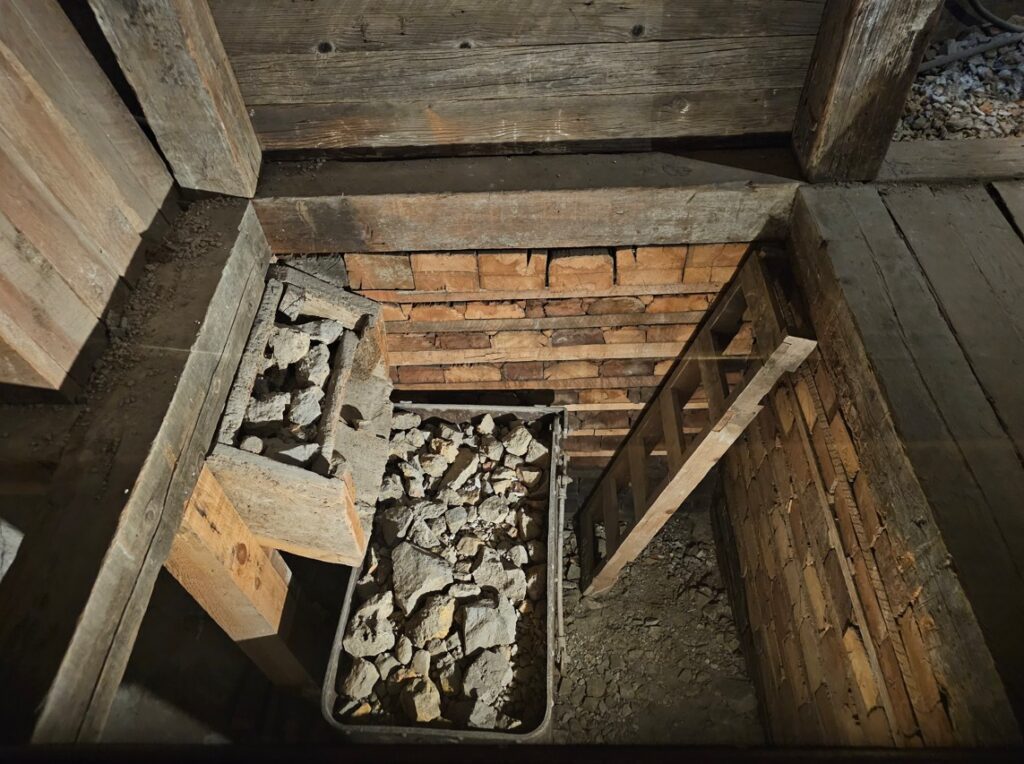
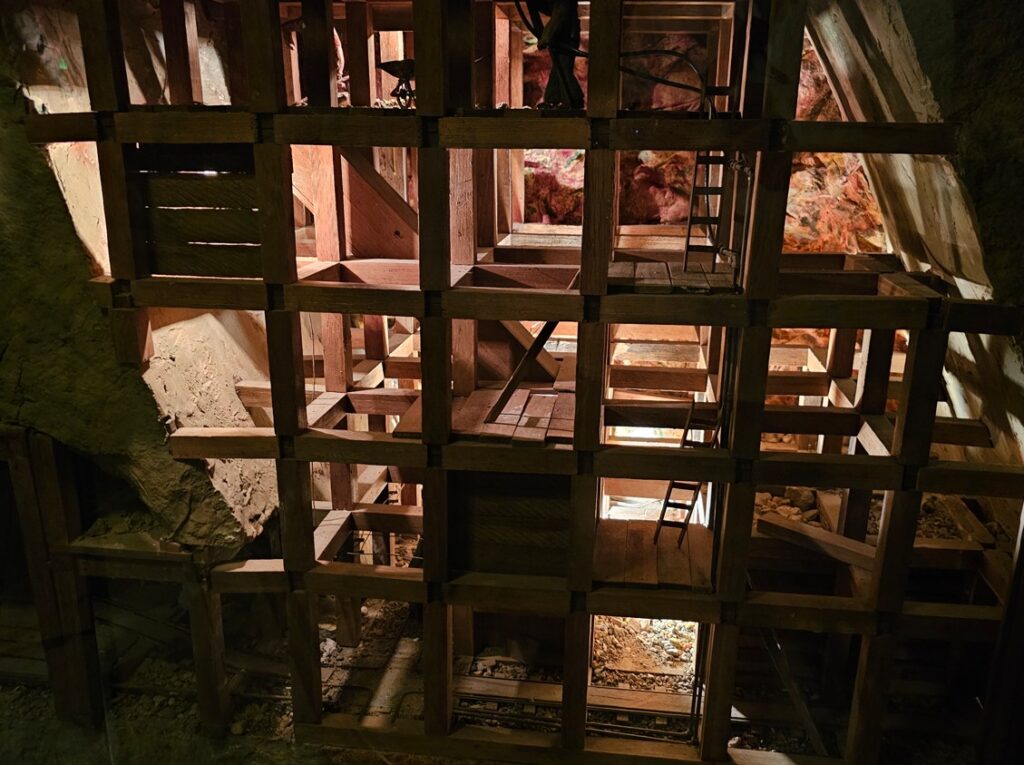
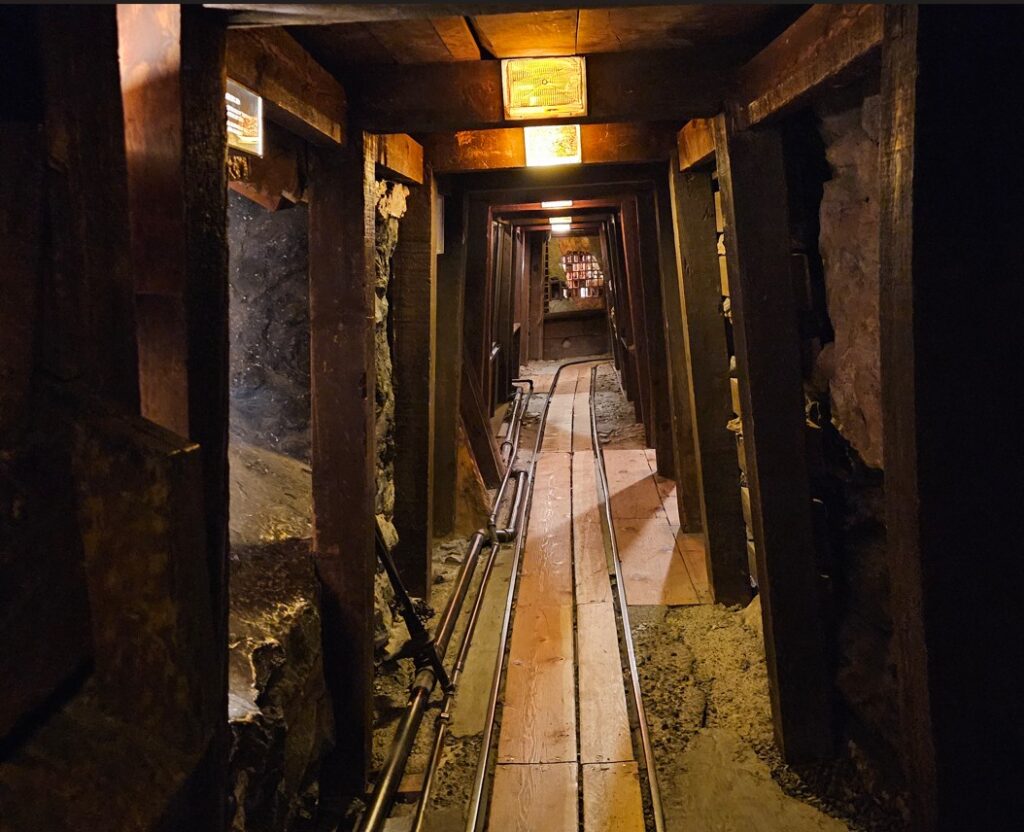
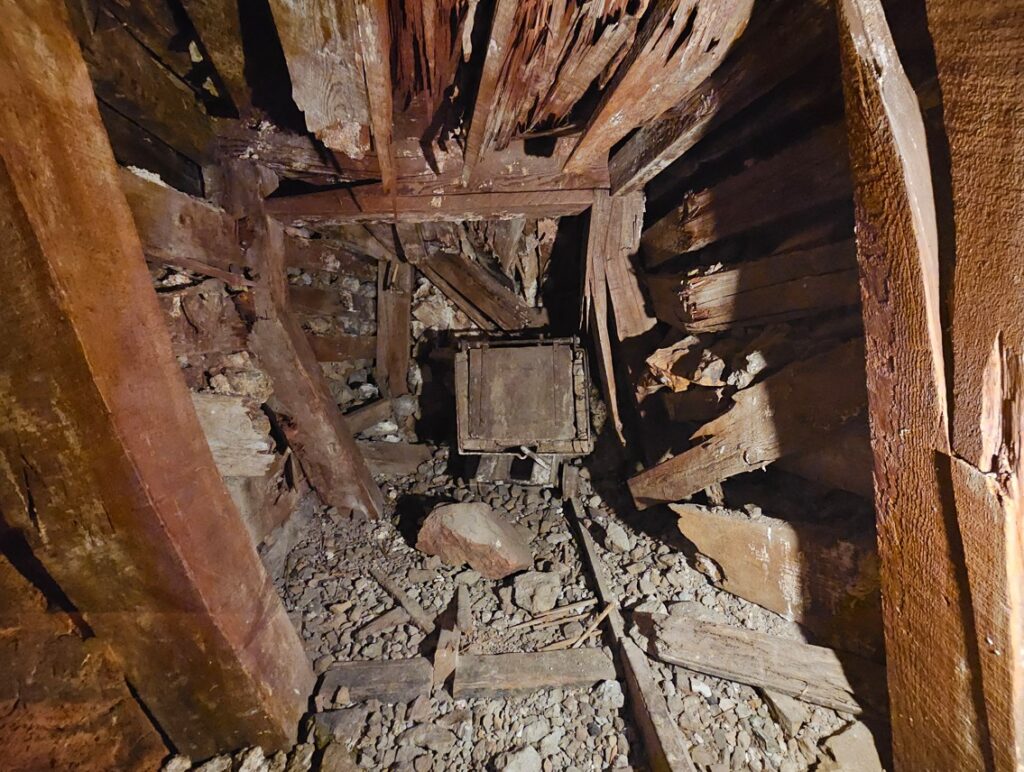
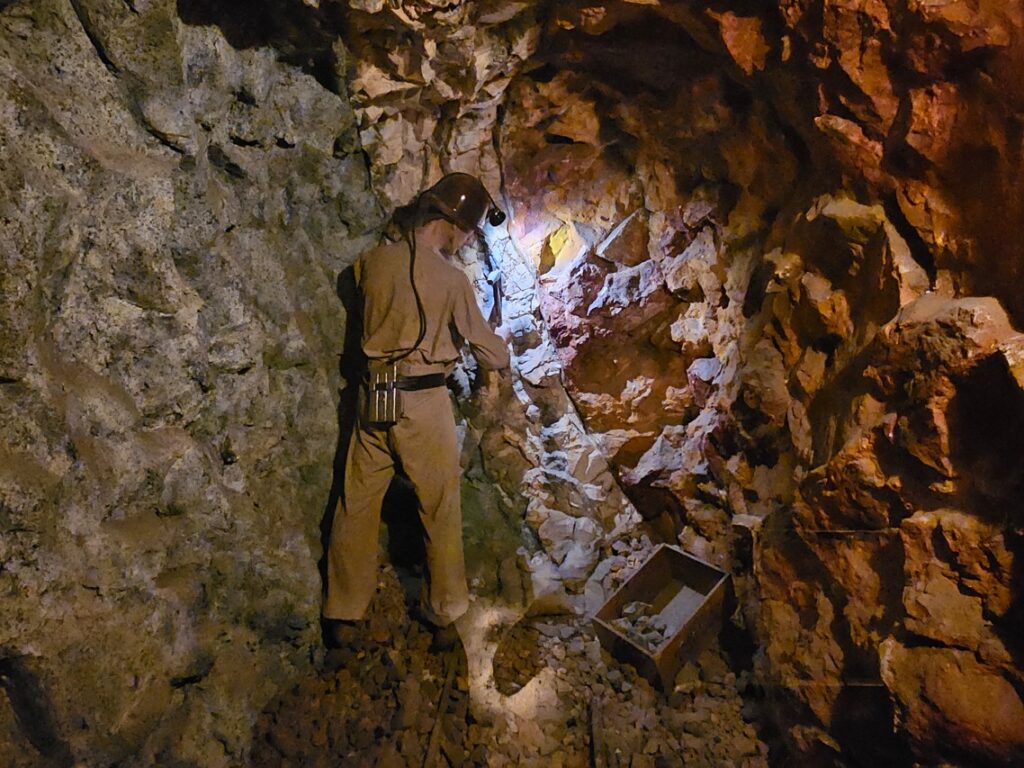
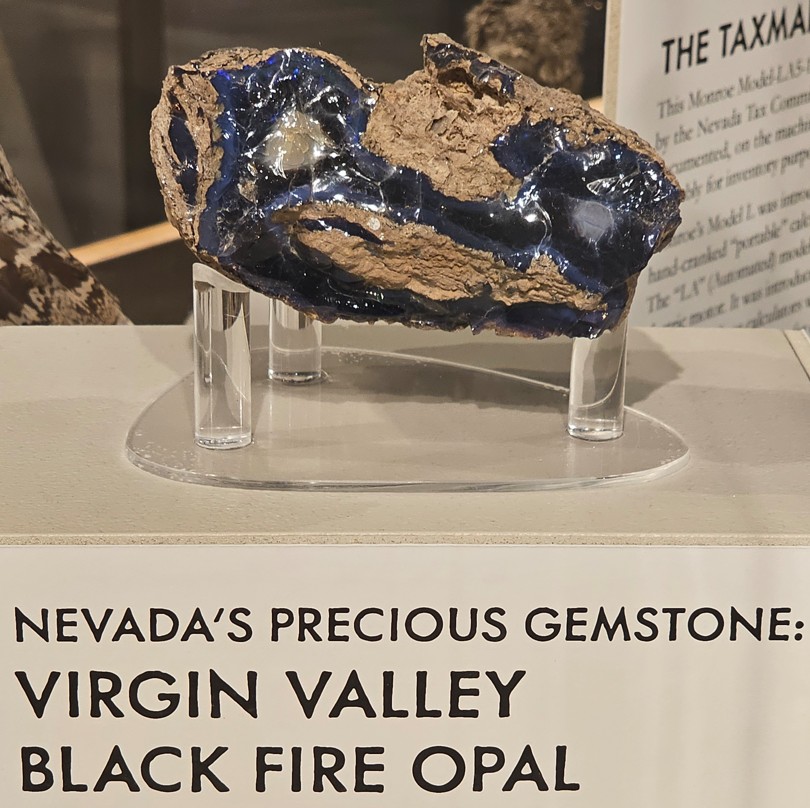
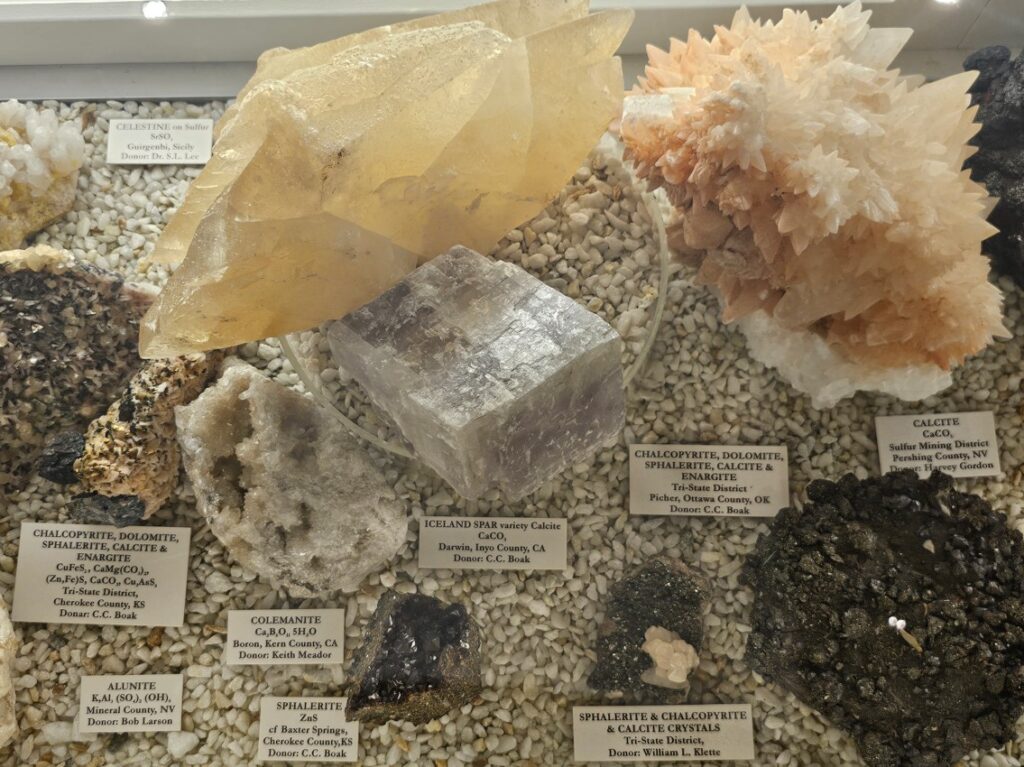
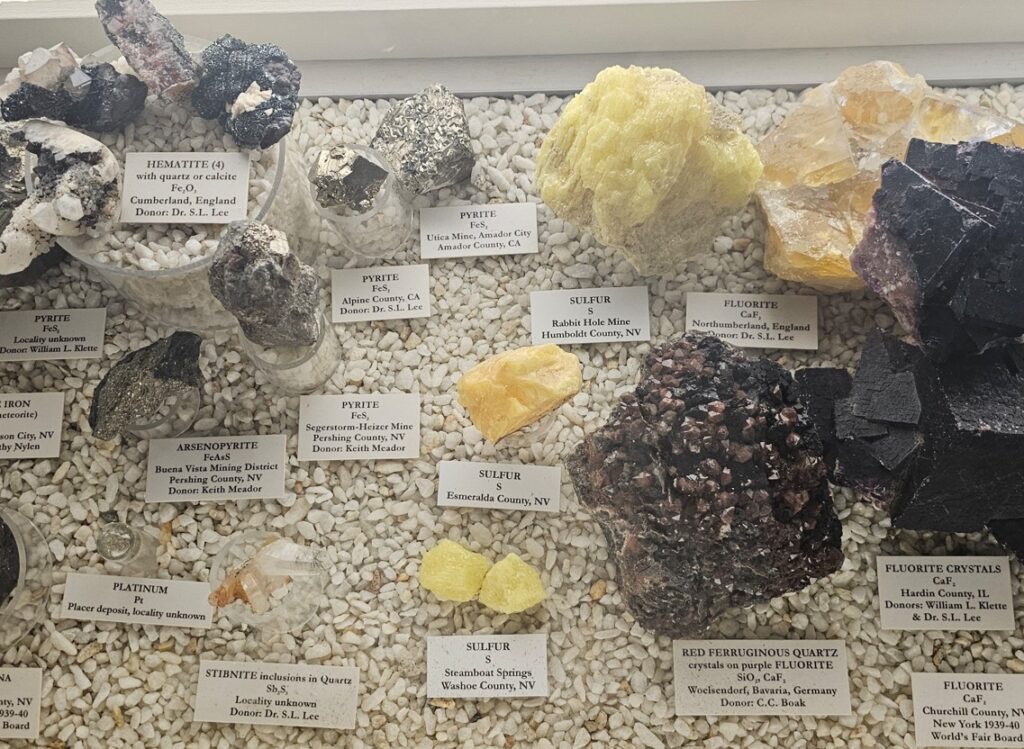
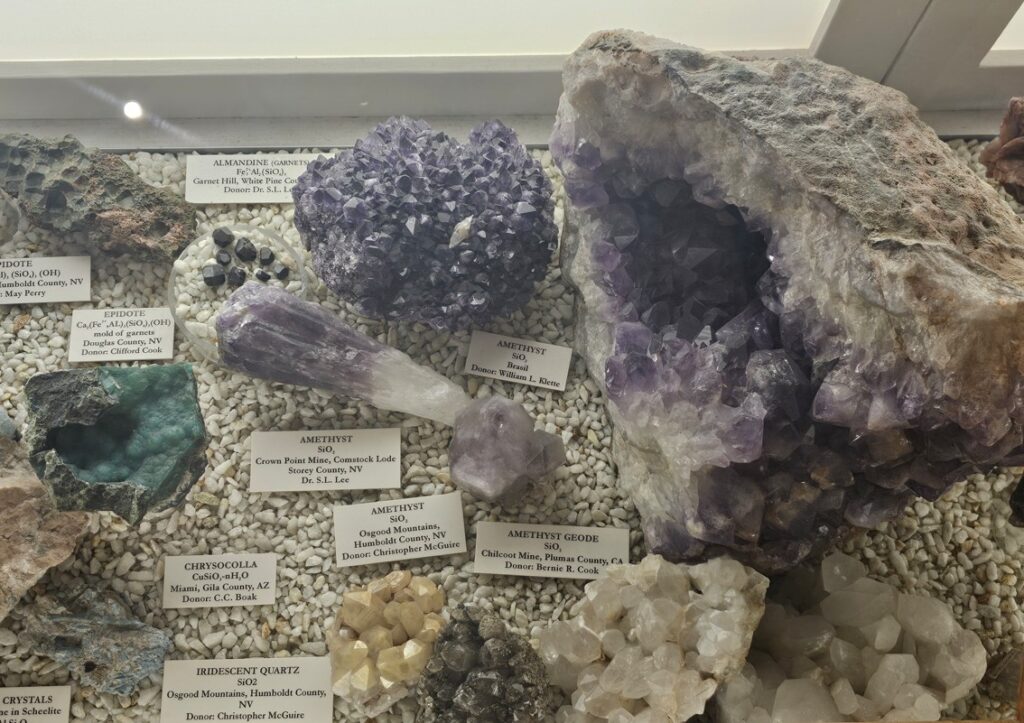
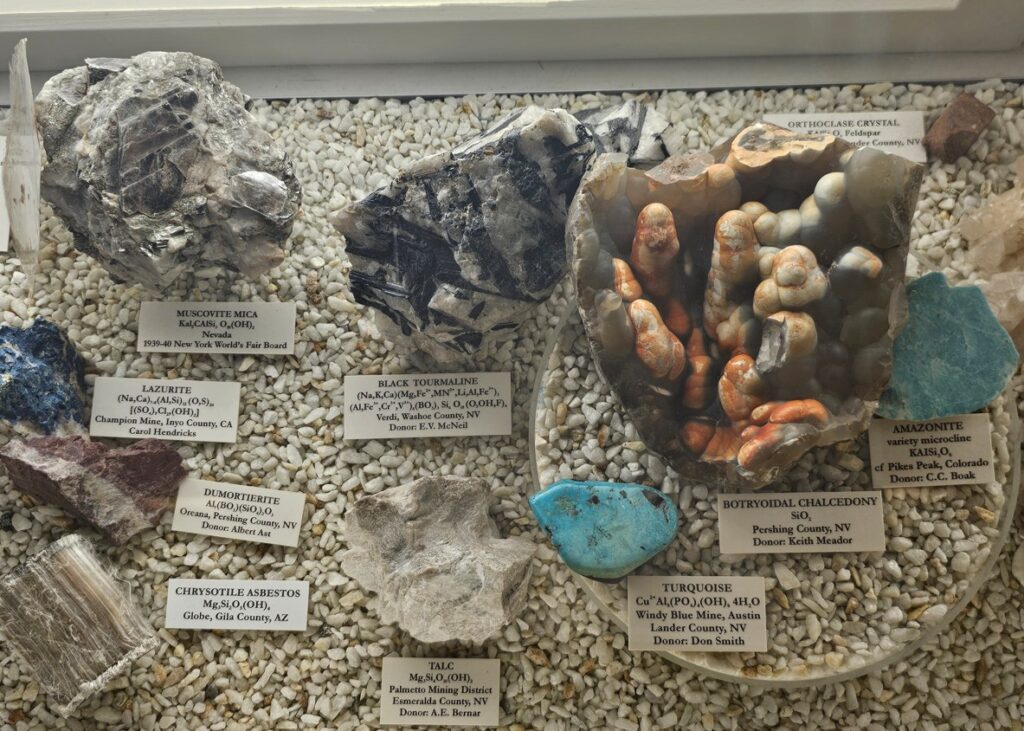
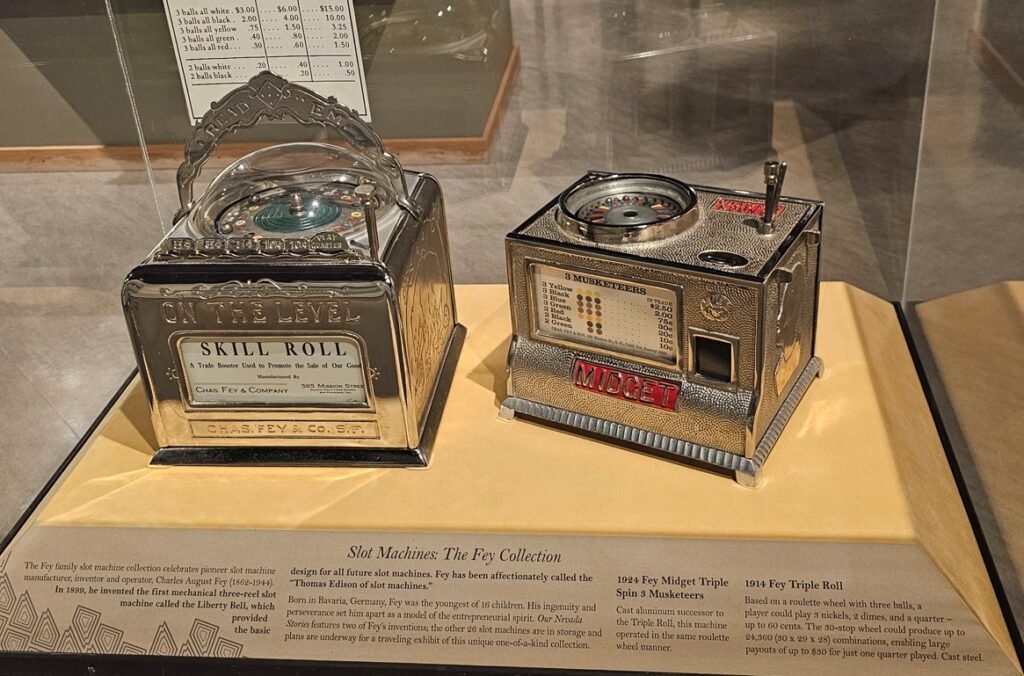
The Nevada State Museum is located on the site of the original Carson City Mint. It is a pretty substantial museum. There is a ghost town and mining exhibit below the first floor, a fairly large exhibit on the Carson City Mint including many coins, silver items made from Nevada silver, minerals and wildlife.
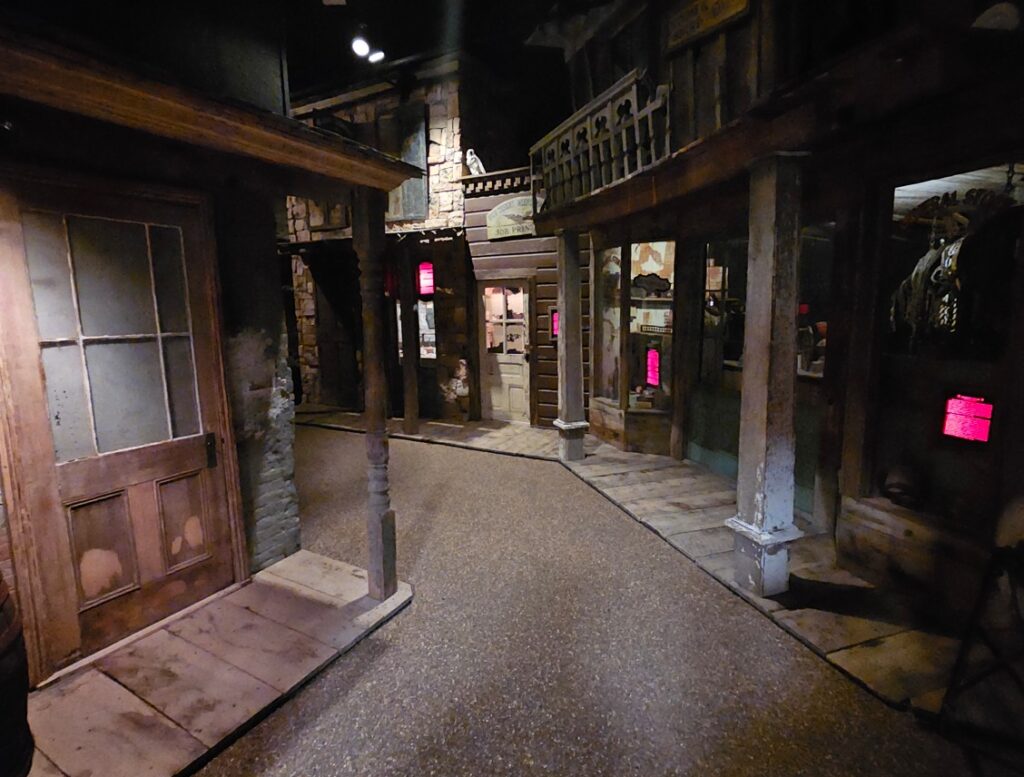
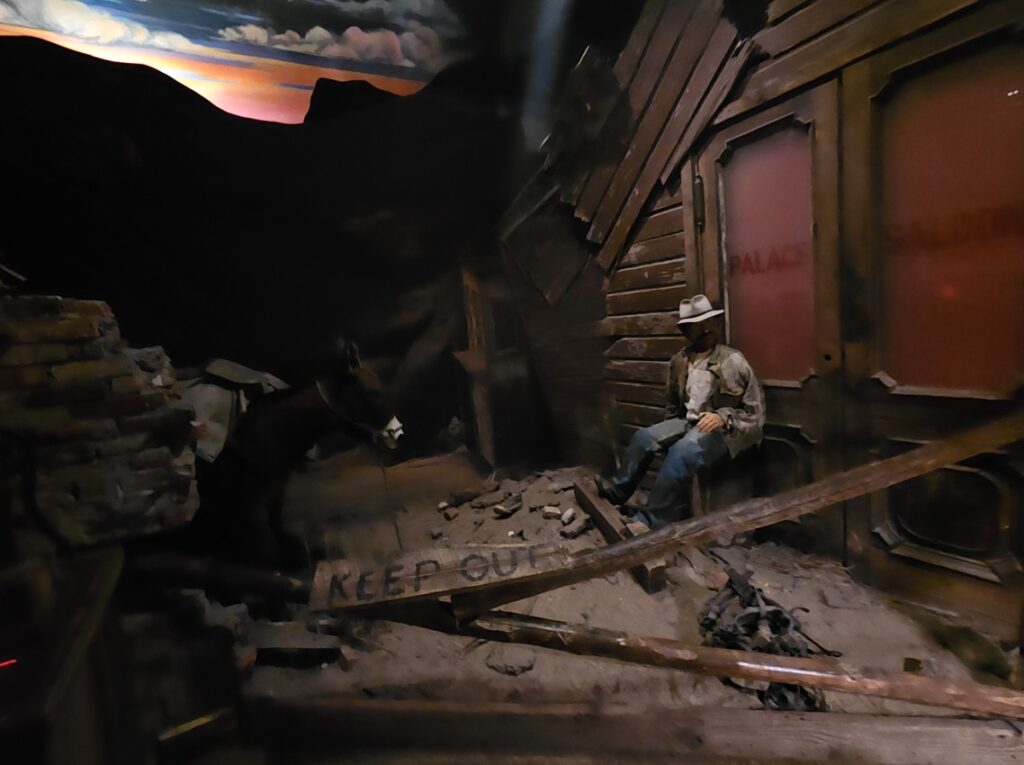
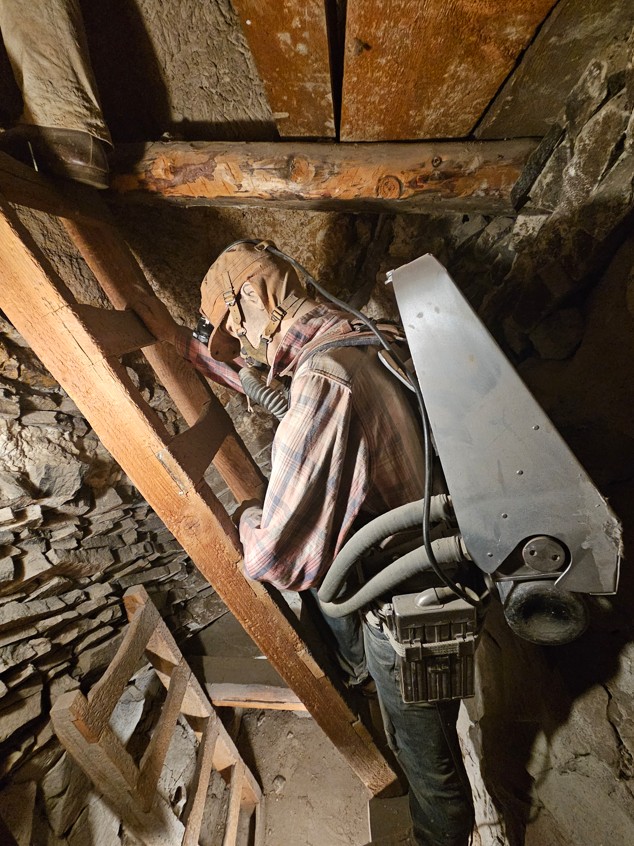
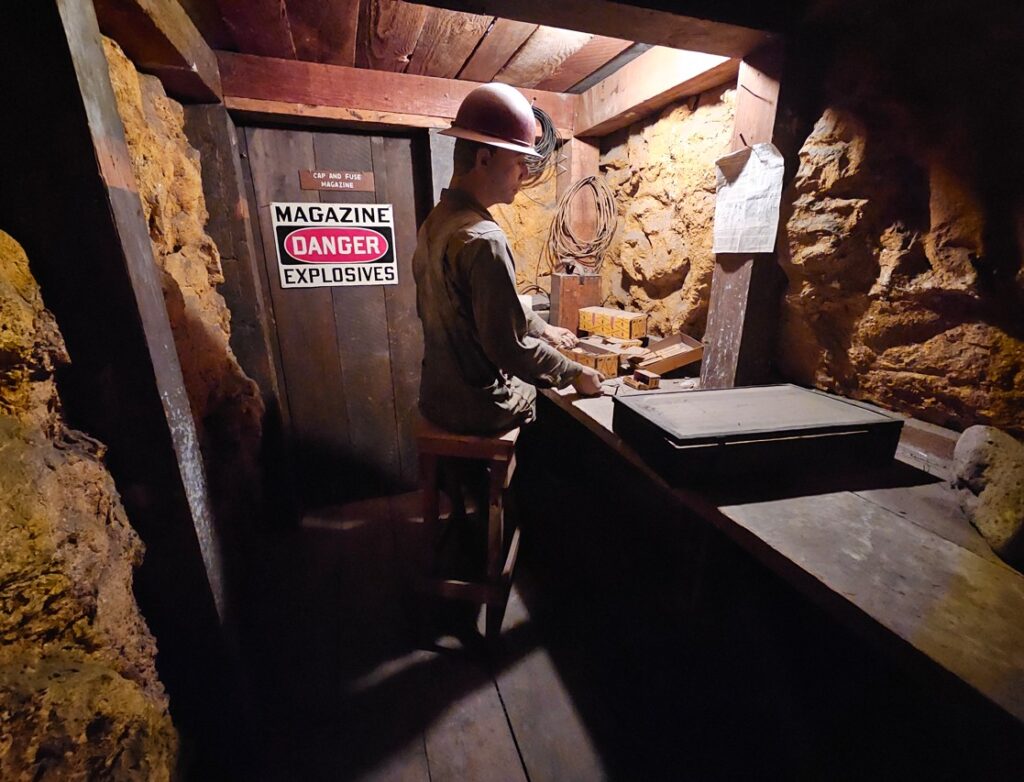
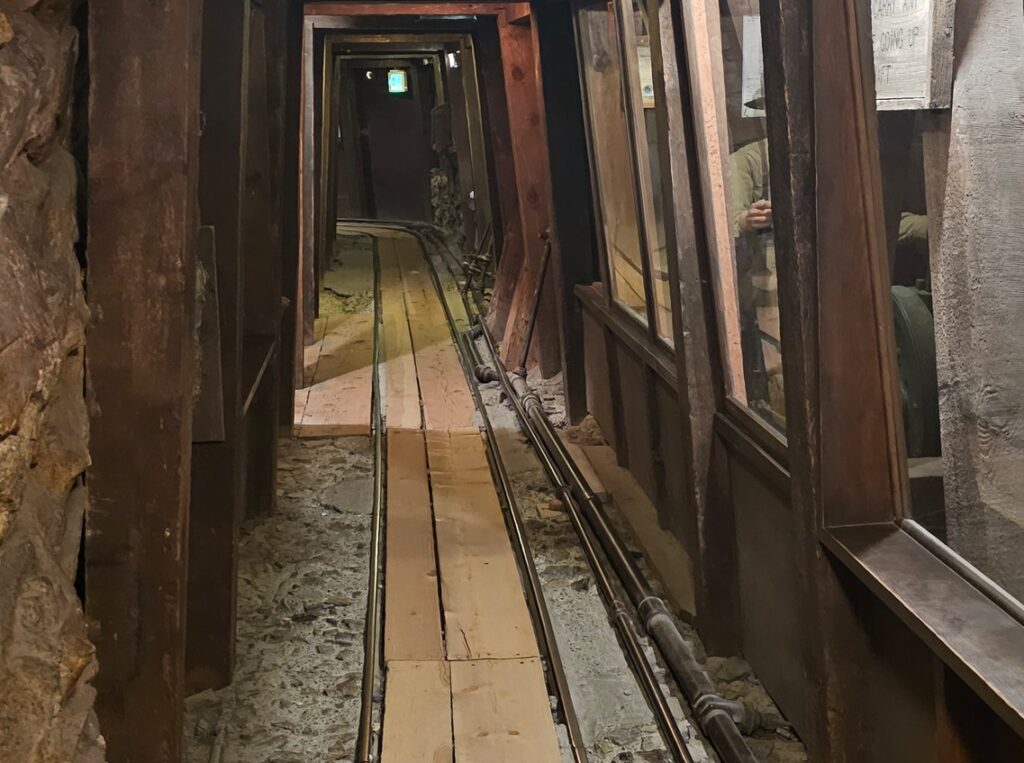
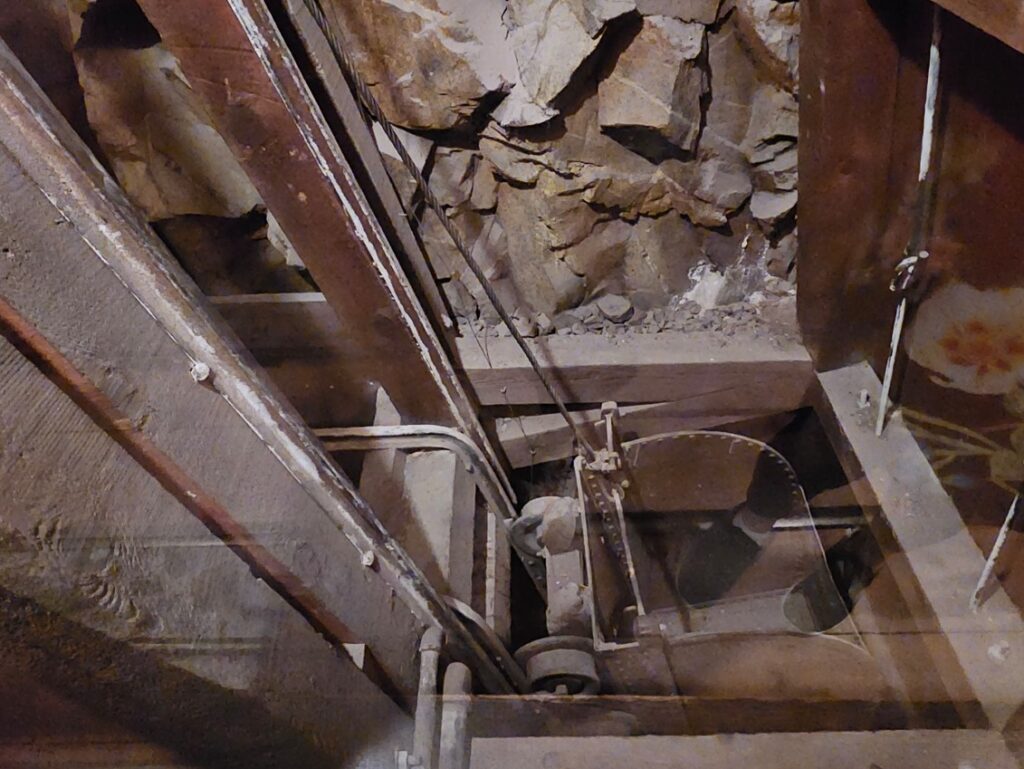
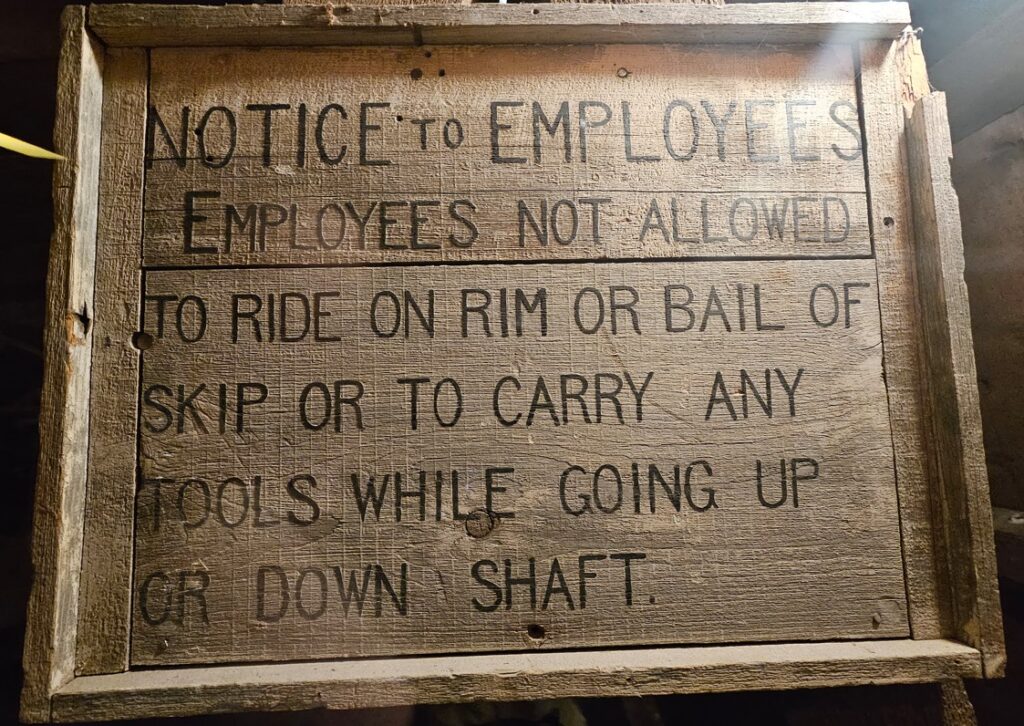
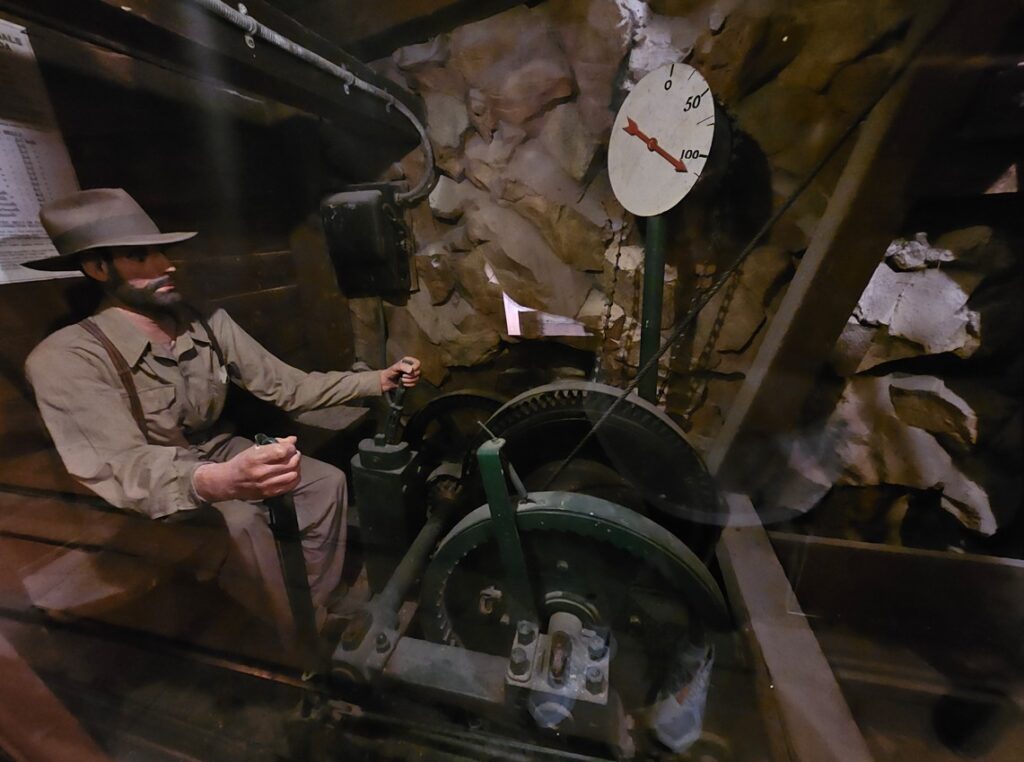
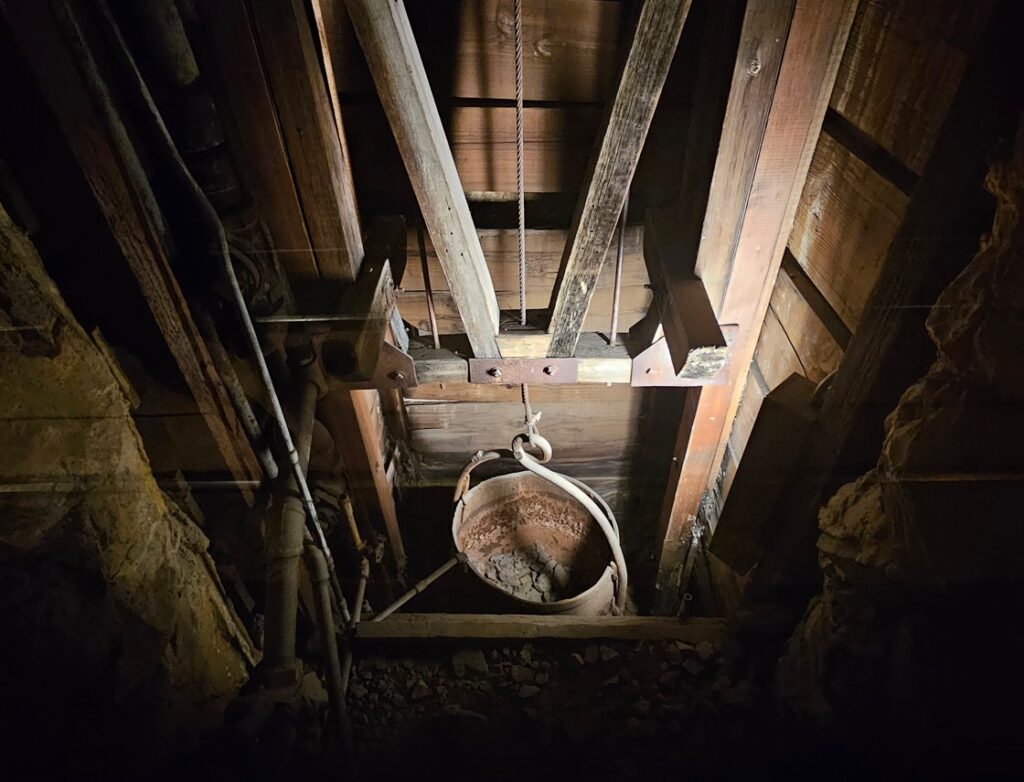
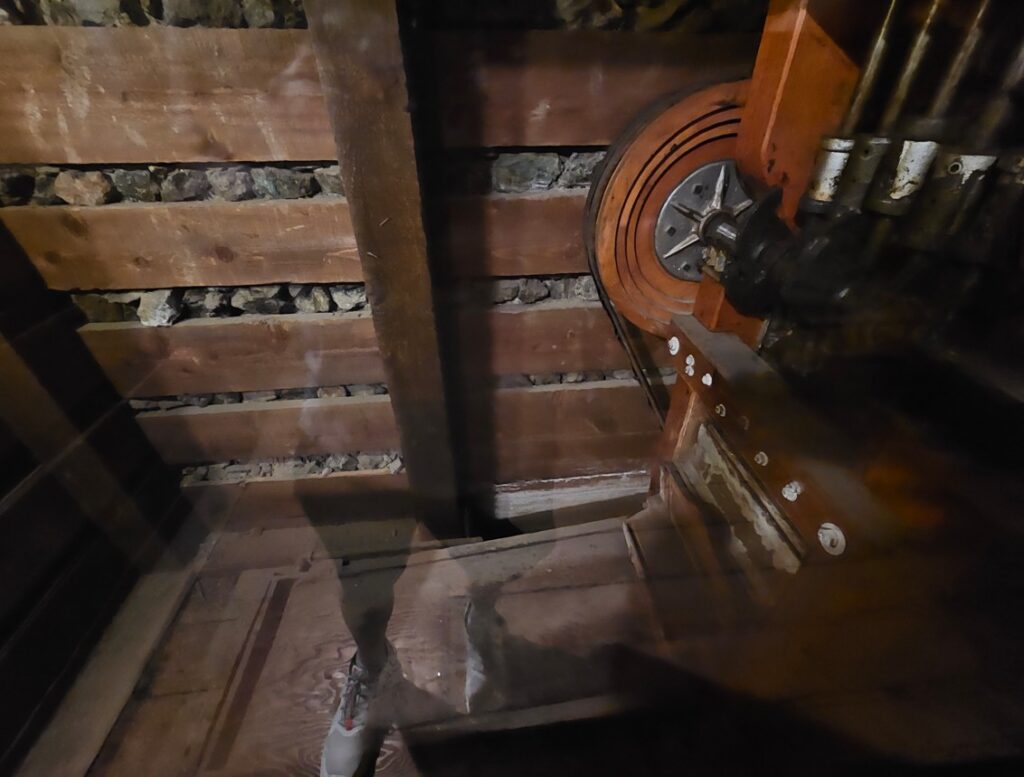
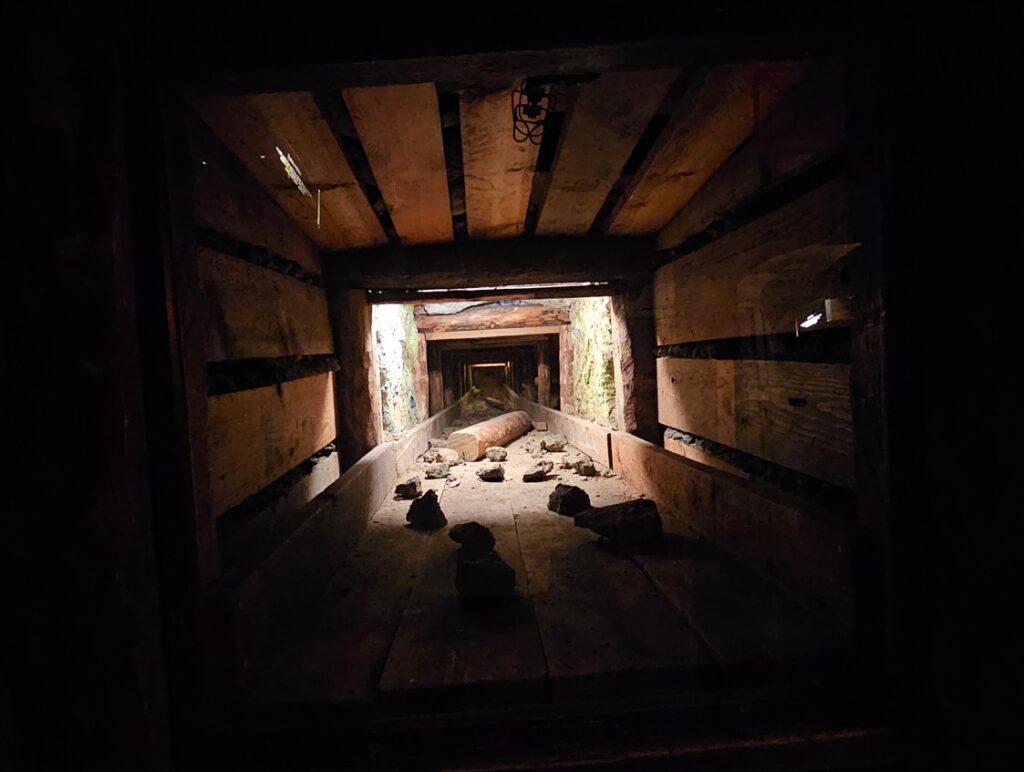
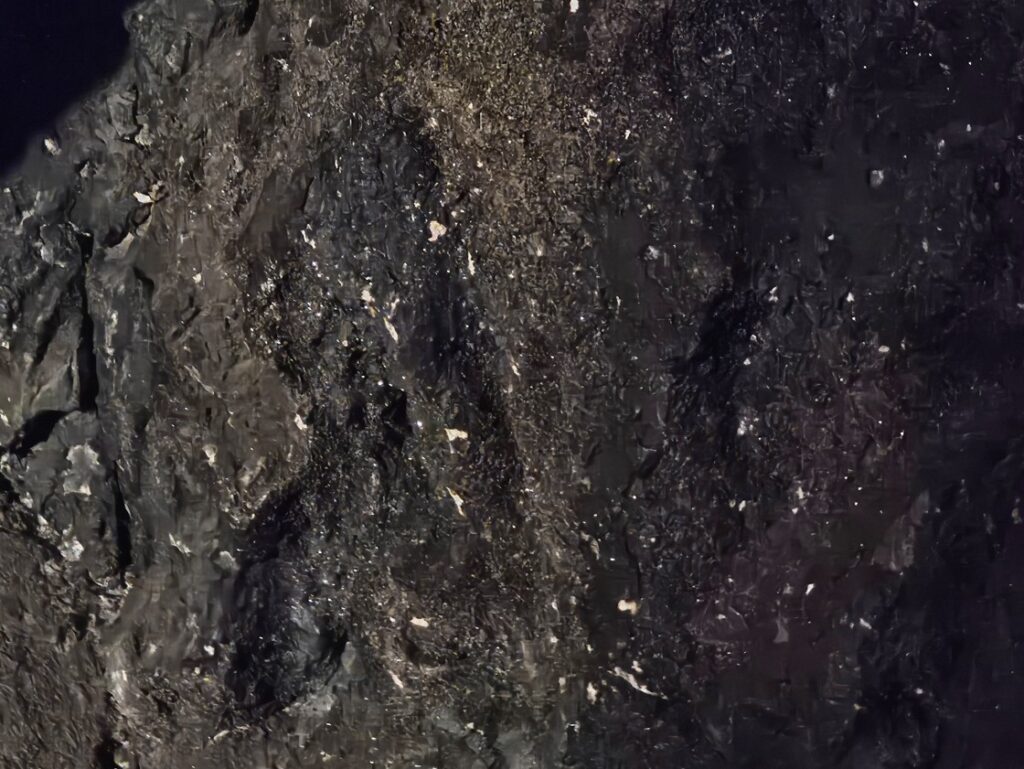
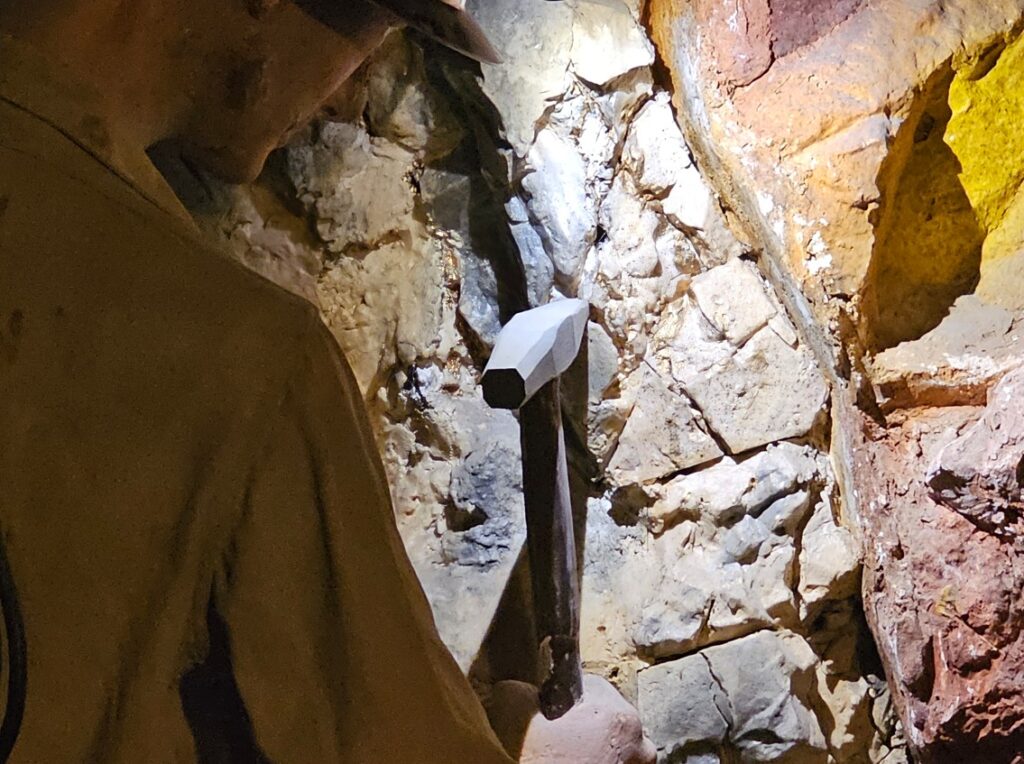
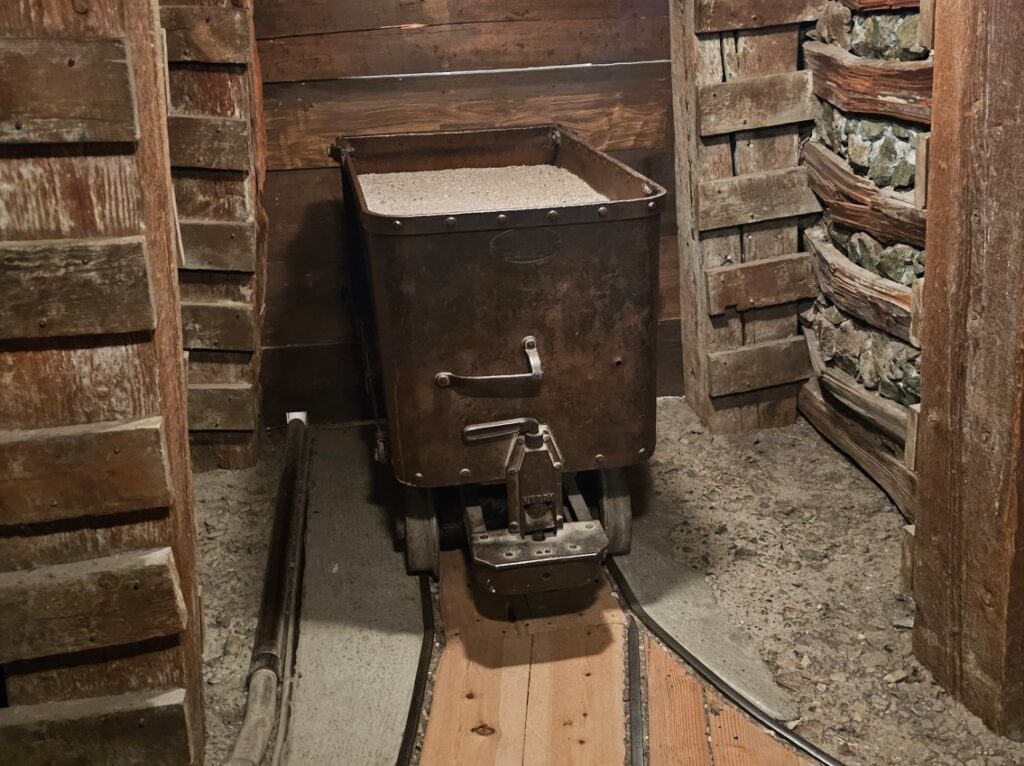
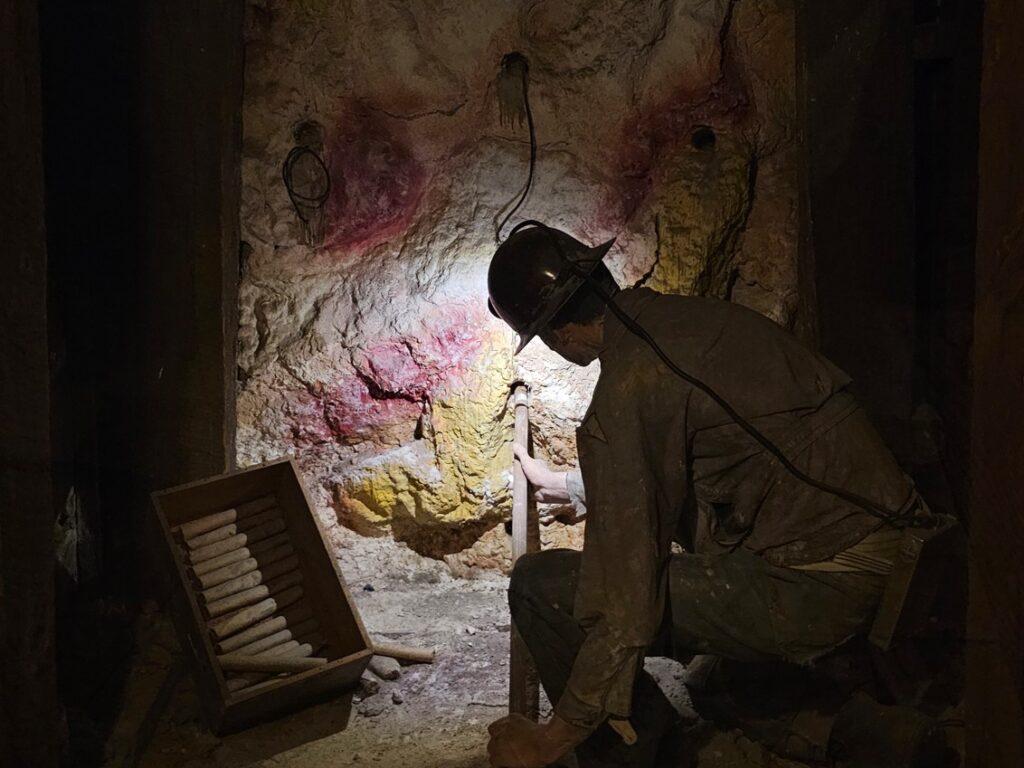
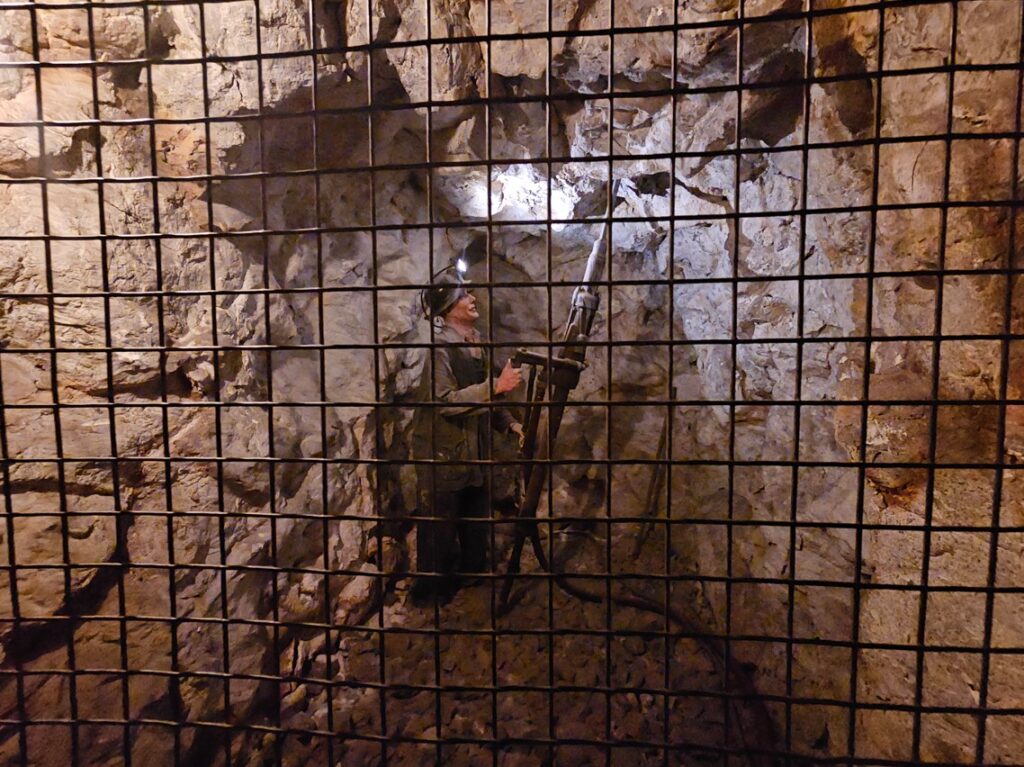
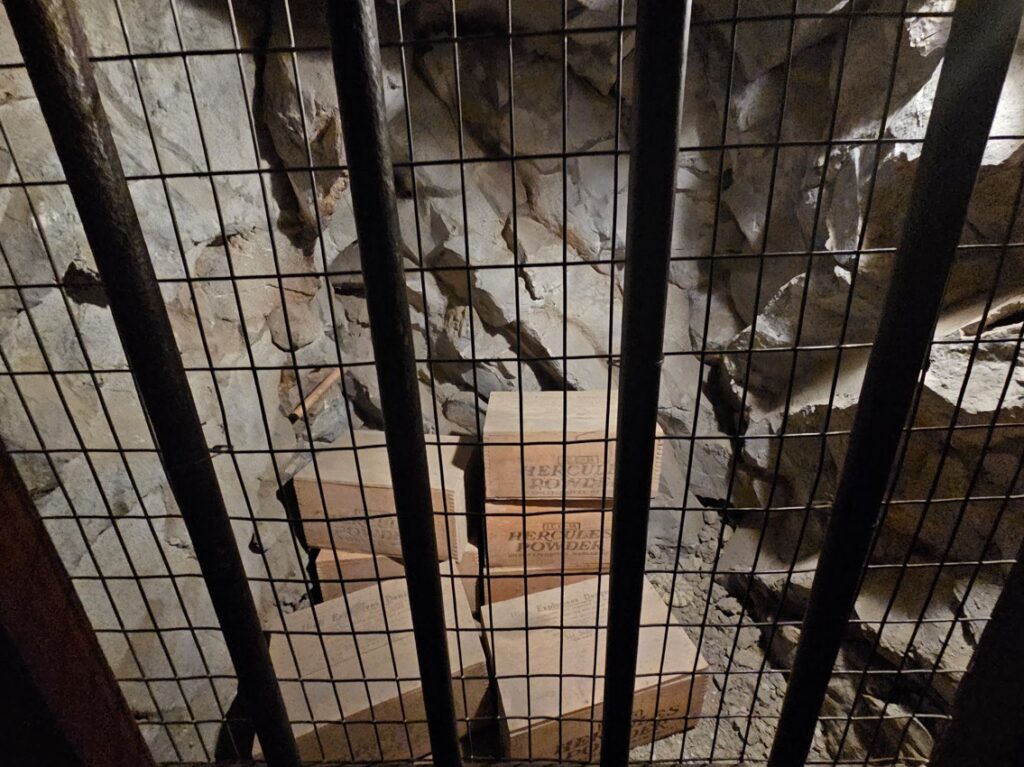
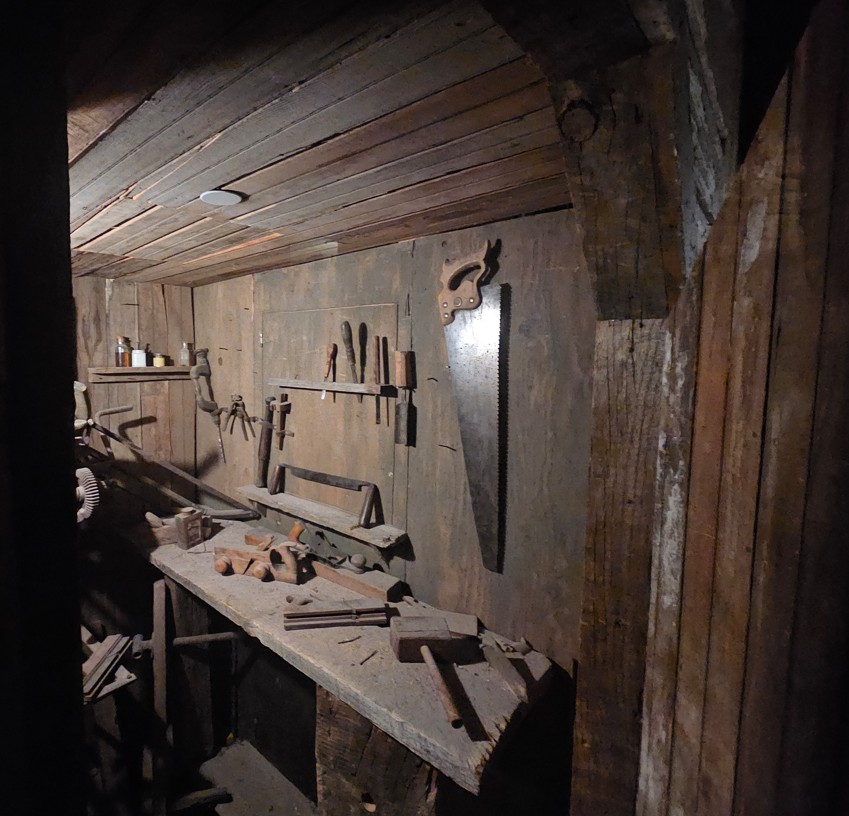
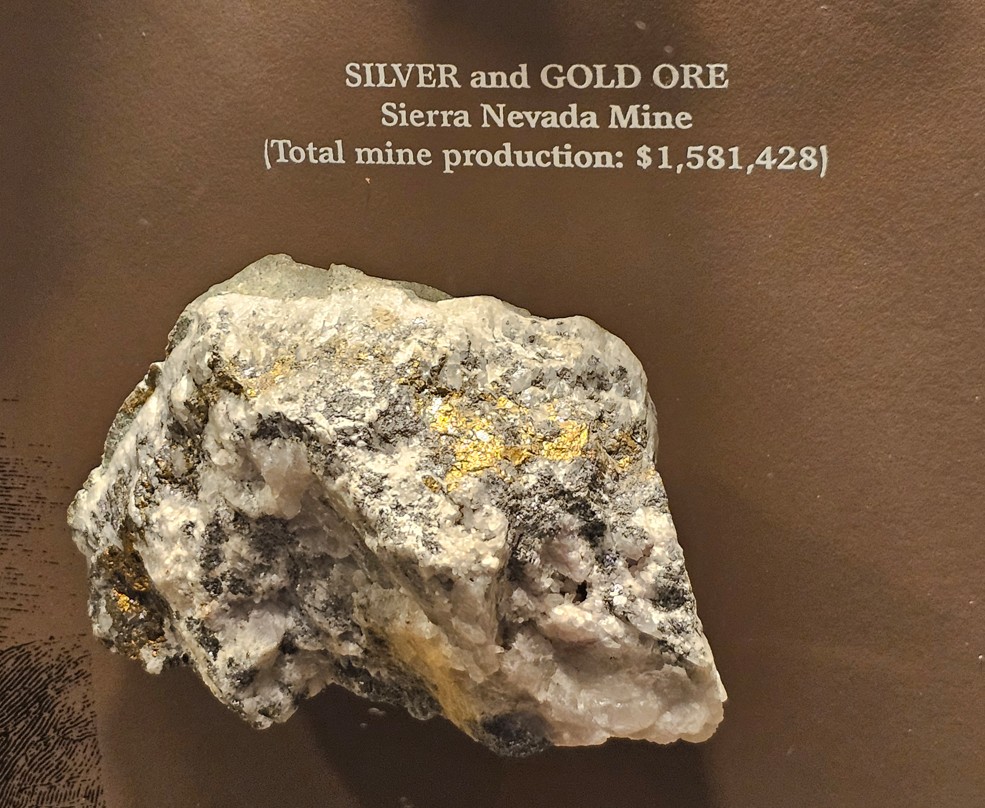
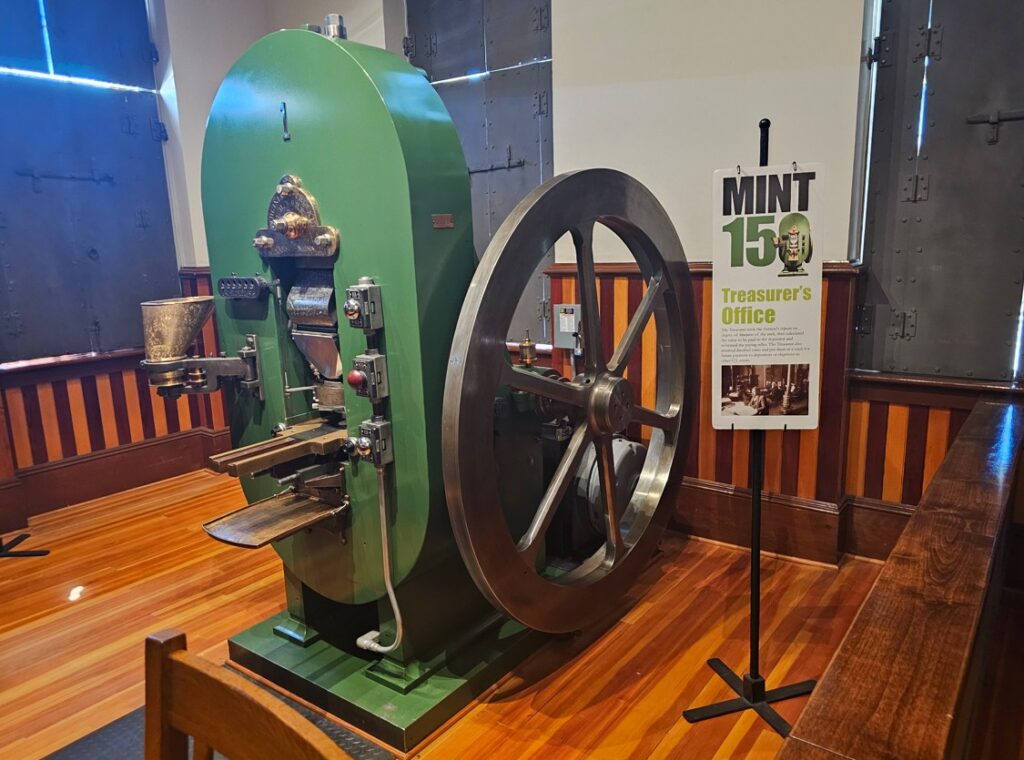
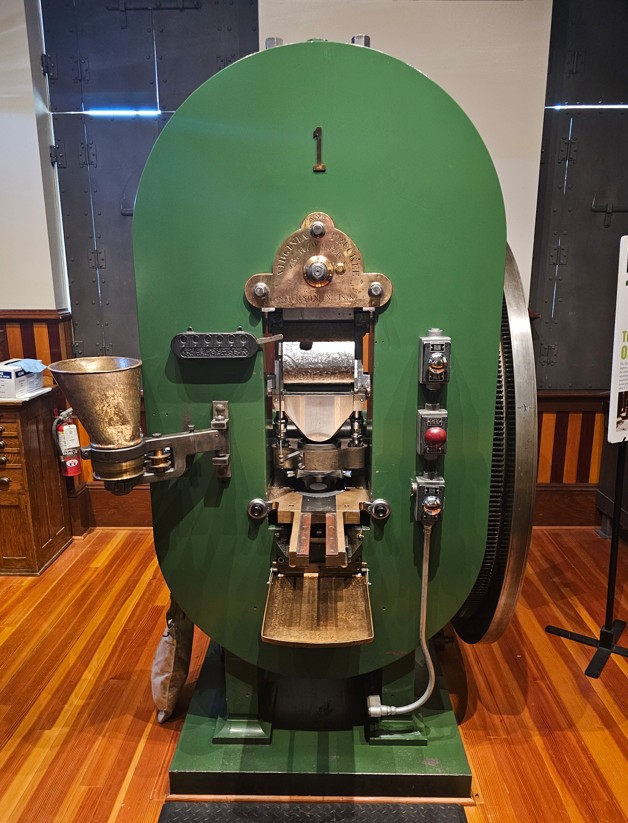
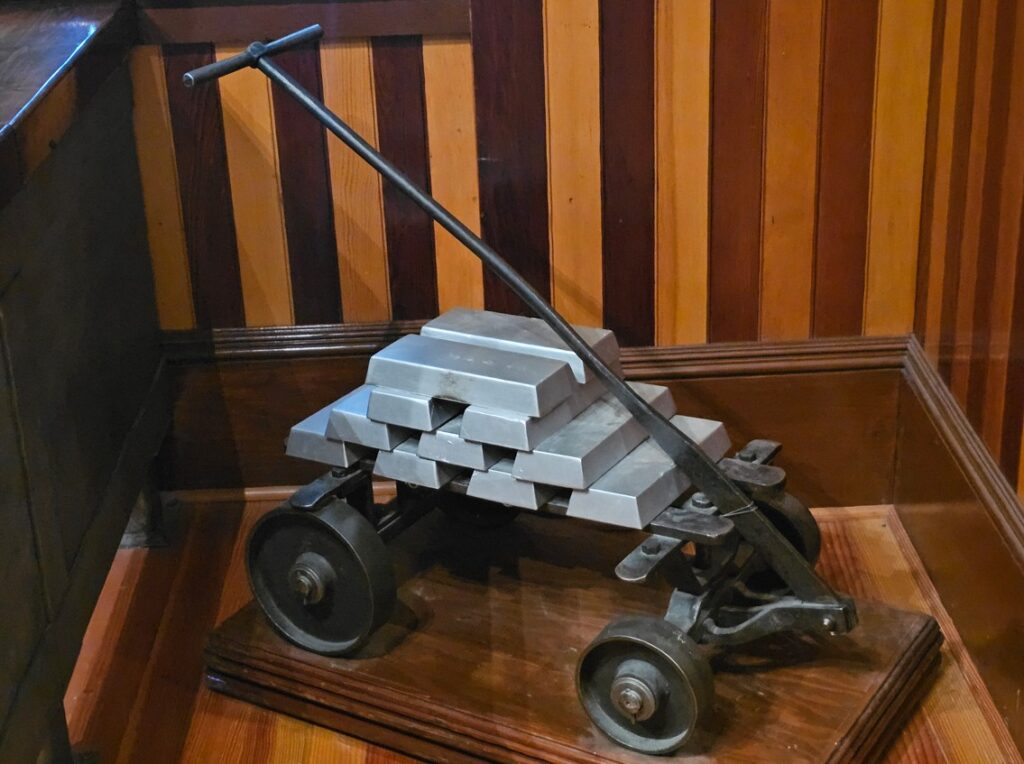
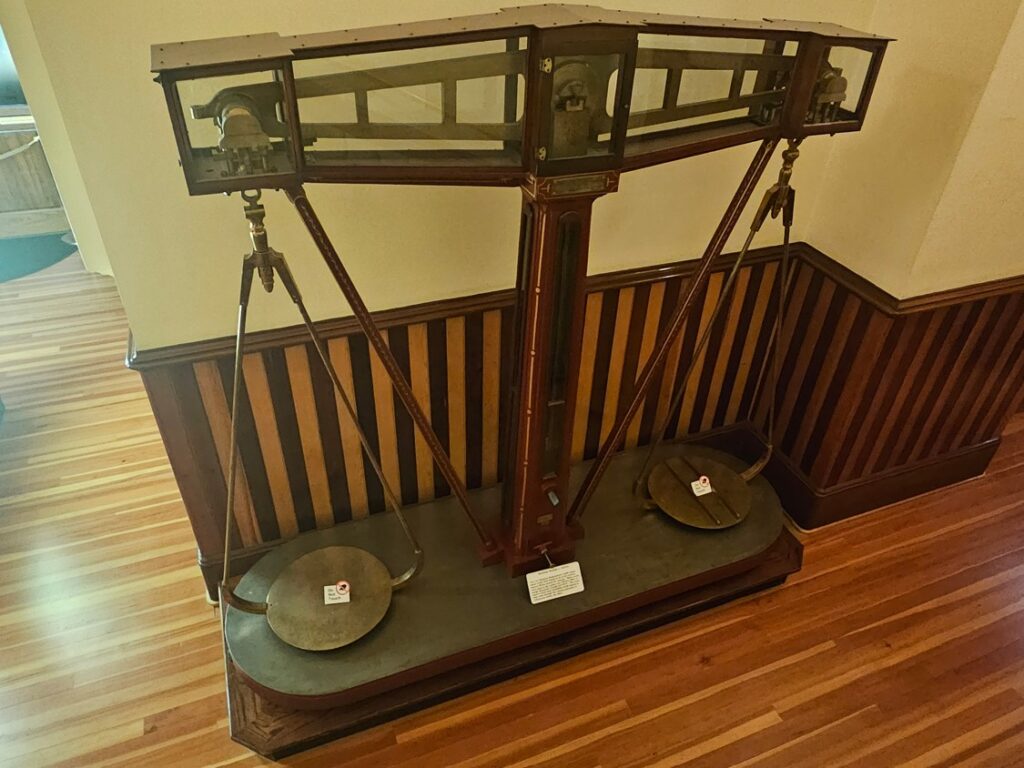
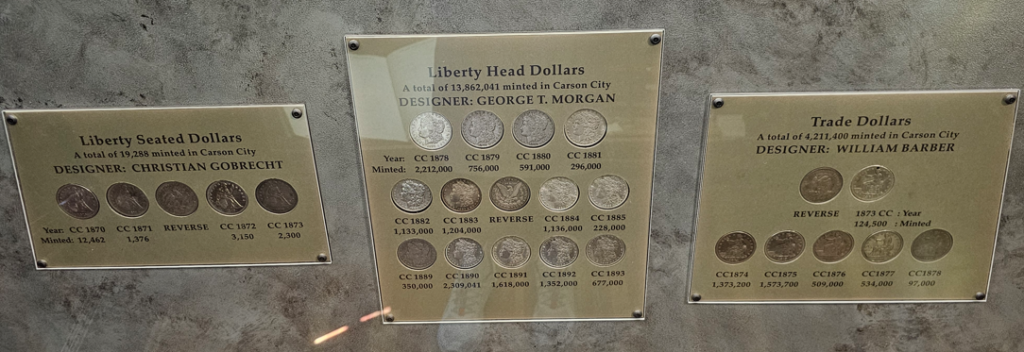
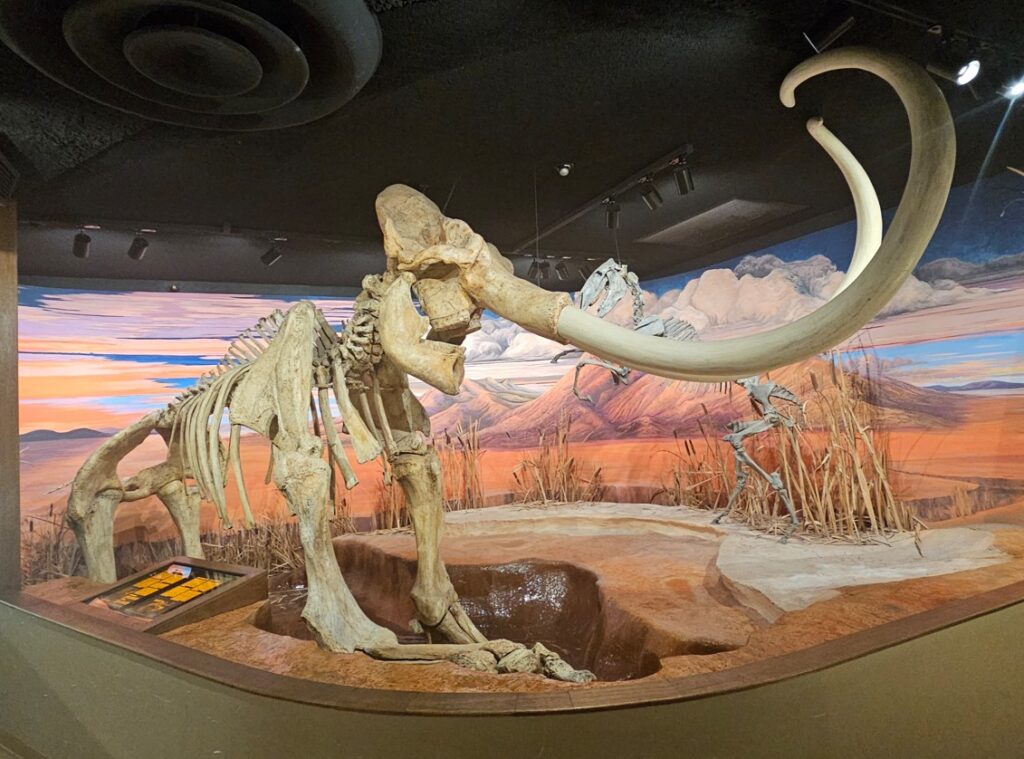
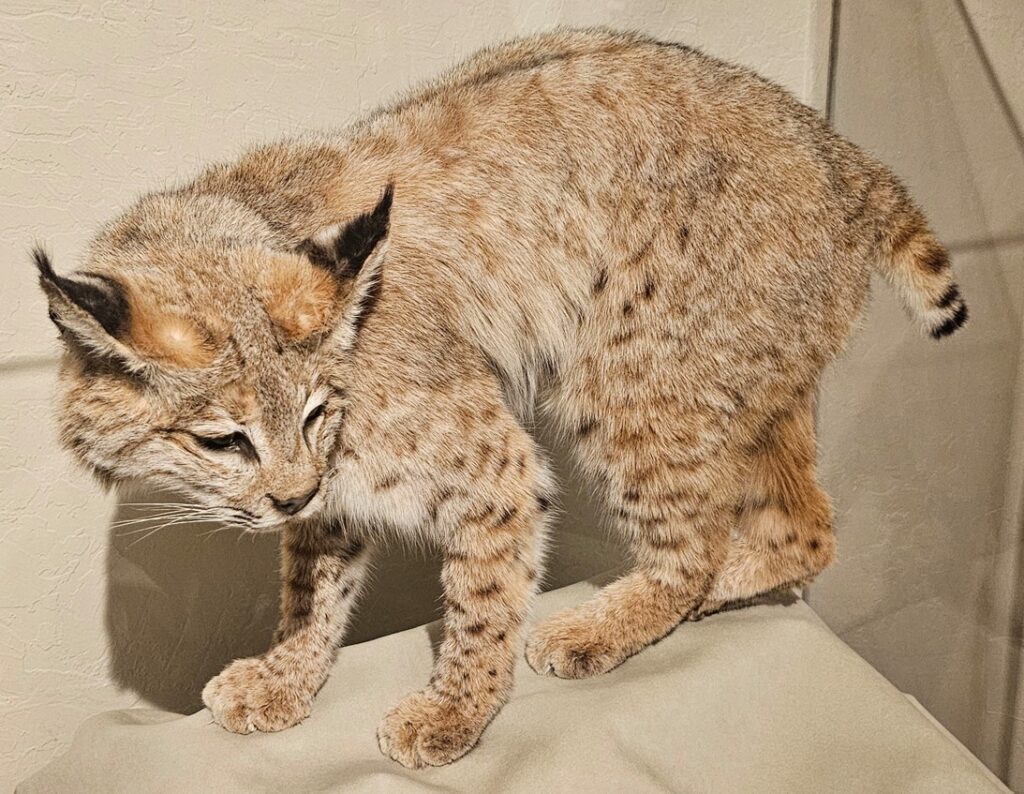
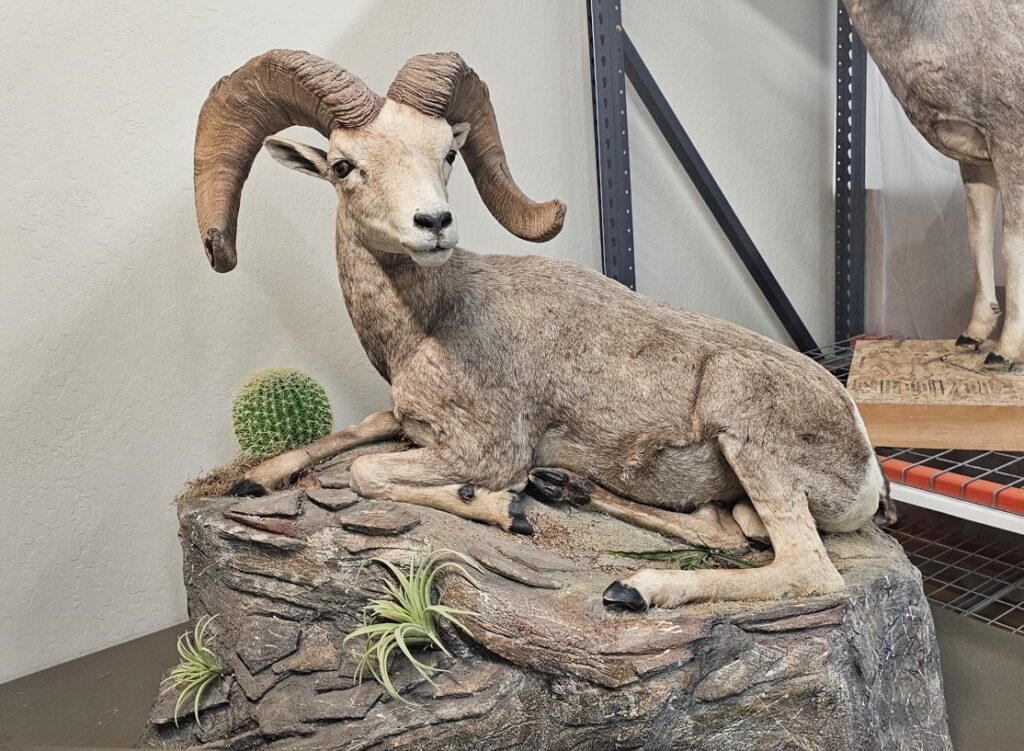
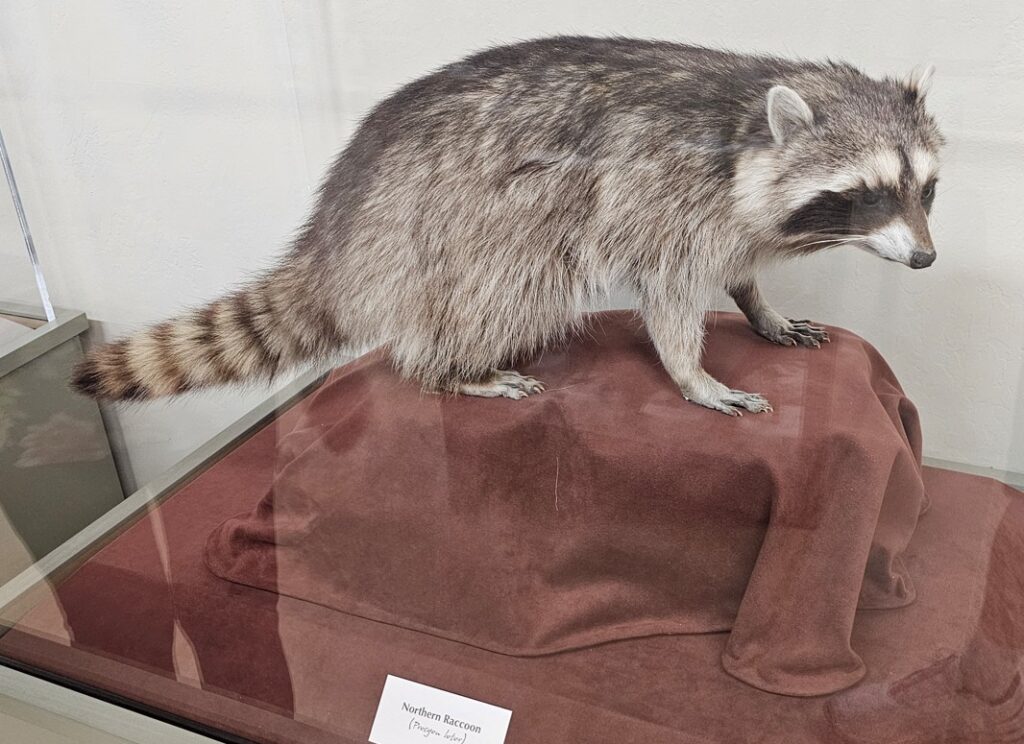
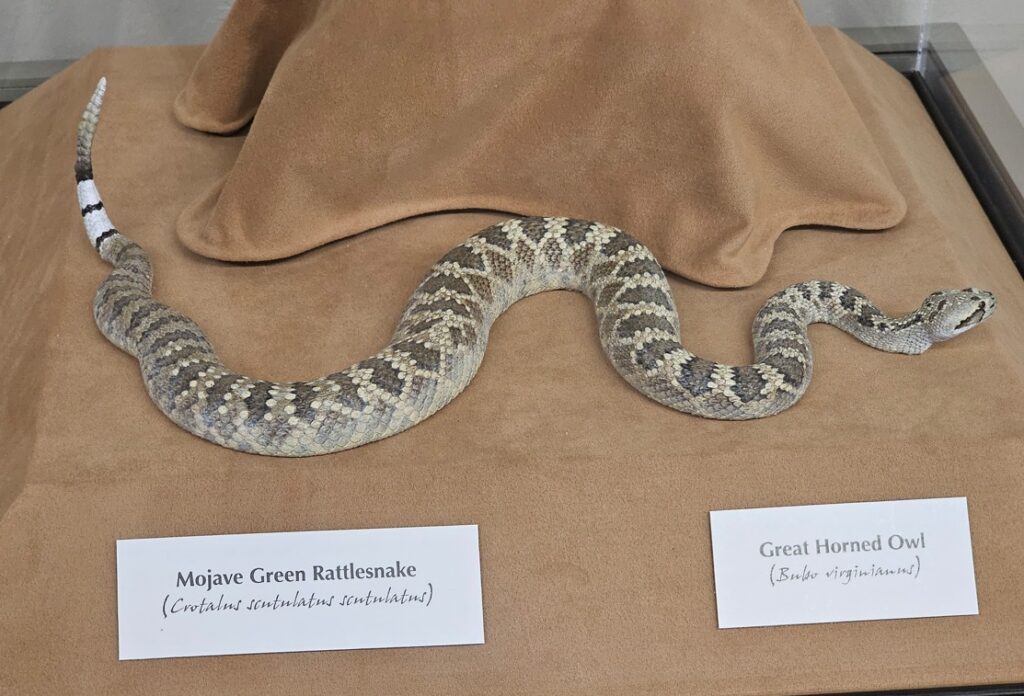
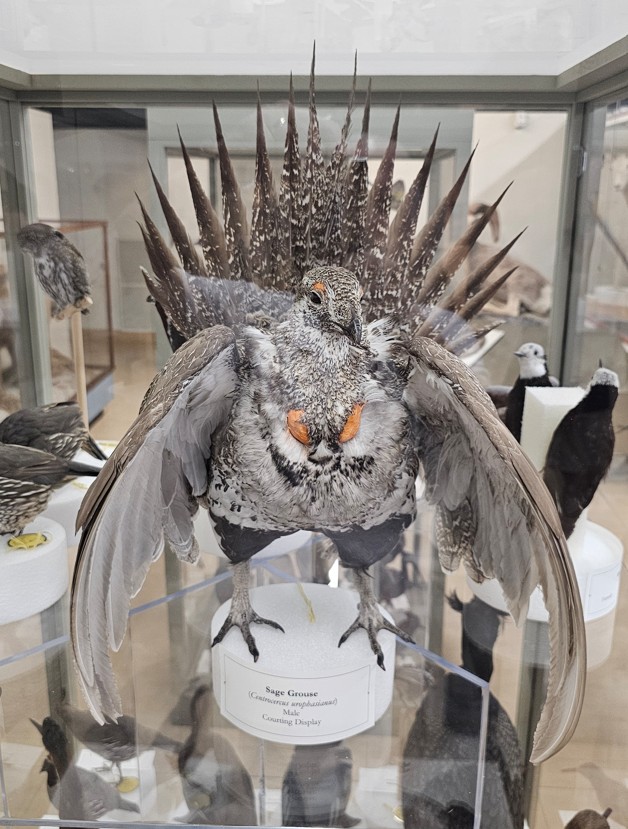
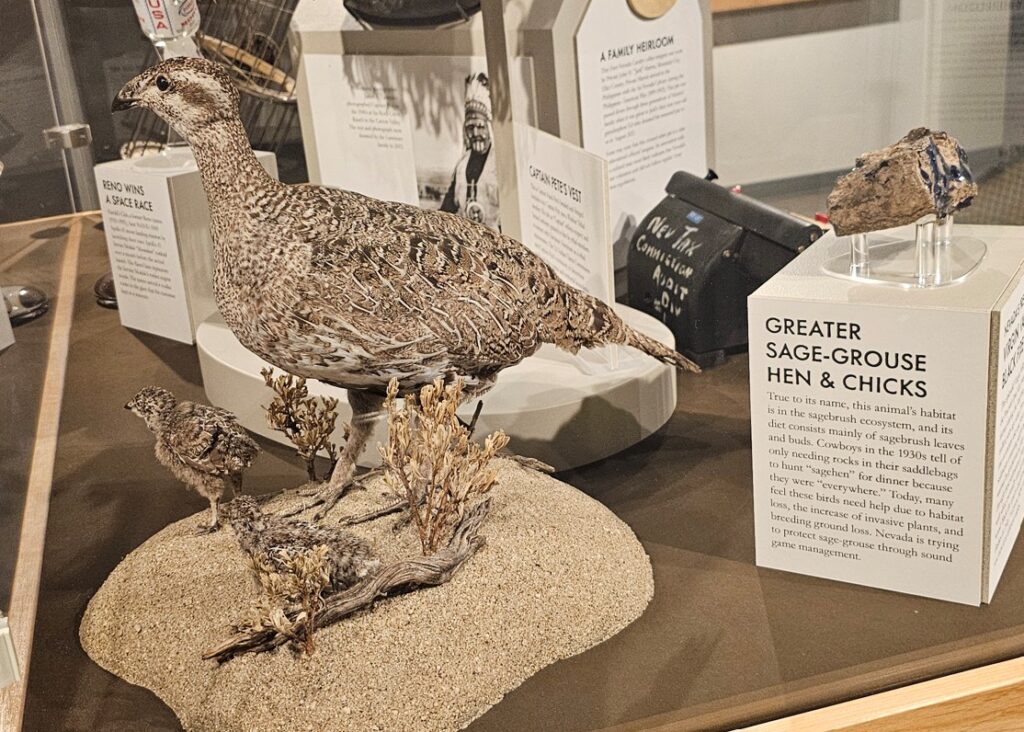
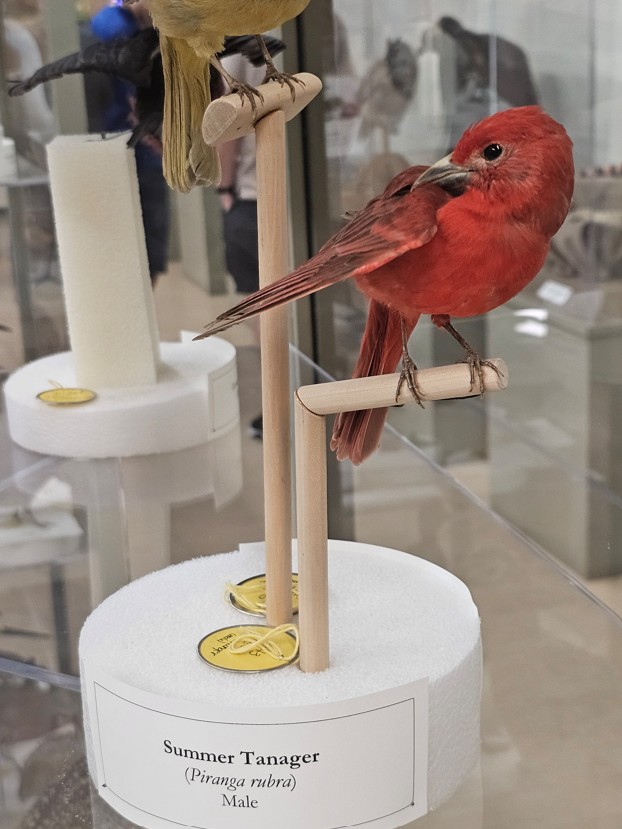
This museum has a substantial ghost town/mine exhibit underground. Oxygen-breathing rescue apparatusCap and fuse magazine.Square set stope, developed in the early days of the Comstock. These are now used the world over to hold heavy ground while extracting ore.Incline winze, which hoists ore up to the main haulage area.Cribbed shaft with crosshead and bailer, used to bail water and hoist rock.Stamp mill. Ore is ground fine and washed over the mercury coated plate. The mercury gathers the gold to form an amalgam.Copper stope. The ore is mined up from the level below, then lowered from this level on a timber slide.Lead-zinc vein.Abandoned drift, showing the crushing effect of loose ground.Gold quartz vein. When streaks or pockets of high grade gold are encountered the specimen boss removes as much “high grade” as possible before the heading is again drilled and blasted.Cinnabar in kaolin. The miner is loading a round of holes for blasting. This method of timbering is spiling, used to advance the heading through loose ground.Scheelite ore (tungsten). The miner is drilling with a stoper. The fluorescent colors of blue, blue-white and white are crystals of scheelite. The red is calcite (no commercial value).Powder magazine.Coin Press Number 1, which produced its first coins at the Mint in Carson City in 1870. Coins with the CC mint mark are highly prized by collectors.Bullion wagon used in the Carson City mint to move ingots from one room to another.Bullion scales from the 1870s.Coins minted at Carson City mint. fgfImperial mammothBobcatBighorn sheepNorthern raccoonMojave green rattlesnakeSage grouseSage grouse hen and chicksSummer tanager
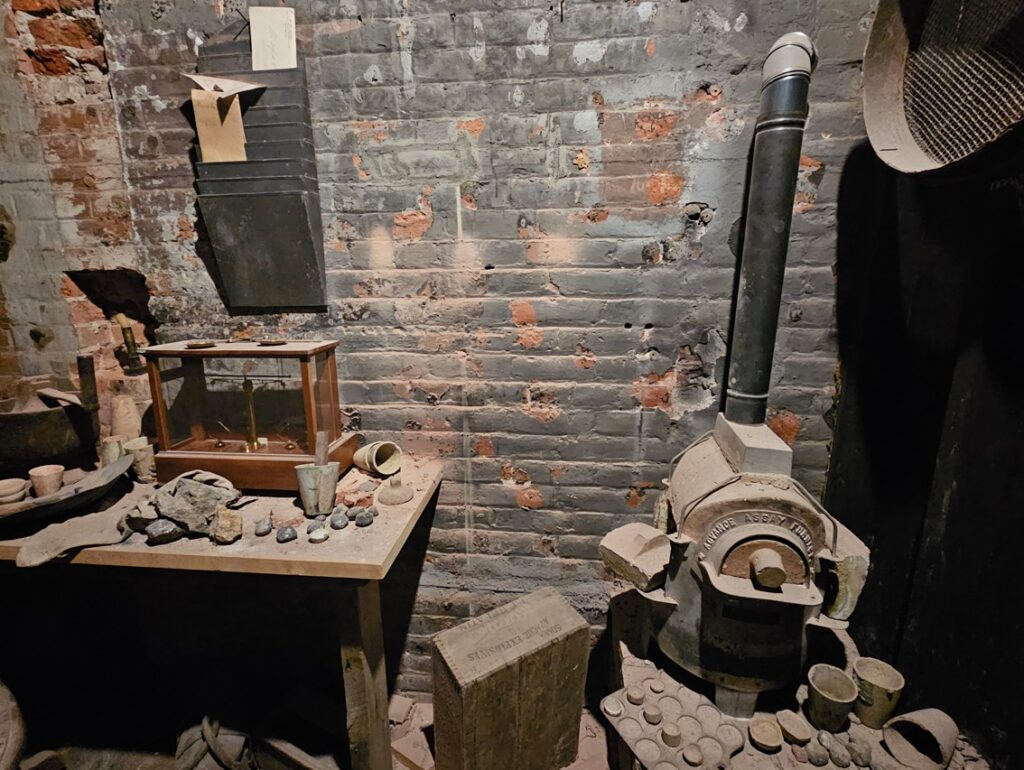
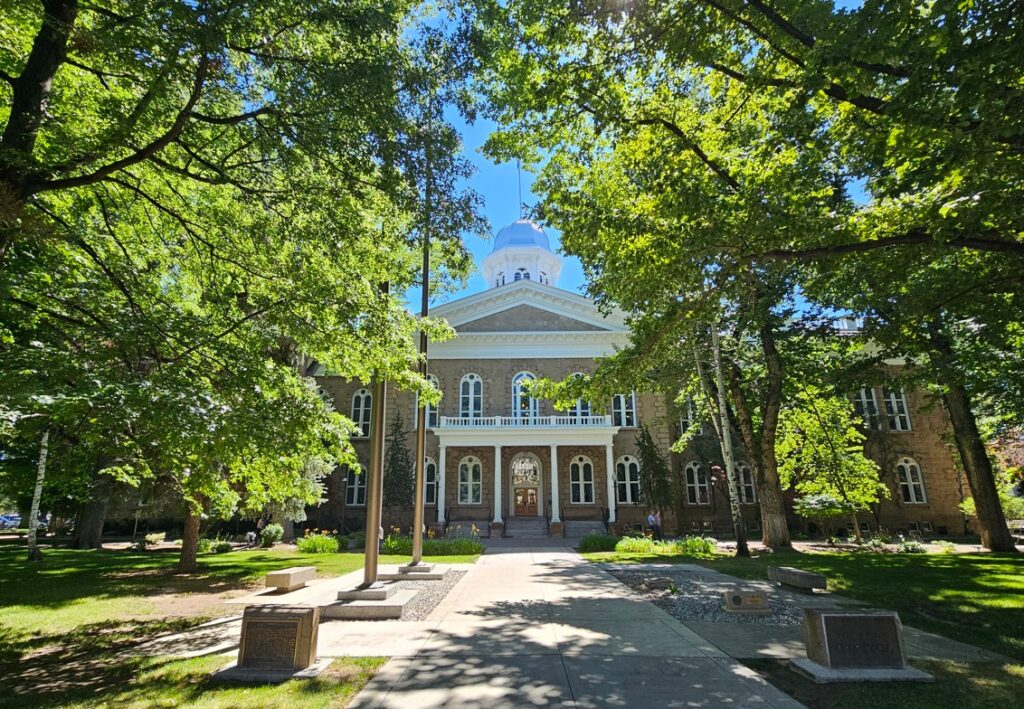
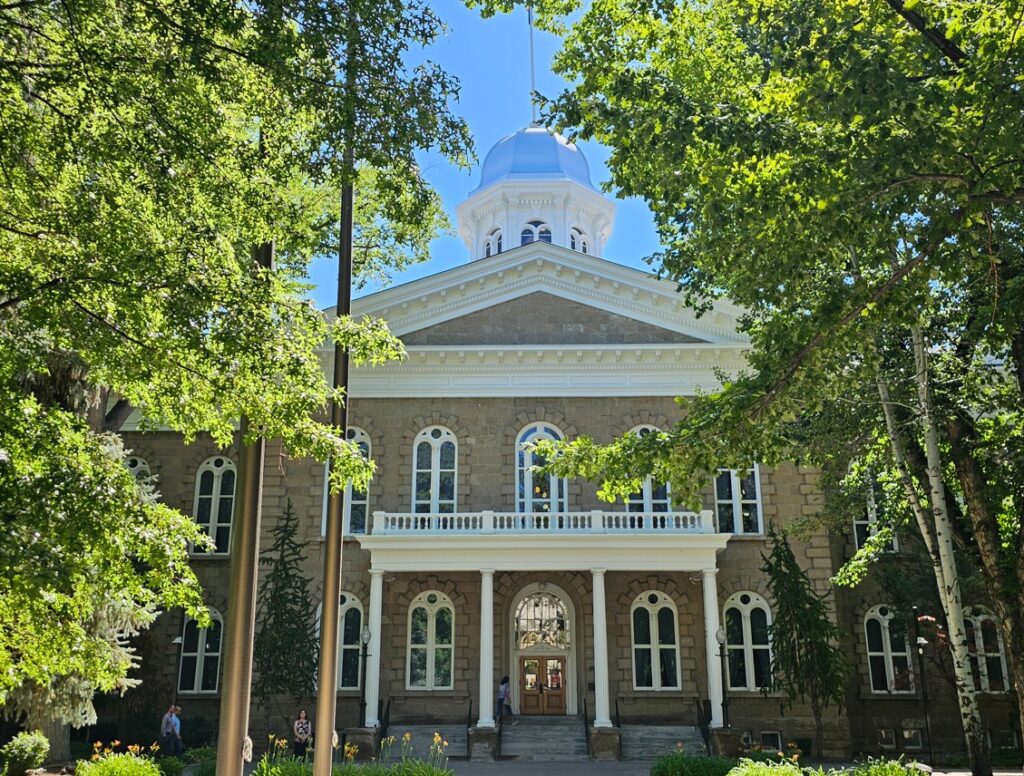
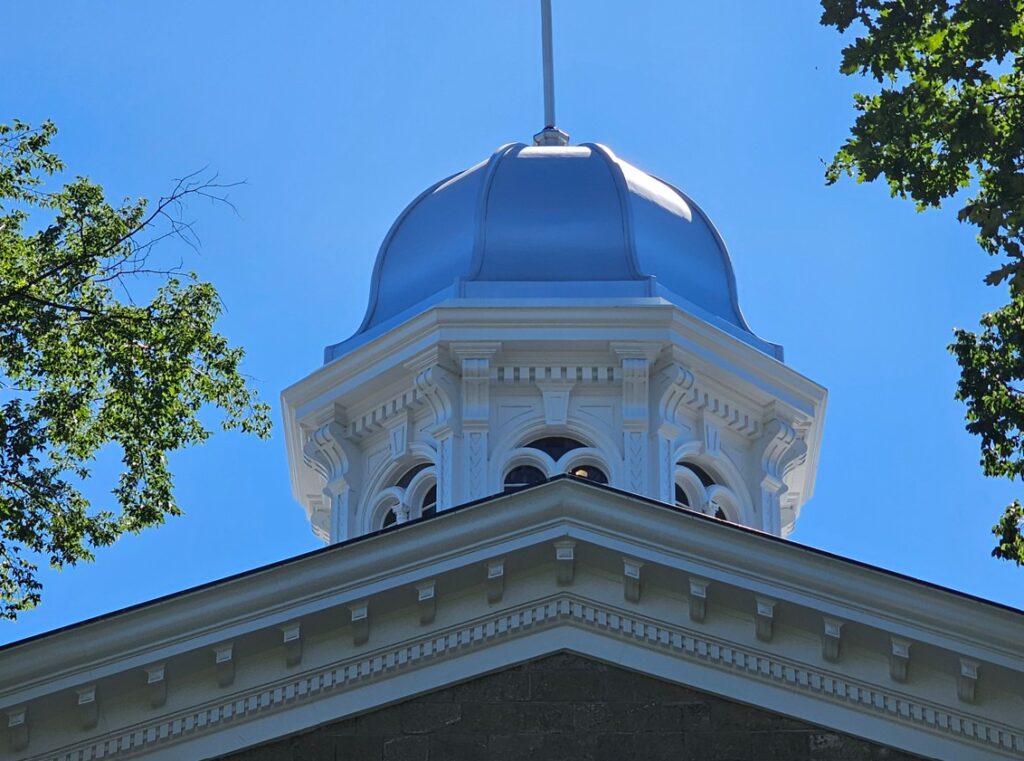
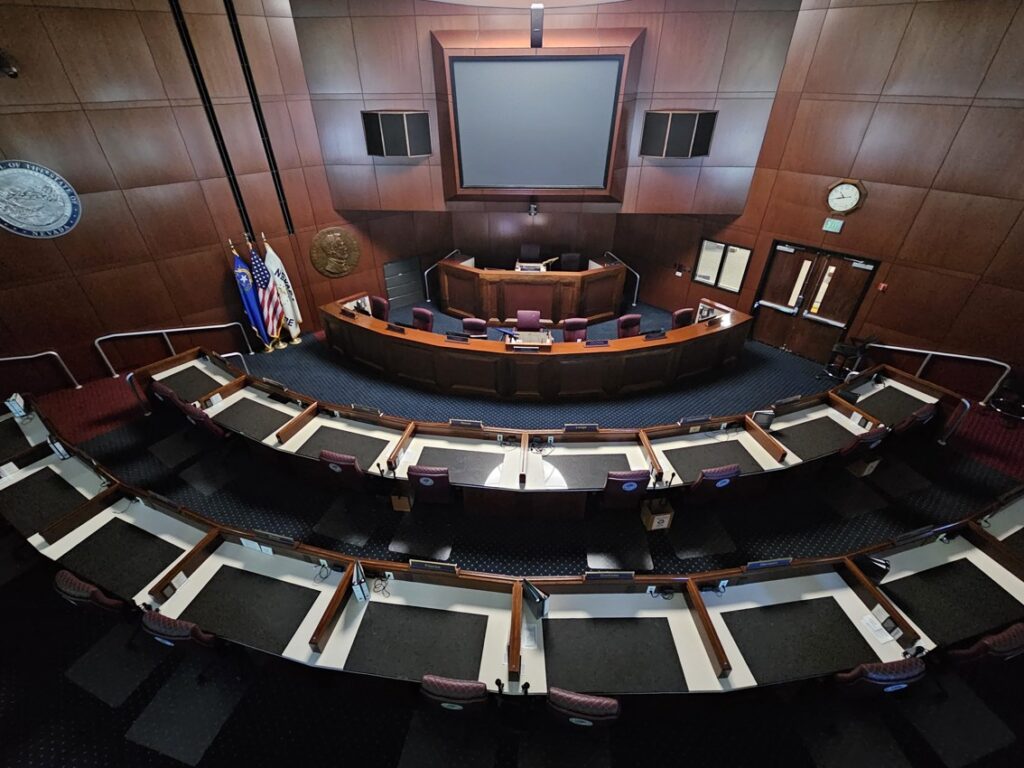
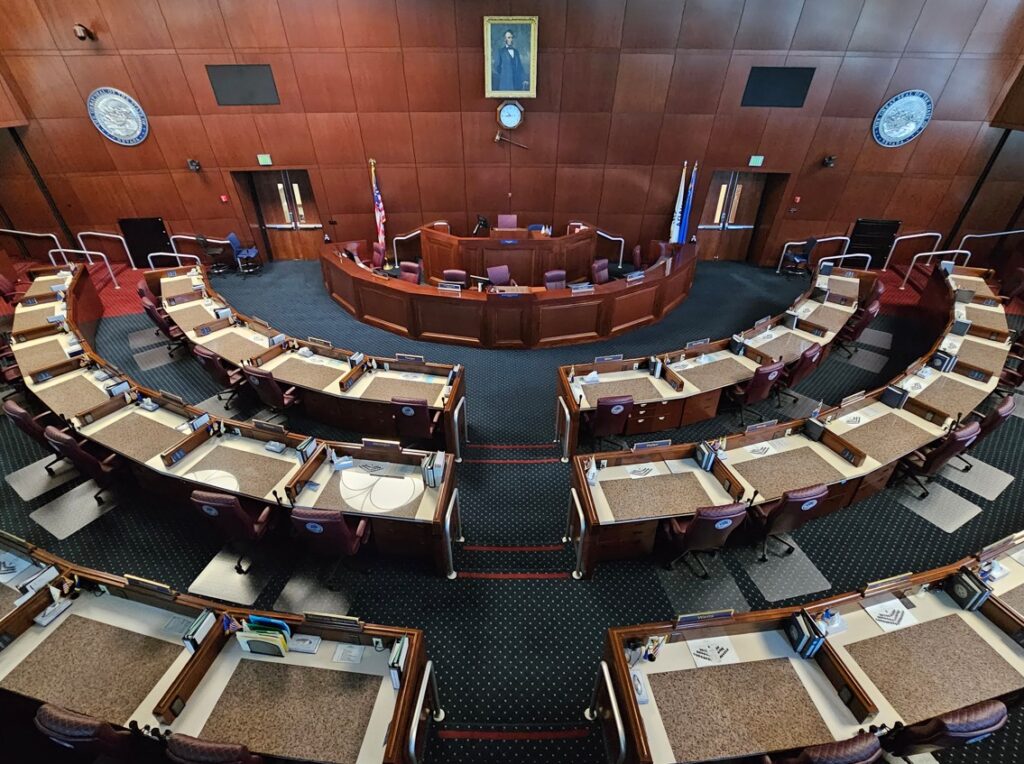
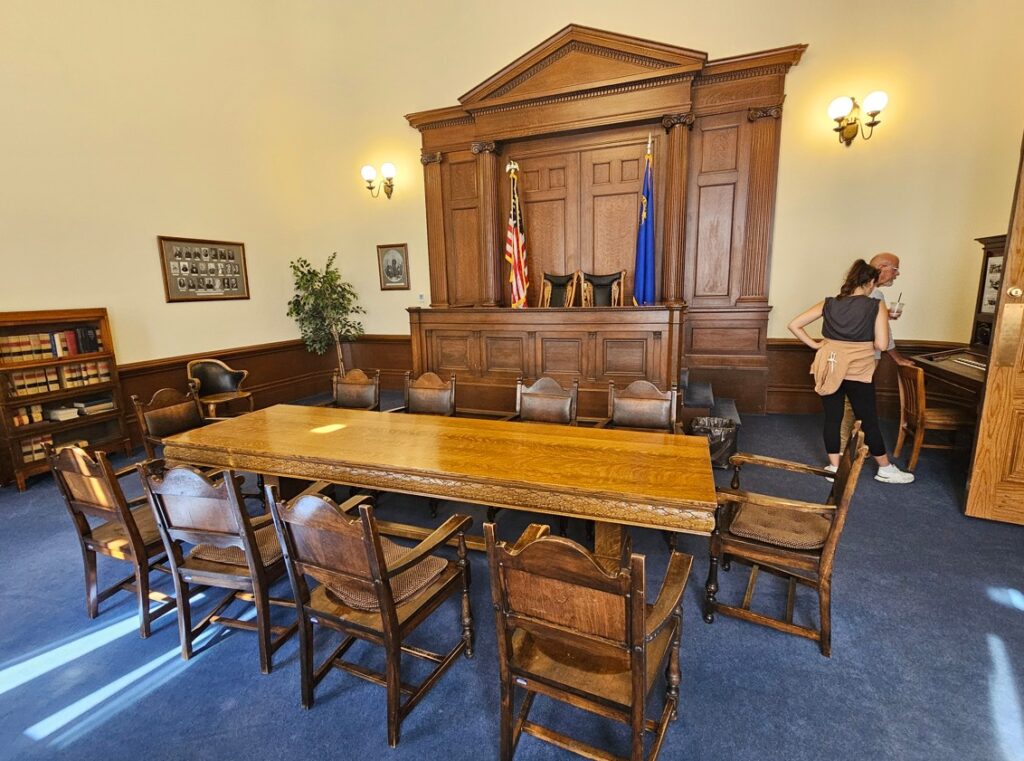
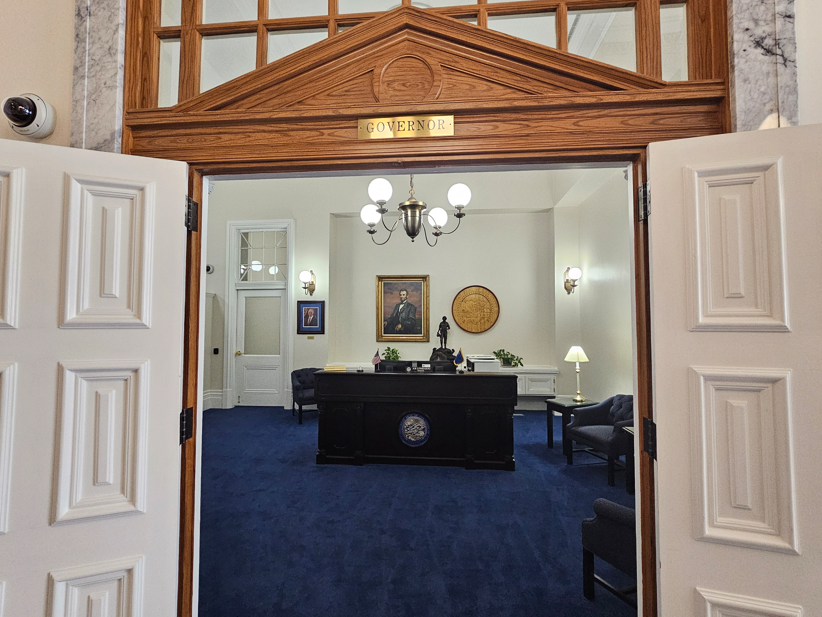
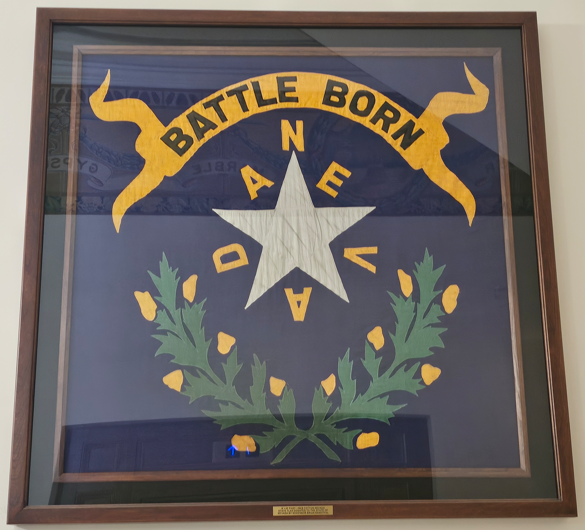
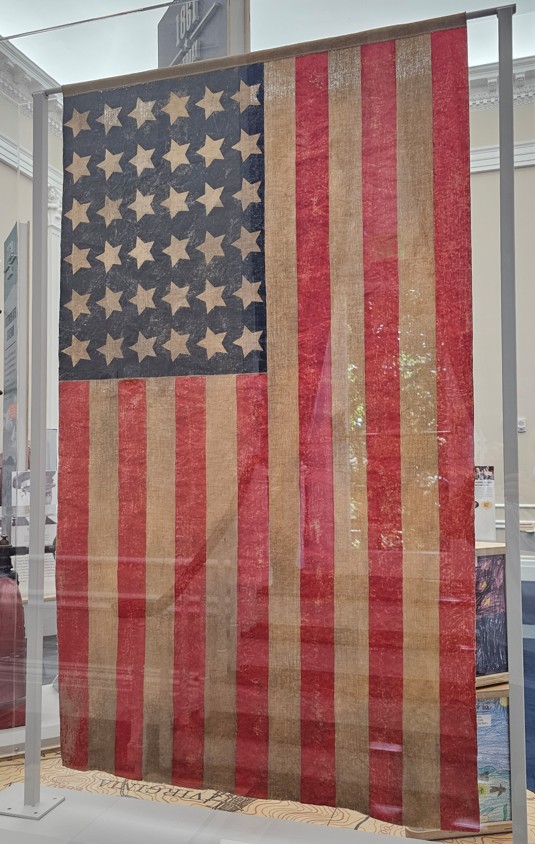
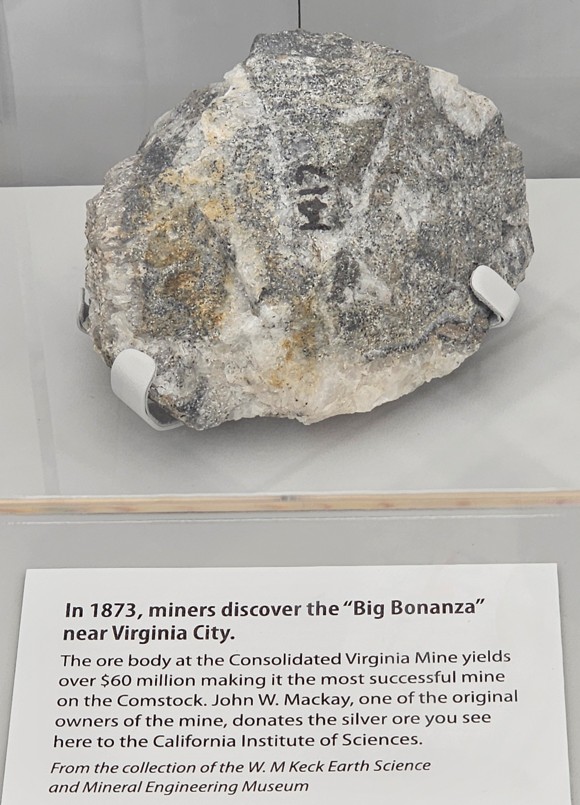
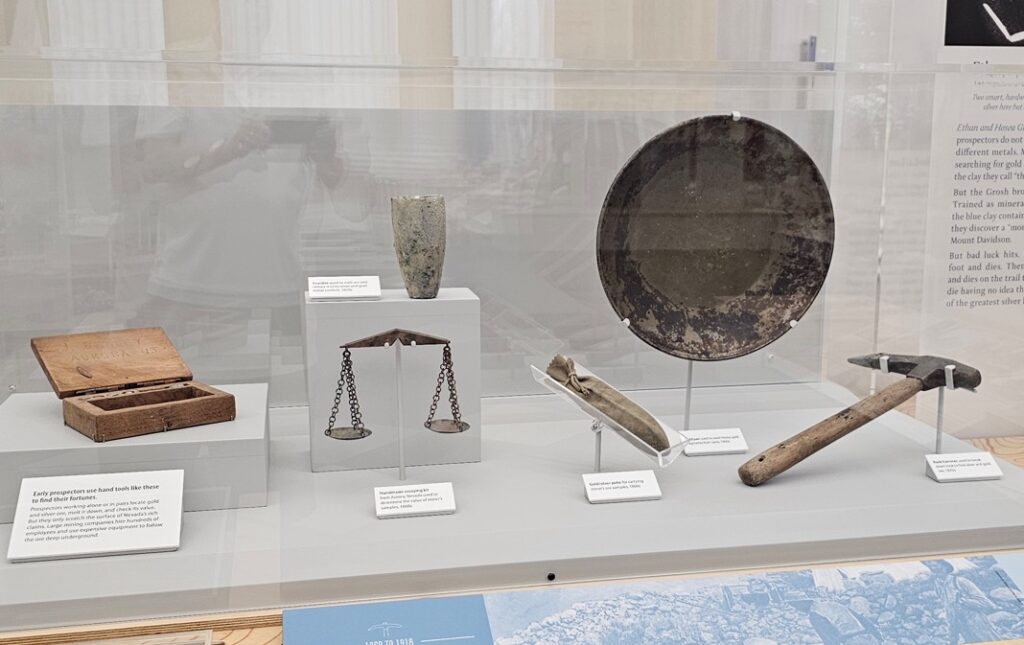
Front of the Nevada State Capitol, built 1871.Nevada Senate ChamberNevada House ChamberNevada Supreme Court, 1871-1935Nevada Governor’s OfficeNevada state motto, part of the current state flag36 star flag, representing Nevada as the 36th state in 1864.Early prospectors used tools like these: crucible used to melt ore, handmade assaying kit, gold/silver poke for carrying ore samples, gold pan, and rock hammer.
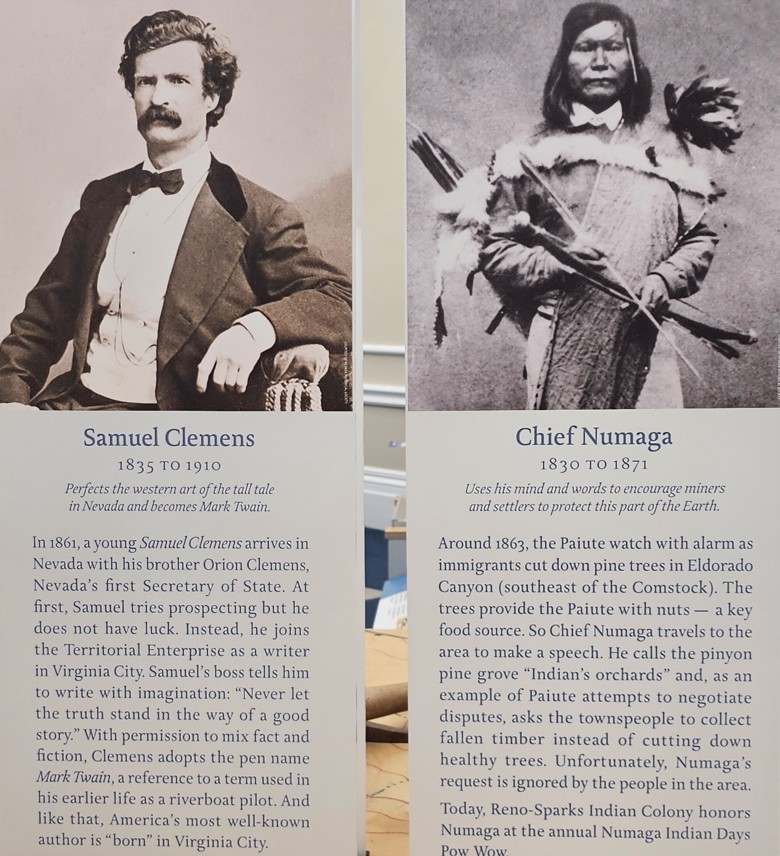
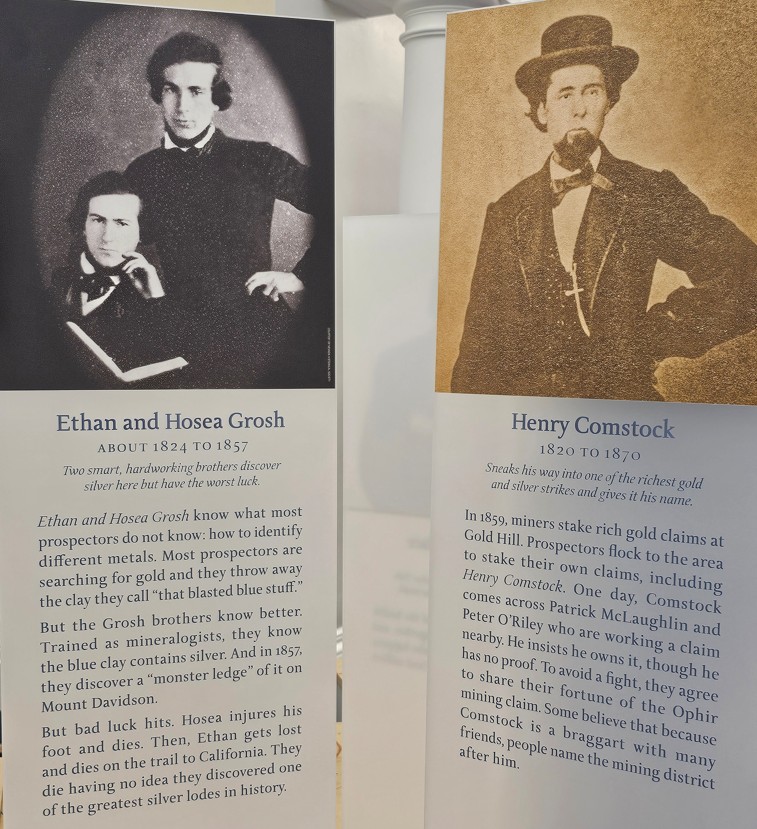
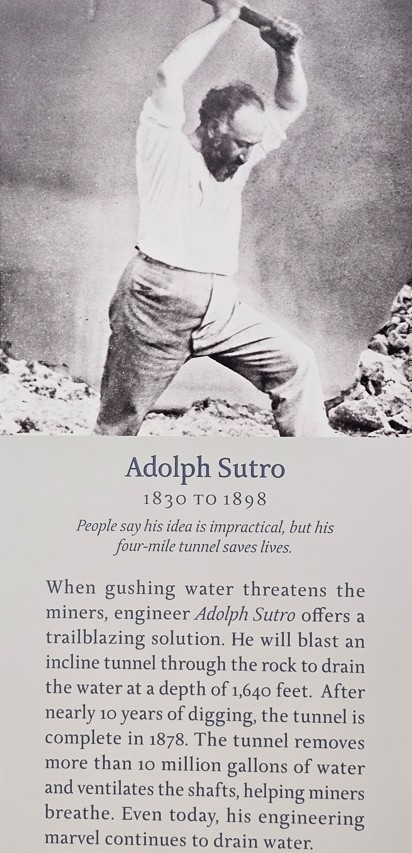
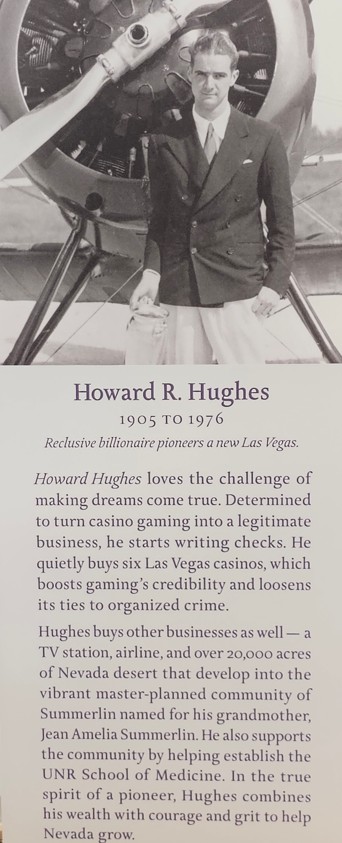
Some of the more famous people from Nevada’s history: