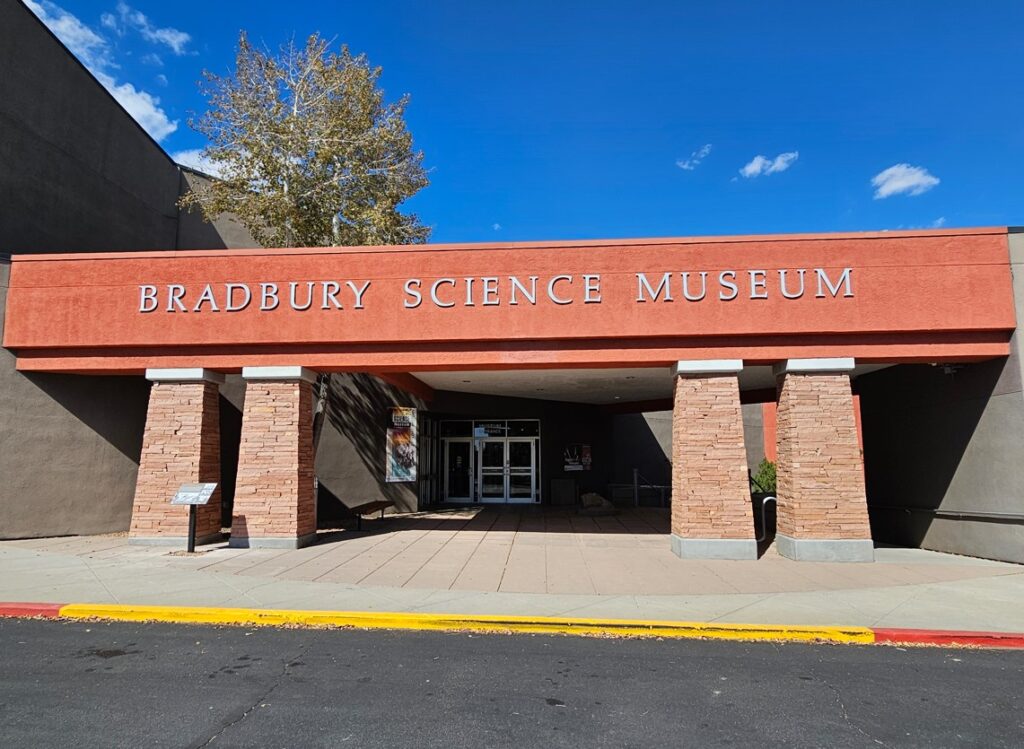
Bradbury Science Museum

Los Alamos NM

The Bradbury Science Museum is Los Alamos National Laboratory’s official public museum, helps visitors learn about the Lab’s beginnings during the Manhattan Project and how the Lab’s continuing work enables global security.
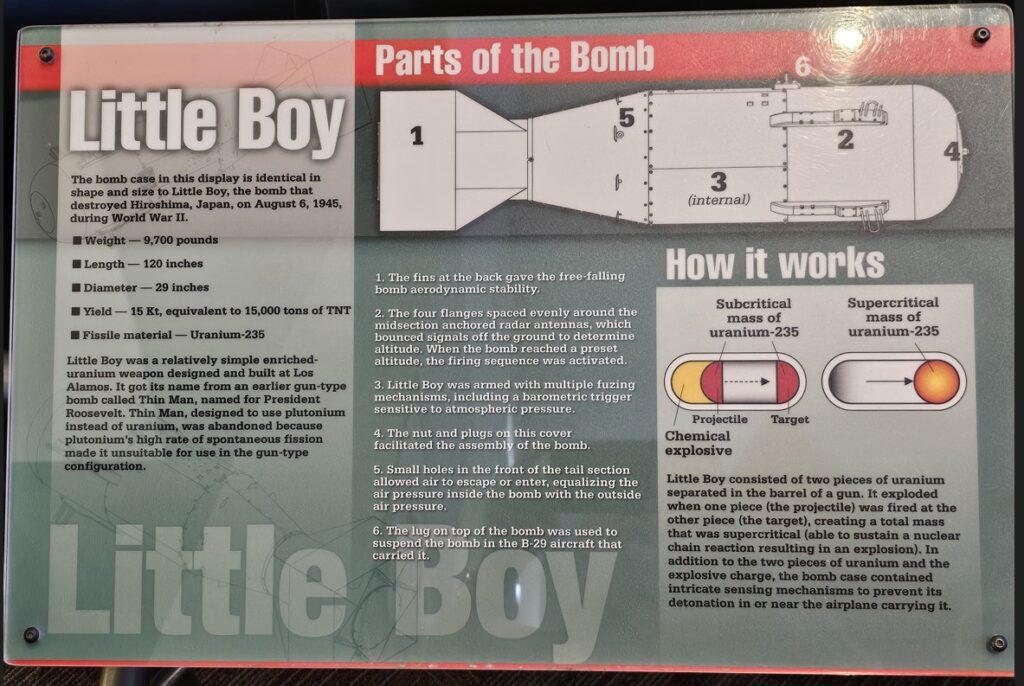
Information about Little Boy, the first bomb dropped on Japan.
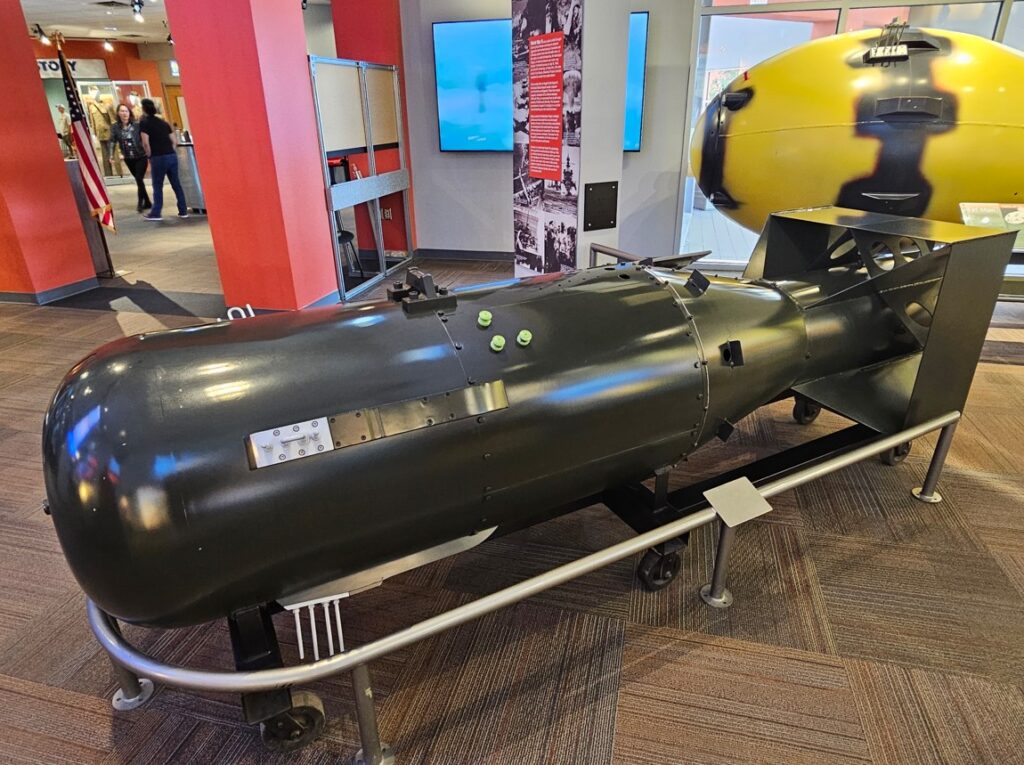
A mock-up of Little Boy
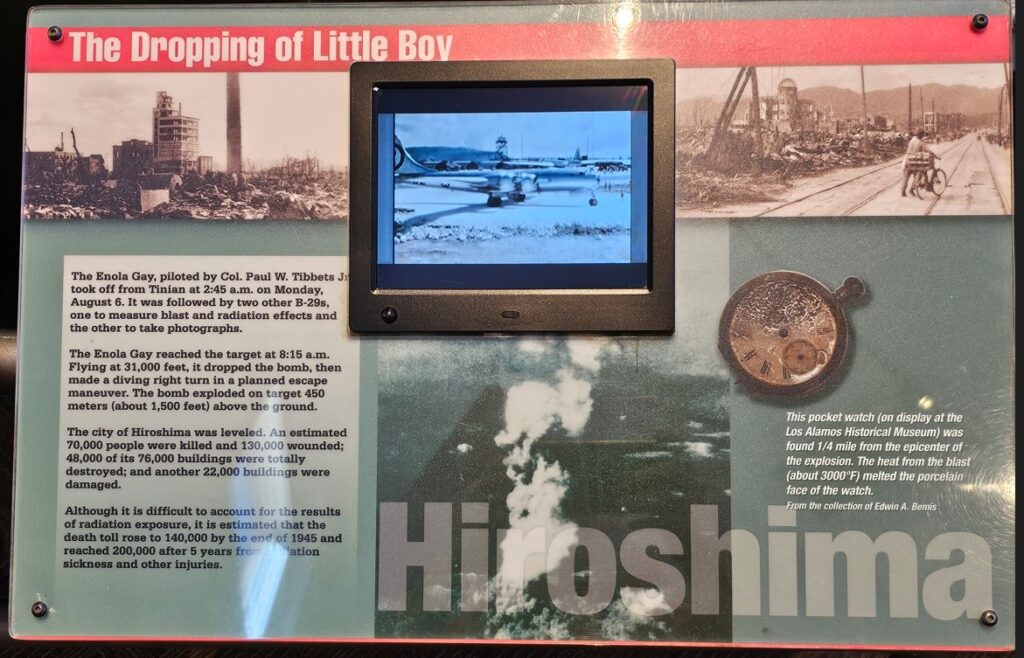
The dropping of Little Boy on Hiroshima.
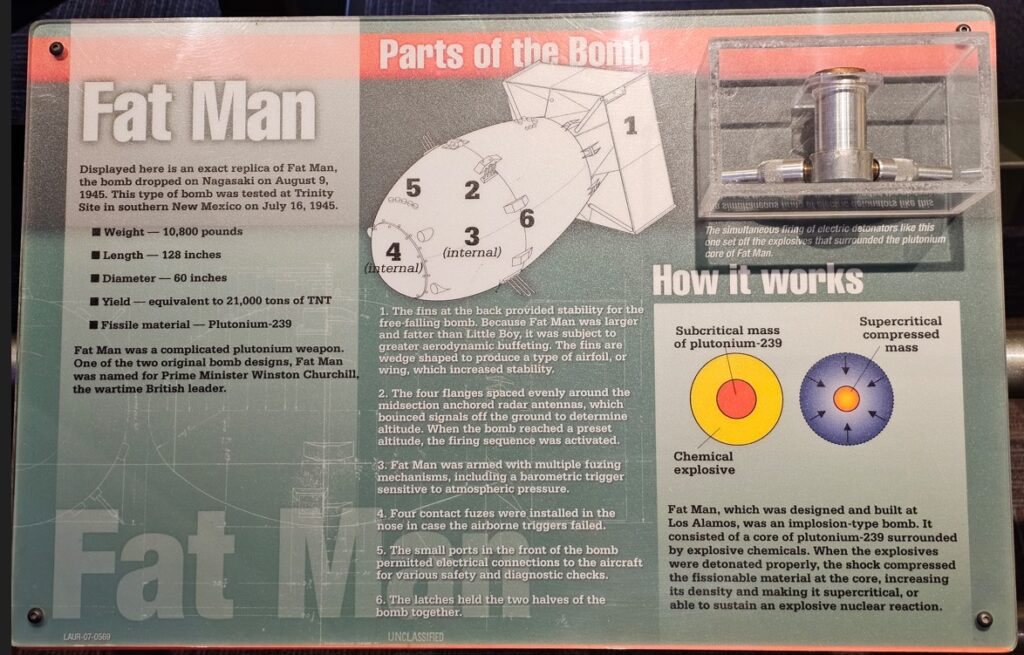
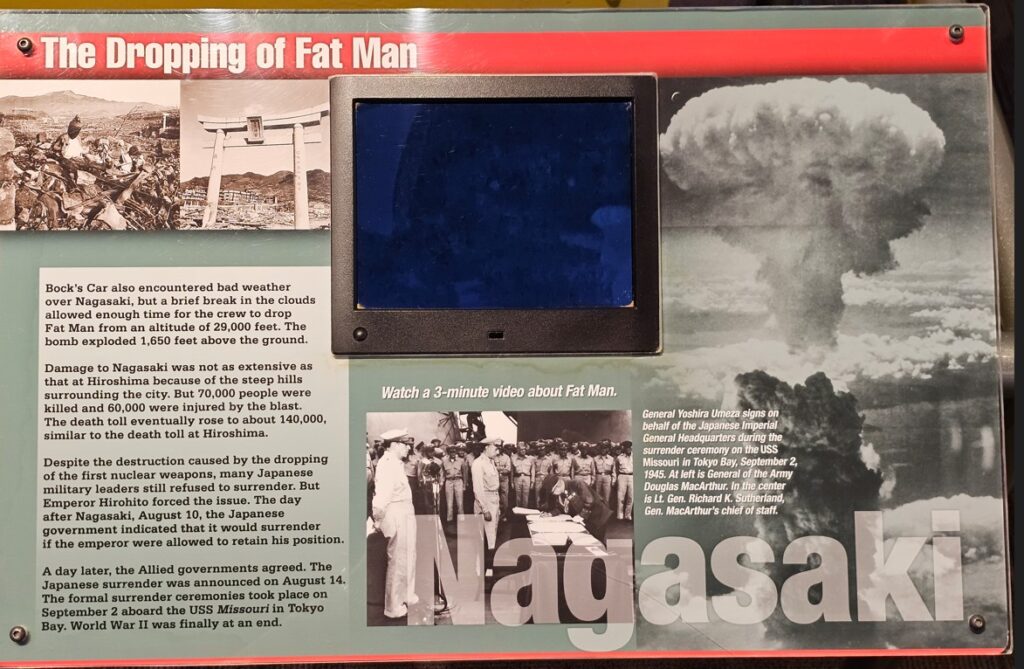
Information about Fat Man, the second bomb dropped on Japan.
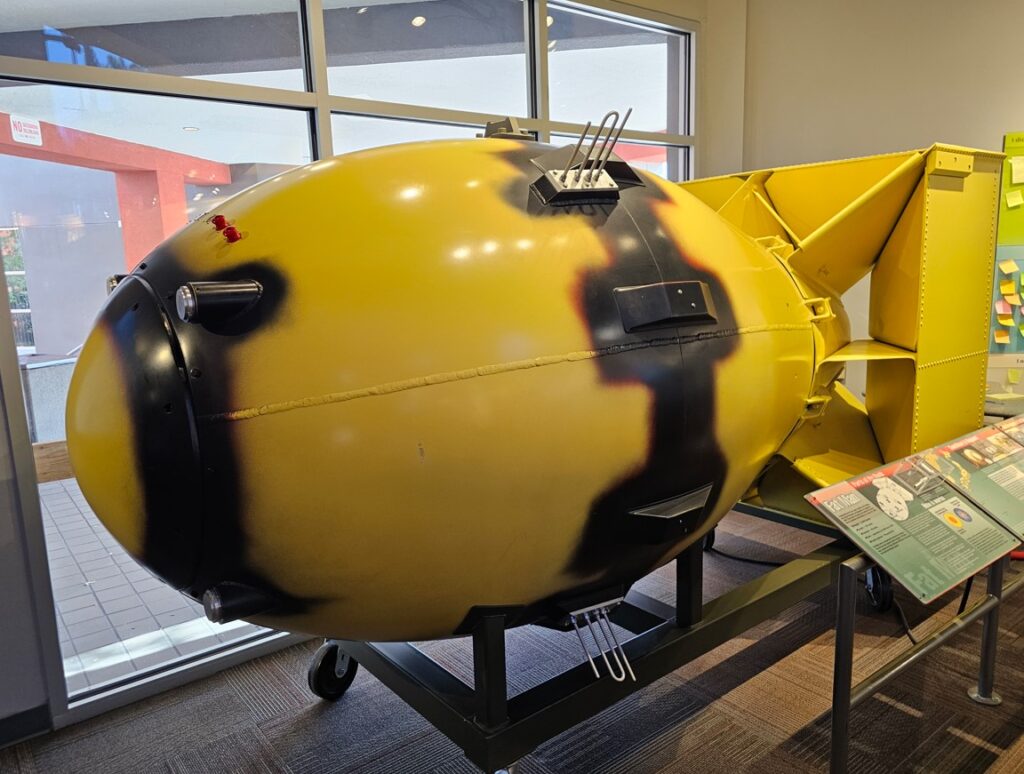
Mock-up of Fat Man.
The dropping of Fat Man on Nagasaki.
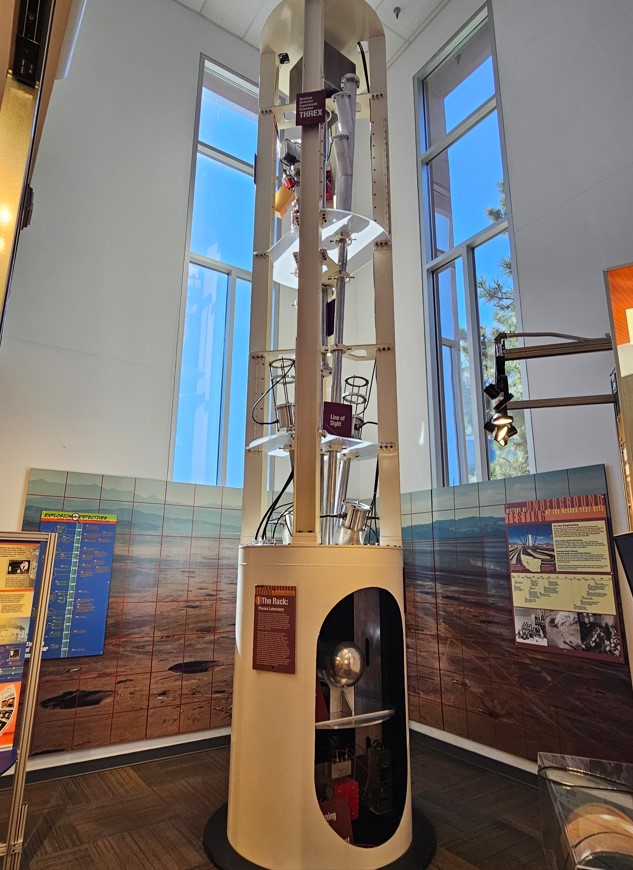
A rack for underground nuclear testing.
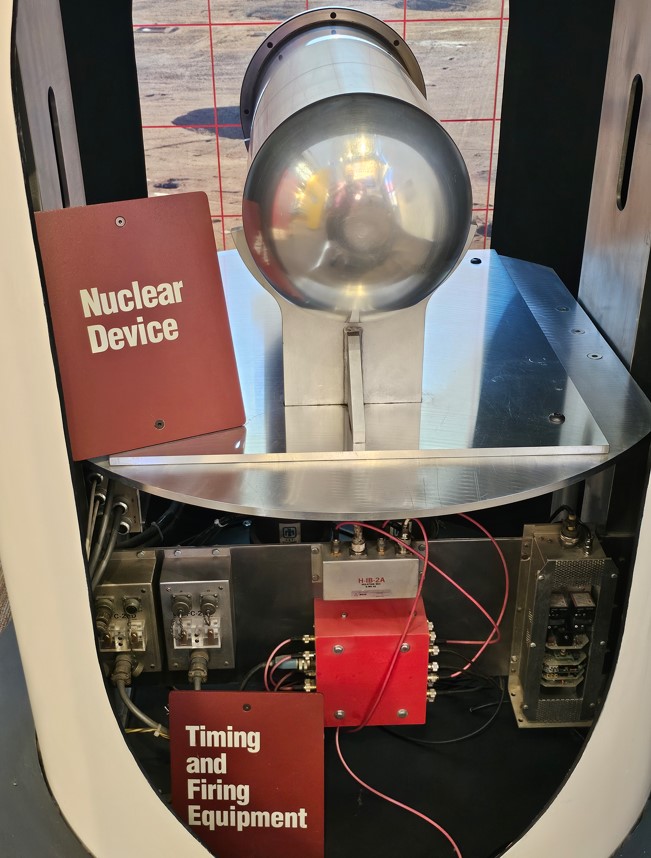
A nuclear device (unarmed!) and the timing and firing equipment.
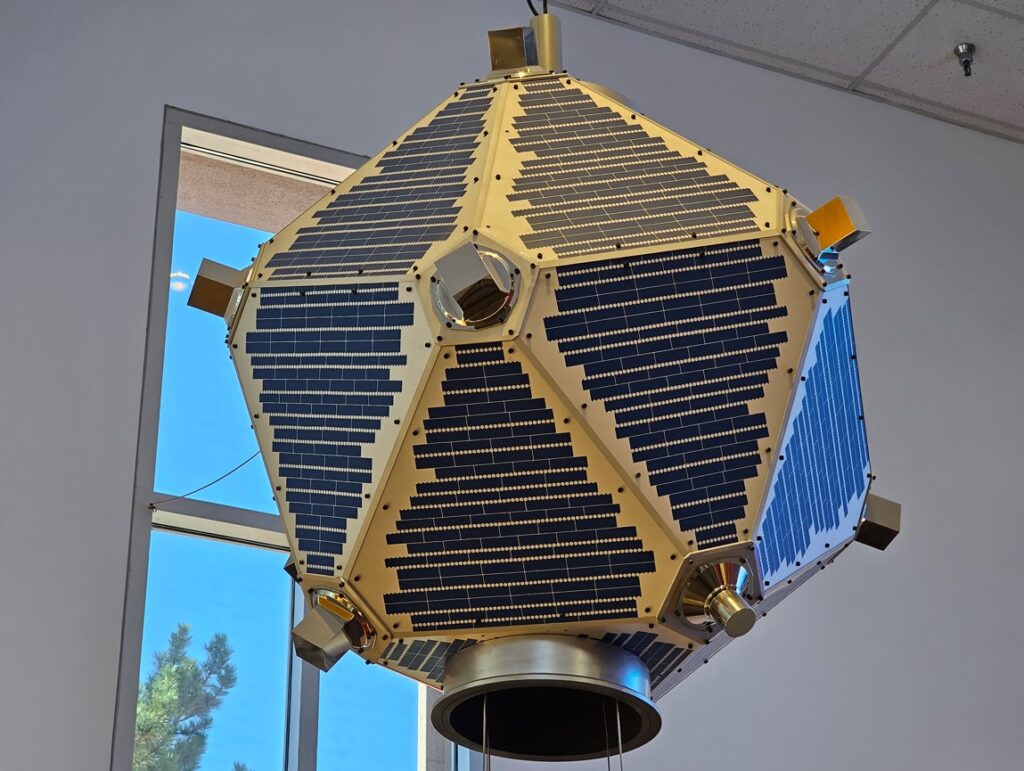
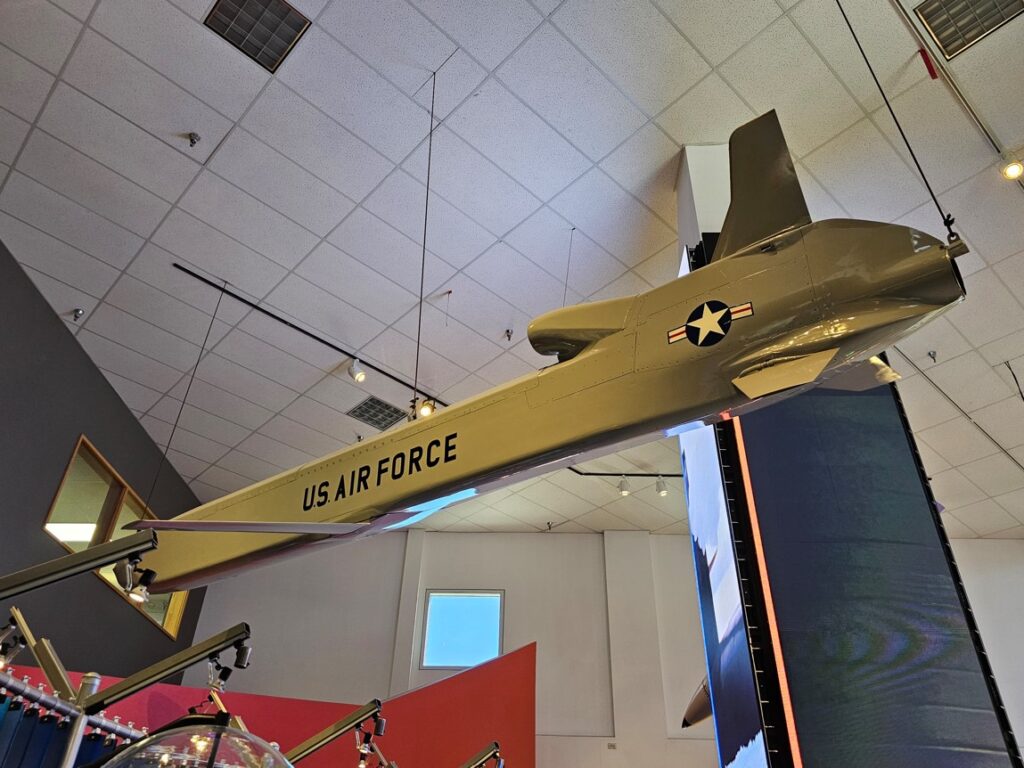
Full-scale model of a Vela Satellite, which is a satellite-based monitoring of nuclear explosions.
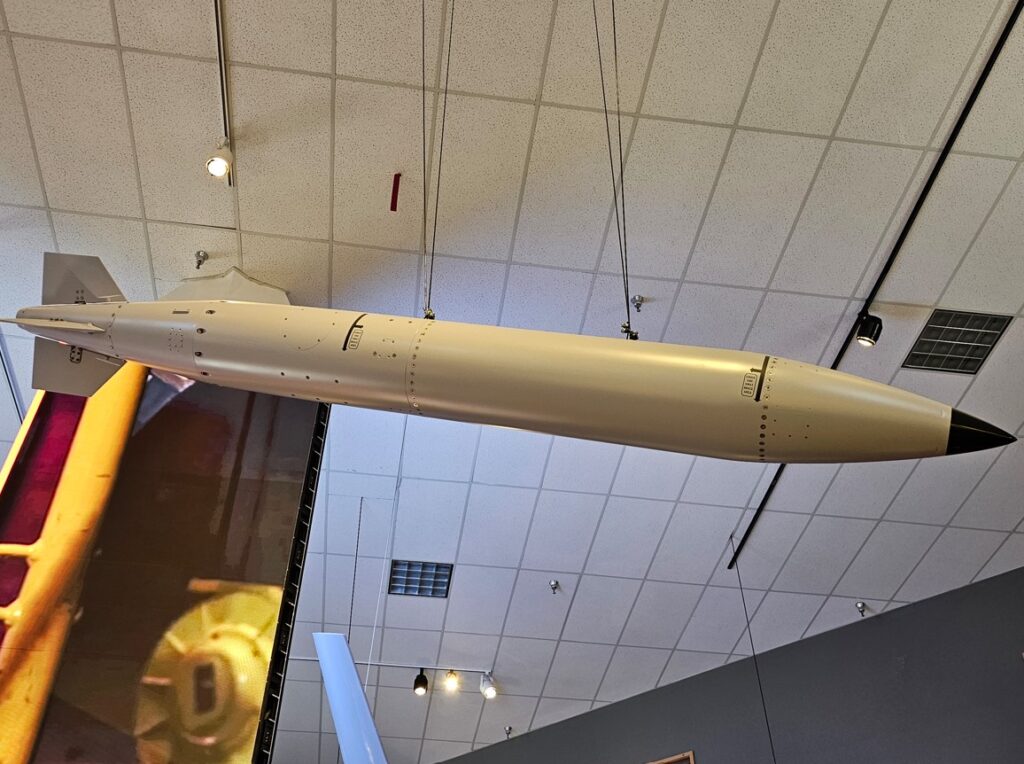
Model of a B61-12 thermonuclear gravity bomb.
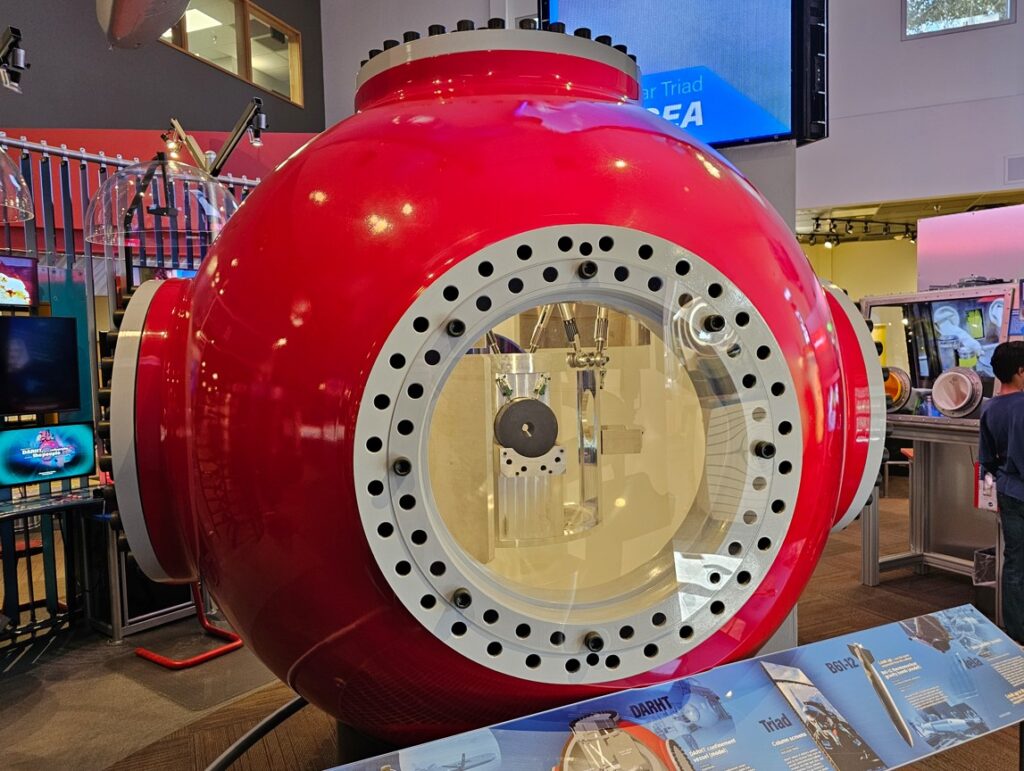
Model of aa DAHRT confinement vessel, which contains various shielding plates that contain the explosion and resultant debris associated with a hydrotest. It also contains collinators, which reduce the amount of scatter, thus enhancing image quality captured during a hydrotest.
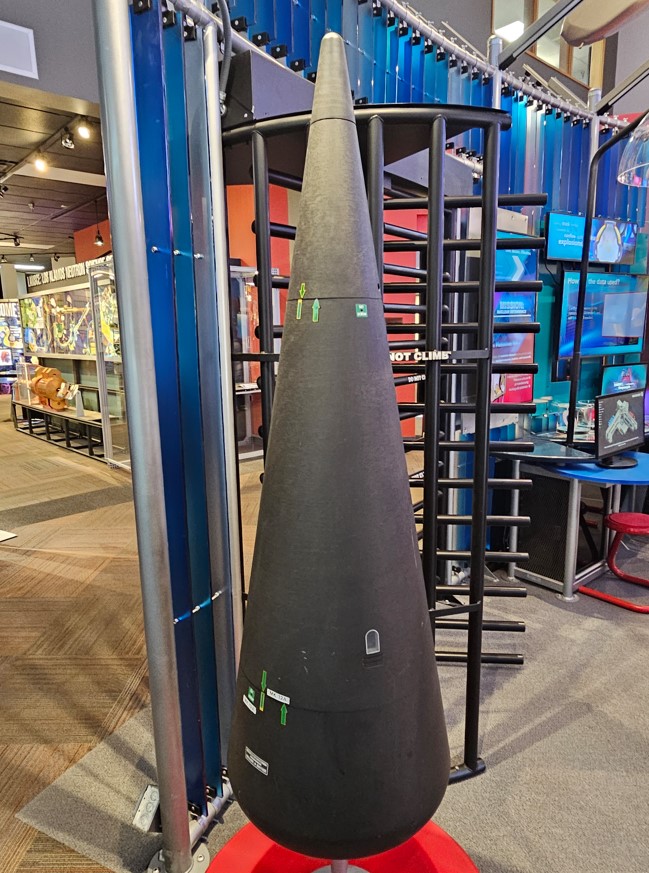
Model of MK-12A reentry vehicle, which is used in ICBMs (intercontinental ballistic missiles), specifically containing W78 warhead when armed.
Model of ALCM (Air-Launched Cruise Missile), which would be delivered by a strategic bomber such as the B-52 Stratofortress. The inner content when armed is a W80 nuclear warhead.
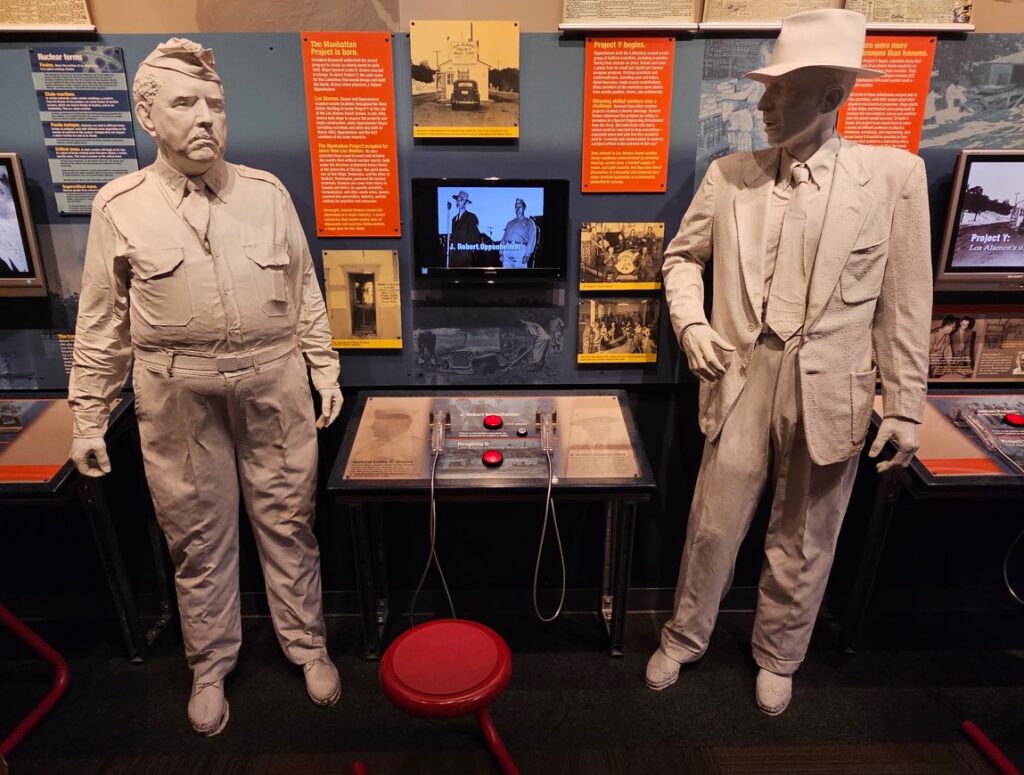
Models of Major General Leslie Groves (left), and J. Robert Oppenheimer.
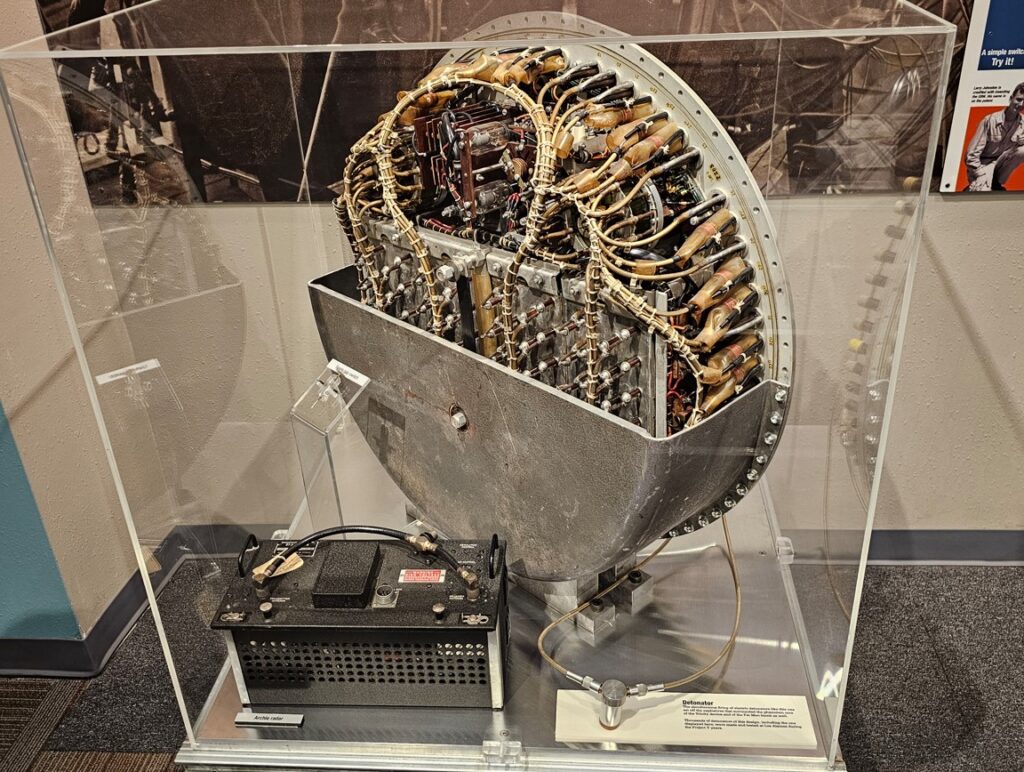
This is a detonator similar to the one used in the Trinity test, and in Fat Man.
Respirators used at Los Alamos.
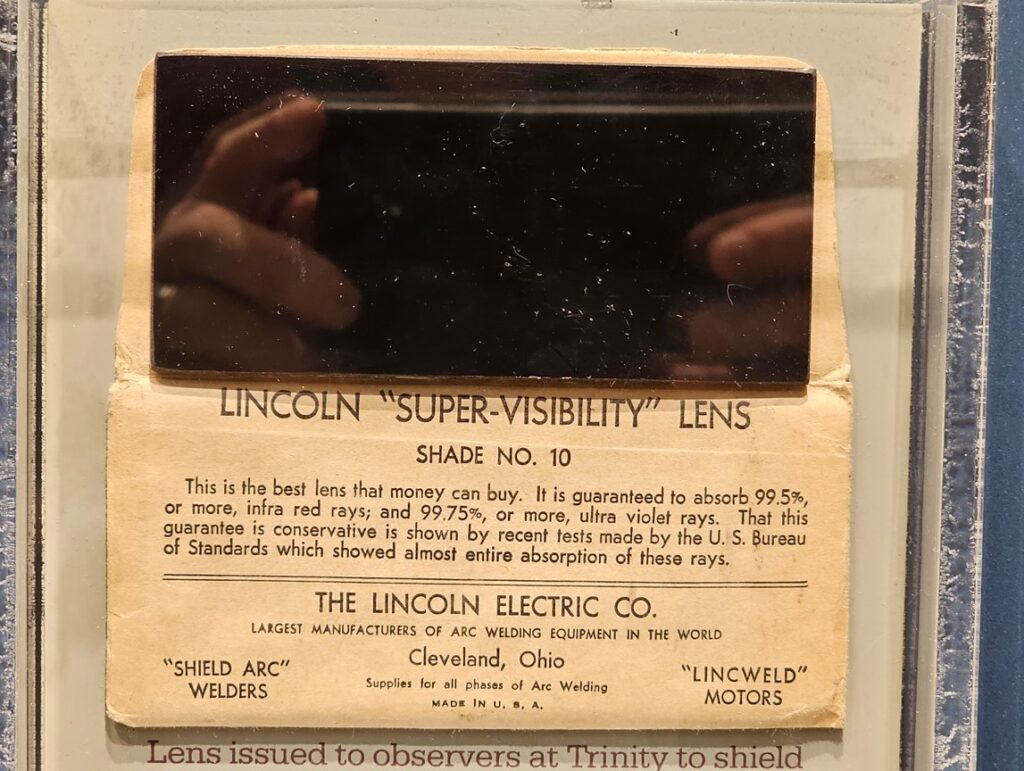
This is a lens that was issued to Trinity Test observers.
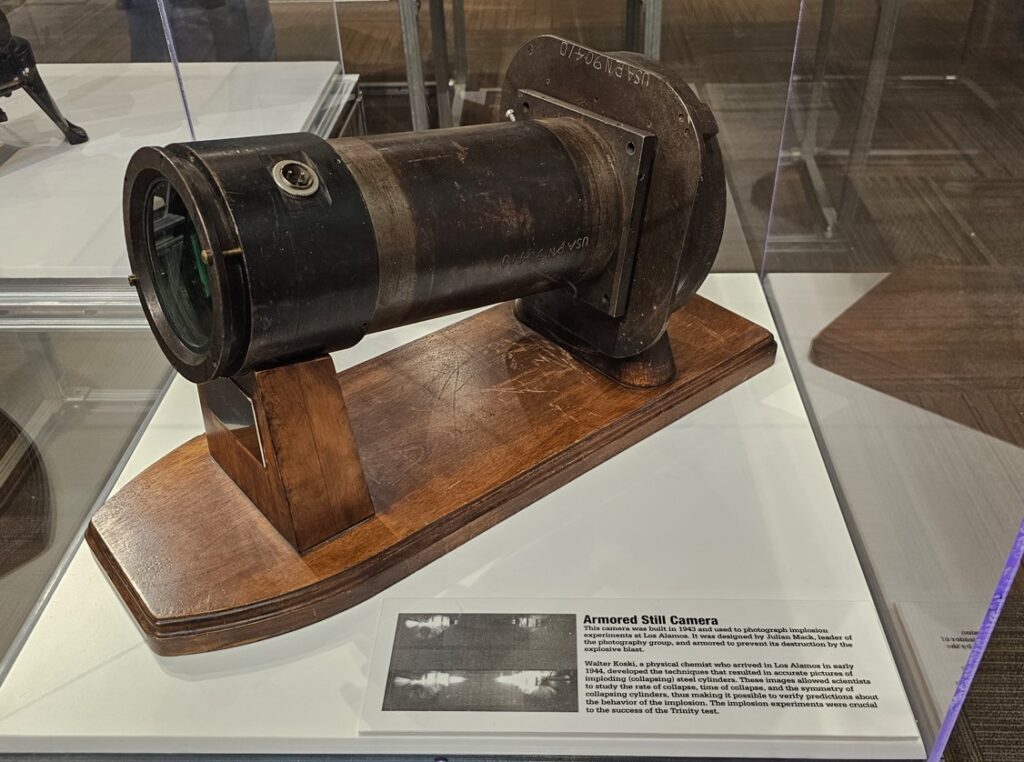
This armored still camera was used to photograph implosions at Los Alamos.
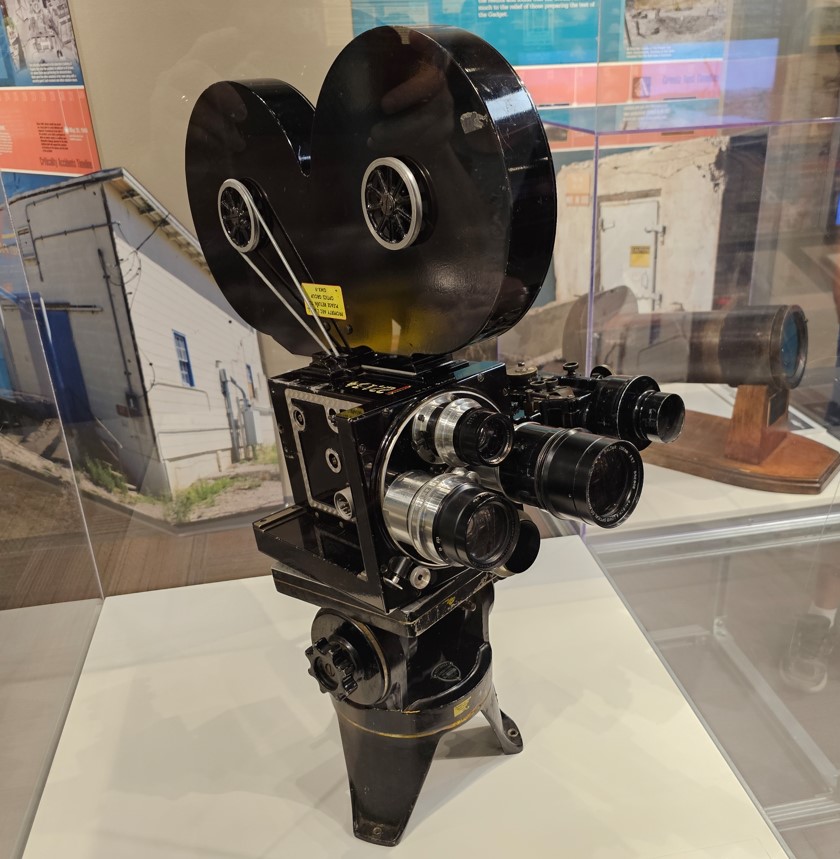
A Mitchell 35mm Movie Camera, this was used to record the world’s first nuclear explosion at the Trinity test.
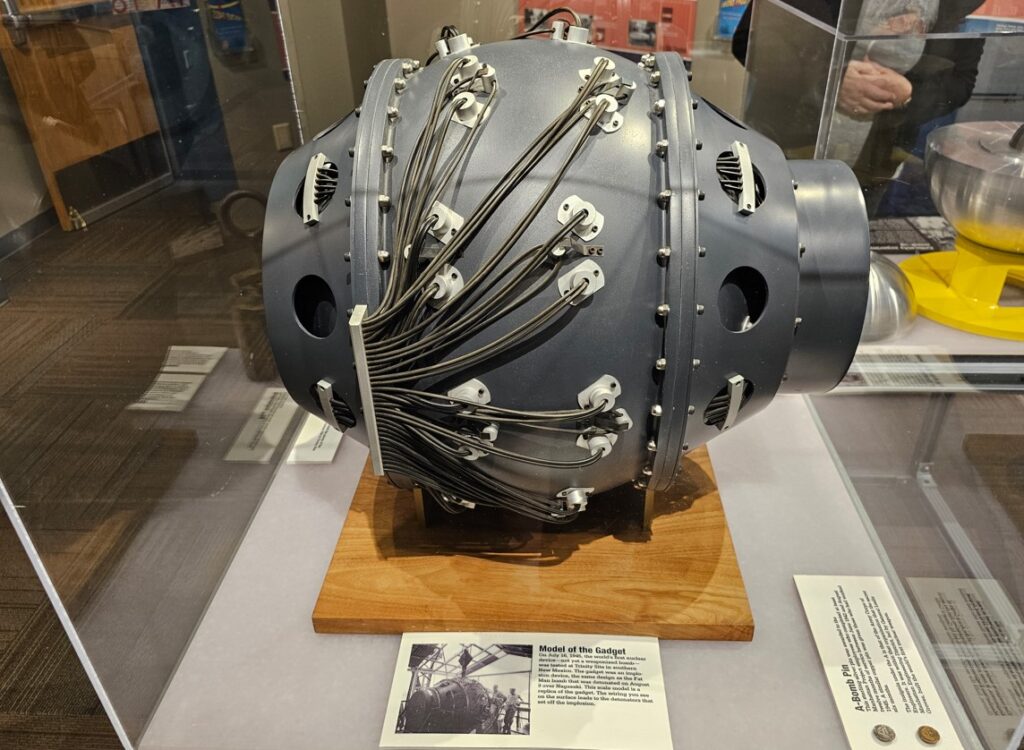
Scale Model of the Gadget, an implosion device of the same design as the Fat Man bomb. The wiring on the surface leads to the detonators that set off the implosion.
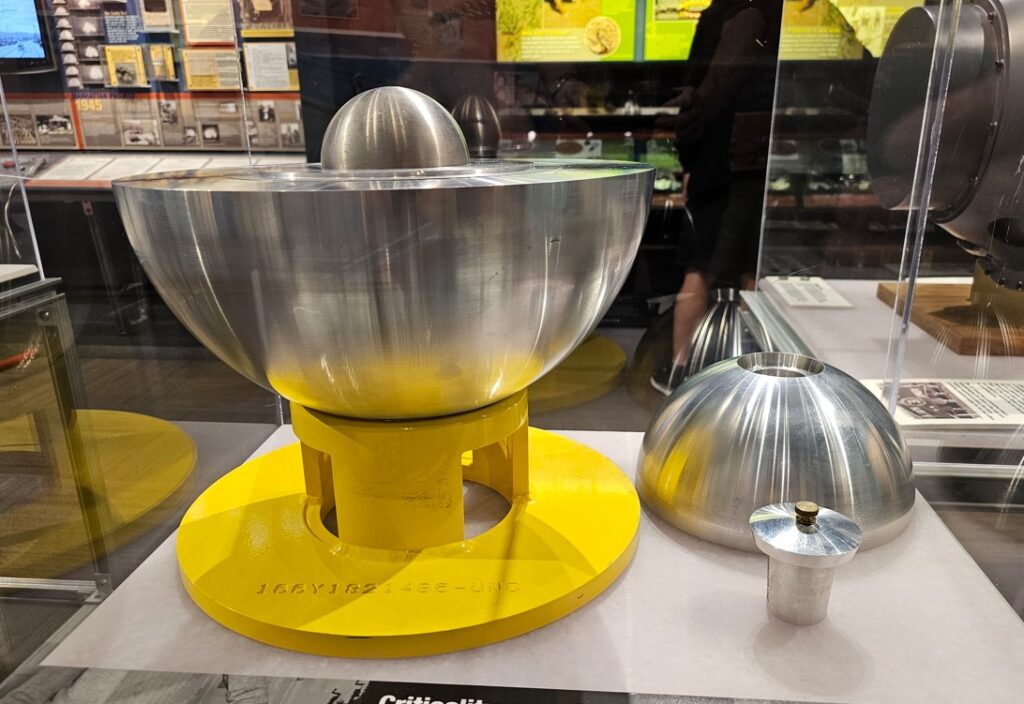
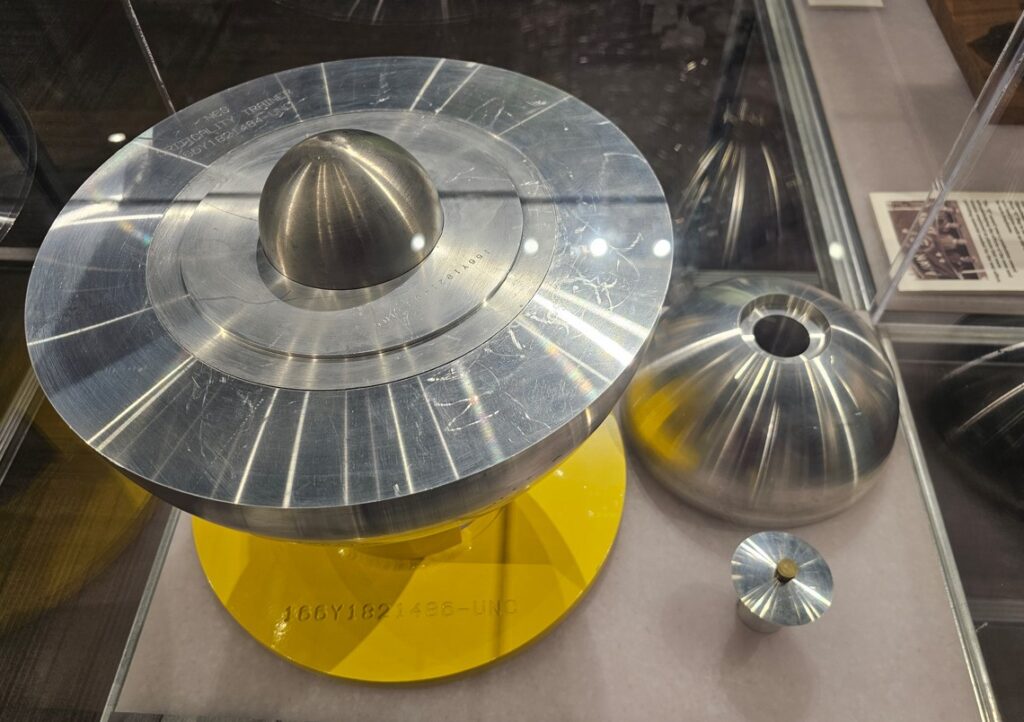
Criticality experiment mock-up. During a “dragon-type experiment” in which a subcritical assembly is brought close to critical, in 1946, an accident occurred when Louis Slotkin’s screwdriver slipped, allowing two hemispheres of beryllium to enclose a subcritical mass of plutonium, releasing a tremendous burst of gamma rays and neutrons. Slotkin received a fatal dose, and seven others were exposed.

New Mexico State Capitol

Santa Fe NM

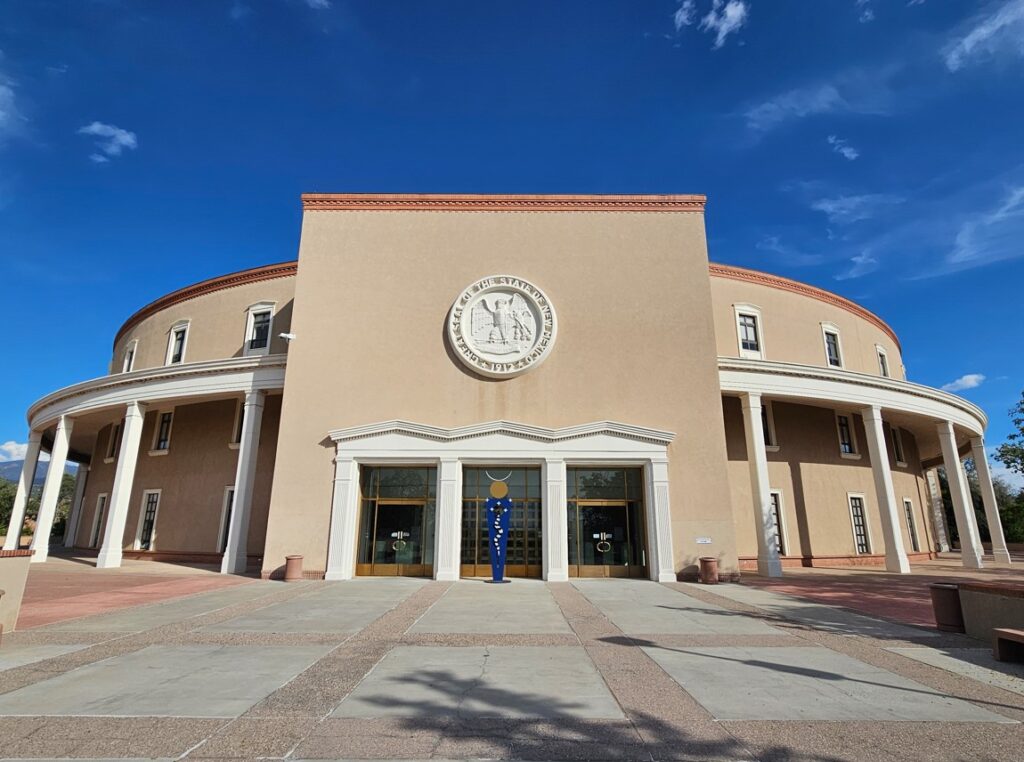
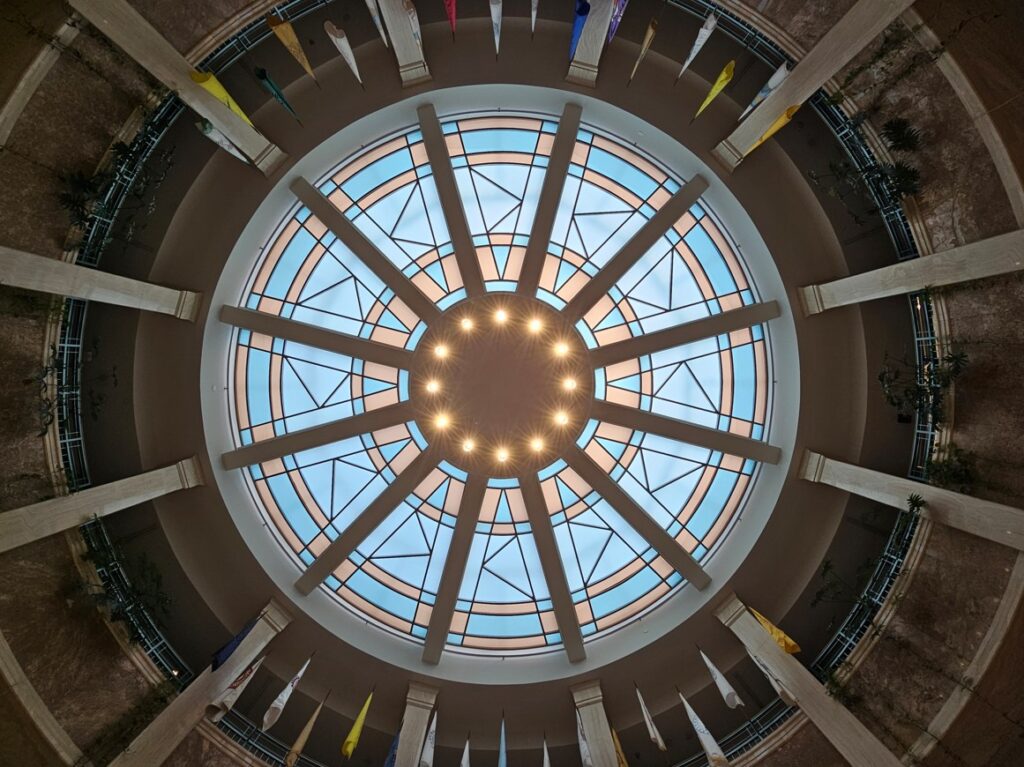
The capitol of New Mexico is a round building.
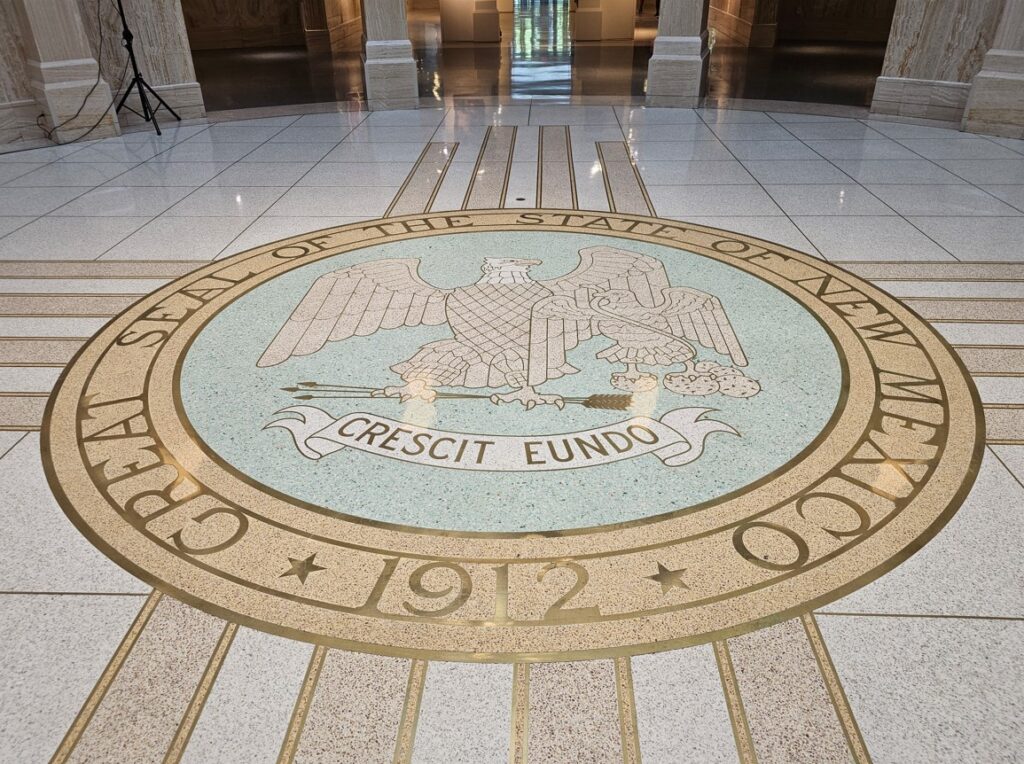
The center of the building.
Beautiful interior.
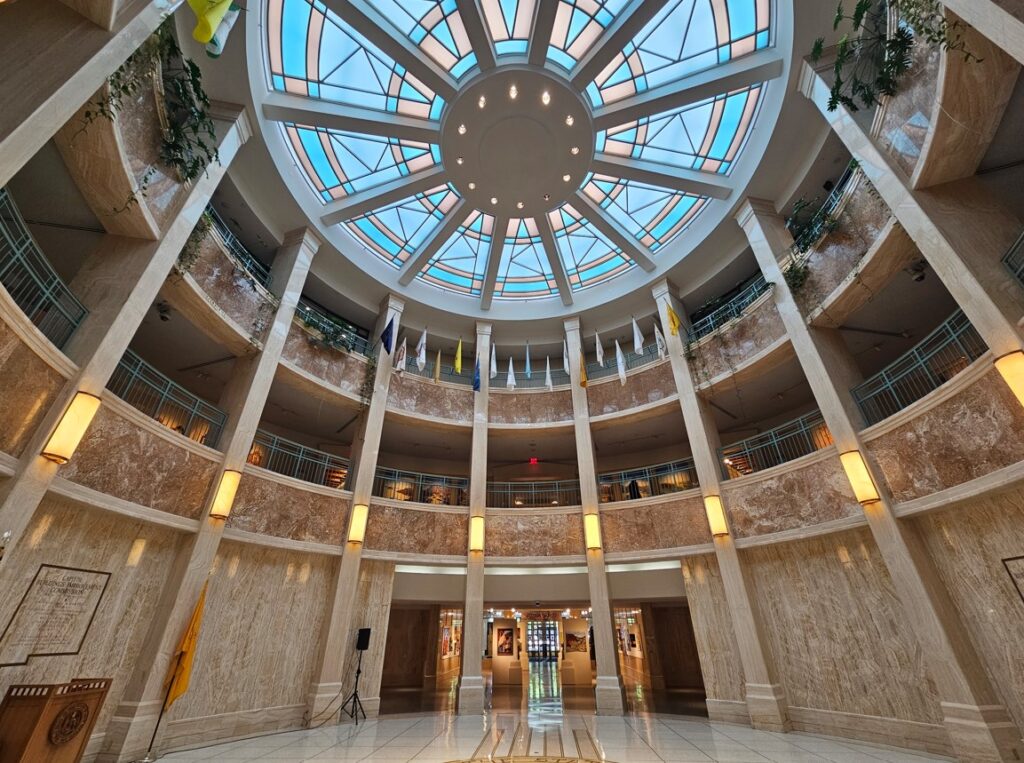
The Rotunda.
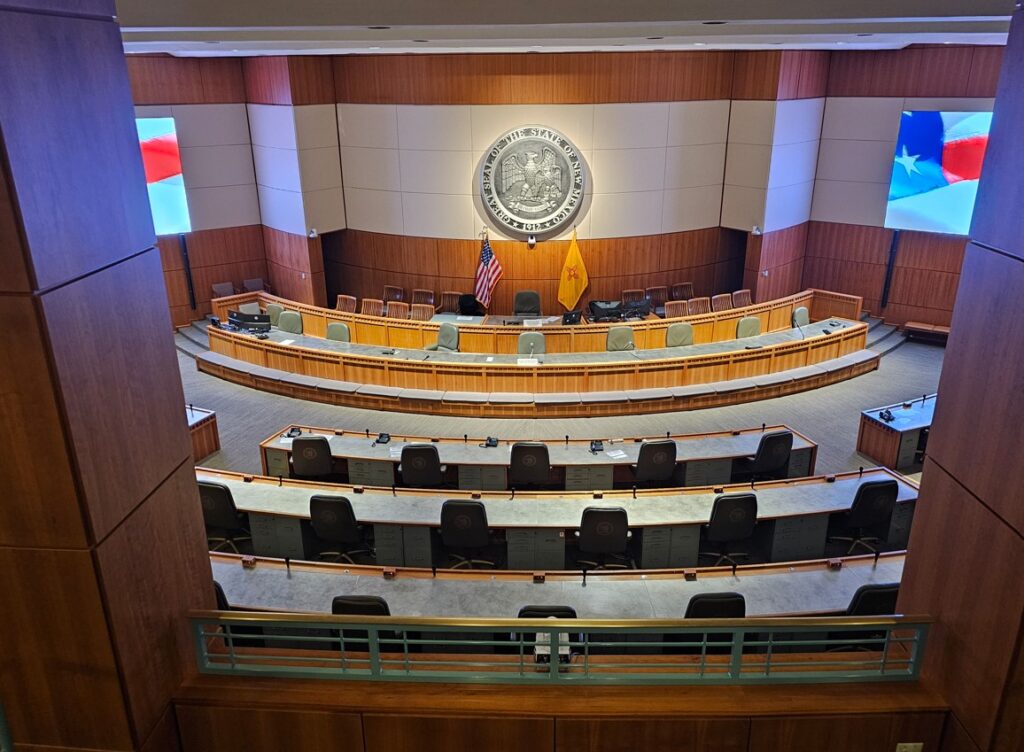
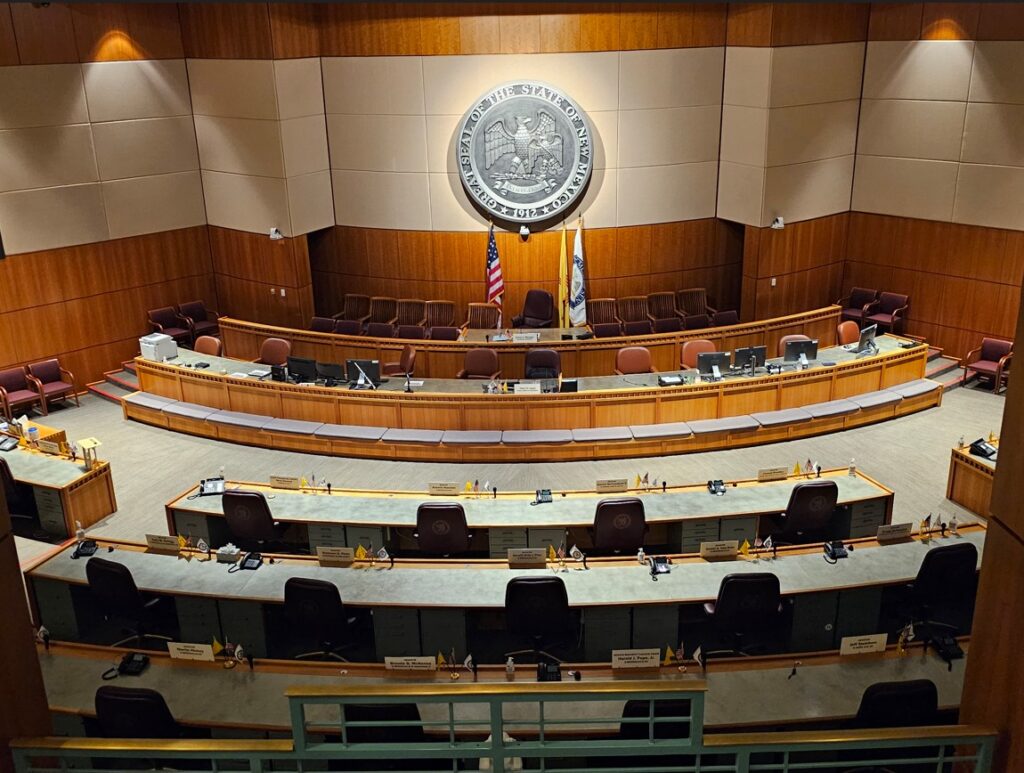
House of Representatives chamber.
Senate chamber.
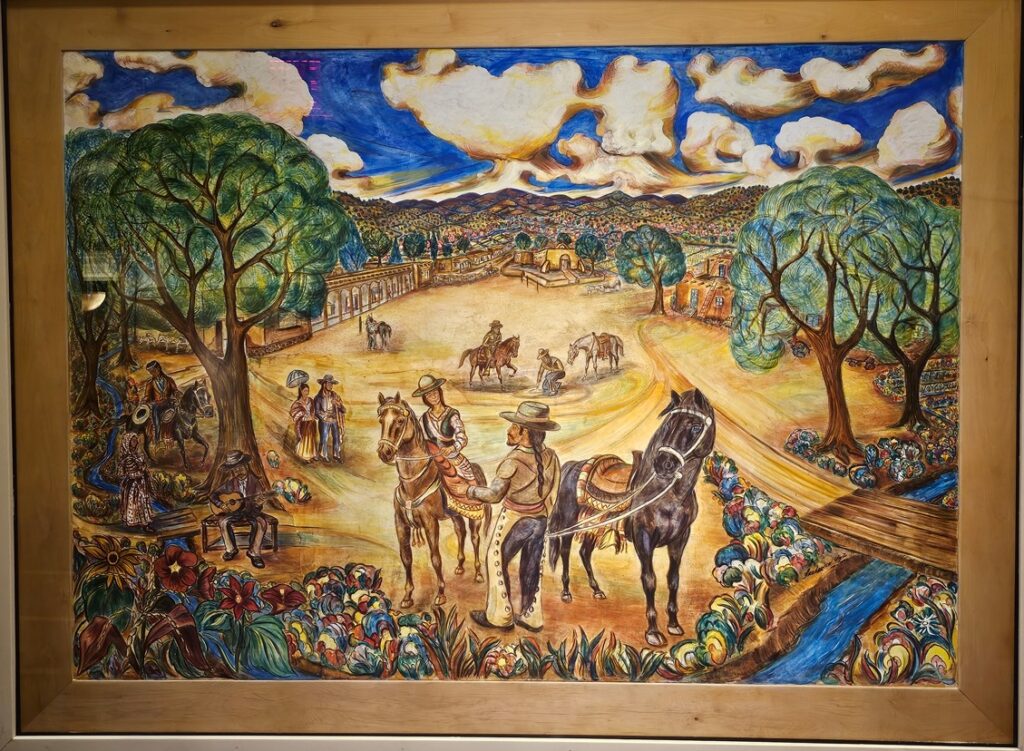
Plaza of Santa Fe in the 1800s, in Buon Fresco, by Frederico M. Virgil, 1992.
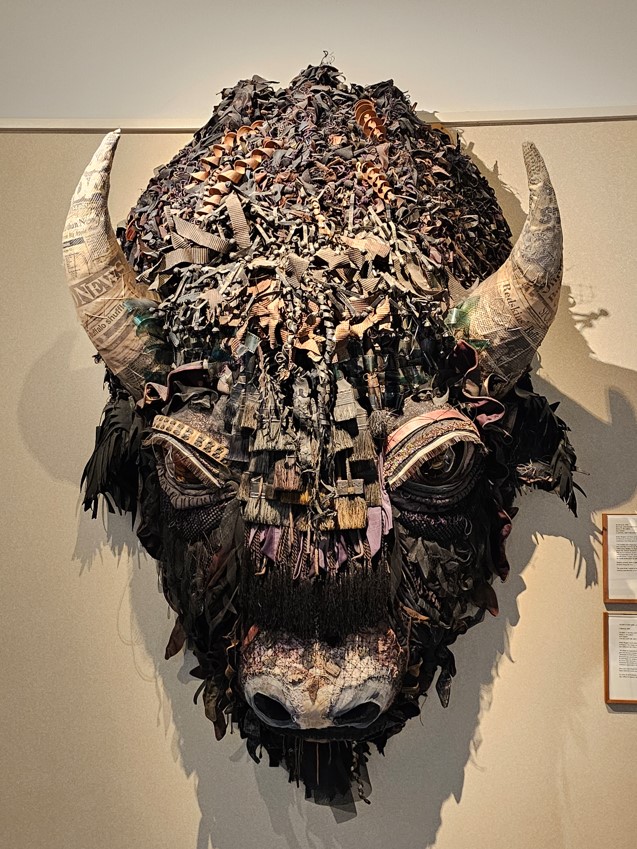
Buffalo, Retail and handwoven, Magnetic tape, film, paintbrushes, wire, quilting applique, by Holly Hughes, 1992.
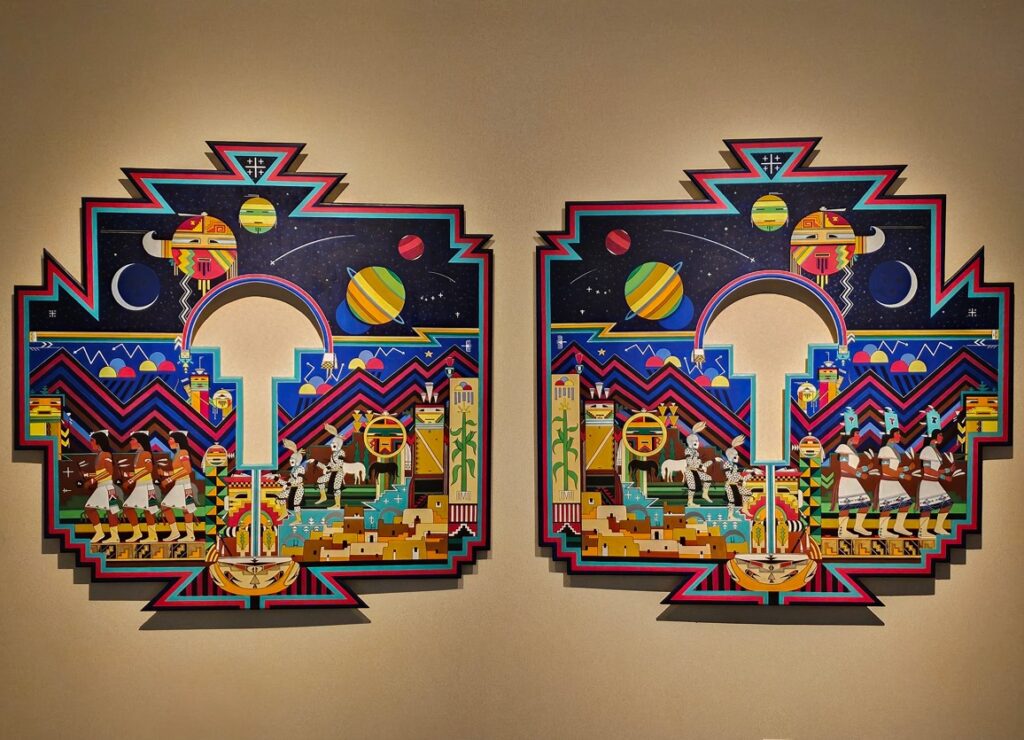
Hoshonzeh, Acrylic on panels, by Douglas Johnson, 1992. Hoshonzeh, translated from Navajo, means “Harmonious Way”, which is a ceremony performed to bring about harmony among all things natural.
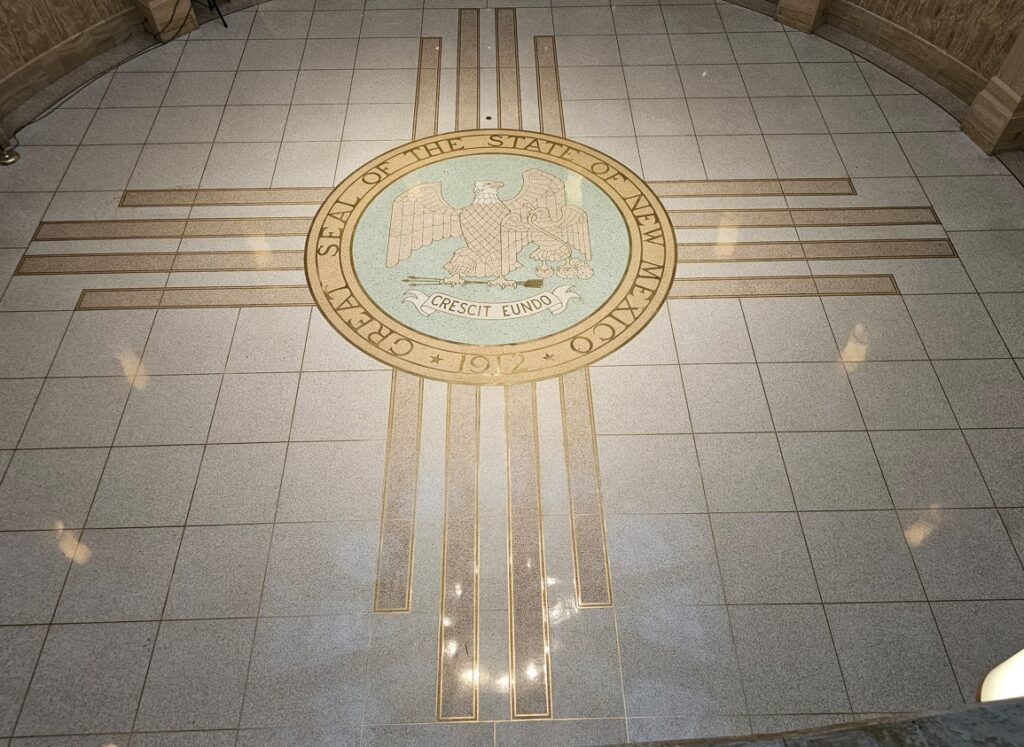
Center of the rotunda floor from the third floor.

Historic Santa Fe NM

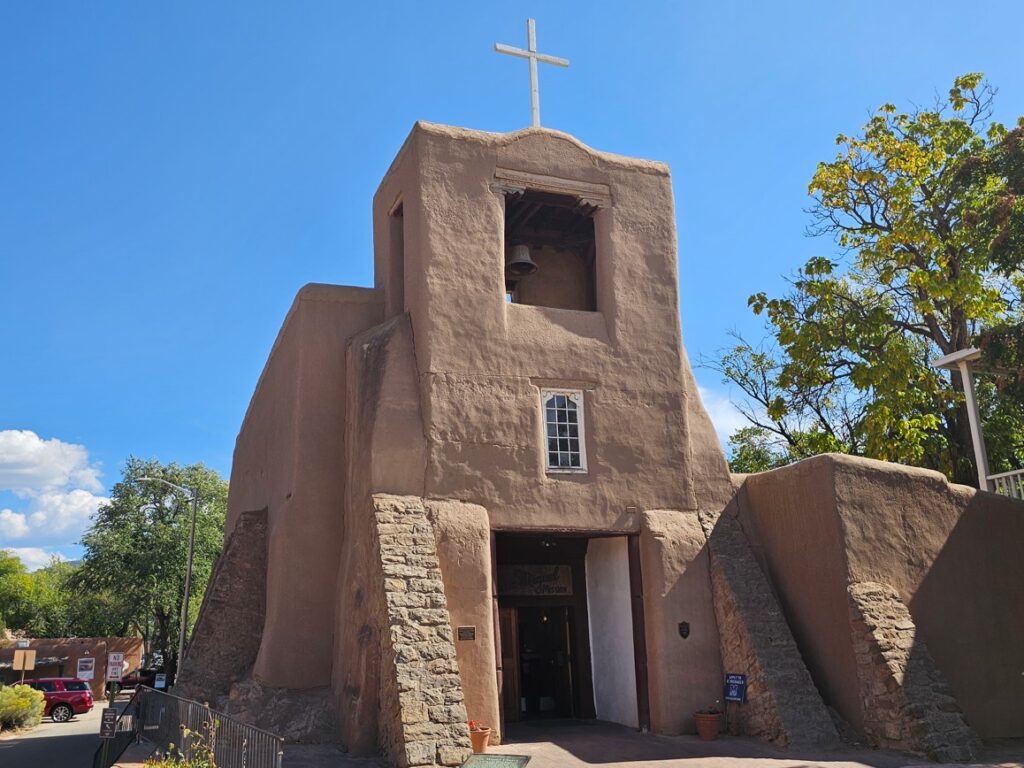
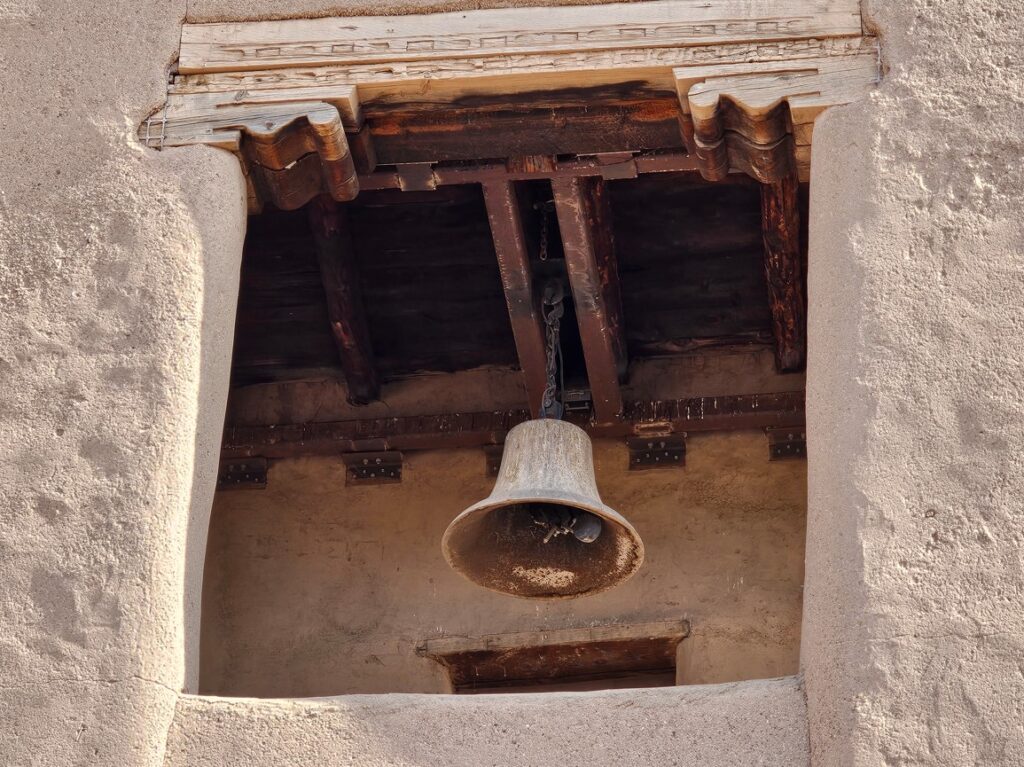
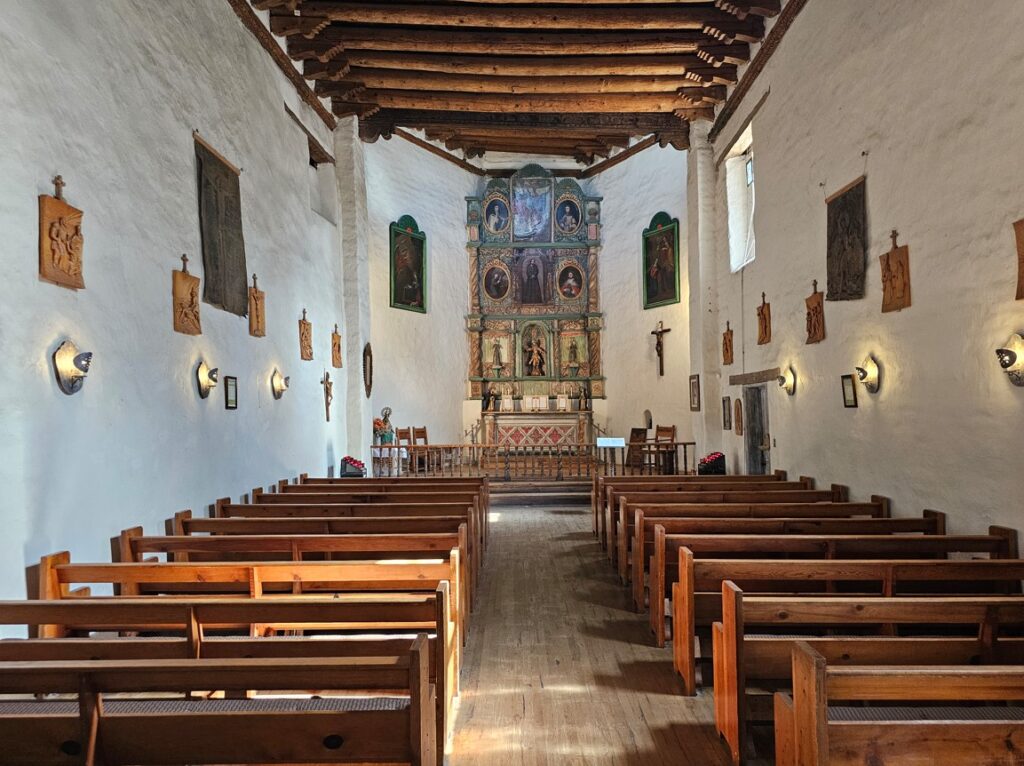
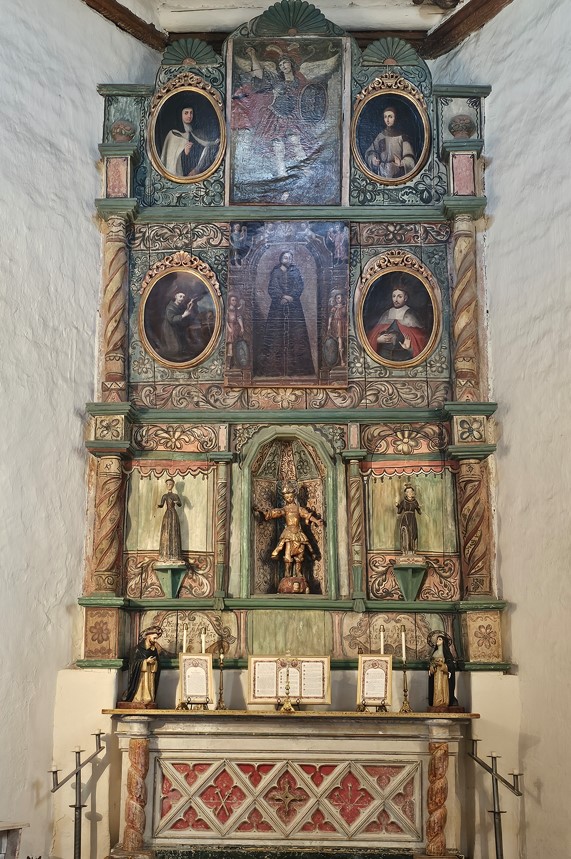
San Miguel Church was built in the early 1600s, the roof recovered from 1694-1710, a three-tiered tower in 1830, and rebuilt as a single tower facade in 1887. Restoration of the beautiful altar backdrop was completed in 1955.
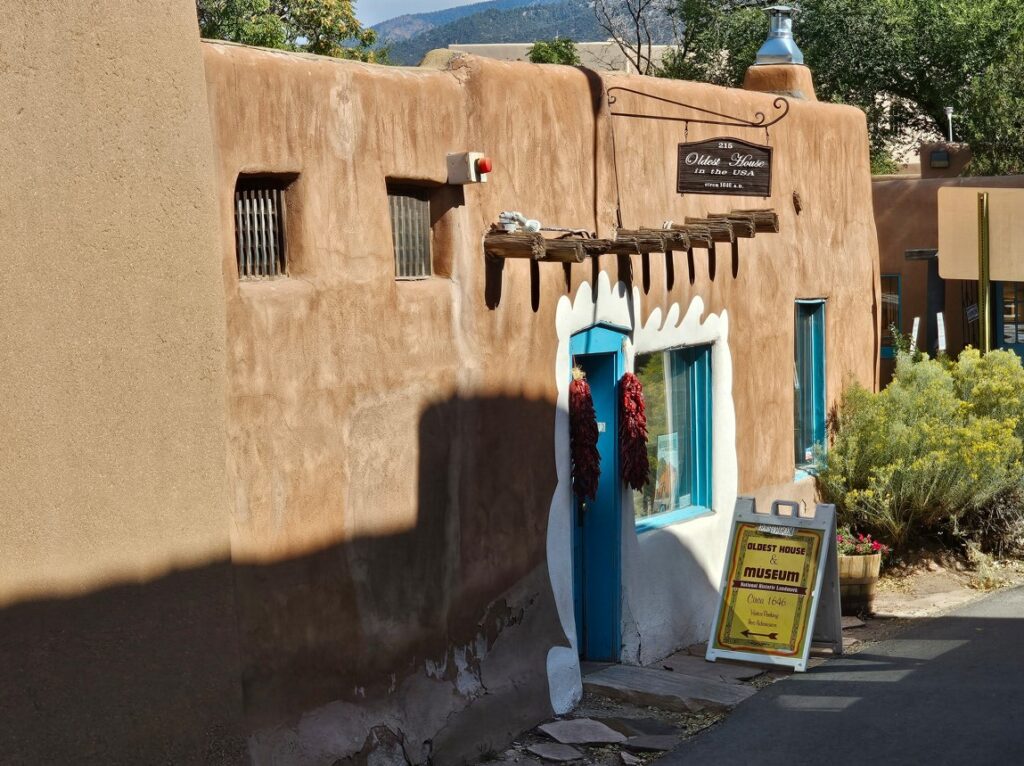
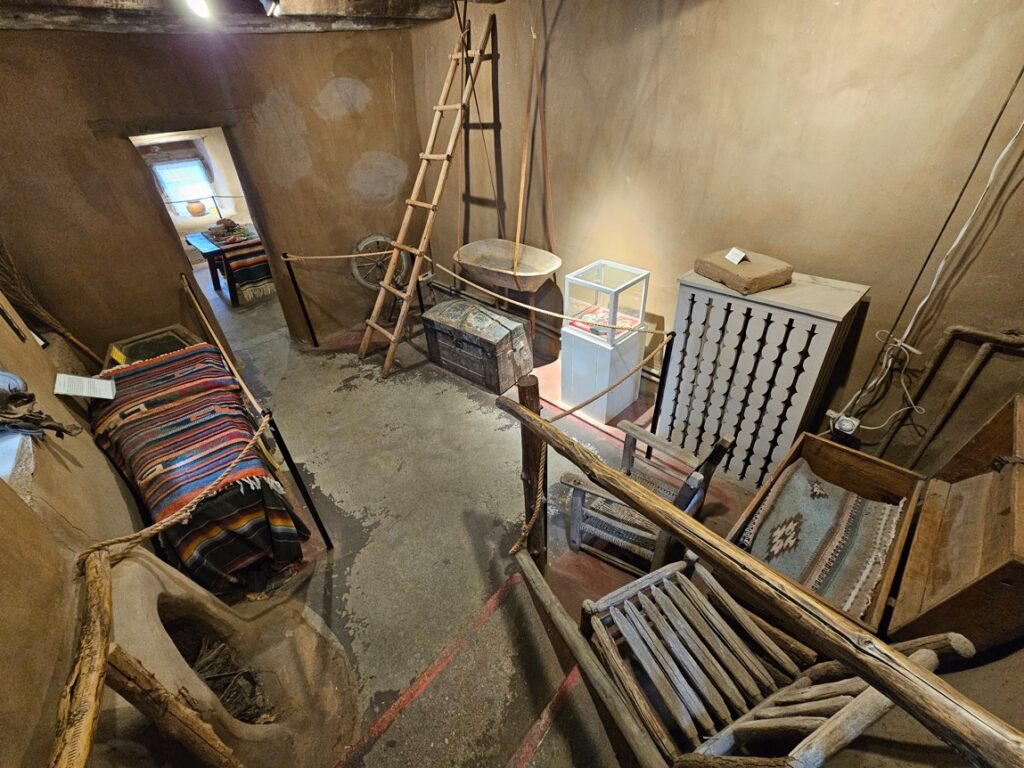
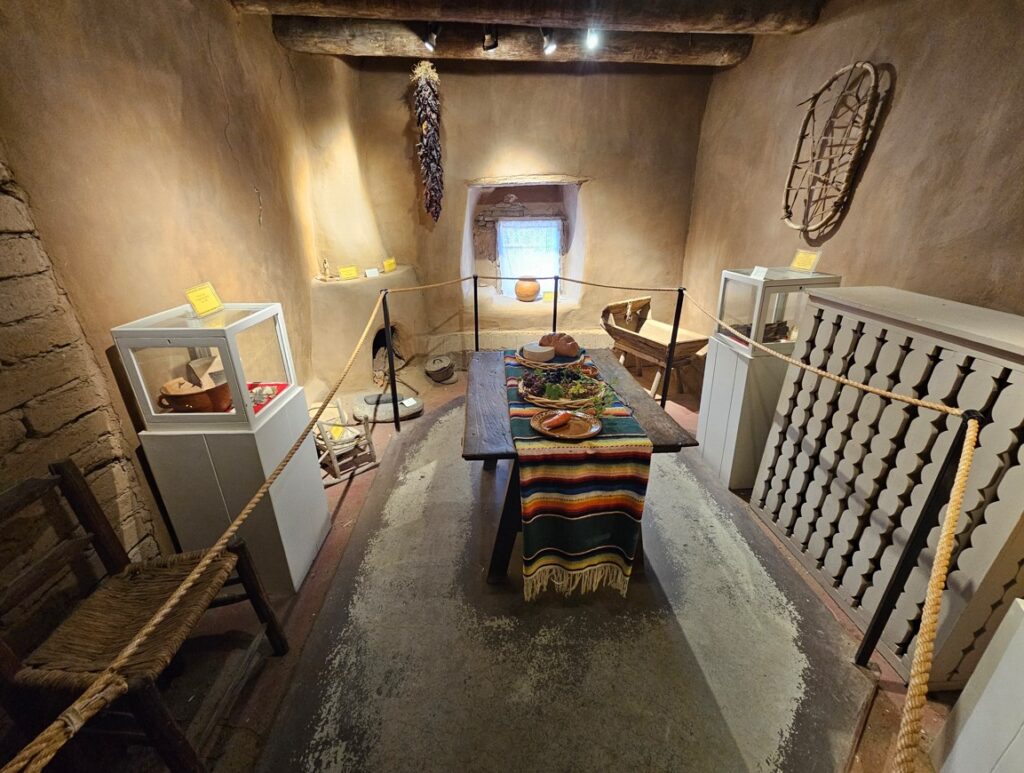
“The Oldest House” sits on part of the foundation of an ancient Indian Pueblo dating to 1200 AD, and taken over by Spaniards in the 1600s. The museum dates itself to 1646.
Rooms inside the Oldest House.
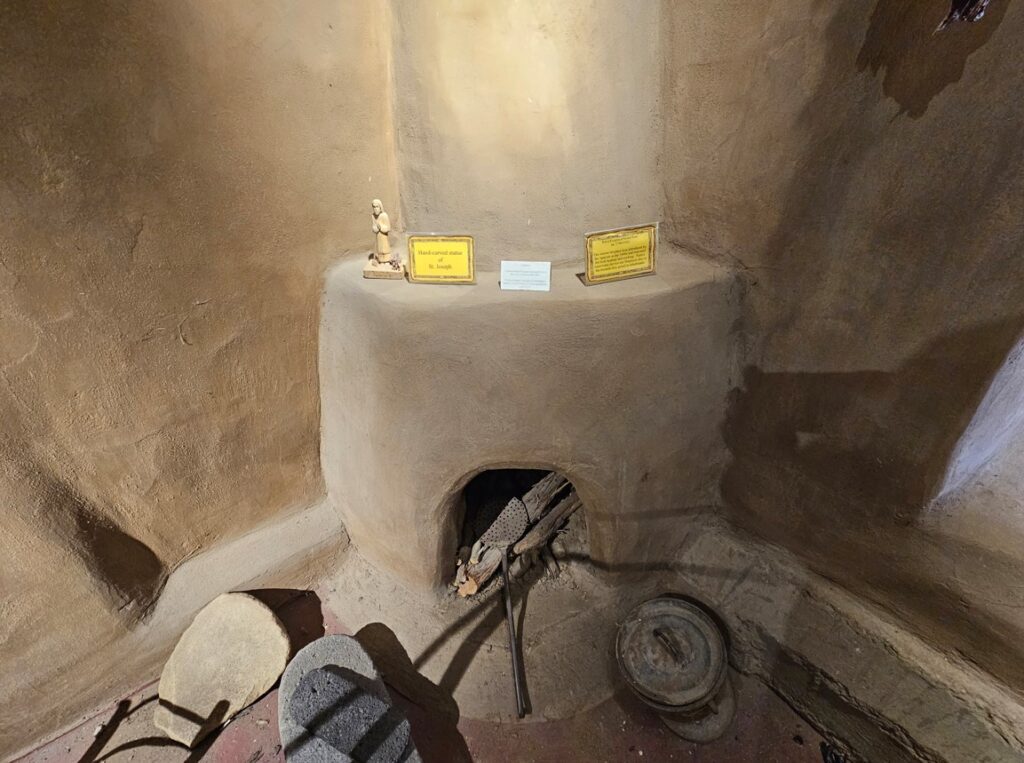
Kiva fireplace dating to the 1600s, introduced by the Spaniards. Native Indians did not use fireplaces due to hazards they posed to inhabitants.
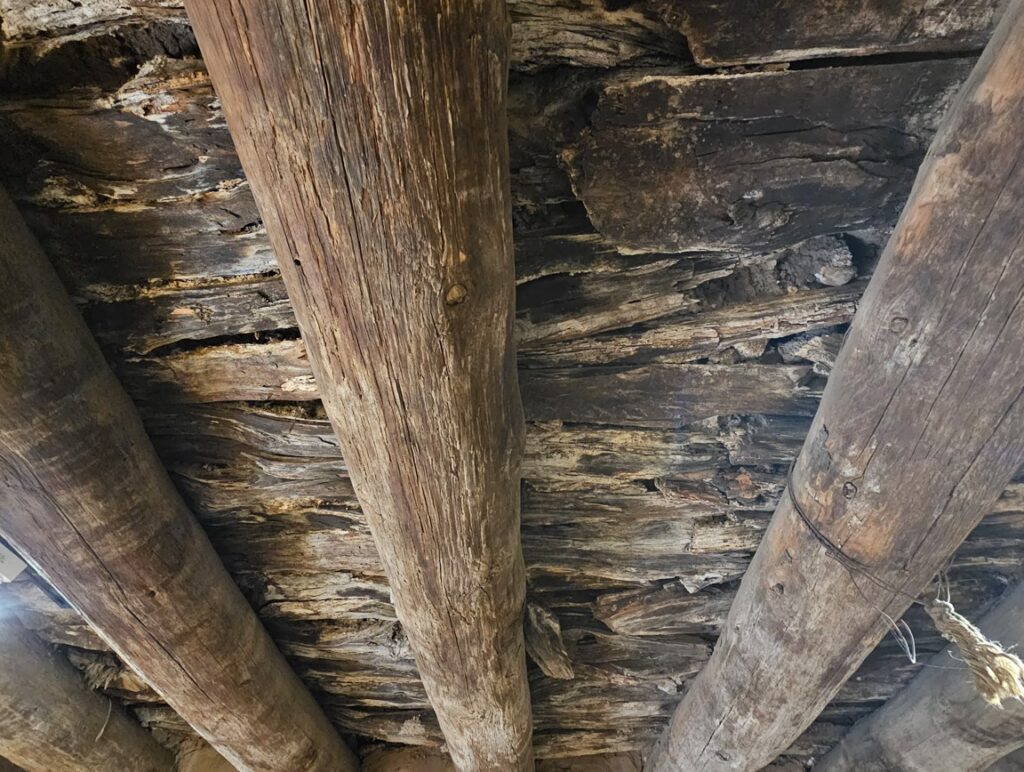
Ceiling.
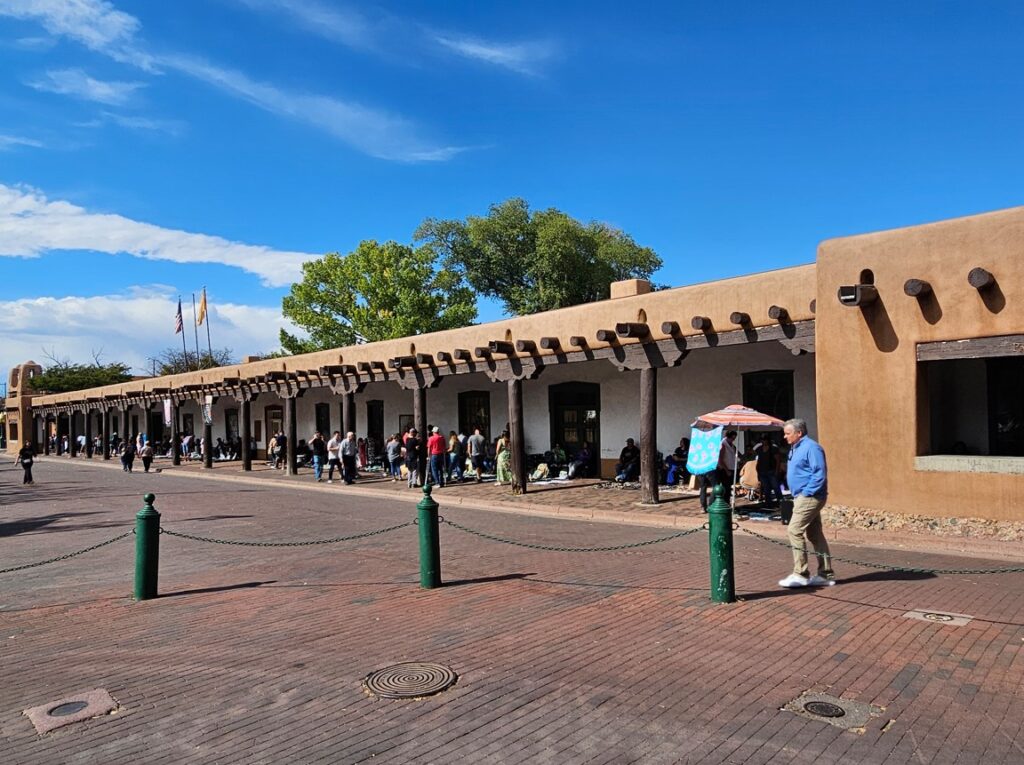
Governors’ Palace, used during the 1600s.
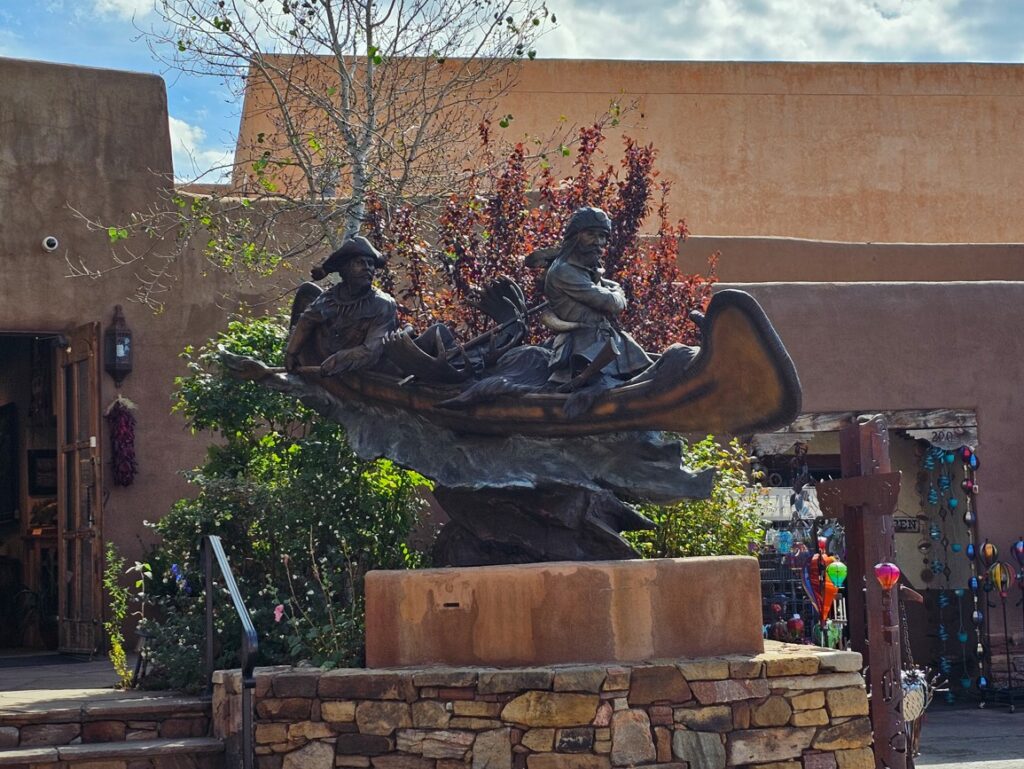
Cool Spanish hunters in canoe sculpture.
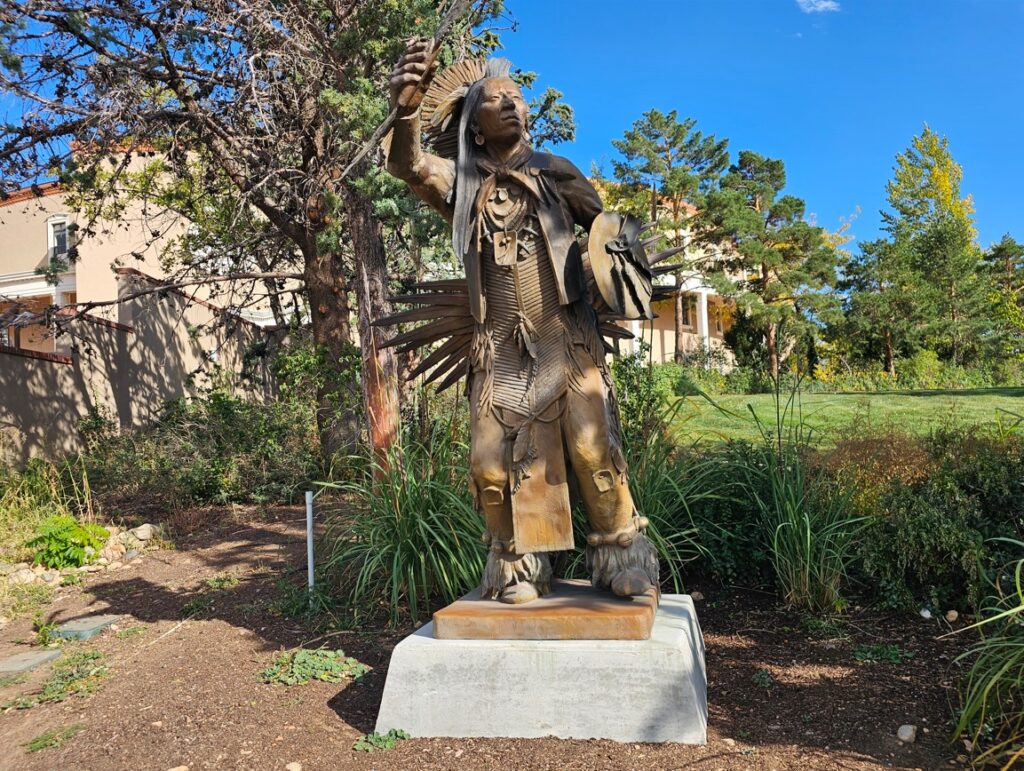
Buffalo Tail, by sculptor Oreland C. Joe, Jr. in 1958.
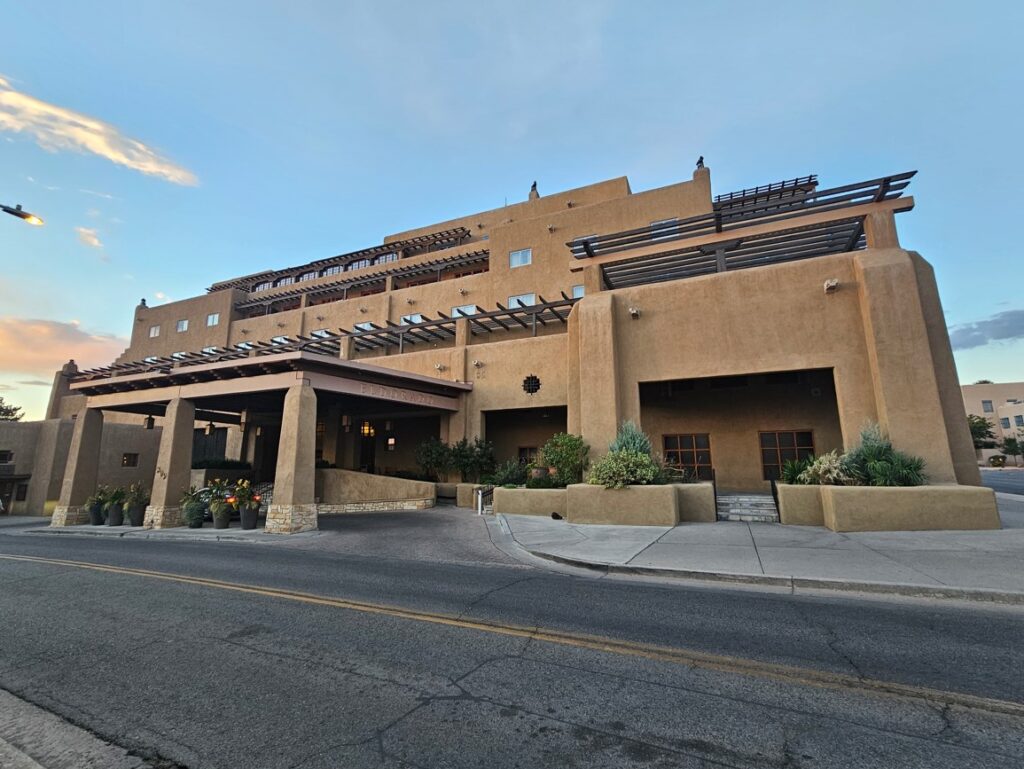
We stayed one night here at the Historic Hilton Hotel in Santa Fe. Built in 1625, the hacienda originally belonged to Padre Ramon Ortiz, a member of one of Santa Fe’s founding families. In 1973, Hilton acquired, restored, and expanded the hacienda while preserving its historic features. The three luxury casitas (we were upgraded free to one of these!) are built within the adobe walls of the 17th-century coach house featuring planked ceilings, exposed brick, Colonial furnishings, and a traditional kiva fireplace.
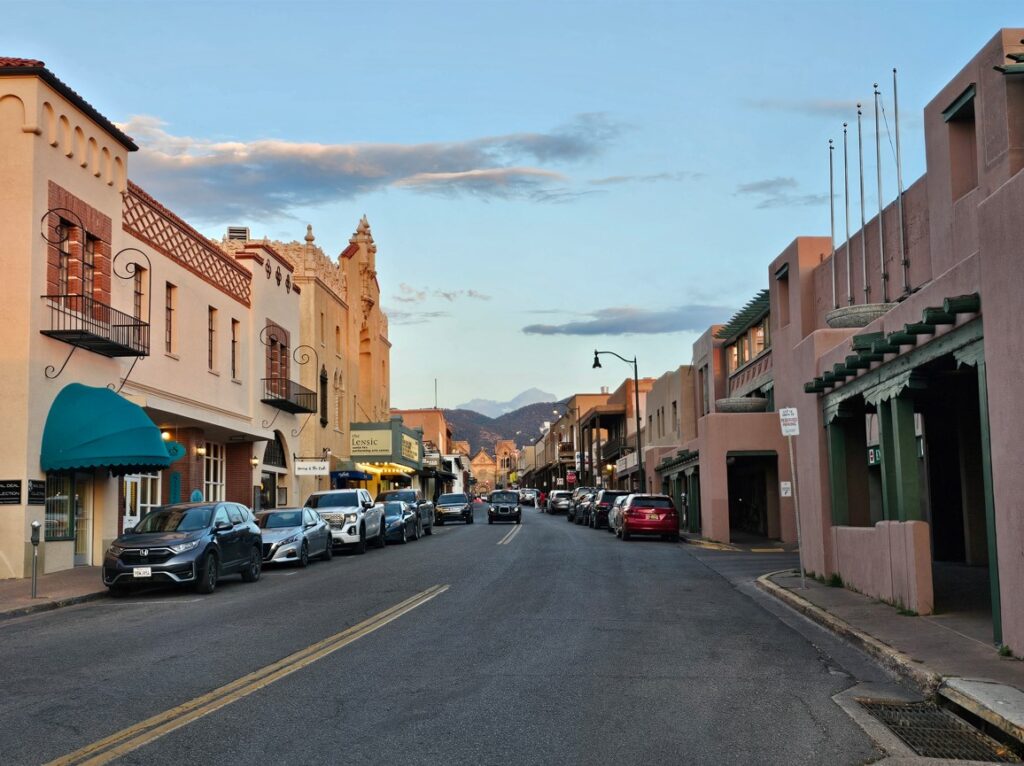
Looking east on W. San Francisco Street

La Jornada (The Journey)

Albuquerque NM

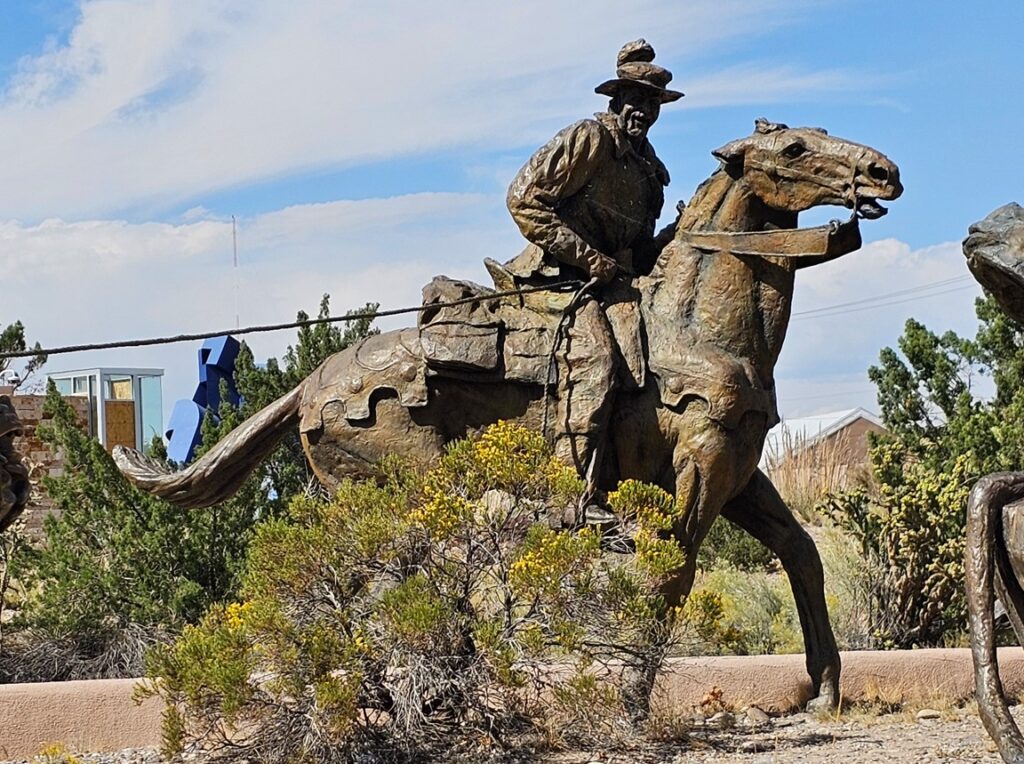
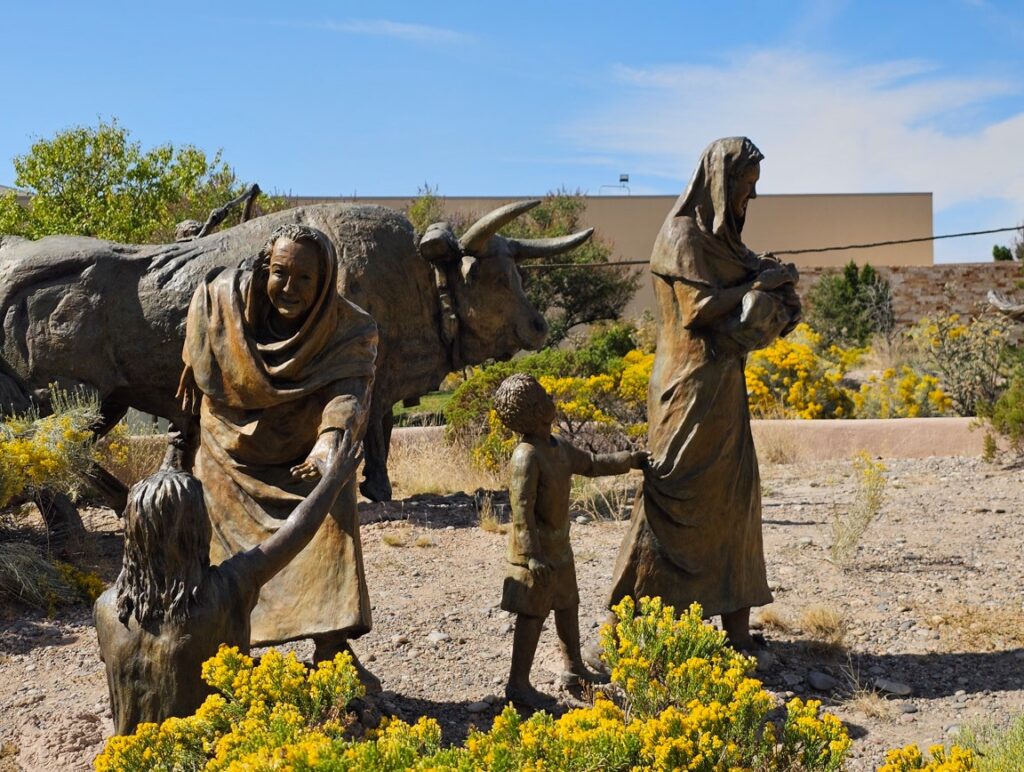
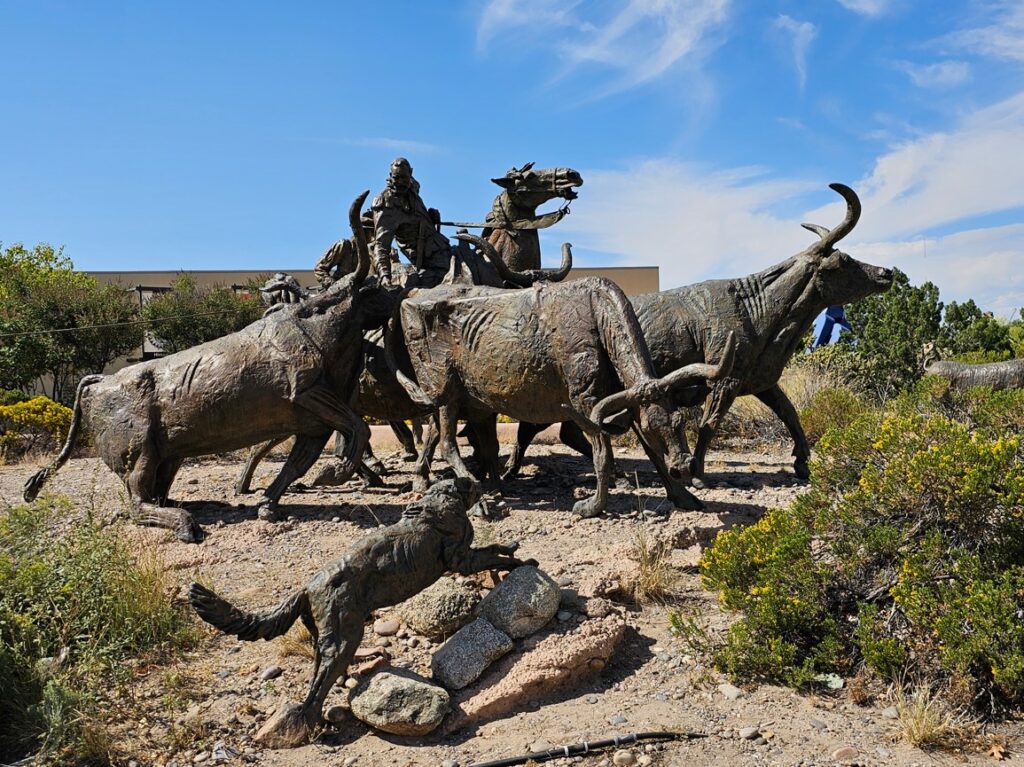
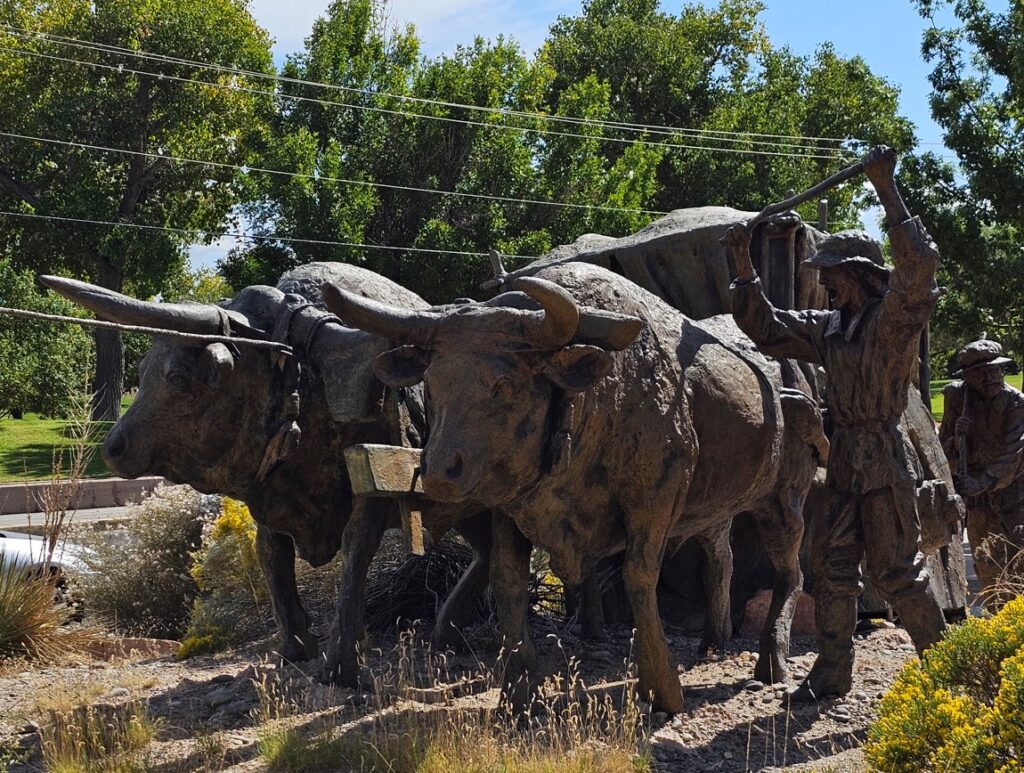
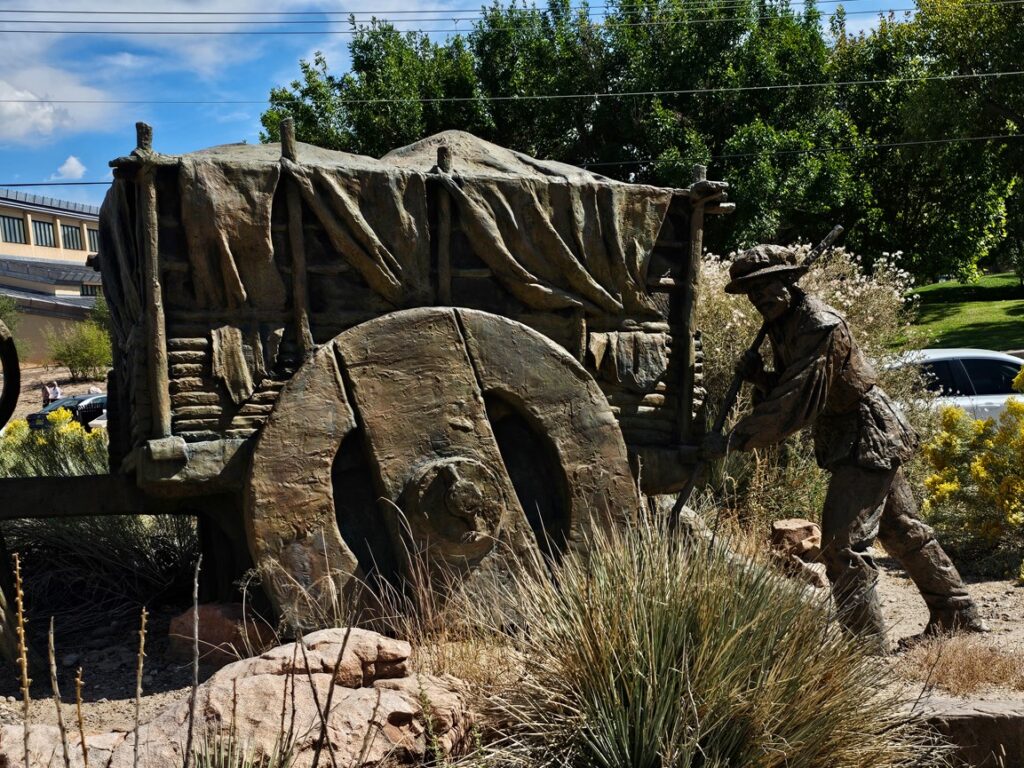
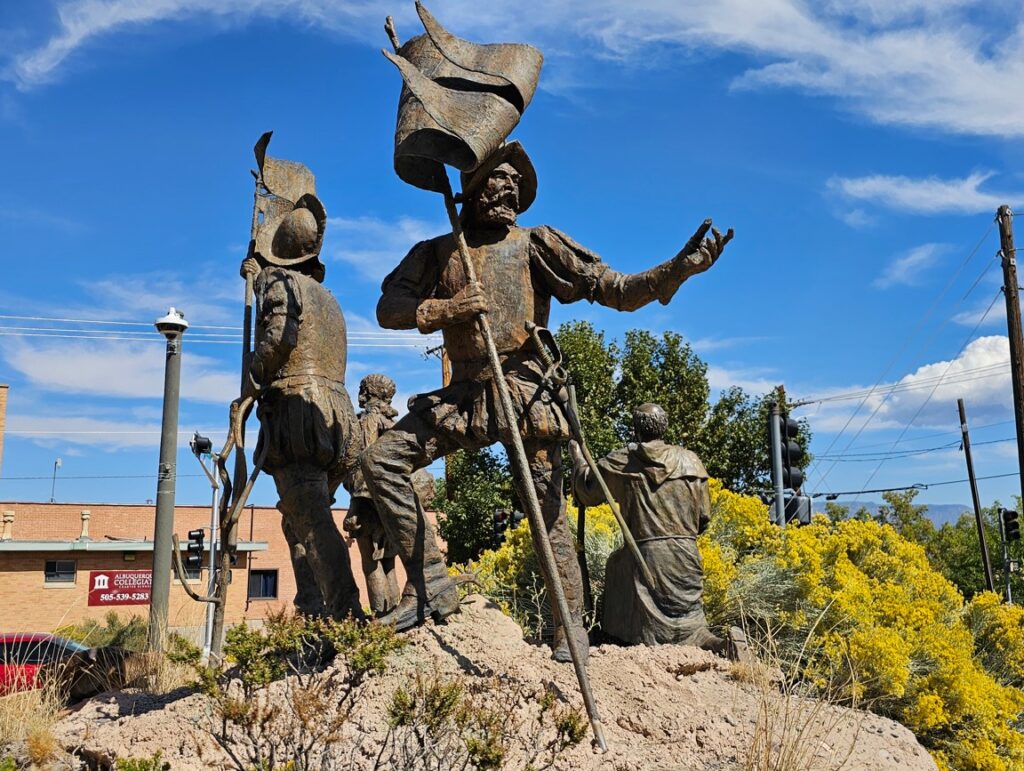
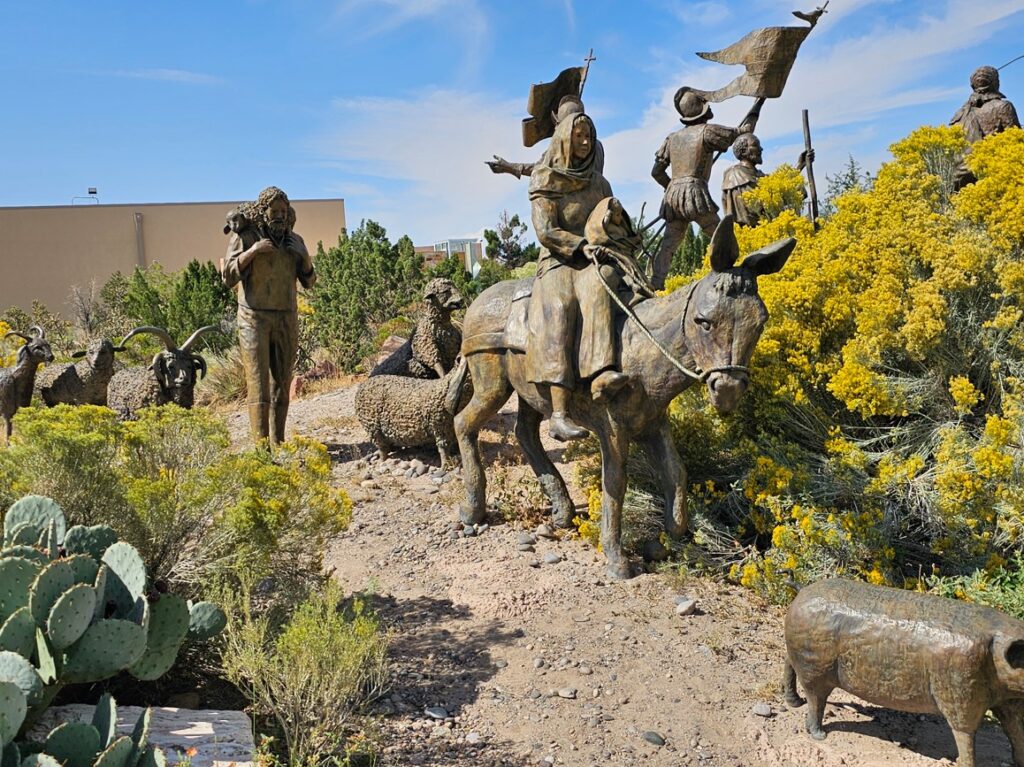
This sculpture outside the Albuquerque Museum depicts several of the 600 settlers who embarked on an arduous seven month journey in 1598 from Santa Barbara (about 250 miles south of El Paso TX) to establish their homes in the northernmost province of New Spain (present day New Mexico). Many modern day New Mexicans trace their roots to these brave men, women and children.
International Balloon Fiesta

Albuquerque NM

The heavens declare the glory of God, and the sky above proclaims his handiwork.
-Psalm 19:1
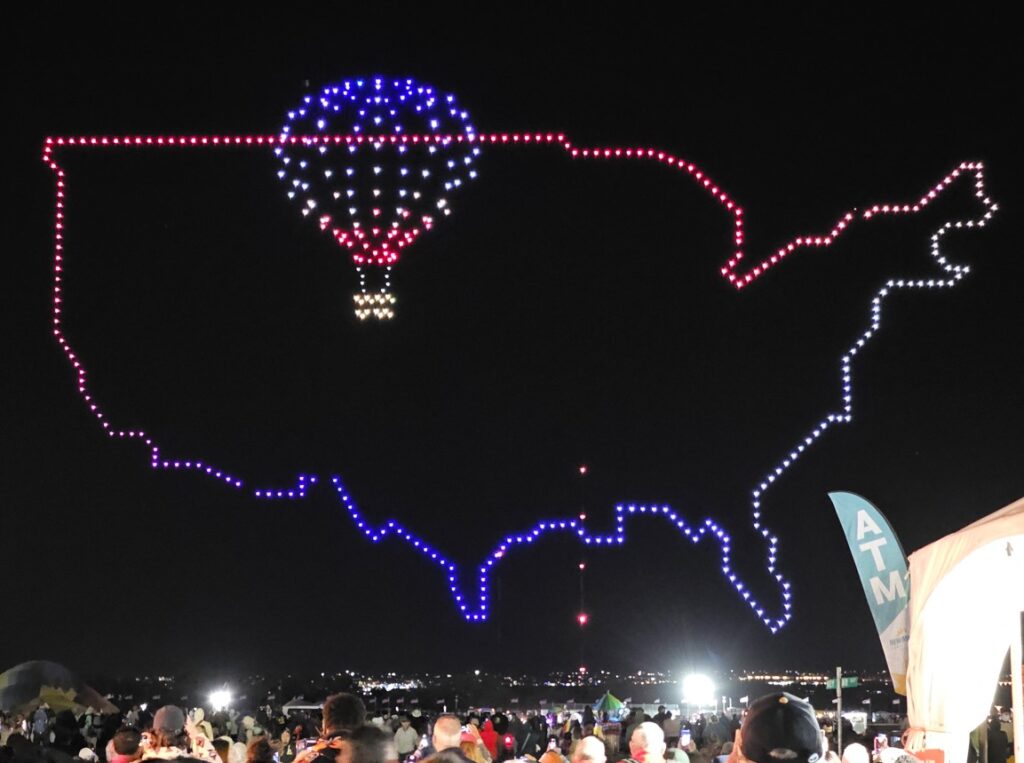
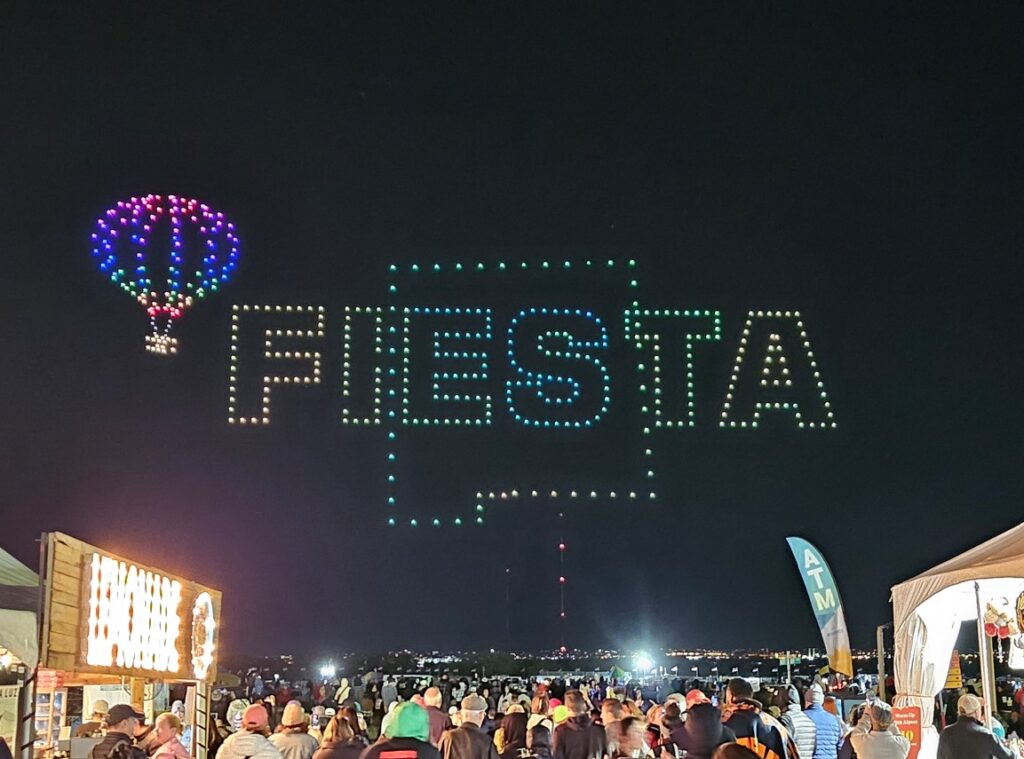
At 6:30 AM, still dark, they did a Drone Light show. Pretty cool.
Another design in the Drone Light show.
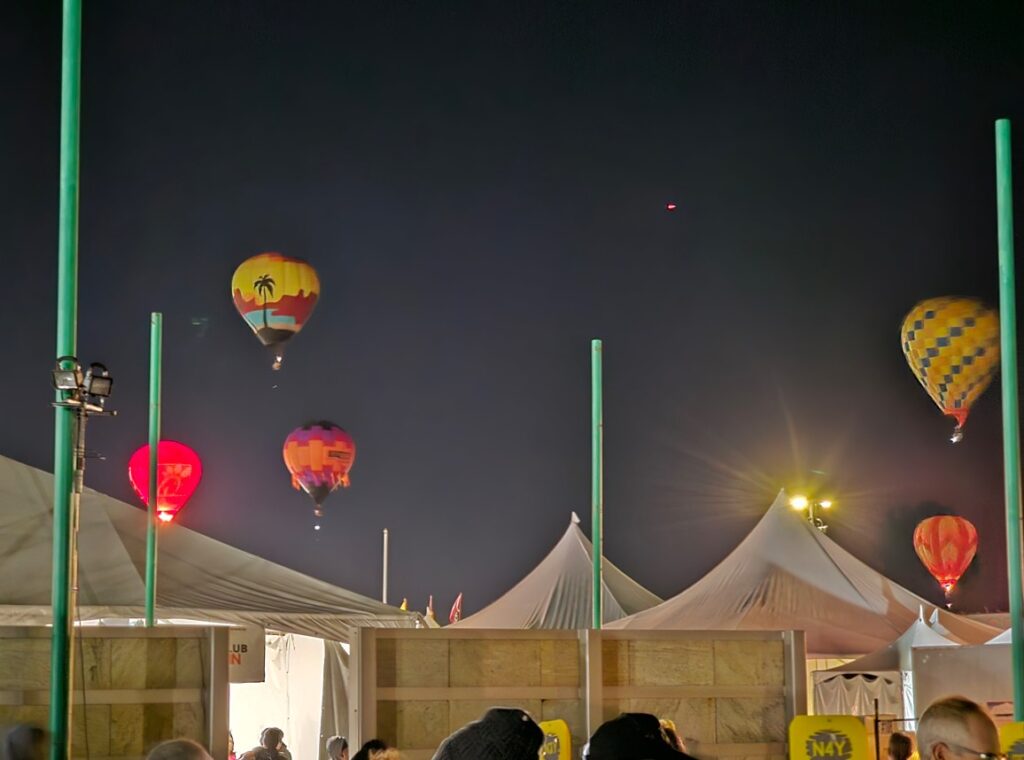
Balloons started lifting off in the dark, and the fire made the balloons glow.
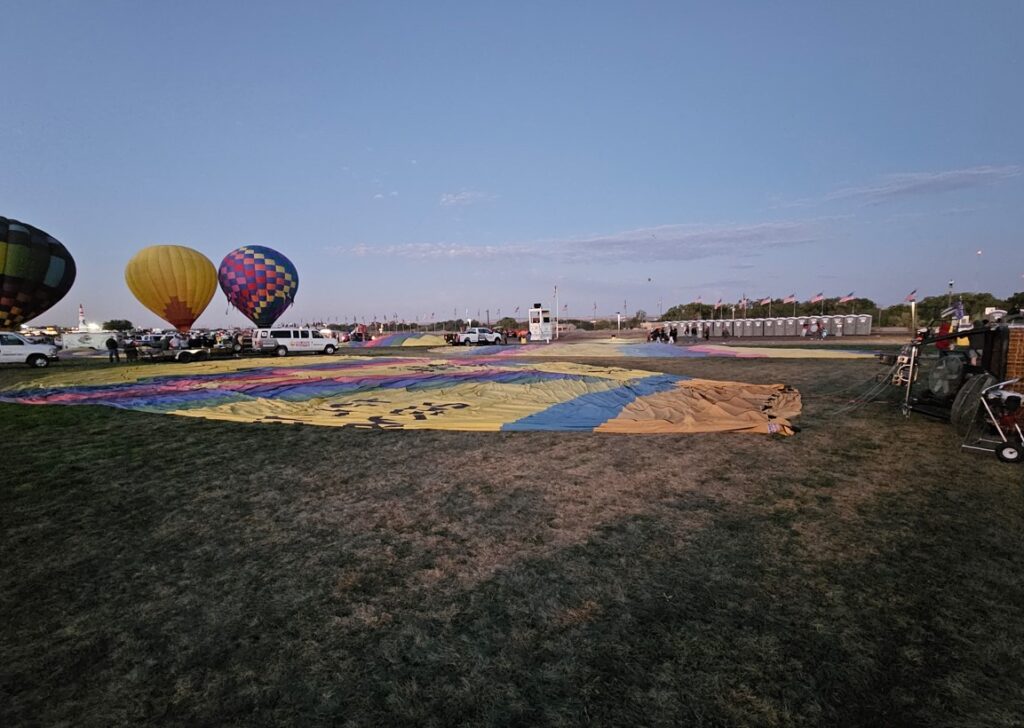
This is our balloon flat on the ground.
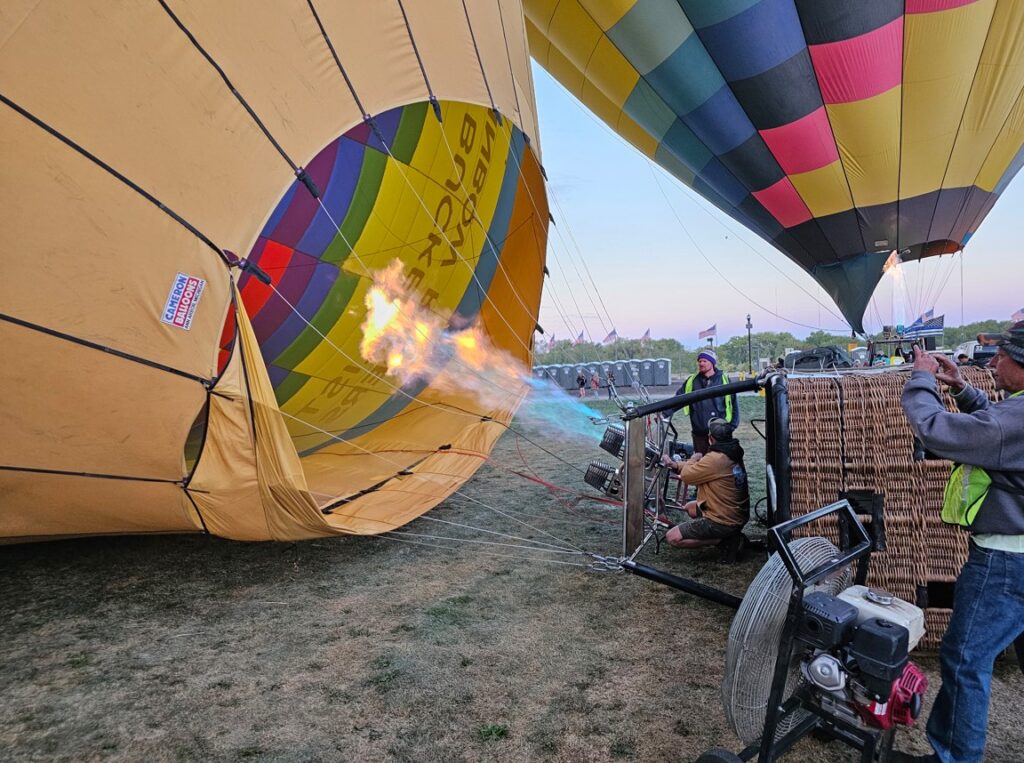
Our pilot inflating the balloon.
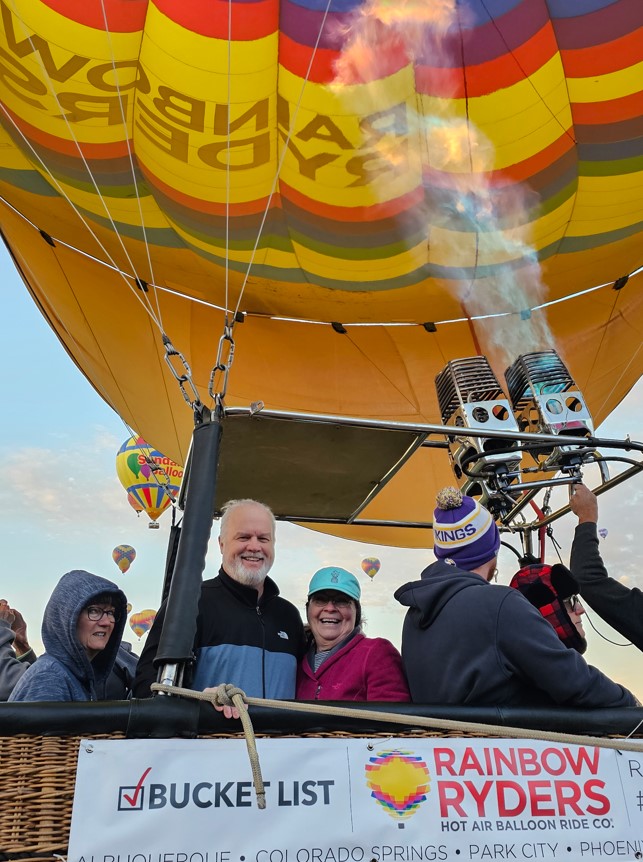
Ready for liftoff!
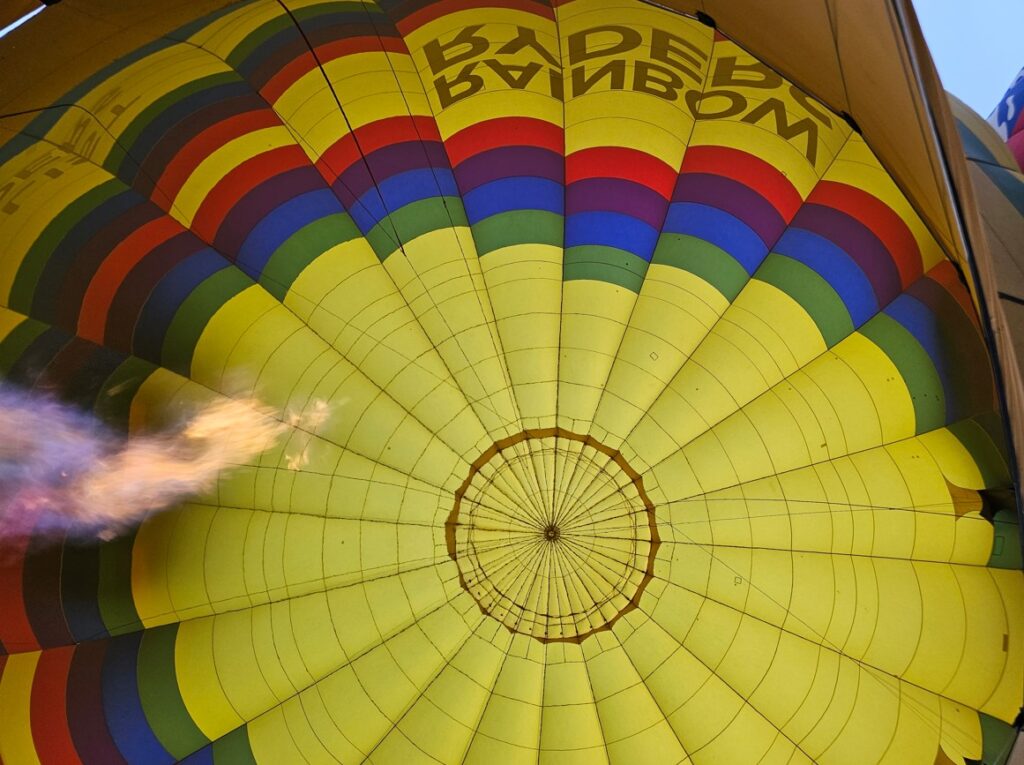
Inside of the balloon.
The liftoff was very smooth.
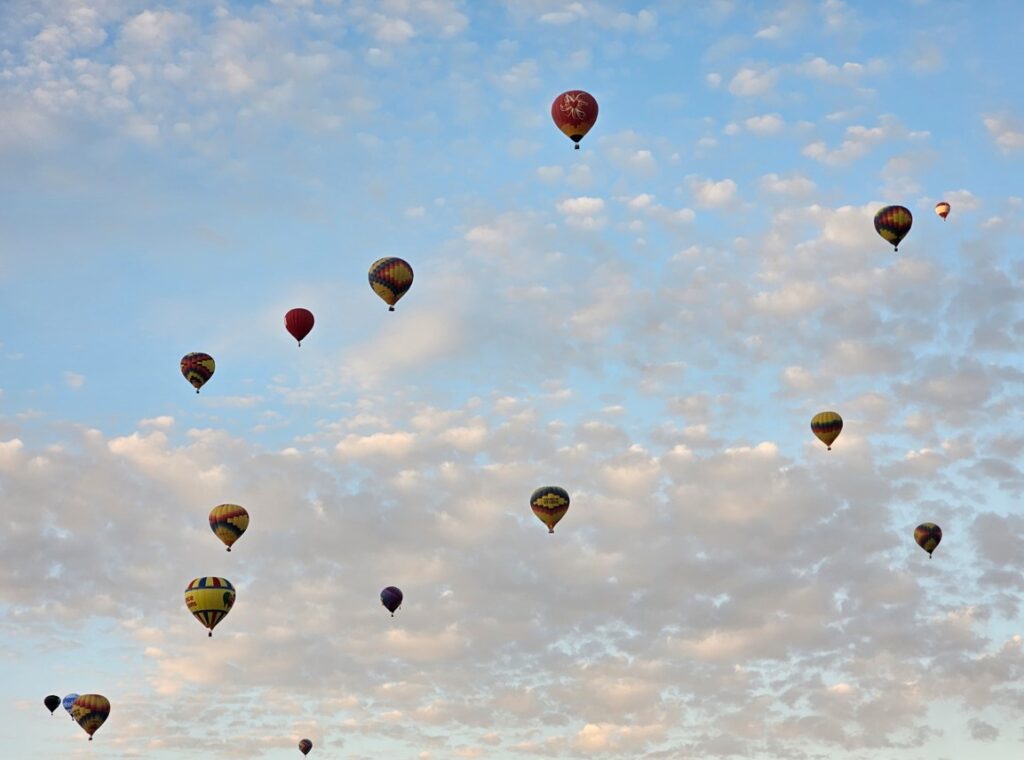
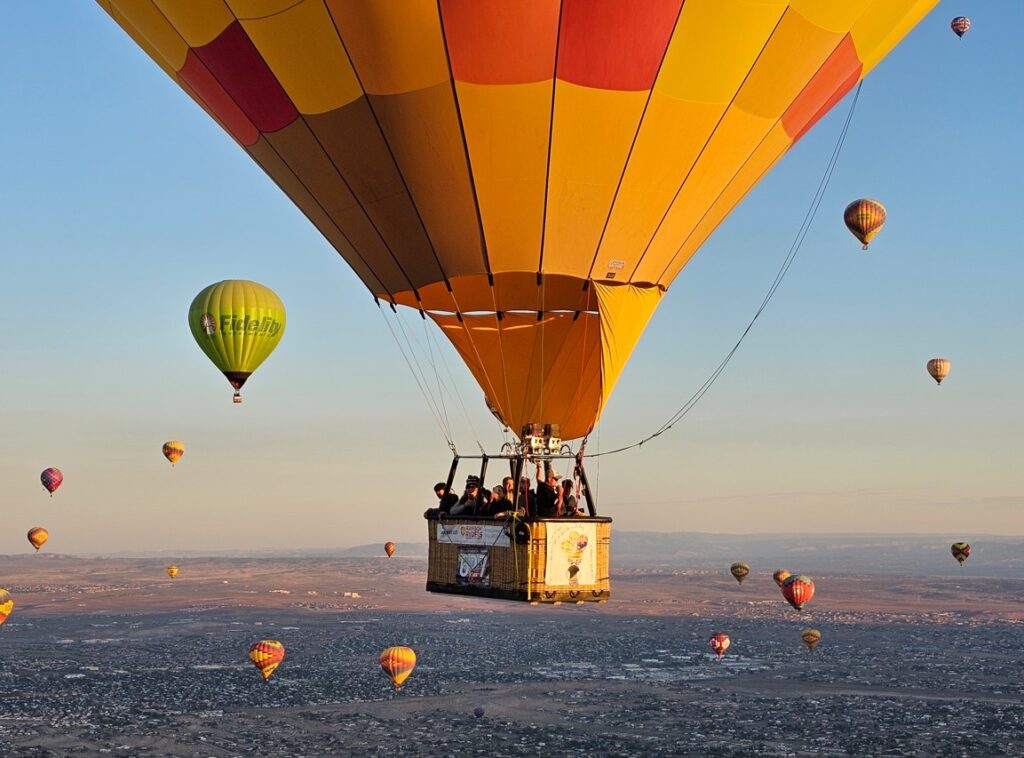
More balloons will follow us!
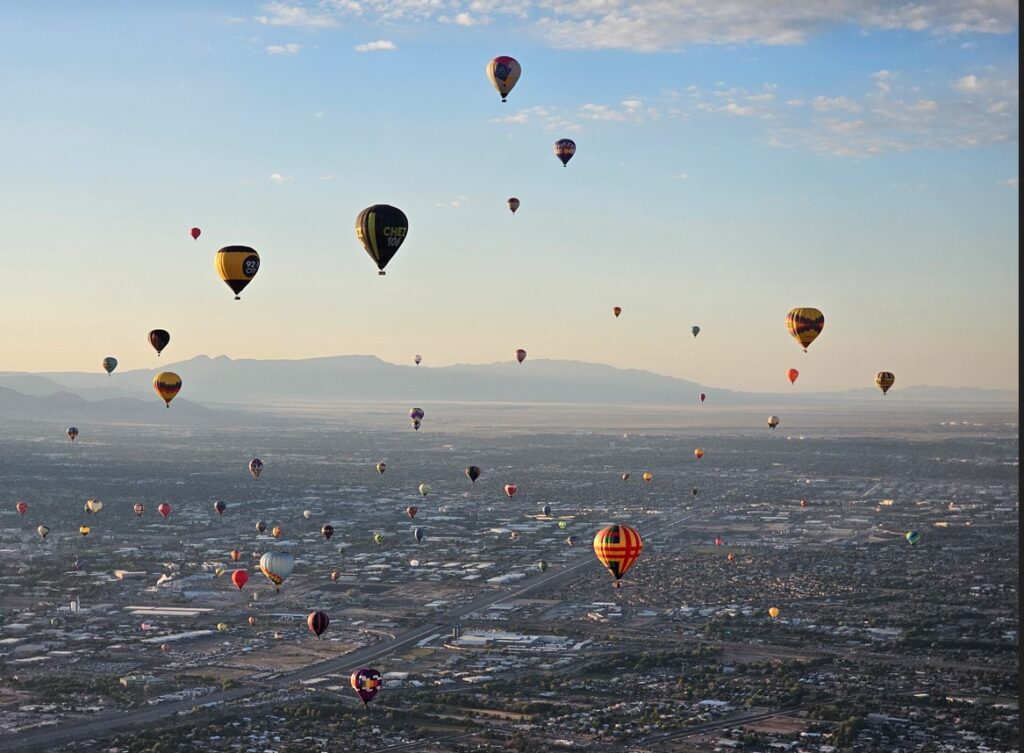
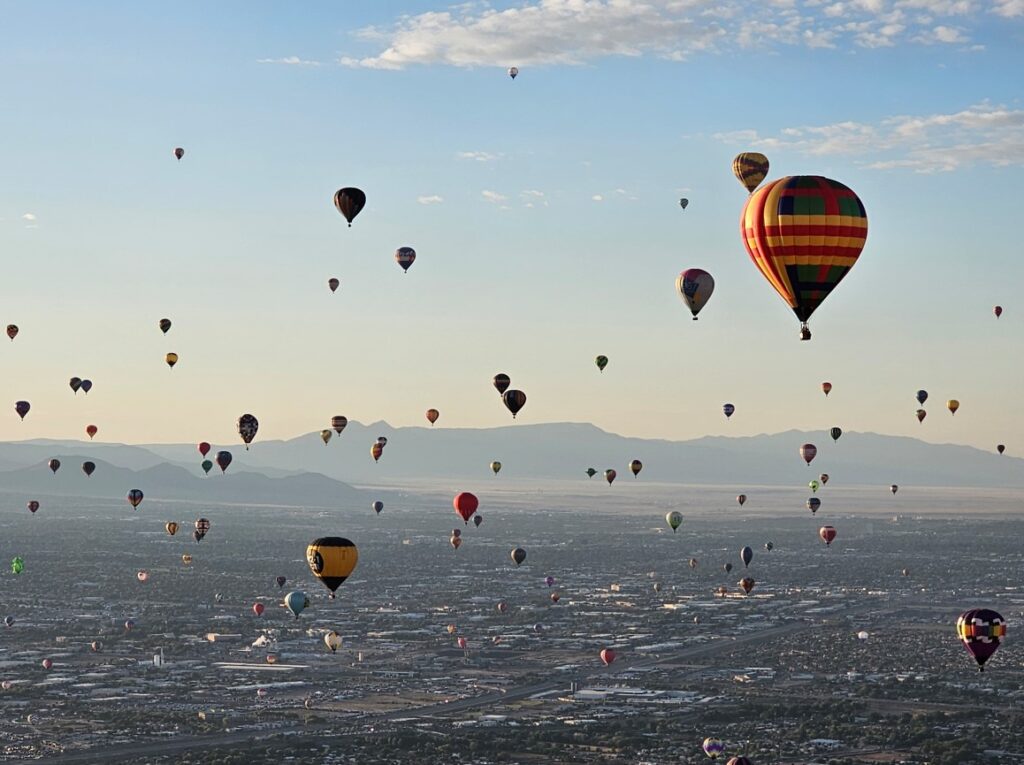
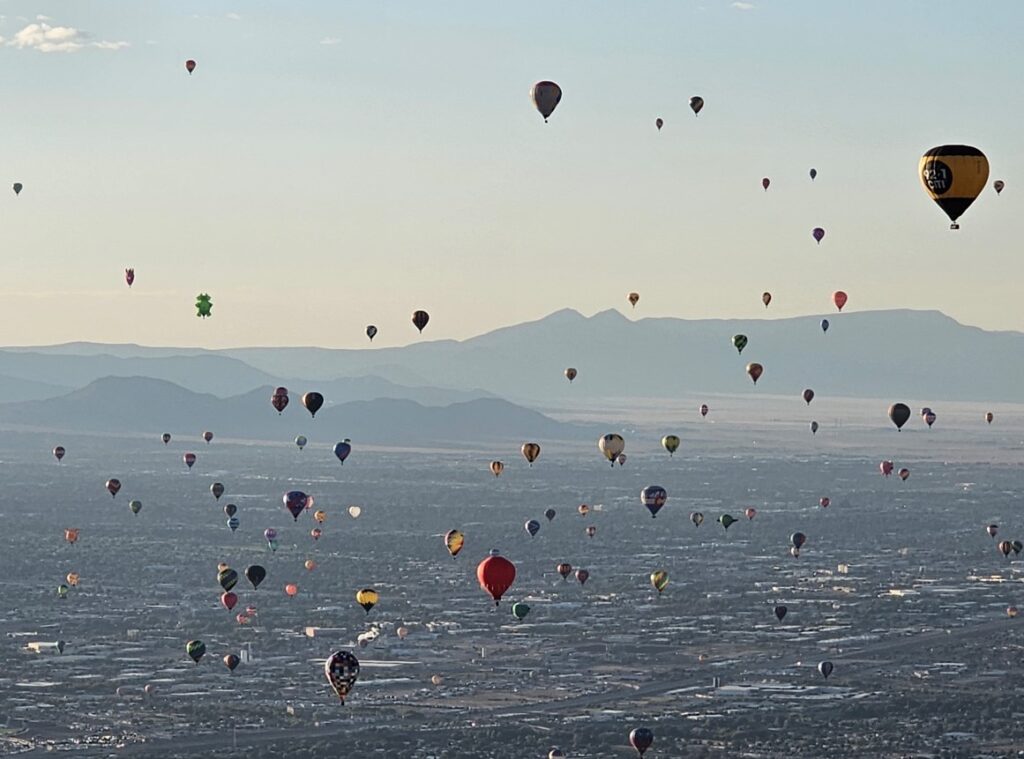
It was actually warm as we floated in the sky, about 2,000 feet above ground. Albuquerque is at altitude of about 5,000 feet so we are 7,000 feet above sea level.
We felt no breeze while in the balloon. The breeze is what moves the balloon, so we were actually moving at whatever the wind speed was.
So peaceful.
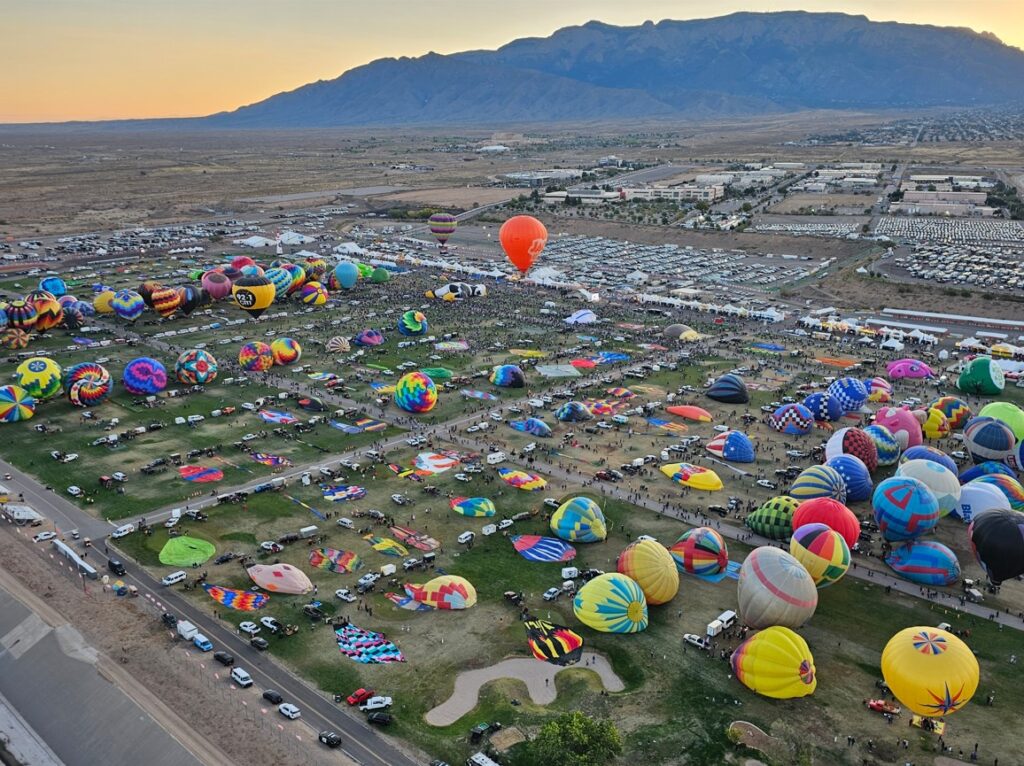
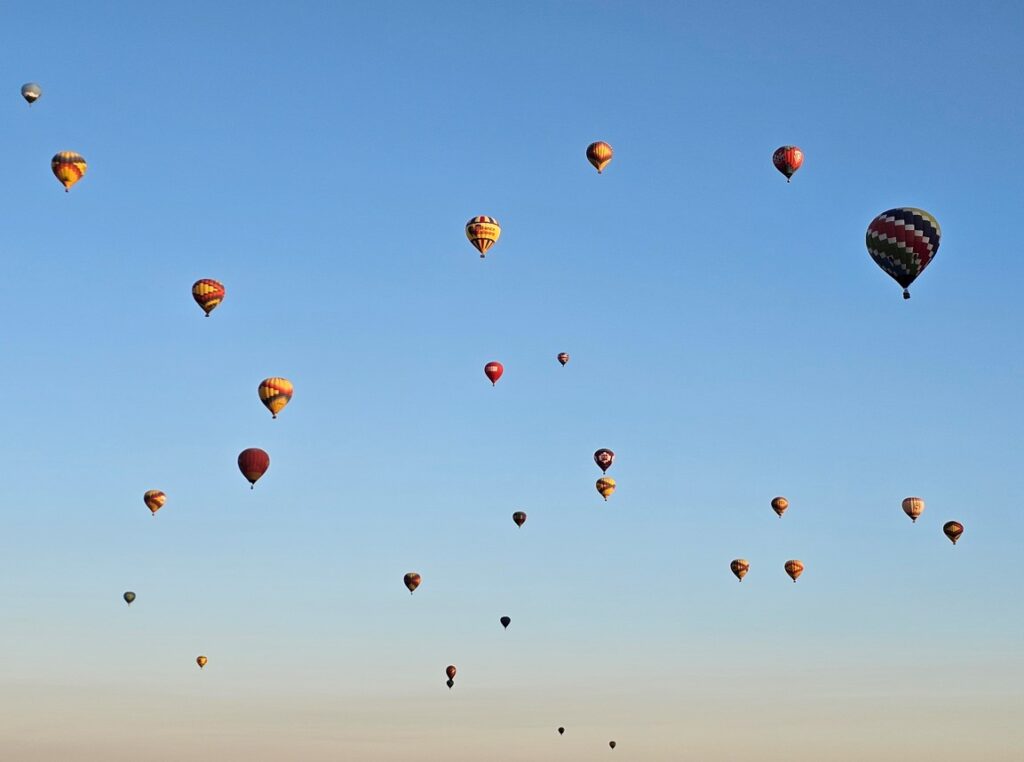
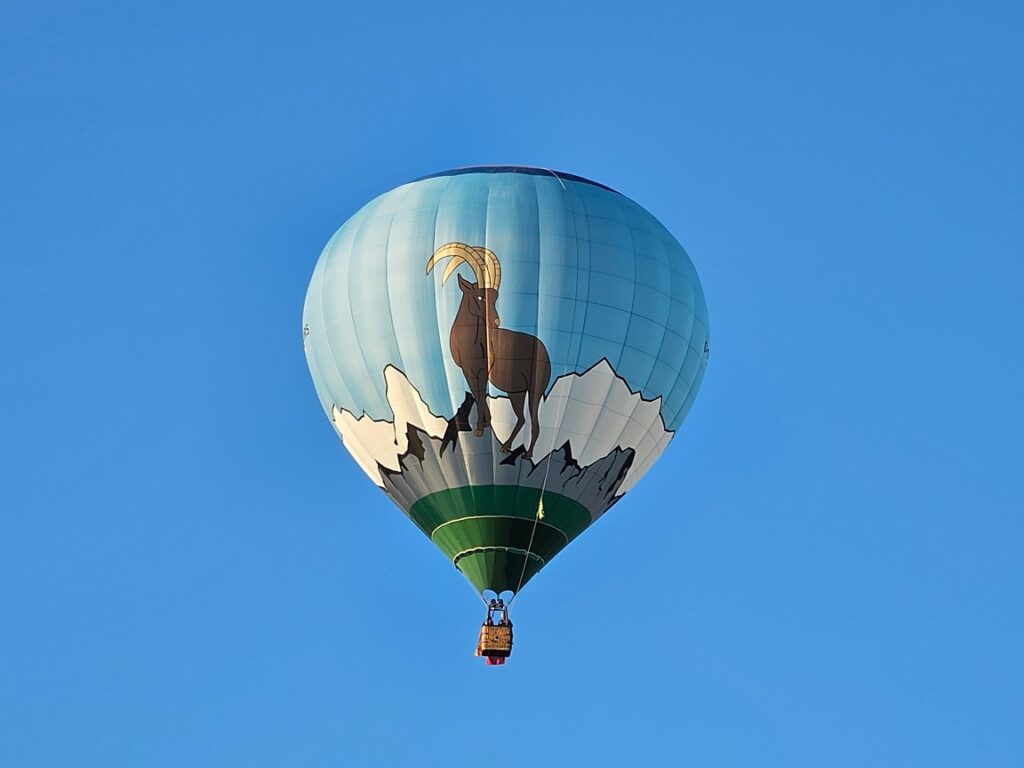
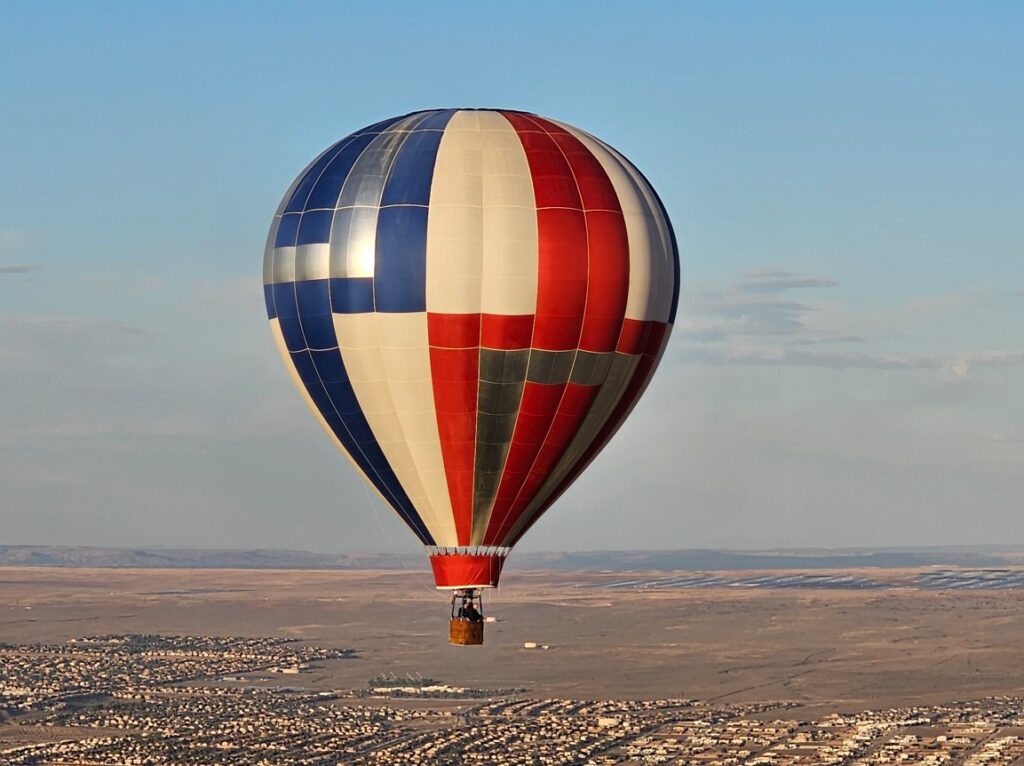
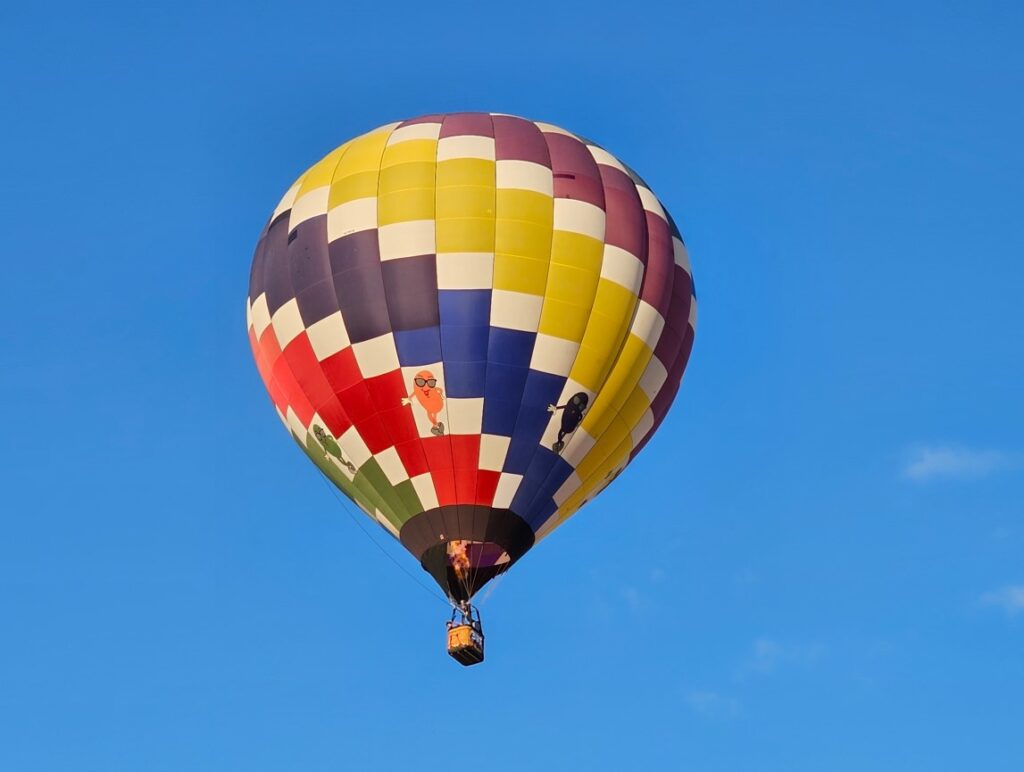
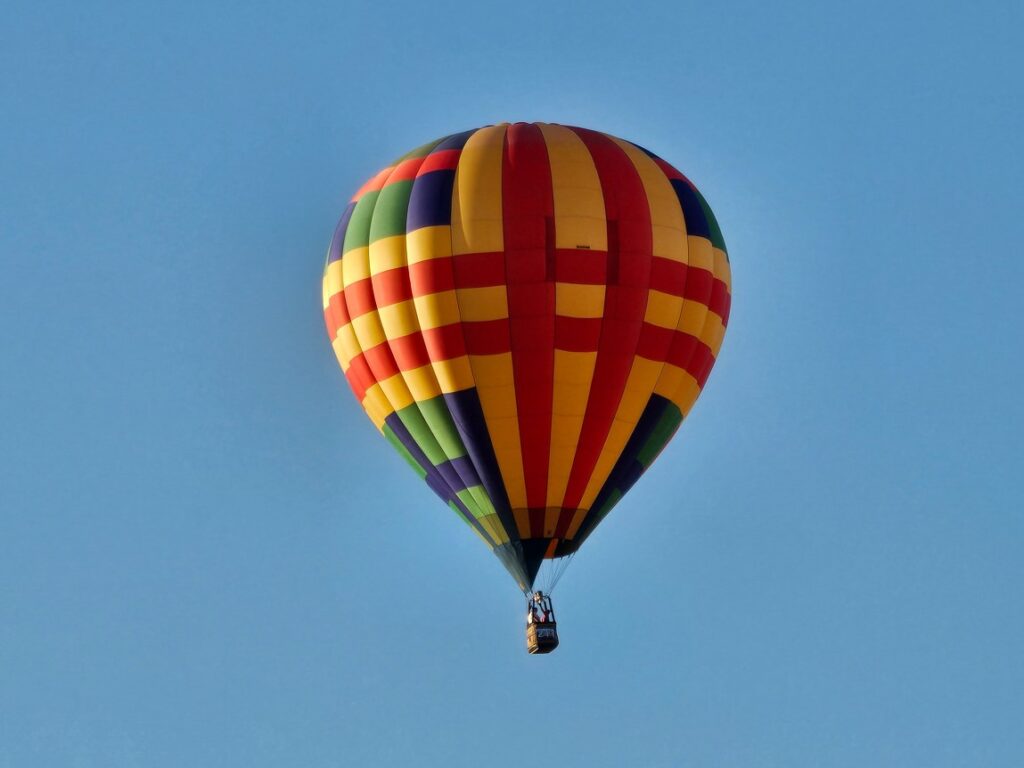
There are about 500 balloons at the Fiesta, about 300 while we were in the air.
Close encounter. Our balloon actually “kissed” this balloon but we did not feel any impact.
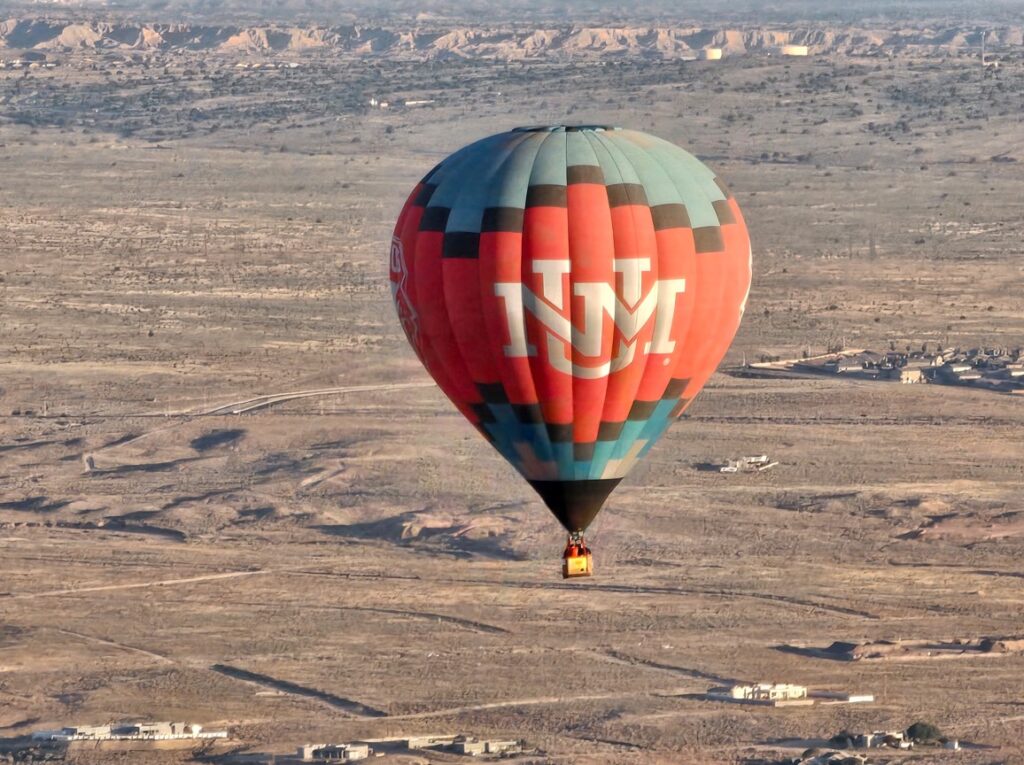
University of New Mexico’s balloon.
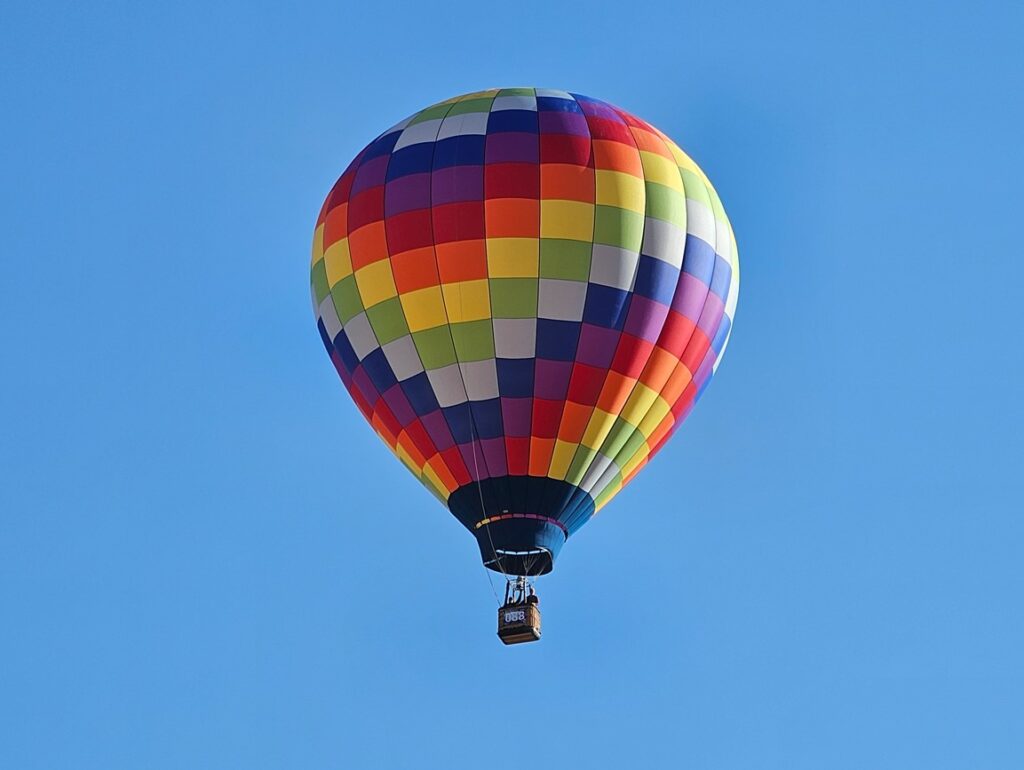
Here are a few balloons up close.
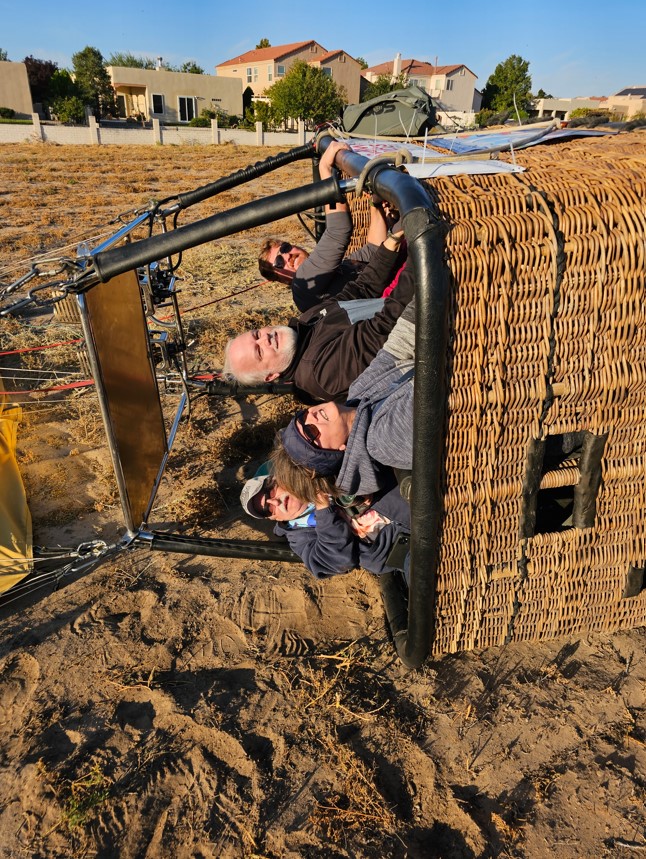
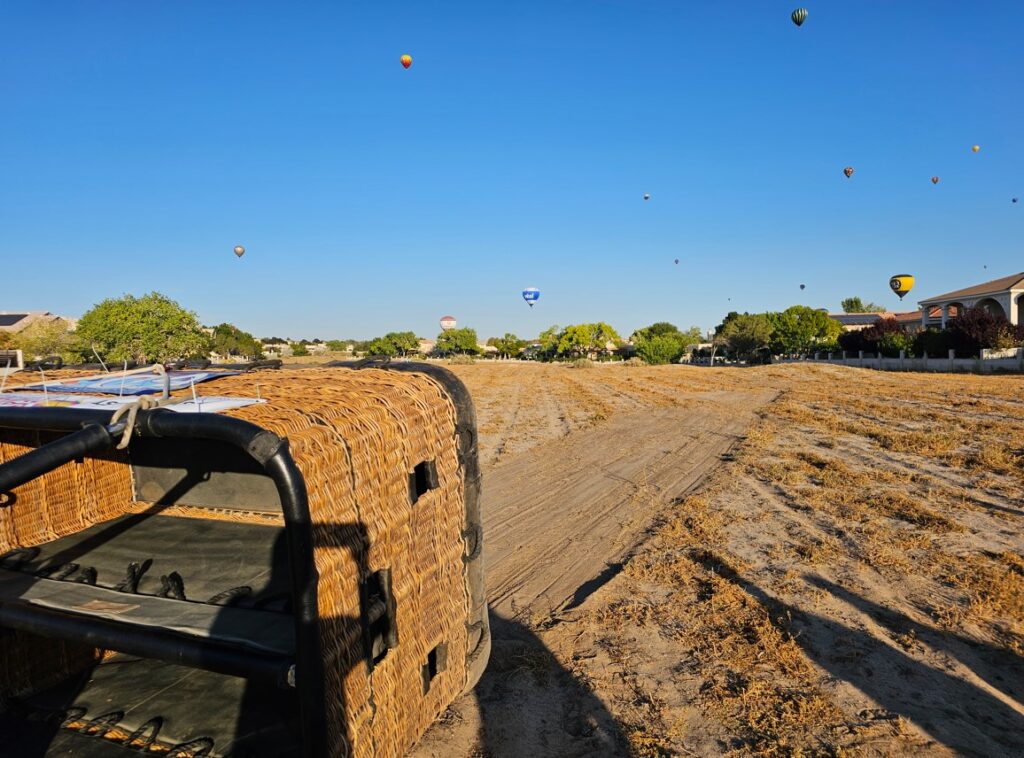
This is the way we landed, on our backs! Not to worry, it was intentional.
Our landing was about a 30 foot skid in an abandoned golf course.
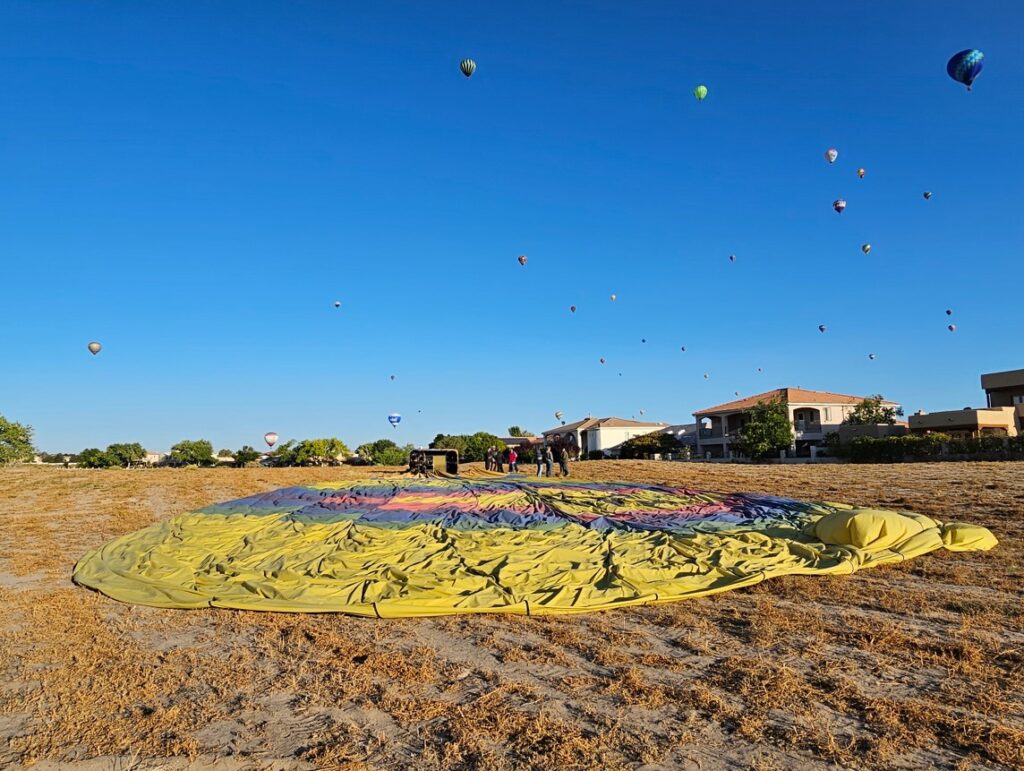
Our balloon deflated after landing.
Every balloon flight is celebrated with a champagne toast. This tradition dates back to the 1700s in France, the very early years of balloon flights. Since you can’t really accurately control where the balloon lands, often times balloons would land on someone’s private property, typically a farm. In the early years, people who had not seen or heard of balloons were fearful that the balloon was a dragon (or worse). Thus developed the tradition of bringing a bottle of champagne to give to the farmer as a peace offering. Champagne was the libation of choice because French King Louis XVI wanted to show off his wines! This tradition continues to this day. Our pilot Pete said he has landed on farms in the Napa Valley CA, and gave champagne to the slightly irritated farmers.

Our pilot also shared this Irish Balloonist Prayer:
The winds have welcomed you with softness
The sun has blessed you with its warm hands
You have flown so high and so well
That God has joined you in laughter
And set you gently back again
Into the loving arms of Mother Earth
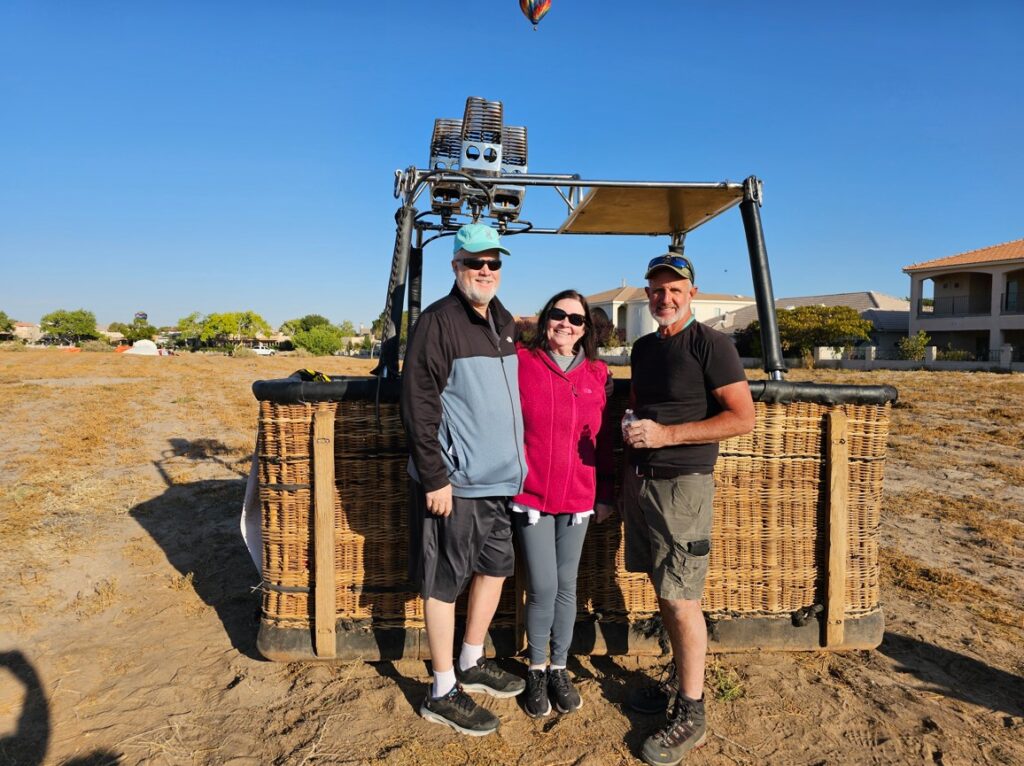
Here we are with our balloon pilot Pete.
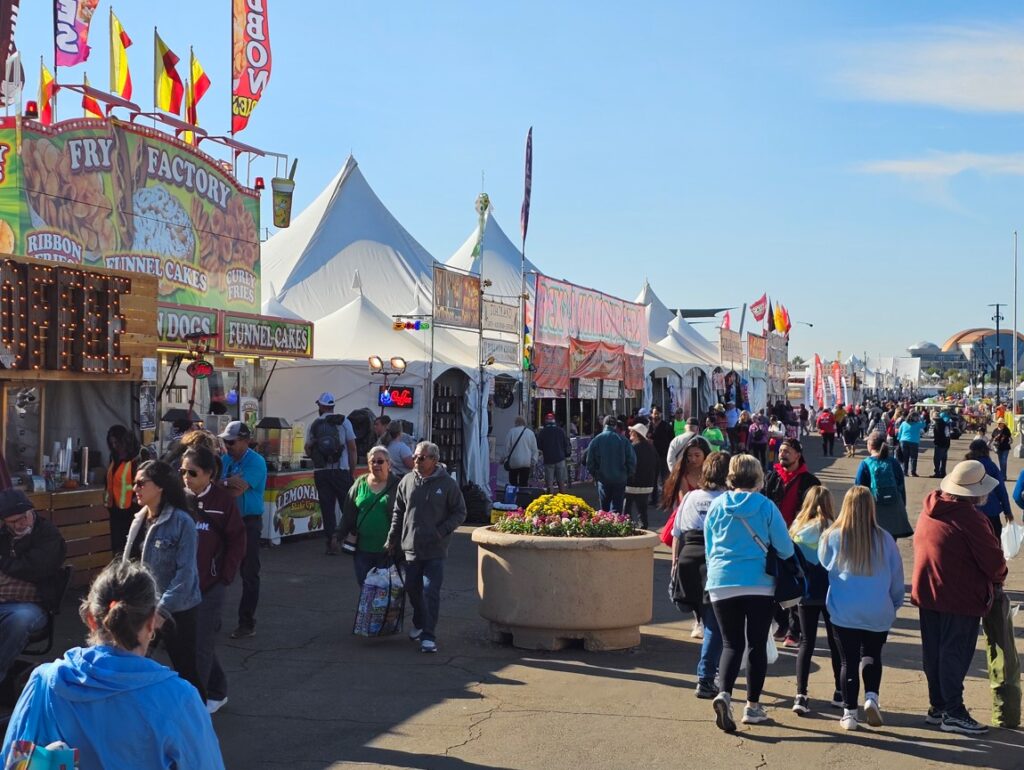
During International Balloon Fiesta, Balloon Fiesta Park looks like a state fair!