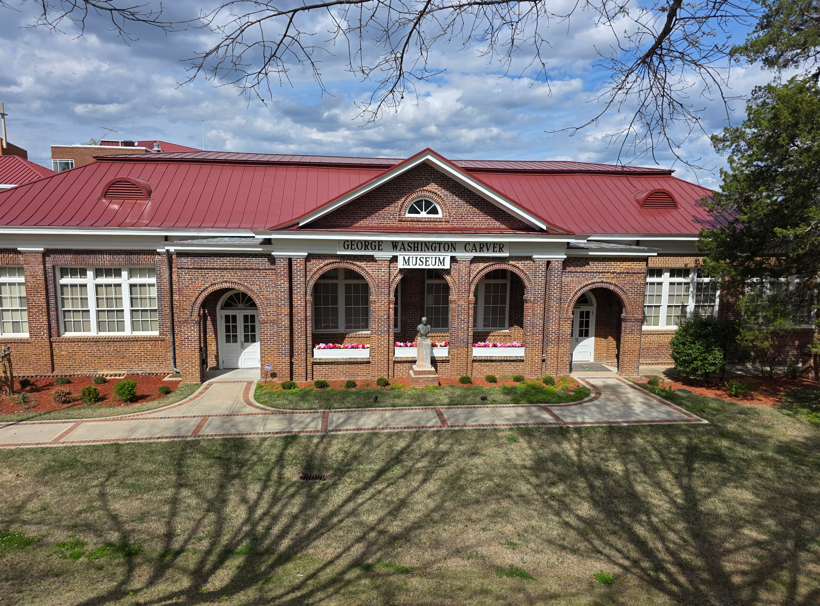
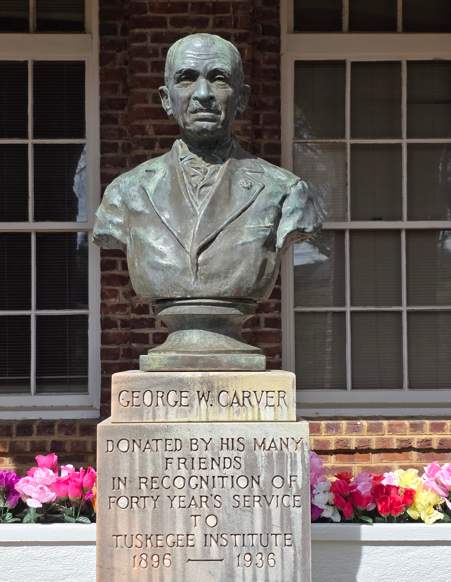
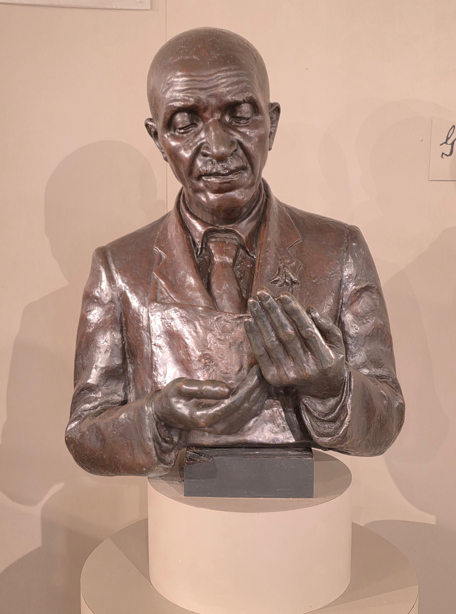
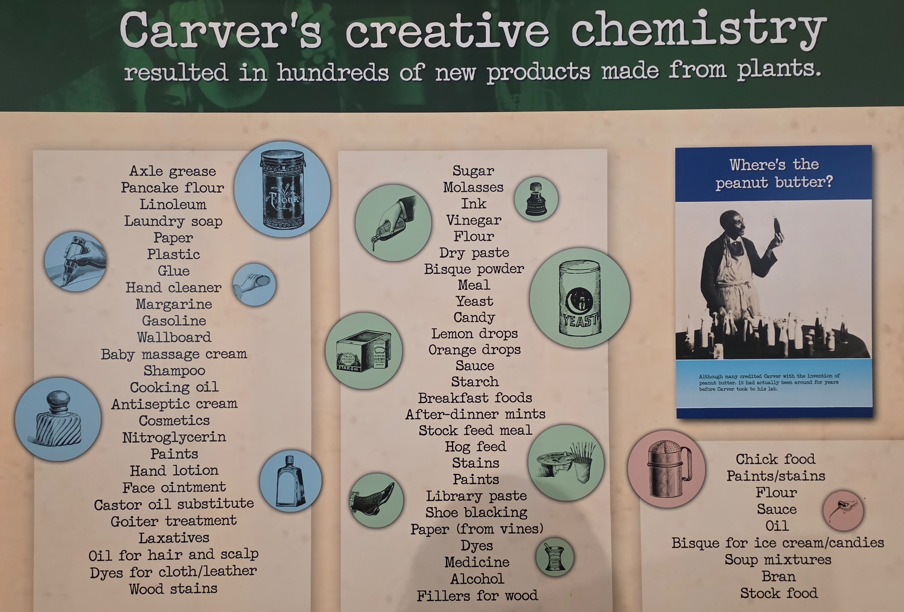
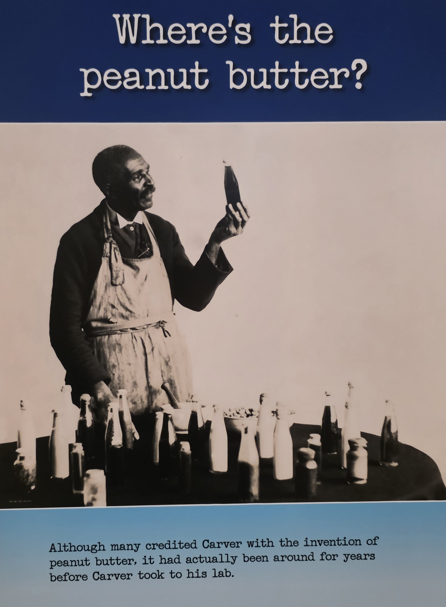
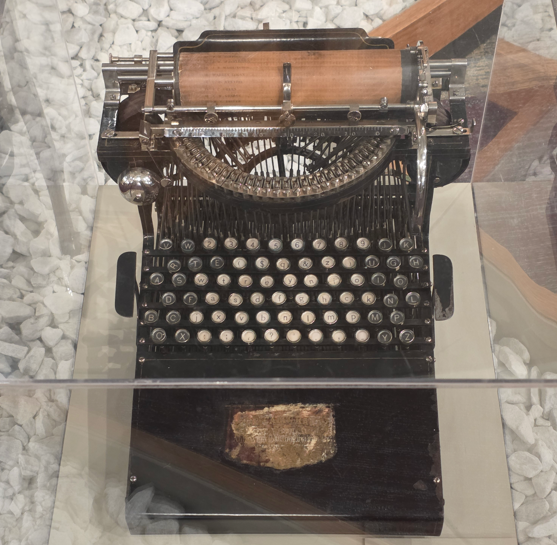
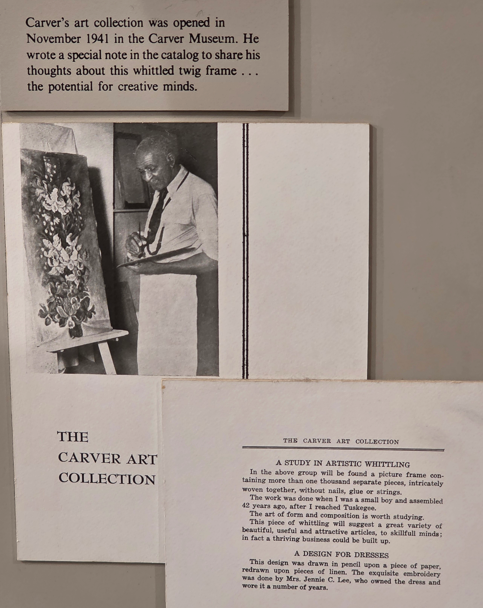
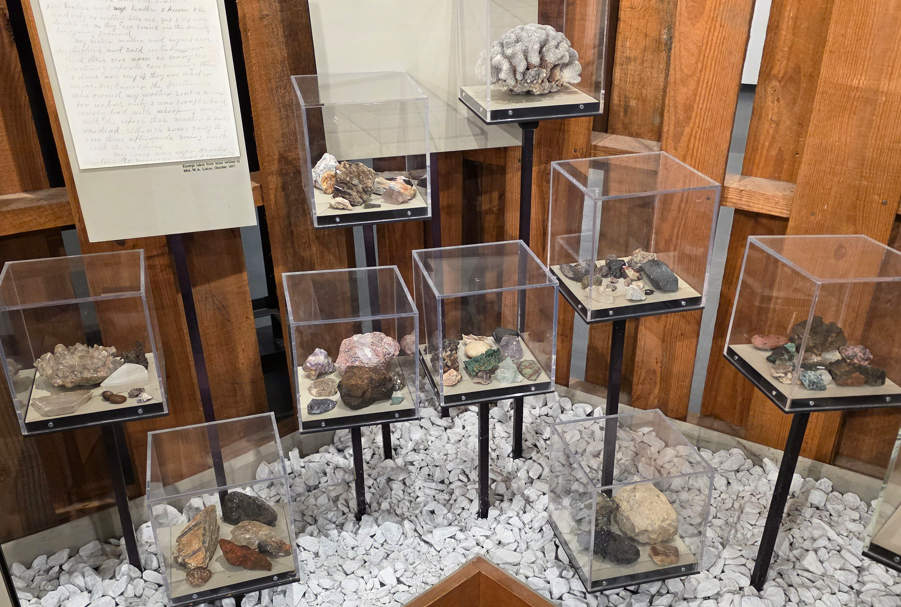
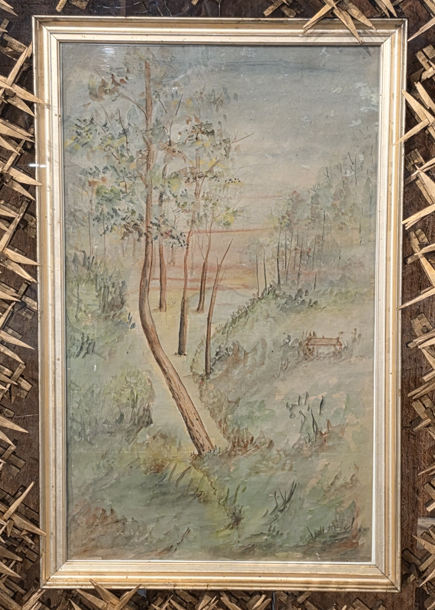
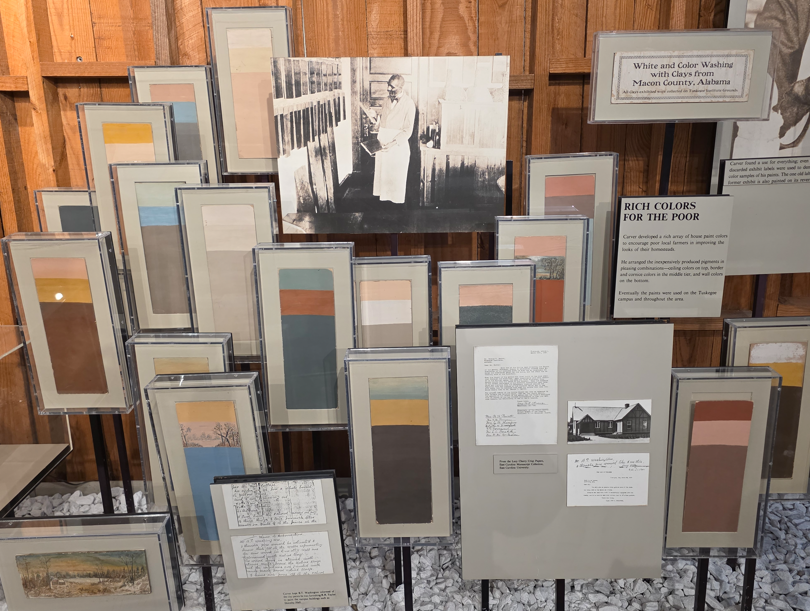
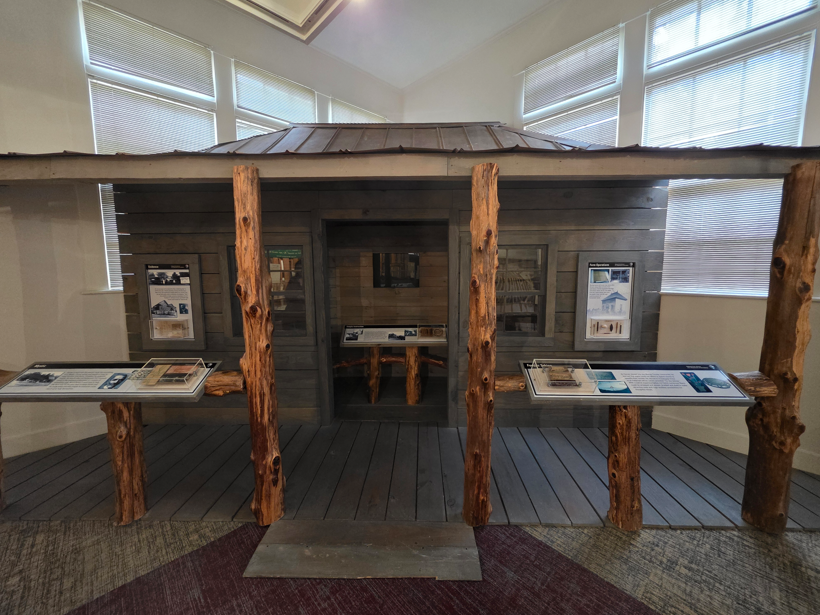
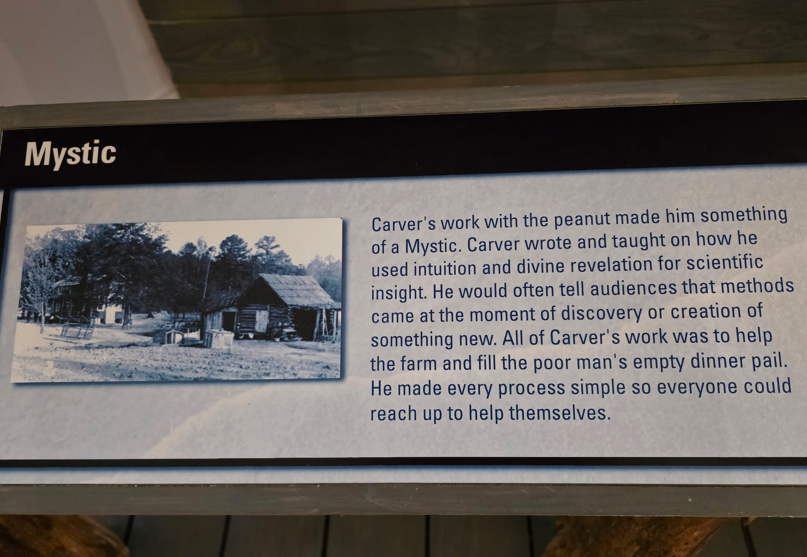
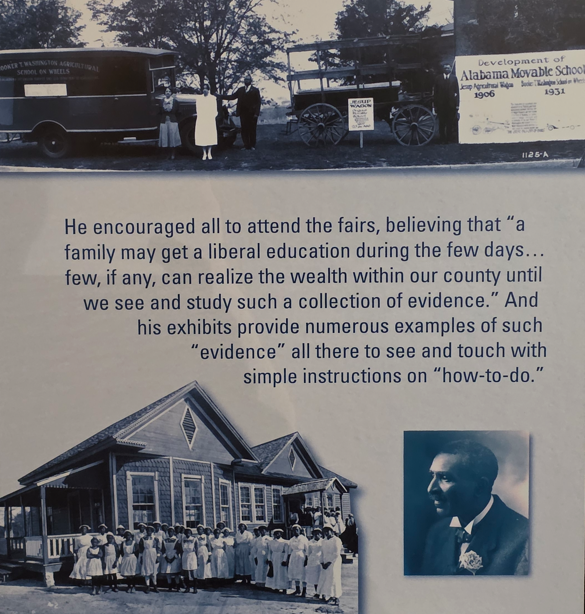
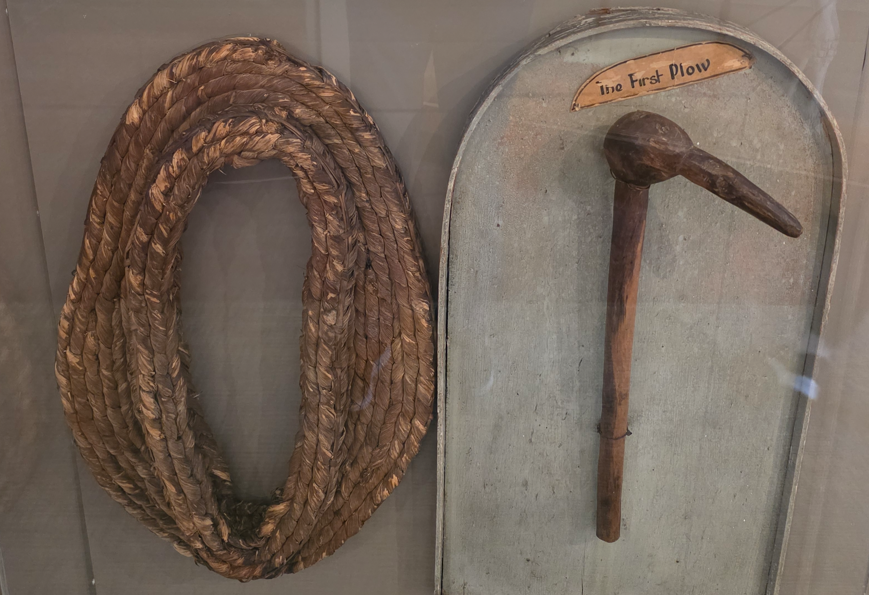
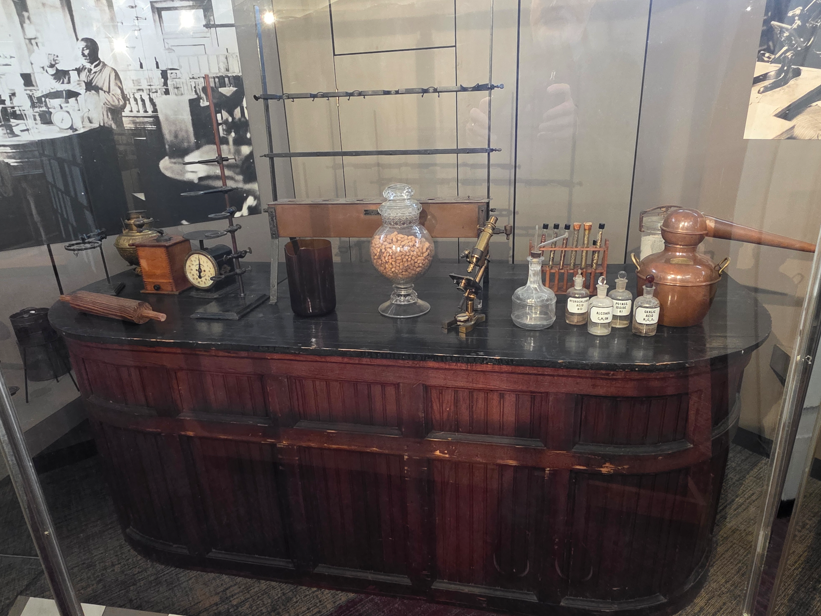
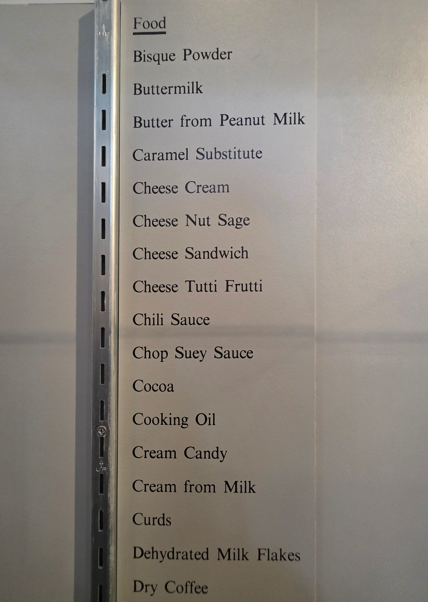
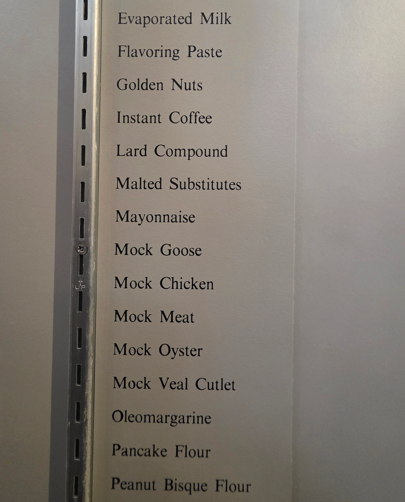
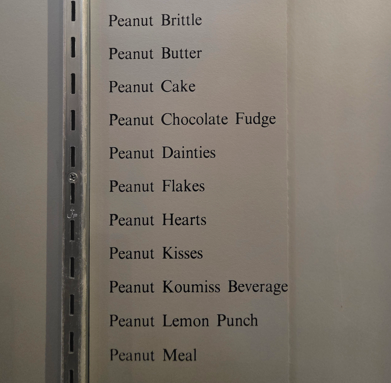
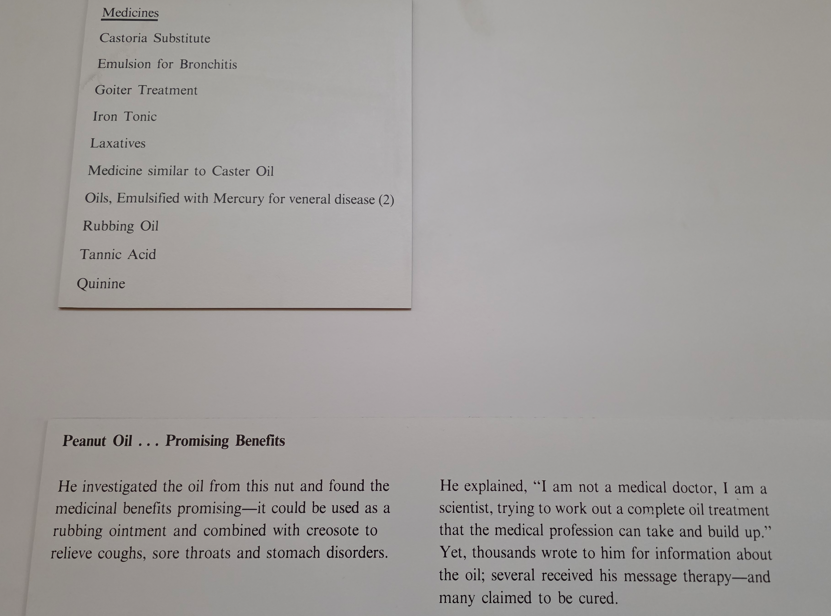
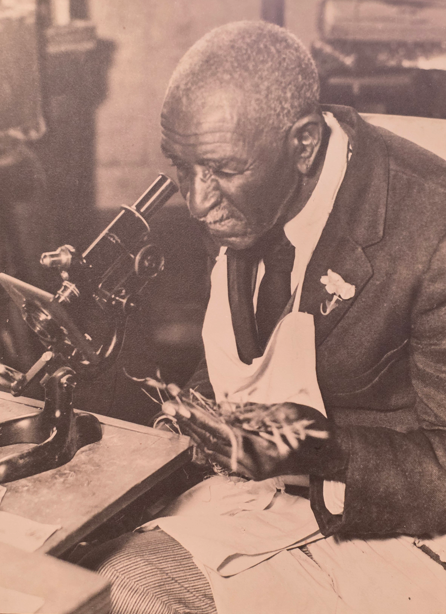
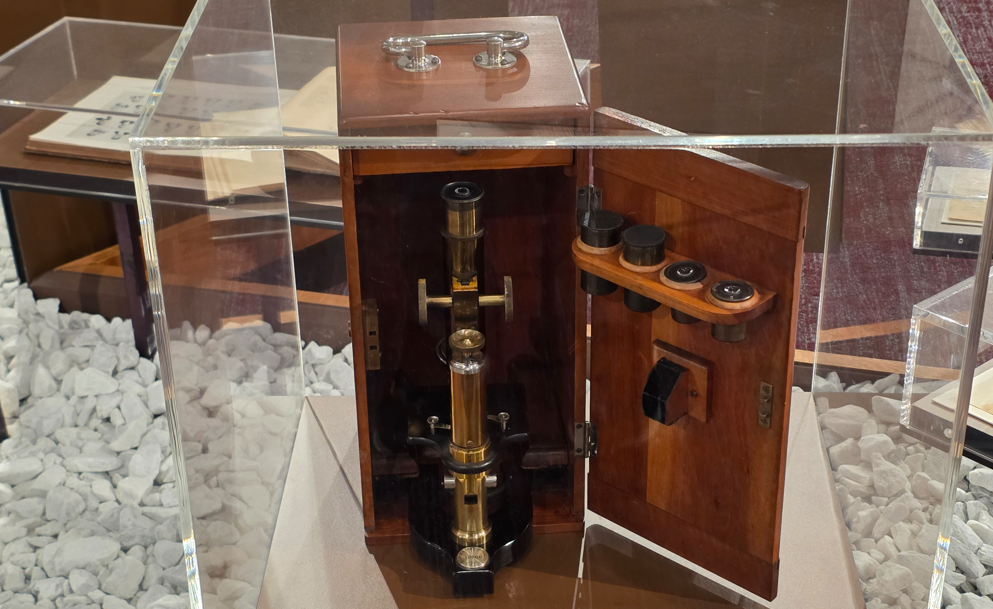
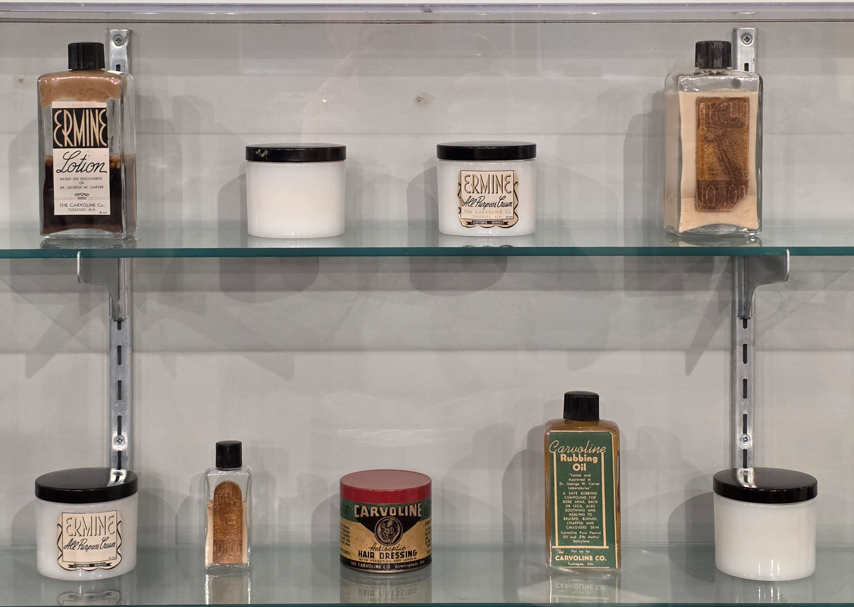
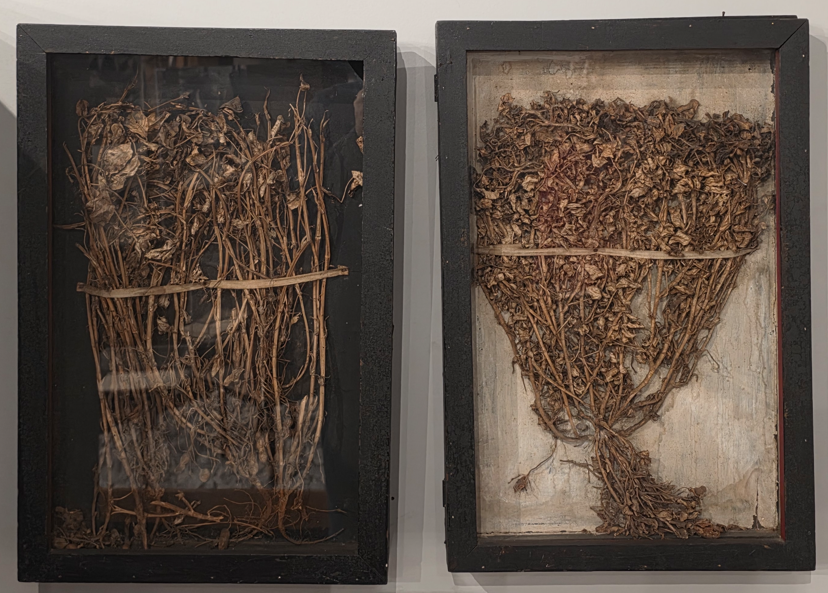
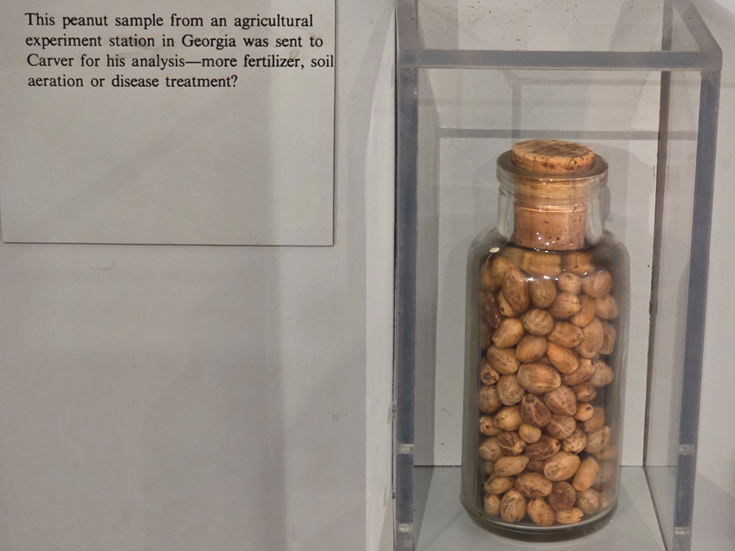
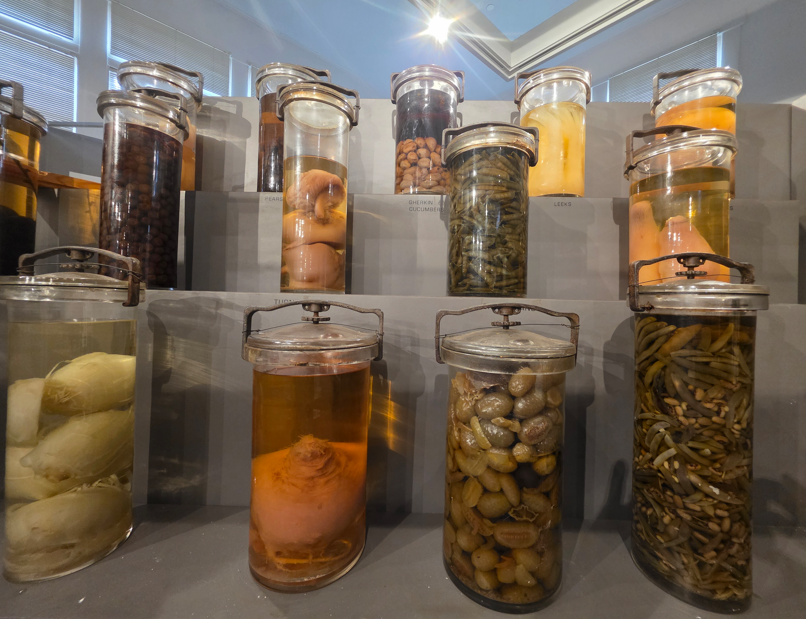
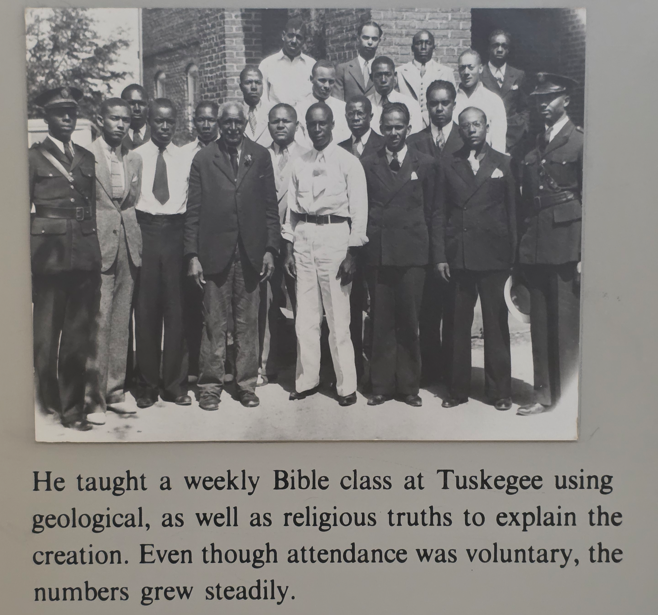
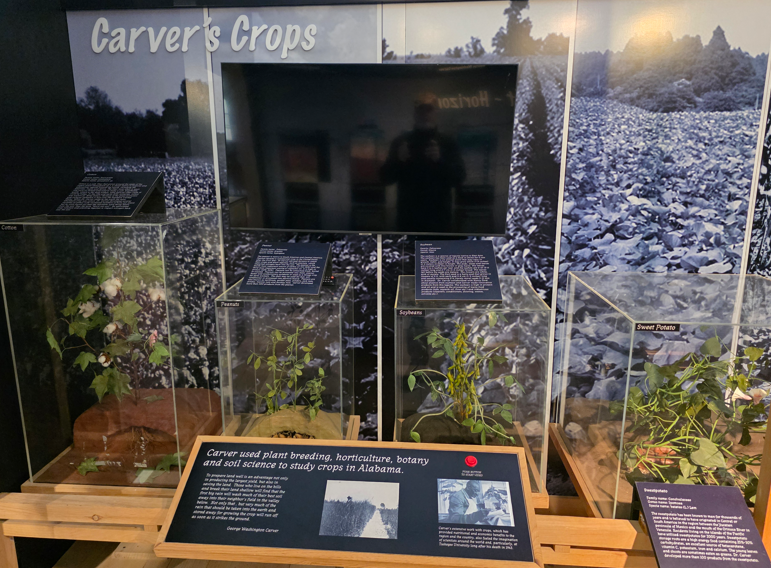
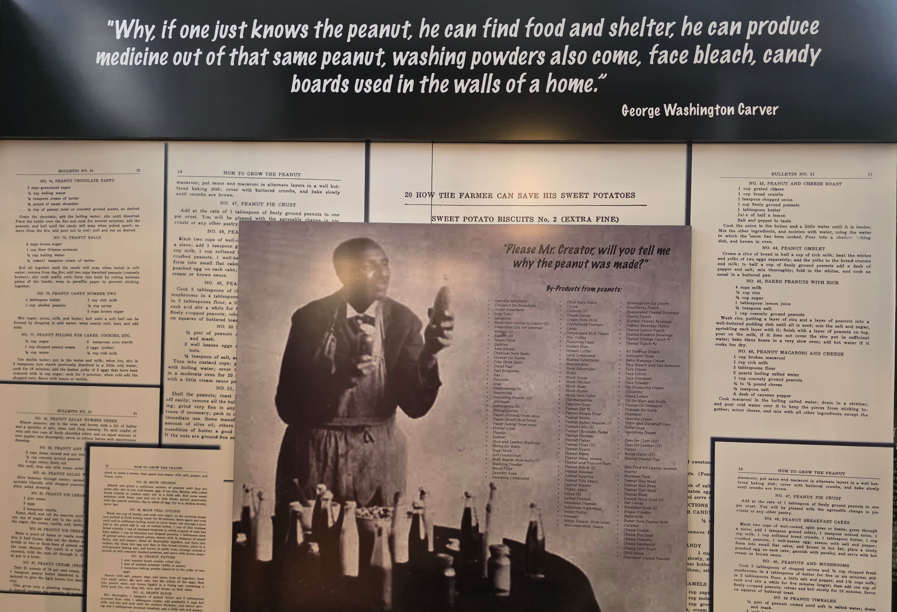
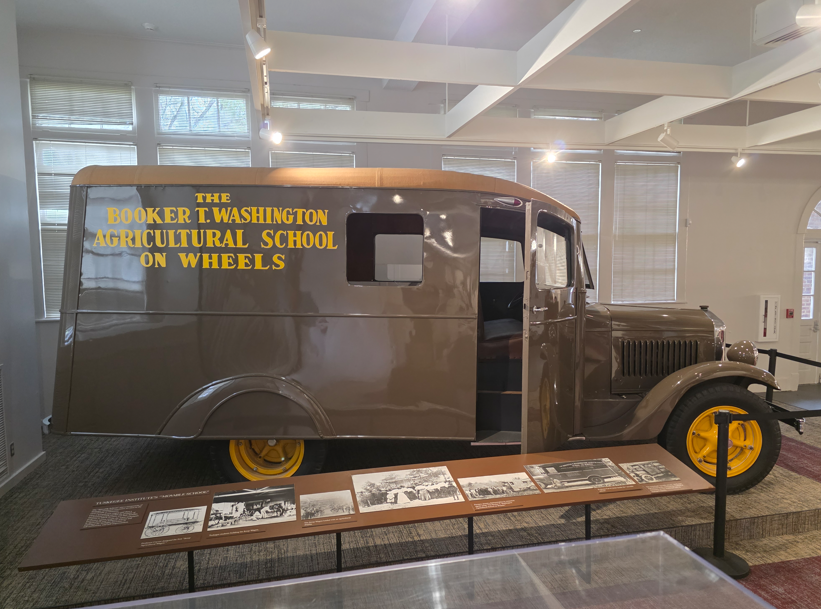
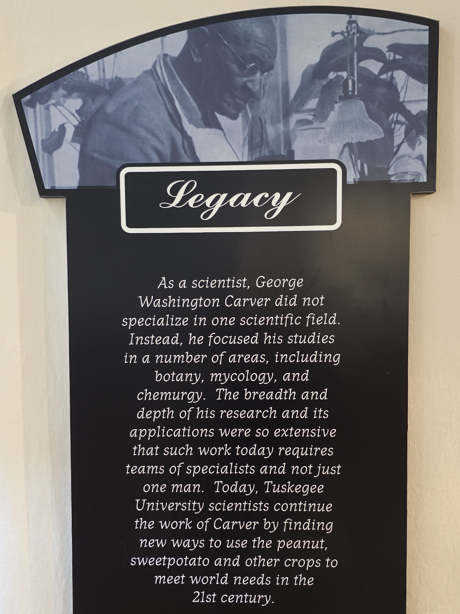
George Washington Carver was a revolutionary American agricultural chemist, agronomist, and experimenter who was born into slavery and sought to uplift Black farmers through the development of new products derived from peanuts, sweet potatoes, and soybeans. His work helped transform the stagnant agricultural economy of the South after the American Civil War. For most of his career he taught and conducted research at the Tuskegee Normal and Industrial Institute (now Tuskegee University) in Tuskegee, Alabama. This museum is located on the campus of Tuskegee University.Carver’s research was extremely wide and deep.Carver is generally credited with “inventing” peanut butter.Carver’s typewriter.Among his many talents and interests, he was an artist,…collected and catalog many different rocks and minerals…–artwork from around the world……and Carver even developed different paint color pigments to help poor people brighten up their houses.Cornhusk horse collar similar to one at The Tuskegee Farmers’ Conference in 1906. Carver prepared exhibits for each subject he taught. This “first plow” may have been in an exhibit showing different agricultural tools.Part of Carver’s laboratory.Sample list of the many items Carver was involved with developing.Carver’s microscope.Carver considered the peanut the answer to many problems. He started with a single problem – to find an inexpensive protein for the meager diets of the rural poor – he unleashed a myriad of solutions to unspoken needs. The peanut plant was cheaply grown, easily stored and offered enrichment to the soil. While he was most publicized for his many different products and preparations with the peanut, Carver’s research extended to its every aspect. Quickly, he became an unpaid consultant to growers and processors with questions about cultivation, treatment of diseases and processing methods.Samples of turnips, cucumbers, English peas, muscadines, leeks, green beans, pears, peaches, sweet potatoes, onions.Carver and Tuskegee Institute took “school” to the poor people where they lived.George Washington Carver’s impact is so large, I think he is underrated whenever great Americans are listed.